Into the next season

The microclimates of different suburbs are most recognisable at this time of year. In some places, the trees are only just moving from budding to flowering, while in others the open blossoms are already wind-blown and slowly moving to the next part of their cycle. Blink and you are likely to miss it.

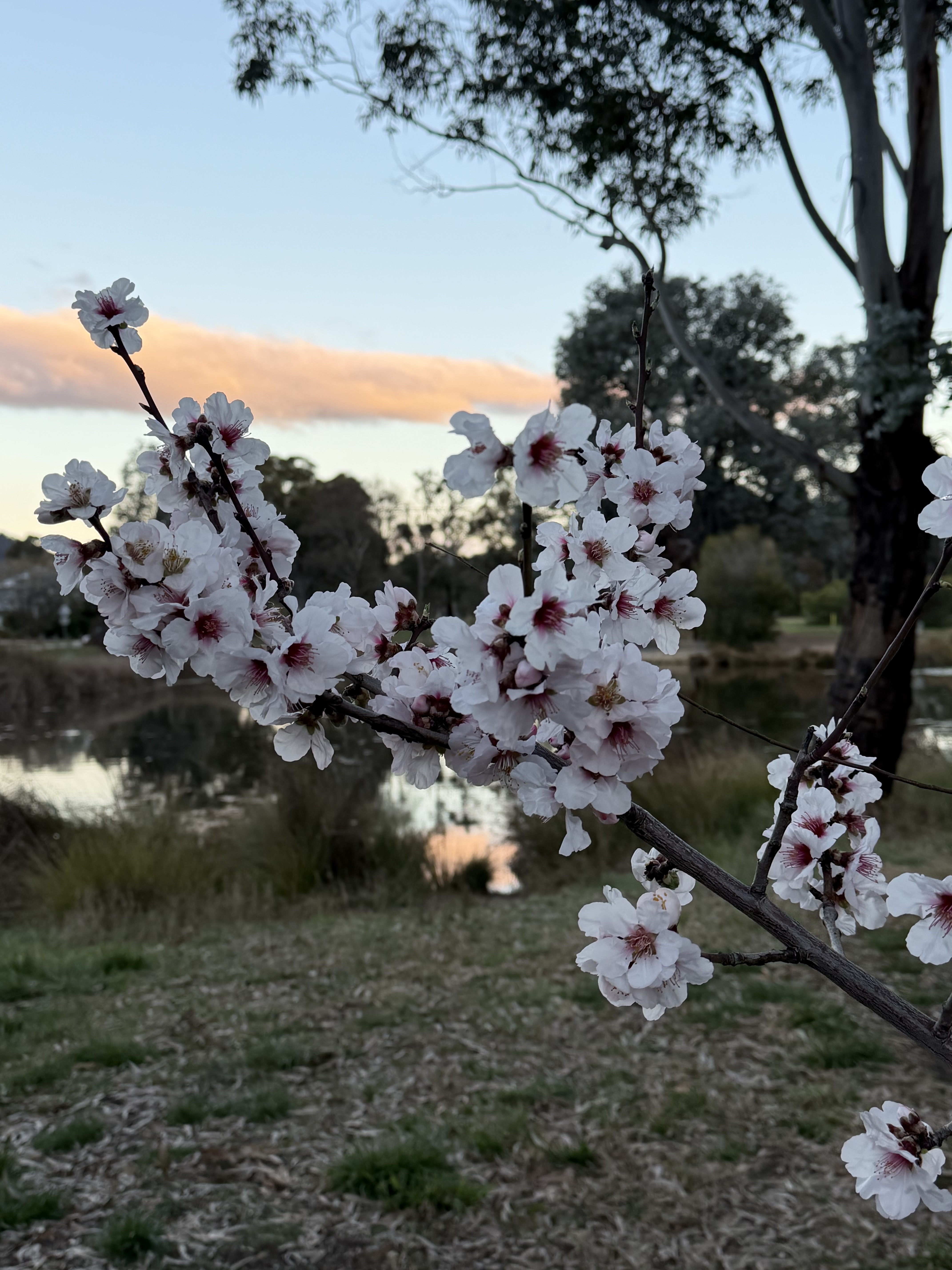
One morning a fortnight ago, I was delighted to come across a naturalised fruit tree on my dog-walking path. From its pale blossoms and distinctive magenta centres, it is most likely an almond tree. In the few years that I have been here, the tree has not grown much. Yet every spring, it puts on a magnificent show for all who walk past it. On a whim, I took a photo of the blossoms and sent it to my cousin, for whom the season is also changing. His world is moving towards the cool of autumn.

This morning, as I walked the dog, I stopped at the tree to have another look. I was surprised to see that many of the flowers had dropped and the tree no longer looked as glorious as it had. All in the space of two weeks. It made me think of the changes we all go through, hardly noticeable from day to day until we look in the mirror and realise how much the person looking back has changed. Viewed through the lens of the seasons, this makes perfect sense. Why should we be surprised when we, too, are part of nature’s great cycle? Perhaps the scraggly little tree had not lost its glory at all. It was simply moving into its next season, as we all are.

The daily punctuation of bells

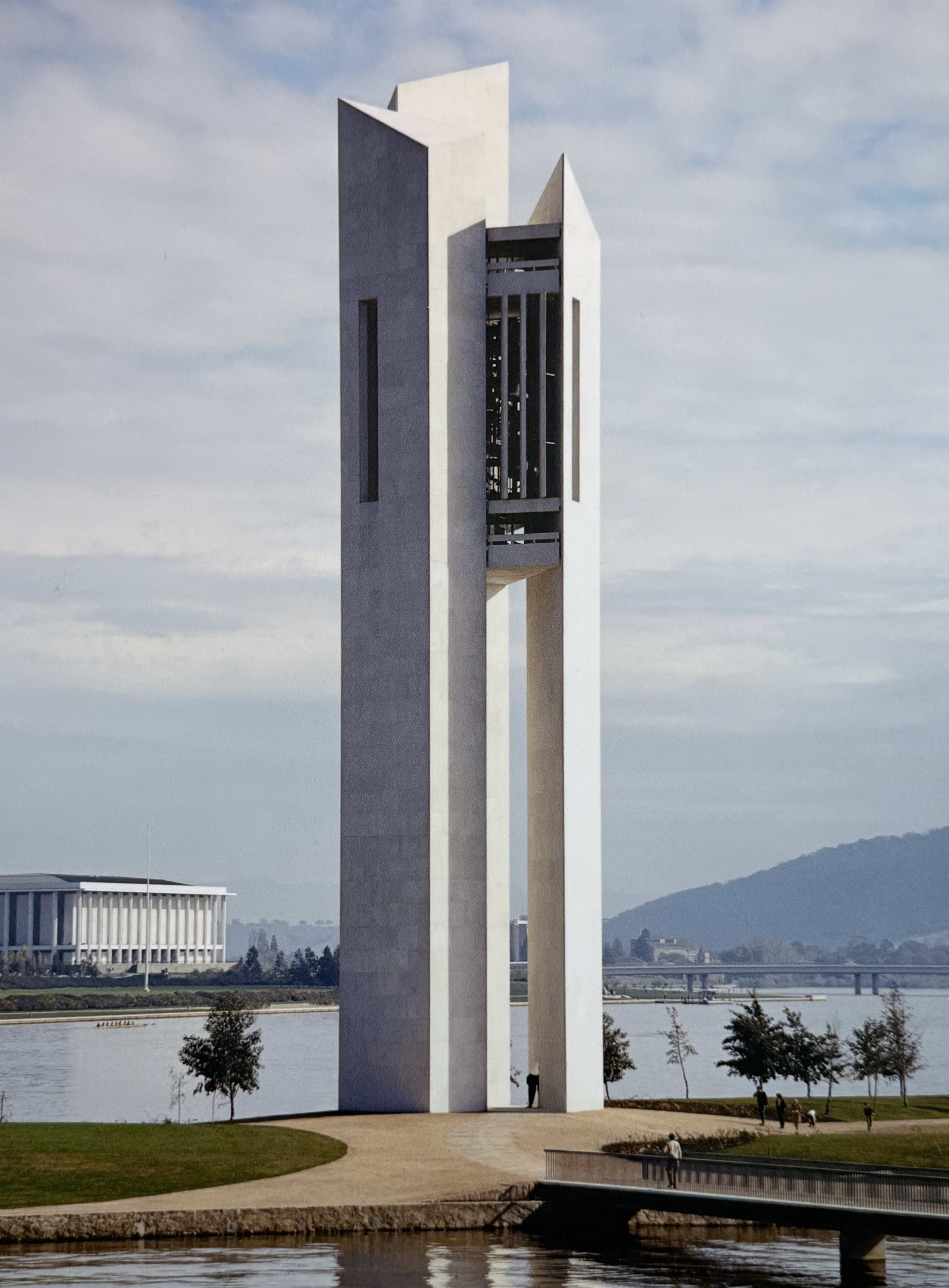
National Carillon 1970

Whenever I return from Europe, it is the daily punctuation of bells that I miss. From churches and town halls, they mark the passing hours and quarter hours. For centuries, their sound helped people keep track of time, long before clocks and watches became common.

When I saw an advertisement to tour the National Carillon here in Canberra, I immediately signed up. I had no idea that traditional carillons were so rare as I have worked at Sydney University where I heard the Carillon played daily and I also worked at Bathurst where one of my friends is a carillonist. I never realised how privileged I was to have heard all three of the traditional carillons in Australia.

To be classed as a carillon, the instrument must have at least 23 bronze bells and be played by hand using a baton keyboard. The carillonist strikes the baton with the bottom of a loose fist and may also play some notes with foot pedals. The National Carillon has 57 bells and today I had the pleasure of playing some random notes that reverberated across a couple of nearby suburbs. The highlight of the tour was taking the lift into the belltower and seeing the largest bells that ring out majestically over Lake Burley Griffin. The biggest bell weighs six tonnes, and I felt its rich resonance with my whole body.

I savour their varied voices, some high pitched and almost tinny, others with tones so low that they feel like pure vibration. To stop and listen until the last reverberation dissipates is a habit I have learned to nurture. I first came across it in Buddhist meditation, where the bell is a reminder to return to the present. And so, for a moment, I allow myself to be enveloped in pure sound and simply be.

The Twenty Dollar Miracle

I never carry cash.  As a result, I don’t even carry a purse. I do have one but it stays at home like some relic from the past. Yet I remember never leaving the house without one in my handbag or back pocket. My father, a leatherworker, made my purses and handbags throughout my teens. They were always prized possessions. He never let me leave the house without a coin in my purse. It was his way of keeping me safe.

Today, I met a friend who asked me to buy her a newspaper. She gave me a twenty dollar note which I really didn’t want to take but she insisted. Carefully, I put it in the pocket of my sweatshirt. As I walked, I kept putting my hand in the pocket to feel for the note. As I neared the shop, I felt uneasy and decided to move the money to another pocket for safekeeping. For once I listened to that insistent inner voice.

At the cash register, I went to fish out the twenty-dollar note. It wasn’t in the pocket. I had lost the money! My first reaction was to feel foolish. Why did I move it from the pocket where it had been perfectly safe? Why did I listen to that insistent inner voice? Then, a far more rational thought calmed me. What difference would that twenty dollars make to how I live this day or even the week ahead? The impact was negligible. It was annoying but no great loss.

Many years ago, when I had nothing, finding even a five-dollar bill would have felt like a miracle. I remember taking a tram to a job interview with 40 cents in my pocket. That was the price of the one-way ticket. After the interview, I walked the eight kilometres back home in shoes I had borrowed from a friend. It took me longer than two hours. My feet blistered, and every step was agony. Wistfully, I watched the trams rattle past me.

I look back at that young girl with compassion and would love to let her know that one day she would no longer have to count her pennies. Today I hope with all my heart that someone in need has found that money and that it will feel like a small miracle come true.

The unexpected joy of recognition

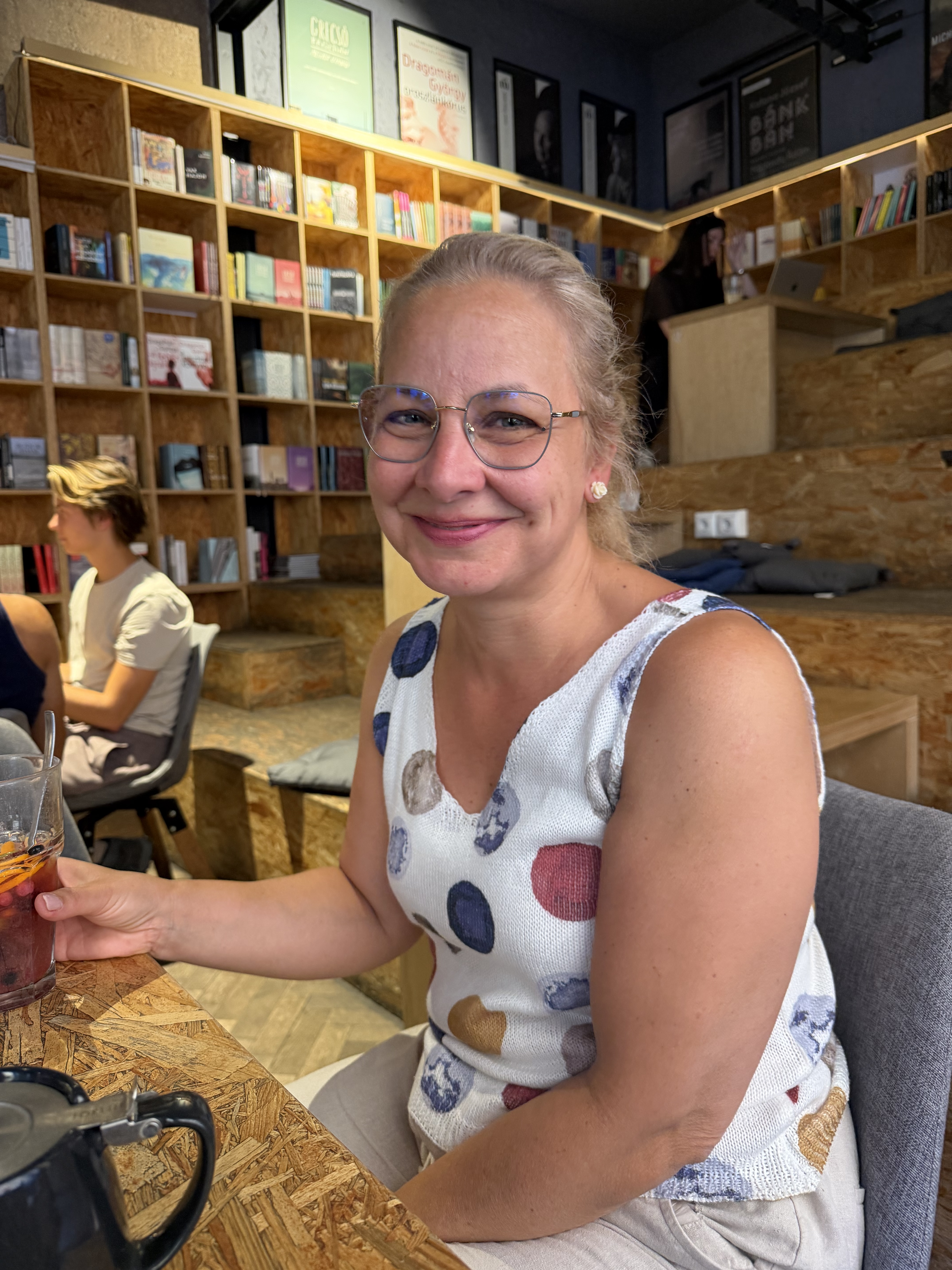
A chance email from my uncle’s granddaughter led to a summer evening in a Budapest café filled with the unexpected joy of recognition. Szilvia had chosen a distinctive café with books on every wall, comfy chairs and an upright piano in a corner. Straight away, I felt at home.

We smiled and embraced, curious to finally meet each other. Szilvia was delighted to meet someone who was related to her, someone who actually knew her grandparents on her father’s side. I too was glad to make the connection, as my father would have been her great uncle. I know so little about my father’s side of the family that any link is a bond to be treasured. Szilvia clearly felt the same way.

My cousin Atti, from my mother’s side of the family, came with me and was witness to our recognition of one another. Although from different sides of the family, there was a common thread running through our little triad. The three of us share much the same sensibility. Opening up to each other came easily to us. It turns out we are all readers, lovers of music and theatre. As a gift, Szilvia brought me a Hungarian novel by an author whose work she admires. I can’t wait to read it.

Being part of a small family where secrets are archaeological, every encounter with a relative feels like fossicking for fragments of the past. Szilvia was hoping that I had some clues about her father and I was hoping she could tell me more about my father’s family. We drew blanks, cursed the secrecy surrounding both branches of our family and wept for ourselves and each other as we tried to make sense of the inexplicable gaps concerning our identity.

She told me of her childhood, the alcoholism that plagued her family the way it plagued mine and we spoke of the trauma that has been passed down from one generation to the next. Her own adult life has had its fair share of heartache but she has come through it with compassion for others and a gentleness that I admire. Like me, she questions herself and my hope for her is that she accepts herself for that wonderfully imperfect, beautiful person who she is.