
A weed by any other name

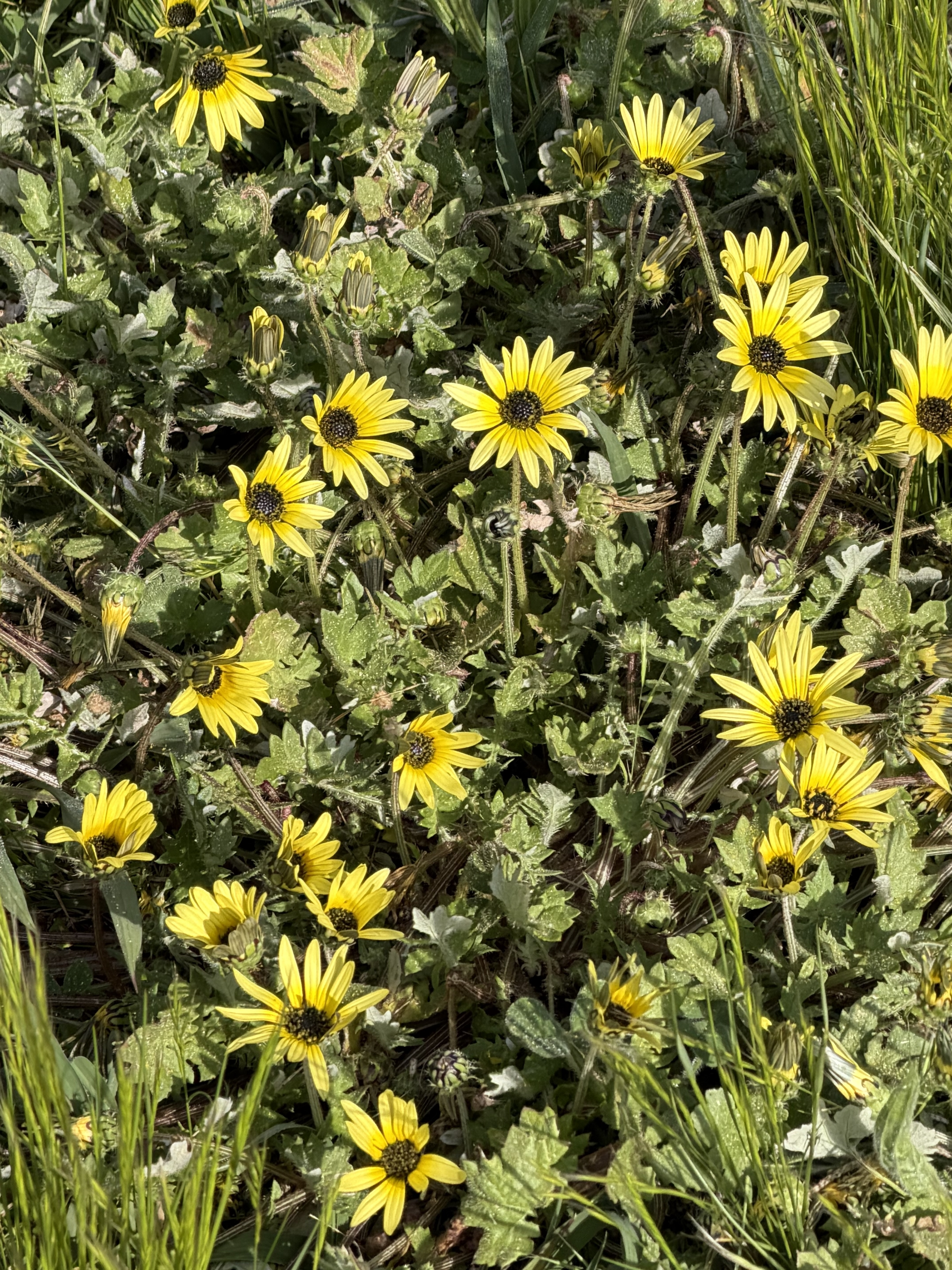
I’ve been away for the best part of a week. On my return, I was greeted by a blanket of yellow daisy-like flowers in the reserve across the road. My first reaction was that they looked quite pretty, but of course a plant springing up in such numbers points to a weed infestation. A quick Google search informed me that I was looking at Capeweed. While we consider it a weed here in Australia in South African, it is a pretty little native wild flower by the name of Arctotheca calendula. The name Capeweed alludes the Cape of Good Hope.

A weed is simply an unwanted plant growing in the wrong place. Some weeds, of course, are much worse for the environment than others, especially those that take moisture and nutrients away from neighbouring plants or displace natives. However, even weeds have their place. Capeweed often grows where the soil has been disturbed, quite possibly by the foot traffic of us dog owners in the area. For now, it covers patches of bare ground and where grass used to be, though it will die back in summer. Our four-footed friends may also carry its seeds further afield. Yes, it indicates an imbalance in that particular ecosystem, but that is hardly surprising in a built-up urban area.

Some weeds have useful functions, such as dandelions, which can be used in salads or made into tea or a caffeine-free coffee substitute. Mint is another example of a plant that can be useful in cooking but can take over a garden in no time, becoming a pesky weed. I have spent many a day pulling unwanted mint from my garden even though I love mint tea.

I am lucky that I don’t have to deal with Capeweed in my garden. It can be difficult to pull out because of its deep taproot. If the root breaks, the plant soon returns. But across the road, I can admire the yellow flowers and be happy for the bees and the young girls who sit and make daisy chains. Perhaps, like beauty, a weed is in the eye of the beholder.

Floriade and Friendship

Many a weekend is spent on housework and chores. That’s a fact of life for those of us who work full-time. But there’s more to life than dishes and socks. Weekends also need to include recreational activities to recharge us.

This week my dear friend Heidi announced she would come to visit. We live about 110 km from each other but even with this relatively short distance in Australian terms, we don’t see each other often. I suggested going to Floriade, a Canberran institution which is held every year in September. She readily agreed.

Floriade is a celebration of spring held at Commonwealth Park each year. An overall theme is selected for the various garden bed designs. This year Floriade features 12 large garden beds highlighting Australian Scientists through the contribution they made to a scientific field. The garden bed themes have names such as Molecular Structure, Spectrum and Petri Dish. By carefully observing the design of each bed, the theme presents itself. My favourites were the double helix for DNA and the Atom.

While massed tulips are the main attraction, there are many varieties of flowers in an assortment of colours. There are Pansies, Chrysanthemums, Hyacinths and Violas to name but a few. Each display is painstakingly planted to represent the facets of science it celebrates. It can be difficult to discern the images portrayed from ground level but when viewed from above, the images become clear.

I suggested going on the Ferris Wheel to get a better view. After a long wait, we clambered into a swinging carriage that was to take us up for a better view. From above, it was much easier to discern the themes. It was very windy at the top and we rocked from side to side which made taking pictures difficult. Our best photos came from when we stopped half way up.

Heidi and I had a wonderful time exploring the gardens. We were mesmerised by the variety of colours of the flowers we encountered. Black Pansies and deep purple hyacinths! We had never seen either of these. We marvelled at the ingenuity of the of the garden bed designers.

While the flowers occupied the centre of attention, we still had time to catch up with each other’s lives. We are empty nesters; our children flapping their fledgling wings. We talked about our plans for retirement, the joys of having a dog, our fears for future generations.

There is immense comfort in a friendship that has lasted forty years. Surprisingly, in all that time, we have only lived in the same town for roughly two years. Yet like tulips at the Floriade, our friendship has returned season after season, surprising us with vivid palettes of colour and the patina that the years provide.