The microclimates of different suburbs are most recognisable at this time of year. In some places, the trees are only just moving from budding to flowering, while in others the open blossoms are already wind-blown and slowly moving to the next part of their cycle. Blink and you are likely to miss it.
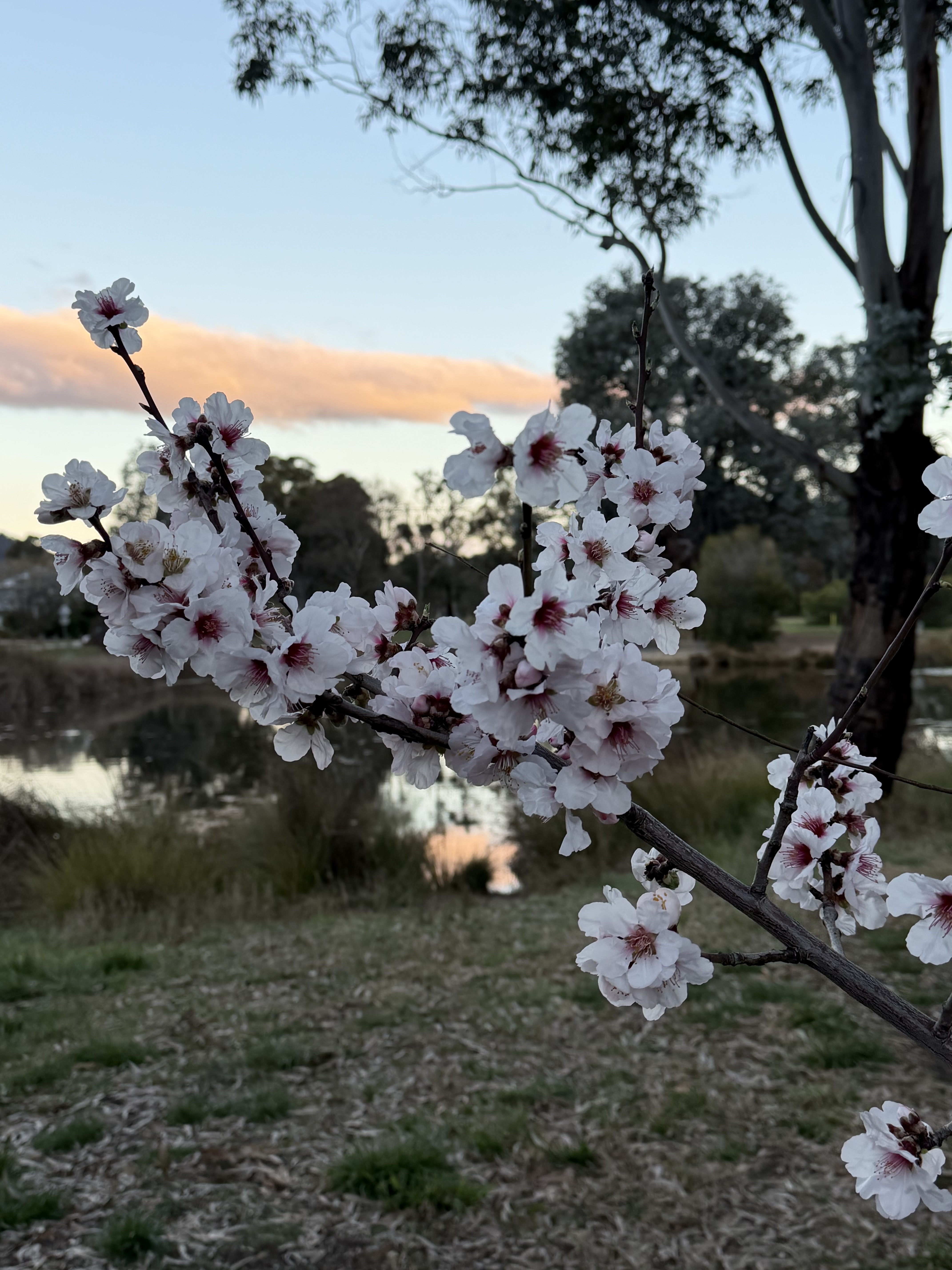
One morning a fortnight ago, I was delighted to come across a naturalised fruit tree on my dog-walking path. From its pale blossoms and distinctive magenta centres, it is most likely an almond tree. In the few years that I have been here, the tree has not grown much. Yet every spring, it puts on a magnificent show for all who walk past it. On a whim, I took a photo of the blossoms and sent it to my cousin, for whom the season is also changing. His world is moving towards the cool of autumn.
This morning, as I walked the dog, I stopped at the tree to have another look. I was surprised to see that many of the flowers had dropped and the tree no longer looked as glorious as it had. All in the space of two weeks. It made me think of the changes we all go through, hardly noticeable from day to day until we look in the mirror and realise how much the person looking back has changed. Viewed through the lens of the seasons, this makes perfect sense. Why should we be surprised when we, too, are part of nature’s great cycle? Perhaps the scraggly little tree had not lost its glory at all. It was simply moving into its next season, as we all are.
We were a group of strangers walking silently through the Banksia garden at the Canberra Botanical Gardens. Tasked with following our hearts to the plants that drew us in, we spent half an hour exploring the area. We took photographs and made notes which would later lead into a nature journaling and painting session.
Our instructions were to be curious, examine our plant in detail and make notes about our observations. We were to include the date, time and weather information as well as any other data we could gather. While I loved the idea, my brain took a different turn and I began to think in metaphors and ponder the questions that came to mind.
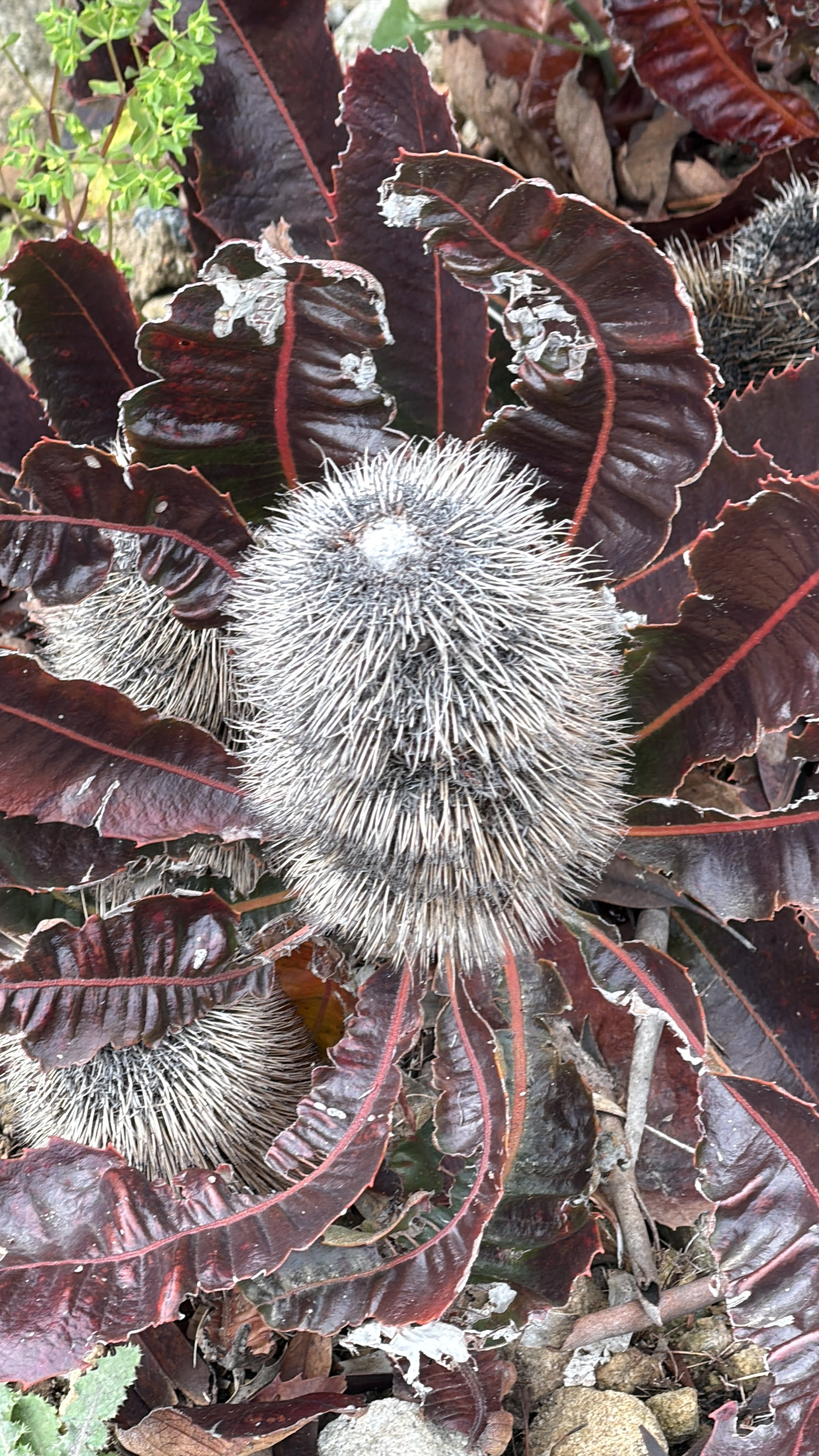
The plant that chose to reveal itself to me was a Banksia robur. This plant can tolerate a wide range of growing conditions, including swamps and sandy environments. I was drawn to the rhubarb coloured leaves at the bottom of the plant as well as the bright flowers at the top. As the flowers fade, the inflorescence, or cluster of hundreds of individual small flowers, turns grey before becoming the woody seed pods that we associate with banksias. It struck me that every stage of the flowering was not only beautiful in its own right but also contained within it the lifecycle of the plant.
What drew me in was the greying flower at the bottom of the plant with the brighter flowers above it. It reminded me of an upside down family tree. I identified strongly with this greying flower, nurturing the youthful generations above it. I called the flower Grandmother Banksia, in recognition of my recent transition to this stage of life. This greying flower exuded a beauty of its own; no longer radiant in its vivid colouring, yet soft and solid. There at the base of the shrub, it would eventually transform into a pod that held within it the possibility of rebirth after a future fire event released the seeds to germinate.
Looking at Grandmother Banksia, I felt at peace with the process of ageing. There is so much that I can still offer to the generations that come after me, as well as to my own generation. I may no longer attract bees with my sweet honey, but there is a strength and solidity that only age can reliably offer. This is my gift.
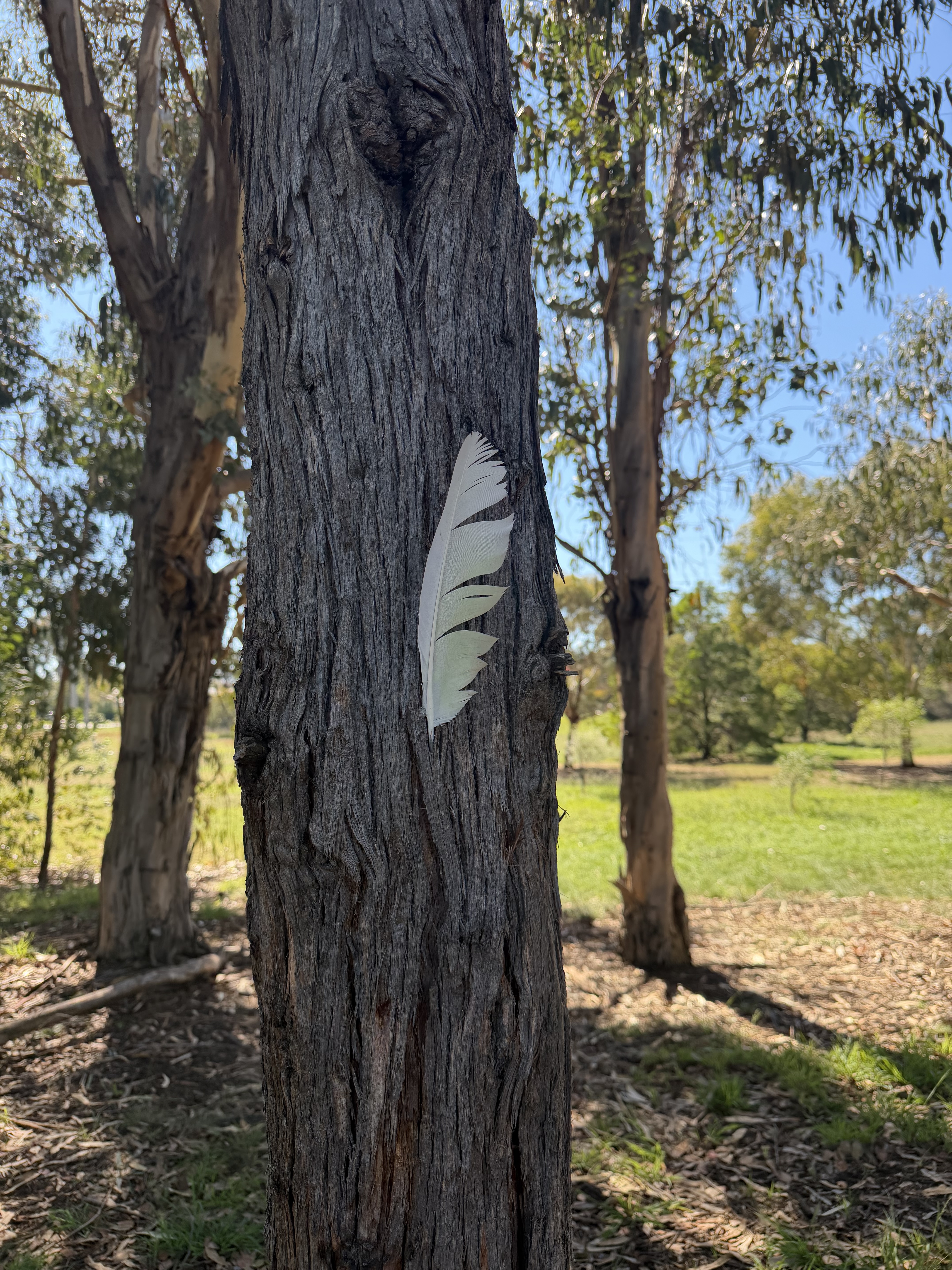
White cockatoo feathers adorn a row of trees on my daily walk. They sit slightly below shoulder height, which makes me think they were placed there by children, perhaps eight years old or older. They have intrigued me for a while now, appearing along the path and then closer to some fences, as though marking something only a few people can see.
I have asked several adults with children whether they knew anything about the feathers, but none of them had even noticed them, despite their prominence. Once I point them out, they too begin to see them everywhere, though they seem less curious about them than I am. Most agree they are probably part of a game some children are playing in the park.
I remember playing cowboys and Indians as a child. No doubt, if there had been cockatoo feathers to be found, I would have made them part of an Indian war path. Of course, I had no understanding then of cultural misappropriation or the colonial stories I was absorbing. I simply liked running around with my pop pistol, shooting into the air and pretending to be a cowboy. I even had cigarette shaped lollies that I pretended to smoke. Dear Lord!
I wonder what these children are playing. Are they marking the way to a clubhouse? Do the feathers carry meaning, like a white flag for peace? I doubt it. That feels like a very adult reading of the symbol. It is more likely to be something enchanting, a secret pathway leading somewhere only they know and understand. Perhaps the feathers are signs left for other players to follow, guiding them towards a place that looks ordinary to the rest of us but has been transformed entirely by imagination.
I like the idea that they are not only playing with other children but also with adults who cannot decipher the code. Could the feathers be territorial markers? This is our place. Do not trespass. Or perhaps they protect the magical world the children are about to enter, charms that keep adults and other dangerous creatures away. Then again, maybe it is simply a treasure hunt. Follow the feathers and you will find the prize.
For me, the real treasure lies in the imagination of the children who created the game. They are outside amongst trees and dirt and wind, inventing meaning from feathers and pathways. They are transforming an ordinary suburban park into another world entirely. There is something deeply hopeful in that in an age dominated by screens.
Getting children (and adults) outside allows for exploration of the natural world, which has a calming and centring influence. It improves fitness through walking, running and jumping, movements often missing from our sedentary lives. I believe it also feeds the imagination. Watching birds, finding feathers, collecting interesting sticks and leaves, all invite children to invent stories and find possibilities through play. Adults don’t do this often enough, even though research tells us imaginative play is crucial for cognitive and social development. And let’s not forget, imaginative play can bring immeasurable joy.
Walking in the park across the road is a daily ritual that offers both quietude and community. This suits me well. I have never been drawn to binary thinking, dividing everything into rigid oppositions. I need the nurture of nature and that of people. It is this interplay that holds my days together.
Some mornings I choose the short circuit, aware of time’s fiendish presence urging me to hurry so I can get to work on time. Yet the moment my feet touch the earth, I resist the urgency, keen to be present to whatever nature offers that day. It may be the sound of a dry stick breaking underfoot, the squawk of a parrot, or the swishing and swaying of stooping gum leaves.
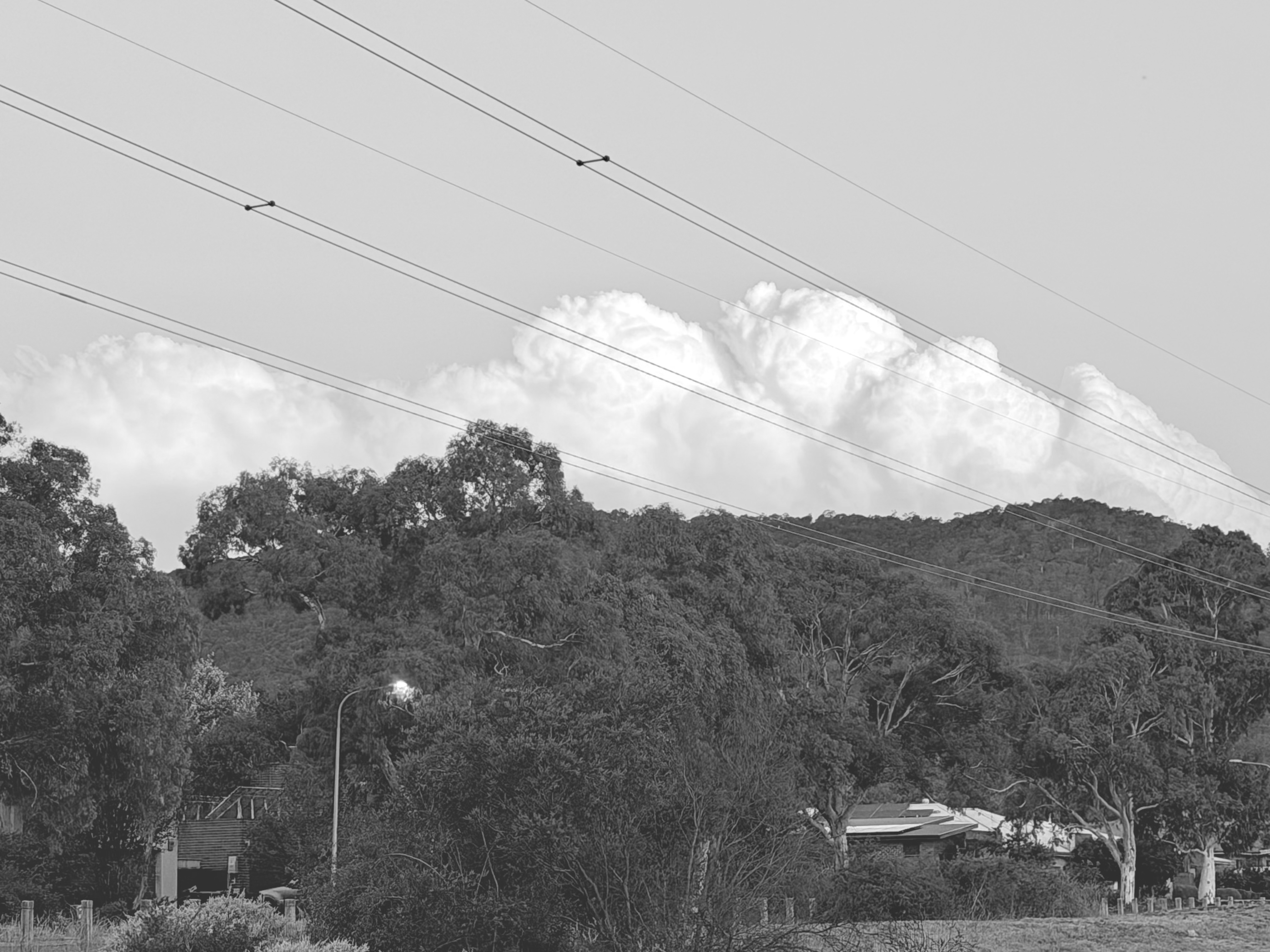
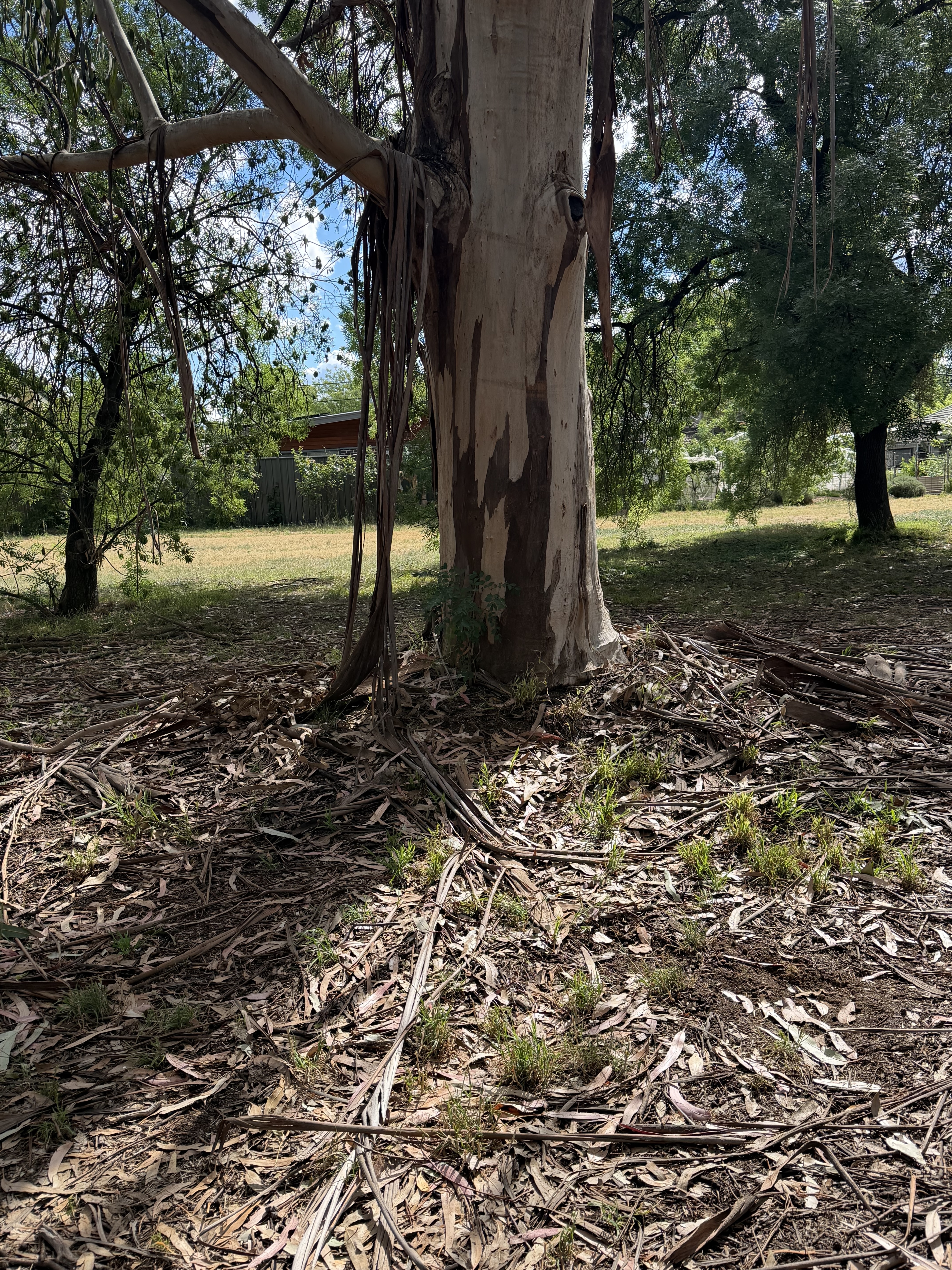
Autumn approaches and the weather shifts. The cool air on my face awakens me to the beauty of the moment. A long blade of bent grass, the smooth bark of blue gums, and Majura mountain framing the vista quicken my spirits. A slow breath in, a pause, a slow breath out, and I feel lighter, part of this landscape, not simply an observer.
In the distance, I see the wave of a hand, and a dog I recognise bounds towards me. I wave back to a fellow dog walker who has, over time, become a friend. Morning hellos have drawn me closer to the people who live in this community. We exchange a few words, learn each other’s names, tentatively invite one another in for a cup of tea, and a friendship forms. Friends introduce friends, and a small community expands to take in another kindred soul. I feel privileged to be included in their company.
As I near home, my thoughts turn to work and the day that awaits. I feel the urge to stop, to look back, to take one last glance at the pond, the trees, and the ever-present mountain. I feel held in its ambit, and it is this feeling I carry with me. It will guide me through the day. And if not the whole day… then at least until my first break.
I have lived away from Sydney longer than I ever lived in that city, yet it keeps pulling me back like the tide along its shores. After living elsewhere for twenty five years, I can still find my way around the inner suburbs. I know the backstreets and shortcuts and have even kept up with the new motorways. In contrast, I often get lost in Melbourne, where I grew up. But it isn’t the streets, or their familiarity, that draw me back to Sydney.
This Christmas, I was greeted by flowering frangipanis in a friend’s garden. Their heady, tropical fragrance carried me back to past summers, to easy, carefree days spent on the beach at Nielsen Park or Bronte, inhabiting what seemed like endless summers. We would lie under the generous shade of Morton Bay fig trees, admiring the large, eel like buttress roots that extend several metres from the trunk. These trees are gigantic, with canopies that can reach up to fifty metres. They offer the best escape from summer heat in Sydney, and their large, often gnarled branches allow for endless adventures for children.
Blooming jacarandas are another Sydney hallmark. Every student at Sydney University knew that when the jacaranda bloomed in the Quadrangle, exam time had arrived. It was a favourite place for graduation photos, and I have one of my husband standing beneath the old tree. That tree collapsed in 2016, but it has since been replaced by new jacarandas to continue the tradition.
Southern Sydney suburbs are known for their jacaranda plantings. In the 1950s, Sister Irene Haxton, who worked at the Jacaranda Hospital in Woolooware, gave jacaranda seedlings to new mothers, who planted them in their gardens. Now there are suburbs where almost every garden hosts a magnificent jacaranda blooming in November. The purple flowers form thick carpets along driveways, a stunning sight, even if not always so welcome to the people who live there.
One of my all-time favourite flowers, which grows easily in Sydney, is the gardenia. Like the frangipani, its heavy, sweet perfume is intoxicating. I bury my nose into one of its creamy flowers and swoon, giddy with the pure pleasure of its scent. Unfortunately, gardenias do not cope well with frost, which precludes them from gracing my small garden in Canberra.
I used to return regularly to Sydney for cultural events, concerts and exhibitions, fleeting overnight visits that rarely allowed time to notice the flora I once took for granted. Now I tend to return to see friends, people who have been there through life’s highs and lows. Sydney is where I met my husband, where my daughter was born, and where many loyal friendships were formed.
I have no desire to move back to Sydney, with its stop start traffic and planes roaring overhead. I am much more at home in the slower pace of Canberra. I love its distinct seasons, with vibrant autumns and bracing winters that sharpen my senses. So, it isn’t that I miss Sydney as much as the memories that come alive whenever I visit. Each street, each smell, each tree reminds me of the path I have trodden, the life I have lived, and the friends who have shaped me. Sydney will always be those heady, fecund years of my thirties, when I sowed seeds of love and friendship. Now, in my sixties, I can return and enjoy its full florescence.
Winds have cut through last week with an invisible scythe. The billabong is covered with dust and debris and smells putrid. Tiny flies swarm around the water’s edge. As I look at the devastation around me, I am surprised there are no trees down. Plenty have fallen in surrounding suburbs.
Leaf litter lies ankle deep, mixed with bark stripped clean from trunks. It is as if Mother Nature has sandblasted her children bare. How did young chicks in those swaying canopies survive wind gusts of 80 kilometres an hour? I’ve not heard a peep from them this morning.
The accompanying storms were short lived but the wind continues to rumble and roar like a road train. The little rain that came with it evaporated within hours, leaving the ground just as compacted and impenetrable as before. Any loose soil has been spun around and around like whirling dervishes in a trance. I am transfixed by the spectacle of dozens of whirly whirlies, small rotating whirlwinds forming across the denuded field.
My walk in town yesterday was miserable. The wind fired bullets of grit at my face and eyes. Its fury whipped up loose items on the ground and hurled them at unsuspecting passers-by. Women tacked their skirts as they leaned into the wind, slicing through the air. Children clung to their parents’ hands, wondering what might happen if they let go.
Back home, windows rattled and walls were buffeted. Further north, roofs and even lives were lost. I never felt any immediate danger, only awe at this force of nature completely out of our control. These past few days have been a reminder that nature is not something separate from us but an integral part of our daily lives. We need only to pay attention to it.
I’m back at work after two glorious months off. While I was still working diligently on my own projects, the days and weeks had a different rhythm. Often, it was difficult to tell which day was which, as the weeks rolled into each other. There’s a deliciousness about feeling that we are outside of time, but it also has its downsides. Like forgetting about business hours for example and realising that others work on a different set of assumptions about working hours.
Now that I am back in the Monday to Friday world of work, weekends have a special quality to them. I can sleep in, read a book, go to the market and walk my dog at a more leisurely pace than during the week. This morning, I took my dog Zoë to the local café, wrote in my journal, drank my latté and shared a freshly baked croissant with her. Bliss.
Walking back, I took my time and noticed the small things that go unnoticed when on a deadline. Like the slight breeze that caressed my bare arms ever so gently. Entering a copse of trees, I saw the shadow of the leaves dancing on the path beneath my feet. I stopped to watch this shimmer of shadow and light – a performance dedicated to the spectator who chose to notice its exquisite beauty.
Back home I performed all the mundane duties that accumulated during the week. I didn’t grumble or delay, I completed them with a sense of joy that comes from being truly present to miracle of life and all it has to offer. Or as Eckhart Tolle put it,’Always say ‘yes’ to the present moment… Surrender to what is.’
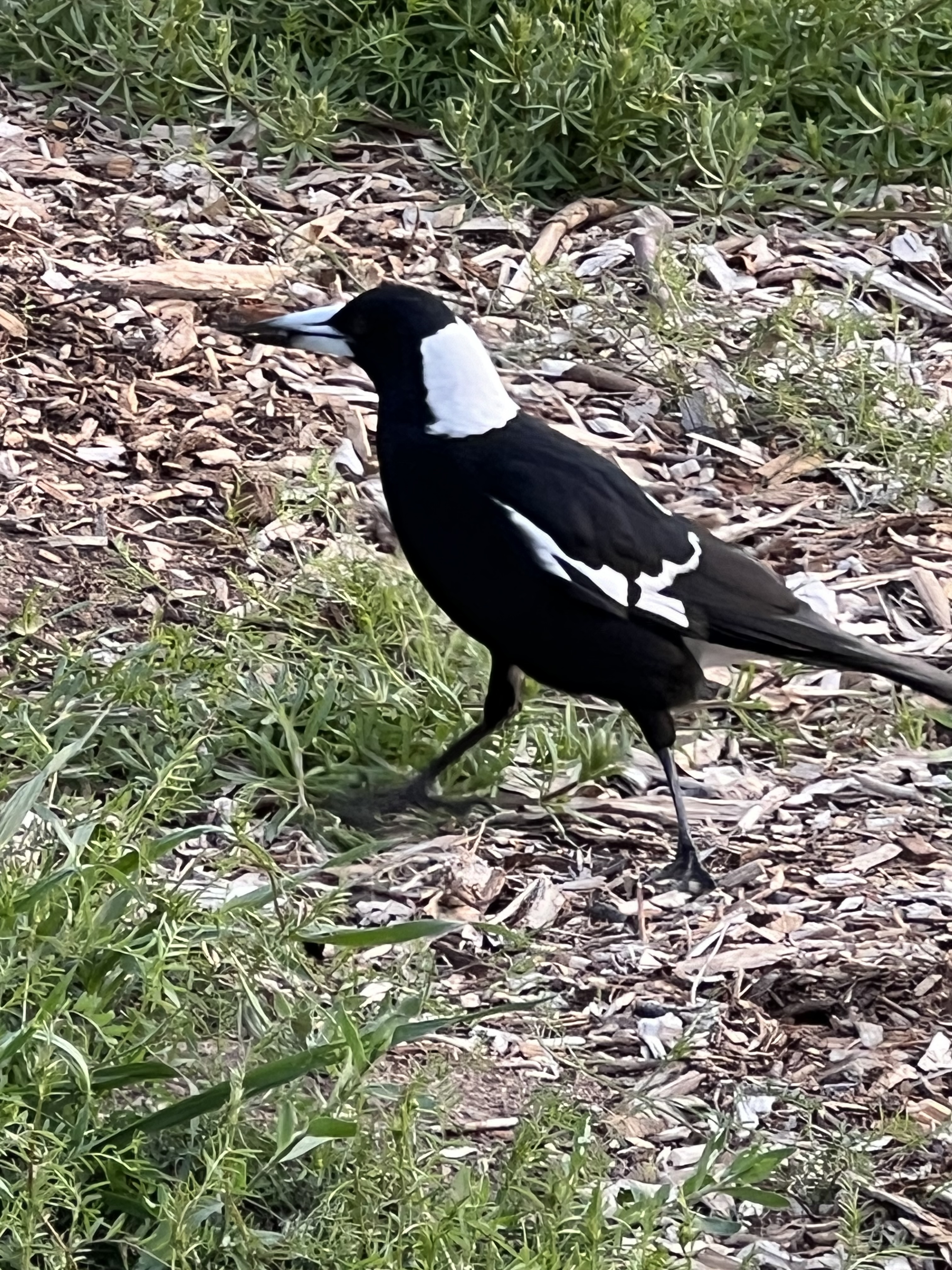
It’s magpie swooping season. In the past two weeks, I’ve been pecked on my head three times and my dog has had Northrop B-2 Spirit magpies stealth-bombing her from behind. Always from behind. She doesn’t move from my side now when we go near trees, and she looks up nervously at her sworn mortal enemies.
For nine months of the year, magpies are a joy in the neighbourhood. They warble in groups of two or three every morning and know us all by sight. They have excellent facial recognition, and recognise everyone in their patch, which is roughly the size of 30 suburban blocks. Magpies know exactly who is naughty or nice, and they pass on this information to other birds.
I always imagined their warble as a joyous expression of welcoming a new day or singing because they are happy. It turns out I was completely deluded. It takes a lot of energy to sing and warble, which is why most songbirds only do it when they are trying to attract a mate. Magpies, however, continue to sing each and every day and it turns out that it is purely to protect their territory. That lovely warble is hurtling expletives at other magpies within earshot. ‘Stay away or else!’
When I lived in the country, three magpies came to the bird feeder most mornings. They’d eat seeds I had put out for parrots, then throw their heads back in what I thought was appreciation and warbled. I referred to them as the three tenors. I must have watched too many Disney movies where all animals are anthropomorphised and given cutesy human traits, for it never occurred to me they were warding off other birds from their find.
Many years ago, I heard an ornithologist interviewed on ABC radio. He explained that 90% of magpies show no aggression at all and that it is only 10% of males who cause all the trouble during mating season. Tongue in cheek, he claimed Australia would be uninhabitable if all magpies swooped. After my last attack, I can only concur. Still, 10% of magpies are a sizable number. Of these aggressive males, half will attack only pedestrians and/or dogs, approximately 16% will attack only cyclists, 16% will go for posties and 18% will randomly attack anyone they come across. These figures are not made up; attacks have been extensively researched and quantified.
Magpies only ever swoop from behind and only if you are in the vicinity of a nest that has chicks in it. All attacks happen within 50 to 100m of a nest, so the sensible thing to do is to avoid the area once you’ve been swooped. When the chicks finally leave the nest, the male returns to being a placid bird until the following year. The best thing you can do in the meantime is to look at your attacker; a magpie won’t ever attack if it can see your face. The worst thing you can do is to run for your life, because then it will surely come after you. If you are on a bike, get off and walk the next 100m until you are in the clear. And yes, the cable ties on helmets work, not that it will stop the swooping, but at least it stops the frightening experience of a beak making repeated contact with the helmet.
For the next two months, I am avoiding the beautiful gums in my neighbourhood. Still, I walk the dog, greet any magpies I meet in a friendly tone and stay out of their territory. There will be time enough to enjoy a shady walk under the spotted gums once spring has passed. In the meantime, I remind myself that I am the intruder here.
I must have blinked and missed it. A week ago, night-time temperatures were in the single digits but today spring has arrived and daytime temps are in the twenties. Trees that seemed dormant a few days back are suddenly blooming. Not just one or two trees, but rows of trees along streets that appeared bare the last time I looked.
Officially, spring is at least another week away, yet Sydney basked in 27 degrees today. This past year has been the second warmest on record, but fortunately rainfall has been average, at the very least in the Eastern states. Luckily, because bushfire season is starting earlier each year and dry vegetation acts like kindling.
For the 16 years that we lived in the Blue Mountains, every spring brought with it that heart-in mouth feeling as fire trucks raced by. My daughter developed a keen sense of bushfires. She can smell one miles away. This is the inadvertent training young children get who live in fire prone areas. We saw the destruction around us with alarming regularity and knew several people who lost their homes. I never knew the full extent of the effect it had on me until I left.
Unfortunately, it is expected that we will have to endure more heatwaves, extreme conditions in summer and increasingly hazardous weather conditions earlier than ever before and not just in Australia. We will all have to learn mitigation tactics and put an end to being complacent about our impact on the planet. It is high time we stop talking about the weather and work together to actively improve the climate.

The moon is pregnant with celestial fire.* Her belly is full, round and luminous. I can’t stop looking up, admiring her ability to put on this heavenly show every twenty-nine days.
Yet the full moon messes with some people’s minds. Sleeplessness, sleepwalking, and feeling emotionally overwhelmed are some of the negative effects people can experience at this time of the month. It is no surprise that lunacy means madness; people believed the moon was its cause. As is often the case, there is a kernel of truth in this folklore. Recently, a link has been found between symptoms of bipolar disorder and the phases of the moon.
Luckily, I don’t suffer from any of these negative consequences. I am an unashamed Selenophile and could spend hours admiring the moon’s beauty. In ancient times, the Greeks venerated Selene as the moon Goddess. Her name means moon, light and brightness. Had I been born during the Antiquity, I would have worshipped her at every full moon, standing in a field with my hands raised to the heavens. Instead, I signal my adoration by tilting my head towards her belly and let awe course through my body with soothing calmness. I never tire of her beauty or mystique.
However, my fanciful flight into metaphor and personification only works in languages where nouns have no gender or where the moon per chance is considered feminine, such as in French. Had I been writing this piece in German, where the moon is masculine (der Mond), I would have imagined him as a lover, a sentinel or my nighttime companion who would inevitably leave me every twenty-nine days.
* Elegy Written in a Country Churchyard by Thomas Gray