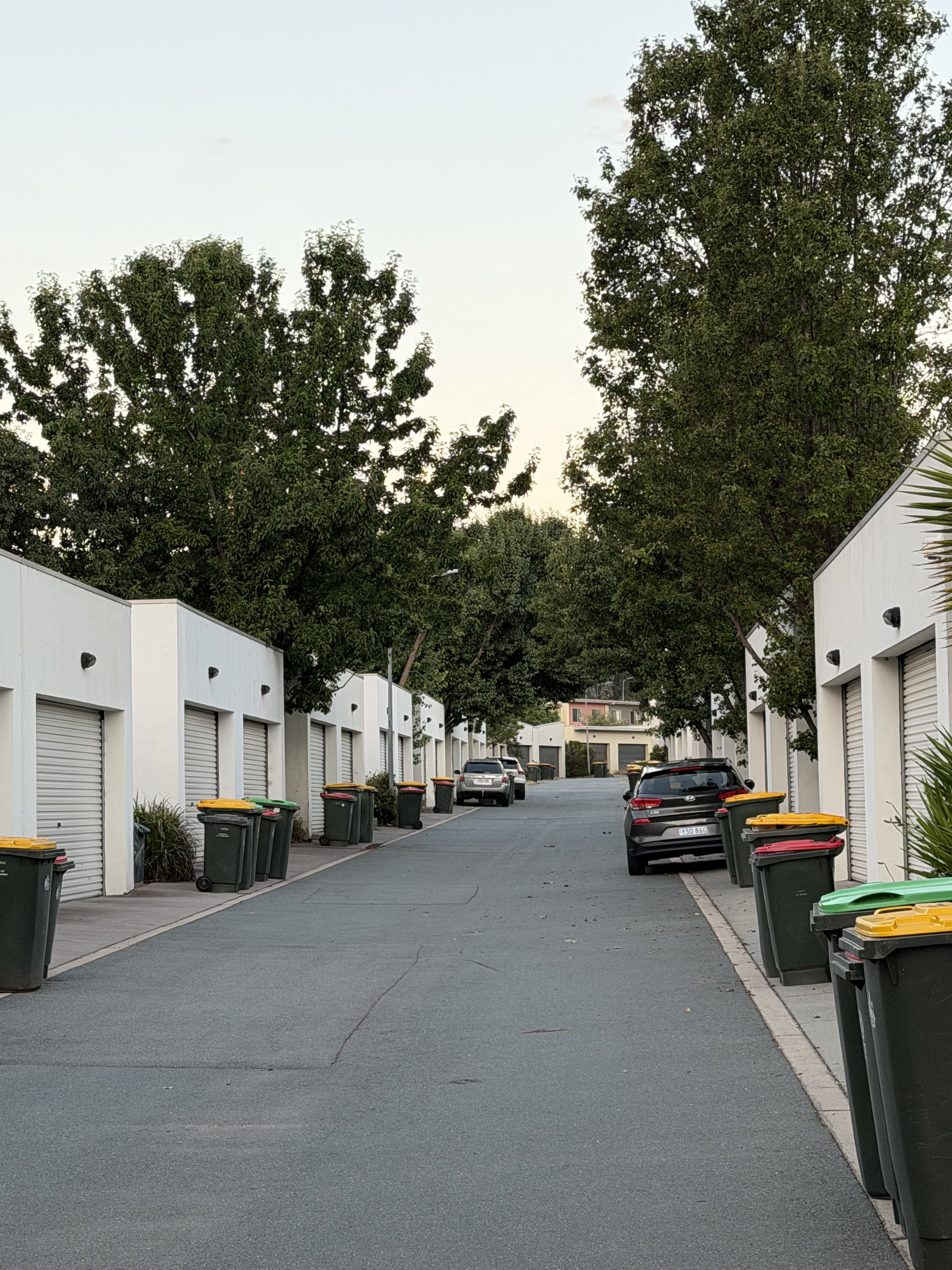
We had a little laneway gathering just before Christmas where a good many of neighbours came out and mingled, bringing food and drinks for everyone to enjoy. There were people I knew reasonably well but also neighbours I had only seen from a distance. The ones I knew were the dog owners whom I had met at the park or had been introduced to previously.
We blocked off the lane so kids and dogs could run up and down to their heart’s content. When an unexpected downpour threatened to end our gettogether, we simply moved into one of the garages and continued there until the rain stopped. We visited each other’s gardens to see what people had planted and admired some clever renovations. It was a convivial and relaxed celebration of the year we had traversed.
Most of the conversation was small talk, focusing on questions such as how long someone had lived in one of the two streets that abut the lane, and whether there were animals or children in the household. There were pets to adore and babies were passed around that we cooed over. About an hour into the festivities, a neighbour’s son initiated a conversation with me. He asked whether I had chosen a word for 2026. I admitted that I hadn’t thought about it and we continued to chat about a range of subjects. He moved off to talk to other people but I kept coming back to his question and began to wonder whether a single word may not be a better talisman than a new year’s resolution.
I thought about choosing a word for the next few days and realised that I had in fact done something similar in the past. The difference was that I always chose three to five things to focus on and unsurprisingly, I’d forget by February. The only time I remembered was one year when my phrase was ‘Just do it’ and this was ruined for ever when Nike adopted it as their slogan. It doesn’t help to jump up and down and cry ‘I used it first!’
I tossed around quite a few words, synonyms for words, words that focused on intention and words that act as a charm. I remembered a bracelet I was given for Christmas years ago that had the word ‘fearless’ etched on the band. The colleague who gave it to me recognised that I was often acting out of fear and she wanted me to learn fearlessness.
I played around with this word but recognised that it wasn’t quite right for me. It is not so much an absence of fear that I need but the courage to face it. That’s how I came to my word for 2026.
I want to have the courage to speak up for myself and others, the courage to initiate instead of waiting, the courage to say no and the courage to say yes to what I want out of life. One word held lightly, to guide me through the year. Surely, that is enough.





 From Quill to Quote