Jars full of optimism

A lazy Sunday is doing what I want, when I want. Few are as perfect as today has been. After several nights of not sleeping well, I expected to feel drowsy and grumpy. As it turned out, I was wide awake when I finally emerged from my cocoon. After a glorious shower, I was ready to follow wherever the day decided to take me.

My friend Christine, who has been staying with me for the past week or so, suggested going to the Knox café for a coffee. I needed a few things from the supermarket, and the dog was keen for a walk too. Perfect. Let’s go!

The coffee was exactly as I like it, and the croissant was fluffy but not too buttery. Feeling a tad guilty that I hadn’t shared any of it with the dog, I bought her some lamb neck rosettes as a special treat. Zoë thought this was a perfectly good substitute. She enjoyed her crunchy breakfast, which she devoured in less than a minute.

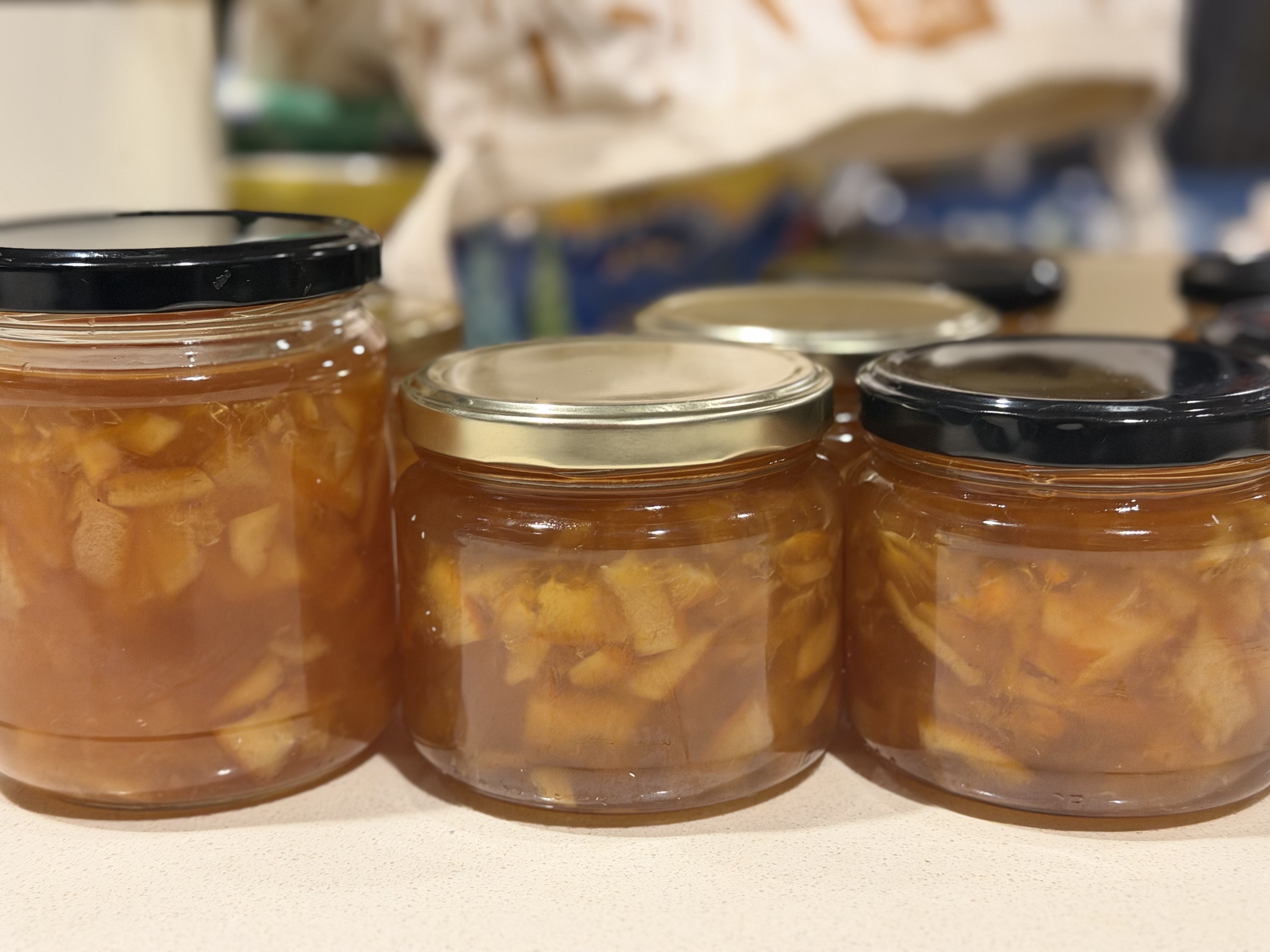
Back home, I decided to continue with my marmalade making adventure. I had sliced the oranges and cooked them until softened the day before. Today was the time to add the sugar and get it to set. I let it cook for longer than suggested and eventually, after several attempts at the cold plate test, I figured the marmalade had reached setting point. With the jars already sterilised, the business of pouring the marmalade began. The batch produced 24 full jars. Perfect for Christmas!

After spending a couple of lazy hours reading Simone Abbot’s newly published novel Eudaimania, I ambled over to visit my friend Anthea across the road. A jar of marmalade in hand, I was welcomed with a cup of tea, cheese and biscuits, and other delights. Our dogs have their own little friendship and settled into a companionable snooze. Meanwhile, we chatted, laughed, told stories and whiled away the afternoon. Just perfect.

A short walk with the dog, and home we wandered. I read more of Eudaimania and reheated the mushroom risotto from yesterday. No cooking required. The light is now fading, and I am in the company of my favourite group of writers from the London Writers’ Salon, the ‘renegade’ group that meets on weekends. We have been writing in each other’s company for years now and have developed a strong bond. Whenever I write with them, I feel part of a worldwide community of writers. It is a perfect way to finish my day.

But wait. The marmalade. It is still quite runny. A quick Google search tells me that I should leave it for 24 to 48 hours to set. I can’t remember it ever taking that long. A sinking feeling comes over me. I may have to reboil the lot.

It is the end of the day, and I am ready to discard my rose coloured glasses. I take solace in the late, great W. C. Fields: “If at first you don’t succeed, try, try again. Then quit. There’s no point in being a damn fool about it.” It is time to hit the sack.
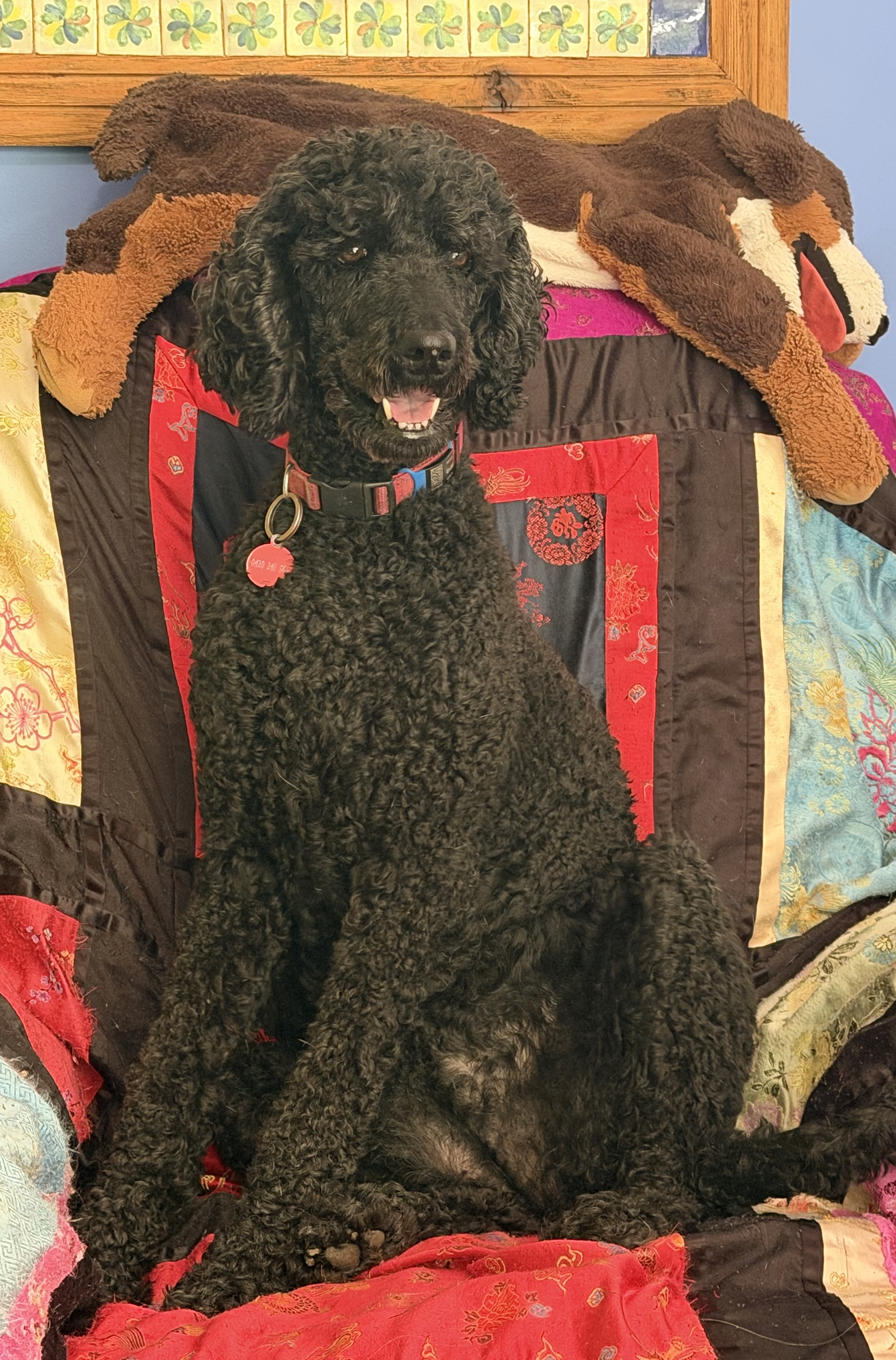
Zoë at Anthea’s
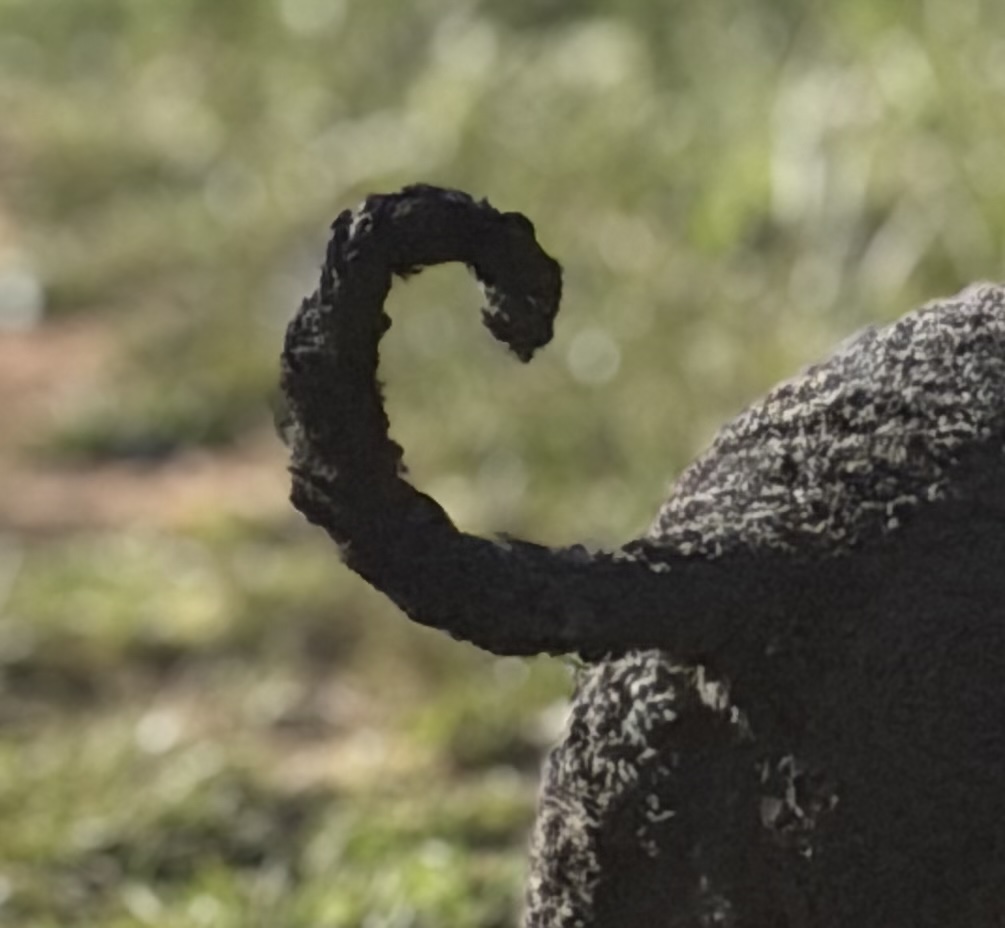
A tale of two tails

On my daily dog walk, I watch a motley crew of dogs enjoying their outing. They always make me smile, if not laugh at their antics. Today, though, I found myself fixated on their medley of tails.

There was a border collie with its long, sweeping brush of a tail and white tip, then a greyhound with its sleek, elegant tail, perfectly suited to running at speed. A schnauzer joined us, its tail thick at the root and pointing slightly upward. The toy poodle that followed had a similarly upward-curving tail, topped with a pom-pom. But it was the sight of a boxer with its tapered tail that made me realise why I was finding the subject so interesting and amusing. Until about twenty years ago, many of the dogs I saw would have had their tails docked. When I bought our first poodle in 1996, its tail was docked too.

Until 2004, it was unusual to see breeds such as corgis, cocker spaniels, boxers or rottweilers with their full tails. Some breed standards treated an undocked tail as a fault. That began to change when Australia’s states and territories introduced bans on cosmetic tail docking, with the practice banned nationwide by 2004. In the United States, docking remains not only accepted but encouraged by the American Kennel Club for many breeds. It is estimated that up to 1,000,000 dogs get their tails docked per annum in the States.

The practice can be traced to seventeenth- and eighteenth-century England. Some people believed that shortening a dog’s tail would strengthen its back and increase its speed. Another explanation links docking to dog taxes. A docked tail could identify a working dog, which was exempt from the tax. Even after the tax was repealed in 1796, the practice of docking remained.

A dog’s tail is an extension of its spine, made up of a series of flexible vertebrae. Tails help dogs balance when making sharp turns, act as rudders when swimming, and communicate with people and other dogs. We use the idiom ‘left with his tail between his legs’ to describe someone who feels humiliated after a reprimand, much as a dog might. A dog’s tail can signal that it is relaxed or friendly, or that it is agitated or fearful. There are many subtleties in this communication.

When I’m walking my dog, I find myself reading the body language of the dogs we meet. I realise that beside a dog’s stance, raised fur or ear position, I get much of my information from its tail. A happy wag, a relaxed neutral tail or an inquisitive tail held high all offer clues about how a dog might be feeling and whether or not I ought to approach it.

If beauty is in the eyes of the beholder, the exuberant abundance of dog tails also gives us the chance to appreciate nature’s wonderful quirks. I just wish our ancestors hadn’t lost theirs 25,000,000 years ago.

Fear of the Empty Page

There are times when nothing comes to mind to write about. The standard advice is to write anyway. Write whatever comes to mind, in a stream of consciousness. I once gave that advice to a group of ten to twelve-year-old students as they sat looking at the blank pages of their exercise books. I wanted them to keep a journal at school, simply to get used to putting pen to paper without judgment or fear of being marked incorrect.

My students did not grow up seeing people write. Their parents texted on their phones or wrote shopping lists, but not much else. I suppose that is true for most of us. We no longer write letters, and our emails tend to be written at work. Unless a person is studying or loves writing for its own sake, there is little need to compose longer pieces of text.

‘I don’t know what to write about,’ was a common cry. There was no point in telling my students they could write about anything, because that was too broad. Eventually, I told them they could recount something that had happened to them or describe what was happening around them. As you may guess, this led to some boring writing.

I persisted, and so did they. When they were writing, so was I. Their stamina grew, and eventually they could write for fifteen minutes and fill half a page. Sure, there were spelling mistakes, syntax errors and paragraphs that did not make much sense, but they were writing. The fear of the empty page receded. I began to see sensory descriptions, direct speech, and even some little stories of their own. I initialled and dated their entries, and kept my promise never to correct them.

Of course, this wasn’t their writing lesson for the day. That happened at another time, with an altogether different purpose. But in the long run, the two writing sessions influenced each other. Free writing improved their stamina, and the formal lessons improved their technical skills. They learnt what all writers know: the craft of writing is a muscle that needs regular exercise.