Softening the edges

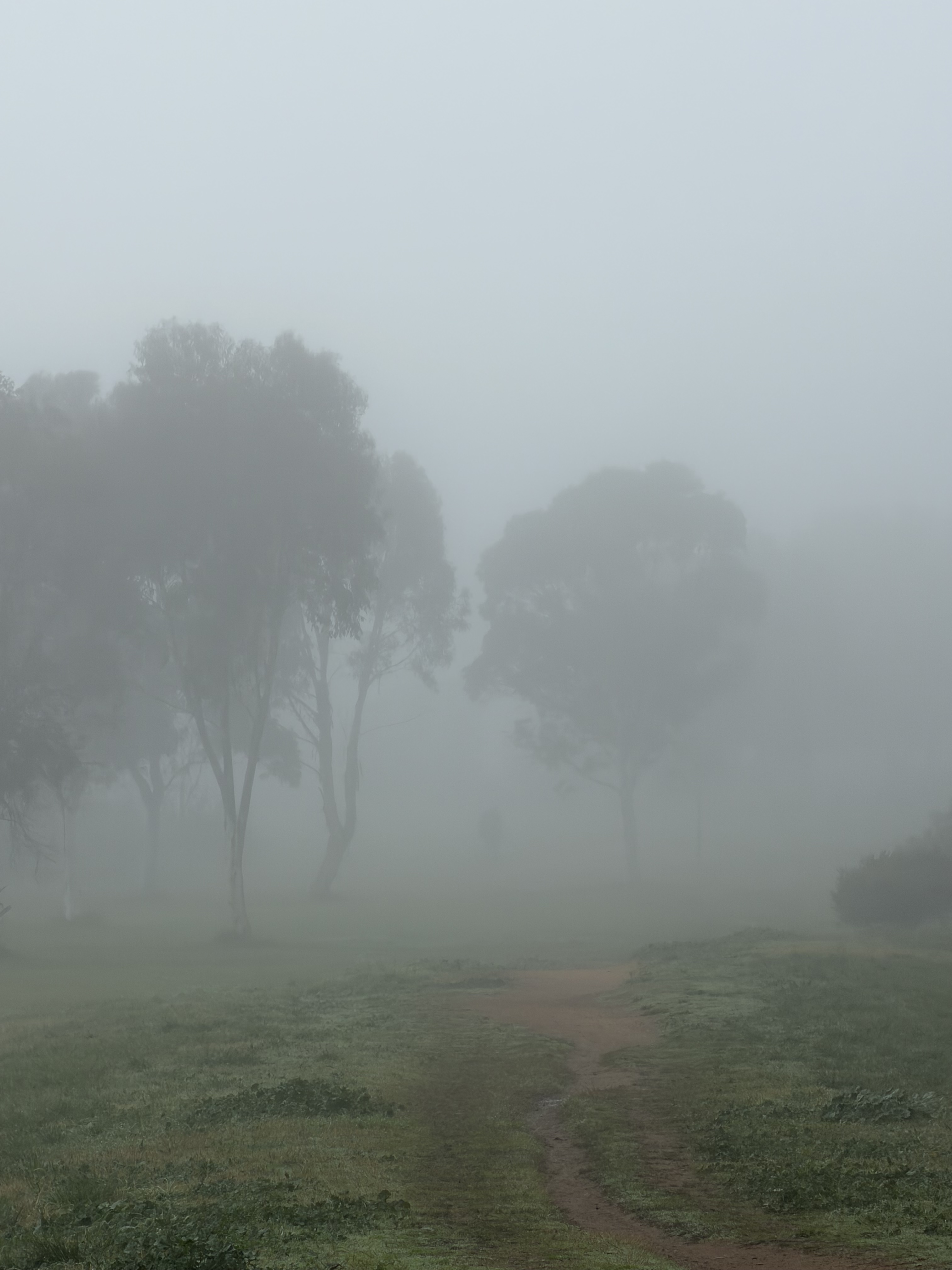
I am drawn to the fog the way some people are to the sun. I revel in it, rejoice in its arrival and gladly slip into its cloak. It is a snug garment to wear that allows me to blend and fade, removing my sharp edges and those of the world around me.

When I walk in fog, I feel I am the subject of a drawing where a skilled artist using only black and white pastels renders the scene. My figure in the distance is finger smudged and blends with the light grey surrounds. It is hard to make out the shapes but they are there. Look and you will find them.

A copse of trees takes on a mystique, sensual and unattainable. Their beauty can only be captured from the distance, come too close and the fog dissipates leaving only a group of ordinary trees. Move back into the distance and the intrigue returns.

For some years I worked at Blackheath, a village atop the Blue Mountains. Fog accompanied our days in both summer and winter. You never knew when it would appear. Many a time I stood in the fog shrouded playground knowing that somewhere beyond the white sheet that enveloped me, were over 300 children. I reasoned they would find me should they need me.

It was at Blackheath that I saw a phenomenon that I could only describe as poetry come alive. I watched the fog roll in from the valley, slowly making its way up the main street. It rolled like a haybale, gathering up people, cars, buildings until I too was swallowed up in this rolling ball. It reminded me of the line in T.S. Elliot’s poem The Love Song of J. Alfred Prufrock where he describes The yellow fog that rubs its back upon the window-panes. The fog curled and settled on every object in its way.

While I know that this is a very romantic view of fog, I acknowledge the hazards it brings. Generally, I don’t mind driving in fog but once, when driving in Canada on the other side of the road in mid-winter, I lost my nerve and had pull over. Logging trucks rattled past on that purblind night and fear clouded my judgement just as the fog had clouded the alpine road ahead. My daughter took over and steered us safely to our destination, a picturesque log cabin blanketed in snow.

Back in Australia, fog is a friendly companion on winter mornings. I enjoy getting lost within it, the anonymity it brings and the delight in discovering a dog on the path that was invisible only a few seconds ago. I enjoy the softness it brings to an otherwise bleak morning. Like those trees in the distance, some things are at their most beautiful when not fully revealed.
Three Women, Some Paper and Sheepdog Whiskey

I never imagined I would become interested in arts and crafts. Sure, I may do a mosaic or two, knit a jumper or a baby blanket, but that doesn’t make me someone who would join a crafting group. God forbid I turn into a granny who foists pastel coloured booties onto babies! That’s about as likely to happen as getting a blue rinse.

But the truth is that I do at times dabble in these dark arts. I have been known to crochet bits and pieces at times (I’m never satisfied with the product), and I have even tried painting with watercolours (even less satisfied with the product). Hypercritical and lacking in skills, I get embarrassed and easily discouraged. So, when a friend asked me to come to a ‘craft afternoon’ at her place, I was both cringing yet eager to spend an afternoon with three close female friends.

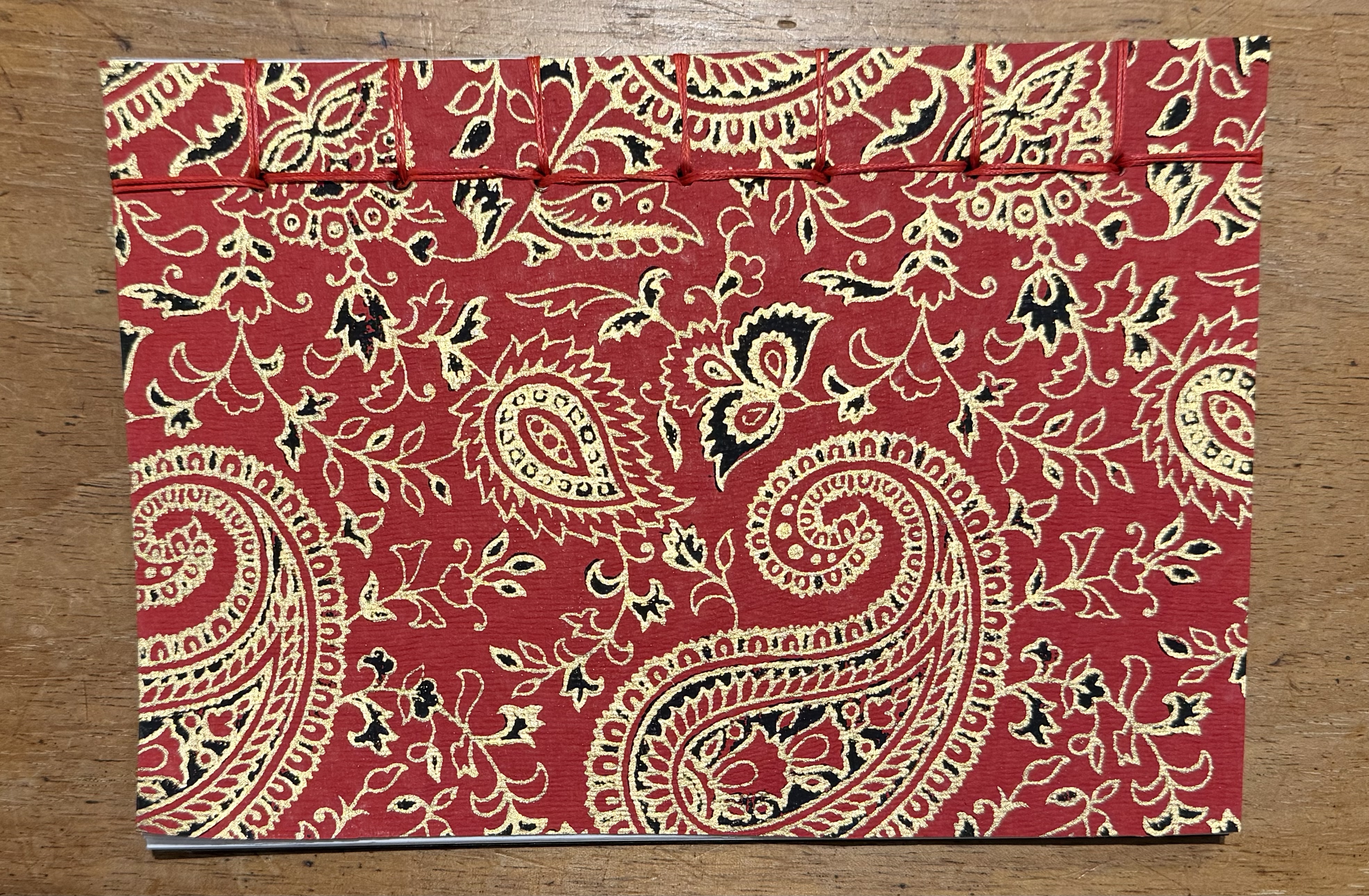
Some months ago, three of us had attended a Japanese bookbinding course together. The process is relatively simple; choose some nice paper for your cover, mark where the holes need to be, punch the holes and then sew the papers together, starting from the centre of your ‘book’. I enjoyed the course and bought some basic equipment to practice the craft. Did I make any more booklets after the course? Of course not! This craft afternoon was a chance to redeem myself.

For the first hour or so, we ate lunch and chatted. It felt as if no-one was prepared to jump in and start. Eventually, I brought out my project and each of us began to show each other what we intended to do. What struck me was the generosity of the afternoon. We admired each other’s work, offered suggestions and helped where we could. I was given some Korean paper to use for one of my booklets, we played with some fountain pens and inks, and picked up ideas from each other for projects we may like to attempt in the future. It wasn’t at all the way I imagined a craft afternoon to be with pumpkin scones and billy tea. Instead, I was introduced to Sheepdog, a peanut butter whiskey that went down a treat.

The final verdict? Don’t disparage things you haven’t tried before and a shot or three of whiskey softens the contours of your work. Best of all, it quietens that pesky inner critic.

Moments of Grace

Why does beauty matter to me? From an early age, even in the least favourable situations, I would attempt to create an aesthetic with toys, placing them in a pleasing order, putting those I considered beautiful at the front while relegating others further back. I had no words for this, only an inner compulsion to create something that made me come alive. Once I was happy with my arrangement, I cared for it in a way that I didn’t care for the individual items when they were simply strewn around.

My first introduction to aesthetics was through the church. Old Catholic churches, in particular, are rich in colour, symbolism and beauty. They embody the pre-Enlightenment conflation of truth and beauty: the belief that true beauty is God-like and that it is our duty to strive for and emulate the beauty found in God. As a child, I loved the stained-glass windows, the light they cast across the floors, the gold chalice, the frescoes and the intricate carvings on the sides of the pews. Walking into a church took my breath away. It struck me with awe and allowed me to access a place beyond the mundane realities of everyday existence.

I feel something akin to this when I walk into an art gallery or a well-tended garden. Even seeing an unusual or brightly coloured bird brings with it a sensation of grace descending upon me through the simple act of witnessing beauty. It is as if my very being yearns for these aesthetic experiences so that I can feel truly alive. They remind me that there is more to life than being an economic entity whose sole role is productivity.

Listening to live music also has this effect. Last Friday, I felt elated as I listened to Salut Baroque perform a selection of pieces they had collated under the title Bohemian Rhapsody. The music reverberated through my body, making it feel lighter. A series of tingles travelled up my spine and, over the course of the concert, I entered a state of total relaxation. Transformative is the word that comes to mind to describe the effect of the music, and the feeling of wellbeing stayed with me throughout the night.

To feel whole, to thrive and to be content, I need beauty in my life. Daily encounters with beauty provide nourishment for my soul in the same way that food nourishes my body. It provides inspiration much as breath sustains life. I simply cannot imagine my life without it.

Very superstitious

My Hungarian mother was a superstitious woman who made sure I could decipher the various spirit signs, even as a young child. It was impossible to escape them and they followed me everywhere, contributing to my hypervigilance. Even though I no longer believe what these signs tell me, I will still often name them when I come across them. Then, I tell myself that there are perfectly simple explanations for the phenomenon. I wonder how many of these were part of your childhood?

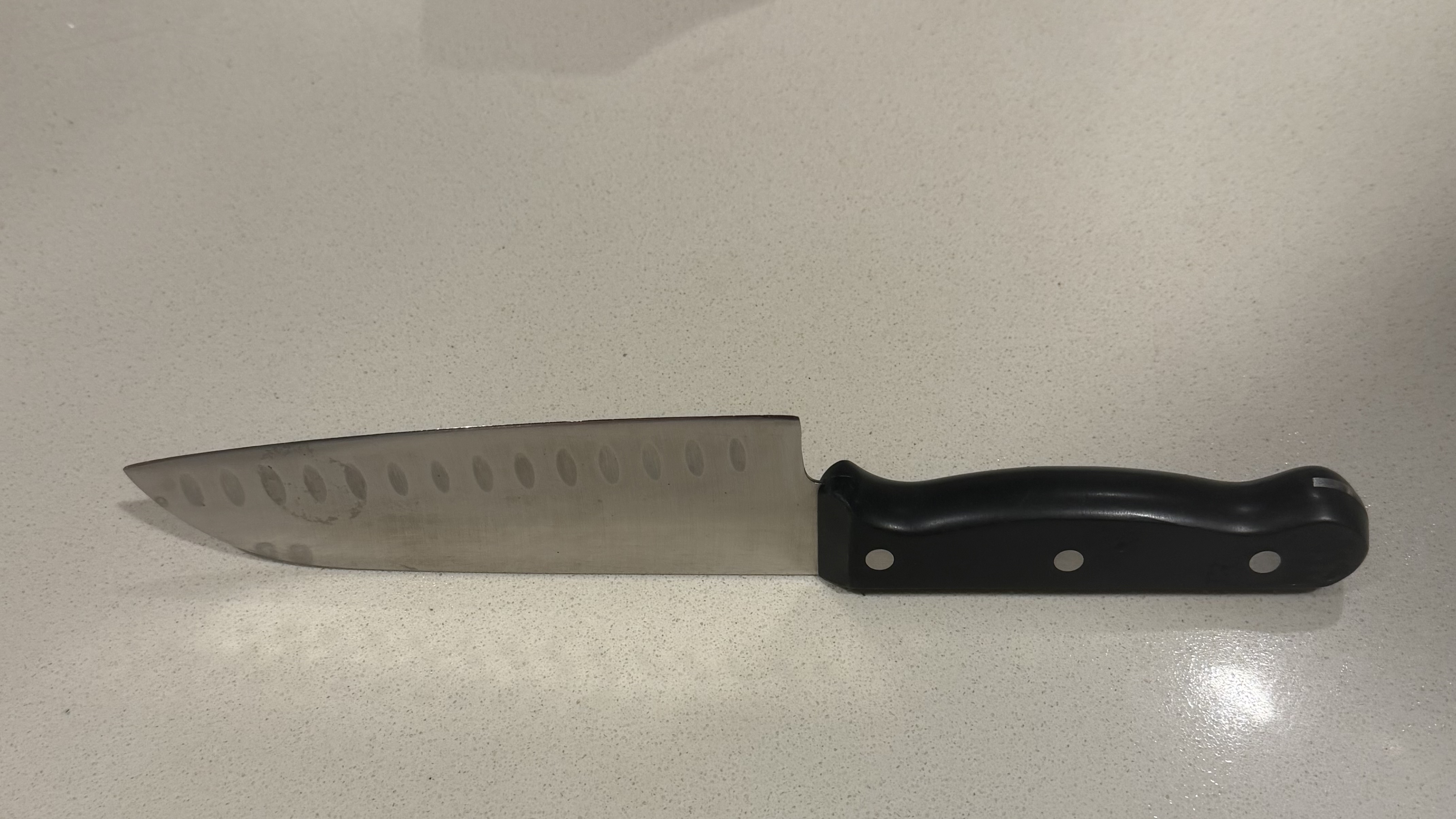
  • A knife that lands with the blade facing up. Sure-fire sign that there will be an argument. This one had a 99% chance of occurring. Was my mother ready to start the fight the moment my father came home to prove the sign right? There were lots of ‘I told you sos,’ afterwards. Hard to dismiss as a child.
  • Light bouncing off glass onto the wall or ceiling. An imminent death. I was never, ever allowed to play with light or look for rainbows on the walls. This one scared me to death!
  • Spilling salt. I still throw a bit of salt over my left shoulder just to make sure I ward of bad luck. Why for goodness sake?
  • Eating lentils on the first day of the year to attract money. The lentils are like small coins and will bring you prosperity. (I’m still waiting…)
  • Flickering candles signify the dead giving you advice on a particularly tricky decision. This one spooked me every time!
  • Sweeping dirt out of the house rather than picking it up with a dustpan and brush will ensure you remain poor. Oh dear, I committed this mortal sin many a time as a teenager.
  • Sewing a button or anything on an item of clothing while wearing it will also doom the person to penury. I wonder whether royalty was aware of this rule when they were sewn into garments?
  • Crossing myself when I see dead animals on the road. (I admit, I haven’t been able to break this one!)
  • Melting a small piece of lead in a spoon and dropping it into cold water. This is usually done on New Year’s Eve but my mother would try her luck at other times. The newly solidified shape has different meanings according to the shape and would lead to interpretations for the coming year. This one reminds me of reading tea leaves.
  • Bumping the funny bone means that guests are about to turn up. My experience of this has only been blinding pain.
  • A chimney sweep indicates good luck, but only if you quickly get a hold of a black button and turn it!
  • On Easter Monday, a woman/girl cannot leave the house until a male has come over and sprinkled some perfume on her head.
  • Stepping on the heel of someone’s shoe indicates that they will be coming to your wedding. I’ve had so many kids do this at school and none of them were invited to my wedding.

Then there are all the usual suspects, four-clovers (I find many), walking under a ladder, storks for new life, and garlic to ward off evil. Later, I my teenage years, my Indian friend added to the list the counting of Indian Myna birds. Here it goes: one for sorrow (which I change to solitude), two for joy, three for letter, four for boy, five for silver, six for gold, seven for a secret never to be told, eight for copper, nine for brass and ten for my exams to pass. And yes, I still count them!

The superstitions in our household had the function of keeping everyone alert, to look for danger and always be ready for a disastrous turn of events. I was always on edge, looking for threats whether they were there or not, and this was a heavy burden to place on an already traumatised child.

I eventually learned that knives are dangerous when you cut yourself on the blade but knives per se carry no evil intent. The constant arguments came from elsewhere. I now recognise that my mother’s superstitions were part of a broader attempt to make sense of a world she found frightening and unpredictable. She had survived a war, untold atrocities and men who were equally as damaged and unable to give her the security she needed. Yes, my mother was a difficult woman. At times she was cruel and vindictive, but she was also struggling with demons that none of us understood.