
The gift of friendship

‘Come and stay whenever you like,’ I tell my friends. And this week, I had the pleasure of four friends at my doorstep, each having come a long way to see me. I know these women from different times of my life and and their loyalty is astounding. I have moved hundreds of kilometres away but we still stay in touch.

They are all outstanding educators of one kind or another, yet I’m not sure they’d have much in common other than their teaching careers. I guess if they met, they would talk shop. However, I have a much deeper connection to each of them. I find a different side of me emerges in their company, not because I am trying to impress them, but because they speak to a part of my personality that resonates with theirs.

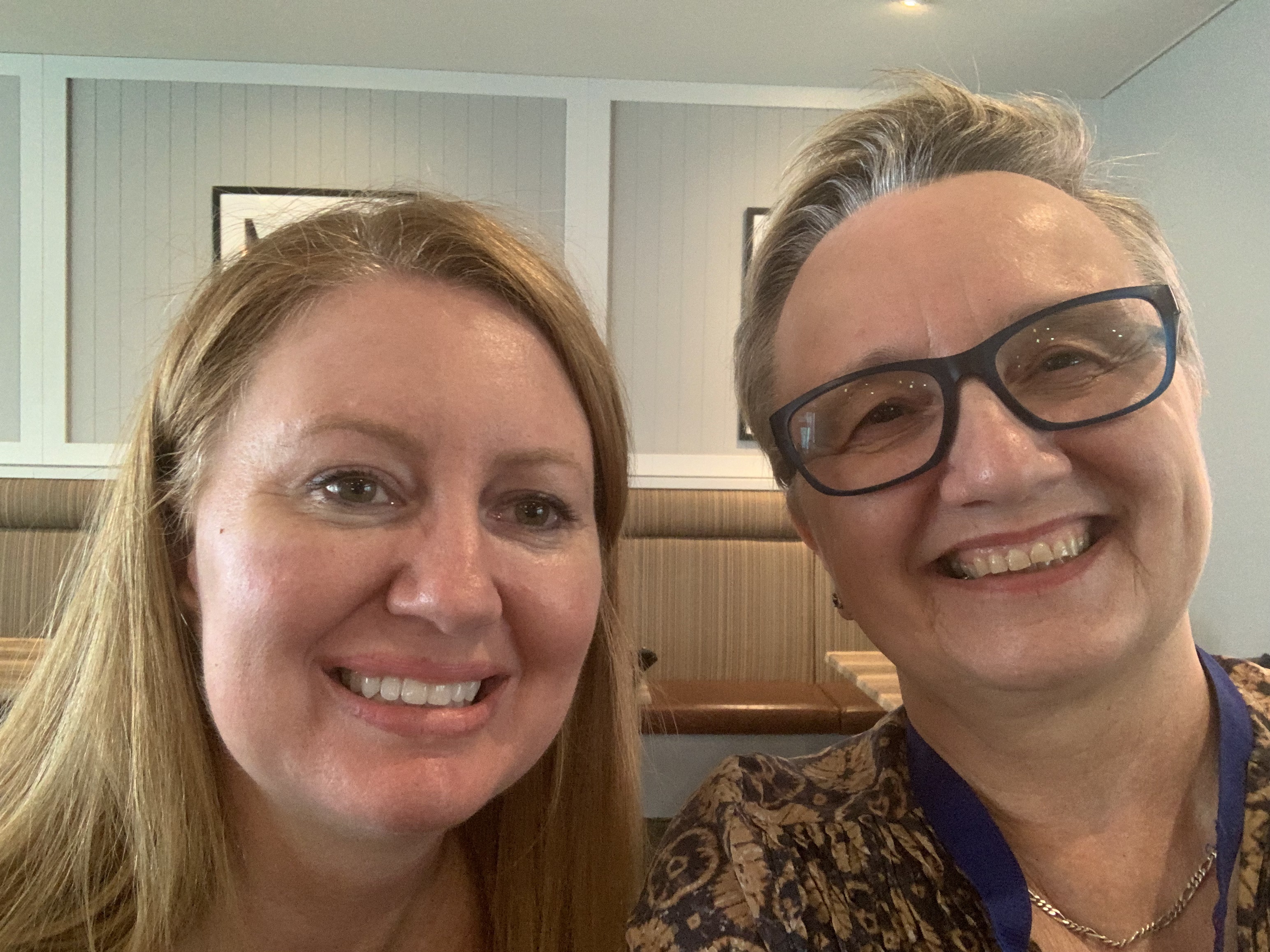
Michelle and her friend Claire’s visit brought out my rambunctious side. We could speak without a filter, mercilessly tease each other, drink gin, and laugh through the night without a care. There is something to be said for letting your hair down without worrying about the consequences when you know your friends have your back. Spending a night with them was like stepping into my carefree early twenties. Years and cares melted away. Yet they too have their share of hard times, but we can forget these for a while when we get together.

Lizzie was the next to arrive. I have known her for over twenty years, and she has been a loyal friend through jubilation and sorrow. Thousands of cups of tea have infused our friendship. Although her children are older than my daughter, we have shared our struggles and joys of motherhood, marriage and work life. I have always admired her loyalty to friends far and wide and her ability to find time to produce quality teaching resources, which she freely shares. There is also a deep spiritual side to Lizzie, which connects heart to heart. Her friendship has buoyed me over the years, and I feel blessed to be counted among the people she loves.

The last friends to visit were Kath, her husband, and their gorgeous Labrador, who simply wanted to play zoomies with my standard poodle. We don’t see each other that often anymore, but whenever we do, we feel nourished and affirmed by each other’s company. I worked with Kath for two or three short years, and they were the best years of my working life. She is thoughtful and generous, always inclusive, and gives the best hugs. Kath works harder than anyone I know and has made many personal sacrifices to run a high school with its fair share of complexities an hour and a half from where she lives. I have so much respect and admiration for her resilience, and I count myself lucky that she finds time to see me.

Seeing this many friends in a week is very unusual. As an introvert, I can get quite overwhelmed when I see too many people in quick succession. I was quite surprised that I didn’t feel drained at all. In part, this is because I have been on holidays, so I don’t have to juggle other commitments whilst having visitors. However, the other reason is that my friends have been so nurturing and aware of my needs that it hasn’t felt like hosting visitors at all. Each, in their own way, has filled my cup to the brim and beyond with love and warmth. My hope is that we can keep enjoying these precious times for many more years.

A bubbly legacy

For 20 years, I didn’t drink a drop. Then, out for dinner with a man who would grace my life for four short years, I succumbed to a glass of red. It was delicious. Tart, intense and astringent, I enjoyed every mouthful.

I have never been a heavy drinker. Admittedly, I went through episodes of binge drinking in my early twenties, but that was mainly to overcome social anxiety. Once inebriated, I took advantage of my impaired control and began to enjoy parties, rather than be the wallflower hanging out in the kitchen counting tiles. But that was a long time ago.

When I began to drink again, I would only do so at dinner and never at every dinner. Then Roger introduced me to the glass of champers on a Friday evening to celebrate the passing of another week. His philosophy was simple – celebrate if you have had a good week and celebrate if you made it through a tough one. Either way, you are a winner.

When he ‘shuffled off this mortal coil’, as he liked to quote, I was left with an unusually large glass vase filled to the brim with champagne corks. It was years’ worth of good and not so good weeks he had lived through, with and without me. I neither wanted to keep them, nor throw them away. In the end, I reached a compromise, took a photo of the full vase and kept perhaps 30 of the corks. They remind me of a life well-lived.

Now I carry on the tradition, at least most weeks. I can’t drink a bottle of bubbly on my own, but I can enjoy a piccolo, which is 200mL or almost two standard glasses. It is a perfect amount. I raise my glass and salute Roger, and the passing of another week. Cheers!

A capital fog

Canberra is located at the foothills of the Snowy Mountains, within the Great Dividing Range. Its altitude is 577m above sea level, which may not seem like much by South American standards where cities often sit above 1000m, but it is quite high compared to other cities in Australia and Europe. In fact, Canberra’s elevation is 168m above that of Zürich.

The elevation and the fact that it is a relatively sheltered valley near mountains, allows cooler air to sink and the warmer air to form a blanket above it, especially when there is little or no wind. These are perfect conditions for thick fog to occur. On average, there are around 20 heavily foggy days in winter.

I relish these foggy days which give the city a magical air. I love walking in it, not knowing what is in front or behind me, just focusing on one step at a time. I don’t even mind driving in it, although I admit that I prefer driving in fog when I know a route well. But then I have had years of experience driving in the Blue Mountains, where fog can envelop a valley even in summer.

Canberra airport was built on one of the lowest lying areas in the city. The result is that many flights are delayed and cancelled, especially after 10am when incoming flights can’t land due to the lack of visibility. It does seem like a huge oversight to have located an international airport in one of the worst affected areas in town.

Where I live is only 9km from the airport and it shares its propensity to fog. There are mornings when I can only see shadowy outlines of the trees across the road. When I walk the dog, she disappears ahead of me, and I can confuse markers ahead for people coming towards me. It is a strange, fairy-tale landscape where both time and space seem to conflate. It is muffled and eerie, yet stunningly beautiful and comforting at the same time.

When I worked at Blackheath in the Blue Mountains, I often watched the fog roll in like hay bales on a farm. One would roll up the main street and gather moisture and momentum as it shrouded everything in its path, white as a freshly washed sheet. I’d look out onto the playground and play a game of ‘now you see me and now you don’t’; 350 children there one moment and gone the next.

Fog is an enormous doona spread over the city to make all of us more aware of our senses, to hone our navigation skills and to remind us of the things we can’t control.

It is also a lesson in awe and wonder inviting us to pay close attention to our surroundings. Fog is the winter coat I wear gladly. Wrapped around me, I feel peaceful and lovingly enveloped.

From barren to blooming

Costa Georgiadis argues that no space is too small for a garden. On Gardening Australia, he has presented stories of magnificent indoor gardens and balcony gardens. I never took much notice as I neither had a balcony nor much light inside my house to grow indoor plants. The truth is, while I enjoy visiting beautiful gardens, I am not a gardener. I’m impatient, get frustrated with weeds and find the whole never-ending process akin to cleaning. A boring chore.

One feature I like about my townhouse is its miniature courtyard. I also like the balcony upstairs, but I immediately bequeathed it to the cat, so she had a place to escape from the dog. There was only one problem with that. It looked so desolate with only a cat litter tray and her little trampoline, and I don’t cope well with desolation. It lacked what Germans identify as Gemütlichkeit or what Danes call hygge. No-one bar the cat would want to spend any time there.

I may not enjoy the work that goes into making a patch of green space, but I do value the benefits it brings. Sure, the nature reserve is only across the road, but it turns out I needed something closer than that. I knew there were health benefits that come from spending time in nature and that cities that have more parks score higher on measures of well-being. Maybe that is why Canberra ranked second in the world for a city with the best quality of life. While that is reassuring, I still felt I needed to transform my barren balcony into something more pleasing. As Danielle Shanahan from the University of Queensland said, ‘There is plenty of evidence that you will get a range of benefits even if all you can manage is putting a plant in your room or looking at trees through your window at home.’

Plants don’t have to be sourced from expensive nurseries. I kept a look out for second-hand plants and nice pots and spent a day last weekend driving to people’s houses. I met a woman who propagates proteas, someone else who is moving house and then migrating to Spain and a suspicious person who left me standing in the cold, locking the screen door, while she retrieved the plant from inside. It was an interesting study in human behaviour.

This weekend, I purchased some shoe racks which I am using as plant stands. I cleared the area and began my arrangement. It is still a work in progress, but I am pleased with the results. Now when I look out onto the balcony from my desk, I see freshly planted pots in the foreground and the trees across the road in the nature reserve. It is a perfect place to write.

Early winter

Frosty mornings have arrived, covering the grass in icy, white droplets. The dog’s breath turns to vapour as we make our way across the road to the park. I too can see my breath ahead of me and plunge my hands deep into my pockets. The cold nibbles at my ears and nose, but a down coat keeps the rest of my body warm.

 The dog doesn’t seem to feel the cold. She happily lies on this carpet of frost, frolicking and licking the icy dew. There’s a wild look in her eye and I know she is about to run in ever-widening circles, stretching her body fully with each stride. I watch as she performs her exercise routine with unashamed, abundant joy, and I can’t help but feel a vicarious sense of being fully alive. I admire her ability to be so present that nothing else matters to her at all.

These morning walks before work are now as important to me as they are to the dog. Some mornings, the park is shrouded in fog, and we venture into unfamiliar terrain, uncertain of what we may come across along the way. The trees become mysterious creatures with outstretched arms, ready to catch me should I stumble too close. These mornings I am transported into a fairy tale where inanimate objects take on human form in the distance, only to turn back into posts or small bushes when I come near. It never feels menacing, but laden with the promise of some adventure.

The black swan that had appeared one day on the billabong has continued its journey.  I wonder where they fly for winter. Only the ducks are left and a cormorant or two. Even the magpies seem quieter in the morning now, or am I imagining this? In any case, the park has taken on a different feel; it is quieter, and the colours are muted. The park is now in calm repose.

My day continues with work hours, obligations, and errands. By late afternoon, I feel the urge to visit again before the light fades completely. I take the dog for her second walk of the day, this time with greater urgency and less time to reflect. Despite my desire to be there, the walk becomes perfunctory. I’m thinking about cooking dinner and jobs that still need to be done before the day is out. Other people in the park seem harried too. Everyone wants a bit more time outside before the light fades completely.

Back home, I can just make out the outline of the canopies. Soon, the inky black sky will blanket the city. The day, with all its cares, is over. A brand-new walk awaits us in the morning.

Haig Park – Canberra

One of the enjoyable aspects of moving to a new city is discovering what others take for granted. Since moving into my daughter’s unit in Braddon while my place undergoes a facelift, I’m seeing this suburb with fresh eyes.

As a visitor, I had been to Haig Park several times, usually to visit the Sunday morning markets. Now that I live across the road, I have quite a different relationship with it. As I need to take my dog down several times a day to do her business, the park is perfect for a quick comfort stop or a longer run off leash. We have met several dogs and their owners, some chatty, others rather off-hand. Humans that is, never the dogs.

The park has a rather curious design. It runs the length of two suburbs and is 1780m long. It has 14 rows of trees, planted equidistant from each other, giving it more of a feel of a state forest. The plantings of pine trees reinforce this, although on closer inspection, there are four different species of trees which all have their own dedicated rows. Where I am, I can see Italian Cypress, Pin Oaks, and Deodar Cedars, but there are also Argyle apple trees and Radiata Pines. The row upon row of trees gives it a rather eerie feel at night, especially as the lighting is virtually non-existent. I certainly wouldn’t venture across it in the dark.

During the day, it is a much friendlier place, although it still feels odd to be walking up and down in straight lines between trees. This made me wonder about the history of the park, as many of the trees are quite old. A little research yielded the answer to its odd design. It was originally planted as a windbreak in 1921 when Braddon and Turner were fledgling suburbs and needed to be protected from the dust and wind battering it from the north. I can’t imagine Braddon being a fledgling suburb as it is now as close as you can get to the centre of the city.

I haven’t explored the Turner side of the park yet. But I have discovered a couple of interesting things at the Braddon end. The first thing I came across were two metal cabinets that are attached to a pole. The cabinets aren’t locked and unfortunately, this means that possums and crows regularly raid the contents and leave them strewn. A notice attached to the top of one of the cabinets describes their purpose. They are there for food donations for anyone in need. Despite the clear instructions to only use it for non-perishable items, people still leave bread that gets eaten by local wildlife. It also makes a mess around the cabinets. It is a shame that great initiatives often have unwanted consequences.

A little further across the park, I came across a labyrinth. This was an unexpected delight. Unlike other labyrinths I have walked, this one is in the shape of a hand. It is called the Ngala labyrinth. Ngala is the Ngunnawal word for tree. At first, I thought it looked a little too simple compared to the Chartres design. However, walking the labyrinth, I discovered its own beauty. The centre is within the palm, which of course has echoes Proverbs 30.4 ‘God holds us in the palm of his hand.’ But there are also reverberations within Buddhism, Taoism and Yoga where the palm is associated with subtle energy or chakras. Then there is also the connection to fortune telling and palmistry. Clearly, there is a long spiritual tradition which treats the hands as a metaphor. Walking this labyrinth, I felt at peace and grounded upon the land I was on, a stark contrast to the hustle and bustle of Lonsdale Street just a few hundred metres away.

To see the world with fresh eyes is a gift that moving to a new place offers. It is my sincere wish that this stage has longevity so that I may continue to be observant and approach my surroundings with childlike curiosity.

Fun with etymology

https://languages.oup.com/google-dictionary-en/

I know, I know, a bit geeky, but trust me, a deep dive into the history of vocabulary can be fun. I was preparing a presentation for teachers on some useful prefixes to teach students in mathematics and, of course, I couldn’t just leave it at providing them with a list. No, I went into the Latin or Greek roots of some of them and then showed teachers how unlocking the meaning of a prefix allows students to deduce the meaning of many unfamiliar words, not just the word they were teaching at the time.

Take the prefix uni- for example. Knowing that uni- means one allows students not only to know that unidirectional means going in one direction, but it helps them work out unilateral, universe, unite, unison, unicycle and unique. Frac- coming from the Latin means break or broken as in a fraction of a number. From there, we can work out the meaning of fracture, fractious, infraction (breaking an agreement) and refract. All very interesting, you may say, but where’s the fun?

I began looking into the word rectangle, meaning a right-angled polygon. I then became interested in the word ‘right’, which goes back to the Latin ‘rectus’, meaning ruled as in ruled in a straight line. This then made me think of right and left and how right handedness has been favoured. No wonder as right is associated with being straight, while left goes back to meanings of tired or weak. No wonder left-handed people feel hard done by!

Coming back to rectangle, the prefix rec- is related to several other prefixes, namely regi-, reg- and rex-. We can see the other meaning of ‘rule’ in regi- and rex- as in register, reginal or regina. Even with these regal words, we can see the relationship to being being kept straight. Then, with the prefix rec- we have rectify (to straighten out), correct, direct, erect, resurrect, misdirect and rectum. Rectum? Straight away, I had to look up why this word belonged with all the others. And for those of you as curious as I was, it refers to the final straight portion of the large intestine. Mystery solved.

Word of the day

There is a common denominator when moving house in Australia: trip upon trip to Bunnings. For those unacquainted with this iconic fixture of Aussie weekend shopping, it is a hardware store that sells everything from nails, tools and build-it-yourself kitchens to paints, tiles and garden gnomes.

Bunnings is where you go to get cardboard boxes, masking tape and wrapping material before you move, then hire a ute for the move, followed by all the things you require after the move. Consequently, I have spent a sizeable percentage of my income at Bunnings over the past few months. I dare not keep track of the actual amount, to spare me from a visit to the cardiologist.

My laundry is filled with sample pots of paint in various colours as I struggle to choose the right hue for my walls. Of course I had to buy a bucket to wash out the paintbrushes, even though there must be half a dozen somewhere. Last weekend I went back three times – twice for mulch and potting mix and once for a spirit level and more paint. I’m already on first name basis with some staff at my nearest outlet, and can tell you the life story of one particularly helpful team member. He carted over a 100L of soil to my car, so we had plenty of opportunity to chat. I suppose it’s one way to get to know people in a new city.

Service can be slow at the paint counter as people like me agonise over their colour choices. On Sunday, I was waiting patiently for my turn as I overheard a lengthy conversation about restoring a bathtub which had been left outside for some years. Stuart, who was serving, went through all the possible products which could help the young man with his project. Jocular yet deadpan, he directed the would be bath restorer to the merchandise in stock.

‘Down the next isle mate, middle shelf, halfway along you’ll find a cornucopia of enamel colours to fix that old bath of yours.’

‘Great word,’ I said, unable to keep my teacher’s voice in check. Lucky for him, I didn’t have a sticker at hand or I may have put one on his lapel or sent him to the principal for an award.

‘Bet you didn’t wake up this morning and think, I’ll hear the word cornucopia at Bunnings today,’ he replied without missing a beat.

‘I certainly did not,’ I said, smiling, ‘but it made my day.’

Moral of the story: don’t underestimate old blokes working for Bunnings.

End of holiday blues

A six-week holiday is a luxury not many of us can afford. I took some extended leave so I could downsize, declutter, and pack before my interstate move. I was busy for the first three weeks and then time began to slow down to almost a standstill. Suddenly, there was very little to do until the last couple of days when things ramped up once more. And now that I am on the other side of the state border, there are dozens of things to organise, but now I have run out time.

I go back to work on Tuesday. It was a deliberate choice not to start on Monday. I knew I’d need that extra day. The electrician is coming at 8:30, I have parcels to collect and errands to run. The year has well and truly started, and that holiday feeling is but a fast-fading memory. Why does it always end so quickly?

Everything is gathering speed like a snowball about to become an avalanche. No matter how fast I run, I can’t get out of its way. There are now only two days left and I am caught between wanting to relax before work becomes all-consuming and wanting to get as much done as possible. Neither side seems to be getting traction.

Instead, I am plagued by anxiety dreams. They all take place at schools but not any school I recognise. I am either in charge and unable to make cogent decisions or I am in front of a class without planned lessons trying to control unruly students. In these dreams I forget to turn up for playground duties; my students miss their buses and I’m often the last one to arrive to class. This may sound as if I am plagued by anxiety, but if you talk to teachers at the start of a new year, many will have had similar dreams. I’m sure other professions have their own versions of these dreams.

It is not that I dislike my job. Far from it. There are many aspects I enjoy, like going into schools to work with teachers. One of the best things is watching teachers grow in confidence when they implement pedagogical changes, especially when they were sceptical or downright antagonistic at first. Not that I always succeed but when I do, it is magic.

So here I am with two days to go. I have a book I’d like to finish reading, boxes to unpack and I am longing for a lengthy walk amongst trees to replenish my soul. Instead, I fall asleep in my armchair, exhausted. I walk the dogs in the summer heat and return with a renewed determination to tackle whatever lies ahead. I remind myself of what Bob Marley wisely said, ‘Beginnings are usually scary, and endings are usually sad, but everything in between – that makes it all worth living.’

The ‘treehouse’

I have been planning this move for over two years. Thank goodness I had the foresight to buy this townhouse. At the time I really didn’t think I could afford it. Luck was on my side, and I purchased just before prices in Canberra skyrocketed. I certainly wouldn’t be able to afford it now.  

I am enjoying the city after seven years in the country. Mind you, it feels more like a large country town which has made it easier to acclimatise. I love that there are trees everywhere and from my study window, I can just see the roof of a solitary building.

A friend of my daughter calls my place the treehouse. I like that. The mosaic I made depicting a large tree will be affixed to the wall at the front door. It all seems so befitting now as l look over the canopies and listen to the warbling magpies. I am glad the Maggies have followed me here as have the Sulphur Crested Cockies. I do miss my Blackbirds though. Although they wouldn’t quite fit into the deliberately native landscape. There are no Silver Birches, Magnolias, Crab Apples, or Fruit trees. Instead, I look out over Eucalypts, Kurajongs, She-oaks, and Crepe Myrtles.

This makes me think about the possibilities for a garden. My courtyard out the back is presently filled with weeds. It has but a tiny patch of soil and I will have to think long and hard about what to plant there. It won’t be the roses of Millthorpe, nor brightly coloured flowering exotic species. I want to pay respect to the landscape around me so I will find out about endemic plants before I make my choice. There is much to learn.

I have been here less than a week, but it already feels like a lifetime. Maybe it is because I have spent so much time in this city over the past ten years. I may not know where everything is yet, but it feels very familiar. Familiar enough to feel a little like home.