Lighthouse reflections

Some things are seriously worth waiting for. Like the Artist residency at Nobby’s beach, Newcastle. I was counting down the months, then the weeks until it was finally upon me. Five glorious days to spend on my memoir that has been sitting on a shelf for the past year, patiently waiting for me to come back and give my undivided attention.

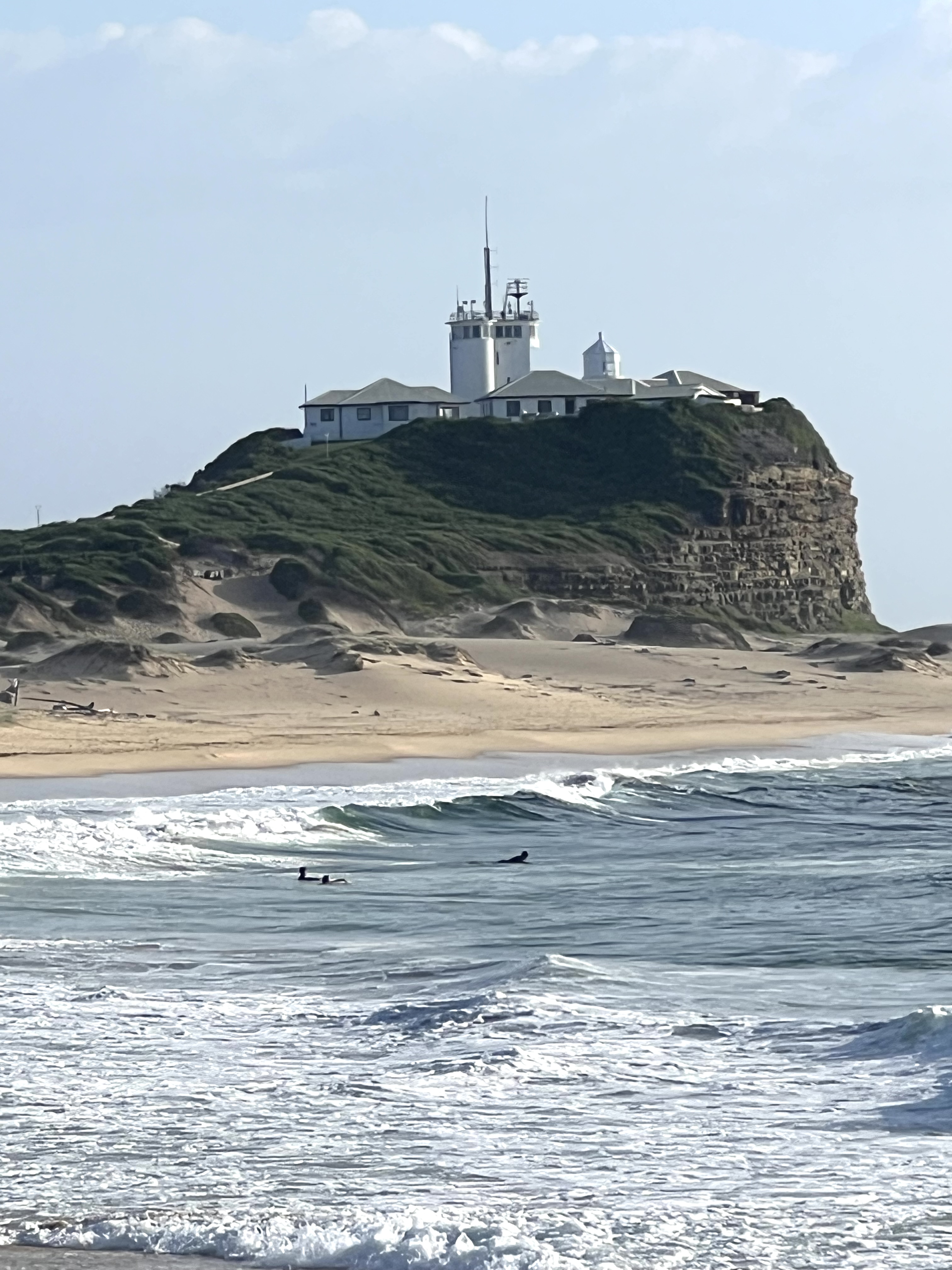
There were eleven of us at the lighthouse. Some writers, some artists. Several had returned for the second time and were delighted to meet up with old friends. Two of us came from Canberra and, to my surprise, there was a large Melbourne contingent. One younger woman had grown up at the lighthouse as her father was the last signals operator before that job too became automated. We loved hearing stories about the people who lived there and the history of each of the rooms where we worked. For her, it was a chance to paint the lighthouse and its surrounds which had played such a significant part in her early life.

There is something magical about lighthouses. They are often metaphors for safe passage, guidance, and protection. They offer illumination for the dark nights of the soul and are a beacon of hope. In a port city like Newcastle, this lighthouse has the important function of guiding vessels into the harbour and up the Hunter River.

Before I arrived, the lighthouse became the beacon guiding me to cross the finish line of the year with a sense of achievement. It didn’t disappoint. I found it easy to get into flow and felt focused for hours on end. Many of us met at 12.30 for lunch in the common room, enjoyed each other’s company, and went back with a fresh burst of energy for the afternoon session. By the end of the week, I cut 21 000 words from my manuscript. I consider it a boon for my future readers. The engagement with the work has also rekindled my enthusiasm for the project.

The knowledge that Nobby’s lighthouse is one of the oldest operational lighthouses in the country made it feel like a workplace rather than some anachronistic holiday destination. I felt connected to both its current significance and its historical legacy.

Back in 1854, it first guided commercial shipping and 88 years later, it became important for military operations during WWII. The three small cottages erected on the site and these were used by defence staff during the war. An unexploded shell fired from a Japanese submarine damaged one of them.

Various lighthouse staff occupied the cottages after the war until the late 1990s. Lighthouse Arts, which is an initiative of the Hunter Writers’ Centre, now uses these cottages to hold exhibitions and offer artists and writers a space to create.

The area where the lighthouse is located is now known as Nobbys-Whibayganba headland. So finally, there is recognition of the Traditional Custodians, the Awabakal people and their deep cultural connection to the land, saltwater and the Dreaming.

I am grateful I could nurture my calling on this spiritually laden Country. It gave me much needed clarity and purpose. As such, I am already planning my next sojourn.

If you feel you would benefit from having a week to commit to your creative project, apply at https://hunterwriterscentre.org/2024/11/28/lighthouse-arts-residencies/  

We may even meet each other there.

When a Stranger Calls Your Name

Photograph by John Harding originally posted on Friends of Watson Greenspace Facebook page

It takes about a year for me to feel that I have arrived in a new place. I have moved cities often enough to recognise this pattern. Sometimes waiting for that moment feels like an eternity, as it did when I first moved to Sydney while other times, it feels as if it has taken no time at all. Canberra falls in the latter category.

While I have felt at home in my new place very quickly, I didn’t know anyone besides my daughter and her friends when I moved. Then, a couple of months later I met my first friend at the dog park. She lives on the same street as I do, and we meet up for drinks or dinner every now and again.

I am known at the local shop but not by name. People are more likely to say hello to my dog Zoë who wears her name on her harness than they are to say hello to me. Of course this is very common. Even Markus Zusak says that when he is out without his dogs, he becomes invisible to people on the street.

Can you imagine my surprise when a man with a camera hanging from his neck called out to me, ‘Are you Viktoria?’ It turned out, he was the local wildlife photographer who posts the most stunning photos of birds, dogs and kangaroos that visit the nature reserve across the road from me. I have been liking his posts for months and occasionally writing a comment, especially when he posts shots of tawny frogmouths. He must have looked at my name and found a picture of me. Now, he kindly showed me the tree where they were roosting, and I saw the three babies with their parents with my own eyes. It was a truly awe-inspiring sight, and I was grateful that he shared his knowledge of birds freely.

I thanked him and continued on my way. Zoë was getting impatient for her walk. However, after about 200m we were stopped again. This time, an older woman called out, ‘excuse me but do you have a friend in Sydney who lives in Dulwich Hill?’ Once more, I was flummoxed. Turns out she had moved to Watson recently, was given my number, but hadn’t made the call as yet. She recognised me because of Zoë. I guess there aren’t many black standard poodles who walk in this park. We had a chat and decided to catch up for a cuppa later in the month.

Ten months have gone by since I first moved here. So many joyful things have happened, but it wasn’t until I was recognised by strangers that I felt I had truly set down roots. It feels like I am part of the suburb and part of this community. I feel calm in the familiarity of the trees, the pond and the paths that I take daily. But hearing my name said out loud carried a particular weight, as though the world had suddenly recognised me within it. It was a fleeting moment of quiet significance, a moment when I felt connected to the place and the person who has called me into being out of my own thoughts and into the time and space we both inhabited.

And so, I have finally arrived.

Dogs and Laughter: How Zusak Stole the Show

This weekend, I am attending the Canberra Writers’ Festival. It is my first time. I have been really impressed with the line-up of speakers and it was hard to choose the few I would attend. There were the ones whose books I have read and enjoyed and a couple of new ones that I thought looked interesting.

Of the big names on the list, I chose to see Markus Zusak. I have just finished reading Three Wild Dogs and the Truth, which was a present from a dear friend. As a dog lover, whose own memoir may one day appear with the title Blue Dog Girl, I couldn’t pass up the chance to hear him speak.

The book most people associate with Zusak is The Book Thief. Three Wild Dogs have none of the qualities of that book. It is a raw, unflinching, violent, tragic and oozing with love for these three crazy, havoc-wreaking mongrels. Zusak doesn’t portray himself as a perfect dog owner, far from it. I can imagine some dog owners recoiling in horror over some things he has done. But he is truthful, full of humour and passionately devoted to these dogs.

I wasn’t sure what to expect, but I wanted to get a glimpse into this man who could produce two books that couldn’t be more different. From experience, meeting an author whose work you adore can be a hit and miss affair. Once, I signed up for a six-week writing class with an author I idolised, only to find him pompous and condescending. I was in for a treat with Zusak.

The talk was held in the foyer of the Australian National Museum. By the time I arrived, hundreds of people had taken their seats. It was clear from the from the first question on that he was going to go off script and tell hilarious stories, rather than purposefully answer questions. He had such a wonderful connection with the audience that by the time he finished, we all felt that he was our friend. I have never seen an author work a crowd the way he did. He was clearly enjoying himself on that stage.

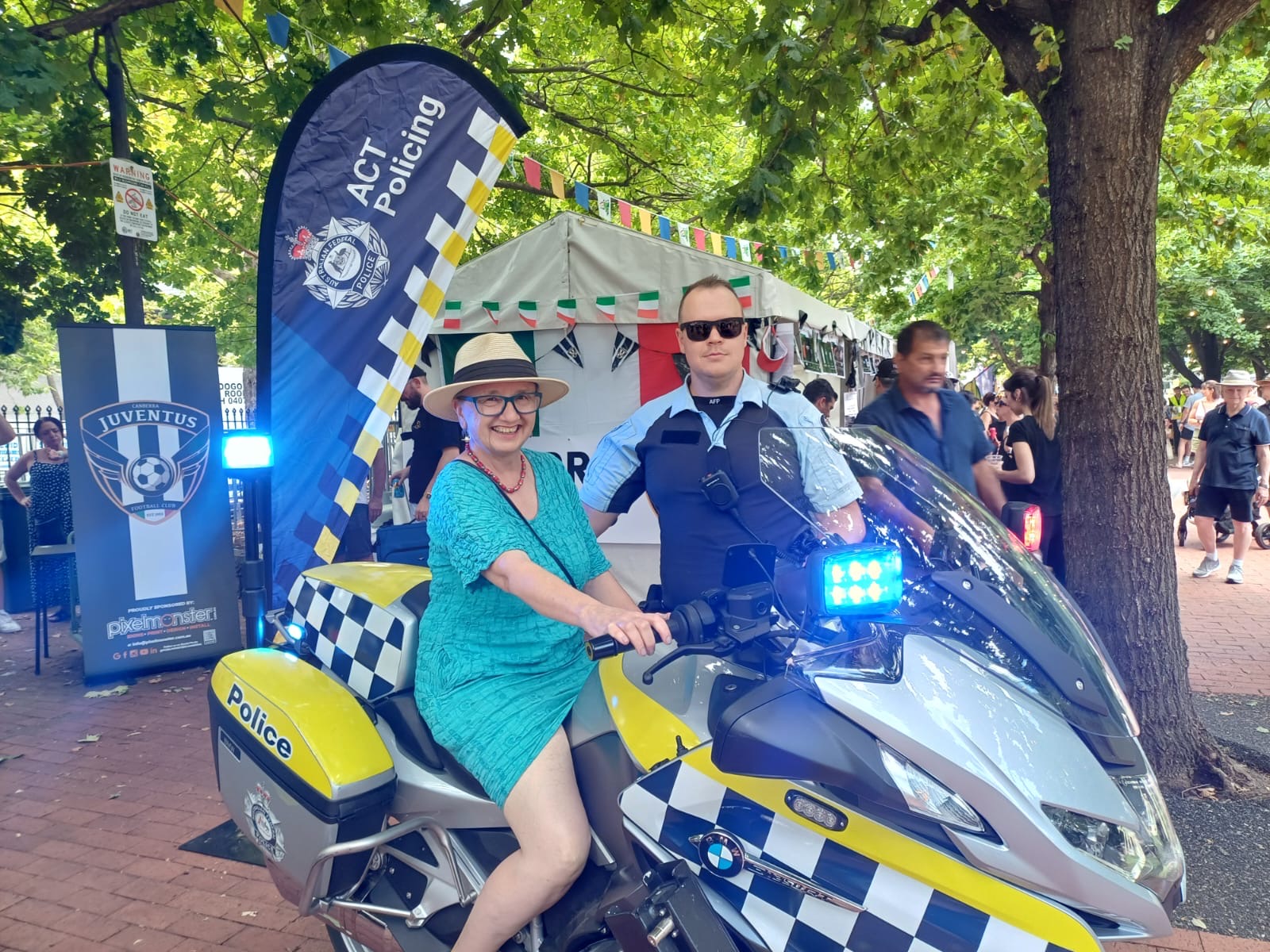
I lined up to get my book signed. When I reached him, he easily engaged in conversation by asking about my dog. He then told me a little anecdote about Standard Poodles while drawing three dog faces on the title page. Markus was charming and generous with his time.

It is rare to have an experience like this at a Writers Festival. It made readers feel part of a valued relationship. He honoured us as much as we honoured him. I’ll cherish this evening, as a testament to the magic that can happen when writers and readers come together.

In Luna’s embrace

Like tides, I am drawn to the moon. Looking up from the cares of the world, there is my constant companion. Waxing, waning, lighting my way. Full moons always bring me joy. Every full moon catches me by surprise as if saying, ‘here I am, did you miss me?’. I sure did.

 I was unaware of all the hype around October’s super moon, when the Moon is at the closest point to us in its orbit. This super moon was the closest the Moon has been for quite a while and appeared at least 10% larger and 30% brighter than the faintest moon of the year.

The Western world colloquially refers to the full moon in October as the ‘Hunter’s Moon’. Traditionally, it was the best time to see deer and other wild animals to hunt and preserve for the coming winter. Of course, this makes little sense in the Southern Hemisphere as we await sweltering summers, but the name persists.

 There is a strong feminine connection with the moon, from the menstrual cycle which follows the 28-day lunar cycle, through to goddesses such as Luna and Selene named after her. The moon has played an important part in many cultures and religions. The Jewish calendar is lunisolar. Jewish people celebrate the first night of Passover when a full moon occurs after the spring equinox. In the Christian tradition, Easter falls on the first Sunday after the full moon following the spring equinox. Islam uses a lunar calendar with the new crescent moon marking the beginning of each month. The moon has influenced humanity since time immemorial.

Yet every light creates its own shadow. The moon has also been associated with madness, as in lunacy. Consider the quote from Shakespeare’s Othello ‘It is the very error of the moon. She comes more near the earth than she was wont. And makes men mad.’ There is, of course, no evidence to this myth, but it continues to flourish. Think of all the horror movies depicting a full moon and wolves howling. Then, in the early 19th century in the era of Romanticism, poets were associated with madness and mental illness. In truth, it was probably syphilis that caused their psychosis and mania.

Is it any wonder that seeing the full moon makes my heart jump a beat? I look up and see her on the horizon, as beautiful as a pregnant woman’s belly, about to bring forth new life on this planet. I swoon. My first instinct is to call my daughter, another lunar devotee, and tell her to look up NOW. Every minute counts as the moon rises and the optical illusion of a giant moon fades. Often, I will simply stop what I am doing, feast my eyes on her beauty and breathe in luscious long breaths in gratitude for what I have received.

Rescue, reclaim and write!

Whenever I move house, the first thing I set up is my desk. It has to be in the right position, preferably in front of a window. I love looking out when I am trying to think of the right word or phrase to express exactly what I am trying to say. Looking at a wall is stifling, no matter how many lovely post cards or pictures I have placed there.

I have had many desks in my life, starting with an ancient desk that my parents bought me when I was six or seven. I loved sitting there with an ancient Remington typewriter perched upon it. It made me feel important, like a real writer. At that desk, I typed my first stories and contemplated the idea of becoming an author. I couldn’t think of anything more magical than writing of lands far away, where anything was possible, and where readers could explore places unlike those they have ever encountered. I still have that dream. 

Since then, I have had pretty desks, utilitarian desks, large and small desks, old and more modern desks, desks that I have loved and ones I have loathed. My last one should have been perfect, except it was far too low for me to feel comfortable. No matter what I tried, it just didn’t feel right. I dreamt of a desk that was made just for me and had all the right dimensions.

Serendipitously, I met Thomas Fox at a local market. When I saw his woodwork, I knew he was the person who could design and make the desk I was after. He is an artisan with an eye for form and style. I wanted a desk with sensuous curves and a surface that would connect me to the age and beauty of the wood. I wanted a desk I could love, not just for its utility but for its inherent beauty, a desk to caress like a lover.

After months of refinement, we settled on a design. Thomas went to work on translating those ideas into something tangible and exquisitely elegant. Several months later, the desk arrived, ready to have its final polish and placement in my study. I took pleasure in hearing about the reclaimed wood he used, its provenance, and how the unique pieces of wood were rescued from iconic buildings around Bega. While its latest form as a desk is new, parts of it are over 150 years old. Each section of the desk has its own story, and its character has developed over the years from previous uses. It has come to me as a palimpsest, waiting for me to imprint meaning without erasing its history. I foresee a lasting, rich collaboration between us.

Weather Whiplash

I must have blinked and missed it. A week ago, night-time temperatures were in the single digits but today spring has arrived and daytime temps are in the twenties. Trees that seemed dormant a few days back are suddenly blooming. Not just one or two trees, but rows of trees along streets that appeared bare the last time I looked.

Officially, spring is at least another week away, yet Sydney basked in 27 degrees today. This past year has been the second warmest on record, but fortunately rainfall has been average, at the very least in the Eastern states. Luckily, because bushfire season is starting earlier each year and dry vegetation acts like kindling.

For the 16 years that we lived in the Blue Mountains, every spring brought with it that heart-in mouth feeling as fire trucks raced by. My daughter developed a keen sense of bushfires. She can smell one miles away. This is the inadvertent training young children get who live in fire prone areas. We saw the destruction around us with alarming regularity and knew several people who lost their homes. I never knew the full extent of the effect it had on me until I left.

Unfortunately, it is expected that we will have to endure more heatwaves, extreme conditions in summer and increasingly hazardous weather conditions earlier than ever before and not just in Australia. We will all have to learn mitigation tactics and put an end to being complacent about our impact on the planet. It is high time we stop talking about the weather and work together to actively improve the climate.

Fitting room fiasco

Swimsuit shopping is an ordeal like no other. You find yourself in a cramped cubicle with lighting that makes you look pallid and anaemic at best. Every blotch on your face is magnified, every fold on your hips highlighted. A bored twenty-something salesperson is on the other side of a flimsy curtain, and you’re left regretting every life choice that led you to this moment.

The four-item limit per cubicle is a cruel joke. If nothing fits, you’re either forced to wait with chattering teeth for the salesperson to come back from their morning tea, or get dressed and face the horror of starting over. It’s enough to make anyone want to avoid getting wet.

Determined not to miss out on future beach ‘fun’, I braved online shopping. My one-piece swimsuit arrived, but it didn’t fit. I swapped it for a tankini and bottoms to go with it—success with the pants, but the top was bursting at the bust. Multiple returns later, I finally have a swimsuit. It almost fits perfectly. At this stage, close enough is good enough.

At least this process was less of a nightmare thanks to a responsive online store that has a real shop front in Brisbane. But honestly, I hope I never have to do this again. Maybe I should’ve ordered two—one for now and one for ‘Ron.

To the lighthouse

Attribution: This photo is taken from the Lighthouse Art residency application form

Rarely do I receive an unsolicited email that I decide to read. This one, however, came from the Hunter Writers’ Centre and it piqued my interest. It was advertising a fresh round of residencies at Nobbys lighthouse in Newcastle. The photo was enough to make me want to apply. Imagine spending a week on the stunning Nobbys-Whibayganba Headlands looking out onto the Pacific Ocean!

No sooner had I decided to apply than I talked myself out of it. Why would they offer it to me? There were much better writers out there. Who was I to think that I was worthy of this opportunity? Luckily, I saw this chatter for what it was – a self-limiting belief that didn’t deserve the airtime it was getting. So, I shut down the megaphone in my head and applied anyway.

I was thrilled to receive an offer letter for a week in December. From 8 to 4, I will have a desk in a room with a view. Pedestrian access along Macquarie Pier is the only way to get there, and the walk is long and in parts steep. It is exposed to the elements. In Awabakal language, Whibayganba means ‘the place of the one who makes it windy’. I have been forewarned.

I am very grateful to the Hunter Writers’ Centre for the chance to dedicate a week to a final edit of my memoir. It will also be a chance to ponder what lies ahead in 2025 and beyond. Few of us ever dedicate time to profound self-reflection.I am committed to make the most of this opportunity and look forward to a week, where my only distractions will be the vagaries of nature and awe-inspiring scenery.

The National Library: A Sanctuary for the Curious Mind

Stained-glass window by Leonard French

One of the delights of living in the capital city is access to the National Library. While I can’t borrow items to take home, I can request anything from their collection which has more than 7 000 000 items. It also houses a delightful café and a bookshop that I can never resist. As a Friend of the National Library, I receive a 10% discount at both the bookshop and the café which makes it a desirable place to visit.

The National Library and I share a birth year. However, time has been kinder to the grand lady on the lake. She has grown into stately resplendence and made her mark on the landscape. Her wide steps invite us to enter a modernist cathedral built to venerate history and knowledge. This is echoed within the building by the tall stained-glass windows on either side of the foyer, which functions like a church narthex.

Once the foyer is traversed, a sentinel verifies the visitor is fit to enter the hallowed halls. From there on, a hush descends. It is one of the few libraries that still has rules about eating and drinking, remaining quiet and using mobile phones. No-one complains.

Today, I spent two hours in the library reading. I observed students, researchers, members of the public accessing the latest issues of magazines. I love that in a world of user pays, this facility is free to use and available to anyone in Australia. You don’t need to be an academic or a writer, just someone who is curious to follow a line of enquiry.

The National Library is a cultural treasure, a gift to the country. There are always interesting exhibitions; currently there is one about migration. In August there is a webinar on family history for beginners, a lecture on Aboriginal perspectives on landscape and a book launch of Australian flora, to name a few. There are collections focusing on maps, oral histories, performing arts, Australiana and Australian writers, and many more. You can access many resources through Trove, a library database owned by the National Library at https://trove.nla.gov.au/.

Moonlit reverie

Photo by Michael on Unsplash

The moon is pregnant with celestial fire.*  Her belly is full, round and luminous. I can’t stop looking up, admiring her ability to put on this heavenly show every twenty-nine days.

Yet the full moon messes with some people’s minds. Sleeplessness, sleepwalking, and feeling emotionally overwhelmed are some of the negative effects people can experience at this time of the month. It is no surprise that lunacy means madness; people believed the moon was its cause. As is often the case, there is a kernel of truth in this folklore. Recently, a link has been found between symptoms of bipolar disorder and the phases of the moon.

Luckily, I don’t suffer from any of these negative consequences. I am an unashamed Selenophile and could spend hours admiring the moon’s beauty. In ancient times, the Greeks venerated Selene as the moon Goddess. Her name means moon, light and brightness. Had I been born during the Antiquity, I would have worshipped her at every full moon, standing in a field with my hands raised to the heavens. Instead, I signal my adoration by tilting my head towards her belly and let awe course through my body with soothing calmness. I never tire of her beauty or mystique.

However, my fanciful flight into metaphor and personification only works in languages where nouns have no gender or where the moon per chance is considered feminine, such as in French. Had I been writing this piece in German, where the moon is masculine (der Mond), I would have imagined him as a lover, a sentinel or my nighttime companion who would inevitably leave me every twenty-nine days.

*  Elegy Written in a Country Churchyard by Thomas Gray