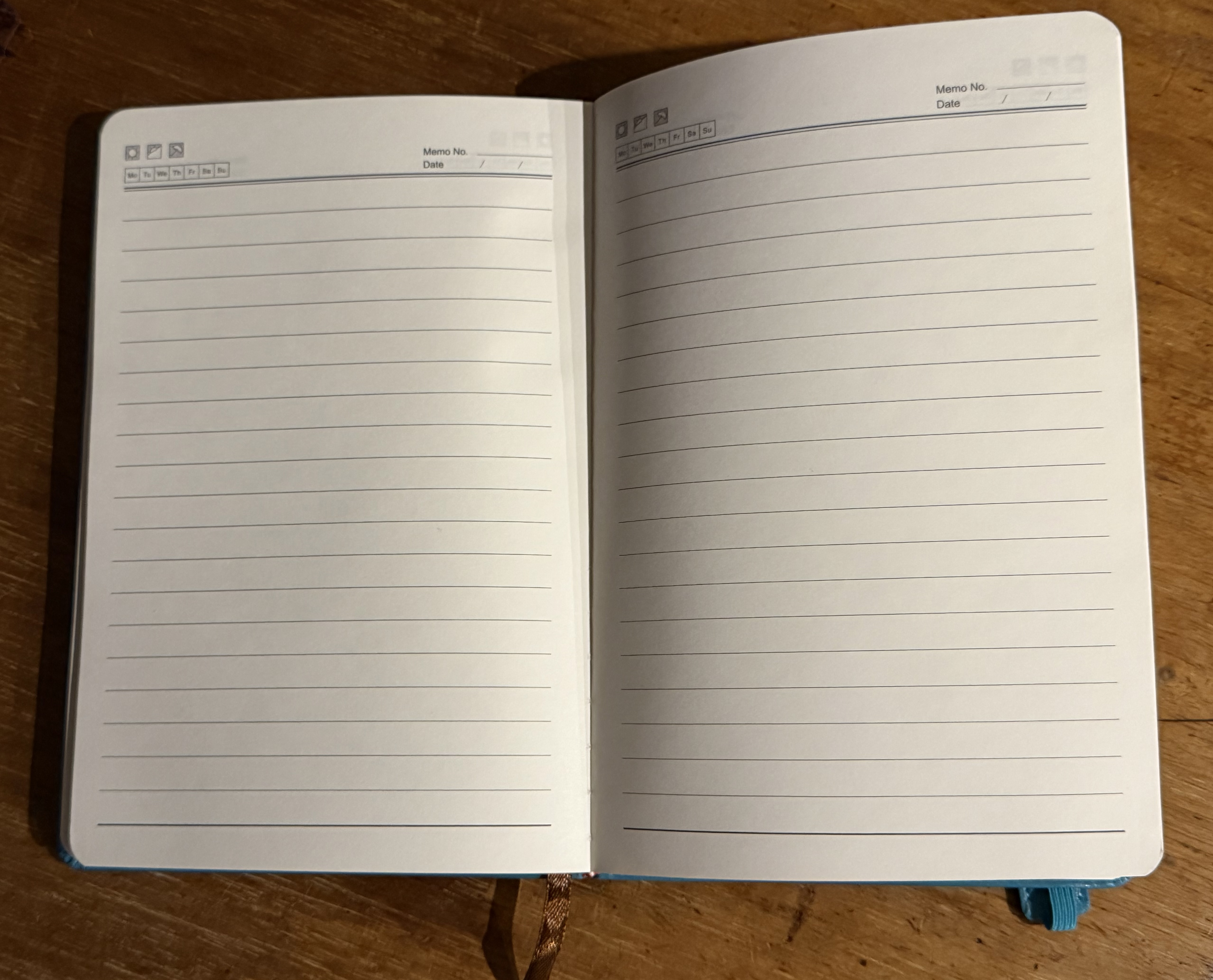
There are times when nothing comes to mind to write about. The standard advice is to write anyway. Write whatever comes to mind, in a stream of consciousness. I once gave that advice to a group of ten to twelve-year-old students as they sat looking at the blank pages of their exercise books. I wanted them to keep a journal at school, simply to get used to putting pen to paper without judgment or fear of being marked incorrect.
My students did not grow up seeing people write. Their parents texted on their phones or wrote shopping lists, but not much else. I suppose that is true for most of us. We no longer write letters, and our emails tend to be written at work. Unless a person is studying or loves writing for its own sake, there is little need to compose longer pieces of text.
‘I don’t know what to write about,’ was a common cry. There was no point in telling my students they could write about anything, because that was too broad. Eventually, I told them they could recount something that had happened to them or describe what was happening around them. As you may guess, this led to some boring writing.
I persisted, and so did they. When they were writing, so was I. Their stamina grew, and eventually they could write for fifteen minutes and fill half a page. Sure, there were spelling mistakes, syntax errors and paragraphs that did not make much sense, but they were writing. The fear of the empty page receded. I began to see sensory descriptions, direct speech, and even some little stories of their own. I initialled and dated their entries, and kept my promise never to correct them.
Of course, this wasn’t their writing lesson for the day. That happened at another time, with an altogether different purpose. But in the long run, the two writing sessions influenced each other. Free writing improved their stamina, and the formal lessons improved their technical skills. They learnt what all writers know: the craft of writing is a muscle that needs regular exercise.

