Fear of the Empty Page

There are times when nothing comes to mind to write about. The standard advice is to write anyway. Write whatever comes to mind, in a stream of consciousness. I once gave that advice to a group of ten to twelve-year-old students as they sat looking at the blank pages of their exercise books. I wanted them to keep a journal at school, simply to get used to putting pen to paper without judgment or fear of being marked incorrect.

My students did not grow up seeing people write. Their parents texted on their phones or wrote shopping lists, but not much else. I suppose that is true for most of us. We no longer write letters, and our emails tend to be written at work. Unless a person is studying or loves writing for its own sake, there is little need to compose longer pieces of text.

‘I don’t know what to write about,’ was a common cry. There was no point in telling my students they could write about anything, because that was too broad. Eventually, I told them they could recount something that had happened to them or describe what was happening around them. As you may guess, this led to some boring writing.

I persisted, and so did they. When they were writing, so was I. Their stamina grew, and eventually they could write for fifteen minutes and fill half a page. Sure, there were spelling mistakes, syntax errors and paragraphs that did not make much sense, but they were writing. The fear of the empty page receded. I began to see sensory descriptions, direct speech, and even some little stories of their own. I initialled and dated their entries, and kept my promise never to correct them.

Of course, this wasn’t their writing lesson for the day. That happened at another time, with an altogether different purpose. But in the long run, the two writing sessions influenced each other. Free writing improved their stamina, and the formal lessons improved their technical skills. They learnt what all writers know: the craft of writing is a muscle that needs regular exercise.

Morning pages

There are weeks when writing is hard. I just had one of them. Illness, deadlines, and distractions all got in the way, and I didn’t write. Although, strictly speaking this isn’t true. I always write something, it just might not be a blog post. In this past week I have written a job application (not my favourite kind of writing) and I have written in my journal. It is the one thing I manage to do almost every day of the year.

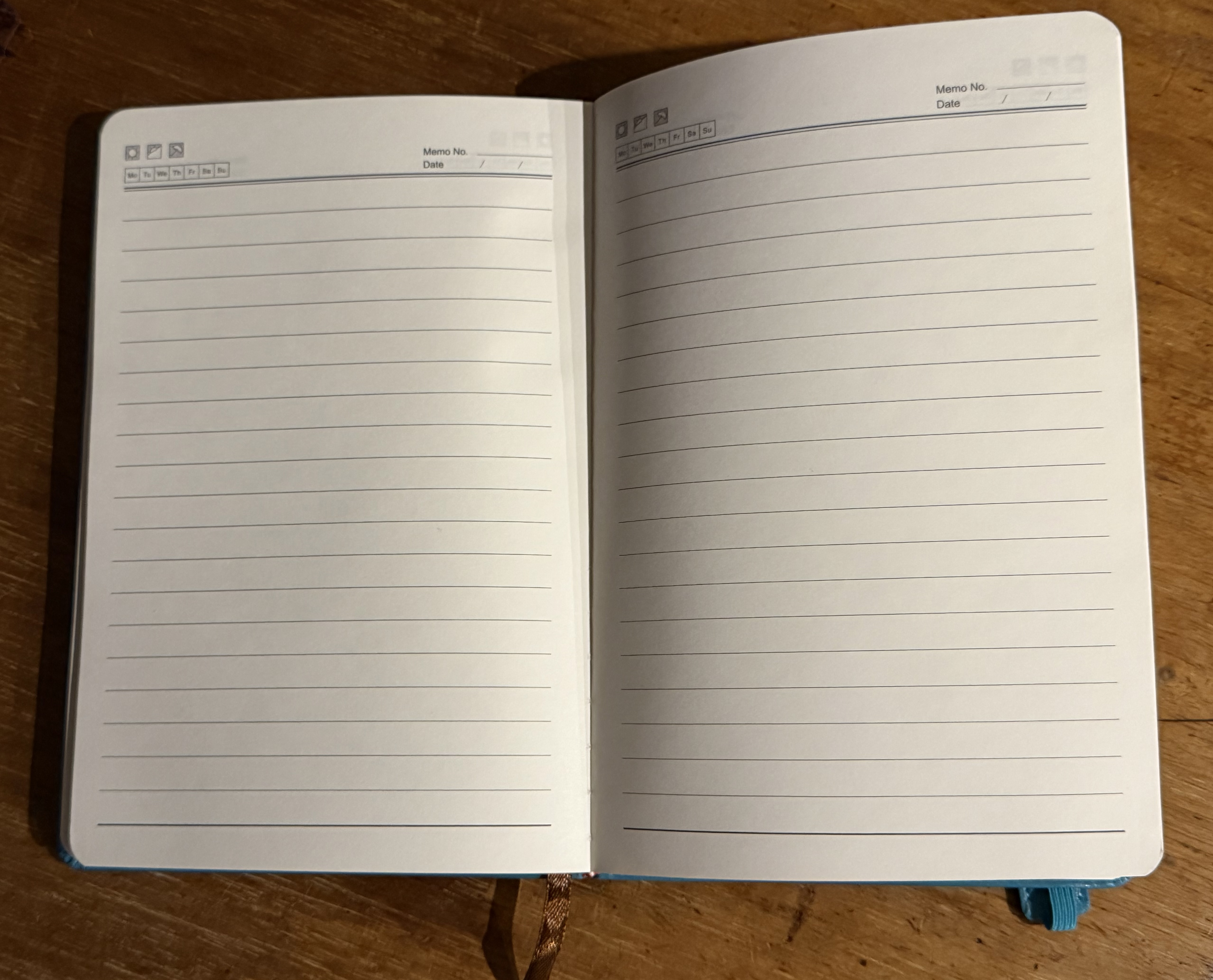
I try to follow Julia Cameron’s rule of three handwritten pages first thing in the morning. When time is tight, I will write one page rather than not write at all. As my friend Kellie likes to remind me, ‘done is better than perfect.’ When I write longhand, words flow from my pen as if my right hand was connected to my thoughts. Sometimes when I read a sentence back, I notice that I have written the first part of a word and finished it with the next one. It is fast, unedited, stream of consciousness writing.

Most of the time, my scribbles are not worth reading. They chronicle mundanities of life, sometimes strange dreams and on rare occasions, I might get some insight. Still, I persist. As Julia Cameron suggests, morning pages are for my eyes only and they are not meant to be creative writing but a way to clear the mind.

Weeks go by when I think that the morning pages have done nothing at all for me. Then I realise that getting those initial thoughts out of my system allow me to face the day without ‘stuff’ circling in my mind. I can leave all those thoughts in the journal. It is like having a container for loose change, only that in this case the container holds loose thoughts.

Every now and again, a solution to a problem presents itself in the pages. Granted, it doesn’t happen often. These are like little nuggets of gold that are left behind when all the dirt has been washed away. I can’t expect to find a nugget every day but when I do, I know that the process has worked its charm.

It takes me about fifteen minutes in the morning to write three pages. I don’t use prompts. I simply pick up the pen, put it to paper and let it glide across the page. I enter an almost a meditative state where I watch the pen do its work. I sit with a cup of tea, write, sip, write some more and finally close the journal. I rarely read what I have written, although it can be useful to go back after a few months and get a sense of how things have shifted.

I recommend the habit of morning pages. They allow you to clear away the cobwebs and start the day unburdened. You might find it the most worthwhile fifteen minutes of your day.

Writers’ Hour by London Writers’ Salon

There are many disciplined writers, but I am not one. There have been weeks, sometimes months when all I have done is to agonise about writing but get a single word down. And then there have been times when I have found that magic state of flow. Inevitably, a busy period at work throws a spanner in the works and I fall out of the habit.

A few months ago, my friend Margaret Paton, who single-handedly organises the Central West Writers’ Group, put up a post on our Facebook page.

Writershour.com – Daily Writing Sessions. Brought to you by London Writers’ Salon.

I was intrigued. It took me a while to work out that there were in fact several writers’ hours, all held between 8 and 9 am around the world. The one in London is between 5pm and 6pm Australian Eastern time, while the New York hour comes on at 10pm to 11pm. As I am night owl, I tend to catch the New York session but sometimes I am lucky enough to be home by 5 to take part in the London session.

The concept is deceptively simple. Writers log onto Zoom at the specified hour, a host mutes the conversation and welcomes us all. There is an explanation of the process: we are to type our intention for the next 50 minutes into the chat pod and some of these are read out. We may be sitting isolated from each other yet there’s a definite feeling of community. We are all comforted by the couple of hundred people sitting in their own space, all engaged in the writing process and experiencing similar struggles and joys.

The host reads out an inspiring quote, we raise a glass of water or cup of tea and off we go, keeping our cameras on for extra accountability, or not. After fifty minutes, a voice gently invites us back into the ‘room’. We use the chat pod to say how we went, whether we reached our goal for the hour and how we felt. One or two people are randomly chosen to report back before we say goodbye. It is as simple as that.

Since coming across the London Writers’ Salon, I write every day. I am beginning to recognise faces and love the way we encourage each other. I feel part of this wonderful world-wide community and best of all, I have written many thousands of words. I only wish I had come across the London Writers’ Salon when they first went online during lock down. Since then, they have grown exponentially. There aren’t many positives I can point to when it comes to Covid, but the Writers’ Hour is definitely one. I have finally found my community and reawakened my enthusiasm for writing.

For the past three years I have struggled with writing my memoir. Within a few months of regularly attending Writers’ Hour, I have completed my first draft and I’m now using my daily writing habit for editing. I never thought I could say that I’m looking forward to when my book is published. Thanks to the London Writers’ Salon, that day is now within reach.