The mother of a Tamil girl whom I tutored invited me to a coming of age ceremony on short notice. I was off work, so I accepted the invitation. When I asked about its significance, she explained that when a girl gets her first period, they have a special ceremony to acknowledge her new state. While in the past this marked a girl as being of marriageable age, it is now seen more as a rite of passage on the journey to becoming a woman.
Out of respect for the family’s privacy, I won’t be sharing their names or images.
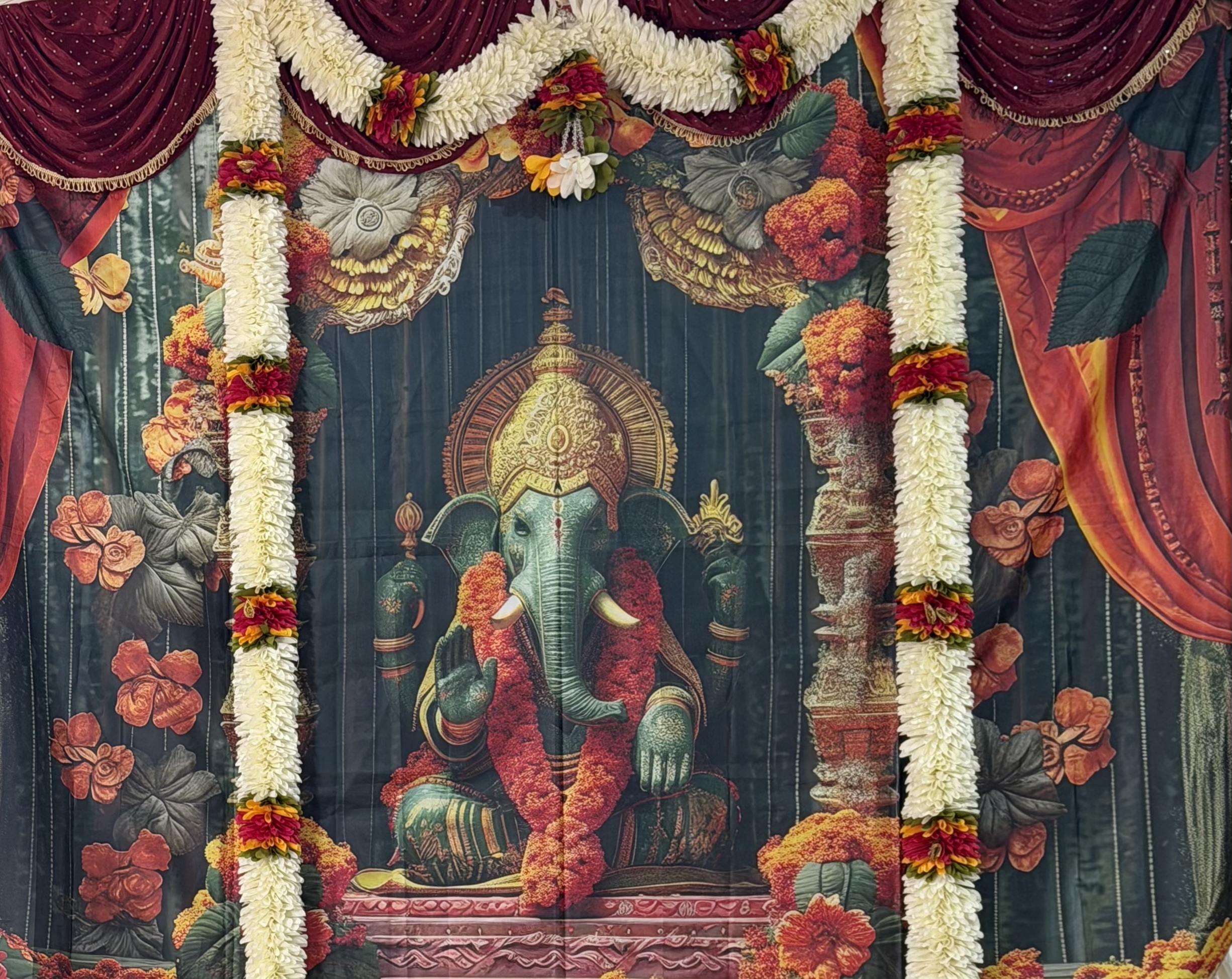
I arrived earlier than most guests, with no preconceived expectations. The house had been decorated with garlands and there were fruit offerings in front of the door. Once inside, I sat on a sofa and watched the adults hurrying to and fro, getting things ready for the priest and the guests who were yet to arrive. The girl was nowhere to be seen.
When her sister came out to greet me, I passed on my present, which I had presumed, correctly, should be jewellery. When the girl first appeared, she was wearing a lovely embroidered dress. She then sat on a stool and was blessed by various family members using coconut milk and a herb on her head. I too was invited to come forward and place some on her head. Several other rituals were performed before she disappeared to be washed. She later emerged wearing a half sari, symbolising the bridge between childhood and adulthood.
At this point, she had haldi kumkum applied to her forehead and other sacred pastes of turmeric placed onto both her arms and cheeks. Once more, close family and elders were invited to apply the balm and offer their blessings.
When the priest arrived, he performed a long ceremony, reciting Vedic prayers for well over an hour and a half. During this time, various members of the family were called upon to sit beside the girl, using incense, fire, leaves and flowers to purify her and shower her with blessings. While I sat transfixed, others in the room continued to talk, take photos and move about. This was something I found quite unusual. I was brought up to make a clear distinction between the sacred and the everyday. I wouldn’t dream of talking in church while the clergy performed their duty, yet here it was quite accepted that people talked and laughed while the ceremony continued not more than two metres away.
One of the guests streamed the event live to Indonesia, where the girl’s aunt lives. The family had visited her during the Christmas holidays once their application for asylum had been granted and they were assured of re entry into Australia. They now have Australian citizenship, which must feel like winning the lottery after years of living on a bridging visa.
When the ceremony was over, everyone shared a feast of vegetarian curries and special sweets. The food was delicious, albeit quite hot. I chatted to the only other older woman there, who also holds a special place in the heart of this family. She is a Christian Sri Lankan who has worked tirelessly with Tamil refugees in Canberra, helping them connect with organisations that support their settlement and sense of belonging. She was pleased to hear that I too would be attending the Palm Sunday Rally for Refugees.
I have played a small part in helping this family feel welcome, supporting two of their children with English and other school related learning. What I have gained in return is something far richer. I was welcomed into their family and given a glimpse into a culture very different from my own. And yet, I was also struck by what connects us.
For my First Holy Communion, I wore a white dress reminiscent of a wedding dress, not so different from the half sari. On Ash Wednesday, a cross of ash was placed on my forehead, while this young girl had white, orange and red markings carefully applied to hers. The meanings are different, shaped by different beliefs and traditions, and yet the gestures feel familiar.
I know they serve different purposes, grounded in their own histories. Yet I am struck by how instinctively we mark these moments in the body. With cloth, with colour, with touch, with ritual.
Across cultures, we seem to reach for the same things when something matters. We pause. We gather. We mark the moment. We acknowledge what matters.