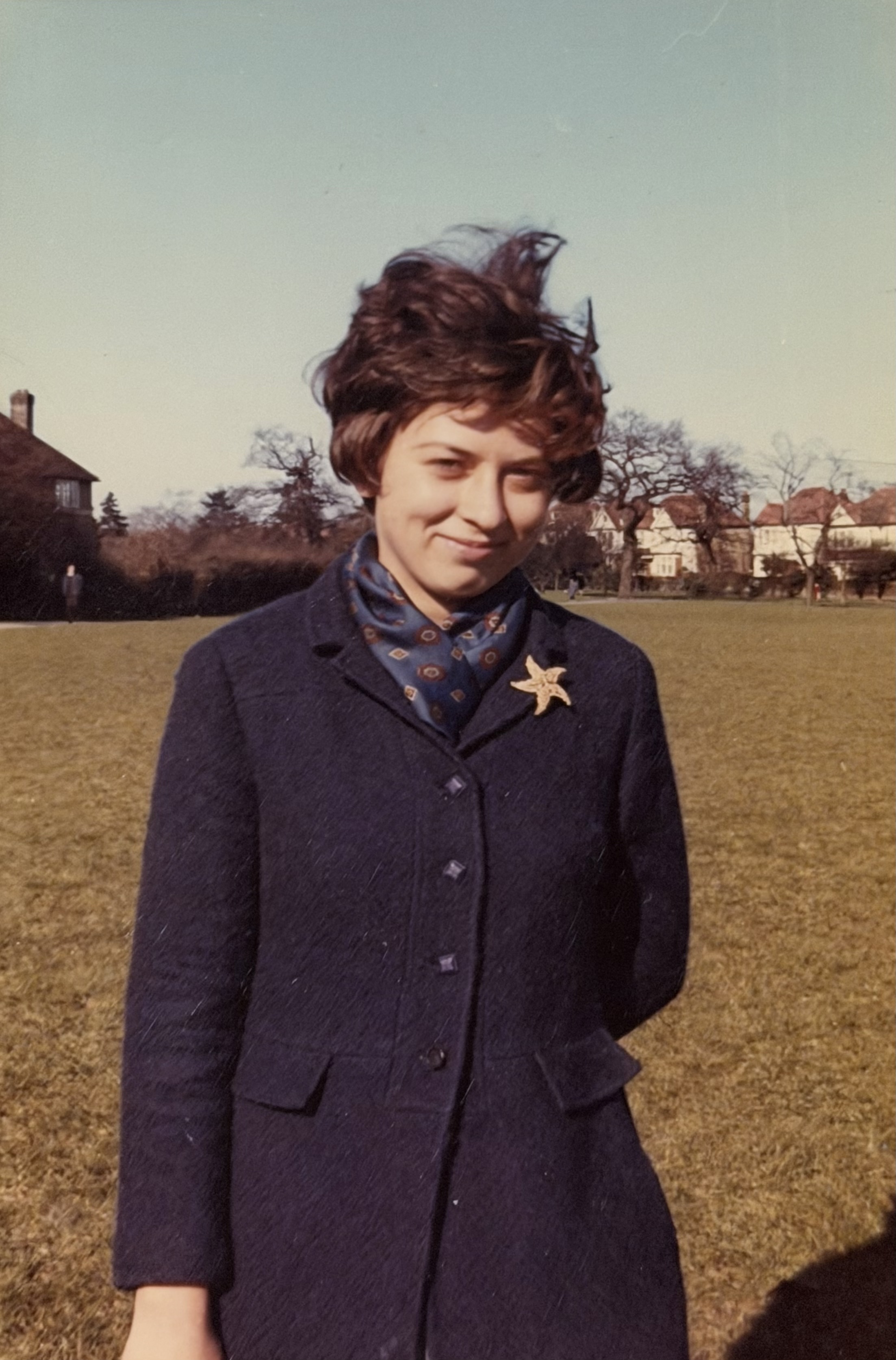
Naszti, Palma, Pam

My sister died suddenly but it was not unexpected. She had a series of health issues that plagued her but none of them were necessarily fatal. It was both the combination of these ailments, and her stubborn refusal to do anything about them, that led to her passing. It is easy to say that she chose the path to self-destruction but of course it was much more complicated than that.

Born in Hungary in 1950, she was a post-war baby in a ravaged country where everything was still scarce. Her father had left while our mother was pregnant and by the time she was born two months premature, my mother did not want her either. ‘Throw it against the wall,’ she’d say, then throw her head back and laugh. This was how she always recounted the birth of my sister. Her aunt Vicki, who acted as her midwife, did no such thing. Instead she stoked up the fire and kept the room hot so that the little girl would survive.

True to her word, my mother did not want anything to do with her daughter. She left her in her aunt’s care, where the young child was loved and treated as if she were one of her own. I don’t know whether my mother visited often or at all but in the meantime, she met my father who had lost his wife to tuberculosis in the late 40s. The chemistry sparked between them and during the 1956 revolution they decided to risk their lives and flee the country. It was at this point that my mother returned to Aunt Vicki and took the child from her.

My sister was christened Palma Anastasia. Nobody really knows why. Both are unusual names in Hungary. She was always known by a shortened version of her middle name, Naszti, which later caused her to change her name to Palma and eventually to Pam because she was tired of people getting her name wrong. This was yet another layer of her identity that was stripped from her.

Little Naszti went from a stable loving home to running across mountains with a people smuggler, gunshots echoing behind her. Once ‘safe’ in Austria, she waited in a refugee camp with her mother whom she barely knew and a man she had hardly met. Eventually they were resettled in Luxembourg where she had to learn the three official languages, French, German and Letzeburgisch. Then, when she was ten years old, I was born.

Unfortunately for her, the chemistry that sparked between my parents soon became explosive and my mother often used her to create division between them.

‘He doesn’t love you the way he loves your sister. You’re not of his blood.’

I am surprised she was able to love me as much as she did, considering all the things she was told. My sister, however, was a gentle soul then and wanted to protect me above all else. In fact, as a ten-year-old, she took on much of the mothering responsibilities while my mother worked.

Her world was once again turned upside down when she was fourteen. After a disastrous business venture, my parents fled to Spain to escape bankruptcy. Another language to learn, new school, new friends to make. She was also watching my parents’ marriage implode. When my father and I disappeared one day, she was left with my grieving mother. She searched everywhere for her second daughter and when she found me a year later, my sister was left behind in Madrid to fend for herself at sixteen.

After another ill-fated reunion, this time in Austria, she left for London to work as an au pair at age seventeen. There was another language to learn and she couldn’t keep her name which sounded too much like ‘nasty’ to the English. She began using Palma and eventually Pam to fit in. At eighteen, she met her husband, a Sicilian chef nine years her senior. They married and within a year, I was sent to them for a year so I could learn English. They paid for my private school costs, all other expenses and put up with a miserable homesick child who really didn’t want to be there. My sister wasn’t equipped to look after my emotional needs, but then she was barely more than a child herself. At nineteen, I didn’t do any better looking after the younger siblings of my friends. It wasn’t my sister’s fault; my parents should have known better.

We migrated to Australia in 1971 and she followed within a year with her husband and baby son. While my family life unravelled amid my parents’ ongoing fights and eventual separation, hers seemed to flourish. They moved to the outskirts of Melbourne and life seemed to be going well for her. They built a house, had another child, bought a business and began to establish wealth. I didn’t see her for about six years during this period as I chose to stay with my father. We didn’t have a phone or car and I am not even sure that I had her address.

When we finally re-established contact, she was a mother of two living in suburbia. We didn’t have much in common but we loved each other. I became more involved with her daughter whom I regularly took to my place for sleepovers and ballet lessons. My sister took on more and more of the Italian traits of her husband’s heritage. They spoke Italian at home, she saw herself as the matriarch but was never really accepted by the broader Italian family. No matter how much she tried, she could never become one of their tribe.

I didn’t see everything that happened behind closed doors. My brother-in-law was loud and demanding. He always got what he wanted. I know he didn’t treat his wife kindly. He worked hard and she was expected to do whatever had to be done behind the scenes for his businesses. If anything was not to his liking, she would know about it. I never saw him hit her but his children did. I think she just got tired of a transactional marriage and saw no way out for herself.

When our mother became old and disoriented, my sister took her in. She looked after her for years with the patience of a saint. Our mother had never been easy but in her old age she became ever more demanding, nasty and often drunk. No matter where the alcohol was hidden, she would sniff it out. It became a constant source of friction between my sister and her family yet she could never find the heart to put her in a home.

Food became a source of comfort and over the years she gained a great deal of weight. She always loved fried food, bread, pasta and sweets. About three years ago, she was diagnosed with diabetes. She struggled to manage her diabetes and often forgot to check her levels.

Like her husband, she was a chain smoker which eventually led to emphysema. Smoking helped her regulate her mood. She continued to smoke even after her husband died of lung cancer. She probably had a smoke in bed the night before she died. ‘What else do I have left?’ she would say to herself.

I’m not sure when she discovered poker machines. She certainly kept it a secret from us all. I used to get frustrated with her stories of break-ins, cleaning ladies stealing jewellery, people stealing her bag or wallet out of the car, often with the weekly takings of the shop in her possession. How could anyone have such bad luck, I would think. At times she would ring in a panic and ask for a loan for something she couldn’t tell her husband about. Whenever I could, I obliged, never thinking that there was another reason behind her constant bad luck with money.

Once the truth came out, her relationship with her children was damaged and her husband was furious. She had lost well over a million dollars and suddenly they went from being well off to having to work to keep the roof over their heads. The last time I saw her she told me that gambling blocked everything out of her mind and for the hours she was there, she did not think about how miserable she felt. In the end, it left her asset rich in a large house without the money she needed for its upkeep. She relied on foodbanks to get her through to her next pension cheque.

She discovered love about four years ago when she met a much older man. He is in his 90s and has outlived her. While they seemed happy in each other’s company, her daughter had concerns about the relationship and did not approve. As it turned out, he was too frail to look after my sister or to live on his own so he moved to Gippsland to live with his daughter. He kept in touch over the phone and occasionally would visit her. My sister confided in me that he was the first gentle man she had encountered.

It is painful to admit that she was never truly happy. Our phone calls were always about the latest aches and pains, the terrible state of affairs in … (insert the latest hot spot), and how ungrateful her children were. I dreaded these conversations. Her hearing aid never worked well, the TV was always on high volume in the background and I had no chance of getting a word in. She stopped going out and her world shrunk to her four walls.

I tried to talk to her about our family but she steered clear of painful memories. As with so many members of my family, whatever she knew is now forever lost. I have come back from Hungary with photographs I have never seen before, and I was looking forward to asking my sister who these people were. I was hoping to drive to Melbourne in late September to talk to her about my recent trip. Now there is no one left to ask. The people in those photographs will remain unnamed, another missing piece in the puzzle that is my family.
What Might Have Been, What Still Is

It is seven in the morning and I’m walking my dog. There are a few people about; a Border Collie here, an Oodle there, a Kelpie in the distance. As I come to cross path, an older couple appear without a dog in tow. This seems odd. At this time of the morning, most people walk briskly with their dogs, giving them a quick outing before work. Over time, most of these people have become familiar faces which I acknowledge with a nod and smile, or with whom I exchange a comment about the weather.  

Ever curious, my eyes follow the older couple as they walk in-step, hands in pockets, elbows lightly touching. As I watch from a distance, my heart aches for the familiarity and affection I sense from their movements. In their steps, I glimpse the path I imagined for myself long ago. This is how I always wanted my old age to be; my husband and I, walking along with a dog running ahead, enjoying companionable silence, or the conversation that makes up a lifetime shared.

Watching them, my heart aches but there’s also joy in my sadness. Joy, because they beat the odds of divorce, death or the malignancy of indifference. They have not ended up in a law court fighting out a bitter dispute or learned to loathe each other in silence, bickering away the fleeting moments of their lives. I celebrate this couple and all those who stood the test of time, those who have learned to love through pain, heartache and oh so many joys that life has to offer, to finally arrive at old age together, whether it be by luck, good fortune or good health. And as I watch them go, I know without doubt and without sentimentality that this would have been us, had death not severed my beloved from my side.

A bubbly legacy

For 20 years, I didn’t drink a drop. Then, out for dinner with a man who would grace my life for four short years, I succumbed to a glass of red. It was delicious. Tart, intense and astringent, I enjoyed every mouthful.

I have never been a heavy drinker. Admittedly, I went through episodes of binge drinking in my early twenties, but that was mainly to overcome social anxiety. Once inebriated, I took advantage of my impaired control and began to enjoy parties, rather than be the wallflower hanging out in the kitchen counting tiles. But that was a long time ago.

When I began to drink again, I would only do so at dinner and never at every dinner. Then Roger introduced me to the glass of champers on a Friday evening to celebrate the passing of another week. His philosophy was simple – celebrate if you have had a good week and celebrate if you made it through a tough one. Either way, you are a winner.

When he ‘shuffled off this mortal coil’, as he liked to quote, I was left with an unusually large glass vase filled to the brim with champagne corks. It was years’ worth of good and not so good weeks he had lived through, with and without me. I neither wanted to keep them, nor throw them away. In the end, I reached a compromise, took a photo of the full vase and kept perhaps 30 of the corks. They remind me of a life well-lived.

Now I carry on the tradition, at least most weeks. I can’t drink a bottle of bubbly on my own, but I can enjoy a piccolo, which is 200mL or almost two standard glasses. It is a perfect amount. I raise my glass and salute Roger, and the passing of another week. Cheers!

A prime number

ssa-school.org

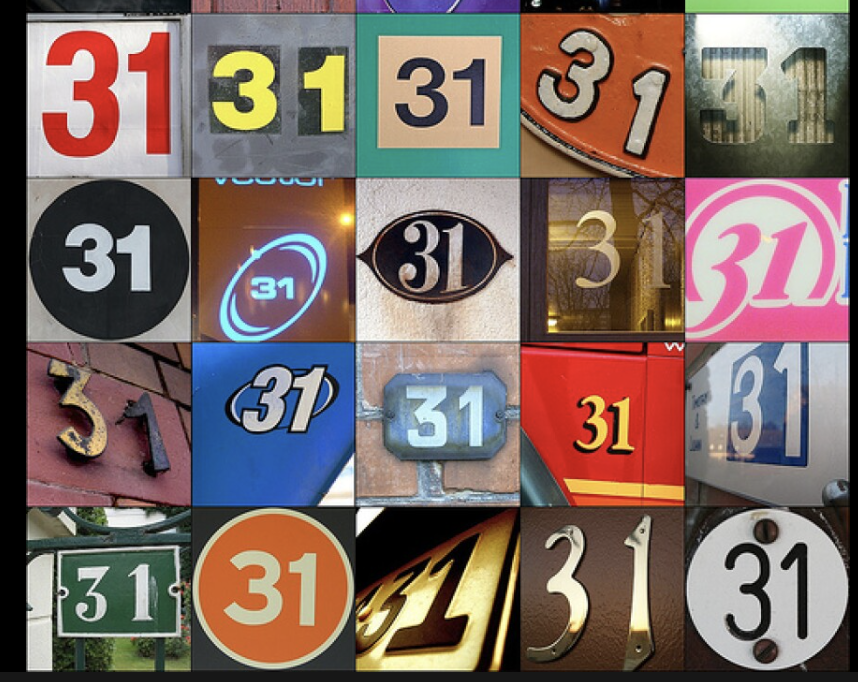
Thirty-one years ago today, we took a taxi to the registry office in Sydney where we were to meet your parents, the only invited guests for the ceremony. I opted for a pink pant suit, and you wore an elegant jacket and tie for the occasion. We had wanted to keep it low key.  

We didn’t tell anyone about our wedding, it was strictly a private affair, but people found out anyway. The next Monday at work, some observant colleagues noticed your wedding ring and for the next few days, it was all they could talk about. My colleagues guessed too and by the end of the day I was presented with an enormous bunch of native flowers. They made your eyes itch and set off sneezing fits, so I relegated them to the balcony of our small apartment.

Marriage didn’t change much between us, but parenthood did. Our daughter became our focus and as my job became increasingly demanding, you were the one to take her to the park, play tennis or teach her to ride a bike. We didn’t have nearly enough time for one another, but we knew we had each other’s back.

You had much more patience with her than I ever did. I was a hard task master when it came to learning but you managed to achieve the same results without tears. Maths was your strength, and it has become hers too. You both had a love of patterns in numbers and your favourite numbers were prime. Seventeen, your birthday and thirteen the day you died, both prime. Sixty-one, the age at which you left us to grieve an innumerable loss in the prime of your life.

We were married for 19 years. Yet another prime number. Each year we’d celebrate our wedding anniversary with a special dinner, but we never bought each other presents. We didn’t need to. Our love didn’t rely on any outward signs. We knew its strength from the small acts of service, the cup of tea in bed each morning, dinner on the table at night, washing brought in without a word. Sometimes it was conveyed in a look, a smile, a hand across the table.

Then, as our daughter became increasingly independent, we reached out for each other again. We’d take the train to explore a town, listen to an orchestra or visit art galleries. But our time was to be cut short. I never indulged in false hope. Three months before you died, we visited the Art Gallery of NSW for an exhibition on modernity in German Art. You knew it would interest me and booked the tickets. It was a sunny day, not a cloud in the sky as we waited at the traffic lights on the corner of Hyde Park and Macquarie Street.

I looked up into the bluest of blue skies, skies the colour of your eyes. I remember thinking, what a pity it was that I wouldn’t share the rest of my life with you the way I had always intended. I was overcome by great sadness but couldn’t divulge my thoughts. Instead, I smiled and resolved to have the best day with you at the exhibition, which I did.

Today, we would have celebrated our 31st wedding anniversary and you would have made a joke about it being an auspicious number. You’d be 73 now, just shy of your 74th birthday. It is hard for me to imagine you at this age, but I know you’d still have that glint in your azure eyes.

‘We’re still in our prime,’ you’d say, and I’d fall in love with you over again.

Melbourne Cup Day

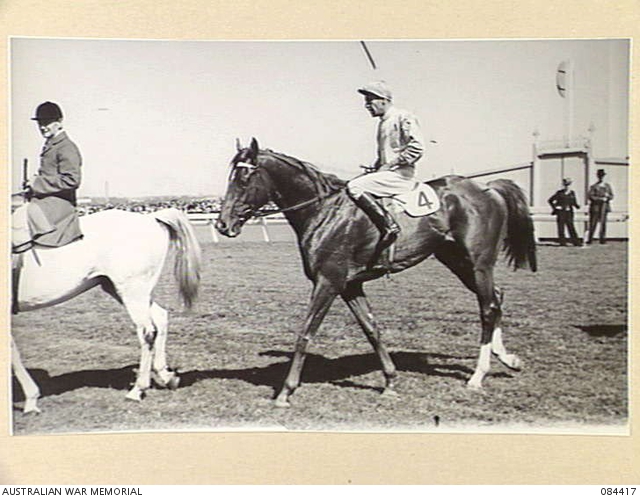
Sirius, Melbourne Cup winner 1944

Roger could recite every Melbourne Cup winner going back to his birth year, 1944. It was his favourite party trick. Starting with Sirius, he could name them all and knew details about most. He loved horses, had a fervent interest in racing carnivals, but never had a bet. The last horse to be committed to his phenomenal memory was Verry Elleegant, the first horse to ever win the Melbourne Cup from barrier 18.

While I admired his passion, I could never reconcile the love of horses with racing. My heart broke every time I heard about an accident on the field. These horses rarely survive. It also seems to me that we don’t need to encourage betting in a nation that has the greatest per capita losses from gambling worldwide.

The day that Dunaden won the Melbourne Cup is seared into my memory. My husband, Peter, was returning to work after several months on sick leave. He had a part of his lung removed after we discovered that his Melanoma had spread. Things were going well; he felt better and was looking forward to returning to work. We dared to be optimistic.

I received a muffled phone call at about 10am on Cup Day. He was calling from the waiting room of the hospital where he had received his previous treatments. ‘I’m alright,’ he said in the way he did when he wanted to shield me from distress. I had to prise the details out of him, the way I always did when I needed to know the truth.

‘I wasn’t feeling well on the train and when I got off, I collapsed. People helped me up and eventually I had enough strength to walk to the medical centre. They sent me straight to hospital.’

At that moment, I knew. I knew we were at the starting post of a race against time and the odds were stacked against us. It was a race we would never win, no matter how much I pleaded with the specialists. We were riding on their mercy and time was running out. I didn’t believe in miracles, but I dared to hope. I dared to hope for Christmas, then New Year.  After that, I hoped for our daughter’s birthday and our wedding anniversary. He never made it to either. The race had run its course.

Melbourne Cup Day makes me anxious. I am taken back to these dark times of loss. The loss of a partnership of over two decades, the loss of innocence for my daughter, and the loss of a deep love. I am also reminded of a more recent loss, that of losing a second chance at love with a man whose joyful connection to the Melbourne Cup is all the more lamentable now that he too has run his final race. Yet I can’t help but feel grateful to have accompanied both of my valiant men on their final stretch to the finish line.

Radical Gratefulness

Gratitude has become trendy with the positive psychology movement. You can always find something to be grateful for – be grateful for your breath, a pretty flower, a kind word. While I agree with the sentiment, I wonder whether the next generation who hear this mantra will grow up like I did, having to eat everything on my plate because I had to think of all those starving children in India. I am quite sure none of my Indian friends ever benefitted from the extra mouthful of cauliflower or cabbage I forced down my throat and it created a very skewed relationship with food for me which has lasted a lifetime. Waste not, want not…

Don’t get me wrong, gratefulness is a beautiful state and I do believe that we need embody it much more than we do. My gripe is the glib statements that often sound forced and obvious.  What I have been grappling with is what we do when things go wrong in our lives. How to be grateful when truly terrible things happen. This is what mean by radical gratefulness.

When I watched Peter die, struggling to take his last breaths, in those moments, I felt grateful. Not for the intense sunny morning that seemed so incongruous with what was happening, nor for the 20 or so years I had spent with him, but for those awful moments where I watched him suffer and that I could be there to share them with him. As my dear friend Janet said at her husband’s funeral, ‘Today is a beautiful, terrible day.’

Ten years later, I sat with Roger as he took his last breath and once more, I was grateful to have had the honour to sit with him in that beautiful, terrible moment. To bear witness to someone’s final moments is to be filled with deep sorrow, pain and beatitude. Radical gratefulness is the only way I can describe this. It is the experience of two opposing feelings in visceral communion through grace.

And so it was this week when I experienced a major setback. It was my fault – I missed a crucial date, and it has cost me dearly. My first reaction was to be annoyed, frustrated, and to be honest, gutted. But as time went on, I was able to find my way back to radical gratefulness. I didn’t accept the ‘it happened for a reason,’ ‘something better will come your way,’ comments, although I truly appreciated the love and empathy I received. No, I forced myself to look at the situation deeply, accept it fully, and be grateful for the lesson I have learned about my chronic inattention to detail. It simply matters, and I’ve stopped making excuses about being ‘the big picture thinker’.

I can now say with conviction that I am grateful for the mistakes I’ve made, for they have enabled me to learn and grow. As Alex Elle explains eloquently, ‘Gratitude practice isn’t about pacifying our painful or challenging times —i t’s about recognizing them and finding self-compassion as we do the work.’

The wild garden

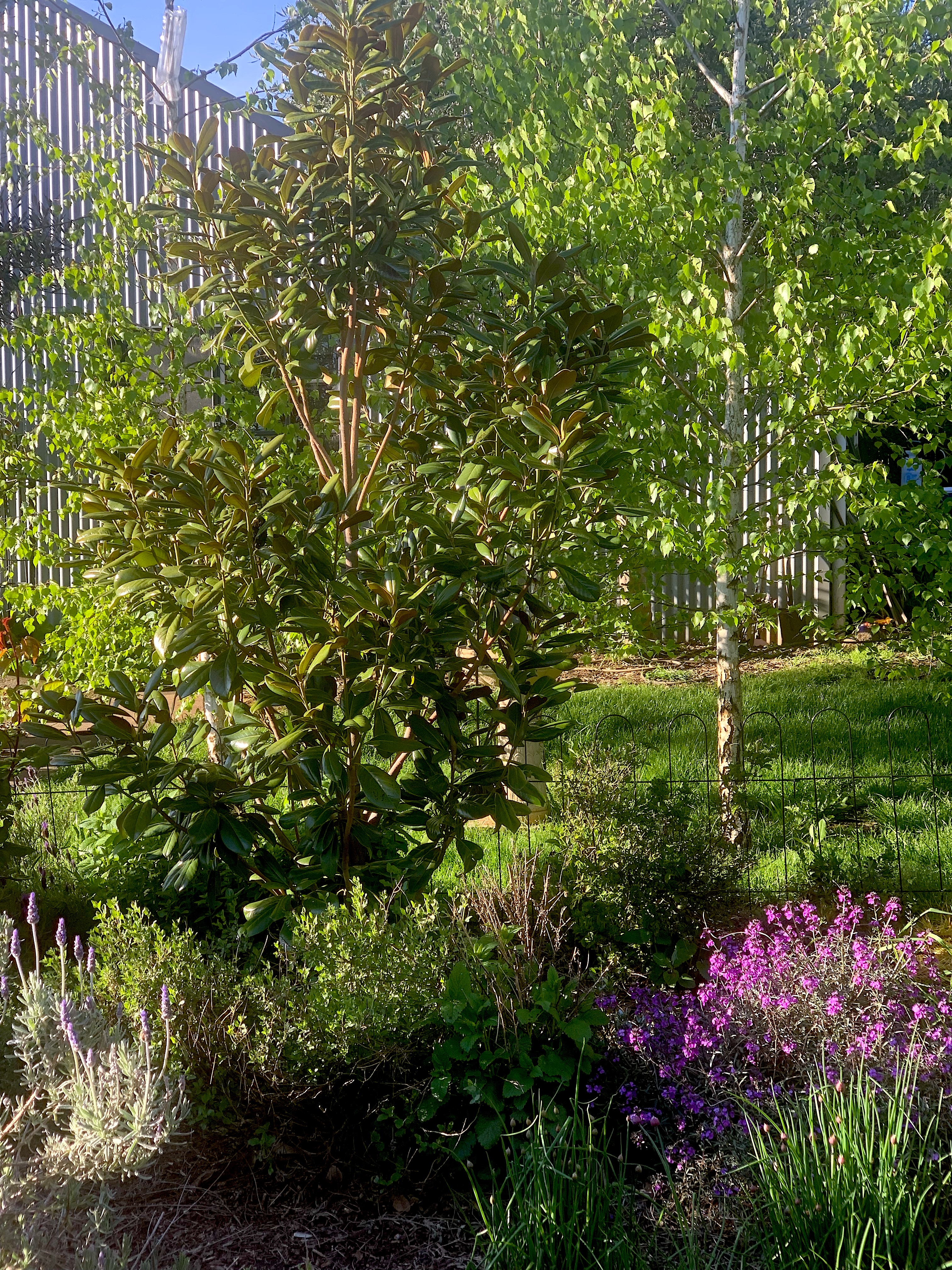
Blackbirds sing their songs of love to my crushed heart. I look to the garden you planted only a few years ago and am astonished at the height of the trees. The wind rustles slender silver birches and the leaves of ornamental pears shiver in rapport. Bees head for an overgrown patch of woody lavender, then to the purple snake bush and the rosemary. These are the only flowers in bloom this early in spring, but I can see budding carnations which are only days in the offing. Apart from these blue hues, the garden captures the full range of verdant tones from olive to sage, emerald to St Patrick’s Shamrock green.

The riot of roses that will transform the garden to a perfumed oasis are yet to emerge. I won’t cut their first blush for your bedside this year. The table shall remain bare, a reminder, should I need one, that you are no longer there. The roses will bloom, and I will reminisce, yearning for the gardener who brought life to barren land. Yes, I will see the beauty of the roses and I shall feel the full sting of their thorns.

A summer without you, in the garden you have sown, is hard to envision. It will live on, your creation, even if you are no longer here to tend it. My heavy hands will attempt your work and every flower will remind me of you.

I asked for an untamed garden, a garden of reckless colour, a garden that reflected my heart and you delivered. And now, now that you have left to return to the eternal, I grieve in the wild garden of my soul.