Lives Between Pages

It is not true that we have only one life to live; if we can read, we can live as many more lives and as many kinds of lives as we wish.
S. I. Hayakawa

I love reading. I always have. From the moment I could read, my nose has been happiest pointing to a page in a book. And yes, I do love smelling them too! From an early age, I discovered that reading could bring me more sustained pleasure than any other activity. I not only read stories, I became one of the characters, sharing in their experiences and joining in their adventures. Through books I led many lives, explored jungles, sailed on ships, had a different family and experienced freedom. This is what reading for pleasure can do for a child.

Sadly, research shows a long-term decline in children’s enjoyment of reading. A 2025 UK study by the National Literacy Trust found that only one in three children and young people aged eight to eighteen enjoyed reading in their free time. This was the lowest level in 20 years. Although the 2026 findings show a small improvement, enjoyment remains low. Yet we know that reading is important not only for future academic success but also for emotional wellbeing. There is also some evidence that reading fiction may help children develop empathy.

Another piece of the reading puzzle is the reading habits of parents. When children see their parents read, they grow up believing that reading is a part of life. When my daughter was about seven, she watched me read Vikram Seth’s A Suitable Boy. She too wanted to read a book that was as thick as that paperback. I took her to the local bookshop and we bought a copy of the collected Milly-Molly-Mandy stories. When she finished her book before I finished mine, she was so proud of herself for beating her mother in our thick-book reading race!

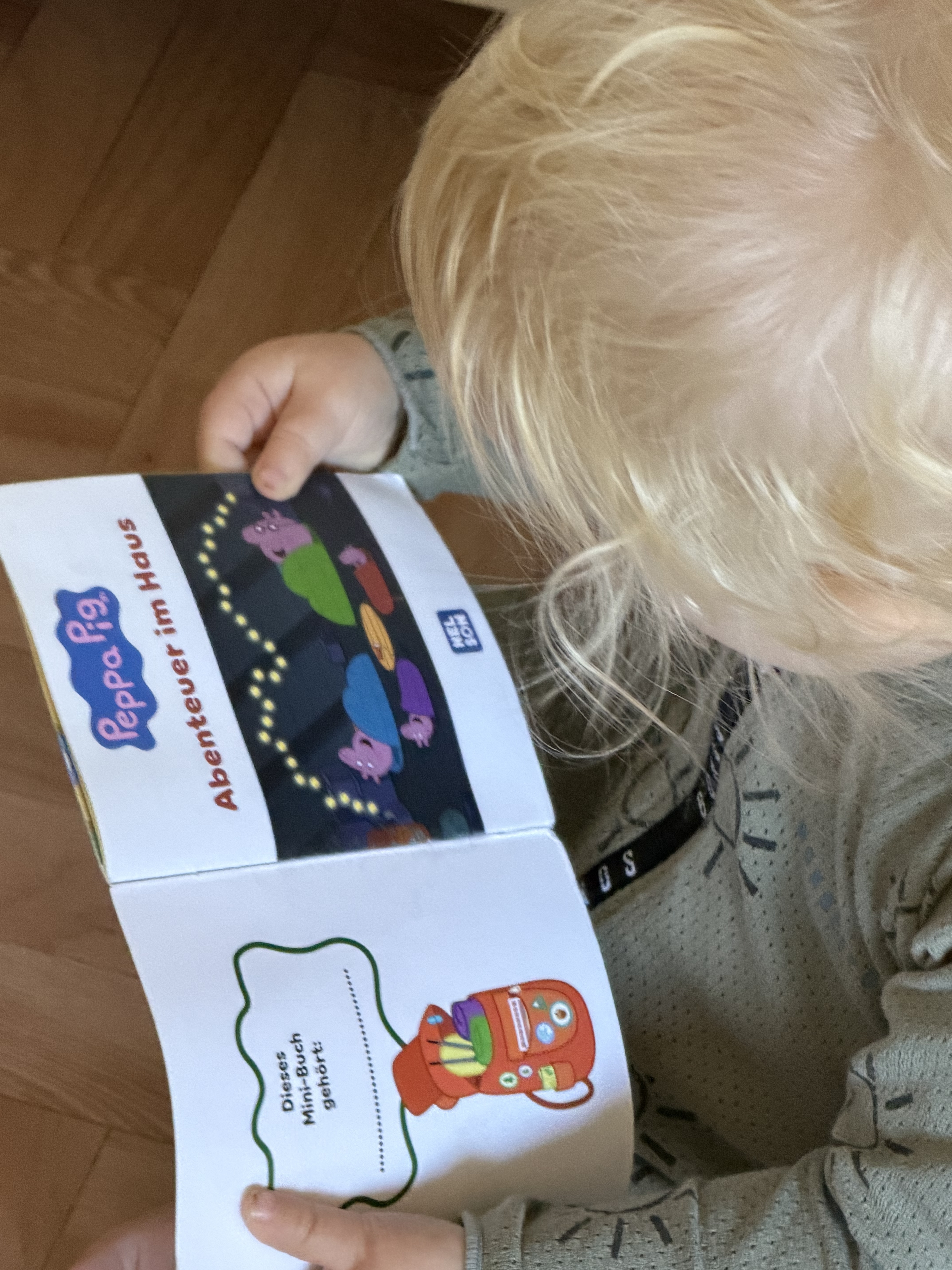
Now a mother herself, she is passing on the reading bug. My granddaughter has her own bookshelf filled with books which she loves to pull out and ‘read’. She already holds a book the right way around, turns the pages and enjoys looking at the pictures. Both her mother and father read to her and, to make things interesting, I read to her in German. Of all her toys, books are what she gravitates towards, and she can spend a long time looking at them without getting bored.

My hope for her is that she keeps enjoying books, that they transport her to many different places and that, through the power of imagination, she is able to live as many lives as she wishes.
Red Plaits, Freckles and a Dash of Mischief

The first Children’s book week took place in Australia in 1945. Every year since then, children participated in book week parades, dressing up as their favourite character from a book. This year is especially significant as we celebrate 80 years of encouraging children to immerse themselves in books and find novel ways (pun intended) to engage with reading.

The Children’s Book Council of Australia confers awards to authors and illustrators of outstanding children’s books published in the past year. The ‘long list’ or notable books is announced around February, followed by the ‘short list’ from which the finalists are selected. The books that receive prizes often become best loved classics with children.

Book week parades started out with simple home-made costumes and a lot of imagination. Today, parents can spend a small fortune on costumes, wigs and accoutrements. My favourites, however, remain the simple imaginative costumes. If I could have given a prize this year, it would have gone to a little boy at my school who wore rainbow stockings, a long t-shirt, a hand-sewn felt snake’s head and a crocheted blanket made of colourful granny squares. He was the rainbow serpent! Second prize would have been awarded to the girl in leotards with underpants over it. She was ‘Captain Underpants!’

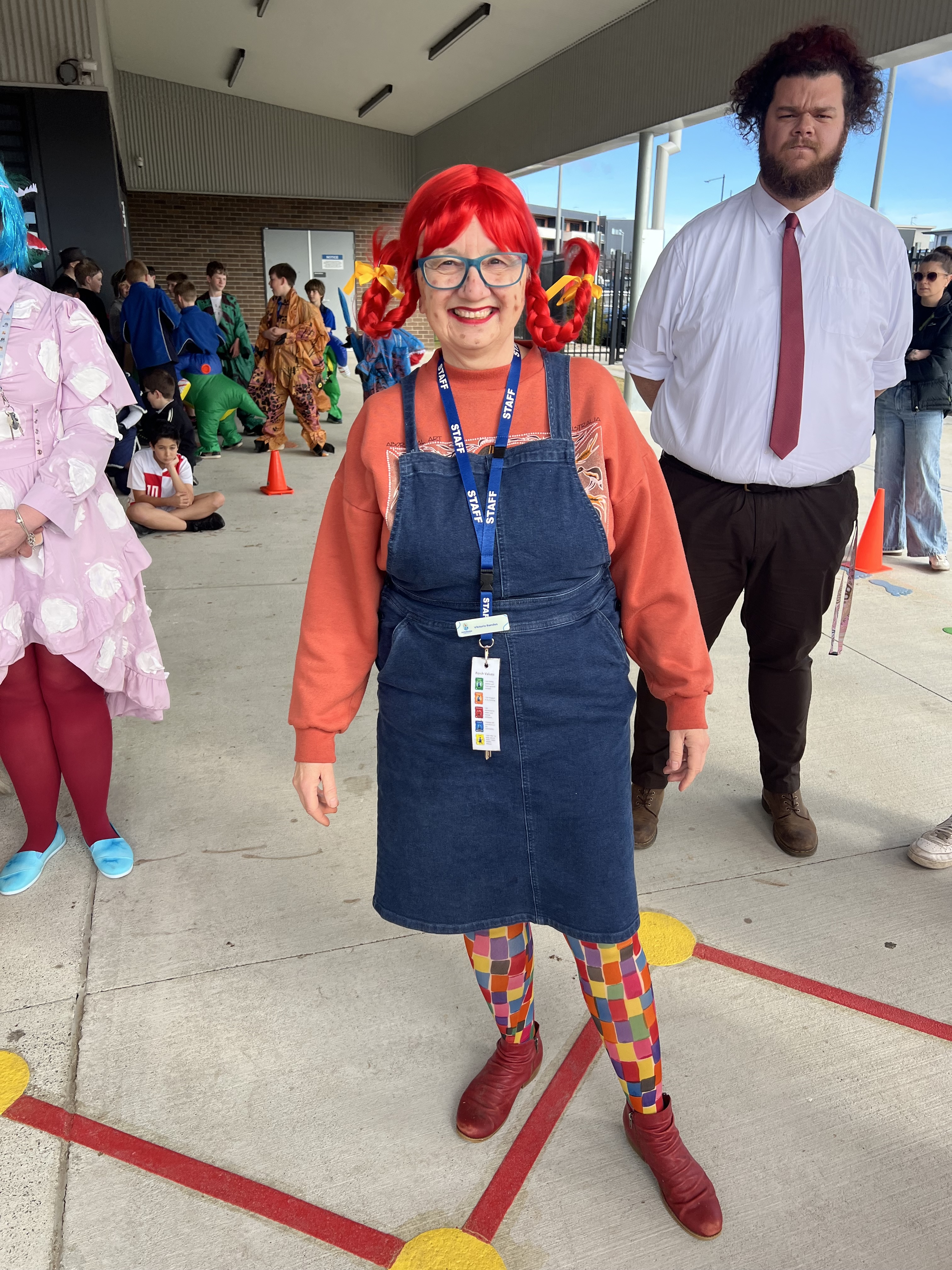
Teachers almost always join in the fun with costumes of their own. My go to is Pippi Longstocking because she was my childhood favourite character. This year, the book turned 81, a year older than the CBCA celebrations. I loved and envied Pippi. She lived on her own in Villekulla cottage in Sweden with her monkey and horse as company. Her father was a pirate and there was little mention of her mother. She was superhumanly strong, lived by her own rules and adults had no power over her, no matter how hard they tried. Recently, I was amused to read that she has been pathologised- it is now thought that she had ADHD and oppositional defiance disorder traits!  I couldn’t help but laugh at this. Are we about to prescribe her Ritalin?

There definitely is a bit of Pippi in my genes. I think that’s the genius of Astrid Lindgren, her creator. Every child has a little Pippi in them wanting to come out. Some manage it better than others. Of course, our job as adults is to keep the lid on the shenanigans and keep children from jumping off roof tops or attempting other dangerous things. Still, the yearning is always there to break free.

So once again, I embraced my inner Pippi and drove to school with my red plaits, multicoloured stockings and painted on freckles. The only downside was that the teachers recognised who I was but none of the children had ever heard of the one and only Pippilotta Delicatessa Windowshade Mackrelmint Ephraim’s Daughter Longstocking.  

Bibliophile

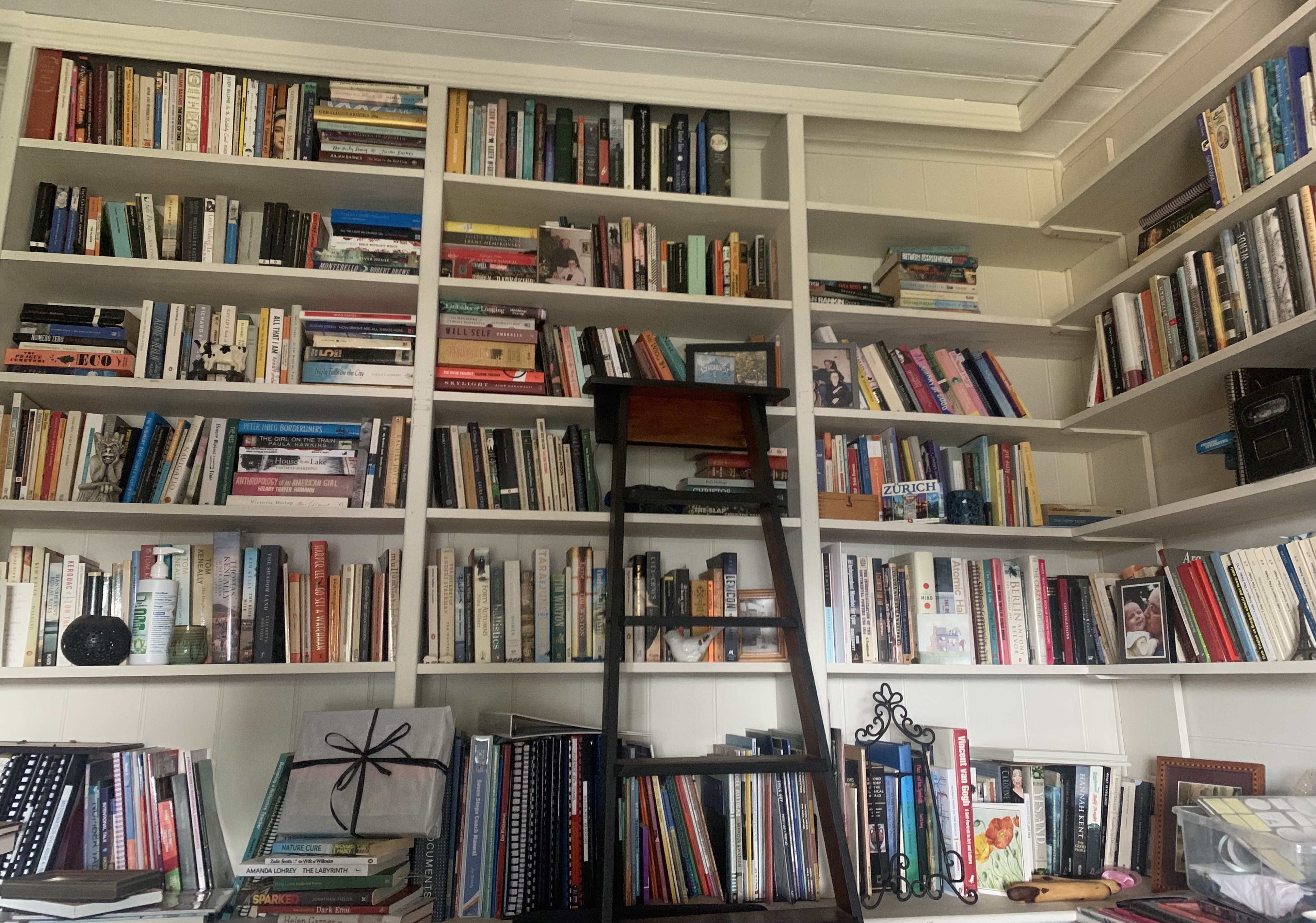
I am a self-confessed bookhound. I cannot walk past a bookshop without browsing and buying at least one book, even when I have no intention of a purchase. Sometimes I enter a store with a particular title in mind, but most of the time a book will call out and attract my attention before my rational mind can produce a scintilla of common sense. It doesn’t matter that I have thousands of unread books on my shelves, another one is added on a whim.

The last time I moved house, I counted well over 50 boxes of books. I packed them with a close friend at my side. I was glad to have her there, not only for the purposes of packing, but also to stop me from looking at each one to lovingly remember how it came into my possession. Had I attempted the exercise on my own, it would have taken days to complete the task.

This time, I know I will not have enough shelves at my new place to house my collection. Not only that, but there won’t be the wall space either. I am already investigating rotating shelves and other innovative designs. Regardless, I will have to downsize.

Today I set myself a target of reducing my collection by a mere 50 books. The first ten weren’t hard, but as I kept going, the task became increasingly difficult.

“But I haven’t read this yet!”

“I may not have enjoyed it, but it is a classic.”

“What if I want to revisit this passage and find the book is out of print?”

I listened to all the irrational arguments and kept adding books to the out-pile. It felt good to reach my target, even though I knew I would have to be more rigorous in my next cull.

Luckily for me, there is a street library down the road and its shelves were looking decidedly sparse. My contribution of 50 paperbacks has now filled all those empty spaces. I know my books will provide hours of pleasure to the readers of Millthorpe.

But will I resist the call next time I walk past a bookshop?