Jonquils in July

I make a last-minute dash to the markets for some Batlow apples. Most stallholders are busy sweeping the concrete, packing their unsold wares onto trucks. Everyone is looking forward to getting home and for some, there is a long drive ahead. They have been here since five in the morning, setting up and waiting for the first customers to arrive. I hastily look for my favourite stall and I’m lucky, the girl selling apples is still serving customers.

I take a walk around what’s left of the markets, buy some mushrooms and am given an extra bag of woodland browns to take home. These late saunters on a Saturday morning, when the place empties, are my idea of bliss and there’s always a bargain to be had.

As I come around the last isle, bright yellow jonquils catch my eye. It is mid-winter, yet here they are, heralding spring. Massed in large plastic buckets, their sweet fragrance borders on pungent. I can’t resist. Two bunches are rolled into tissue paper while I hand over a ten dollar note.

Flowers always brighten my day. I’m drawn to their beauty and fragrance. It turns out there is a reason for this feeling. Flowers can spark the release of dopamine and serotonin in our brain by their bright colours and pleasant smell. There are studies that show that having flowers in the house can lower cortisol levels. They create a relaxed and aesthetically pleasing environment which makes us feel more relaxed. 

Before I knew any of these benefits, I instinctively bought flowers when I felt downhearted. Back in 1987, I spent a rather miserable winter in Berlin. The cloud cover arrived in October and never left for six months. The short days felt like eternal dawn or dusk; it was impossible to tell which. It was during these months that I began the habit of buying flowers every Friday afternoon as I returned from university. The florist around the corner wasn’t cheap but made the most exquisite flower arrangements. They reminded me of the Japanese art of Ikebana. The designs were always minimalist, and they took my breath away. I had very little money left for luxuries, but my Friday ritual never felt like an extravagance.

This memory came flooding back as I purchased my jonquils. While I don’t possess the patience to artistically place flowers in a vase, it doesn’t much matter. A dull winter’s day has been transformed into delight by their smiling yellow faces. And for the next week, there will be guaranteed sunshine every morning.

Three Beating Hearts: The Making of a Family

Some women are naturally clucky. They coo over babies, look at them wide-eyed and are in awe of the miracle of life, so tiny and perfect. I am not one of these women. I am much more likely to coo over puppies to reach out to stroke them than I ever am to hold a baby in my arms. Hard to admit but true.

When my daughter was born, I was completely in love the moment I set eyes on her. Finally, I understood what came naturally to other women. But for me, I only had eyes and love for my daughter. She was the most perfect creature I had ever seen, and I was instantly filled with a love so strong that I knew I would do anything for her. That feeling has never left me.

When my daughter fell pregnant, I wondered how I would react to the baby once it was born. Would I be as madly in love with her as I was with my own daughter? I honestly didn’t know. Of course, I knew I would love and protect her, but would it be the same as when my own child was born? After many months of waiting and wondering who this new member of the family would be like, the day came quicker than any of us anticipated.

I arrived at the hospital just before my daughter was brought back to the ward, baby against bare chest, vernix protecting her daughter’s delicate skin. She looked so peaceful and beautiful, angelic even. Yet my eyes moved quickly to the face of her mother, my own daughter whom I love above all else. In turn, her eyes were fixed on her baby daughter and I recognised that fierce look of love, a feeling we now both share, generations apart.

She was looking out for her daughter, while I was looking out for mine.

Later in the week, I stayed at the hospital for a night so her husband could get some rest before bringing his family home. I am ashamed to say that I was of very little help that night. I heard the baby cry but could not rouse myself to get up. My darling daughter, however, was awake and doing all the things she had only learnt in the past couple of days. She was a natural. At six in the morning, I finally picked up her baby and settled her next to me so her mother could have a rest. For two blissful hours, I dozed with my granddaughter in the crook of my arm.

Her father came back in the morning and at first couldn’t find his baby. When he saw her snuggled into my arm, he laughed and came to retrieve her. He is besotted with his daughter, proud and protective. I see my husband’s love for our own child reflected in my son-in-law’s eyes. He will be a perfect father.

I am so proud of this little family. They work together, look out for one other and wear their boundless love with pride. And so, my own love expands beyond what I ever felt possible to envelope these three magnificent individuals who have become their own little family.

Woven Threads, Living Stories: A NAIDOC Reflection

My finished product

Happy NAIDOC Week! NAIDOC stands for National Aborigines and Islanders Day Observance Committee. As the name suggests, it was originally marked on a single day, and since 1975 has grown into a week-long celebration held each July.

This year marks the 50th anniversary of NAIDOC. It has its roots in protest movements seeking recognition and rights for Indigenous peoples and has since evolved into a celebration of culture, resilience and leadership. The theme for this year is “The Next Generation: Strength, Vision & Legacy.” As a teacher, this theme resonates deeply with me. We must ensure that the next generation is equipped with the knowledge, skills and tools to preserve and adapt their culture. I pay my respects to Elders past and present for the work they have done, and continue to do, in guiding and teaching the younger generations.

NAIDOC Week is also an opportunity for non-Indigenous members of the community to learn more about culture and Country. When I saw a weaving workshop advertised, I decided to go along and learn a little about this ancient craft. Ronnie Jordan ran the two-hour session at the Botanic Gardens with a couple of enthusiastic young people who clearly enjoyed sharing their cultural knowledge. I was humbled by their generosity.

Weaving is an example of complex technology, not only in the act of weaving itself, but also in the selection, processing and dyeing of materials such as grasses, reeds and even bark. Preparations like splitting, soaking and finding the right pigments are essential to how the final product takes shape. Weaving is used to make mats, baskets, bags, ropes, bowls, nets and fish traps. Weavers not only know how to create these items, but also how to repair them.

Both Indigenous men and women weave. They pass on knowledge through their hands, connecting with both people and Country. Each weaver develops their own distinctive style, which others recognise. It’s even possible to tell where an object comes from based on the plants used and the time of year it was harvested.

For our workshop, we used raffia that Ronnie had dyed using natural seeds, fruits and plants. We sat in a circle, began the process together, and continued at our own pace. I caught on reasonably quickly, perhaps because I knit and crochet, both of which rely on repeated patterns and maintaining even tension. As Ronnie walked around, she’d occasionally call out, “Exhale,” noticing that many of us were so focused we were holding our breath. After a while, the chatter died down and we settled into a meditative flow state.

The first time I saw Aboriginal women weaving was in Maningrida, in West Arnhem Land. They sat on the veranda of the local arts centre, their hands moving rhythmically as they wove baskets with intricate designs. It was mesmerising. I bought a small basket as a souvenir and carried it carefully all the way back to Sydney. I still regard it as one of the most beautiful objects in my home.

After two hours, our weaving was still very much in its infancy. We were encouraged to take some raffia home to continue. Not wanting to appear greedy, I took what I thought was a fair amount. It wasn’t nearly enough. Once home, I continued weaving late into the night until I ran out of coloured raffia. I had made a small mat, larger than a coaster, smaller than a placemat in about five hours. It gave me a new appreciation for handwoven baskets, and I now understand the price tags attached to them.

Bed Rest and Restlessness

I am an impatient patient. Bed rest is agony, not because of the pain but because I am railing against having to rest. Any other time, I long for a sleep in, a chance to have a leisurely morning, just not when I’m sick. Feeling unwell sends me into a spin of (mild) depression, feeling trapped and a sense of foreboding that I will never reemerge into the land of the hale and hearty.

I’ve had the luxury of a week off work. Was I pleased? Not a bit! I lay in bed checking emails, between coughing fits and fits of sleep. Things were happening without me running around. Everyone was coping but me. My colleagues were probably not even aware that I wasn’t there. I was superfluous.

Is this how retirement would feel? No longer needed, no one wondering what I was up to? I have always thought of the moment I leave as entering the land of milk and honey. I’d finally be able to do whatever I liked, whenever I liked. But would it be like this illness, stretching ahead without an end in sight?

Today I finally felt well enough to walk the dog and meet up with a friend. I came home, had a short rest and then proceeded to paint the laundry. First coat done, I had a longer rest before attempting the next tasks on my list. Is this what I have come to? Short bursts of energy to be followed by periods of rest before I can cope with the next item? Surely not!

Tomorrow, the second coat goes on and I have a shelf to assemble before the new washing machine arrives on Monday morning. I may then head out to the Christmas in July markets. I’m already feeling better just thinking of it. That fresh coat of paint will not only give the laundry a new lease of life but will also renew my spirits. Perhaps, I just need to find a new rhythm. One that fits in with what my body is gently trying to tell me. On the other hand, maybe I’ll hold onto that thought until at least Monday and let the sleeping dog lie on the bed. After all, I have a laundry to conquer.

23 Prime Truths My Dog Has Taught Me

  1. Live in the moment, things are much less complicated that way.
  2. It is never too cold to go for a walk.
  3. Always be on the lookout for adventure.
  4. Act first and ask for forgiveness later.
  5. Apologise fast and look sincere.
  6. Lean in.
  7. Abandon yourself to heartfelt Zoomies.
  8. Sleep is a beautiful thing.
  9. Always stretch after you get up.
  10. Being well groomed makes you feel better.
  11. Curiosity may have killed the cat, but it keeps me engaged and happy.
  12. Find fun in the small stuff like sticks, balls and play.
  13. Chase after your dreams, even if they are unattainable.
  14. Don’t take your eye off the prize bone.
  15. Loyalty is the most important virtue.
  16. The more you give, the more you get.
  17. Always find your way home to those who love you.
  18. Greet strangers with a smile (or tail wag).
  19. Your bark should always be bigger than your bite.
  20. Learn new tricks, it never fails to impress.
  21. Trust your instincts, they are rarely wrong.
  22. Train your superiors well.
  23. A pee in the bush is better than a UTI.

Low light, low mood

Today is the winter solstice, the shortest day of the year. Things are on the way up from here. Don’t get me wrong, I love the brisk, cold winter days but I do get affected by the shorter days. It can be as cold as it likes but I need light. A lack of light can make me feel quite listless and despondent. All I want to do is roll up in a ball and hibernate.

I don’t know whether I truly have SAD or Seasonal Affective Disorder but some of the symptoms fit. Symptoms like lack of energy, fatigue, sleeping too much, eating too many carbs, difficulty in concentrations, physical aches and pains, feeling anxious, blue, restless are all there but doesn’t everyone experience these at some point in their lives? It reminds me of looking at a horoscope and cherry picking your traits. Oh yes, I’m such a Virgo/Libra/Sagittarius because these five very generalised traits apply to me. Is it all in my head?

Well yes, it is all in my head in one way or another. And does it really matter if I can assign a label to my feelings? I just know I feel better when there is light around me, I just don’t like the heat that comes with it. One of the best days I can recall was a mid-winter freezing cold day in the Swiss alps with snow all around me, blue skies and a blazing sun above. I felt on top of the world, full of energy, weightless, content.

It doesn’t help to have to get up before the sun comes over the horizon. I’m gloomy and moody in the mornings until I get outside. Once I’m out walking and the sun appears, I am fine but cloudy days press down on me and keep me downcast.

I now understand why I have always felt depressed when curtains are drawn in summer to keep the heat out. It explains why I have opted for translucent blinds in my current home and why I fell in love with it the moment I walked in. There are large windows on three sides of the main room which not only let in light but the sight of trees.

I now have a better appreciation as to why people worship the sun. Even those of us who prefer to hide in the shade are drawn to her light. It isn’t her heat that I need, just her brightness and clarity. And so, on this shortest day of the year, I look forward to the light returning, day by day, minute by minute until the days are long and bright and my mood rises above the horizon.

The Miracle Morning Missed Me

Why can’t I get out of bed in the morning? Every night, my alarm is set on my phone and placed in the kitchen. I have chosen the most ear-piercing, shrill sound that I fear wakes my entire neighbourhood, but I still manage to roll over and go back to sleep. I have tried going to bed earlier, setting the alarm for as late as possible, setting it earlier to give myself more time, having a thermos of tea at my bedside, all to no avail.

The strange thing is that I’m not even comfortable in bed once I wake up. My hips ache, my bladder protests and still I lie there, convincing myself that ‘out there’ is not only less desirable but downright ghastly. It will be too cold and much too unpleasant. Yet when I finally get up, it is quite agreeable out there. The shower is warm, the world seems benign and when I take the dog for her walk, I can’t help but feel jubilant. The frost and silent fog are achingly beautiful. I wonder why I can’t return to this feeling to get me out of bed earlier. It would be so much more enjoyable to have an extra twenty minutes out in the park instead of lying in bed.

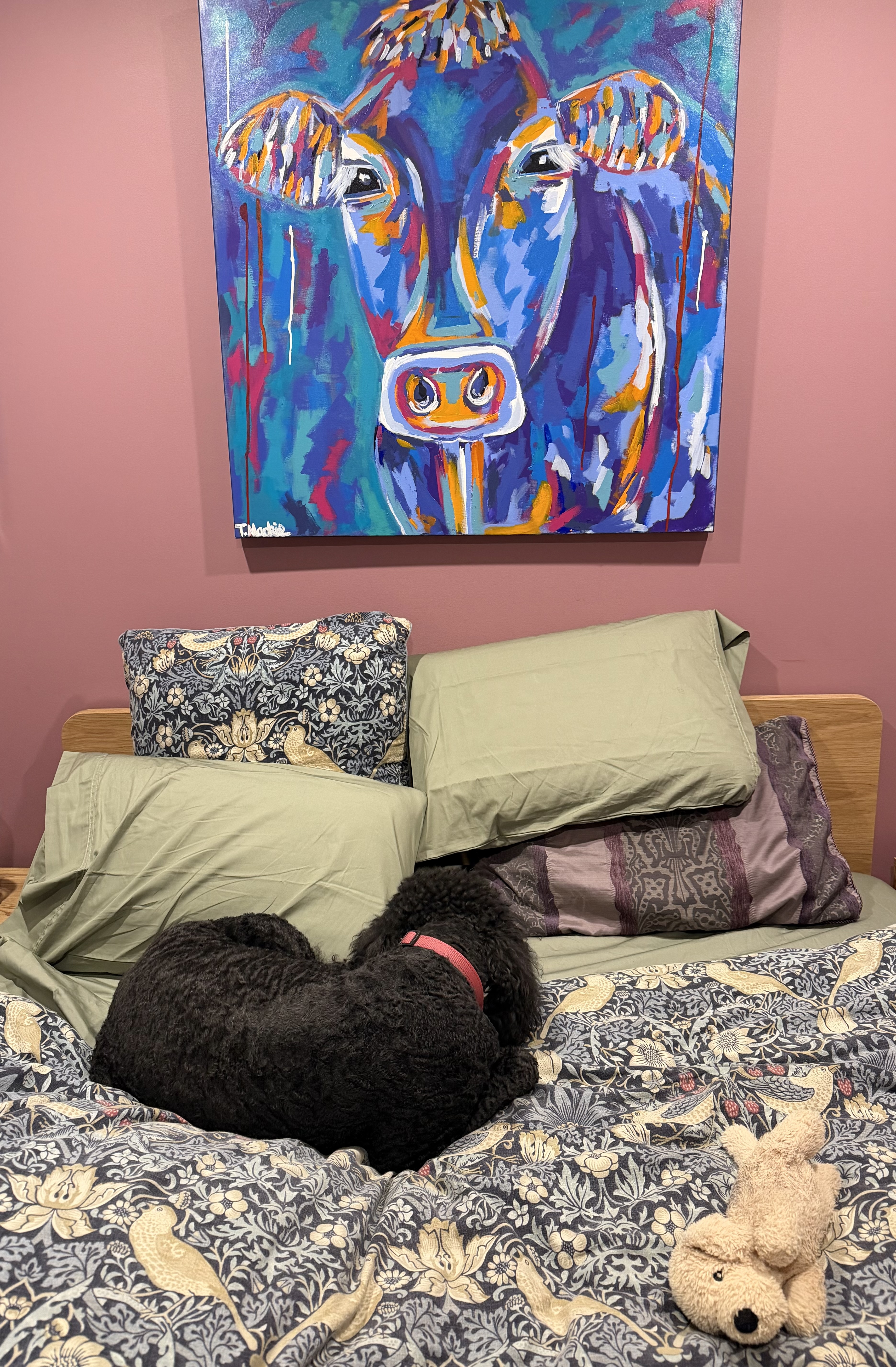
I never thought I’d say this, but I wish I were a morning person: someone who wakes up, jumps out of bed fully awake and ready to tackle the day. The type of person who is bright and chirpy, finds the first is hours of the day invigorating and gets things done before others are awake. It seems to make no difference whether I have six hours or ten hours sleep. I wake up bleary eyed, slightly grumpy and always at least a little more tired than when I went to bed. Luckily, my dog doesn’t mind me being monosyllabic for the first hour.

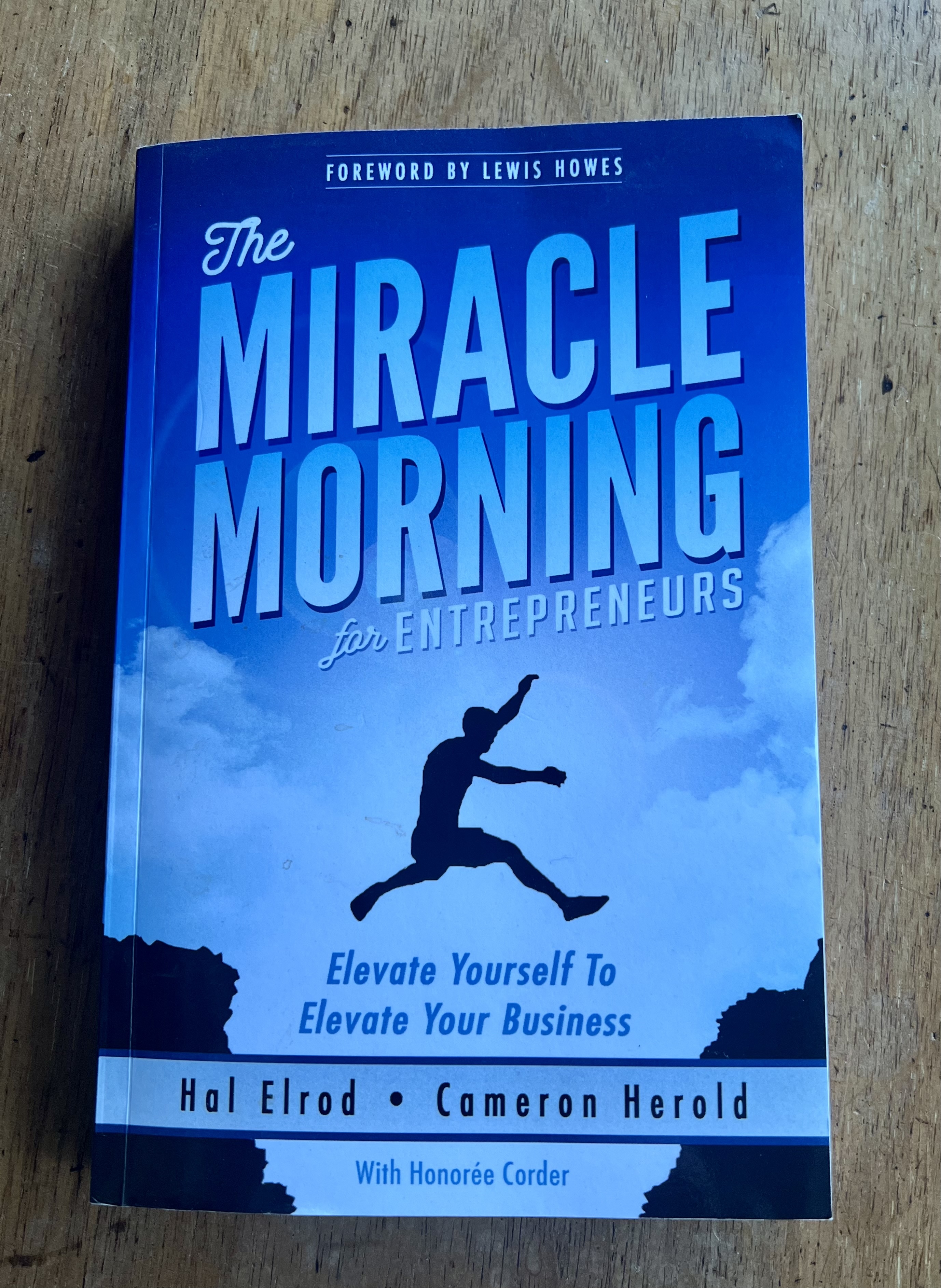
I have read ‘Miracle Morning’, ‘The Five Second Rule’ and various other books of the same ilk, trying to convince me that it is a merely a question of putting my mind to it. Lord knows, I have tried. I have even succeeded for a week or two at a time, but it was always a struggle, and I never felt full of energy. My rocket booster kicks in about 30 minutes before bedtime, which would be perfect timing if my job were midnight space travel, but not so great for a 6am start in the real world.

Many years ago, I taught English to Chinese students at a private college. It wasn’t a great job and for the most part I was deeply unhappy there. But there was one moment that has become a favourite of mine, an anecdote that resonates with every fibre of my being. A young man handed me his journal to be marked. The first sentence read, ‘I was alarmed at 7am.’  I simply couldn’t bring myself to mark it as incorrect.

From Asters to Astoria

Asters are star shaped flowers with tube like petals that come in a variety of dazzling colours. I was given a bright pink bunch a couple of weeks ago and I delighted in their cheery presence, especially in this bleak and wintery weather. Sadly, their stems soon began to droop, but the flowers retained their sunny disposition. That’s when I decided to cut off their stems and float the flowers in a bowl of water. They have continued to bring joy for two weeks and still look fresh.

Their flower heads remind me of daisies, so I wondered whether they were related. It turns out they are. Like a daisy, the disk florets in the centre of the flower are bright yellow, which is why we think of them as being sunny. Asters bloom late autumn and provide an important food source for bees and when there is little nectar to be found. My pink asters are native to Australia but as a species, there are more than 250 varieties in the world.

While researching the humble aster, I learnt that the Hungarian revolution of October 1918 was also called the ‘Aster Revolution’. The name was derived from soldiers removing the Austro-Hungarian symbols from their caps and replacing these with asters.

The ‘headquarters’ for the revolutionaries was at the Astoria Hotel in Pest, on the eastern side of the Danube of the dual city of Budapest. This stunning seven storey hotel, featuring fin-de-siècle architecture is still one of the best loved hotels in the heart of the city. However, at the time of the revolution, it was only four years old and without a doubt one of the most elegant places in Budapest. It was from one of its balconies that the leader of the First Hungarian People’s Republic, Mihály Károlyi, announced the end of the Hapsburg empire and the foundation of the republic to jubilant supporters below. This was the only revolution that Hungarians have ever won.

Reading about the significance of the Astoria took me back to the 1980s, when during a particularly cold winter, I arrived in Budapest to find the transport in the city had ground to a halt. Metre high snow lay frozen on the side of roads; there were abandoned cars and trams everywhere, and the occasional taxi or bus that was still operational wouldn’t stop.

I stood at a bus stop with dozens of commuters needing to get out of the cold. They were locals, while I was a tourist with a 30kg backpack that I could barely carry. When a bus finally stopped, they roughly pushed past me to get on board. I slipped on the ice, fell on my back and was transformed into a giant beetle, like Gregor Samsa in Kafka’s Metamorphosis. By now the bus had left, and I lay on the ground, legs in the air, crying, asking for my father’s intercession to get me out of this mess. After all, I was in his hometown, chasing ghosts.

Getting up seemed to take an eternity. I was cold, miserable and lonely. My only contact was my aunt who lived in a Soviet style high-rise in Buda. It was miles away. That’s when I spotted the Hotel Astoria on the other side of the road. Surely, someone could help me there.

I trudged across the road, entered the building and was greeted by a friendly face. I wiped away my tears. The woman behind the counter took pity on me and called my aunt who immediately took charge of the situation. All I had to do was to wait outside until she bribed a taxi driver to drive back into the city to collect me. Within half an hour the taxi arrived, and I arrived safely at my aunt’s place fifteen minutes later.

The weather improved the next day. I took the bus into town, found a florist and bought a pot of chrysanthemums. These I delivered to my saviour at the Astoria. At the time I had no idea of the hotel’s history. Nor would I have known that chrysanthemums are closely related to asters.  

The Quiet Cost of Disconnection

A few weeks back, I drove 330 km to attend friend’s birthday lunch. I hadn’t seen her for about six months and was delighted to surprise her on the day. I also caught up with a couple of friends I hadn’t seen for years on that weekend. Since then, my life has revolved around work, and I have barely seen anyone. Usually, I don’t mind at all, I’m a bit of a loner and rarely feel lonely. Lately though, there’s been a niggle gnawing within me, a slight feeling of dissatisfaction, which I’m finding disconcerting.

I talk to lots of people during the day, so it isn’t a lack of contact. However, most of my interactions are transactional and I don’t feel connected in any meaningful way. Today, it occurred to me that I know very little about the private lives of my colleagues and they know very little about me. Whilst I don’t expect to have all my social needs met at work, it is where I spend a large chunk of my time.

We always think about the quality of our diet and exercise as the main risk factors for our health. Recently, studies have identified another risk factor, which could be equally as important to longevity and health – the importance of social relations. This may be because the support that friends offer can lower our stress hormones, it can even help regulate insulin and help with our gut function. It reminds me of studies that have been done on positive coronary effects of purring cats on laps. We all need companionship and physical touch.

What matters most is the quality of our interactions. Happy marriages can help prolong life; unhappy ones can lead to poor health outcomes. While not causal, there’s a definite a link. This also applies to friendships. The stronger and more harmonious our friendships, the happier and healthier we tend to be.

But it isn’t just the social interaction that’s been lacking from my life. I haven’t done much of the two things that keep me centred. The first is walking and the second is writing. Before work, I only fit in 15 to 20 minutes of a walk and, now that winter has arrived, I mostly get home after dark. I miss my hour-long stroll after work and so does the dog. No such excuses for my lack of writing.

After a few weeks of missing the online London renegade writers’ group, I finally logged on today. We wrote, we chatted, we laughed and cheered each other on. Such a simple step and I already feel better. Two hours later, I’m buoyed, smiling, and content with my lot once again. And here’s the blog post to show for it.

Music in the Margins

Dickson is an inner-north suburb of Canberra, well known for Asian restaurants and specialty grocers. The shopping precinct is also known for people sleeping rough, alcohol and drug problems as well as boarded up shop fronts. Coles and Woolworths are two retail giants competing against each other, but small shops struggle to make ends meet. It is a mixed bag.

In the centre of the shopping precinct is a plaza with a public library servicing the surrounding areas. At night, the covered entrance way provides shelter for the homeless. Vinnies does a night patrol in the area, providing food, jackets, sleeping bags, and offering non-judgmental social interaction. There are many who would like to clear out the poor and ‘improve’ the suburb. They speak of a clean-up as if it were a matter of getting some mops and brooms, sweeping away unwanted people.

Yes, I can attest to the problems in the area, but I also see a richness and community spirit. While waiting for a prescription to be filled, I sat on a bench opposite a muralled wall where an upright piano stands under the eaves of a building. It is old and weather-beaten, but its keys are intact. Playable, even if most likely out of tune.

A man in his 40s, wearing a black backpack, sat down, rolled a cigarette and began to play. The music that flowed from his hands was enchanting. As it was a public holiday, there were very few people about. Yet those who were about to walk past, stopped, took videos or simply listened before continuing on their way. I stood up and commented on the soaring melodies to a woman with a pram. Her toddler was transfixed. Soon, someone else joined us and we were strangers no more. The pianist had brought us together to enjoy the moment, doing what he loved best, awakening within us the power of music.

At the end of a song, I approached to say thank you. He was rather bashful, telling me he was self-taught and had only been playing for two years. He could only play by ear, and as he hadn’t worked out how to use the black keys, he could only play in C major or A minor, the two scales that can be played solely on the white keys. He probably wasn’t aware of that. Nevertheless, he sounded accomplished, and his repertoire was extensive.

This man, rich in spirit but poor, had transformed my trip to the chemist into deep appreciation for the gifts that people can offer each other. He touched the hearts of everyone who walked past and allowed people to connect who would otherwise not strike up a conversation. All because someone had leaned an old piano against a wall in the mall.

I have seen the architect’s impression of a precinct, a master plan of hundreds of new apartments and clean, green public spaces. The language of conservation (zero waste) and Connecting with Country (green corridors) are present, appealing to our middle-class conscience.  No doubt the suburb will enjoy a process of gentrification and it will be prices rather than the broom that will eventually sweep the suburb clean of people like the piano man.