Over the past year, I have replaced all my amalgam fillings. My dental visits from now on would consist of a clean and polish. Or so I thought.
I became aware of a rough edge on a back molar. No matter how much I tried to stop my tongue from exploring the area, it always returned to it like a homing pigeon with poor judgement. On closer inspection, I saw it was my favourite filling.
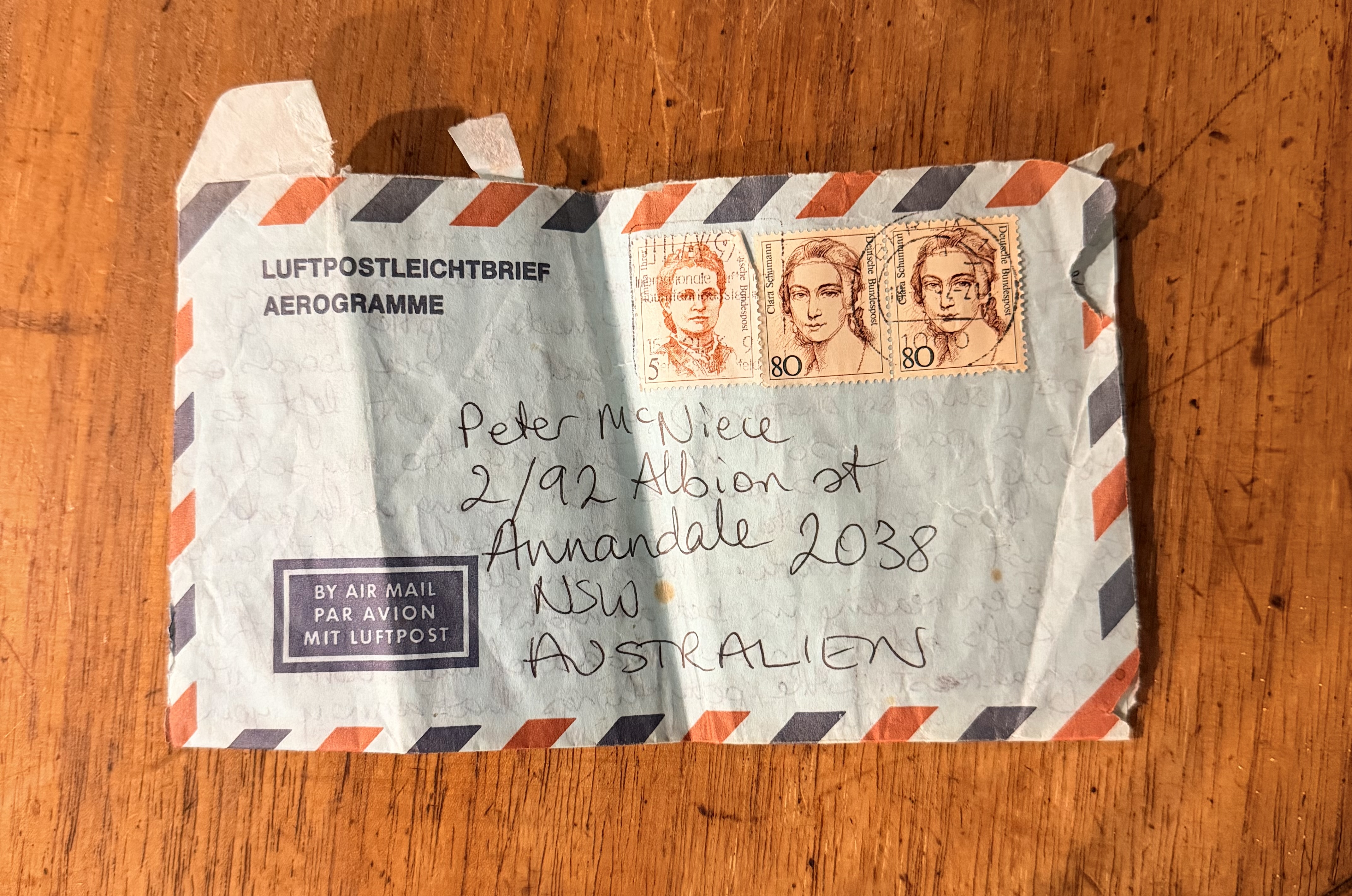
In December 1987, I was living in Berlin. I had met the man who would become my husband in August of that year, just before I was to fly to Germany for a year. We wrote to each other daily on blue aerograms, as thin and brittle as onion skin. Back then, the postal service worked and I received my replies within a week.
Peter was coming to visit! I began to count down the days. He was taking a train from Frankfurt and would arrive at Bahnhof Zoo in the evening. Unfortunately, I had a scheduled appointment with my dentist, Frau Dr Quast that afternoon. When I arrived with my throbbing tooth, I explained that I would be seeing my lover for the first time in months that night.
‘You can’t arrive numb and dribbling!’ she said. ‘How will you kiss him? We’ll do this without anaesthetic. Tell me when you need a break, Ja?’
Frau Dr Quast kept her word. She drilled, took a break, drilled some more, took a break, until she could finally fill the tooth. It was meant to be a temporary solution until I could go back to have it capped. I thanked her for her forethought and gentleness. This was to be my first non-metal filling. Then, as the tooth stopped hurting, I never went back. That temporary filling has lasted 37 years.
Last week, I kept the appointment with my current dentist, Dr Park. That filling needed replacing. I recounted the story of that December afternoon appointment with Frau Dr Quast. He was impressed. ‘That’s the best dentistry story I’ve heard in twenty years,’ he said, ‘but the love filling will have to go.’
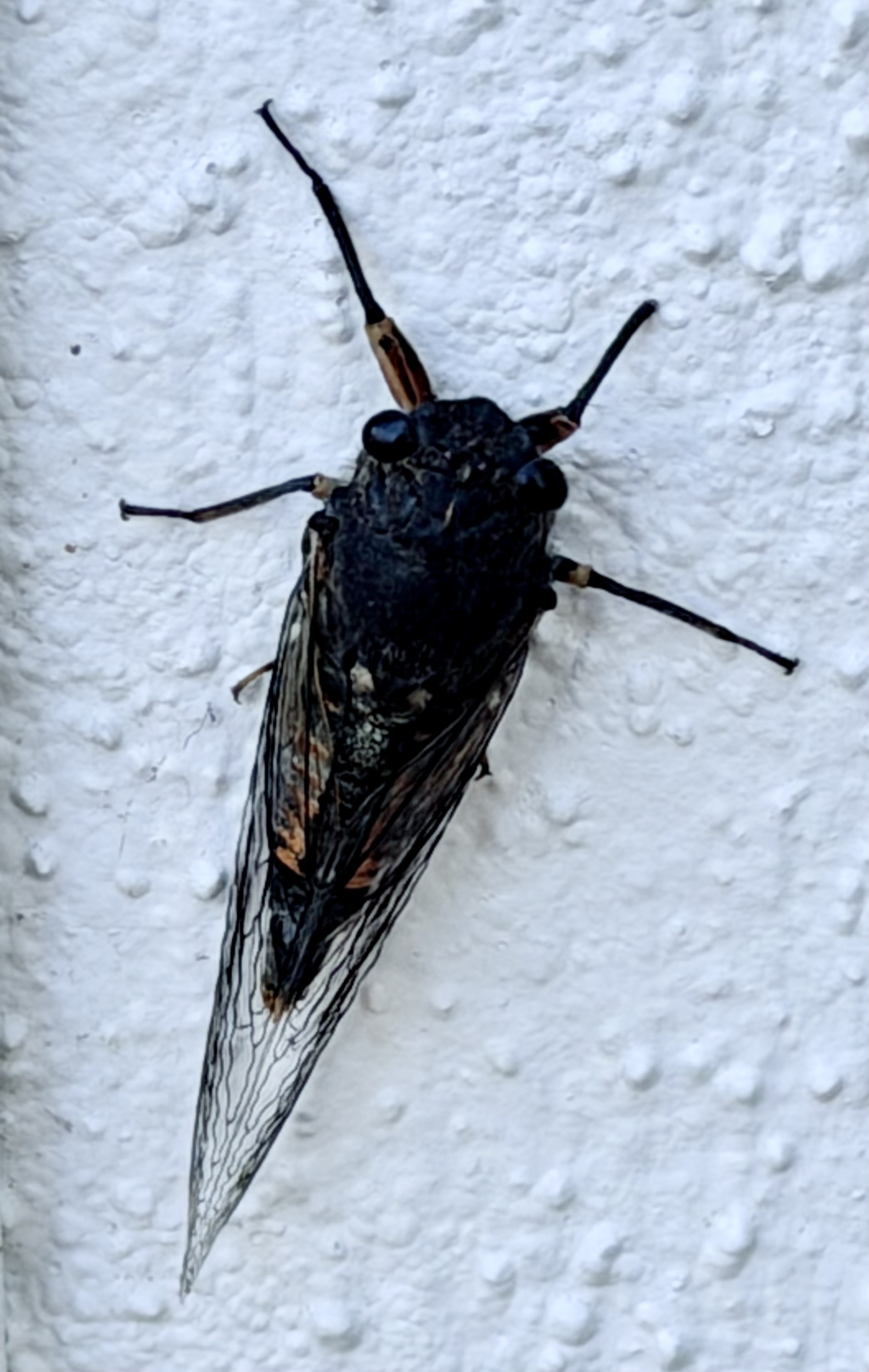
The sound of summer in Australia is the ear-splitting drone of cicadas. On a hot day, different species may be heard, each with their unique song. The sound they make with their tymbals creates the characteristic rhythmic drone. On my walk the other morning, the sound reminded me of a hurdy gurdy used in medieval music.
The closer I listened, the more sounds I heard, including a lower rhythmic quack that punctuated the drone. Intrigued, I recorded the sound and headed home to do some research. The quack quack sound belongs to Red Eyed Cicada and the high pitched deafening drone comes from the cicada affectionately known as the Greengrocer.
The common names of cicadas in Australia are often comical. Here are some of the ones I have come across: Double Drummer, Yellow Monday, Floury Baker and Razor Grinder… They sound like nicknames acquired down the pub after a few beers.
Some years ago, I worked at a school where classes were named after a theme. One year, the whole school was named after insects and I chose for our class to be the cicadas. We collected their shells from trees and learnt about their life cycle. Children often brought in cicadas they had found and after studying them, released them in the playground. At the end of the year, each child was to receive an award which I read out aloud at an assembly. I found 25 different cicada names which I assigned to each child with a sentence or two about their personality. Parents laughter echoed in the hall as I read amusing anecdotes I had collected throughout the year. The kid who liked to tap his pencil on his desk became the Double Drummer, the Black Prince was our Star Wars aficionado. I haven’t thought about that for years.
This year we have had a strange summer. It arrived somewhat late and while there are stinking hot days, the temperatures have also plunged into the teens. It is pretty unpredictable at present. I am not a fan of the hot weather and much prefer autumn and winter, especially in Canberra where temperatures plummet to negative numbers. Yet the sound of cicadas cutting through the summer heat, loud and insistent, brings a measure of joy to even the hottest days.
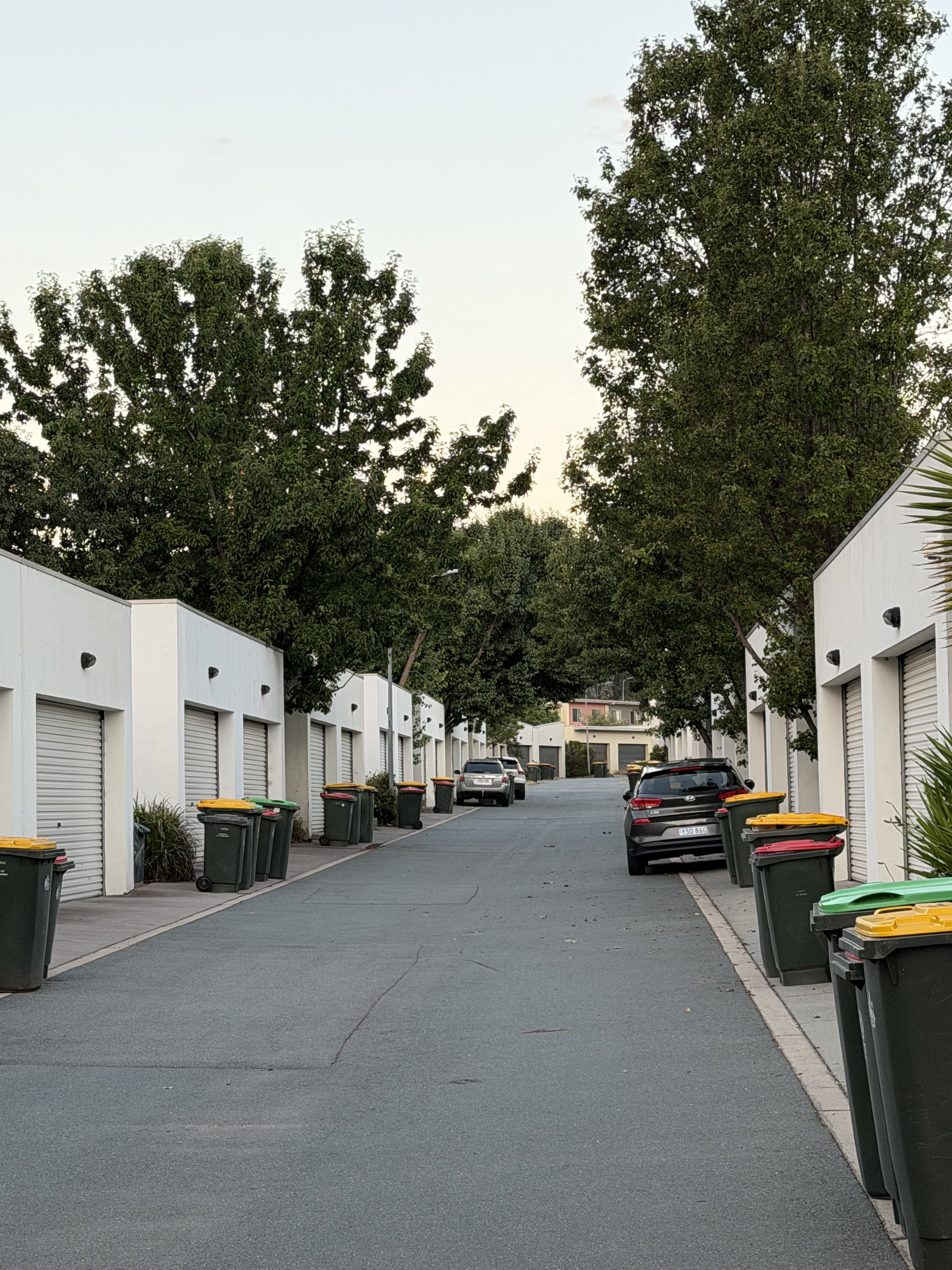
We had a little laneway gathering just before Christmas where a good many of neighbours came out and mingled, bringing food and drinks for everyone to enjoy. There were people I knew reasonably well but also neighbours I had only seen from a distance. The ones I knew were the dog owners whom I had met at the park or had been introduced to previously.
We blocked off the lane so kids and dogs could run up and down to their heart’s content. When an unexpected downpour threatened to end our gettogether, we simply moved into one of the garages and continued there until the rain stopped. We visited each other’s gardens to see what people had planted and admired some clever renovations. It was a convivial and relaxed celebration of the year we had traversed.
Most of the conversation was small talk, focusing on questions such as how long someone had lived in one of the two streets that abut the lane, and whether there were animals or children in the household. There were pets to adore and babies were passed around that we cooed over. About an hour into the festivities, a neighbour’s son initiated a conversation with me. He asked whether I had chosen a word for 2026. I admitted that I hadn’t thought about it and we continued to chat about a range of subjects. He moved off to talk to other people but I kept coming back to his question and began to wonder whether a single word may not be a better talisman than a new year’s resolution.
I thought about choosing a word for the next few days and realised that I had in fact done something similar in the past. The difference was that I always chose three to five things to focus on and unsurprisingly, I’d forget by February. The only time I remembered was one year when my phrase was ‘Just do it’ and this was ruined for ever when Nike adopted it as their slogan. It doesn’t help to jump up and down and cry ‘I used it first!’
I tossed around quite a few words, synonyms for words, words that focused on intention and words that act as a charm. I remembered a bracelet I was given for Christmas years ago that had the word ‘fearless’ etched on the band. The colleague who gave it to me recognised that I was often acting out of fear and she wanted me to learn fearlessness.
I played around with this word but recognised that it wasn’t quite right for me. It is not so much an absence of fear that I need but the courage to face it. That’s how I came to my word for 2026.
I want to have the courage to speak up for myself and others, the courage to initiate instead of waiting, the courage to say no and the courage to say yes to what I want out of life. One word held lightly, to guide me through the year. Surely, that is enough.
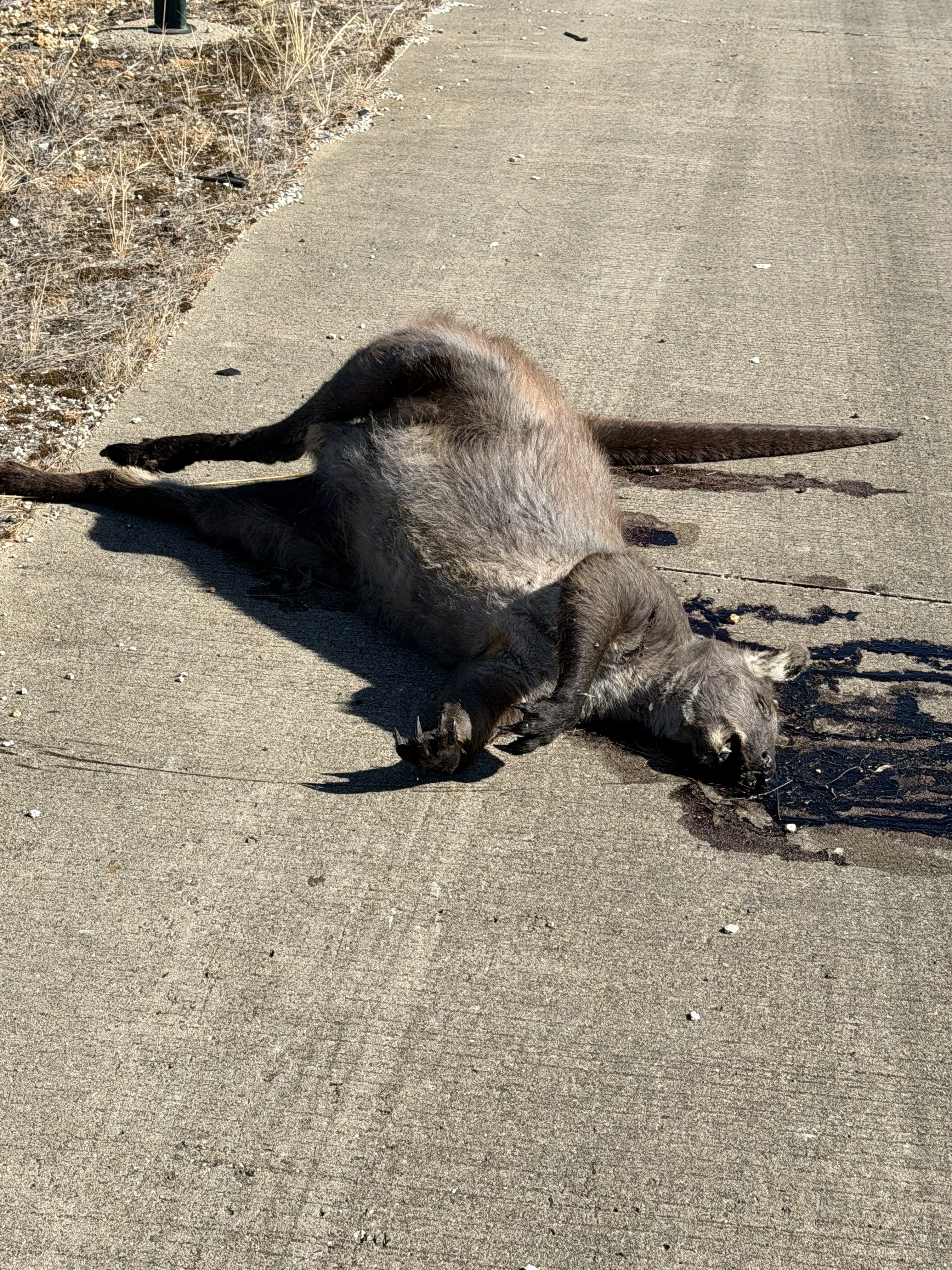
When friends come from overseas, they often bemoan that they only ever see dead kangaroos on the side of the road but never live ones. I share their unease about this road toll that seems to be accepted as a fact of life in Australia.
Until I moved to the country, I didn’t realise just how many animals are killed daily. Now that I live in Canberra, known as the bush capital, I encounter dead kangaroos, birds and wombats almost every day on my way to work. People in cars drive by, drive over, or drive around the carcasses. The animals decompose on the roadside, are eaten by crows or become odd-shaped patches on the bitumen.
According to a conservative estimate, ten million native animals are killed on roads each year. This doesn’t include foxes, rabbits or mice. As there is no national database, this figure is extrapolated from reported cases to wildlife rescue organisations and insurance claims. Many animals would simply disappear into the bush and die there.
In some places, efforts have been made to reduce this carnage. There are rope bridges for possums to cross over highways, and I’ve seen tunnels under sections of road for wombats, echidnas and other animals. However, these measures are few and far between. High fences have been erected around some roads to stop kangaroos accessing them, but these are extremely expensive to build and maintain.
Most wildlife is killed at dawn or dusk when our native animals are on the move. They’re often attracted to the greener grass at the side of the road or they’re crossing to reach water, food, or they may be looking for a mate. Their territory is often fragmented, which forces them to attempt crossings simply to get where instinct tells them to go. Barriers in the middle of the road may protect cars from oncoming traffic, but they also trap animals on the roadway with vehicles whizzing past.
My heart aches every time I see a dead animal on the side of the road. I’m shattered by the sight of a dead mother kangaroo and a joey a few metres further along, and I think about a dead bird’s mate waiting for its return. It’s easy to become desensitised when you see carcasses every few metres along a stretch of road. It becomes part of the everyday experience of driving to work or going on a road trip. But I don’t ever want to get desensitised or accept that this is how it has to be. We are needlessly putting endangered species such as the Tasmanian Devil and koalas at further risk of extinction.
While I don’t have an answer, I can only plead with drivers to slow down when animals are most likely to be on the move. If safe to do so, stop and let that echidna cross the road, or move that turtle in the direction it’s facing. If you happen to see an injured animal, call Wildlife Rescue Australia on 1300 596 457.
There are no roadside memorials dedicated to this daily slaughter. But I have my own small ritual when I see a dead animal on the road. I put a hand to my heart and breathe a breath or two in acknowledgement of their life and of the destruction we humans continue to bring upon them.
Winds have cut through last week with an invisible scythe. The billabong is covered with dust and debris and smells putrid. Tiny flies swarm around the water’s edge. As I look at the devastation around me, I am surprised there are no trees down. Plenty have fallen in surrounding suburbs.
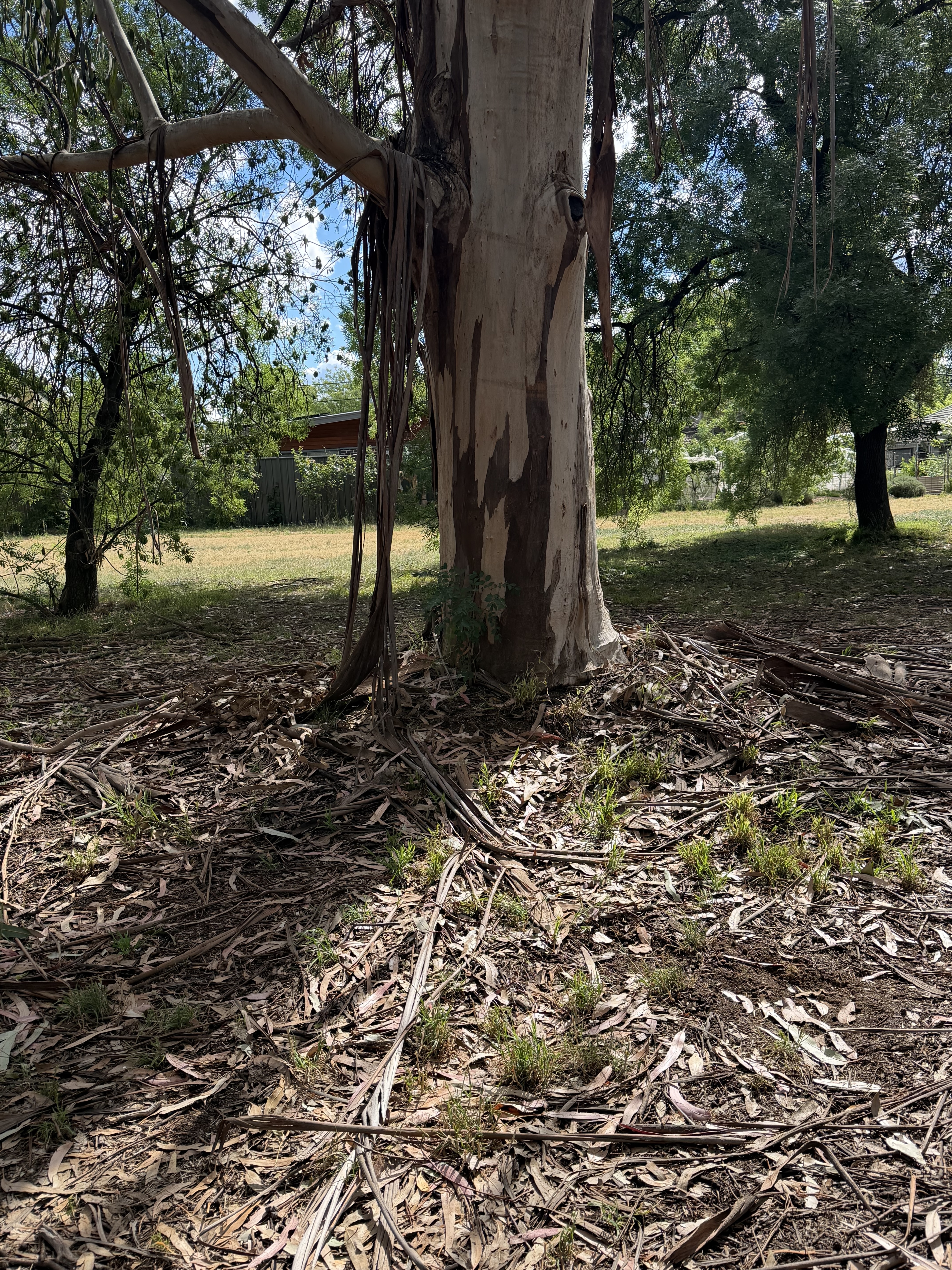
Leaf litter lies ankle deep, mixed with bark stripped clean from trunks. It is as if Mother Nature has sandblasted her children bare. How did young chicks in those swaying canopies survive wind gusts of 80 kilometres an hour? I’ve not heard a peep from them this morning.
The accompanying storms were short lived but the wind continues to rumble and roar like a road train. The little rain that came with it evaporated within hours, leaving the ground just as compacted and impenetrable as before. Any loose soil has been spun around and around like whirling dervishes in a trance. I am transfixed by the spectacle of dozens of whirly whirlies, small rotating whirlwinds forming across the denuded field.
My walk in town yesterday was miserable. The wind fired bullets of grit at my face and eyes. Its fury whipped up loose items on the ground and hurled them at unsuspecting passers-by. Women tacked their skirts as they leaned into the wind, slicing through the air. Children clung to their parents’ hands, wondering what might happen if they let go.
Back home, windows rattled and walls were buffeted. Further north, roofs and even lives were lost. I never felt any immediate danger, only awe at this force of nature completely out of our control. These past few days have been a reminder that nature is not something separate from us but an integral part of our daily lives. We need only to pay attention to it.
There is an ancient rainforest at the bottom of a gully in Katoomba. To reach the forest floor of the Jamison Valley, I take a cable car that drops 200 metres at a 36 degree incline to attend a special session of the 2025 Blue Mountains Writers’ Festival. As we descend, the vertical sandstone cliff face looks almost close enough to touch. Three hundred million years ago, an expansive sea spread over this area. Over millennia, sediment and sand formed into hardened layers which we now recognise as sandstone. Each layer reveals its geological history through erosion, sedimentation or uplift. This cable car is my TARDIS. It is the closest I come to time travel.
The sandstone is ragged. Tiny ledges mark the layers, and wherever a square centimetre can be found, life takes root tenaciously. Small trees curl their roots around rock and somehow find enough nutrients to stay alive. I am in awe of the miracle of life I am privileged to witness.
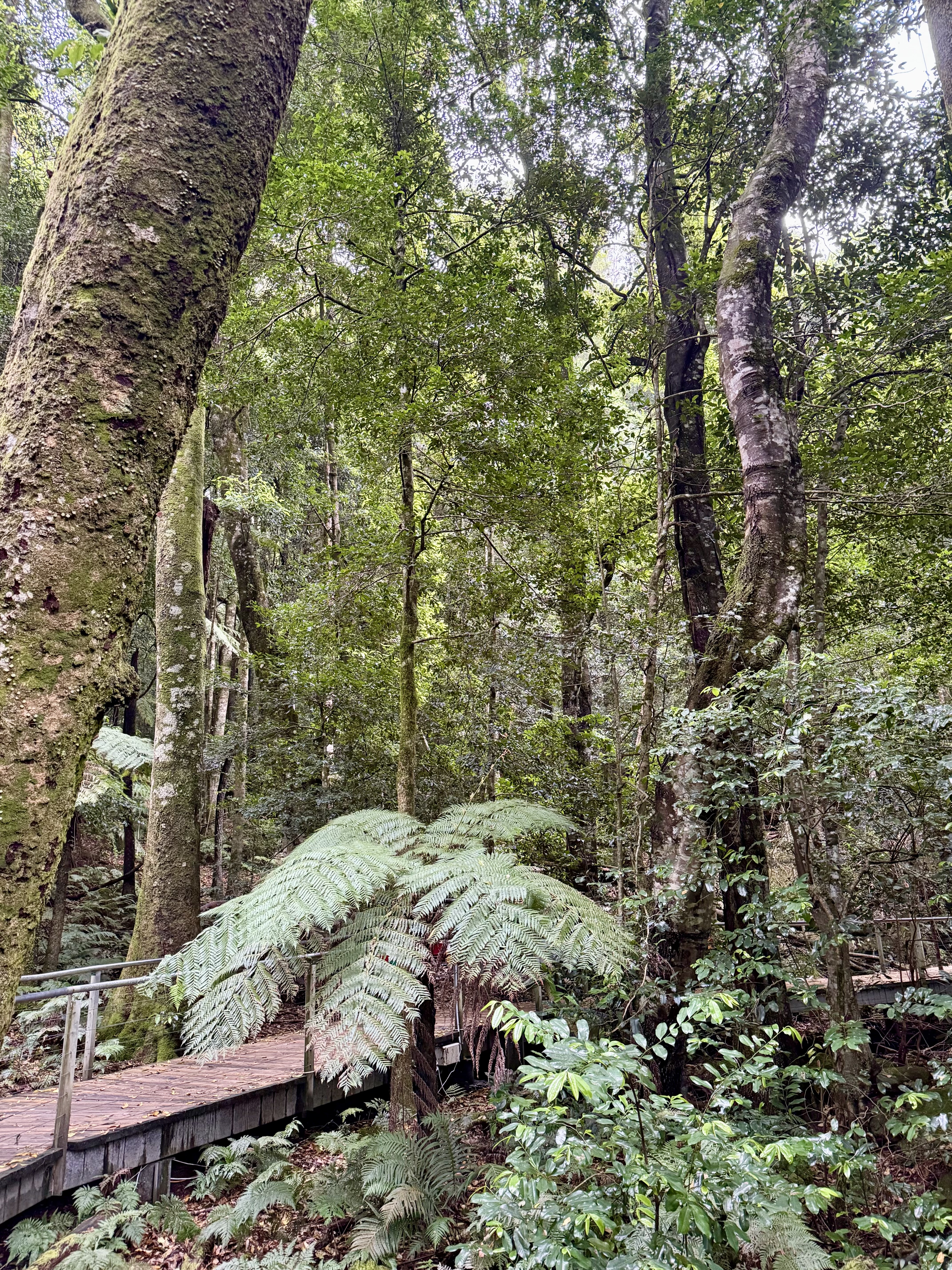
My TARDIS docks next to a wooden boardwalk that winds 2.4 kilometres beneath a rainforest canopy. This area is a privately operated tourist attraction that has managed, for the most part, to keep the rainforest pristine. Some added features feel kitsch, like scattered ‘dinosaur’ bones for children, but they are confined to one side of the boardwalk, so I simply look the other way.
I am enchanted by the ancient trees, vines and ferns that surround me. Some ferns are as tall as trees and about two hundred years old. Smaller ferns, unfurling their fronds, show tight spiral shaped leaves, an example of the Fibonacci sequence in nature. Mesmerised, I regard a delicate formation that follows this complex logarithmic pattern. I am not a mathematician, but I have a deep respect for how mathematics explains so much of the natural world. We seek patterns.
After a fifteen minute walk, I reach the Rainforest Room, a yurt like structure without walls that accommodates about one hundred and fifty people. Seats begin to fill. We are here at 7.45 on a Sunday morning to hear three writers talk about their books. Nature is the common element in their writing, though not all are happy to be labelled nature writers. I have come to hear Inga Simpson, whose work I admire. I don’t know the other two writers, Jessica White and Jane Rawson, but I know I will enjoy the session.
We sit in silence, looking out onto the rainforest. I am struck by the Coachwood trees, which have paintbrush wide white splotches. It looks as if someone has wiped their brushes on the trunks. Later I discover these marks are caused by lichen. They look stunning.
I recognise Sassafras, Turpentine and the Blue Mountain Gum among the trees. Then my ear attunes to songbirds tentatively striking up a melody. Within a minute, they are drowned out by the raucous sound of Sulphur Crested Cockatoos. I can’t help but smile at these juvenile delinquents who arrive with their boom boxes, ready to crash any party. Good luck hearing a song underneath all that squawking.
The event starts and I listen to Jane Rawson speak about her latest book Human/Nature, described as a lyrical work of creative nonfiction. I am drawn to her honesty and humour as she talks about establishing a life in the Huon Valley. Inga Simpson speaks about her latest book The Thinning, which I read some time ago. While it wasn’t my favourite of her works, it is interesting to listen to its reception within this group of readers. Jessica White talks about Silence Is My Habitat, her book of ecobiological essays. I am drawn to the title. Silence has always been my friend. I occasionally play music, which I love, but silence is what I long for most. I am listening to a kindred spirit, but her silence has been imposed by deafness, which she acquired at the age of four after pneumococcal meningitis. Her deafness has rendered the world silent, but it has given her the superpower of acute observation, especially of the natural world.
I love listening to these women in conversation. My soul is nourished by their words, their deep respect for one another and their reverence for nature. A tiny, oft ignored voice gently reminds me of a suppressed longing. I want to be a writer. First heard when I was six years old, I have held onto this dream tenaciously, much like the stunted trees clinging to the sandstone ledges. Their roots wrap around the rock the way my fingers furl over the keyboard, finding a letter here then there, forming words and sentences. It may not be much, but I hold on as if my life depended on it.
Getting sick is like sitting down on a chair that’s much lower than anticipated. You land hard and wonder why you didn’t see it coming. The signs were all there – lack of energy, headache, a bit of a cough but it didn’t seem that bad. Until it was. And then the crash landing.
Six days in bed felt like long drawn out weeks. There were nights where minutes felt like hours and hours stretched into infinity until dawn. Unable to breathe through my nose, I sat half upright, sipping endless glass after glass of water in a futile attempt to keep my lips moist. It was pretty grim by Wednesday night. Thoughts meandered irrationally in and out of my consciousness. At one point I was writing scripts for ‘Vera’; trains of clever dialogues rattled by without ever stopping at a station. At other times I was coming up with ideas for Podcasts. Perhaps that synapse of an idea will make this suffering worthwhile.
Being sick for a length of time gave me ample of opportunity to appraise my life. Existential dread arrived on cue between the hours of three and four a.m., no alarm necessary. Had I done enough with my one wild life? Clearly not. My shortcomings lay exposed, expectorating. I was condemned, guilty on all counts. My optimism fled at the first sign of the tempest raging in my head.
The week has been confronting. I turned into a creature I barely recognised. I could have walked out of the pages of Fear and Loathing in Las Vegas. Any veneer of humour was chipped away, hope no longer resided in my soul. And my old friend, gratitude? She too deserted me and has only fleetingly reappeared in the past two days. A fair-weather friend on whom I thought I could rely. Faith too had deserted me.
Here I am on day eight and the fog is slowly lifting. I am now fully dressed and have even eaten a meal. I’ve stopped trying to wrestle with what I can’t control and settled into reluctant acceptance. My mood has steadied and the storm has eased. I am emerging, somewhat battered but essentially intact. I tell myself I’ll never take my health for granted again, and even as I think it, I know it’s probably horseshit.
My granddaughter was born two and a half months ago. She’s generally a ‘good baby’ (as if any baby could be bad), but she does struggle with sleep. In this regard, she reminds me of my daughter as a baby. She was a wakeful child, who would become overtired and then unable to sleep at all.
Now, of course, my daughter wishes she could sleep. Even a ten-minute nap is bliss, and she catches rest whenever she can. Her husband is a hands-on dad, which means both of them are running on empty. Nothing can prepare you for parenthood. It can only be understood through living it. I look at them and marvel at their resilience, but I also recognise that fine line between coping and breaking point.
One unfortunate inheritance I’ve passed on to my daughter is chronic migraines. She remembers me lying down with a bucket beside the bed, waiting for her father to come home and take over the evening routine. It probably happened once a week, certainly often enough to leave an imprint. Like me, she can only lie down, hope to sleep, or ride out the waves of pain. I know what she’s going through, but all I can really do is empathise, bring her medicine, prepare food, and care for the baby so she can rest.
Today she called me in desperation, asking where I was. After hours of trying to settle the baby with multi-day migraine, she had reached her limit. She did the wisest thing she could, put the baby down safely and walked away to her bedroom. I remember the guilt of those moments, when I too had to step back. Yet that distance, that breath of space, is what saves both mother and child. No-one can prepare you for motherhood and the contradictions it carries: joy and frustration, love and exhaustion, light and shadow.
She’s fortunate to have a close friend nearby who stepped in until I arrived. Together we cared for the baby, giving my daughter the reprieve she needed. Watching her, I thought about how difficult it can be raising a child in a nuclear family. How much gentler it might be if grandparents, aunts and uncles lived nearby, ready to lend a hand or a listening ear. There is much to be said for the extended family networks that are woven naturally into other cultures. As for us, we simply muddle through, doing our best, one tired, love-filled day at a time.
As September and my birthday approach, I become acutely aware that the year is heading into the final waning quarter. We race about exclaiming ‘where did the year go?’, like we have done every year before this and no doubt will in years to follow. But years come and go in days and hours, in the actions and inactions that we succumb to in the moment. At the time they seem such tiny decisions that they really don’t matter but when we add them up, those moments become minutes and hours and then days and months.
It reminds me of that small biscuit that can’t possibly make a difference yet over time adding up to extra kilos or the five dollars for a coffee that can add up to a substantial amount of money when invested. We often look for the big things that make a change in our lives when we should be looking at the micro-moments that have the real impact.
Recently, I have begun to question every one of my purchases. Do I really need it? Will I really use it? How much will it be worth to me in six months’ time? They are quite sobering questions, and I have found that many things are quite unnecessary. This has also allowed me to appreciate the things I do have. The exception to my newfound frugality is buying books, but even there, I have curbed my spending. In part, because I am running out of both shelf and wall space to accommodate them.
As I approach the last quarter of the year, I am disappointed with my lack of progress on some goals but at the same time, I am buoyed by the progress of others. On reflection, this sounds fairly normal. We dream big at the beginning of the year but then, getting through the day with all its demands wears us down little by little. In addition, like joker cards, life’s twists and turns can jolt our lives onto a different track altogether.
I head into my birth month taking stock of this past year, what I can achieve as we sprint towards the finish line of 2025 and what lies ahead for me in the coming year. I’ll be a year older, none-the wiser, but feeling positive about some of the habits I have been developing. Spending less and living within my means is a basic tenet in life that I should have acquired decades ago but I am proud that in this season of my life, I am on my way to conquering my spending habits and learning to make the moments count. It turns out, the last quarter of the year, and of life, is also shaped by the smallest of choices.
The first Children’s book week took place in Australia in 1945. Every year since then, children participated in book week parades, dressing up as their favourite character from a book. This year is especially significant as we celebrate 80 years of encouraging children to immerse themselves in books and find novel ways (pun intended) to engage with reading.
The Children’s Book Council of Australia confers awards to authors and illustrators of outstanding children’s books published in the past year. The ‘long list’ or notable books is announced around February, followed by the ‘short list’ from which the finalists are selected. The books that receive prizes often become best loved classics with children.
Book week parades started out with simple home-made costumes and a lot of imagination. Today, parents can spend a small fortune on costumes, wigs and accoutrements. My favourites, however, remain the simple imaginative costumes. If I could have given a prize this year, it would have gone to a little boy at my school who wore rainbow stockings, a long t-shirt, a hand-sewn felt snake’s head and a crocheted blanket made of colourful granny squares. He was the rainbow serpent! Second prize would have been awarded to the girl in leotards with underpants over it. She was ‘Captain Underpants!’
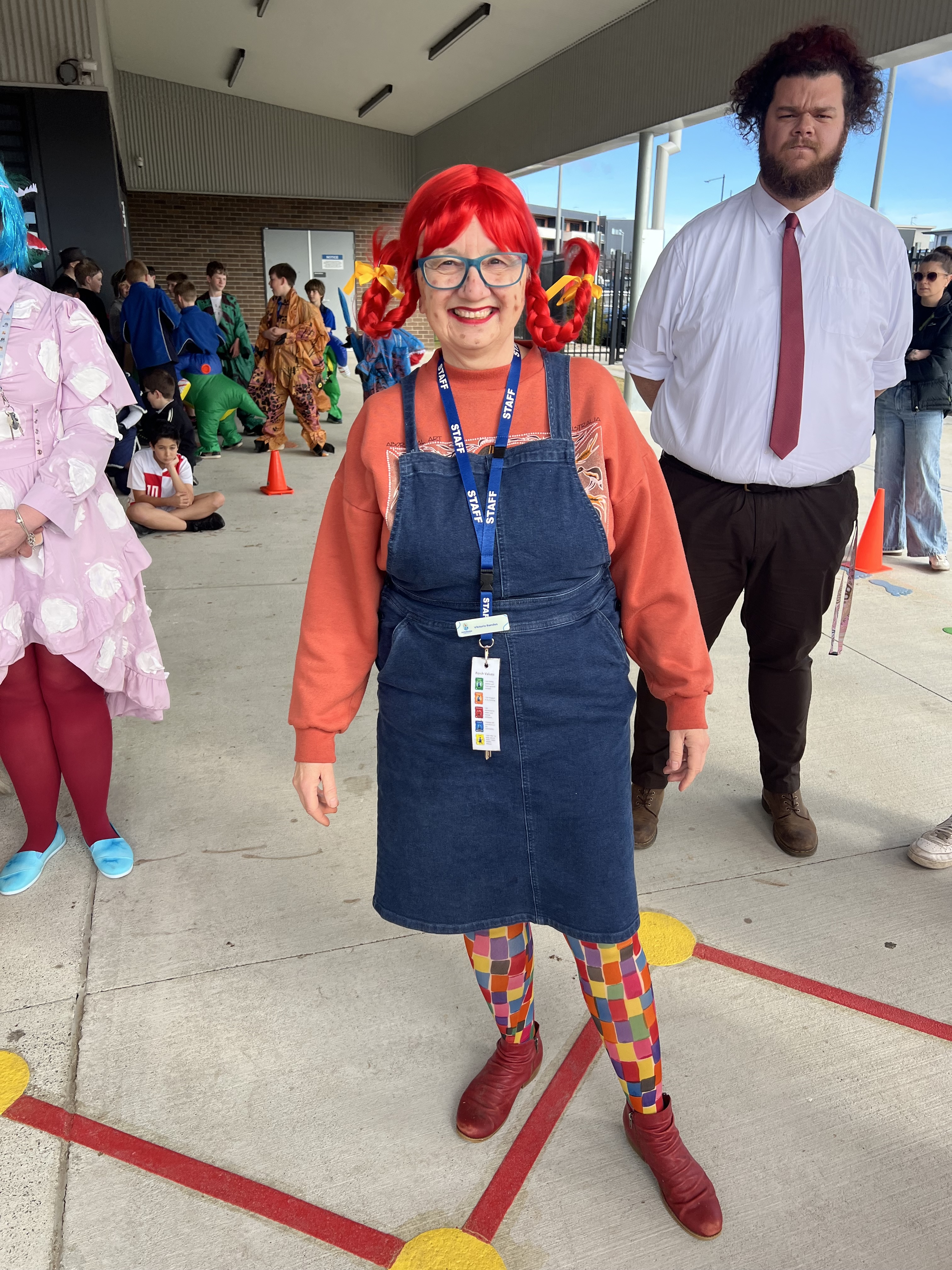
Teachers almost always join in the fun with costumes of their own. My go to is Pippi Longstocking because she was my childhood favourite character. This year, the book turned 81, a year older than the CBCA celebrations. I loved and envied Pippi. She lived on her own in Villekulla cottage in Sweden with her monkey and horse as company. Her father was a pirate and there was little mention of her mother. She was superhumanly strong, lived by her own rules and adults had no power over her, no matter how hard they tried. Recently, I was amused to read that she has been pathologised- it is now thought that she had ADHD and oppositional defiance disorder traits! I couldn’t help but laugh at this. Are we about to prescribe her Ritalin?
There definitely is a bit of Pippi in my genes. I think that’s the genius of Astrid Lindgren, her creator. Every child has a little Pippi in them wanting to come out. Some manage it better than others. Of course, our job as adults is to keep the lid on the shenanigans and keep children from jumping off roof tops or attempting other dangerous things. Still, the yearning is always there to break free.
So once again, I embraced my inner Pippi and drove to school with my red plaits, multicoloured stockings and painted on freckles. The only downside was that the teachers recognised who I was but none of the children had ever heard of the one and only Pippilotta Delicatessa Windowshade Mackrelmint Ephraim’s Daughter Longstocking.