Six Days Horizontal

Getting sick is like sitting down on a chair that’s much lower than anticipated. You land hard and wonder why you didn’t see it coming. The signs were all there – lack of energy, headache, a bit of a cough but it didn’t seem that bad. Until it was. And then the crash landing.

Six days in bed felt like long drawn out weeks. There were nights where minutes felt like hours and hours stretched into infinity until dawn. Unable to breathe through my nose, I sat half upright, sipping endless glass after glass of water in a futile attempt to keep my lips moist. It was pretty grim by Wednesday night. Thoughts meandered irrationally in and out of my consciousness. At one point I was writing scripts for ‘Vera’; trains of clever dialogues rattled by without ever stopping at a station. At other times I was coming up with ideas for Podcasts. Perhaps that synapse of an idea will make this suffering worthwhile.

Being sick for a length of time gave me ample of opportunity to appraise my life. Existential dread arrived on cue between the hours of three and four a.m., no alarm necessary. Had I done enough with my one wild life? Clearly not. My shortcomings lay exposed, expectorating. I was condemned, guilty on all counts. My optimism fled at the first sign of the tempest raging in my head.

The week has been confronting. I turned into a creature I barely recognised. I could have walked out of the pages of Fear and Loathing in Las Vegas. Any veneer of humour was chipped away, hope no longer resided in my soul. And my old friend, gratitude? She too deserted me and has only fleetingly reappeared in the past two days. A fair-weather friend on whom I thought I could rely. Faith too had deserted me.

Here I am on day eight and the fog is slowly lifting. I am now fully dressed and have even eaten a meal. I’ve stopped trying to wrestle with what I can’t control and settled into reluctant acceptance. My mood has steadied and the storm has eased. I am emerging, somewhat battered but essentially intact. I tell myself I’ll never take my health for granted again, and even as I think it, I know it’s probably horseshit.

It takes a village

My granddaughter was born two and a half months ago. She’s generally a ‘good baby’ (as if any baby could be bad), but she does struggle with sleep. In this regard, she reminds me of my daughter as a baby. She was a wakeful child, who would become overtired and then unable to sleep at all.

Now, of course, my daughter wishes she could sleep. Even a ten-minute nap is bliss, and she catches rest whenever she can. Her husband is a hands-on dad, which means both of them are running on empty. Nothing can prepare you for parenthood. It can only be understood through living it. I look at them and marvel at their resilience, but I also recognise that fine line between coping and breaking point.

One unfortunate inheritance I’ve passed on to my daughter is chronic migraines. She remembers me lying down with a bucket beside the bed, waiting for her father to come home and take over the evening routine. It probably happened once a week, certainly often enough to leave an imprint. Like me, she can only lie down, hope to sleep, or ride out the waves of pain. I know what she’s going through, but all I can really do is empathise, bring her medicine, prepare food, and care for the baby so she can rest.

Today she called me in desperation, asking where I was. After hours of trying to settle the baby with multi-day migraine, she had reached her limit. She did the wisest thing she could, put the baby down safely and walked away to her bedroom. I remember the guilt of those moments, when I too had to step back. Yet that distance, that breath of space, is what saves both mother and child. No-one can prepare you for motherhood and the contradictions it carries: joy and frustration, love and exhaustion, light and shadow.

She’s fortunate to have a close friend nearby who stepped in until I arrived. Together we cared for the baby, giving my daughter the reprieve she needed. Watching her, I thought about how difficult it can be raising a child in a nuclear family. How much gentler it might be if grandparents, aunts and uncles lived nearby, ready to lend a hand or a listening ear. There is much to be said for the extended family networks that are woven naturally into other cultures. As for us, we simply muddle through, doing our best, one tired, love-filled day at a time.

September Stirrings

As September and my birthday approach, I become acutely aware that the year is heading into the final waning quarter. We race about exclaiming ‘where did the year go?’, like we have done every year before this and no doubt will in years to follow. But years come and go in days and hours, in the actions and inactions that we succumb to in the moment. At the time they seem such tiny decisions that they really don’t matter but when we add them up, those moments become minutes and hours and then days and months.

It reminds me of that small biscuit that can’t possibly make a difference yet over time adding up to extra kilos or the five dollars for a coffee that can add up to a substantial amount of money when invested. We often look for the big things that make a change in our lives when we should be looking at the micro-moments that have the real impact.

Recently, I have begun to question every one of my purchases. Do I really need it? Will I really use it? How much will it be worth to me in six months’ time? They are quite sobering questions, and I have found that many things are quite unnecessary. This has also allowed me to appreciate the things I do have. The exception to my newfound frugality is buying books, but even there, I have curbed my spending. In part, because I am running out of both shelf and wall space to accommodate them.

As I approach the last quarter of the year, I am disappointed with my lack of progress on some goals but at the same time, I am buoyed by the progress of others. On reflection, this sounds fairly normal. We dream big at the beginning of the year but then, getting through the day with all its demands wears us down little by little. In addition, like joker cards, life’s twists and turns can jolt our lives onto a different track altogether. 

I head into my birth month taking stock of this past year, what I can achieve as we sprint towards the finish line of 2025 and what lies ahead for me in the coming year. I’ll be a year older, none-the wiser, but feeling positive about some of the habits I have been developing. Spending less and living within my means is a basic tenet in life that I should have acquired decades ago but I am proud that in this season of my life, I am on my way to conquering my spending habits and learning to make the moments count. It turns out, the last quarter of the year, and of life, is also shaped by the smallest of choices.

Red Plaits, Freckles and a Dash of Mischief

The first Children’s book week took place in Australia in 1945. Every year since then, children participated in book week parades, dressing up as their favourite character from a book. This year is especially significant as we celebrate 80 years of encouraging children to immerse themselves in books and find novel ways (pun intended) to engage with reading.

The Children’s Book Council of Australia confers awards to authors and illustrators of outstanding children’s books published in the past year. The ‘long list’ or notable books is announced around February, followed by the ‘short list’ from which the finalists are selected. The books that receive prizes often become best loved classics with children.

Book week parades started out with simple home-made costumes and a lot of imagination. Today, parents can spend a small fortune on costumes, wigs and accoutrements. My favourites, however, remain the simple imaginative costumes. If I could have given a prize this year, it would have gone to a little boy at my school who wore rainbow stockings, a long t-shirt, a hand-sewn felt snake’s head and a crocheted blanket made of colourful granny squares. He was the rainbow serpent! Second prize would have been awarded to the girl in leotards with underpants over it. She was ‘Captain Underpants!’

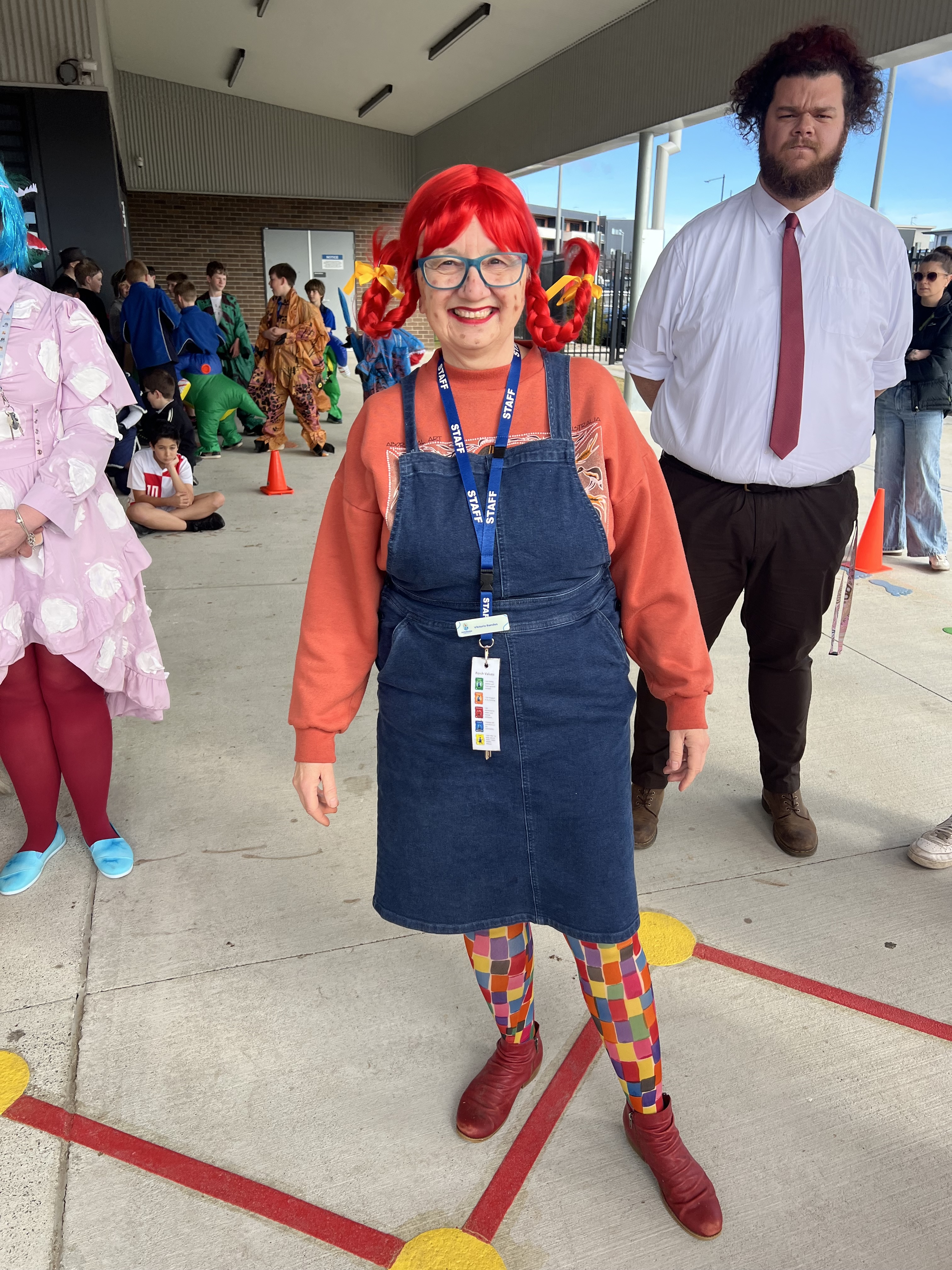
Teachers almost always join in the fun with costumes of their own. My go to is Pippi Longstocking because she was my childhood favourite character. This year, the book turned 81, a year older than the CBCA celebrations. I loved and envied Pippi. She lived on her own in Villekulla cottage in Sweden with her monkey and horse as company. Her father was a pirate and there was little mention of her mother. She was superhumanly strong, lived by her own rules and adults had no power over her, no matter how hard they tried. Recently, I was amused to read that she has been pathologised- it is now thought that she had ADHD and oppositional defiance disorder traits!  I couldn’t help but laugh at this. Are we about to prescribe her Ritalin?

There definitely is a bit of Pippi in my genes. I think that’s the genius of Astrid Lindgren, her creator. Every child has a little Pippi in them wanting to come out. Some manage it better than others. Of course, our job as adults is to keep the lid on the shenanigans and keep children from jumping off roof tops or attempting other dangerous things. Still, the yearning is always there to break free.

So once again, I embraced my inner Pippi and drove to school with my red plaits, multicoloured stockings and painted on freckles. The only downside was that the teachers recognised who I was but none of the children had ever heard of the one and only Pippilotta Delicatessa Windowshade Mackrelmint Ephraim’s Daughter Longstocking.  

Three Beating Hearts: The Making of a Family

Some women are naturally clucky. They coo over babies, look at them wide-eyed and are in awe of the miracle of life, so tiny and perfect. I am not one of these women. I am much more likely to coo over puppies to reach out to stroke them than I ever am to hold a baby in my arms. Hard to admit but true.

When my daughter was born, I was completely in love the moment I set eyes on her. Finally, I understood what came naturally to other women. But for me, I only had eyes and love for my daughter. She was the most perfect creature I had ever seen, and I was instantly filled with a love so strong that I knew I would do anything for her. That feeling has never left me.

When my daughter fell pregnant, I wondered how I would react to the baby once it was born. Would I be as madly in love with her as I was with my own daughter? I honestly didn’t know. Of course, I knew I would love and protect her, but would it be the same as when my own child was born? After many months of waiting and wondering who this new member of the family would be like, the day came quicker than any of us anticipated.

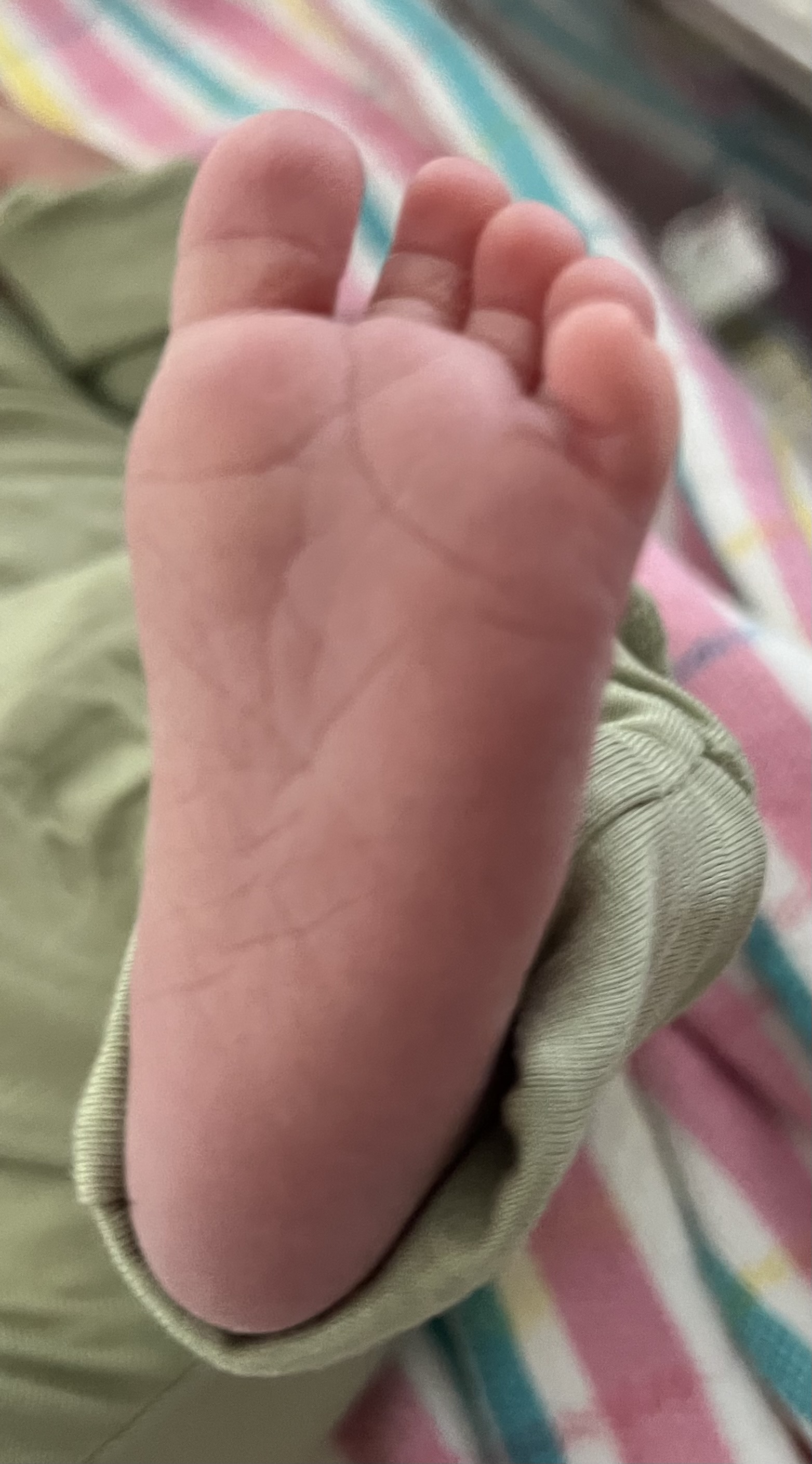
I arrived at the hospital just before my daughter was brought back to the ward, baby against bare chest, vernix protecting her daughter’s delicate skin. She looked so peaceful and beautiful, angelic even. Yet my eyes moved quickly to the face of her mother, my own daughter whom I love above all else. In turn, her eyes were fixed on her baby daughter and I recognised that fierce look of love, a feeling we now both share, generations apart.

She was looking out for her daughter, while I was looking out for mine.

Later in the week, I stayed at the hospital for a night so her husband could get some rest before bringing his family home. I am ashamed to say that I was of very little help that night. I heard the baby cry but could not rouse myself to get up. My darling daughter, however, was awake and doing all the things she had only learnt in the past couple of days. She was a natural. At six in the morning, I finally picked up her baby and settled her next to me so her mother could have a rest. For two blissful hours, I dozed with my granddaughter in the crook of my arm.

Her father came back in the morning and at first couldn’t find his baby. When he saw her snuggled into my arm, he laughed and came to retrieve her. He is besotted with his daughter, proud and protective. I see my husband’s love for our own child reflected in my son-in-law’s eyes. He will be a perfect father.

I am so proud of this little family. They work together, look out for one other and wear their boundless love with pride. And so, my own love expands beyond what I ever felt possible to envelope these three magnificent individuals who have become their own little family.

Bed Rest and Restlessness

I am an impatient patient. Bed rest is agony, not because of the pain but because I am railing against having to rest. Any other time, I long for a sleep in, a chance to have a leisurely morning, just not when I’m sick. Feeling unwell sends me into a spin of (mild) depression, feeling trapped and a sense of foreboding that I will never reemerge into the land of the hale and hearty.

I’ve had the luxury of a week off work. Was I pleased? Not a bit! I lay in bed checking emails, between coughing fits and fits of sleep. Things were happening without me running around. Everyone was coping but me. My colleagues were probably not even aware that I wasn’t there. I was superfluous.

Is this how retirement would feel? No longer needed, no one wondering what I was up to? I have always thought of the moment I leave as entering the land of milk and honey. I’d finally be able to do whatever I liked, whenever I liked. But would it be like this illness, stretching ahead without an end in sight?

Today I finally felt well enough to walk the dog and meet up with a friend. I came home, had a short rest and then proceeded to paint the laundry. First coat done, I had a longer rest before attempting the next tasks on my list. Is this what I have come to? Short bursts of energy to be followed by periods of rest before I can cope with the next item? Surely not!

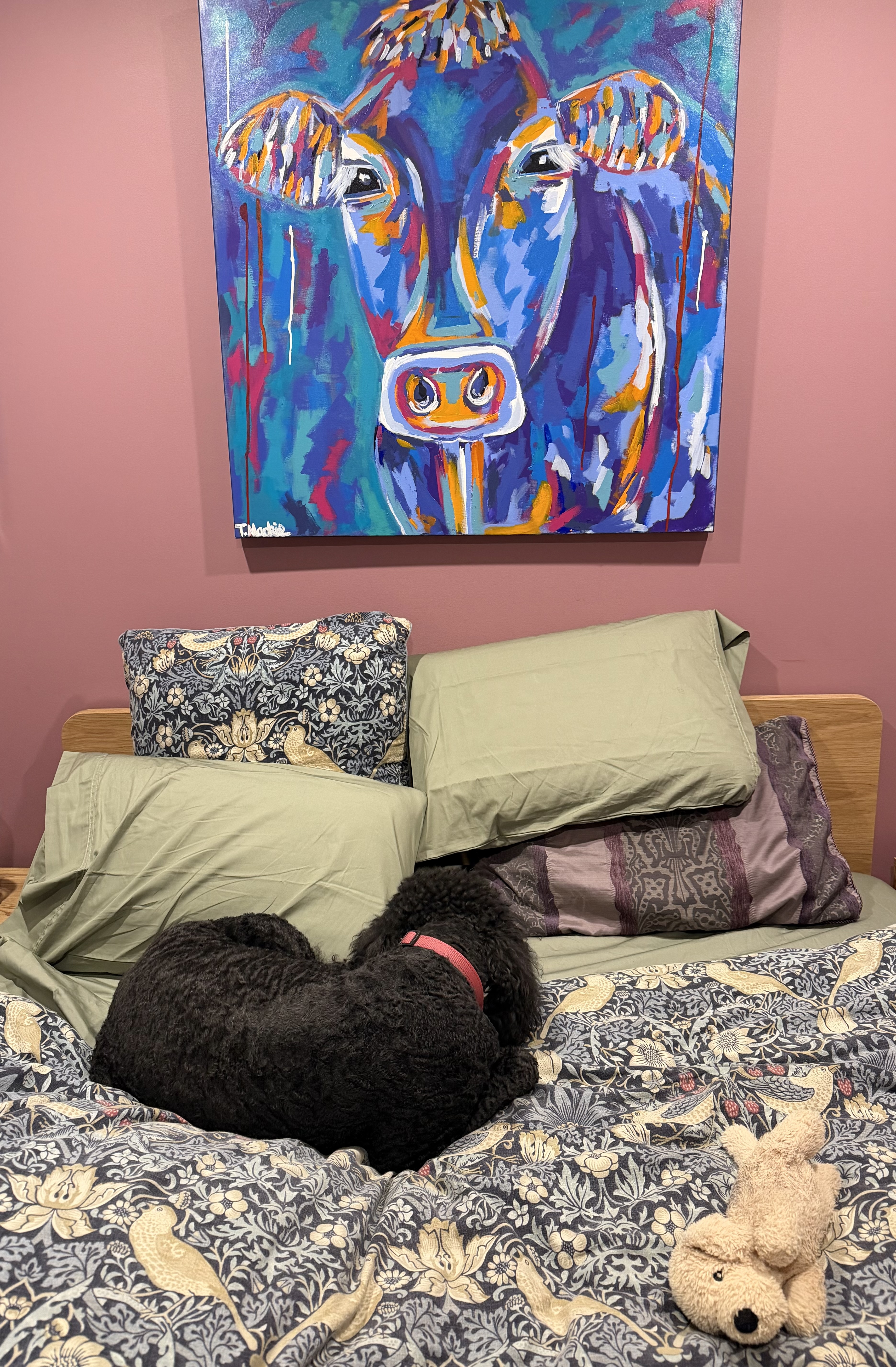
Tomorrow, the second coat goes on and I have a shelf to assemble before the new washing machine arrives on Monday morning. I may then head out to the Christmas in July markets. I’m already feeling better just thinking of it. That fresh coat of paint will not only give the laundry a new lease of life but will also renew my spirits. Perhaps, I just need to find a new rhythm. One that fits in with what my body is gently trying to tell me. On the other hand, maybe I’ll hold onto that thought until at least Monday and let the sleeping dog lie on the bed. After all, I have a laundry to conquer.

Low light, low mood

Today is the winter solstice, the shortest day of the year. Things are on the way up from here. Don’t get me wrong, I love the brisk, cold winter days but I do get affected by the shorter days. It can be as cold as it likes but I need light. A lack of light can make me feel quite listless and despondent. All I want to do is roll up in a ball and hibernate.

I don’t know whether I truly have SAD or Seasonal Affective Disorder but some of the symptoms fit. Symptoms like lack of energy, fatigue, sleeping too much, eating too many carbs, difficulty in concentrations, physical aches and pains, feeling anxious, blue, restless are all there but doesn’t everyone experience these at some point in their lives? It reminds me of looking at a horoscope and cherry picking your traits. Oh yes, I’m such a Virgo/Libra/Sagittarius because these five very generalised traits apply to me. Is it all in my head?

Well yes, it is all in my head in one way or another. And does it really matter if I can assign a label to my feelings? I just know I feel better when there is light around me, I just don’t like the heat that comes with it. One of the best days I can recall was a mid-winter freezing cold day in the Swiss alps with snow all around me, blue skies and a blazing sun above. I felt on top of the world, full of energy, weightless, content.

It doesn’t help to have to get up before the sun comes over the horizon. I’m gloomy and moody in the mornings until I get outside. Once I’m out walking and the sun appears, I am fine but cloudy days press down on me and keep me downcast.

I now understand why I have always felt depressed when curtains are drawn in summer to keep the heat out. It explains why I have opted for translucent blinds in my current home and why I fell in love with it the moment I walked in. There are large windows on three sides of the main room which not only let in light but the sight of trees.

I now have a better appreciation as to why people worship the sun. Even those of us who prefer to hide in the shade are drawn to her light. It isn’t her heat that I need, just her brightness and clarity. And so, on this shortest day of the year, I look forward to the light returning, day by day, minute by minute until the days are long and bright and my mood rises above the horizon.

The Miracle Morning Missed Me

Why can’t I get out of bed in the morning? Every night, my alarm is set on my phone and placed in the kitchen. I have chosen the most ear-piercing, shrill sound that I fear wakes my entire neighbourhood, but I still manage to roll over and go back to sleep. I have tried going to bed earlier, setting the alarm for as late as possible, setting it earlier to give myself more time, having a thermos of tea at my bedside, all to no avail.

The strange thing is that I’m not even comfortable in bed once I wake up. My hips ache, my bladder protests and still I lie there, convincing myself that ‘out there’ is not only less desirable but downright ghastly. It will be too cold and much too unpleasant. Yet when I finally get up, it is quite agreeable out there. The shower is warm, the world seems benign and when I take the dog for her walk, I can’t help but feel jubilant. The frost and silent fog are achingly beautiful. I wonder why I can’t return to this feeling to get me out of bed earlier. It would be so much more enjoyable to have an extra twenty minutes out in the park instead of lying in bed.

I never thought I’d say this, but I wish I were a morning person: someone who wakes up, jumps out of bed fully awake and ready to tackle the day. The type of person who is bright and chirpy, finds the first is hours of the day invigorating and gets things done before others are awake. It seems to make no difference whether I have six hours or ten hours sleep. I wake up bleary eyed, slightly grumpy and always at least a little more tired than when I went to bed. Luckily, my dog doesn’t mind me being monosyllabic for the first hour.

I have read ‘Miracle Morning’, ‘The Five Second Rule’ and various other books of the same ilk, trying to convince me that it is a merely a question of putting my mind to it. Lord knows, I have tried. I have even succeeded for a week or two at a time, but it was always a struggle, and I never felt full of energy. My rocket booster kicks in about 30 minutes before bedtime, which would be perfect timing if my job were midnight space travel, but not so great for a 6am start in the real world.

Many years ago, I taught English to Chinese students at a private college. It wasn’t a great job and for the most part I was deeply unhappy there. But there was one moment that has become a favourite of mine, an anecdote that resonates with every fibre of my being. A young man handed me his journal to be marked. The first sentence read, ‘I was alarmed at 7am.’  I simply couldn’t bring myself to mark it as incorrect.

The Quiet Cost of Disconnection

A few weeks back, I drove 330 km to attend friend’s birthday lunch. I hadn’t seen her for about six months and was delighted to surprise her on the day. I also caught up with a couple of friends I hadn’t seen for years on that weekend. Since then, my life has revolved around work, and I have barely seen anyone. Usually, I don’t mind at all, I’m a bit of a loner and rarely feel lonely. Lately though, there’s been a niggle gnawing within me, a slight feeling of dissatisfaction, which I’m finding disconcerting.

I talk to lots of people during the day, so it isn’t a lack of contact. However, most of my interactions are transactional and I don’t feel connected in any meaningful way. Today, it occurred to me that I know very little about the private lives of my colleagues and they know very little about me. Whilst I don’t expect to have all my social needs met at work, it is where I spend a large chunk of my time.

We always think about the quality of our diet and exercise as the main risk factors for our health. Recently, studies have identified another risk factor, which could be equally as important to longevity and health – the importance of social relations. This may be because the support that friends offer can lower our stress hormones, it can even help regulate insulin and help with our gut function. It reminds me of studies that have been done on positive coronary effects of purring cats on laps. We all need companionship and physical touch.

What matters most is the quality of our interactions. Happy marriages can help prolong life; unhappy ones can lead to poor health outcomes. While not causal, there’s a definite a link. This also applies to friendships. The stronger and more harmonious our friendships, the happier and healthier we tend to be.

But it isn’t just the social interaction that’s been lacking from my life. I haven’t done much of the two things that keep me centred. The first is walking and the second is writing. Before work, I only fit in 15 to 20 minutes of a walk and, now that winter has arrived, I mostly get home after dark. I miss my hour-long stroll after work and so does the dog. No such excuses for my lack of writing.

After a few weeks of missing the online London renegade writers’ group, I finally logged on today. We wrote, we chatted, we laughed and cheered each other on. Such a simple step and I already feel better. Two hours later, I’m buoyed, smiling, and content with my lot once again. And here’s the blog post to show for it.

Music in the Margins

Dickson is an inner-north suburb of Canberra, well known for Asian restaurants and specialty grocers. The shopping precinct is also known for people sleeping rough, alcohol and drug problems as well as boarded up shop fronts. Coles and Woolworths are two retail giants competing against each other, but small shops struggle to make ends meet. It is a mixed bag.

In the centre of the shopping precinct is a plaza with a public library servicing the surrounding areas. At night, the covered entrance way provides shelter for the homeless. Vinnies does a night patrol in the area, providing food, jackets, sleeping bags, and offering non-judgmental social interaction. There are many who would like to clear out the poor and ‘improve’ the suburb. They speak of a clean-up as if it were a matter of getting some mops and brooms, sweeping away unwanted people.

Yes, I can attest to the problems in the area, but I also see a richness and community spirit. While waiting for a prescription to be filled, I sat on a bench opposite a muralled wall where an upright piano stands under the eaves of a building. It is old and weather-beaten, but its keys are intact. Playable, even if most likely out of tune.

A man in his 40s, wearing a black backpack, sat down, rolled a cigarette and began to play. The music that flowed from his hands was enchanting. As it was a public holiday, there were very few people about. Yet those who were about to walk past, stopped, took videos or simply listened before continuing on their way. I stood up and commented on the soaring melodies to a woman with a pram. Her toddler was transfixed. Soon, someone else joined us and we were strangers no more. The pianist had brought us together to enjoy the moment, doing what he loved best, awakening within us the power of music.

At the end of a song, I approached to say thank you. He was rather bashful, telling me he was self-taught and had only been playing for two years. He could only play by ear, and as he hadn’t worked out how to use the black keys, he could only play in C major or A minor, the two scales that can be played solely on the white keys. He probably wasn’t aware of that. Nevertheless, he sounded accomplished, and his repertoire was extensive.

This man, rich in spirit but poor, had transformed my trip to the chemist into deep appreciation for the gifts that people can offer each other. He touched the hearts of everyone who walked past and allowed people to connect who would otherwise not strike up a conversation. All because someone had leaned an old piano against a wall in the mall.

I have seen the architect’s impression of a precinct, a master plan of hundreds of new apartments and clean, green public spaces. The language of conservation (zero waste) and Connecting with Country (green corridors) are present, appealing to our middle-class conscience.  No doubt the suburb will enjoy a process of gentrification and it will be prices rather than the broom that will eventually sweep the suburb clean of people like the piano man.