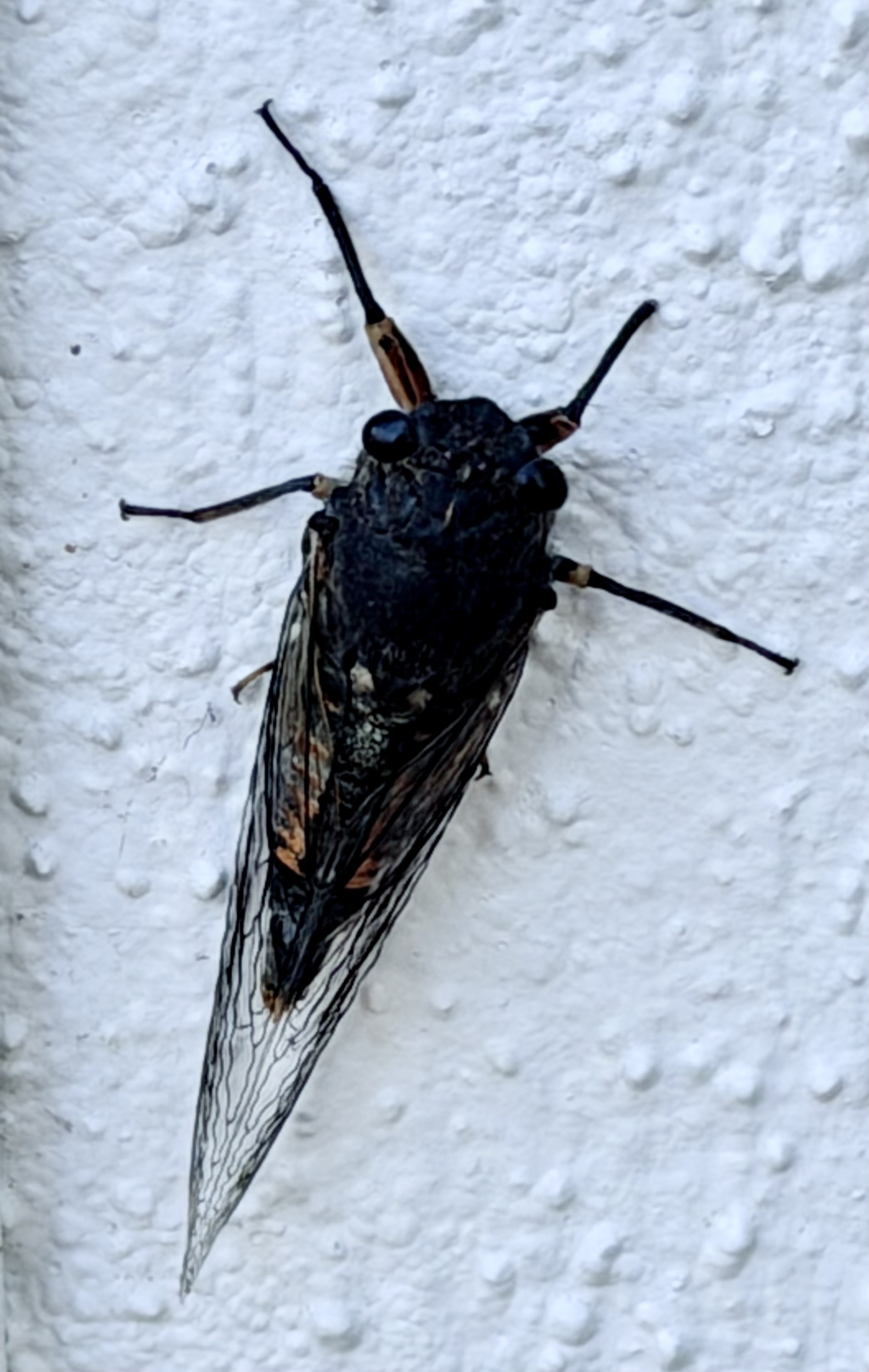
Dawn, Dusk and the Dangerous Crossing

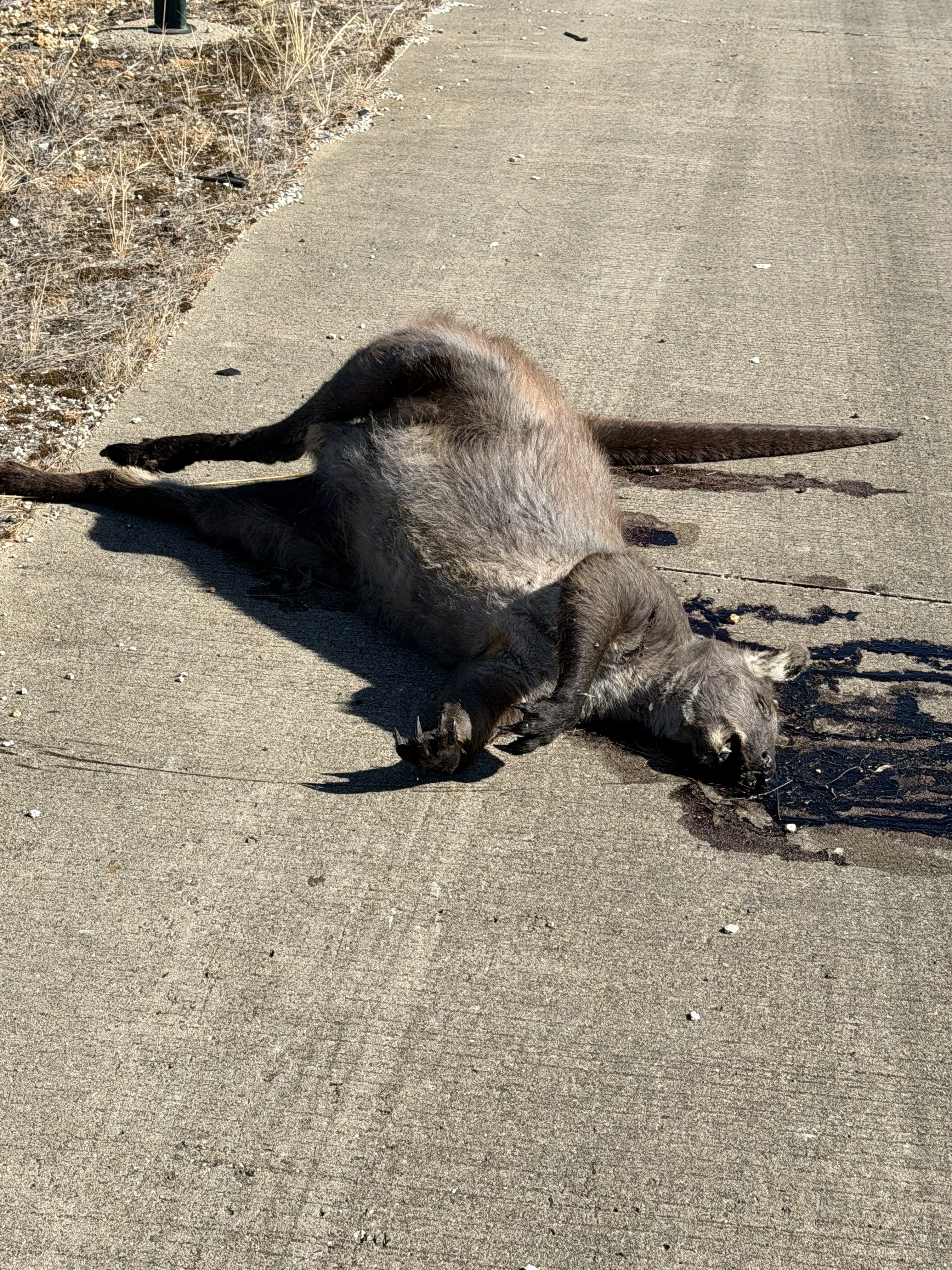
When friends come from overseas, they often bemoan that they only ever see dead kangaroos on the side of the road but never live ones. I share their unease about this road toll that seems to be accepted as a fact of life in Australia.

Until I moved to the country, I didn’t realise just how many animals are killed daily. Now that I live in Canberra, known as the bush capital, I encounter dead kangaroos, birds and wombats almost every day on my way to work. People in cars drive by, drive over, or drive around the carcasses. The animals decompose on the roadside, are eaten by crows or become odd-shaped patches on the bitumen.

According to a conservative estimate, ten million native animals are killed on roads each year. This doesn’t include foxes, rabbits or mice. As there is no national database, this figure is extrapolated from reported cases to wildlife rescue organisations and insurance claims. Many animals would simply disappear into the bush and die there.

In some places, efforts have been made to reduce this carnage. There are rope bridges for possums to cross over highways, and I’ve seen tunnels under sections of road for wombats, echidnas and other animals. However, these measures are few and far between. High fences have been erected around some roads to stop kangaroos accessing them, but these are extremely expensive to build and maintain.

Most wildlife is killed at dawn or dusk when our native animals are on the move. They’re often attracted to the greener grass at the side of the road or they’re crossing to reach water, food, or they may be looking for a mate. Their territory is often fragmented, which forces them to attempt crossings simply to get where instinct tells them to go. Barriers in the middle of the road may protect cars from oncoming traffic, but they also trap animals on the roadway with vehicles whizzing past.

My heart aches every time I see a dead animal on the side of the road. I’m shattered by the sight of a dead mother kangaroo and a joey a few metres further along, and I think about a dead bird’s mate waiting for its return. It’s easy to become desensitised when you see carcasses every few metres along a stretch of road. It becomes part of the everyday experience of driving to work or going on a road trip. But I don’t ever want to get desensitised or accept that this is how it has to be. We are needlessly putting endangered species such as the Tasmanian Devil and koalas at further risk of extinction.

While I don’t have an answer, I can only plead with drivers to slow down when animals are most likely to be on the move. If safe to do so, stop and let that echidna cross the road, or move that turtle in the direction it’s facing. If you happen to see an injured animal, call Wildlife Rescue Australia on 1300 596 457.

There are no roadside memorials dedicated to this daily slaughter. But I have my own small ritual when I see a dead animal on the road. I put a hand to my heart and breathe a breath or two in acknowledgement of their life and of the destruction we humans continue to bring upon them.

Wind struck days

Winds have cut through last week with an invisible scythe. The billabong is covered with dust and debris and smells putrid. Tiny flies swarm around the water’s edge. As I look at the devastation around me, I am surprised there are no trees down. Plenty have fallen in surrounding suburbs.

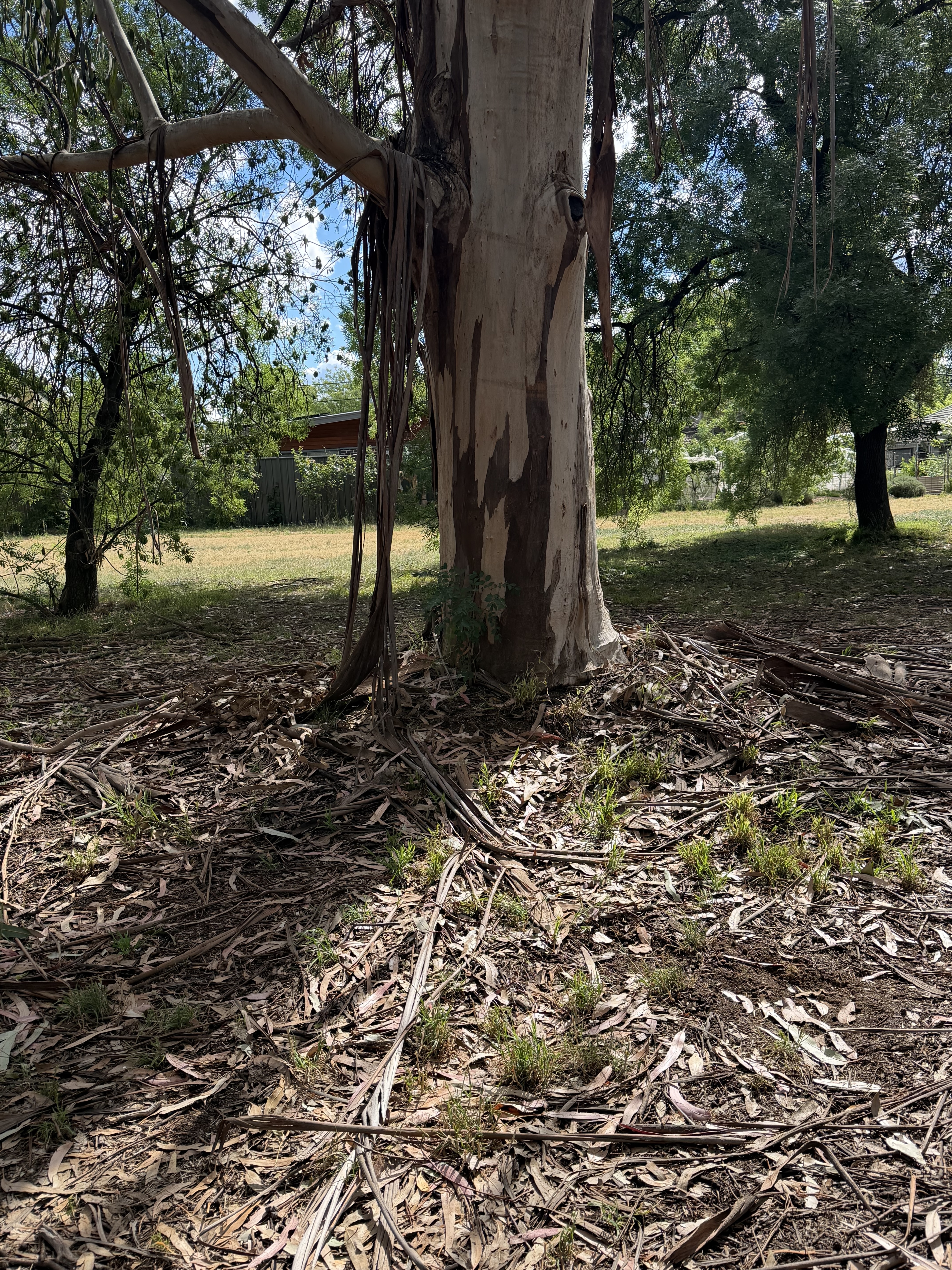
Leaf litter lies ankle deep, mixed with bark stripped clean from trunks. It is as if Mother Nature has sandblasted her children bare. How did young chicks in those swaying canopies survive wind gusts of 80 kilometres an hour? I’ve not heard a peep from them this morning.

The accompanying storms were short lived but the wind continues to rumble and roar like a road train. The little rain that came with it evaporated within hours, leaving the ground just as compacted and impenetrable as before. Any loose soil has been spun around and around like whirling dervishes in a trance. I am transfixed by the spectacle of dozens of whirly whirlies, small rotating whirlwinds forming across the denuded field.

My walk in town yesterday was miserable. The wind fired bullets of grit at my face and eyes. Its fury whipped up loose items on the ground and hurled them at unsuspecting passers-by. Women tacked their skirts as they leaned into the wind, slicing through the air. Children clung to their parents’ hands, wondering what might happen if they let go.

Back home, windows rattled and walls were buffeted. Further north, roofs and even lives were lost. I never felt any immediate danger, only awe at this force of nature completely out of our control. These past few days have been a reminder that nature is not something separate from us but an integral part of our daily lives. We need only to pay attention to it.

A Story of Water, Land, and Recognition

The first time I saw Lake George was almost 30 years ago. We were travelling to Canberra along the Federal Highway when the lake appeared to our left. It looked like an enormous expanse of water that accompanied us for what seemed like a long time. Later I would learn that the lake is 20 km long and 10 km wide. I thought all of Canberra’s drinking water must come from this enormous lake.

A few years later, we travelled the same route and I was looking out for the large lake. It wasn’t there. All I could see were cattle and sheep grazing where the lake should have been. There were even fences. It struck me that I couldn’t see any creeks that should have fed into a lake. Could I have imagined the expanse of water?

In time, I learnt that the lake regularly empties and fills. There are no creeks that feed into it, which makes it an unusual type of lake, a closed basin. What feeds it is rain and what drains it is evaporation. When it does have water, it is rarely deeper than 1.5 to 2 metres. This was not always the case. I have seen photos from the early 1960s when the Canberra sailing club held regattas on the lake. And in prehistoric times, the lake is estimated to have been 37 metres deep. With the current rate of climate change, Lake George will experience more severe fluctuations, and it may become a dry bed with only occasional filling episodes. So much for my fanciful idea that it could supply drinking water.

I have now lived in Canberra for close to two years. In that time, I have seen the lake fill and begin to drain again. There are cattle at the northern end now and I can see the fences appear again. Looking across the lake, I see a wind farm that one of our ex-politicians, Joe Hockey, described as ‘a blight on the landscape’. It makes me wonder whether he has ever seen an open cut mine. I quite like the look of the wind turbines in the distance.

Last winter, my boss and I had to drive to Sydney a couple of times. When we left Canberra it was still dark, and the sun had just begun to peep over the horizon as we came down towards Lake George. I was mesmerised. The black expanse of water slowly changed to navy, then cerulean. Golden threads shimmered where the sun’s rays bounced off the water. I was glad not to be the driver, so I could immerse myself in the liquid light of the lake.

Lachlan Macquarie named this expanse of water Lake George after King George III in 1820, as if it didn’t already have a name. To the Aboriginal tribes of the area, the lake was known as Weereewa or Ngungara. It has deep significance to the custodians of the land and waters as both a meeting place and a place for ceremonies. There is also strong evidence that there was a massacre at the site sometime in the early 1820s. King George III never set foot on Australian soil. It is time to recognise the custodians of this land and the lake, allowing them to reclaim it with their own language and rightful name. The lake is waiting for us to remember its true name.

This Quiet Unfurling

There is an ancient rainforest at the bottom of a gully in Katoomba. To reach the forest floor of the Jamison Valley, I take a cable car that drops 200 metres at a 36 degree incline to attend a special session of the 2025 Blue Mountains Writers’ Festival. As we descend, the vertical sandstone cliff face looks almost close enough to touch. Three hundred million years ago, an expansive sea spread over this area. Over millennia, sediment and sand formed into hardened layers which we now recognise as sandstone. Each layer reveals its geological history through erosion, sedimentation or uplift. This cable car is my TARDIS. It is the closest I come to time travel.

The sandstone is ragged. Tiny ledges mark the layers, and wherever a square centimetre can be found, life takes root tenaciously. Small trees curl their roots around rock and somehow find enough nutrients to stay alive. I am in awe of the miracle of life I am privileged to witness.

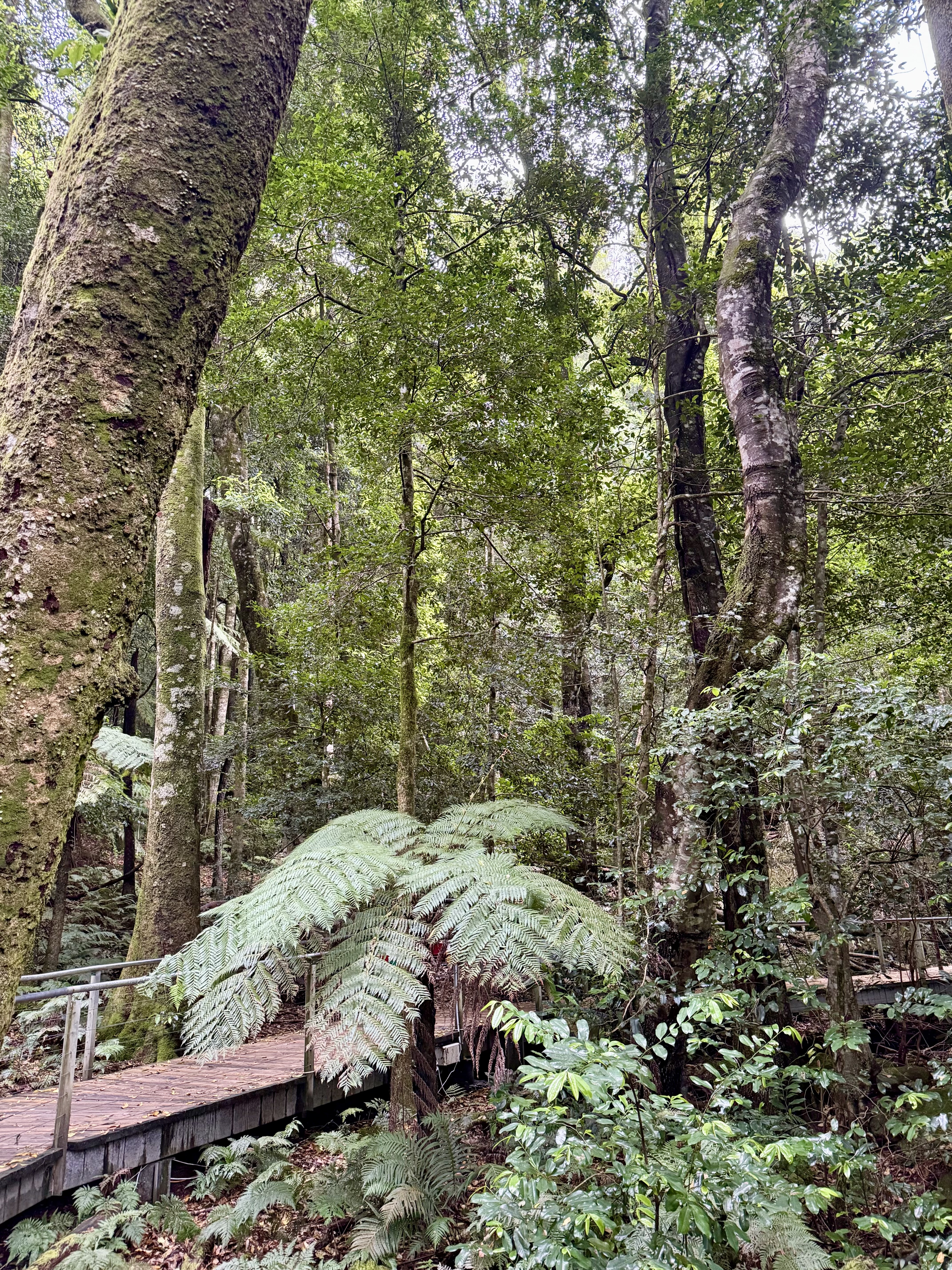
My TARDIS docks next to a wooden boardwalk that winds 2.4 kilometres beneath a rainforest canopy. This area is a privately operated tourist attraction that has managed, for the most part, to keep the rainforest pristine. Some added features feel kitsch, like scattered ‘dinosaur’ bones for children, but they are confined to one side of the boardwalk, so I simply look the other way.

I am enchanted by the ancient trees, vines and ferns that surround me. Some ferns are as tall as trees and about two hundred years old. Smaller ferns, unfurling their fronds, show tight spiral shaped leaves, an example of the Fibonacci sequence in nature. Mesmerised, I regard a delicate formation that follows this complex logarithmic pattern. I am not a mathematician, but I have a deep respect for how mathematics explains so much of the natural world. We seek patterns.

After a fifteen minute walk, I reach the Rainforest Room, a yurt like structure without walls that accommodates about one hundred and fifty people. Seats begin to fill. We are here at 7.45 on a Sunday morning to hear three writers talk about their books. Nature is the common element in their writing, though not all are happy to be labelled nature writers. I have come to hear Inga Simpson, whose work I admire. I don’t know the other two writers, Jessica White and Jane Rawson, but I know I will enjoy the session.

We sit in silence, looking out onto the rainforest. I am struck by the Coachwood trees, which have paintbrush wide white splotches. It looks as if someone has wiped their brushes on the trunks. Later I discover these marks are caused by lichen. They look stunning.

I recognise Sassafras, Turpentine and the Blue Mountain Gum among the trees. Then my ear attunes to songbirds tentatively striking up a melody. Within a minute, they are drowned out by the raucous sound of Sulphur Crested Cockatoos. I can’t help but smile at these juvenile delinquents who arrive with their boom boxes, ready to crash any party. Good luck hearing a song underneath all that squawking.

The event starts and I listen to Jane Rawson speak about her latest book Human/Nature, described as a lyrical work of creative nonfiction. I am drawn to her honesty and humour as she talks about establishing a life in the Huon Valley. Inga Simpson speaks about her latest book The Thinning, which I read some time ago. While it wasn’t my favourite of her works, it is interesting to listen to its reception within this group of readers. Jessica White talks about Silence Is My Habitat, her book of ecobiological essays. I am drawn to the title. Silence has always been my friend. I occasionally play music, which I love, but silence is what I long for most. I am listening to a kindred spirit, but her silence has been imposed by deafness, which she acquired at the age of four after pneumococcal meningitis. Her deafness has rendered the world silent, but it has given her the superpower of acute observation, especially of the natural world.

I love listening to these women in conversation. My soul is nourished by their words, their deep respect for one another and their reverence for nature. A tiny, oft ignored voice gently reminds me of a suppressed longing. I want to be a writer. First heard when I was six years old, I have held onto this dream tenaciously, much like the stunted trees clinging to the sandstone ledges. Their roots wrap around the rock the way my fingers furl over the keyboard, finding a letter here then there, forming words and sentences. It may not be much, but I hold on as if my life depended on it.

Jonquils in July

I make a last-minute dash to the markets for some Batlow apples. Most stallholders are busy sweeping the concrete, packing their unsold wares onto trucks. Everyone is looking forward to getting home and for some, there is a long drive ahead. They have been here since five in the morning, setting up and waiting for the first customers to arrive. I hastily look for my favourite stall and I’m lucky, the girl selling apples is still serving customers.

I take a walk around what’s left of the markets, buy some mushrooms and am given an extra bag of woodland browns to take home. These late saunters on a Saturday morning, when the place empties, are my idea of bliss and there’s always a bargain to be had.

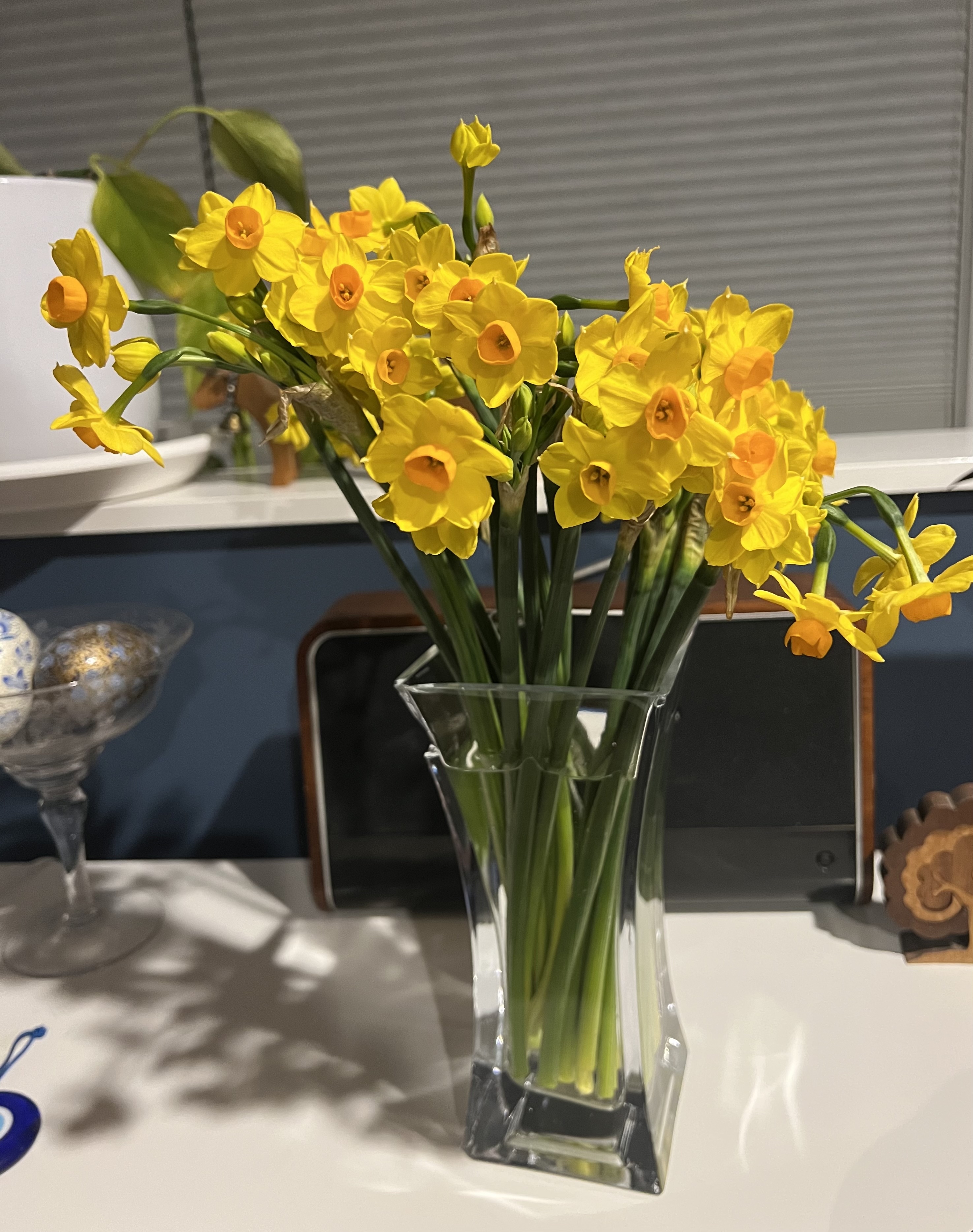
As I come around the last isle, bright yellow jonquils catch my eye. It is mid-winter, yet here they are, heralding spring. Massed in large plastic buckets, their sweet fragrance borders on pungent. I can’t resist. Two bunches are rolled into tissue paper while I hand over a ten dollar note.

Flowers always brighten my day. I’m drawn to their beauty and fragrance. It turns out there is a reason for this feeling. Flowers can spark the release of dopamine and serotonin in our brain by their bright colours and pleasant smell. There are studies that show that having flowers in the house can lower cortisol levels. They create a relaxed and aesthetically pleasing environment which makes us feel more relaxed. 

Before I knew any of these benefits, I instinctively bought flowers when I felt downhearted. Back in 1987, I spent a rather miserable winter in Berlin. The cloud cover arrived in October and never left for six months. The short days felt like eternal dawn or dusk; it was impossible to tell which. It was during these months that I began the habit of buying flowers every Friday afternoon as I returned from university. The florist around the corner wasn’t cheap but made the most exquisite flower arrangements. They reminded me of the Japanese art of Ikebana. The designs were always minimalist, and they took my breath away. I had very little money left for luxuries, but my Friday ritual never felt like an extravagance.

This memory came flooding back as I purchased my jonquils. While I don’t possess the patience to artistically place flowers in a vase, it doesn’t much matter. A dull winter’s day has been transformed into delight by their smiling yellow faces. And for the next week, there will be guaranteed sunshine every morning.

Low light, low mood

Today is the winter solstice, the shortest day of the year. Things are on the way up from here. Don’t get me wrong, I love the brisk, cold winter days but I do get affected by the shorter days. It can be as cold as it likes but I need light. A lack of light can make me feel quite listless and despondent. All I want to do is roll up in a ball and hibernate.

I don’t know whether I truly have SAD or Seasonal Affective Disorder but some of the symptoms fit. Symptoms like lack of energy, fatigue, sleeping too much, eating too many carbs, difficulty in concentrations, physical aches and pains, feeling anxious, blue, restless are all there but doesn’t everyone experience these at some point in their lives? It reminds me of looking at a horoscope and cherry picking your traits. Oh yes, I’m such a Virgo/Libra/Sagittarius because these five very generalised traits apply to me. Is it all in my head?

Well yes, it is all in my head in one way or another. And does it really matter if I can assign a label to my feelings? I just know I feel better when there is light around me, I just don’t like the heat that comes with it. One of the best days I can recall was a mid-winter freezing cold day in the Swiss alps with snow all around me, blue skies and a blazing sun above. I felt on top of the world, full of energy, weightless, content.

It doesn’t help to have to get up before the sun comes over the horizon. I’m gloomy and moody in the mornings until I get outside. Once I’m out walking and the sun appears, I am fine but cloudy days press down on me and keep me downcast.

I now understand why I have always felt depressed when curtains are drawn in summer to keep the heat out. It explains why I have opted for translucent blinds in my current home and why I fell in love with it the moment I walked in. There are large windows on three sides of the main room which not only let in light but the sight of trees.

I now have a better appreciation as to why people worship the sun. Even those of us who prefer to hide in the shade are drawn to her light. It isn’t her heat that I need, just her brightness and clarity. And so, on this shortest day of the year, I look forward to the light returning, day by day, minute by minute until the days are long and bright and my mood rises above the horizon.

The Old Lady’s Silent Farewell

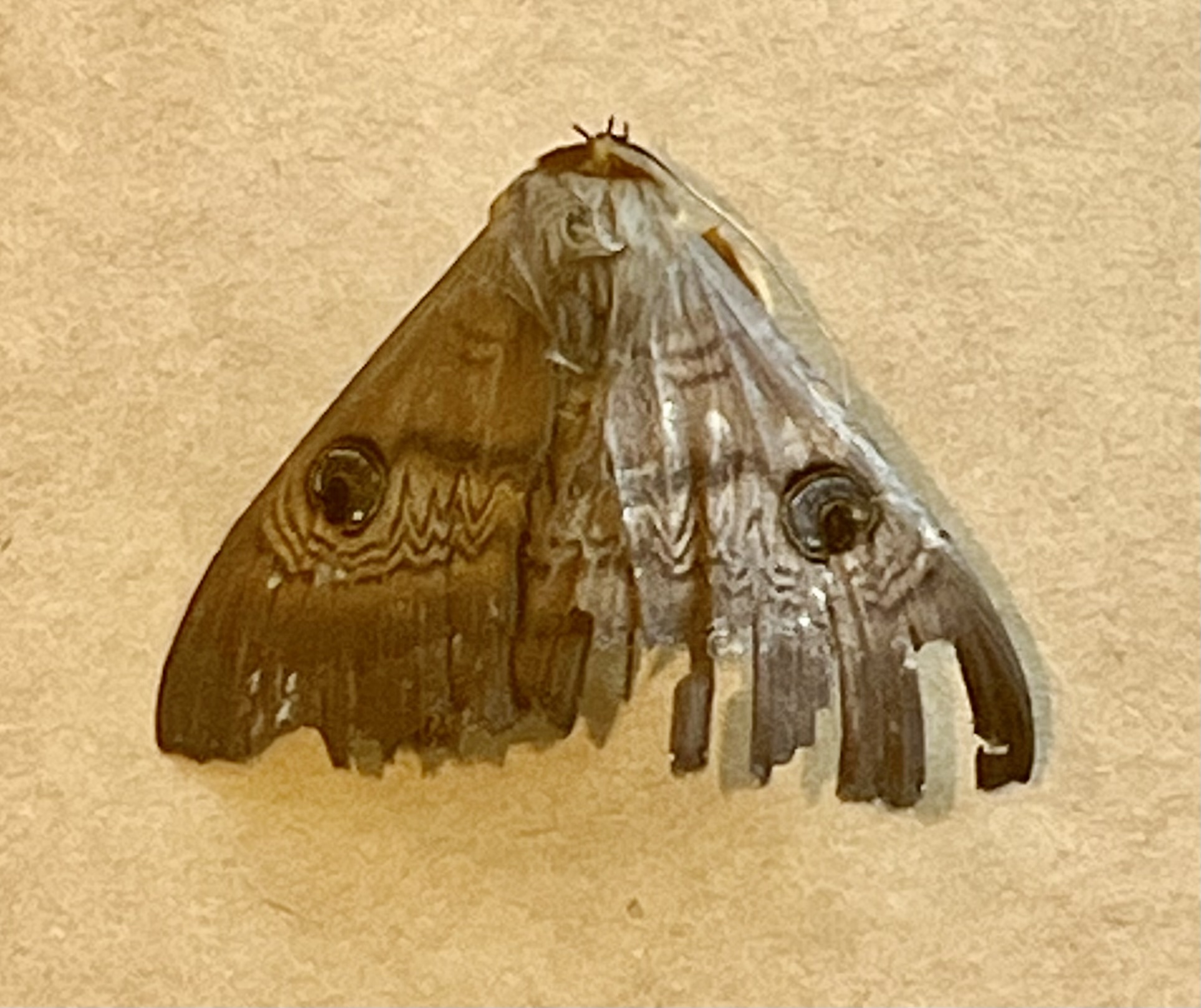
The other night, an enormous moth came into my study. Each of the dark brown wings had a blue ‘eye’, no doubt to intimidate a predator. I saw it settle on a window and watched awhile. I ought to get a large glass to capture and release it on the balcony, I thought. Then, momentarily distracted, I forgot all about the moth.

A week later, I found it dead on the table near the window. Even in death, it looked majestic. I felt guilty that I hadn’t remembered to release it and hoped it had a chance to mate and produce another generation of Southern Old Lady Moths. What an odd name for such a stunning moth!

Once I found out its name, I was curious to learn more. It is such a human trait. Naming something makes us feel more connected to it. So, I did a little research. Southern Old Lady Moths can be found where there are acacia trees, and we have plenty of them in the nature reserve across the road. Their caterpillars feast on wattle leaves and can grow up to 6cm. Their heads and feet are orange, just like the underside of the moth I found.

Once they emerge from their chrysalis, the moths are nocturnal. During the day they hibernate in small, out-of-the-way spaces, sometimes even in houses and garages. During these times, the moths remain perfectly still. This was what I was hoping for when I found the moth on the table, but I quickly realised this was not the case.

I felt responsible for its demise. I wished I had remembered to take it out when I first noticed it. Now, in death, I had the opportunity to observe it closely. I marvelled at its markings and its orange underside and head. Then, belatedly, I placed it in a pot plant on the balcony. Though I had forgotten it in life, I gave it a place in death. Here it will either provide food for a bird or turn to compost, completing its cycle of life.

Weekends: The Gift of Time Well-Spent

I’m back at work after two glorious months off. While I was still working diligently on my own projects, the days and weeks had a different rhythm. Often, it was difficult to tell which day was which, as the weeks rolled into each other. There’s a deliciousness about feeling that we are outside of time, but it also has its downsides. Like forgetting about business hours for example and realising that others work on a different set of assumptions about working hours.

Now that I am back in the Monday to Friday world of work, weekends have a special quality to them. I can sleep in, read a book, go to the market and walk my dog at a more leisurely pace than during the week. This morning, I took my dog Zoë to the local café, wrote in my journal, drank my latté and shared a freshly baked croissant with her. Bliss.

Walking back, I took my time and noticed the small things that go unnoticed when on a deadline. Like the slight breeze that caressed my bare arms ever so gently. Entering a copse of trees, I saw the shadow of the leaves dancing on the path beneath my feet. I stopped to watch this shimmer of shadow and light – a performance dedicated to the spectator who chose to notice its exquisite beauty.

Back home I performed all the mundane duties that accumulated during the week. I didn’t grumble or delay, I completed them with a sense of joy that comes from being truly present to miracle of life and all it has to offer. Or as Eckhart Tolle put it,’Always say ‘yes’ to the present moment… Surrender to what is.’

Bee stings and childhood things

stock.adobe.com

My childhood memories of bumblebees are vivid. They were big, bright and booming creatures I encountered in meadows, underfoot and once in the backseat of a car. An early encounter with a bumblebee set the scene for melissophobia (fear of bees) that plagued me for decades.

I remember the occasion clearly. In the back seat of my uncle’s car, the window was wound down to let in some fresh air. A bumblebee flew in and was buzzing loudly at the back window, trapped. The bee looked so pretty with its striped and furry body, and I was fascinated. My mother’s voice boomed from the front seat.

‘Don’t touch!’

This was enough to make me want to do just that. I was a contrary child who could never follow orders, especially not those given by my parents.  So, I did exactly the opposite to what I was told. I reached out to touch the bee and was stung on my hand. I wailed in pain and tears flowed freely. I probably received a few  ‘I told you sos,’ and nothing could console me. I grew weary of these gentle giants that fly awkwardly from flower-to-flower pollinating as they go. I also developed a fear of all insects in flight

Bumblebees are considered a pest in Australia, and I have only ever encountered them in Tasmania. Like so many imported species, they compete with native species and they also compete with honeybees. An interesting fact about bumblebees is that they do not produce honey. Due to their size, they can damage flowers which makes them unusable for other pollinators that come along. 

I have only overcome my fear of bees in the last few years after learning more about their importance to the ecosystem. Somehow, understanding their vital role in our own survival has changed my attitude towards these creatures and my fear has subsided. I treat bees with respect and keep my distance, but I am no longer afraid. I appreciate all that they do and now watch in awe as they engage in their complex ritual dances to let other bees know where the best nectar can be found.

Magpie Mayhem

It’s magpie swooping season. In the past two weeks, I’ve been pecked on my head three times and my dog has had Northrop B-2 Spirit magpies stealth-bombing her from behind. Always from behind. She doesn’t move from my side now when we go near trees, and she looks up nervously at her sworn mortal enemies.

For nine months of the year, magpies are a joy in the neighbourhood. They warble in groups of two or three every morning and know us all by sight. They have excellent facial recognition, and recognise everyone in their patch, which is roughly the size of 30 suburban blocks. Magpies know exactly who is naughty or nice, and they pass on this information to other birds.

I always imagined their warble as a joyous expression of welcoming a new day or singing because they are happy. It turns out I was completely deluded. It takes a lot of energy to sing and warble, which is why most songbirds only do it when they are trying to attract a mate. Magpies, however, continue to sing each and every day and it turns out that it is purely to protect their territory. That lovely warble is hurtling expletives at other magpies within earshot. ‘Stay away or else!’

When I lived in the country, three magpies came to the bird feeder most mornings. They’d eat seeds I had put out for parrots, then throw their heads back in what I thought was appreciation and warbled. I referred to them as the three tenors. I must have watched too many Disney movies where all animals are anthropomorphised and given cutesy human traits, for it never occurred to me they were warding off other birds from their find.

Many years ago, I heard an ornithologist interviewed on ABC radio. He explained that 90% of magpies show no aggression at all and that it is only 10% of males who cause all the trouble during mating season. Tongue in cheek, he claimed Australia would be uninhabitable if all magpies swooped. After my last attack, I can only concur. Still, 10% of magpies are a sizable number. Of these aggressive males, half will attack only pedestrians and/or dogs, approximately 16% will attack only cyclists, 16% will go for posties and 18% will randomly attack anyone they come across. These figures are not made up; attacks have been extensively researched and quantified.

Magpies only ever swoop from behind and only if you are in the vicinity of a nest that has chicks in it. All attacks happen within 50 to 100m of a nest, so the sensible thing to do is to avoid the area once you’ve been swooped. When the chicks finally leave the nest, the male returns to being a placid bird until the following year. The best thing you can do in the meantime is to look at your attacker; a magpie won’t ever attack if it can see your face. The worst thing you can do is to run for your life, because then it will surely come after you. If you are on a bike, get off and walk the next 100m until you are in the clear. And yes, the cable ties on helmets work, not that it will stop the swooping, but at least it stops the frightening experience of a beak making repeated contact with the helmet.

For the next two months, I am avoiding the beautiful gums in my neighbourhood. Still, I walk the dog, greet any magpies I meet in a friendly tone and stay out of their territory. There will be time enough to enjoy a shady walk under the spotted gums once spring has passed. In the meantime, I remind myself that I am the intruder here.