A bubbly legacy

For 20 years, I didn’t drink a drop. Then, out for dinner with a man who would grace my life for four short years, I succumbed to a glass of red. It was delicious. Tart, intense and astringent, I enjoyed every mouthful.

I have never been a heavy drinker. Admittedly, I went through episodes of binge drinking in my early twenties, but that was mainly to overcome social anxiety. Once inebriated, I took advantage of my impaired control and began to enjoy parties, rather than be the wallflower hanging out in the kitchen counting tiles. But that was a long time ago.

When I began to drink again, I would only do so at dinner and never at every dinner. Then Roger introduced me to the glass of champers on a Friday evening to celebrate the passing of another week. His philosophy was simple – celebrate if you have had a good week and celebrate if you made it through a tough one. Either way, you are a winner.

When he ‘shuffled off this mortal coil’, as he liked to quote, I was left with an unusually large glass vase filled to the brim with champagne corks. It was years’ worth of good and not so good weeks he had lived through, with and without me. I neither wanted to keep them, nor throw them away. In the end, I reached a compromise, took a photo of the full vase and kept perhaps 30 of the corks. They remind me of a life well-lived.

Now I carry on the tradition, at least most weeks. I can’t drink a bottle of bubbly on my own, but I can enjoy a piccolo, which is 200mL or almost two standard glasses. It is a perfect amount. I raise my glass and salute Roger, and the passing of another week. Cheers!

A trip to New Zealand

Or the long-lost friend, a tech savvy daughter and a generous birthday gift.

Wellington foreshore guerilla knitters

Annie and I met in 1989 while working for a private college teaching English in Sydney. Our clients were Chinese, and the massacre at Tiananmen square in June of that year affected them all deeply. They came from cities and villages, desperate to earn money so they could repay the enormous debt they had back home which funded their airfares and tuition fees. None of them knew about life in Australia or the cost of living in Sydney.

Annie and I gravitated towards each other and soon became friends. We spent many a weekend going to the Glebe markets, meeting up for coffee and going for walks along the cliffs at Bondi. I left the college disillusioned with the management and teaching. She stayed for a while longer before travelling to Canada and Nepal. We kept in touch throughout this time.

In my memory, Annie was footloose and fancy free, always looking for the next adventure and travel destination. I was three years older and in a steady relationship. I admired her ability to save money and her courage to travel to far-flung places on her own. I admired her freedom and her trust in finding work wherever she went.

I was one of many friends she had, but she was my best friend. When I was about to give birth to my daughter, Annie was the obvious choice to be my support person. At 8 moths pregnant, I remember driving over some speed humps in my ancient Beetle. We shrieked with laughter as I landed heavily back in my seat. I could always rely on Annie to boost my mood and have a good laugh. No need for nitrous oxide with her by my side!

As our lives became more complicated with partners, jobs and eventually children, it was more difficult to catch up regularly. By then we lived in different parts of the city and eventually my small family moved out of the city altogether. Not long after that, Annie and her family moved back to New Zealand, which she had always called home. We lost touch.

Years passed. I always had a framed photo of Annie on my bookshelf and often wondered where life had taken her. My daughter heard stories about this special friend who was there at her birth and knew how much she meant to me. So she found her on the internet and booked me an airfare to Wellington.

Little did she know I would arrive on the eve of Annie’s birthday. What a treat to celebrate this special day with her loved ones. I finally met her adult children, was reacquainted with her husband and was welcomed into their home.

For a week, we walked the rugged beaches of Wellington with Dexter, their wonderful and quirky dog, catching up on 25 plus years of our lives. So much had changed for us both, but that initial spark from all those years ago still ignited our friendship. We share the same values, care about the same things and, interestingly, experienced similar challenges. We both stayed in teaching; she became an early childhood educator while I became a primary teacher. After teaching adults for many years, we gravitated towards teaching young children.

I loved being taken to her favourite haunts, the supermarket down the road and the café she frequents on weekends. I can now imagine her daily life; the route she takes to work, the walks she takes to clear her head, and I have met the people who are dearest to her. 

We spent some time sight-seeing, but those aren’t the memories I shall hold dear. While I loved walking through the botanical gardens, the museums along the waterfront, and the quirky shops on Cuba Street, what I loved most were the connections I was making. Talking politics with Annie’s 93-year-old mother was definitely a highlight. I loved her joie de vivre and her passion for social justice. May we all be as erudite and passionate no matter our age!

I’ve now been back home for three weeks. Neither of us have contacted each other since the first couple of days. We both have busy jobs and parenting responsibilities. There’s not much time left at the end of the day, especially when there is a two-hour time difference to navigate. It is all too easy to fall into habits of neglect. But this time I’m determined not to lose our precious connection again.

Melbourne Cup Day

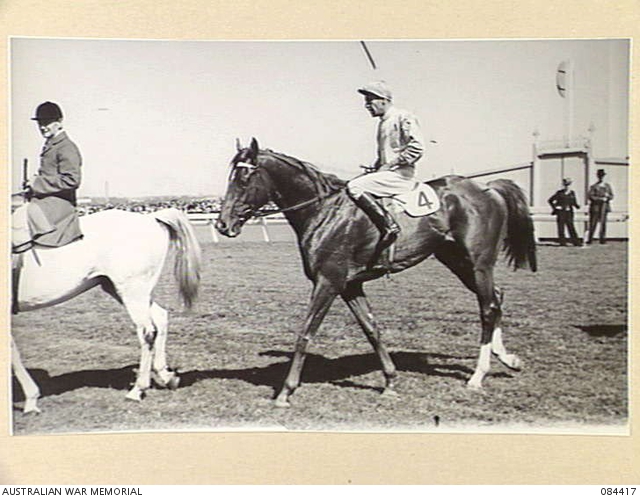
Sirius, Melbourne Cup winner 1944

Roger could recite every Melbourne Cup winner going back to his birth year, 1944. It was his favourite party trick. Starting with Sirius, he could name them all and knew details about most. He loved horses, had a fervent interest in racing carnivals, but never had a bet. The last horse to be committed to his phenomenal memory was Verry Elleegant, the first horse to ever win the Melbourne Cup from barrier 18.

While I admired his passion, I could never reconcile the love of horses with racing. My heart broke every time I heard about an accident on the field. These horses rarely survive. It also seems to me that we don’t need to encourage betting in a nation that has the greatest per capita losses from gambling worldwide.

The day that Dunaden won the Melbourne Cup is seared into my memory. My husband, Peter, was returning to work after several months on sick leave. He had a part of his lung removed after we discovered that his Melanoma had spread. Things were going well; he felt better and was looking forward to returning to work. We dared to be optimistic.

I received a muffled phone call at about 10am on Cup Day. He was calling from the waiting room of the hospital where he had received his previous treatments. ‘I’m alright,’ he said in the way he did when he wanted to shield me from distress. I had to prise the details out of him, the way I always did when I needed to know the truth.

‘I wasn’t feeling well on the train and when I got off, I collapsed. People helped me up and eventually I had enough strength to walk to the medical centre. They sent me straight to hospital.’

At that moment, I knew. I knew we were at the starting post of a race against time and the odds were stacked against us. It was a race we would never win, no matter how much I pleaded with the specialists. We were riding on their mercy and time was running out. I didn’t believe in miracles, but I dared to hope. I dared to hope for Christmas, then New Year.  After that, I hoped for our daughter’s birthday and our wedding anniversary. He never made it to either. The race had run its course.

Melbourne Cup Day makes me anxious. I am taken back to these dark times of loss. The loss of a partnership of over two decades, the loss of innocence for my daughter, and the loss of a deep love. I am also reminded of a more recent loss, that of losing a second chance at love with a man whose joyful connection to the Melbourne Cup is all the more lamentable now that he too has run his final race. Yet I can’t help but feel grateful to have accompanied both of my valiant men on their final stretch to the finish line.

Courage to share his story

Photo: Andreas F. Borchert

He approached us after casting his vote. A stranger who needed to share his story, to explain himself and his actions. A stranger who trusted that two women supporting an Aboriginal Voice would listen as he gave voice to his own story. 

He began to tell us of his Irish mother, a woman he loved dearly. She always claimed he was ‘fey’, alluding to his intuition and ability to sense things from beyond. He showed a keen interest in his Irish roots and had wanted to take his mother back, but this was not to be. After she died, he decided to make the trip on his own.

He sought out the places that were dear to his mother and met long lost family. The more time he spent on his mother’s Country, the more he felt the place holding him, welcoming a lost son. This feeling finally overcame him when he entered a small church in the village where his mother was born. As he stood at the baptismal font where she and generations of her family had been baptised, he succumbed to a flood of tears, held back for the longest time.

A gentle hand touched his shoulder. It was the parish priest.

Welcome home, son,’ he said, and our traveller felt he had truly arrived.

It was a moment akin to transcendence, a knowing that this was where his roots were, no matter where he would live out the rest of his life.

I too have experienced this sense of homecoming. A homecoming to a place that I can no longer call home, but a place where I feel the pull of my roots stronger than any other place I know. It is a feeling of merging and becoming one with the land, the trees and the birds that roost within them. I expand to take in all that is and experience both rapture and rupture between me and what lies beyond. Words cannot capture what happens in these moments, they will always stay ineffable.

Like my stranger, after experiencing what the Irish call ‘Thin Places’, where the veil between heaven and earth momentarily falls away to reveal the transcendent, I have but an inkling of Aboriginal people’s connection to Country. But like the man I met ever so briefly, I know where I stand and why I have chosen to take that stand.

Selling a much-loved house

I am blessed to be able own my own house, or at least a substantial part of it. This cottage is exactly what I have yearned for all my life – an old wooden home with loads of character that greets me with warmth the moment I come in.

It has old, pitted floorboards that tell the story of the many feet that have walked on them, walls that bear the marks of furniture, and windows that creak and groan every time I open them.

Every room has its own story of past renovations which add to its overall charm. It is like an archaeological dig, unearthing the unique stamp of previous owners. I love how the floors tell of walls that have been removed and rooms that once were used in very different ways. And I also have put my own stamp on this place through the addition of a functional bathroom and laundry as well as a kitchen, in keeping with its heritage.

My studio out the back is a real luxury. It is a converted shed but when I open its doors, I am in a light filled space that is bigger than most one-bedroom apartments in Sydney. I have loved working on mosaics or writing in this space and of course my friends have enjoyed the comforts of a self-contained room. I have never had so much space in my life!

The wild cottage garden invites birds, insects and for me, contemplation. While I have never been a gardener, it is a calm place to enjoy. As there are four seasons in Millthorpe, it is possible to grow both deciduous and native trees and roses thrive in this environment. I have loved the explosion of blooms in spring and the colours of autumn. The garden is a testament to the passing of time as different plants take centre stage, depending on the season.

But it is time to move on. Now, I have to convey my love for this place to strangers who will no doubt find fault with what I consider are charming anachronisms. I have to declutter, downsize and get ready to relocate 300km away. It is a daunting task. I am eternally grateful to have spent seven years in a community that has welcomed me into the fold. Together with the friends I have made and the memories of a love that I will cherish for evermore, Millthorpe will always have a special place in my heart.

Tempting Lollies

While paying for my groceries at the local corner store, I noticed a tiny tot, no more than two years old, jump off his tiny bike, and head into the store as if on a mission. He was wearing his helmet as he strode up to the lolly section checking the goods on offer. The shop assistant and I couldn’t help but smile; the boy had the swagger of a cowboy in the body of a wee pixie.

I was just receiving my change when I noticed the boy leave the shop with a packet of sour chews in his hand. He jumped on his bike and rode off, just as quickly as he had arrived. The shop assistant and I looked at each other.

‘Did that kid just walk out with the chews?’ he asked.

‘He certainly did,’ I answered laughing. Our eyes met and we both smiled.

‘I’ll have to run after him,’ he said. He was clearly amused.

As I walked out of the shop, I could see the little kid next to his mother.

‘Did he not pay for the lollies?’ she asked as the shop assistant approached.

I could see that they were talking amicably so I turned and left them to it.

I know this story has turned out well for the little boy. The shop assistant was kind and the mother sympathetic. They both understood that exchanging money for goods is an abstract concept which a two-year-old can’t possibly grasp. Mum would have taken the boy back to the shop to hand over the coins and he would have been handed the lollies in exchange.

This incident reminded me of a similar story which did not end so well. I must have been about four years old when I was shopping with my mother at a market in Madrid. We walked from stall to stall buying vegetables when I spotted some delicious strawberries. As we walked past, I helped myself to a large juicy one that beckoned to be eaten. I have always been attracted to red as a colour, and this strawberry was a deliciously passionate, vibrant red. Just as I bit into the forbidden fruit, the grocer yelled at me, calling me a thief! I had no idea what this meant, only that he was shouting, angry and threatening me with a crooked finger coming towards me. My mother shouted back and pulled me away hard, which hurt my hand and shoulder. Tears welled up, and I could no longer enjoy the fruit I had so desired only moments earlier.

I won’t claim that we live in more enlightened times. To debunk that myth, you need only to look at the juvenile justice system where ten-year-old children can be locked up for shoplifting. But maybe there are an increasing number of people who understand that most children go through this stage and the best way to treat them is to approach with the love and compassion that all young children deserve.  

And so, I hope that the little boy enjoyed every last mouthful of his carefully selected lollies after handing over the cash.

A brush with the Law

In 1977 it was hard to get a job. Only a year before, students like me who had finished school with a Leaving Certificate could find work in the major banks, the post office or Telecom. But times had changed, and unemployment was on the rise. On Saturday morning, I bought the Age, circled jobs, and waited until Monday morning to make my phone calls at a phone booth. The jobs were often gone by the time I got through. One day, I saw a job as a court clerk. I had done Legal Studies at school, and it was a subject I really enjoyed. I loved learning about different legal cases and the precedents they established or built upon. My enthusiasm must have landed me the interview.

As I had no work clothes, I borrowed a blue wrap around skirt with matching shoes from Cat with whom I shared a flat. The shoes had a wedge heel which was a novelty for me. I had exactly 40 cents left for the week which was the cost of the tram ride from the top of Milton Street to Flinders Street station. The solicitor’s office was located in a turn of the century building on Flinders Street near Elizabeth Street.

I walked up two flights of marble stairs, holding onto the heavy wooden balustrade so I wouldn’t go over on my ankles. On the landing was a heavy wooden door. I stepped into a small office and his secretary ushered me into the solicitor’s room. A kindly old gent sat behind a desk piled high with folders, tied with pink legal tape. He invited me to sit down and tell him why I wanted the job.

‘Legal studies was my favourite subject at school. I love reading about cases and the stories they tell.  You know, like Donoghue v Stevenson. That snail in the bottle, and she actually won! Duty of care and all that.’

He smiled. ‘Tell me about yourself, about your family and what you want to do with your life.’

‘My father died a couple of months ago and I’m looking for work now. I’m a real hard worker, you won’t regret giving me the job.’

‘Can you see yourself finishing your studies?’

‘Oh, yes! I’d love to finish my HSC and maybe go to uni. I’d love to study Law.’

‘Well, in this job you will be getting files ready and taking them to court. There’s a lot of running around but you will meet interesting people. It’s a good start for someone interested in the Law.’

‘Does this mean I have the job?’ I asked hopefully.

‘Well, I do have another couple of girls to interview but you are definitely on my shortlist. You don’t have a phone number, do you?’

I shook my head.

Well, give me a call tomorrow morning at nine and I’ll let you know.’

I shook his hand firmly with good eye contact. I had this in the bag.

Outside, the sun promised a beautiful day ahead. As I had spent my last 40c on the tram ride, I began my long walk home. The tram ride had been a pleasant half hour trip but the walk in Cat’s shoes proved much more arduous. It seemed to take forever just to get to Domain Road and there were still a few kilometres to go. I walked past all the modern office blocks and hotels on St Kilda Road, feet aching, and mouth parched. I walked past wolf-whistling construction workers, eyes firmly fixed on the footpath, self-conscious about how I looked. I walked past confident men in suits and tall women in tight skirts trying to keep up with the pace.

I walked past the boarded-up factory where my father once worked, and eventually reached St Kilda town hall where a few years earlier I had requested permission to keep a bus filled with animals in front of St Kilda marina! There were memories everywhere I looked, yet I still had quite a few more blocks to walk. All I wanted to do was to take the shoes off and drink a glass of cold water.

Finally, I reached Milton Street and the block of flats where I lived with three friends. When I arrived home, the girls were out. I put Cat’s shoes back into her room, wiggled my blistered toes and sat down, tucking my feet under my bottom in one of our large 1930’s armchairs. I sipped on a cup of instant coffee with two and a half sugars and closed my eyes. I never borrowed Cat’s shoes again.

The next day, I took some money from the kitty to make the phone call.  I was excited for my first real job in a lawyer’s office. The phone rang three times before my future boss answered.

’Thanks for ringing back. It was a tough decision. I can see that you would make an excellent court clerk and I’d love to have you on board. But when I got home last night, my neighbour came by. His daughter is looking for a position and, well, I’ve known the family for over 30 years. I felt I had to give her a chance. I’m sure you understand the position I’m in.’

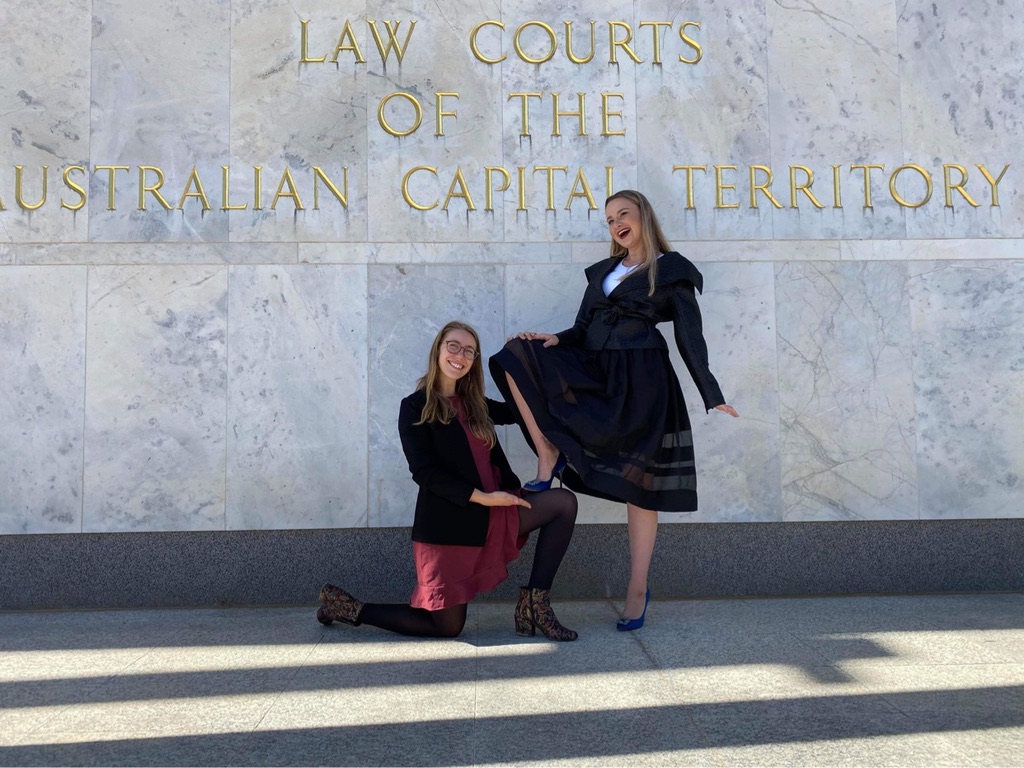
I choked on my words, said thank you and hung up. It was a moment when my life could have taken a different turn and I was fully aware of the chance I had lost. I never did pursue a legal career. In one of those odd turns of fate, it was to be my daughter (above right) who would finish her Law degree and be admitted to the Bar.

Adelaide Markets

In my late teens, I spent most Saturday mornings at the Adelaide markets. It was where we did our weekly shopping for fruit and vegetables and met friends from other share houses. The markets were a grid of trestle tables laden with fresh produce and boxes underneath containing cauliflower leaves and silver beat stalks. The stall holders were loud middle-aged, leather faced men jostling with each other for customers.

There were only a few shops along the side, mainly delicatessens. One of my favourites was Greek and it had dozens of dried Yevani bunches of basil hanging on ceiling hooks. The shop sold vine leaves and other delicacies and I loved the smell of herbs that infused every corner of this tightly packed store.

After our weekly shopping trip, we headed to Victoria square. Most demonstrations started from this vantage point. We often took leisurely strolls through the city streets calling out slogans against uranium mining, for Aboriginal Land rights or made a general plea for peace. There was never any trouble; we marched with our vegetables, stood up for what we believed in and headed home.

I haven’t been back to Adelaide since the halcyon days of my youth when everything seemed possible, and change was in the air. It just turned out that the change that was coming was not what we had bargained for.

I felt disoriented when I walked into the markets this morning. My memory was playing tricks with me. I seemed to remember Victoria Square to my right but it is to my left. Then there is the market itself. It looks nothing like it did back then. I walked all the way around the perimeter looking for the Greek deli, but it has been replaced with trendy coffee shops ubiquitous in every Australian city.

Even the fruit and vegetable stalls look neater and have permanent signage above them. There are rows of cheese shops, coffee roasters and specialty stores selling everything from body lotions to boutique distillery gin. The rhubarb gin was delicious, although it felt very wrong to try it at 9:30 in the morning.  However, the charming salesman reminded me with a wink that it was 5pm somewhere in the world. This certainly wasn’t the markets I remembered from my youth.

I feel an odd unreciprocated nostalgia when I visit places where I have lived. It is as if the place has moved on, but I haven’t. At least not when it comes to my expectations of the familiar. I know the streets and can find my way around, yet I am disoriented. I search for a familiar building to find it has been replaced by a concrete box with offices. As I walk, I recognise that this is undisputedly Adelaide just not the way I know it. My Adelaide will always be locked away in my untrustworthy memory, made tender with age.

On the move again…

I was about to turn five and father and I were on the move again. This time, we were going to Kétegyháza, on the Southern Great Plain of south-east Hungary, near the Romanian border. Once there, my father looked for his brother-in-law, who was the director of an agricultural college. Uncle Attila lived in the caretaker’s house with his family. It must have looked like bucolic bliss.

‘Can she stay a while with you? It’s complicated right now. I’m trying to work out whether I can come home to Hungary and start afresh. There’s a lot to consider,’ my father confided to Attila.

‘Of course she can stay, Stephen,’ my uncle answered. ’She’s family and we always look after family.’

‘It’s only for a while,’ my father said and then he was gone again. I didn’t mind being left this time. I loved my time with Uncle Attila, Aunt Margot and their twelve-year-old son, Atti. My cousin and I adored each other from the moment we met. He treated me like his little sister and I saw him as the brother I’d never had. For Atti, I was a welcome distraction from his exacting parents and for me, he was nothing short of a demigod whom I idolised. For that one magic summer, we were inseparable.

It was fun to be in the country where I was allowed to play all day and make as much noise as I wanted. The house and garden seemed enormous after my time at my grandmother’s deathly quiet flat in Budapest. My stay seemed perfect in every way, and I honestly can’t remember missing my parents at all.

I followed Atti everywhere. Every morning we ran out of the house, climbed trees, played hide and seek. When we were tired, we lay down in meadows and watched clouds drift across the sky, I picked a riot of wildflowers for my aunt. There were so many that my fingers barely reached as I hugged the bunch to my chest. Everything about this summer was expansive like the soft blue sky above us.

In the evenings, I sat on the veranda and watched the colour of the sky change from pale blue to pink then orange and finally to ink. I inhaled the intense sweetness of lilac flowers and kept an eye on the light show in the sky. For hours I sat mesmerised watching uncle Attila whittle away at a piece of wood which would become a miniature blacksmith’s block with a tiny anvil on top. He also carved tiny hammers which made up the blacksmith’s set. I never tired of watching my uncle, although I did think at the time that the tools he made would be too small even for one of the seven dwarfs. Years after my uncle’s death, I would learn that he had made these intricate ornaments to supplement his income.

‘Let’s go and pick some apricots,’ Atti said, near the orchard at the back of their garden. ‘I know the best tree to climb. Catch me if you can!’

I ran after him barefoot. Knee deep in grass, I felt the soft blades brush against my calves. In the orchard dappled apricots hung heavily, ready for the taking. But then, inexplicably, agonising pain. Piercing pain shot shards up my left foot. I screamed.  Atti raced back to find me sitting in the grass, fat tears tumbling onto my cradled foot.

‘Show me,’ he said, and, ever so gently, he removed the bumblebee stinger.

I limped along beside him attuned to the drone of bees. Sure footed, Atti arrived at the orchard, reached up and picked ripe, freckled apricots. He ran back offering the sweetest antidote to a bee sting. One bite and the sting lost its power.

That summer passed far too quickly. It was almost time for Atti to return to school. I couldn’t imagine the house without the sound of his footsteps searching for me, inviting me to come and play. My aunt and uncle spoke about me in hushed tones and then, just like that, my father walked through the front door.

Fifty years later, my cousin Atti explained what had happened on that day. My aunt and uncle had desperately wanted another child and when I arrived on their doorstep, it was as if their prayers had been answered. They put their case convincingly to my father. If he allowed them to formally adopt me, I would not only stay within the wider family, but I would be assured of a secure future with excellent educational prospects and loving ‘parents’ to look after me. Uncle Attila, who was always self-assured, could also be loud and overbearing. No doubt, he clearly spelled out the advantages that my father could not provide. I think he made my father feel inadequate. Indignant, and above all proud, my father packed my few belongings and we left for the train station. In a little over three hours, we arrived in Vienna. He had a few leads to follow but besides those, he knew no-one.


Empty Nest

Ten days ago, I sent off my completed memoir for a manuscript assessment. I have been working on this project consistently since January 2019. It has, however, occupied my thoughts for many years before I was ready write the first sentence.

For someone who has devoted years to this project, the past ten days have felt like an eternity. Does it have merit? How many more edits will it require before I can approach a publisher? Where do I even begin with this next chapter of letting my manuscript go? And the most important question of all – what now?

For three years, I have conducted research, worked on individual scenes, pursued emerging patterns and themes. Several times I have read the manuscript cover to cover and have cut and polished and cut some more. Through this process I have jettisoned some 20,000 words to distil it to its essence. I don’t know whether I have succeeded.

I have put my heart and soul into writing. There were months when words dried up like ink in a misplaced pen. The less I wrote, the more arid my inner landscape became. Then I found my way to a state of flow through the London Writers’ Salon. Once I committed to writing daily, the words cascaded on the page and I completed my first, second and third drafts. I fantasised about working part-time to devote more energy to writing. I wanted a new rhythm to my days and spend happy hours in companionable silence over Zoom with writers from around the world.

But what now? As I am approaching the end of this project, I feel something akin to grief. What if I have nothing more to say? What do I do then? For someone who has the urge to write each day, this is a distressing thought. I have nursed and watched my memoir grow, but it is time to let this fledgling find its wings. When it does, I will have to let it go.

I have no idea how any of this works. Perhaps I need to have more faith. Perhaps I simply need to show up each day. Or perhaps the muse only visits those who have an empty nest to offer.