Red Plaits, Freckles and a Dash of Mischief

The first Children’s book week took place in Australia in 1945. Every year since then, children participated in book week parades, dressing up as their favourite character from a book. This year is especially significant as we celebrate 80 years of encouraging children to immerse themselves in books and find novel ways (pun intended) to engage with reading.

The Children’s Book Council of Australia confers awards to authors and illustrators of outstanding children’s books published in the past year. The ‘long list’ or notable books is announced around February, followed by the ‘short list’ from which the finalists are selected. The books that receive prizes often become best loved classics with children.

Book week parades started out with simple home-made costumes and a lot of imagination. Today, parents can spend a small fortune on costumes, wigs and accoutrements. My favourites, however, remain the simple imaginative costumes. If I could have given a prize this year, it would have gone to a little boy at my school who wore rainbow stockings, a long t-shirt, a hand-sewn felt snake’s head and a crocheted blanket made of colourful granny squares. He was the rainbow serpent! Second prize would have been awarded to the girl in leotards with underpants over it. She was ‘Captain Underpants!’

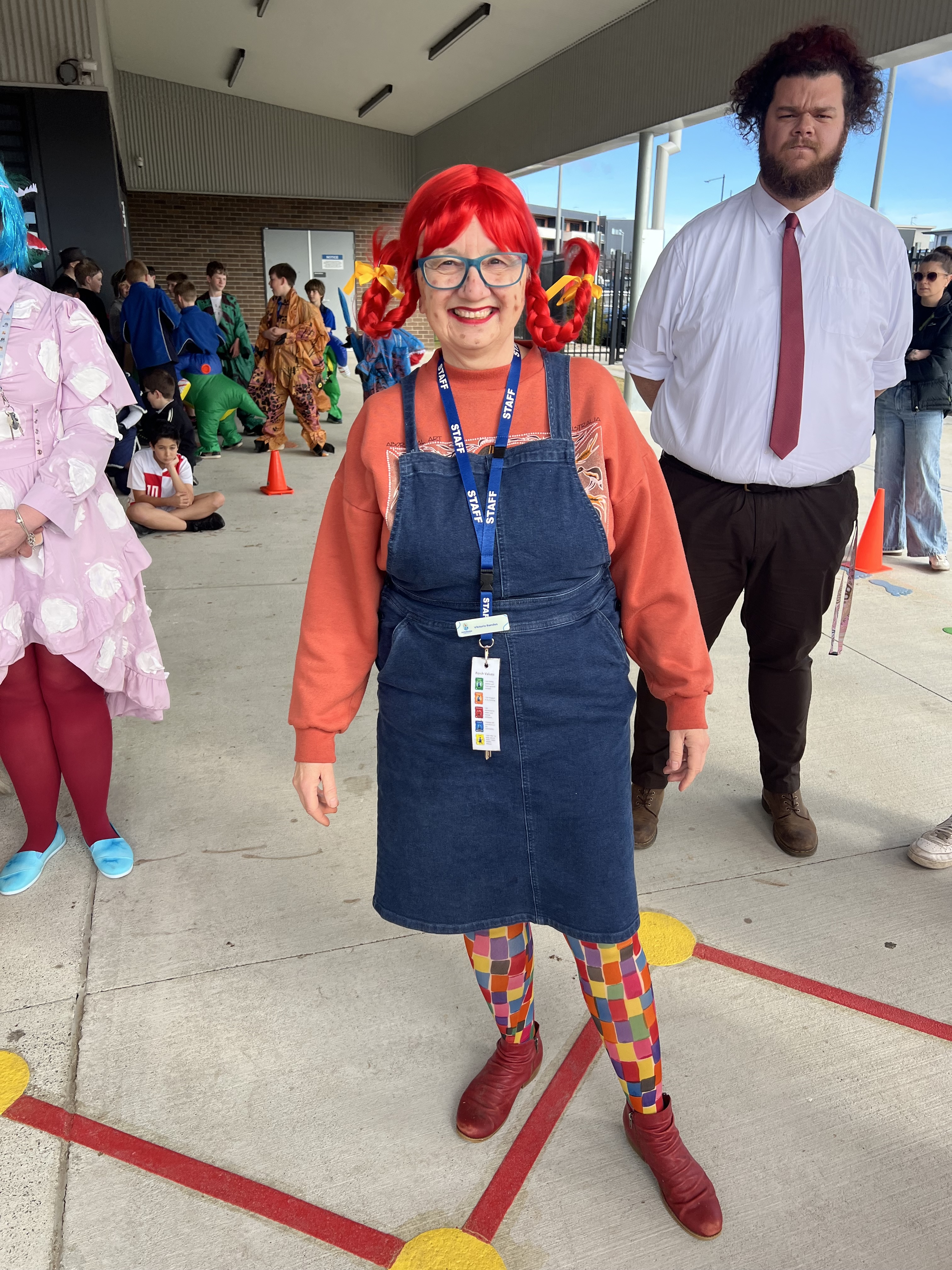
Teachers almost always join in the fun with costumes of their own. My go to is Pippi Longstocking because she was my childhood favourite character. This year, the book turned 81, a year older than the CBCA celebrations. I loved and envied Pippi. She lived on her own in Villekulla cottage in Sweden with her monkey and horse as company. Her father was a pirate and there was little mention of her mother. She was superhumanly strong, lived by her own rules and adults had no power over her, no matter how hard they tried. Recently, I was amused to read that she has been pathologised- it is now thought that she had ADHD and oppositional defiance disorder traits!  I couldn’t help but laugh at this. Are we about to prescribe her Ritalin?

There definitely is a bit of Pippi in my genes. I think that’s the genius of Astrid Lindgren, her creator. Every child has a little Pippi in them wanting to come out. Some manage it better than others. Of course, our job as adults is to keep the lid on the shenanigans and keep children from jumping off roof tops or attempting other dangerous things. Still, the yearning is always there to break free.

So once again, I embraced my inner Pippi and drove to school with my red plaits, multicoloured stockings and painted on freckles. The only downside was that the teachers recognised who I was but none of the children had ever heard of the one and only Pippilotta Delicatessa Windowshade Mackrelmint Ephraim’s Daughter Longstocking.  
Dogs and Laughter: How Zusak Stole the Show

This weekend, I am attending the Canberra Writers’ Festival. It is my first time. I have been really impressed with the line-up of speakers and it was hard to choose the few I would attend. There were the ones whose books I have read and enjoyed and a couple of new ones that I thought looked interesting.

Of the big names on the list, I chose to see Markus Zusak. I have just finished reading Three Wild Dogs and the Truth, which was a present from a dear friend. As a dog lover, whose own memoir may one day appear with the title Blue Dog Girl, I couldn’t pass up the chance to hear him speak.

The book most people associate with Zusak is The Book Thief. Three Wild Dogs have none of the qualities of that book. It is a raw, unflinching, violent, tragic and oozing with love for these three crazy, havoc-wreaking mongrels. Zusak doesn’t portray himself as a perfect dog owner, far from it. I can imagine some dog owners recoiling in horror over some things he has done. But he is truthful, full of humour and passionately devoted to these dogs.

I wasn’t sure what to expect, but I wanted to get a glimpse into this man who could produce two books that couldn’t be more different. From experience, meeting an author whose work you adore can be a hit and miss affair. Once, I signed up for a six-week writing class with an author I idolised, only to find him pompous and condescending. I was in for a treat with Zusak.

The talk was held in the foyer of the Australian National Museum. By the time I arrived, hundreds of people had taken their seats. It was clear from the from the first question on that he was going to go off script and tell hilarious stories, rather than purposefully answer questions. He had such a wonderful connection with the audience that by the time he finished, we all felt that he was our friend. I have never seen an author work a crowd the way he did. He was clearly enjoying himself on that stage.

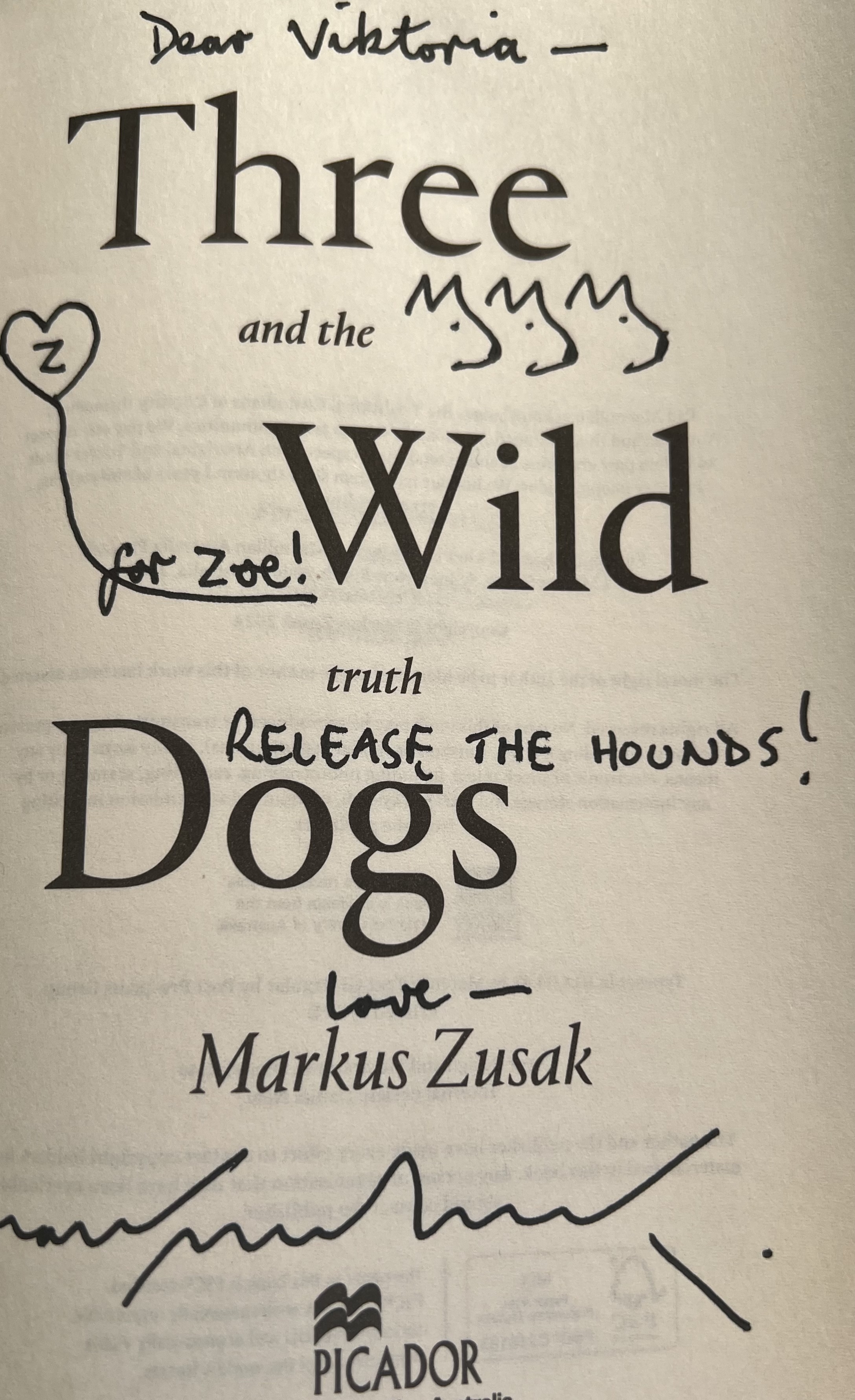
I lined up to get my book signed. When I reached him, he easily engaged in conversation by asking about my dog. He then told me a little anecdote about Standard Poodles while drawing three dog faces on the title page. Markus was charming and generous with his time.

It is rare to have an experience like this at a Writers Festival. It made readers feel part of a valued relationship. He honoured us as much as we honoured him. I’ll cherish this evening, as a testament to the magic that can happen when writers and readers come together.

Love Stories

Published by HarperCollins

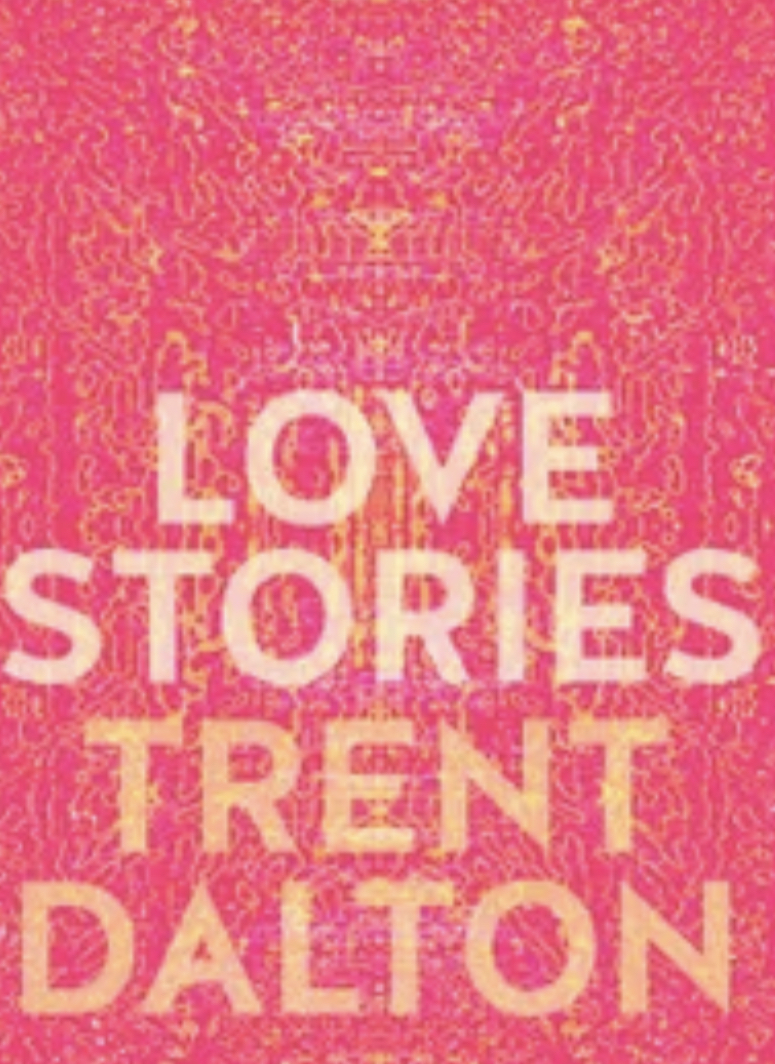
Every now and then, I come across a book I wish I had written myself. Trent Dalton’s Love Stories is a book like that. It rests the simple idea that everyone has a love story to tell. His story starts with an act of love. A close friend’s mother dies and bequeaths a blue portable Olivetti typewriter on which she had typed thousands of letters of protest, determined to make the world a better place. He is touched by the love this woman has shown him and decides to use the typewriter to type up the ordinary stories of love which turn out to be extraordinary in their magnitude.

Dalton takes the typewriter into the heart of Brisbane and sits at a card table with a hand-written sign, asking passers by to share their love stories. And they do! Over a couple of months, he collects their stories, polishes these gems until they spark so much love that my heart aches and tears flow with equal measure of joy and grief.

I listened to the book on Audible on my long drives through the country travelling between schools. I have cheered for bold young lovers and cried at the sublime love stories of couples who have been together for longer than I have been alive. My heart has ached for those who had lost their loved ones and I remembered the men in my own life, whom I have loved just as fiercely.

I was struck by the eloquence of the men and women who spoke candidly about their deepest feelings, who bared their soul to a stranger with a typewriter so that their story could heard. I thank them for it. I fell in love with each one of them.

Dalton cleverly weaves his love for his own wife and children, extended family, and friends into the story. There’s no denying that the book is sentimental, but it is never syrupy or gushing. Anything but. What makes the love stories work is their honesty, however painful that may be. Difficulties are not glossed over, and pure joy isn’t reduced to clichés. The emotions are raw and real, beautiful and tragic, joyous and always, always life affirming.

This is book is a rare gem. Simple yet not simplistic and so full of love that I forgot about the cares of the world for the time that I spent at the magical place on the corner of Adelaide and Albert Streets with Trent Dalton at his Olivetti typewriter.