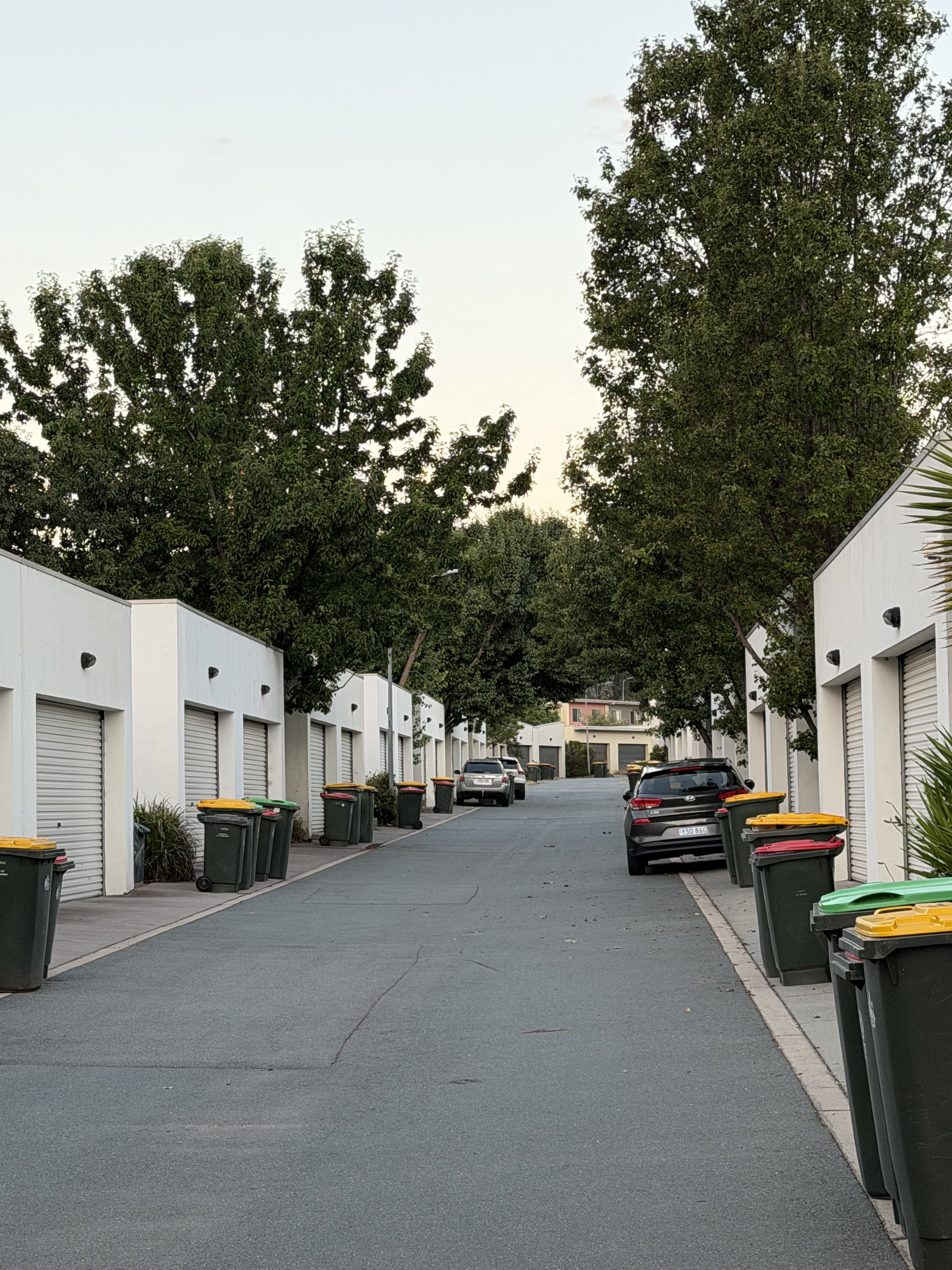
It is seven in the morning and I’m walking my dog. There are a few people about; a Border Collie here, an Oodle there, a Kelpie in the distance. As I come to cross path, an older couple appear without a dog in tow. This seems odd. At this time of the morning, most people walk briskly with their dogs, giving them a quick outing before work. Over time, most of these people have become familiar faces which I acknowledge with a nod and smile, or with whom I exchange a comment about the weather.
Ever curious, my eyes follow the older couple as they walk in-step, hands in pockets, elbows lightly touching. As I watch from a distance, my heart aches for the familiarity and affection I sense from their movements. In their steps, I glimpse the path I imagined for myself long ago. This is how I always wanted my old age to be; my husband and I, walking along with a dog running ahead, enjoying companionable silence, or the conversation that makes up a lifetime shared.
Watching them, my heart aches but there’s also joy in my sadness. Joy, because they beat the odds of divorce, death or the malignancy of indifference. They have not ended up in a law court fighting out a bitter dispute or learned to loathe each other in silence, bickering away the fleeting moments of their lives. I celebrate this couple and all those who stood the test of time, those who have learned to love through pain, heartache and oh so many joys that life has to offer, to finally arrive at old age together, whether it be by luck, good fortune or good health. And as I watch them go, I know without doubt and without sentimentality that this would have been us, had death not severed my beloved from my side.
Many a weekend is spent on housework and chores. That’s a fact of life for those of us who work full-time. But there’s more to life than dishes and socks. Weekends also need to include recreational activities to recharge us.
This week my dear friend Heidi announced she would come to visit. We live about 110 km from each other but even with this relatively short distance in Australian terms, we don’t see each other often. I suggested going to Floriade, a Canberran institution which is held every year in September. She readily agreed.
Floriade is a celebration of spring held at Commonwealth Park each year. An overall theme is selected for the various garden bed designs. This year Floriade features 12 large garden beds highlighting Australian Scientists through the contribution they made to a scientific field. The garden bed themes have names such as Molecular Structure, Spectrum and Petri Dish. By carefully observing the design of each bed, the theme presents itself. My favourites were the double helix for DNA and the Atom.
While massed tulips are the main attraction, there are many varieties of flowers in an assortment of colours. There are Pansies, Chrysanthemums, Hyacinths and Violas to name but a few. Each display is painstakingly planted to represent the facets of science it celebrates. It can be difficult to discern the images portrayed from ground level but when viewed from above, the images become clear.
I suggested going on the Ferris Wheel to get a better view. After a long wait, we clambered into a swinging carriage that was to take us up for a better view. From above, it was much easier to discern the themes. It was very windy at the top and we rocked from side to side which made taking pictures difficult. Our best photos came from when we stopped half way up.
Heidi and I had a wonderful time exploring the gardens. We were mesmerised by the variety of colours of the flowers we encountered. Black Pansies and deep purple hyacinths! We had never seen either of these. We marvelled at the ingenuity of the of the garden bed designers.
While the flowers occupied the centre of attention, we still had time to catch up with each other’s lives. We are empty nesters; our children flapping their fledgling wings. We talked about our plans for retirement, the joys of having a dog, our fears for future generations.
There is immense comfort in a friendship that has lasted forty years. Surprisingly, in all that time, we have only lived in the same town for roughly two years. Yet like tulips at the Floriade, our friendship has returned season after season, surprising us with vivid palettes of colour and the patina that the years provide.
The first time I encountered a floatation tank was in Melbourne sometime in the 1990s. Back then, they were small pods which could either be closed completely or left ajar for those who suffered from claustrophobia. I didn’t know what to expect and found the experience relaxing but rather boring. It was also before I learnt to meditate.
On a whim, I decided to book a 60-minute floatation experience. I reasoned that if I fell asleep during an MRI, I would find floating in an enclosed tank relaxing. I booked into the nearest ‘Wellness Centre’ and a calm young woman met me at the front counter. The process was explained via a short video on an iPad; she then offered me a cup of tea and took me to the floatation room.
Instead of an enclosed tank, I found myself in a very spacious room with a shower on one side and a floatation pool taking up the length of the room. I was surrounded by blue light which I could turn off for complete sensory deprivation. Once showered, I stepped into the pool and immediately floated to the surface of the water. I chose not to have any music and turned off the light.
This may remind some people of solitary confinement and in a sense it was. I began a mindfulness of breathing meditation, where I counted each in and outbreath as one and then continued until I reached ten before starting at one again. I managed to focus for ten times ten breaths which roughly equates ten minutes before I lost track. I’m not sure how long I persevered with counting my breath before I fell into a deep sleep in zero-G.
Sensory deprivation is often used to reduce stress, relieve pain and help with concentration. When sensory input is minimised, it is easier to allow our parasympathetic nervous system to do its job and relax the body. It can lower the heart rate and produce a profound sense of calm. Sensory deprivation, especially when combined with high levels of magnesium sulfate (Epsom salts), can assist with muscle recovery and improved sleep quality. These are all sorely needed when we are always on the go, and my sore body sure appreciated the benefits.
A faint voice awakened me. I stirred, found the light switch and showered once more, washing the salt from my body. Heading to the lounge area, I encountered a number of slow moving, gently smiling people. After tea and a few quiet moments in the lounge, I opened the door and returned to the world outside; calm, rested, and savouring the silence within.
As September and my birthday approach, I become acutely aware that the year is heading into the final waning quarter. We race about exclaiming ‘where did the year go?’, like we have done every year before this and no doubt will in years to follow. But years come and go in days and hours, in the actions and inactions that we succumb to in the moment. At the time they seem such tiny decisions that they really don’t matter but when we add them up, those moments become minutes and hours and then days and months.
It reminds me of that small biscuit that can’t possibly make a difference yet over time adding up to extra kilos or the five dollars for a coffee that can add up to a substantial amount of money when invested. We often look for the big things that make a change in our lives when we should be looking at the micro-moments that have the real impact.
Recently, I have begun to question every one of my purchases. Do I really need it? Will I really use it? How much will it be worth to me in six months’ time? They are quite sobering questions, and I have found that many things are quite unnecessary. This has also allowed me to appreciate the things I do have. The exception to my newfound frugality is buying books, but even there, I have curbed my spending. In part, because I am running out of both shelf and wall space to accommodate them.
As I approach the last quarter of the year, I am disappointed with my lack of progress on some goals but at the same time, I am buoyed by the progress of others. On reflection, this sounds fairly normal. We dream big at the beginning of the year but then, getting through the day with all its demands wears us down little by little. In addition, like joker cards, life’s twists and turns can jolt our lives onto a different track altogether.
I head into my birth month taking stock of this past year, what I can achieve as we sprint towards the finish line of 2025 and what lies ahead for me in the coming year. I’ll be a year older, none-the wiser, but feeling positive about some of the habits I have been developing. Spending less and living within my means is a basic tenet in life that I should have acquired decades ago but I am proud that in this season of my life, I am on my way to conquering my spending habits and learning to make the moments count. It turns out, the last quarter of the year, and of life, is also shaped by the smallest of choices.
The first Children’s book week took place in Australia in 1945. Every year since then, children participated in book week parades, dressing up as their favourite character from a book. This year is especially significant as we celebrate 80 years of encouraging children to immerse themselves in books and find novel ways (pun intended) to engage with reading.
The Children’s Book Council of Australia confers awards to authors and illustrators of outstanding children’s books published in the past year. The ‘long list’ or notable books is announced around February, followed by the ‘short list’ from which the finalists are selected. The books that receive prizes often become best loved classics with children.
Book week parades started out with simple home-made costumes and a lot of imagination. Today, parents can spend a small fortune on costumes, wigs and accoutrements. My favourites, however, remain the simple imaginative costumes. If I could have given a prize this year, it would have gone to a little boy at my school who wore rainbow stockings, a long t-shirt, a hand-sewn felt snake’s head and a crocheted blanket made of colourful granny squares. He was the rainbow serpent! Second prize would have been awarded to the girl in leotards with underpants over it. She was ‘Captain Underpants!’
Teachers almost always join in the fun with costumes of their own. My go to is Pippi Longstocking because she was my childhood favourite character. This year, the book turned 81, a year older than the CBCA celebrations. I loved and envied Pippi. She lived on her own in Villekulla cottage in Sweden with her monkey and horse as company. Her father was a pirate and there was little mention of her mother. She was superhumanly strong, lived by her own rules and adults had no power over her, no matter how hard they tried. Recently, I was amused to read that she has been pathologised- it is now thought that she had ADHD and oppositional defiance disorder traits! I couldn’t help but laugh at this. Are we about to prescribe her Ritalin?
There definitely is a bit of Pippi in my genes. I think that’s the genius of Astrid Lindgren, her creator. Every child has a little Pippi in them wanting to come out. Some manage it better than others. Of course, our job as adults is to keep the lid on the shenanigans and keep children from jumping off roof tops or attempting other dangerous things. Still, the yearning is always there to break free.
So once again, I embraced my inner Pippi and drove to school with my red plaits, multicoloured stockings and painted on freckles. The only downside was that the teachers recognised who I was but none of the children had ever heard of the one and only Pippilotta Delicatessa Windowshade Mackrelmint Ephraim’s Daughter Longstocking.
There is a myth that the Harbour Bridge is continually painted without a break. The story goes that when painters finish at one end, they go back and start at the beginning. This is an urban myth. The reality is that sections need to be painted at differing intervals. Still the myth persists.
Cleaning my house feels like the story about painting the harbour bridge. No sooner do I finish one task, the next is already waiting for me. Now I don’t know whether the painters enjoy their job, but I certainly don’t enjoy mine. I’d much rather be at my desk writing, reading a good book or taking the dog for a walk. Vacuuming, not so much.
Yesterday I vacuumed, did the washing, folded the clothes and put them away, packed and unpacked the dishwasher, changed the sheets and put the rubbish out. Today I will clean the bathroom, iron some work gear, tidy up yet again and water the plants. There’s much more on the list, but I know I won’t get to it. Already the floor looks like it could do with another going over.
Tomorrow the working week begins. When I get home, I will cook, tidy the kitchen, do the dishes and clean out the kitty litter. There won’t be time for much more. The rest of the week will follow in the same vein and then will come the weekend when the big clean will happen once more. Whoever came up with the phrase ‘rinse and repeat’ is a genius. It applies to so much of our daily lives.
Yet while I grumble about my daily chores, I also remember my mother’s lot. When I was a child, she washed clothes in a wooden tub using soap and a washboard to scrub them clean. It was backbreaking work. We didn’t have a vacuum, so cleaning the floor was a matter of a daily sweep with a broom and weekly mopping. Our dishes were washed in a plastic tub and dried with a tea-towel. There were no modern appliances in our house. Cleaning was drudgery.
I have to remind myself that I have it so much easier now. It takes me less than three hours to clean my house top to bottom, which is no more than 2% of all the time available in a week. Viewed in this way, it is hardly an imposition. As with so much of life, it is the attitude to the task that makes the difference. And so, the Bridge gets painted, my house gets cleaned, and I am blessed that life keeps moving on.
Some children are up at 6 a.m. full of beans, ready to play. They wake their bleary-eyed parents with laughter, chatter and joie de vivre. I was never one of these kids. I’ve been a night owl from the day I was born.
My mornings have always been hard. Getting out of bed is hard. Jumping in and out of the shower is hard. Facing breakfast is hard. Anything beyond a grunt is hard. The only thing that isn’t hard is taking the dog for her morning walk.
Although I bitterly resent it before I go, the moment I’m out in the park the day changes. I remind myself this is worth getting up for: the cool air on my face, the well-trodden track under my feet, and the dog cantering ahead like a racehorse.
By this time, I’m smiling and have found my voice. I even enjoy meeting fellow walkers and saying hello. Yet the 45 minutes before the walk have been hellishly difficult. Why can’t I just skip the moaning and groaning and get to the good bits straight away? I’ve read The Miracle Morning, and each time I go back to it, I get all fired up about embracing the new habits it suggests. My enthusiasm, however, wilts the next morning when I actually have to put those lofty ideals into practice.
I now leave my phone in the kitchen and set my alarm so I have to get out of bed to turn it off. Great in theory. In practice, I’ve been known to yell ‘Siri, stop!’ loud enough for my phone to obey. When that hasn’t worked, the rebel in me has simply waited out the alarm with the doona pulled over my head. I can be ridiculously obstinate about getting up.
I’ve tried Mel Robbins’ five-second rule, but if you’re not committed, you won’t do it. I understand the theory (I always understand the theory) and for a while, when I’m all enthusiastic, it works. But inevitably, I slip back into bad habits.
This morning, I set my alarm 15 minutes earlier than I needed to and another for the right time. It let me hurkle-durkle for a while, letting thoughts amble lazily through my mind. With enormous effort, I stumbled out of bed and into the shower. Only when the warm water trickles down my face do I truly wake up. Until then, I’m a zombie condemning everything that crosses my path to hell and damnation.
I’ve always admired people who wake up ready to face the day. The world seems built for morning people. Life would be so much easier if I fell into line. But today, I’ve had a small win. I was out the door 20 minutes earlier than usual, and it made a huge difference. The dog had a much longer walk and I wasn’t in a hurry to get back. So instead of rushing, I enjoyed the magpies warbling and spotted a kookaburra perched on the overhead wire. I’d have missed this beautiful kingfisher on any other day. If every morning started with a kookaburra, I might stop arguing with my alarm. Might.
I make a last-minute dash to the markets for some Batlow apples. Most stallholders are busy sweeping the concrete, packing their unsold wares onto trucks. Everyone is looking forward to getting home and for some, there is a long drive ahead. They have been here since five in the morning, setting up and waiting for the first customers to arrive. I hastily look for my favourite stall and I’m lucky, the girl selling apples is still serving customers.
I take a walk around what’s left of the markets, buy some mushrooms and am given an extra bag of woodland browns to take home. These late saunters on a Saturday morning, when the place empties, are my idea of bliss and there’s always a bargain to be had.
As I come around the last isle, bright yellow jonquils catch my eye. It is mid-winter, yet here they are, heralding spring. Massed in large plastic buckets, their sweet fragrance borders on pungent. I can’t resist. Two bunches are rolled into tissue paper while I hand over a ten dollar note.
Flowers always brighten my day. I’m drawn to their beauty and fragrance. It turns out there is a reason for this feeling. Flowers can spark the release of dopamine and serotonin in our brain by their bright colours and pleasant smell. There are studies that show that having flowers in the house can lower cortisol levels. They create a relaxed and aesthetically pleasing environment which makes us feel more relaxed.
Before I knew any of these benefits, I instinctively bought flowers when I felt downhearted. Back in 1987, I spent a rather miserable winter in Berlin. The cloud cover arrived in October and never left for six months. The short days felt like eternal dawn or dusk; it was impossible to tell which. It was during these months that I began the habit of buying flowers every Friday afternoon as I returned from university. The florist around the corner wasn’t cheap but made the most exquisite flower arrangements. They reminded me of the Japanese art of Ikebana. The designs were always minimalist, and they took my breath away. I had very little money left for luxuries, but my Friday ritual never felt like an extravagance.
This memory came flooding back as I purchased my jonquils. While I don’t possess the patience to artistically place flowers in a vase, it doesn’t much matter. A dull winter’s day has been transformed into delight by their smiling yellow faces. And for the next week, there will be guaranteed sunshine every morning.
Some women are naturally clucky. They coo over babies, look at them wide-eyed and are in awe of the miracle of life, so tiny and perfect. I am not one of these women. I am much more likely to coo over puppies to reach out to stroke them than I ever am to hold a baby in my arms. Hard to admit but true.
When my daughter was born, I was completely in love the moment I set eyes on her. Finally, I understood what came naturally to other women. But for me, I only had eyes and love for my daughter. She was the most perfect creature I had ever seen, and I was instantly filled with a love so strong that I knew I would do anything for her. That feeling has never left me.
When my daughter fell pregnant, I wondered how I would react to the baby once it was born. Would I be as madly in love with her as I was with my own daughter? I honestly didn’t know. Of course, I knew I would love and protect her, but would it be the same as when my own child was born? After many months of waiting and wondering who this new member of the family would be like, the day came quicker than any of us anticipated.
I arrived at the hospital just before my daughter was brought back to the ward, baby against bare chest, vernix protecting her daughter’s delicate skin. She looked so peaceful and beautiful, angelic even. Yet my eyes moved quickly to the face of her mother, my own daughter whom I love above all else. In turn, her eyes were fixed on her baby daughter and I recognised that fierce look of love, a feeling we now both share, generations apart.
She was looking out for her daughter, while I was looking out for mine.
Later in the week, I stayed at the hospital for a night so her husband could get some rest before bringing his family home. I am ashamed to say that I was of very little help that night. I heard the baby cry but could not rouse myself to get up. My darling daughter, however, was awake and doing all the things she had only learnt in the past couple of days. She was a natural. At six in the morning, I finally picked up her baby and settled her next to me so her mother could have a rest. For two blissful hours, I dozed with my granddaughter in the crook of my arm.
Her father came back in the morning and at first couldn’t find his baby. When he saw her snuggled into my arm, he laughed and came to retrieve her. He is besotted with his daughter, proud and protective. I see my husband’s love for our own child reflected in my son-in-law’s eyes. He will be a perfect father.
I am so proud of this little family. They work together, look out for one other and wear their boundless love with pride. And so, my own love expands beyond what I ever felt possible to envelope these three magnificent individuals who have become their own little family.
Happy NAIDOC Week! NAIDOC stands for National Aborigines and Islanders Day Observance Committee. As the name suggests, it was originally marked on a single day, and since 1975 has grown into a week-long celebration held each July.
This year marks the 50th anniversary of NAIDOC. It has its roots in protest movements seeking recognition and rights for Indigenous peoples and has since evolved into a celebration of culture, resilience and leadership. The theme for this year is “The Next Generation: Strength, Vision & Legacy.” As a teacher, this theme resonates deeply with me. We must ensure that the next generation is equipped with the knowledge, skills and tools to preserve and adapt their culture. I pay my respects to Elders past and present for the work they have done, and continue to do, in guiding and teaching the younger generations.
NAIDOC Week is also an opportunity for non-Indigenous members of the community to learn more about culture and Country. When I saw a weaving workshop advertised, I decided to go along and learn a little about this ancient craft. Ronnie Jordan ran the two-hour session at the Botanic Gardens with a couple of enthusiastic young people who clearly enjoyed sharing their cultural knowledge. I was humbled by their generosity.
Weaving is an example of complex technology, not only in the act of weaving itself, but also in the selection, processing and dyeing of materials such as grasses, reeds and even bark. Preparations like splitting, soaking and finding the right pigments are essential to how the final product takes shape. Weaving is used to make mats, baskets, bags, ropes, bowls, nets and fish traps. Weavers not only know how to create these items, but also how to repair them.
Both Indigenous men and women weave. They pass on knowledge through their hands, connecting with both people and Country. Each weaver develops their own distinctive style, which others recognise. It’s even possible to tell where an object comes from based on the plants used and the time of year it was harvested.
For our workshop, we used raffia that Ronnie had dyed using natural seeds, fruits and plants. We sat in a circle, began the process together, and continued at our own pace. I caught on reasonably quickly, perhaps because I knit and crochet, both of which rely on repeated patterns and maintaining even tension. As Ronnie walked around, she’d occasionally call out, “Exhale,” noticing that many of us were so focused we were holding our breath. After a while, the chatter died down and we settled into a meditative flow state.
The first time I saw Aboriginal women weaving was in Maningrida, in West Arnhem Land. They sat on the veranda of the local arts centre, their hands moving rhythmically as they wove baskets with intricate designs. It was mesmerising. I bought a small basket as a souvenir and carried it carefully all the way back to Sydney. I still regard it as one of the most beautiful objects in my home.
After two hours, our weaving was still very much in its infancy. We were encouraged to take some raffia home to continue. Not wanting to appear greedy, I took what I thought was a fair amount. It wasn’t nearly enough. Once home, I continued weaving late into the night until I ran out of coloured raffia. I had made a small mat, larger than a coaster, smaller than a placemat in about five hours. It gave me a new appreciation for handwoven baskets, and I now understand the price tags attached to them.