A capital fog

Canberra is located at the foothills of the Snowy Mountains, within the Great Dividing Range. Its altitude is 577m above sea level, which may not seem like much by South American standards where cities often sit above 1000m, but it is quite high compared to other cities in Australia and Europe. In fact, Canberra’s elevation is 168m above that of Zürich.

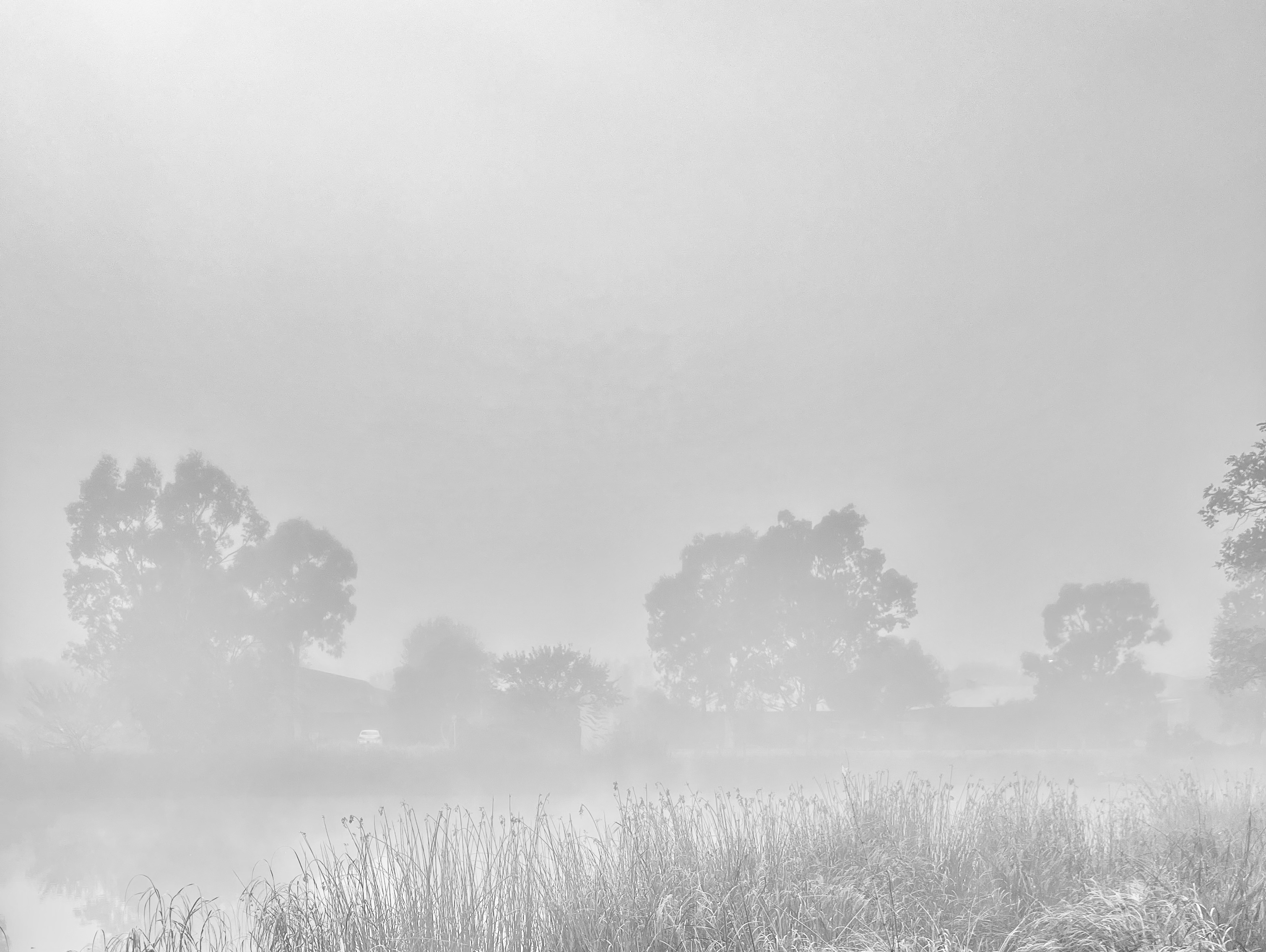
The elevation and the fact that it is a relatively sheltered valley near mountains, allows cooler air to sink and the warmer air to form a blanket above it, especially when there is little or no wind. These are perfect conditions for thick fog to occur. On average, there are around 20 heavily foggy days in winter.

I relish these foggy days which give the city a magical air. I love walking in it, not knowing what is in front or behind me, just focusing on one step at a time. I don’t even mind driving in it, although I admit that I prefer driving in fog when I know a route well. But then I have had years of experience driving in the Blue Mountains, where fog can envelop a valley even in summer.

Canberra airport was built on one of the lowest lying areas in the city. The result is that many flights are delayed and cancelled, especially after 10am when incoming flights can’t land due to the lack of visibility. It does seem like a huge oversight to have located an international airport in one of the worst affected areas in town.

Where I live is only 9km from the airport and it shares its propensity to fog. There are mornings when I can only see shadowy outlines of the trees across the road. When I walk the dog, she disappears ahead of me, and I can confuse markers ahead for people coming towards me. It is a strange, fairy-tale landscape where both time and space seem to conflate. It is muffled and eerie, yet stunningly beautiful and comforting at the same time.

When I worked at Blackheath in the Blue Mountains, I often watched the fog roll in like hay bales on a farm. One would roll up the main street and gather moisture and momentum as it shrouded everything in its path, white as a freshly washed sheet. I’d look out onto the playground and play a game of ‘now you see me and now you don’t’; 350 children there one moment and gone the next.

Fog is an enormous doona spread over the city to make all of us more aware of our senses, to hone our navigation skills and to remind us of the things we can’t control.

It is also a lesson in awe and wonder inviting us to pay close attention to our surroundings. Fog is the winter coat I wear gladly. Wrapped around me, I feel peaceful and lovingly enveloped.
Frost

Canberra is the coldest city in Australia, even eclipsing Hobart in mid-winter. Early morning temperatures are often in the minuses, with heavy frost or fog being quite common. Frost often occurs on days with clear blue skies, which makes the contrast even more alluring.

Walking the dog on this sea of grey-white is a wonderous experience. The dog, energised by the cold, slips and slides as she bounds across a field. She stops to lick the grass, roll on it, before leaping around with feet going every which way. Her joy at this winter wonderland is infectious. I can’t help but laugh and run after her. I make a mental note to take her to the snow this winter to see her reaction.

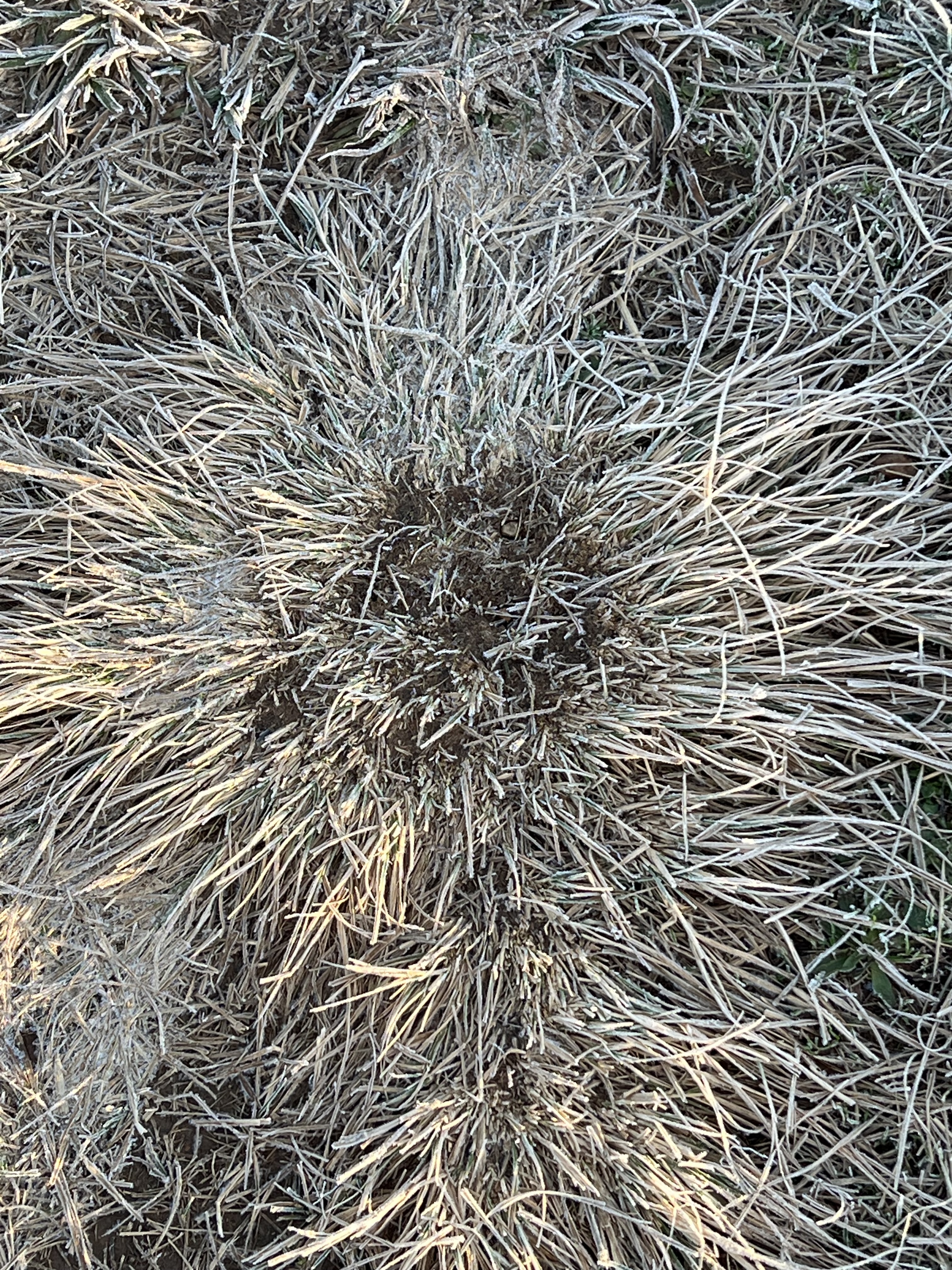
The field is like an old man’s closely shaved beard; patchy, grey and uneven. The grass’ reaction to the cold is to go dormant and conserve the energy it has until it becomes warmer and more conducive to growth. It is a reaction with which I empathise. Getting up early to take the dog for a walk is getting harder with each degree that the temperature drops.

Yet once I am out here, my nose numb and hands firmly planted in my pockets, I know I am alive, ready for next marvel the world offers. As the sun’s rays reach the frosty grass, I notice a shimmer as if fine glitter were strewn across the landscape. I look closely and discover that tiny frozen dewdrops are melting, refracting the sunlight. A soft white glow surrounds these droplets, which I have discovered are called Heiligenschein even in English. It means halo, but I much prefer the German word joining holy and glow. There is something otherworldly and awe-inspiring about these tiny droplets. The more I walk along this path, the more I realise that each morning offers up a novel experience. This is what makes rolling out of bed worthwhile.

From barren to blooming

Costa Georgiadis argues that no space is too small for a garden. On Gardening Australia, he has presented stories of magnificent indoor gardens and balcony gardens. I never took much notice as I neither had a balcony nor much light inside my house to grow indoor plants. The truth is, while I enjoy visiting beautiful gardens, I am not a gardener. I’m impatient, get frustrated with weeds and find the whole never-ending process akin to cleaning. A boring chore.

One feature I like about my townhouse is its miniature courtyard. I also like the balcony upstairs, but I immediately bequeathed it to the cat, so she had a place to escape from the dog. There was only one problem with that. It looked so desolate with only a cat litter tray and her little trampoline, and I don’t cope well with desolation. It lacked what Germans identify as Gemütlichkeit or what Danes call hygge. No-one bar the cat would want to spend any time there.

I may not enjoy the work that goes into making a patch of green space, but I do value the benefits it brings. Sure, the nature reserve is only across the road, but it turns out I needed something closer than that. I knew there were health benefits that come from spending time in nature and that cities that have more parks score higher on measures of well-being. Maybe that is why Canberra ranked second in the world for a city with the best quality of life. While that is reassuring, I still felt I needed to transform my barren balcony into something more pleasing. As Danielle Shanahan from the University of Queensland said, ‘There is plenty of evidence that you will get a range of benefits even if all you can manage is putting a plant in your room or looking at trees through your window at home.’

Plants don’t have to be sourced from expensive nurseries. I kept a look out for second-hand plants and nice pots and spent a day last weekend driving to people’s houses. I met a woman who propagates proteas, someone else who is moving house and then migrating to Spain and a suspicious person who left me standing in the cold, locking the screen door, while she retrieved the plant from inside. It was an interesting study in human behaviour.

This weekend, I purchased some shoe racks which I am using as plant stands. I cleared the area and began my arrangement. It is still a work in progress, but I am pleased with the results. Now when I look out onto the balcony from my desk, I see freshly planted pots in the foreground and the trees across the road in the nature reserve. It is a perfect place to write.

Crafting dreams

https://www.instagram.com/foxyfine_furniture/

The moment I saw Thomas Fox’s work, I knew I this was a young man with a passion for creating beautiful, tactile objects. I was taken by the simplicity of his plant stands, the careful joinery and ingenious design which allowed it to be packed flat and reassembled in seconds. I found myself drawn to his exquisitely crafted coffee tables and inlaid cutting boards. Online, I discovered that he also created larger furniture pieces like sofas and desks, always maintaining a balance between form and function. I bought one of his larger plant stands, which fits perfectly in a gap between some bookshelves and a cabinet in my lounge. It brings me much joy to see a well-crafted object add to the aesthetic of the space I in which I live.

What struck me most, when meeting Thomas Fox, was his youth. Much older men who have had a lifetime of practice normally work with wood at this level of competence. Thomas looked to be in his 20s and was deeply passionate about his craft and wanting to make a living from it. When I suggested a retail outlet she should approach, he replied it was a place he was aspiring to, but wanted to perfect his craft before he approached them. I thought he was much too modest.

I kept thinking about this young man and wondered why he had captivated me. I realised it was his passion for his art and that he was willing to put everything on the line to live an authentic life. On Instagram, I discovered he had given up his day job for this dream. That was well over a year ago, and he is still working on what he loves best. I thought about his courage and determination, his work ethic and belief in himself. I realised then that I had much to learn from the way this young man lives his life with purpose.

There was also a thread running back to my late partner, Roger, who was a self-taught carpenter. In fact, we met over a handsome chest that he sold me here in Canberra many years ago now. He also made beautiful tables which he sold at markets. He was never happier than when he had a piece of wood in his hand and an idea of how to transform it. The moment I met Thomas, I knew what Roger would have said. It was as if he were standing by my side. Roger would have congratulated him, taken his card, and immediately set about to drum up business for him. That was the kind of man he was.

I am now seriously thinking of commissioning Thomas to make me a desk. I saw the photo of one he made for a customer, which was simple, stylish and yet a little quirky. That ticks all the boxes for me. I also know that if I wait too long, I won’t be able to afford his work. This is an artist who is going places.

Suitcase rummage

https://www.suitcaserummage.com.au/market-dates

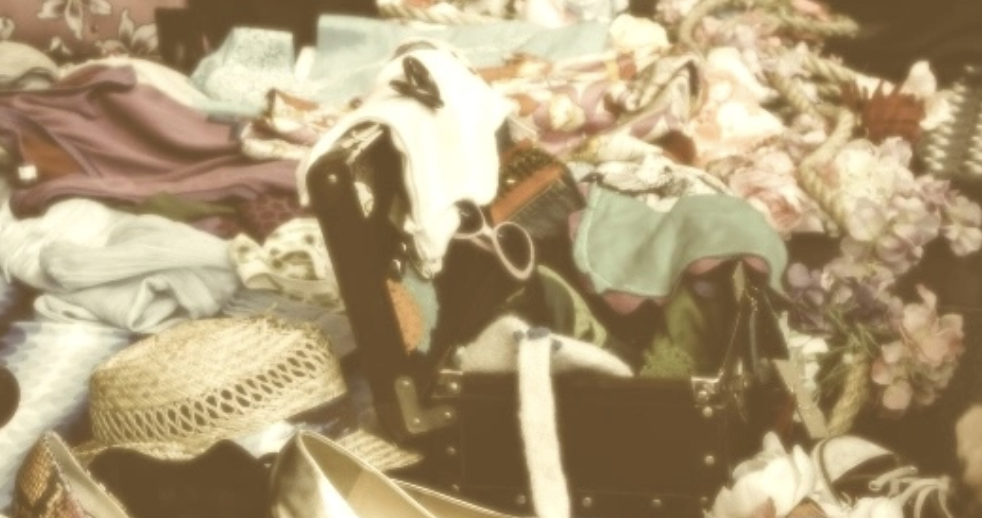
Saturday morning, I walked through the saddest little trash and treasure market in Haig Park. Lining the path were a dozen or so blankets with various pieces of personal effects, mainly clothing. One small suitcase had a sign saying that the owner of the meagre belongings was about to head home and needed to sell everything on display. I didn’t like her chances.

It was a cold morning, and the prospective sellers were huddled on their blankets. They were either rubbing their hands together or had them wedged under their armpits, trying desperately to keep warm. Some were rocking back and forth in the hope that some movement would bring relief to their cold bodies. Looking at their wares, it was difficult to think of anyone who would buy what they had to offer. In a world where a brand-new basic T-shirt can be bought for as little as $2.50, how much could they hope to get for a second-hand garment? And how many people still carry coins or cash for that matter? I did a quick calculation of an hourly rate and concluded that most of them would be lucky to earn the equivalent of a cup of coffee.

I felt like a voyeur looking into the drawers of their bedroom closets and was embarrassed to do so. There is so much you can tell from the items themselves and the way people display them. At one stall there was an open suitcase with belongings spilling out as if they had been dropped from a balcony. At another, each item was folded neatly and arranged according to their colour. It felt far too intimate to be comfortable for a prospective buyer to lay their hands on the items. I wanted to flee.

Something about the sad display reminded me of documentaries of the aftermath of WWII when people with tattered suitcases sat on the back of drays, making their way across the countryside on their way home. Maybe it was the old-fashioned suitcases that most had brought along, or maybe I have seen too many German movies at the festival in the past three weeks.

I left the park feeling disconcerted. I thought about all those items and how they were once new and desirable. A strange thing happens when we bring our purchases home. They take on quite a different life to the one they had in the shop. They become an expression of our personality, or they refuse to fit in and look forlorn or out of place. Unfortunately, most of the items for sale looked forlorn.