Country life

Seven years ago, I moved to a small country town in the Central West of NSW. Initially, I had preconceived ideas and prejudices which have mostly turned out to be, well, preconceived ideas and prejudices. I had no idea what it would be like. I freely acknowledge that each town is different and, honestly, some I really wouldn’t want to live in at all. However, if you choose the place carefully, it is a delight to live out west.

Millthorpe, where I chose to live, is a gem of a town. It is located between Orange and Bathurst which makes it a much sought-after address. It has quaint cottages which give it that old-world charm and the functioning railway station makes it one of the more accessible villages to reach. Our hatted restaurant, Tonic, attracts people as far away as Sydney and weekends can feel a tad busy down the main street. On weekdays, however, the place reverts to a sleepy little village where people walk dogs, chat to one another, and enjoy the slow pace. People look out for one another here and no one is considered an outsider. It is genuinely one of the most welcoming places I know.

While most shops and amenities are further away, it doesn’t take long to get to them. Traffic is mostly non-existent. I drive 20 minutes to get to work which for most people in the city is considered a short commute. My drive is scenic and I am blessed to be surrounded by nature. Whether it is cows on a hill, frost on the grass or swans in a dam, the bucolic charm never fades.

Another thing I appreciate is the quietude. I am one of those people who needs oceans of silence each day. I can listen to bird song, the rustling of leaves or the occasional bark but I don’t cope well with traffic noise or loud people. Here, my nights are dark, silent, and restful. Now and then, there is a storm with heavy thunder and lightning, but I find that a welcome release.

When there are no clouds in the sky, the stars are so much brighter than in the city. Even the moon seems bigger. It comes over the horizon as a large, illuminated ball breaking through the purple, orange and pink sky that heralds our sunsets. Dawn and dusk are magic in the Central West and makes even the most unsentimental among us gasp in awe.

While I know that I will probably not stay for ever, the Central West will always have a place in my heart. I love the quirky, earthy humour of the locals, the defined seasons, my gorgeous worker’s cottage. This is a place where I have felt more accepted than anywhere else I have lived and I have made life-long friends in a short time. It is the place where I have been given the freedom to write, where I have found love and where my soul has been given time to heal. Looking back, it is hard to understand why it took me so long to make the move.

Two mothers

Taking a shortcut through the back lanes of Adelaide, an Aboriginal woman approached me holding two paintings. It was late afternoon and she looked tired as if she had been waiting for someone for a long time.

There was a hopeful look in her eyes, but her body language radiated defeat. I stopped, knowing full well that she was going to ask for money, but I couldn’t walk away. I needed to bear witness to this woman’s story. She began by telling me about her son whom she needed to visit, a good man, now in need of money to pay some bills. What I heard was a plea from one mother to another. It didn’t matter how old her son was, as his mother she would do anything for him in the same way I would do anything for my daughter.

She offered me one of two paintings she had completed; I could choose. She wanted a fair exchange, her pride demanded that. When I told her that I had no cash – who does these days? – she suggested an ATM not far from where we stood. I assured her I’d return but she walked with me anyway, making certain that the exchange would take place.

It was hard to choose a painting, they were so different to one another. One was of animals on an ochre background while the one I eventually chose, was painted in vibrant colours and depicted meeting places and possibly a ceremonial site in the centre. I felt the one I chose was the more feminine and would remind me of her strong character.

The painting and that tiny glimpse into her life is now hanging in my bedroom. Mother to mother, I think of her often and wonder how she and her son are getting on. And I wonder whether she knows that she has touched my heart.

Tempting Lollies

While paying for my groceries at the local corner store, I noticed a tiny tot, no more than two years old, jump off his tiny bike, and head into the store as if on a mission. He was wearing his helmet as he strode up to the lolly section checking the goods on offer. The shop assistant and I couldn’t help but smile; the boy had the swagger of a cowboy in the body of a wee pixie.

I was just receiving my change when I noticed the boy leave the shop with a packet of sour chews in his hand. He jumped on his bike and rode off, just as quickly as he had arrived. The shop assistant and I looked at each other.

‘Did that kid just walk out with the chews?’ he asked.

‘He certainly did,’ I answered laughing. Our eyes met and we both smiled.

‘I’ll have to run after him,’ he said. He was clearly amused.

As I walked out of the shop, I could see the little kid next to his mother.

‘Did he not pay for the lollies?’ she asked as the shop assistant approached.

I could see that they were talking amicably so I turned and left them to it.

I know this story has turned out well for the little boy. The shop assistant was kind and the mother sympathetic. They both understood that exchanging money for goods is an abstract concept which a two-year-old can’t possibly grasp. Mum would have taken the boy back to the shop to hand over the coins and he would have been handed the lollies in exchange.

This incident reminded me of a similar story which did not end so well. I must have been about four years old when I was shopping with my mother at a market in Madrid. We walked from stall to stall buying vegetables when I spotted some delicious strawberries. As we walked past, I helped myself to a large juicy one that beckoned to be eaten. I have always been attracted to red as a colour, and this strawberry was a deliciously passionate, vibrant red. Just as I bit into the forbidden fruit, the grocer yelled at me, calling me a thief! I had no idea what this meant, only that he was shouting, angry and threatening me with a crooked finger coming towards me. My mother shouted back and pulled me away hard, which hurt my hand and shoulder. Tears welled up, and I could no longer enjoy the fruit I had so desired only moments earlier.

I won’t claim that we live in more enlightened times. To debunk that myth, you need only to look at the juvenile justice system where ten-year-old children can be locked up for shoplifting. But maybe there are an increasing number of people who understand that most children go through this stage and the best way to treat them is to approach with the love and compassion that all young children deserve.  

And so, I hope that the little boy enjoyed every last mouthful of his carefully selected lollies after handing over the cash.

The stick library

We have become familiar with street libraries which have popped up in the most unlikely places providing a much-needed community service. People take books that pique their interest and bring back ones they have read, but no longer wish to keep. There are no forms to fill out, no due dates nor any fines to worry about. It is a self-regulated system that works because everyone who uses it benefits. It only takes one person to start it, keep an eye on what comes and goes, tidy up every now and again, and occasionally cull. No wonder they have become such a hit.

Yesterday, as I was walking two dogs at a local park in Watson, Canberra, I discovered a variation on the theme – a stick library. My first reaction was joyous laughter. Such a charming idea matched with a quirky sense of humour, and a doggone purpose. In its vicinity, I spied four people and at least double that number of dogs. I should also mention that there was a lagoon nearby. The humans were standing at its edge, throwing sticks into the water for the dogs to fetch.

I walked up to a man whose Border Collie ran towards us with two sticks in his mouth.

‘What a great idea,’ I said, pointing to the stick library.

‘Yeah, whenever we used to come down here, no one could ever find a stick to throw,’ he said. ‘Then some guy decided to do something about it and since then, people bring sticks back for others to use.’

‘I love the community here in Watson,’ a younger woman chimed in. ‘The stick library speaks volumes about the kind of people who live here. It’s such a friendly place.’

‘Someone called ABC radio the other day to say thank you for the stick library and the switchboard lit up,’ the man added. ‘Now they’ve tracked down a guy called Tom who’ll give an interview at the local radio station.’

I nodded in appreciation and could immediately see the appeal of this good news story. After all, we are a dog loving nation. One in three households in Canberra owns a dog. You don’t have to walk very far to encounter a pooch with its special human beaming with pride as they make their way to the nearest off-leash area. Exercise is essential, especially in a city brimming with apartments. And what better exercise than to fetch a good old-fashioned stick?

Morning pages

There are weeks when writing is hard. I just had one of them. Illness, deadlines, and distractions all got in the way, and I didn’t write. Although, strictly speaking this isn’t true. I always write something, it just might not be a blog post. In this past week I have written a job application (not my favourite kind of writing) and I have written in my journal. It is the one thing I manage to do almost every day of the year.

I try to follow Julia Cameron’s rule of three handwritten pages first thing in the morning. When time is tight, I will write one page rather than not write at all. As my friend Kellie likes to remind me, ‘done is better than perfect.’ When I write longhand, words flow from my pen as if my right hand was connected to my thoughts. Sometimes when I read a sentence back, I notice that I have written the first part of a word and finished it with the next one. It is fast, unedited, stream of consciousness writing.

Most of the time, my scribbles are not worth reading. They chronicle mundanities of life, sometimes strange dreams and on rare occasions, I might get some insight. Still, I persist. As Julia Cameron suggests, morning pages are for my eyes only and they are not meant to be creative writing but a way to clear the mind.

Weeks go by when I think that the morning pages have done nothing at all for me. Then I realise that getting those initial thoughts out of my system allow me to face the day without ‘stuff’ circling in my mind. I can leave all those thoughts in the journal. It is like having a container for loose change, only that in this case the container holds loose thoughts.

Every now and again, a solution to a problem presents itself in the pages. Granted, it doesn’t happen often. These are like little nuggets of gold that are left behind when all the dirt has been washed away. I can’t expect to find a nugget every day but when I do, I know that the process has worked its charm.

It takes me about fifteen minutes in the morning to write three pages. I don’t use prompts. I simply pick up the pen, put it to paper and let it glide across the page. I enter an almost a meditative state where I watch the pen do its work. I sit with a cup of tea, write, sip, write some more and finally close the journal. I rarely read what I have written, although it can be useful to go back after a few months and get a sense of how things have shifted.

I recommend the habit of morning pages. They allow you to clear away the cobwebs and start the day unburdened. You might find it the most worthwhile fifteen minutes of your day.

The car park

There are times when spending a little extra cash could save your sanity. But then, what is your sanity worth when compared to a good story?

This story starts with my daughter Ella and I arriving in Adelaide. We drove around the block twice, looking for an entrance to the hotel carpark. There wasn’t one. The bartender/concierge advised us to park in one of the many carparks in the area.

‘There’s a cheap one right across the road,’ he added, noting my displeasure at having to drive further afield and pay for the inconvenience. 

While I took our luggage upstairs, Ella went to park the car. She returned a short time later with a smug look.

‘I was looking for the pay station and found a note saying it’s unattended. We can park there for free,’ she said, satisfied with her discovery.

The following day, I went across the road to look for a parking attendant. I eventually found a bum-bagged, dishevelled employee to whom I explained that we needed parking for four days. He grunted in a manner that a certain breed of young men has finessed.

‘Sixty,’ he said.

‘Can I drive in and out at any time?’ I asked.

‘Uh-huh.’

‘We’re leaving on Sunday,’ I ventured

‘Mm,’ he acknowledged without looking up once.

I moved my car closer to the entrance of the unlit, cavernous space. With its broken windows and filthy floors, it would have made a perfect setting for a British murder series. I couldn’t help but look for the acid bath which surely was hidden in a corner somewhere. It didn’t help that Ella and I had listened to a whodunnit while driving to Adelaide. In that story, the body was stuffed into a freezer in a basement.

The following day, I ventured across the road to retrieve my car. I was glad I had parked it close to the entrance as there wasn’t a soul in sight. Not even the young grunt. I drove to Port Adelaide, walked along the schmick, renovated wharf and went past a house where I had lived in my late teens. It was still there but across the road were the ever-multiplying modern townhouses. The area is still far from genteel, but it has climbed up a rung or two in the property market. I took a couple of obligatory photos while the next-door dogs barked incessantly. It was time to leave before someone peered out from behind a curtain and called the police.

I was tempted to drive to the beach but decided against it. The beach could wait for another day. I drove back to dingy parking lot, locked the doors, and bolted across the road to the safety of the hotel.

The next morning was Saturday. We slept in and Ella was running late.

‘Could you drop me off?’ she pleaded after downing her triple shot espresso. Not that it seemed to make much difference to her demeanour.

‘Sure,’ I said, planning a day at the beach with a good book in hand.

As we crossed the road, Ella was first to notice.

‘The roller door is shut!’ she cried.

It is uncanny how a day can turn 180 before the mind has time to absorb the consequences. Ella was already jumping into an Uber while I stood fuming in front of the locked door. I called the number on the sign and listening to a message.

‘The person you are calling is unavailable. No message will be left as the mailbox is full.’

I dialled again in disbelief. Unsurprisingly, I received the same message. Over the course of the next six hours, I became intimate with the recorded voice.

I accosted two police officers in Rundle Mall and explained my plight.

‘Yeah, that’s a pretty shonky outfit. You’d be better off parking in one of the other places. There’ve had a few break ins and I guess that’s why they locked it up.’

‘But it says 24 hours!’ I said.

‘Go back. I’m sure you’ll find that they’re open by now,’ the friendlier of the two advised.

I walked the four city blocks to the carpark, buoyed by the optimism of the boys in blue.

There’s nothing more shattering than false hope. The roller door was still firmly shut. In desperation I asked the bartender if he knew about their opening hours.

‘They’re usually open. There’s a side door off a lane you can try,’ he said while polishing beer glasses. I don’t know whether he seriously thought I could drive my car through a side door, but I investigated anyway.

The lane was heavily graffitied but harmless in daylight. I found the side door jimmied. The deadlock bolt banged against the splintered door frame. Without thinking, I entered. A shaft of light from the open door allowed me to see my car in the distance. The only other vehicle was a white van.

‘Hello?’ I shouted into the void. No answer.

I felt a shiver go down my spine. Surely, it was safer to leave now and come back with Ella. My fingerprints were all over the jimmied door by now. Was I breaking and entering? Surely not. It was broken already. Entering? Well yes. Maybe my partner in crime could work out a way to get the car out.

Ella wasn’t given a choice when she returned in the afternoon.

‘We’re going over,’ I said. ‘I have a plan. We could try to lift the roller door.’

Undeterred by her mother’s crazy idea, Ella jumped into action. We entered the carpark, called out in case an axe murderer was about to make himself known and made our way to the front. The chain on the roller door was padlocked and I was ready to admit defeat. Sure, I had thought about ramming the door, but my car would have come off worse. As satisfying as it would have been, a thin thread of sanity stopped me from doing a full Thelma and Louise job on the carpark.

‘I can’t believe you are going to give up,’ said Ella.

At moments like these, she is truly my daughter. Of course, we wouldn’t give up! We made our way to the back and found another roller door. No padlock on this one! I tried to pull on the chain, but my exertions led nowhere. Ella on the other hand could move it about 10 cm. At that rate it would be midnight before we could drive the car out. Still, she was a determined young Quasimodo, pulling the chain with all her might.

I went out to see whether I could help push it up from the outside. No hope. That’s when two curious young men walked past. One looked back at me, so I said hello.

‘Do you need a hand?’ he asked.

What does it look like, I thought but I was savvy enough to offer a huge smile and coo ‘Yes please!’

‘We don’t need a hand,’ came Ella’s muffled voice.

‘Oh yes we do!’ I answered as I implicated two innocent men in our trespassing/ breaking and entering operation. The taller one was clearly gym junkie. It took him less than a minute to pull the door high enough for me to drive through it. He even pulled it shut, which I certainly wouldn’t have done. After our heartfelt thank you and waves goodbye, we drove off never to see the men again.
Moral of the story: Park in a reputable carpark.

Alternative moral 1: Be prepared for any crazy eventuality and act accordingly.

Alternative moral 2: Never be afraid to ask for help, especially when doing something slightly mad.

Alternative moral 3: When in doubt, go for the option that offers a memorable story.

A brush with the Law

In 1977 it was hard to get a job. Only a year before, students like me who had finished school with a Leaving Certificate could find work in the major banks, the post office or Telecom. But times had changed, and unemployment was on the rise. On Saturday morning, I bought the Age, circled jobs, and waited until Monday morning to make my phone calls at a phone booth. The jobs were often gone by the time I got through. One day, I saw a job as a court clerk. I had done Legal Studies at school, and it was a subject I really enjoyed. I loved learning about different legal cases and the precedents they established or built upon. My enthusiasm must have landed me the interview.

As I had no work clothes, I borrowed a blue wrap around skirt with matching shoes from Cat with whom I shared a flat. The shoes had a wedge heel which was a novelty for me. I had exactly 40 cents left for the week which was the cost of the tram ride from the top of Milton Street to Flinders Street station. The solicitor’s office was located in a turn of the century building on Flinders Street near Elizabeth Street.

I walked up two flights of marble stairs, holding onto the heavy wooden balustrade so I wouldn’t go over on my ankles. On the landing was a heavy wooden door. I stepped into a small office and his secretary ushered me into the solicitor’s room. A kindly old gent sat behind a desk piled high with folders, tied with pink legal tape. He invited me to sit down and tell him why I wanted the job.

‘Legal studies was my favourite subject at school. I love reading about cases and the stories they tell.  You know, like Donoghue v Stevenson. That snail in the bottle, and she actually won! Duty of care and all that.’

He smiled. ‘Tell me about yourself, about your family and what you want to do with your life.’

‘My father died a couple of months ago and I’m looking for work now. I’m a real hard worker, you won’t regret giving me the job.’

‘Can you see yourself finishing your studies?’

‘Oh, yes! I’d love to finish my HSC and maybe go to uni. I’d love to study Law.’

‘Well, in this job you will be getting files ready and taking them to court. There’s a lot of running around but you will meet interesting people. It’s a good start for someone interested in the Law.’

‘Does this mean I have the job?’ I asked hopefully.

‘Well, I do have another couple of girls to interview but you are definitely on my shortlist. You don’t have a phone number, do you?’

I shook my head.

Well, give me a call tomorrow morning at nine and I’ll let you know.’

I shook his hand firmly with good eye contact. I had this in the bag.

Outside, the sun promised a beautiful day ahead. As I had spent my last 40c on the tram ride, I began my long walk home. The tram ride had been a pleasant half hour trip but the walk in Cat’s shoes proved much more arduous. It seemed to take forever just to get to Domain Road and there were still a few kilometres to go. I walked past all the modern office blocks and hotels on St Kilda Road, feet aching, and mouth parched. I walked past wolf-whistling construction workers, eyes firmly fixed on the footpath, self-conscious about how I looked. I walked past confident men in suits and tall women in tight skirts trying to keep up with the pace.

I walked past the boarded-up factory where my father once worked, and eventually reached St Kilda town hall where a few years earlier I had requested permission to keep a bus filled with animals in front of St Kilda marina! There were memories everywhere I looked, yet I still had quite a few more blocks to walk. All I wanted to do was to take the shoes off and drink a glass of cold water.

Finally, I reached Milton Street and the block of flats where I lived with three friends. When I arrived home, the girls were out. I put Cat’s shoes back into her room, wiggled my blistered toes and sat down, tucking my feet under my bottom in one of our large 1930’s armchairs. I sipped on a cup of instant coffee with two and a half sugars and closed my eyes. I never borrowed Cat’s shoes again.

The next day, I took some money from the kitty to make the phone call.  I was excited for my first real job in a lawyer’s office. The phone rang three times before my future boss answered.

’Thanks for ringing back. It was a tough decision. I can see that you would make an excellent court clerk and I’d love to have you on board. But when I got home last night, my neighbour came by. His daughter is looking for a position and, well, I’ve known the family for over 30 years. I felt I had to give her a chance. I’m sure you understand the position I’m in.’

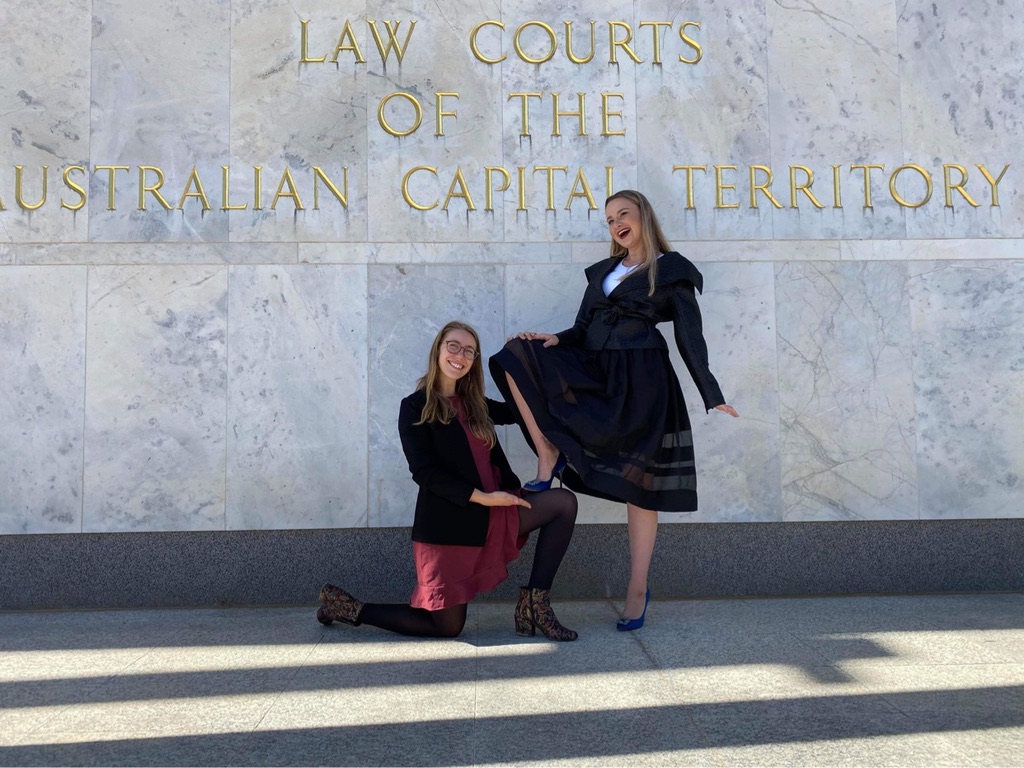
I choked on my words, said thank you and hung up. It was a moment when my life could have taken a different turn and I was fully aware of the chance I had lost. I never did pursue a legal career. In one of those odd turns of fate, it was to be my daughter (above right) who would finish her Law degree and be admitted to the Bar.

Adelaide Markets

In my late teens, I spent most Saturday mornings at the Adelaide markets. It was where we did our weekly shopping for fruit and vegetables and met friends from other share houses. The markets were a grid of trestle tables laden with fresh produce and boxes underneath containing cauliflower leaves and silver beat stalks. The stall holders were loud middle-aged, leather faced men jostling with each other for customers.

There were only a few shops along the side, mainly delicatessens. One of my favourites was Greek and it had dozens of dried Yevani bunches of basil hanging on ceiling hooks. The shop sold vine leaves and other delicacies and I loved the smell of herbs that infused every corner of this tightly packed store.

After our weekly shopping trip, we headed to Victoria square. Most demonstrations started from this vantage point. We often took leisurely strolls through the city streets calling out slogans against uranium mining, for Aboriginal Land rights or made a general plea for peace. There was never any trouble; we marched with our vegetables, stood up for what we believed in and headed home.

I haven’t been back to Adelaide since the halcyon days of my youth when everything seemed possible, and change was in the air. It just turned out that the change that was coming was not what we had bargained for.

I felt disoriented when I walked into the markets this morning. My memory was playing tricks with me. I seemed to remember Victoria Square to my right but it is to my left. Then there is the market itself. It looks nothing like it did back then. I walked all the way around the perimeter looking for the Greek deli, but it has been replaced with trendy coffee shops ubiquitous in every Australian city.

Even the fruit and vegetable stalls look neater and have permanent signage above them. There are rows of cheese shops, coffee roasters and specialty stores selling everything from body lotions to boutique distillery gin. The rhubarb gin was delicious, although it felt very wrong to try it at 9:30 in the morning.  However, the charming salesman reminded me with a wink that it was 5pm somewhere in the world. This certainly wasn’t the markets I remembered from my youth.

I feel an odd unreciprocated nostalgia when I visit places where I have lived. It is as if the place has moved on, but I haven’t. At least not when it comes to my expectations of the familiar. I know the streets and can find my way around, yet I am disoriented. I search for a familiar building to find it has been replaced by a concrete box with offices. As I walk, I recognise that this is undisputedly Adelaide just not the way I know it. My Adelaide will always be locked away in my untrustworthy memory, made tender with age.

On the move again…

I was about to turn five and father and I were on the move again. This time, we were going to Kétegyháza, on the Southern Great Plain of south-east Hungary, near the Romanian border. Once there, my father looked for his brother-in-law, who was the director of an agricultural college. Uncle Attila lived in the caretaker’s house with his family. It must have looked like bucolic bliss.

‘Can she stay a while with you? It’s complicated right now. I’m trying to work out whether I can come home to Hungary and start afresh. There’s a lot to consider,’ my father confided to Attila.

‘Of course she can stay, Stephen,’ my uncle answered. ’She’s family and we always look after family.’

‘It’s only for a while,’ my father said and then he was gone again. I didn’t mind being left this time. I loved my time with Uncle Attila, Aunt Margot and their twelve-year-old son, Atti. My cousin and I adored each other from the moment we met. He treated me like his little sister and I saw him as the brother I’d never had. For Atti, I was a welcome distraction from his exacting parents and for me, he was nothing short of a demigod whom I idolised. For that one magic summer, we were inseparable.

It was fun to be in the country where I was allowed to play all day and make as much noise as I wanted. The house and garden seemed enormous after my time at my grandmother’s deathly quiet flat in Budapest. My stay seemed perfect in every way, and I honestly can’t remember missing my parents at all.

I followed Atti everywhere. Every morning we ran out of the house, climbed trees, played hide and seek. When we were tired, we lay down in meadows and watched clouds drift across the sky, I picked a riot of wildflowers for my aunt. There were so many that my fingers barely reached as I hugged the bunch to my chest. Everything about this summer was expansive like the soft blue sky above us.

In the evenings, I sat on the veranda and watched the colour of the sky change from pale blue to pink then orange and finally to ink. I inhaled the intense sweetness of lilac flowers and kept an eye on the light show in the sky. For hours I sat mesmerised watching uncle Attila whittle away at a piece of wood which would become a miniature blacksmith’s block with a tiny anvil on top. He also carved tiny hammers which made up the blacksmith’s set. I never tired of watching my uncle, although I did think at the time that the tools he made would be too small even for one of the seven dwarfs. Years after my uncle’s death, I would learn that he had made these intricate ornaments to supplement his income.

‘Let’s go and pick some apricots,’ Atti said, near the orchard at the back of their garden. ‘I know the best tree to climb. Catch me if you can!’

I ran after him barefoot. Knee deep in grass, I felt the soft blades brush against my calves. In the orchard dappled apricots hung heavily, ready for the taking. But then, inexplicably, agonising pain. Piercing pain shot shards up my left foot. I screamed.  Atti raced back to find me sitting in the grass, fat tears tumbling onto my cradled foot.

‘Show me,’ he said, and, ever so gently, he removed the bumblebee stinger.

I limped along beside him attuned to the drone of bees. Sure footed, Atti arrived at the orchard, reached up and picked ripe, freckled apricots. He ran back offering the sweetest antidote to a bee sting. One bite and the sting lost its power.

That summer passed far too quickly. It was almost time for Atti to return to school. I couldn’t imagine the house without the sound of his footsteps searching for me, inviting me to come and play. My aunt and uncle spoke about me in hushed tones and then, just like that, my father walked through the front door.

Fifty years later, my cousin Atti explained what had happened on that day. My aunt and uncle had desperately wanted another child and when I arrived on their doorstep, it was as if their prayers had been answered. They put their case convincingly to my father. If he allowed them to formally adopt me, I would not only stay within the wider family, but I would be assured of a secure future with excellent educational prospects and loving ‘parents’ to look after me. Uncle Attila, who was always self-assured, could also be loud and overbearing. No doubt, he clearly spelled out the advantages that my father could not provide. I think he made my father feel inadequate. Indignant, and above all proud, my father packed my few belongings and we left for the train station. In a little over three hours, we arrived in Vienna. He had a few leads to follow but besides those, he knew no-one.


In praise of adverbs

Read any advice on improving your writing and one of the first suggestions is: NEVER use adverbs! Really? Shall we go through the entire English literary canon and expunge them all? Poor Charlotte Bronte would fail this scrutiny in the first three paragraphs of Jane Eyre. Not even the Bard would pass such a stringent test. Frankly, the clarion call to delete a whole class of words from the written language is prescriptive drivel.

The reason given for avoiding adverbs at all costs is that it makes for lazy writing. A writer may use an adverb to tell us something about a situation rather than show us through elegant and descriptive writing. It may be considered lazy if that were the only strategy a writer has in their toolkit, in the same way that overused adjectives can also diminish writing.

But playing with adverbs can also be a lot of fun. Take Tom Swifties for example. I once made an 8-hour train ride pass ever so quickly as I wrote pages upon pages of Tom Swifties before the era of constant internet distraction. In case you’ve never heard of Tom, this character was Edward Stratemeyer’s invention. He was the protagonist of books written under the pen name of Victor Appleton. Tom Swift appeared in over a hundred science fiction and adventure stories for boys from the early 1900’s onwards. Characteristically, Tom would say something before a cleverly placed adverb made a pun upon his remark. One of the original examples is, ‘We must hurry,’ said Tom Swiftly. Since then, these kinds of puns have been called Tom Swifties.

I modestly offer a small selection for your enjoyment:

‘It simply isn’t true, your Honour!’ said Tom judgmentally.

‘The bottle is half full,’ said Tom optimistically.

‘The bottle is half empty,’ said Tom pessimistically.

‘That’s beside the point,’ said Tom tangentially.

‘Open wide!’ said Tom obtusely.

‘Turn the air-con on,’ said Tom heatedly.

‘That’s R rated,’ cried Tom passionately.

‘Hands up and freeze!’ said Tom coldly.

‘I’m making my first curry,’ said Tom gingerly.

‘Fire!’ yelled Tom alarmingly.

‘I love Picasso,’ said Tom abstractly.

‘I prefer Ariel to Times Roman,’ declared Tom boldly.

‘The tablet is stuck in my throat,’ said Tom bitterly.

‘Wedgie!’ cried Tom briefly.

‘Lemon, lime and bitters?’ asked Tom cordially.

‘She’s such a bitch,’ Tom insisted doggedly.

‘I don’t like seafood,’ said Tom crabbily.

‘That must be Robyn,’ said Tom chirpily.

‘I was at the Queen’s funeral,’ said Tom majestically.

‘Shaken, not stirred,’ said Tom drily.

‘I’m just not that into you,’ said Tom flaccidly.

‘Adverbs, I wouldn’t be without them,’ said Viktoria absently.