Recently, I had to spend a couple of days away from home. Not for pleasure, although I did catch up with a couple of dear friends while I was away. As always, I enjoy their company and feel looked after and enriched by their presence in my life. Good friends know how to hold you gently. They also know when it is time to let you go.
The drive back home was long and uncomfortable. I stopped at Eling Forest Winery to stretch my legs and have a cup of tea. How many times have I driven past this little gem? If it hadn’t been at the behest of a friend, I would never have stopped. How well she knew that I needed a rest in picturesque surroundings.
The rain pelted down, allowing only brief glimpses of the road ahead. Wind gusts pummelled the car while large trucks barrelled down menacingly from behind. Clenching the steering wheel, I drove on, my shoulders inching steadily upward. There were moments when I dared not breathe. Then, as I crested a hill, we left the wet road behind and were greeted by blue skies. I relaxed my grip, returned to my audiobook and breathed steadily.
There is a particular point on the Federal Highway where Telstra Tower appears in the distance atop Black Mountain. I can’t help but rejoice at that moment. It is as if a banner were stretched above the road declaring WELCOME HOME. My heart quickens every time. There is still another ten or fifteen minutes to go, but my heart has already arrived.
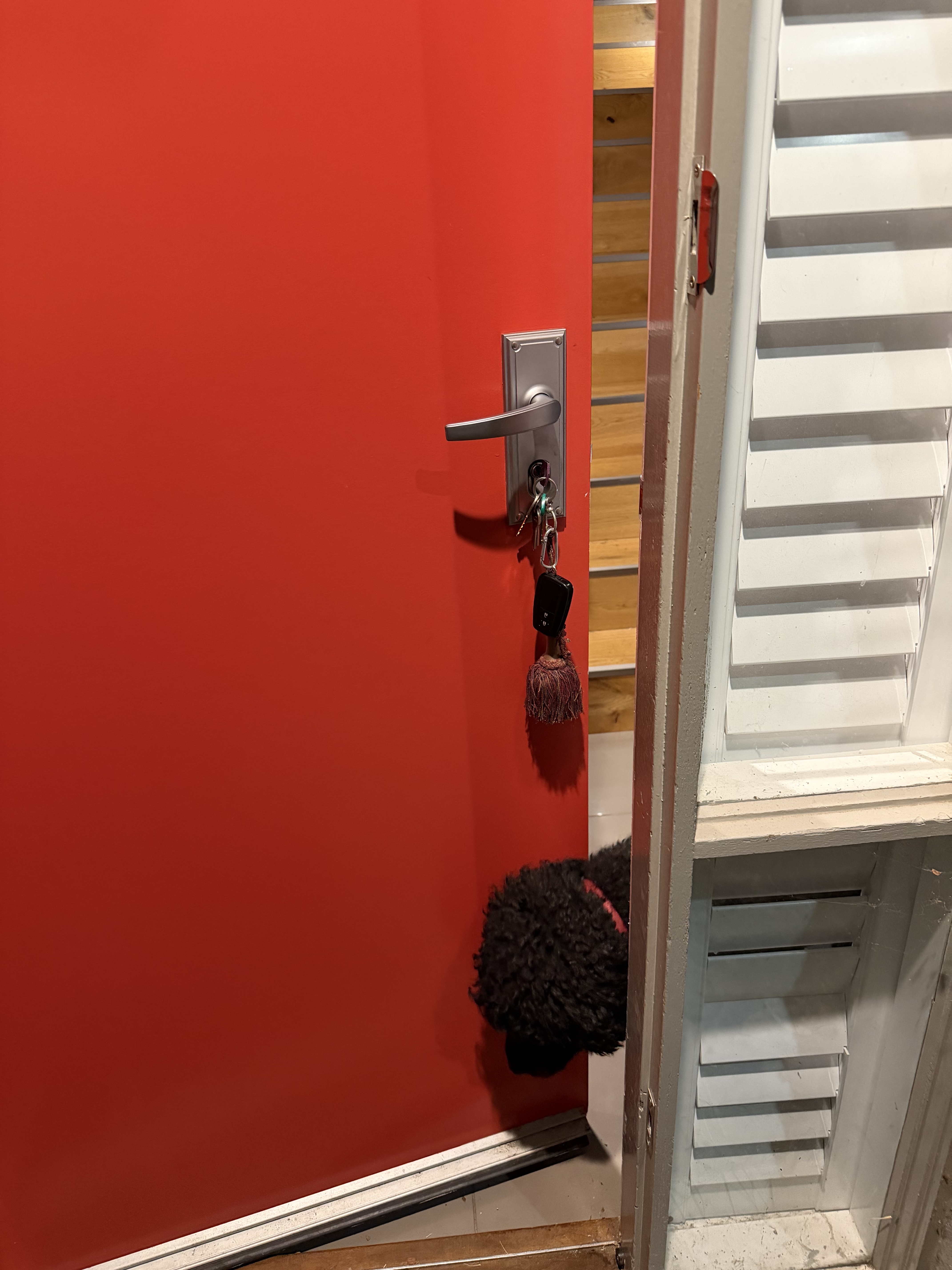
As I park the car, reach for my keys and walk towards the front door, I notice myself exhaling. The key in the lock, the small click as it turns, and I step inside. I am home. There is still washing to do and emails to answer, but for a moment none of that matters. Arriving is enough.
I have lived away from Sydney longer than I ever lived in that city, yet it keeps pulling me back like the tide along its shores. After living elsewhere for twenty five years, I can still find my way around the inner suburbs. I know the backstreets and shortcuts and have even kept up with the new motorways. In contrast, I often get lost in Melbourne, where I grew up. But it isn’t the streets, or their familiarity, that draw me back to Sydney.
This Christmas, I was greeted by flowering frangipanis in a friend’s garden. Their heady, tropical fragrance carried me back to past summers, to easy, carefree days spent on the beach at Nielsen Park or Bronte, inhabiting what seemed like endless summers. We would lie under the generous shade of Morton Bay fig trees, admiring the large, eel like buttress roots that extend several metres from the trunk. These trees are gigantic, with canopies that can reach up to fifty metres. They offer the best escape from summer heat in Sydney, and their large, often gnarled branches allow for endless adventures for children.
Blooming jacarandas are another Sydney hallmark. Every student at Sydney University knew that when the jacaranda bloomed in the Quadrangle, exam time had arrived. It was a favourite place for graduation photos, and I have one of my husband standing beneath the old tree. That tree collapsed in 2016, but it has since been replaced by new jacarandas to continue the tradition.
Southern Sydney suburbs are known for their jacaranda plantings. In the 1950s, Sister Irene Haxton, who worked at the Jacaranda Hospital in Woolooware, gave jacaranda seedlings to new mothers, who planted them in their gardens. Now there are suburbs where almost every garden hosts a magnificent jacaranda blooming in November. The purple flowers form thick carpets along driveways, a stunning sight, even if not always so welcome to the people who live there.
One of my all-time favourite flowers, which grows easily in Sydney, is the gardenia. Like the frangipani, its heavy, sweet perfume is intoxicating. I bury my nose into one of its creamy flowers and swoon, giddy with the pure pleasure of its scent. Unfortunately, gardenias do not cope well with frost, which precludes them from gracing my small garden in Canberra.
I used to return regularly to Sydney for cultural events, concerts and exhibitions, fleeting overnight visits that rarely allowed time to notice the flora I once took for granted. Now I tend to return to see friends, people who have been there through life’s highs and lows. Sydney is where I met my husband, where my daughter was born, and where many loyal friendships were formed.
I have no desire to move back to Sydney, with its stop start traffic and planes roaring overhead. I am much more at home in the slower pace of Canberra. I love its distinct seasons, with vibrant autumns and bracing winters that sharpen my senses. So, it isn’t that I miss Sydney as much as the memories that come alive whenever I visit. Each street, each smell, each tree reminds me of the path I have trodden, the life I have lived, and the friends who have shaped me. Sydney will always be those heady, fecund years of my thirties, when I sowed seeds of love and friendship. Now, in my sixties, I can return and enjoy its full florescence.
When friends come from overseas, they often bemoan that they only ever see dead kangaroos on the side of the road but never live ones. I share their unease about this road toll that seems to be accepted as a fact of life in Australia.
Until I moved to the country, I didn’t realise just how many animals are killed daily. Now that I live in Canberra, known as the bush capital, I encounter dead kangaroos, birds and wombats almost every day on my way to work. People in cars drive by, drive over, or drive around the carcasses. The animals decompose on the roadside, are eaten by crows or become odd-shaped patches on the bitumen.
According to a conservative estimate, ten million native animals are killed on roads each year. This doesn’t include foxes, rabbits or mice. As there is no national database, this figure is extrapolated from reported cases to wildlife rescue organisations and insurance claims. Many animals would simply disappear into the bush and die there.
In some places, efforts have been made to reduce this carnage. There are rope bridges for possums to cross over highways, and I’ve seen tunnels under sections of road for wombats, echidnas and other animals. However, these measures are few and far between. High fences have been erected around some roads to stop kangaroos accessing them, but these are extremely expensive to build and maintain.
Most wildlife is killed at dawn or dusk when our native animals are on the move. They’re often attracted to the greener grass at the side of the road or they’re crossing to reach water, food, or they may be looking for a mate. Their territory is often fragmented, which forces them to attempt crossings simply to get where instinct tells them to go. Barriers in the middle of the road may protect cars from oncoming traffic, but they also trap animals on the roadway with vehicles whizzing past.
My heart aches every time I see a dead animal on the side of the road. I’m shattered by the sight of a dead mother kangaroo and a joey a few metres further along, and I think about a dead bird’s mate waiting for its return. It’s easy to become desensitised when you see carcasses every few metres along a stretch of road. It becomes part of the everyday experience of driving to work or going on a road trip. But I don’t ever want to get desensitised or accept that this is how it has to be. We are needlessly putting endangered species such as the Tasmanian Devil and koalas at further risk of extinction.
While I don’t have an answer, I can only plead with drivers to slow down when animals are most likely to be on the move. If safe to do so, stop and let that echidna cross the road, or move that turtle in the direction it’s facing. If you happen to see an injured animal, call Wildlife Rescue Australia on 1300 596 457.
There are no roadside memorials dedicated to this daily slaughter. But I have my own small ritual when I see a dead animal on the road. I put a hand to my heart and breathe a breath or two in acknowledgement of their life and of the destruction we humans continue to bring upon them.
Winds have cut through last week with an invisible scythe. The billabong is covered with dust and debris and smells putrid. Tiny flies swarm around the water’s edge. As I look at the devastation around me, I am surprised there are no trees down. Plenty have fallen in surrounding suburbs.
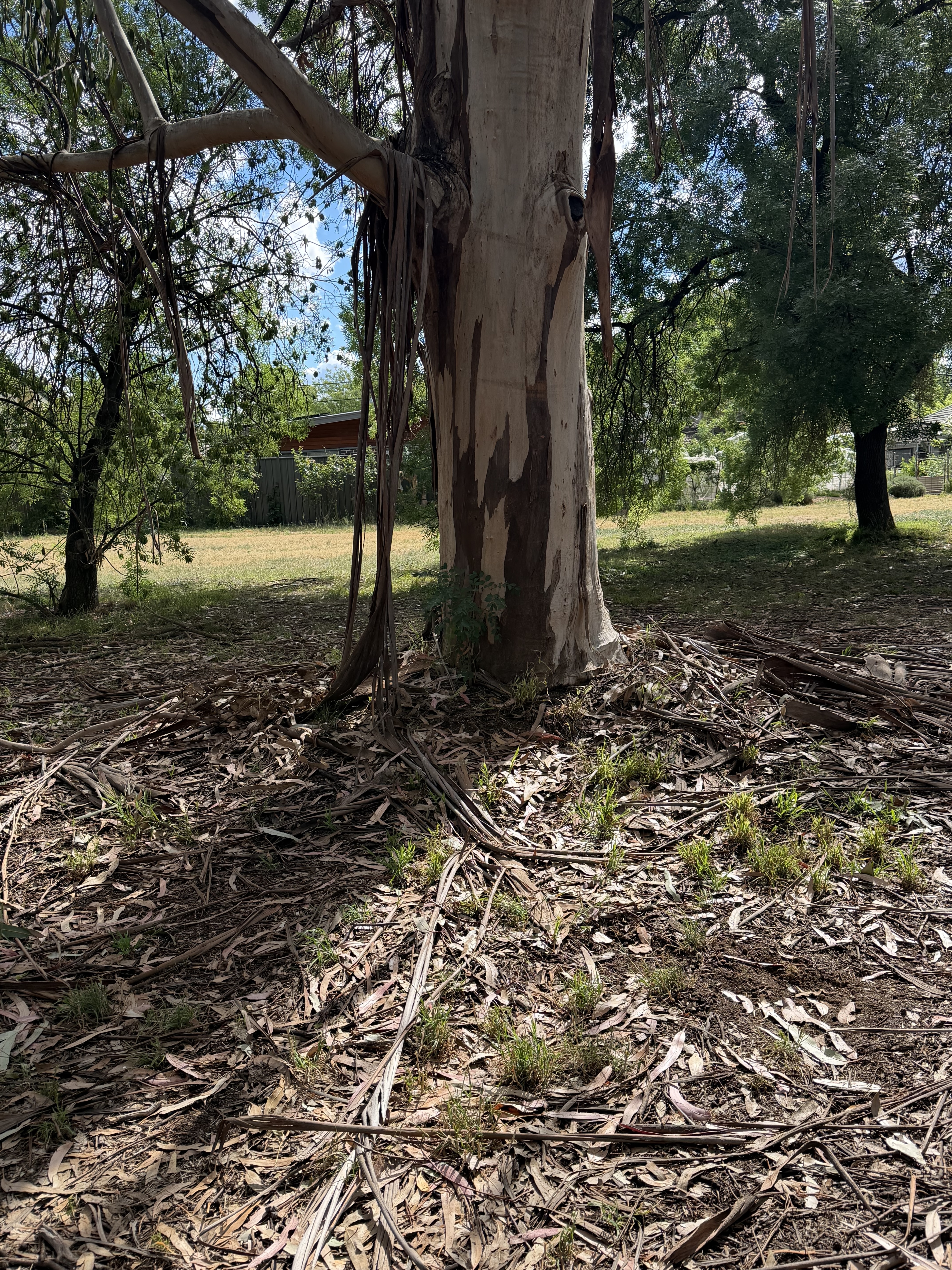
Leaf litter lies ankle deep, mixed with bark stripped clean from trunks. It is as if Mother Nature has sandblasted her children bare. How did young chicks in those swaying canopies survive wind gusts of 80 kilometres an hour? I’ve not heard a peep from them this morning.
The accompanying storms were short lived but the wind continues to rumble and roar like a road train. The little rain that came with it evaporated within hours, leaving the ground just as compacted and impenetrable as before. Any loose soil has been spun around and around like whirling dervishes in a trance. I am transfixed by the spectacle of dozens of whirly whirlies, small rotating whirlwinds forming across the denuded field.
My walk in town yesterday was miserable. The wind fired bullets of grit at my face and eyes. Its fury whipped up loose items on the ground and hurled them at unsuspecting passers-by. Women tacked their skirts as they leaned into the wind, slicing through the air. Children clung to their parents’ hands, wondering what might happen if they let go.
Back home, windows rattled and walls were buffeted. Further north, roofs and even lives were lost. I never felt any immediate danger, only awe at this force of nature completely out of our control. These past few days have been a reminder that nature is not something separate from us but an integral part of our daily lives. We need only to pay attention to it.
There is an ancient rainforest at the bottom of a gully in Katoomba. To reach the forest floor of the Jamison Valley, I take a cable car that drops 200 metres at a 36 degree incline to attend a special session of the 2025 Blue Mountains Writers’ Festival. As we descend, the vertical sandstone cliff face looks almost close enough to touch. Three hundred million years ago, an expansive sea spread over this area. Over millennia, sediment and sand formed into hardened layers which we now recognise as sandstone. Each layer reveals its geological history through erosion, sedimentation or uplift. This cable car is my TARDIS. It is the closest I come to time travel.
The sandstone is ragged. Tiny ledges mark the layers, and wherever a square centimetre can be found, life takes root tenaciously. Small trees curl their roots around rock and somehow find enough nutrients to stay alive. I am in awe of the miracle of life I am privileged to witness.
My TARDIS docks next to a wooden boardwalk that winds 2.4 kilometres beneath a rainforest canopy. This area is a privately operated tourist attraction that has managed, for the most part, to keep the rainforest pristine. Some added features feel kitsch, like scattered ‘dinosaur’ bones for children, but they are confined to one side of the boardwalk, so I simply look the other way.
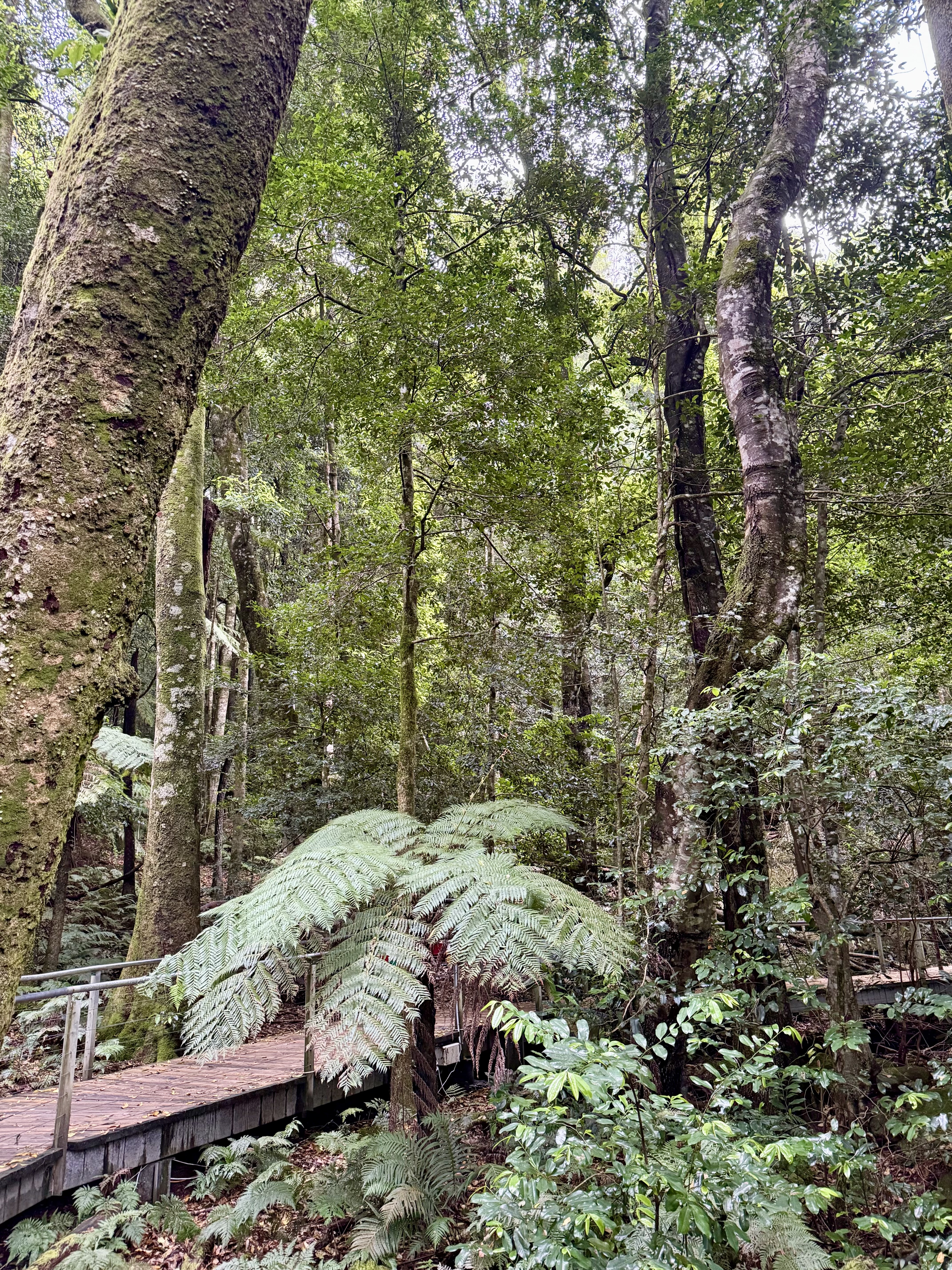
I am enchanted by the ancient trees, vines and ferns that surround me. Some ferns are as tall as trees and about two hundred years old. Smaller ferns, unfurling their fronds, show tight spiral shaped leaves, an example of the Fibonacci sequence in nature. Mesmerised, I regard a delicate formation that follows this complex logarithmic pattern. I am not a mathematician, but I have a deep respect for how mathematics explains so much of the natural world. We seek patterns.
After a fifteen minute walk, I reach the Rainforest Room, a yurt like structure without walls that accommodates about one hundred and fifty people. Seats begin to fill. We are here at 7.45 on a Sunday morning to hear three writers talk about their books. Nature is the common element in their writing, though not all are happy to be labelled nature writers. I have come to hear Inga Simpson, whose work I admire. I don’t know the other two writers, Jessica White and Jane Rawson, but I know I will enjoy the session.
We sit in silence, looking out onto the rainforest. I am struck by the Coachwood trees, which have paintbrush wide white splotches. It looks as if someone has wiped their brushes on the trunks. Later I discover these marks are caused by lichen. They look stunning.
I recognise Sassafras, Turpentine and the Blue Mountain Gum among the trees. Then my ear attunes to songbirds tentatively striking up a melody. Within a minute, they are drowned out by the raucous sound of Sulphur Crested Cockatoos. I can’t help but smile at these juvenile delinquents who arrive with their boom boxes, ready to crash any party. Good luck hearing a song underneath all that squawking.
The event starts and I listen to Jane Rawson speak about her latest book Human/Nature, described as a lyrical work of creative nonfiction. I am drawn to her honesty and humour as she talks about establishing a life in the Huon Valley. Inga Simpson speaks about her latest book The Thinning, which I read some time ago. While it wasn’t my favourite of her works, it is interesting to listen to its reception within this group of readers. Jessica White talks about Silence Is My Habitat, her book of ecobiological essays. I am drawn to the title. Silence has always been my friend. I occasionally play music, which I love, but silence is what I long for most. I am listening to a kindred spirit, but her silence has been imposed by deafness, which she acquired at the age of four after pneumococcal meningitis. Her deafness has rendered the world silent, but it has given her the superpower of acute observation, especially of the natural world.
I love listening to these women in conversation. My soul is nourished by their words, their deep respect for one another and their reverence for nature. A tiny, oft ignored voice gently reminds me of a suppressed longing. I want to be a writer. First heard when I was six years old, I have held onto this dream tenaciously, much like the stunted trees clinging to the sandstone ledges. Their roots wrap around the rock the way my fingers furl over the keyboard, finding a letter here then there, forming words and sentences. It may not be much, but I hold on as if my life depended on it.
When I jump into the deep end of a pool, I can always dog paddle until I find my stroke. This is what life has taught me. I always get to the other side. I may not be a great swimmer but I am buoyant. Knowing this has served me well.
In 2008 I spent a year in Switzerland with my family. It was a crazy opportunity that came out of nowhere and I was willing to take the chance. Arriving in Zurich was like jumping off a diving board. The first week felt like a massive belly flop and I wondered whether I had made the right decision, not only for myself but for my family.
It didn’t take us long to learn some of the idiosyncrasies of our new home. School starts before 8 a.m., shops close for lunch, trains and buses run on time. There were other quite annoying things such as having to do your washing on a Friday (everyone has a designated day), no flushing toilets after 10 p.m. (house rules) and no paracetamol available except at chemists which are closed on Sundays.
I was quite cocky before we left. Why would I have trouble understanding the Swiss, when I understand Swabian and Austrian dialects? What could be so difficult? Well, maybe vocabulary, grammar and pronunciation as a start! It took me much longer than I expected to follow simple conversations. Nor did I expect the Swiss to frown upon my high German. After all, it is meant to be the official language in the German cantons.
As we became increasingly familiar with how things operated, we began to appreciate the small things of life. Wherever we were in the countryside, we’d find a cat in a field, ears pricked up, ready to pounce. We could even spot them from the train! Why do Swiss cats do this and not other cats? It remained a charming mystery.
If land didn’t have a dwelling on it, there were cows grazing there, kept in place by movable electric fences. Behind our nearest bus shelter were three cows and behind them were rows of multi-storey flats. If it wasn’t cows grazing, it was goats. These animals could be found in any of the suburbs of large towns. I grew to love this proximity to farm animals. It made for a slower and much calmer pace.
In 2024, I jumped off the diving board once more, this time to move to Canberra. It wasn’t anywhere near as disorientating as moving to Switzerland but it did feel much more permanent. I had bought a townhouse, changed jobs and began the process of acclimatising. At least I can speak the language here and know how society operates but it still takes time to adjust.
At first, I was confused by the wide streets and wanted to turn into the oncoming traffic not realising that the lanes were one way. Then there were all the roundabouts and roads that go around in circles. I have been caught out more than once with the all-day 40 km school zones with no flashing lights. In fact, I have never had as many fines as I have since moving here. The rules can be quite perplexing!
In Canberra, I can buy a bottle of wine at the supermarket, just as I could in Switzerland. However, when I go to work across the border, this is no longer possible. Lately, I have begun to see other similarities with where we lived in Switzerland. Every morning I drive past ducks that may waddle across the street, only 100 m from a main arterial road. Near the first roundabout as you enter Canberra coming from Sydney, there is a small herd of Angus cows grazing in a paddock that will eventually be turned into medium density housing. I had to laugh when I first saw them.
My drive to work takes me along a stretch of a freeway that has paddocks on both sides. There are agisted horses, cows and small farms all within a ten-minute drive from the centre of the city. I hope this doesn’t change in my lifetime. Next to one of these farms there is a small ‘shop’ that works on an honesty system. Here, I can buy eggs, cheese and honey on my way home. It reminds me of a place in Switzerland which was a ten-minute walk up the hill from our place. We could buy seasonal fruit from the farmer who had a wooden box on the side of the road where we would leave money. Honesty boxes could be found all over Switzerland including deep in forests where 2 Franks could be exchanged for a swig of Absinthe!
Canberra has retained the feel of a large country town with plenty of green space. No wonder it prides itself on being the Bush Capital. Maybe I recognised some of its similarities to Switzerland which I grew to love. I think about this more often as I approach my second anniversary living in Canberra. The longer I spend here, the more I appreciate its beauty, surrounded by farms, nature reserves and the stunning Brindabellas in the distance. I’ve found my rhythm once more; steady, buoyant and much more at home.
Happy NAIDOC Week! NAIDOC stands for National Aborigines and Islanders Day Observance Committee. As the name suggests, it was originally marked on a single day, and since 1975 has grown into a week-long celebration held each July.
This year marks the 50th anniversary of NAIDOC. It has its roots in protest movements seeking recognition and rights for Indigenous peoples and has since evolved into a celebration of culture, resilience and leadership. The theme for this year is “The Next Generation: Strength, Vision & Legacy.” As a teacher, this theme resonates deeply with me. We must ensure that the next generation is equipped with the knowledge, skills and tools to preserve and adapt their culture. I pay my respects to Elders past and present for the work they have done, and continue to do, in guiding and teaching the younger generations.
NAIDOC Week is also an opportunity for non-Indigenous members of the community to learn more about culture and Country. When I saw a weaving workshop advertised, I decided to go along and learn a little about this ancient craft. Ronnie Jordan ran the two-hour session at the Botanic Gardens with a couple of enthusiastic young people who clearly enjoyed sharing their cultural knowledge. I was humbled by their generosity.
Weaving is an example of complex technology, not only in the act of weaving itself, but also in the selection, processing and dyeing of materials such as grasses, reeds and even bark. Preparations like splitting, soaking and finding the right pigments are essential to how the final product takes shape. Weaving is used to make mats, baskets, bags, ropes, bowls, nets and fish traps. Weavers not only know how to create these items, but also how to repair them.
Both Indigenous men and women weave. They pass on knowledge through their hands, connecting with both people and Country. Each weaver develops their own distinctive style, which others recognise. It’s even possible to tell where an object comes from based on the plants used and the time of year it was harvested.
For our workshop, we used raffia that Ronnie had dyed using natural seeds, fruits and plants. We sat in a circle, began the process together, and continued at our own pace. I caught on reasonably quickly, perhaps because I knit and crochet, both of which rely on repeated patterns and maintaining even tension. As Ronnie walked around, she’d occasionally call out, “Exhale,” noticing that many of us were so focused we were holding our breath. After a while, the chatter died down and we settled into a meditative flow state.
The first time I saw Aboriginal women weaving was in Maningrida, in West Arnhem Land. They sat on the veranda of the local arts centre, their hands moving rhythmically as they wove baskets with intricate designs. It was mesmerising. I bought a small basket as a souvenir and carried it carefully all the way back to Sydney. I still regard it as one of the most beautiful objects in my home.
After two hours, our weaving was still very much in its infancy. We were encouraged to take some raffia home to continue. Not wanting to appear greedy, I took what I thought was a fair amount. It wasn’t nearly enough. Once home, I continued weaving late into the night until I ran out of coloured raffia. I had made a small mat, larger than a coaster, smaller than a placemat in about five hours. It gave me a new appreciation for handwoven baskets, and I now understand the price tags attached to them.
Asters are star shaped flowers with tube like petals that come in a variety of dazzling colours. I was given a bright pink bunch a couple of weeks ago and I delighted in their cheery presence, especially in this bleak and wintery weather. Sadly, their stems soon began to droop, but the flowers retained their sunny disposition. That’s when I decided to cut off their stems and float the flowers in a bowl of water. They have continued to bring joy for two weeks and still look fresh.
Their flower heads remind me of daisies, so I wondered whether they were related. It turns out they are. Like a daisy, the disk florets in the centre of the flower are bright yellow, which is why we think of them as being sunny. Asters bloom late autumn and provide an important food source for bees and when there is little nectar to be found. My pink asters are native to Australia but as a species, there are more than 250 varieties in the world.
While researching the humble aster, I learnt that the Hungarian revolution of October 1918 was also called the ‘Aster Revolution’. The name was derived from soldiers removing the Austro-Hungarian symbols from their caps and replacing these with asters.
The ‘headquarters’ for the revolutionaries was at the Astoria Hotel in Pest, on the eastern side of the Danube of the dual city of Budapest. This stunning seven storey hotel, featuring fin-de-siècle architecture is still one of the best loved hotels in the heart of the city. However, at the time of the revolution, it was only four years old and without a doubt one of the most elegant places in Budapest. It was from one of its balconies that the leader of the First Hungarian People’s Republic, Mihály Károlyi, announced the end of the Hapsburg empire and the foundation of the republic to jubilant supporters below. This was the only revolution that Hungarians have ever won.
Reading about the significance of the Astoria took me back to the 1980s, when during a particularly cold winter, I arrived in Budapest to find the transport in the city had ground to a halt. Metre high snow lay frozen on the side of roads; there were abandoned cars and trams everywhere, and the occasional taxi or bus that was still operational wouldn’t stop.
I stood at a bus stop with dozens of commuters needing to get out of the cold. They were locals, while I was a tourist with a 30kg backpack that I could barely carry. When a bus finally stopped, they roughly pushed past me to get on board. I slipped on the ice, fell on my back and was transformed into a giant beetle, like Gregor Samsa in Kafka’s Metamorphosis. By now the bus had left, and I lay on the ground, legs in the air, crying, asking for my father’s intercession to get me out of this mess. After all, I was in his hometown, chasing ghosts.
Getting up seemed to take an eternity. I was cold, miserable and lonely. My only contact was my aunt who lived in a Soviet style high-rise in Buda. It was miles away. That’s when I spotted the Hotel Astoria on the other side of the road. Surely, someone could help me there.
I trudged across the road, entered the building and was greeted by a friendly face. I wiped away my tears. The woman behind the counter took pity on me and called my aunt who immediately took charge of the situation. All I had to do was to wait outside until she bribed a taxi driver to drive back into the city to collect me. Within half an hour the taxi arrived, and I arrived safely at my aunt’s place fifteen minutes later.
The weather improved the next day. I took the bus into town, found a florist and bought a pot of chrysanthemums. These I delivered to my saviour at the Astoria. At the time I had no idea of the hotel’s history. Nor would I have known that chrysanthemums are closely related to asters.
My mind is scattered. The other day, I drove to Sydney for an appointment on the wrong day. That’s a six hour round trip I could have avoided. I have a bad habit of skimming emails and assuming details. It has got me into trouble before. But I decided against self-flagellation and make the most of a day in the city.
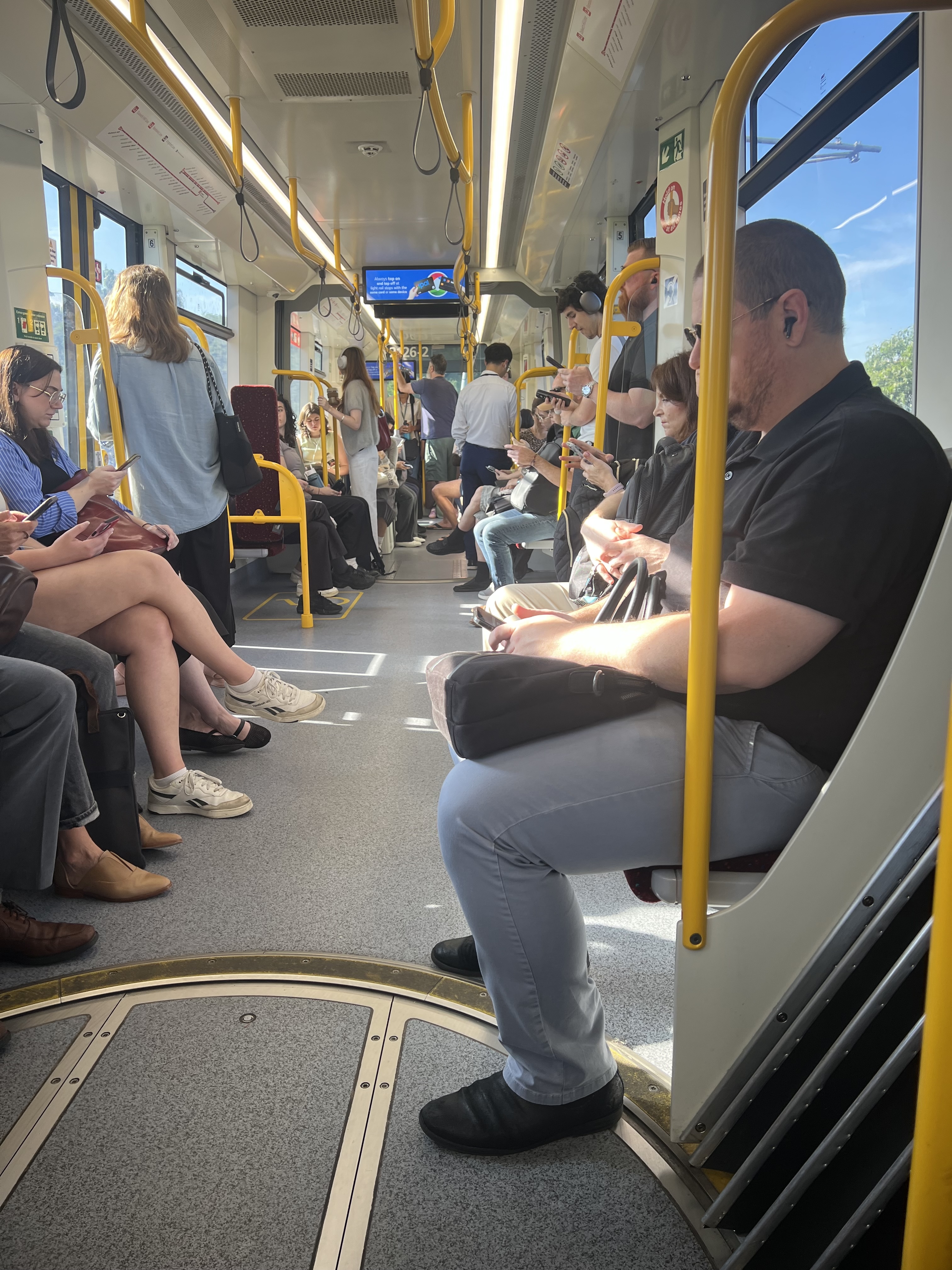
Although there were many options to get into town, I chose to take the light rail from Dulwich Hill. Not the quickest way but I wanted to see what it was like. Having grown up with trams in Melbourne, I have always had a soft spot for them. I much prefer them to trains and buses. I like that I can see the driver, that they are smaller and more intimate than trains, and travel at a slower speed. There’s a human scale to them, almost a little quaint now, yet efficient at moving people from one suburb to the next.
The track goes along a narrow goods train corridor which hasn’t been used for years. For most of the journey, there’s vegetation on both sides of the track, making it a pleasant ride through a green corridor. On this particular day, the leaves of the trees we were dappled in sunlight, giving the effect of passing through an arbour. I was captivated by the changing light and shadow on the various shades of green. Yet when I looked at my fellow passengers, hardly anyone noticed. Familiarity breeds contempt.
As I began to observe the commuters, I noticed two women reading a book, maybe three people sitting quietly and the rest were either scrolling on their phones or wearing earbuds. In the past, commuters may have been reading a newspaper or book, knitting or striking up a conversation with someone nearby. People would have made eye contact with each other or even given a slight nod. I remembered a TV show aired on SBS called ‘Going Home’. We used to watch it regularly after the news. Filmed in 2000-2001, it followed the lives of a fictional group of commuters on their homeward train journey. The characters shared aspects of their lives with one another, noticed if someone was missing and discussed current affairs. This series could not be made now. Who would watch a group of commuters staring at their phones for 20 minutes a day?
Once more, I focused my gaze outwards as we passed Jubilee Park, Wentworth Park and then made our way into the city. It had been a pleasant trip, musing about the nature of change and the joys of travelling along a green corridor. Did it matter that I arrived on the wrong day? Not really. I spent the day doing a bit of shopping and surprised a dear friend, turning up unannounced. A perfect, unscripted day.
We are approaching the end of the term. I can tell. My floors aren’t vacuumed, and the bed is overdue for clean sheets. Lots of little jobs are falling by the wayside. I tell myself that I will get to them next week when I finally have some time.
Today, I arrived home after 7pm and my number one priority was feeding the animals and then cooking my own meal. My poor dog didn’t even get out for her customary walk tonight. I’ve snuggled into my dressing gown and I have no desire to brave the elements.
To be fair, not all of it has to do with working at a busy school. Last week, I had several engagements that left me with little time at home. The first was a delightful dinner on Friday night where good company, a bottle of bubbly and the funniest conversations made me laugh so hard that I had to hold my sides. Both food, and company were outstanding.
Saturday, I drove back to Millthorpe where I used to live to catch up with dear friends and get a haircut. It is a three hour drive one way. That’s quite some distance to travel for a hairdresser. While I like the Salon and the quality of the cut, my main reason for not swapping over to someone else is that I enjoy catching up with friends. As we move away, it is harder and harder to keep in contact. ‘We must keep in touch,’ is a common refrain but life gets busy and after a short time the connections are weakened until they are completely severed. I didn’t want that to happen.
The downside of being away for a weekend is that the washing, cleaning and weekly preparation doesn’t get done. I went headlong into this week without much of a plan. I’m feeling the effects of it now. My Monday has been taken up with reactive tasks and the important items on my to-do list never got a look in. When I packed up in the afternoon, I discarded a full cup of tea I had made myself at midday. I hadn’t been near my desk since then.
Am I frustrated? Maybe just a little. But life is more than just the tasks we feel we have to complete. I’m glad that I went to the dinner with good friends on Friday, and then off to see more lovely friends on the weekend. The washing can wait. I still have plenty to wear. While I may be tired, I am also incredibly grateful for my full life in loving company.
I’m grateful for friends – old and new, grateful for shared laughter, and for the chance to be of service, even on the messiest of Mondays. The to-do list can wait. For now, my dressing gown, a warm meal, and a quiet moment are exactly what I need.





 From Quill to Quote