When a snip becomes a road trip

Every six weeks, I get my hair cut. There’s nothing out of the ordinary about that. Hair grows and if you like it short, it needs to be cut regularly. Nor is it unusual for women to travel across town to visit their hairdresser. Once you have established a good relationship, it is difficult to start over with someone else. It’s a bit like an old relationship where you are comfortable bearing all to each other.

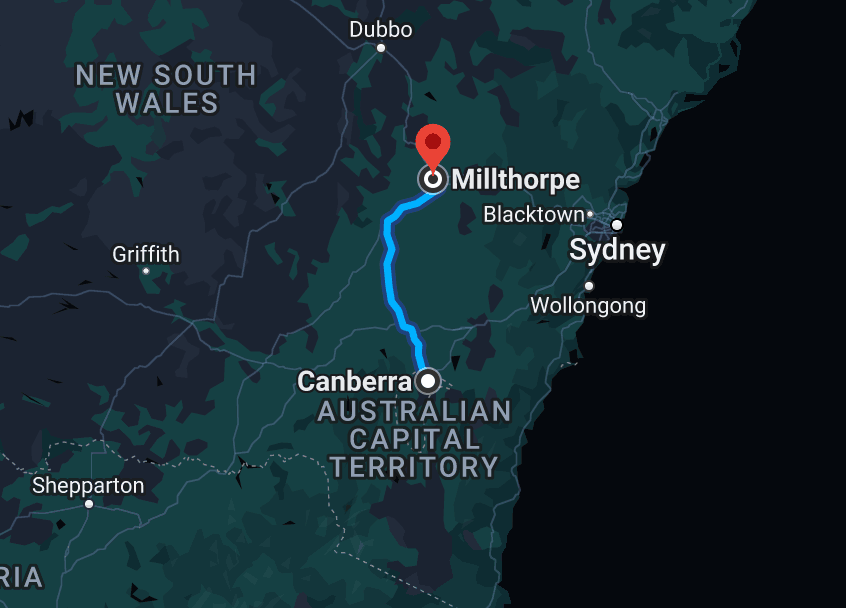
I probably take this further than most. Visiting my hairdresser involves a ritual of driving 270km each way and staying overnight with friends in Millthorpe where I used to live. That’s the equivalent of driving from Milan to Venice or further than Vienna to Budapest. In Europe this would be insane, in Australia just slightly bonkers. We readily acknowledge that we have a different relationship to distances. In my misspent youth, I dated guys who used six packs (beer) as their preferred unit of measure between cities. (Not condoned!) That was before drink driving was taken seriously. I have a tendency to measure distances by increments of towns. Canberra to Millthorpe is three hours; one hour to Boorowa, one hour to Cowra and then one hour to Millthorpe. It’s a rough estimate, but it works for me.

My hairdresser is good but there’s probably 50 equally good ones within a 10km radius from where I live. She knows me well by now and doesn’t bother with social niceties. If we talk, there’s a point to it. She’s a no-nonsense woman who has no need to pretend to be anything else. I like her. But that’s not the only reason I make the trip.

Over the seven years I lived in Millthorpe, I have made some good friends and rekindled some old friendships from a different part of my life. Funny how that works out. When I moved to Canberra, I left some very good friends behind, and it seems a shame to keep losing friends as we age. So, I decided not to let that happen. My hairdresser appointment is a good excuse to visit friends regularly. For I know when we say, ‘let’s keep in touch,’ it rarely eventuates. Our lives become busy, other priorities take over and before we know it, we have lost contact. Getting my haircut is my way of ensuring that I keep up with friends. I now need to come up with a similar strategy to see my friends in Sydney!

How far do you go to keep up friendships?

Hello and goodbye

Seven years ago, when I bought my house, it was under very unusual circumstances. Ruth, who sold me the house had only advertised it on Facebook. I turned up on her doorstep and decided to buy it on nothing more than the of strength feeling that this was the right place for me. I agreed to the price, we shook hands and began negotiating a long handover period. She trusted my word, I trusted hers and we kept in touch until three months later we could finally make it happen. We popped a bottle of bubbly and worked out moving days. There was no agent involved, just a couple of solicitors and banks. I’m sure we were both told that this was a crazy way to go about things, but we did it anyway and it worked out perfectly for us both.

This time around, I did get an agent involved mainly because he had worked closely with my late partner. I knew I could trust him implicitly. He too had his share of bad luck in the past few years – a stroke, which he survived, has left him with a lame leg and difficulty with movement. His once thriving business has suffered greatly from this setback. Yet his mind is as sharp as it ever was, and he is a good salesman. While I was close to becoming a nervous wreck in the process of the sale, he remained calm and optimistic and got on with the job.

When the eventual buyer came to look at the house, he was quietly optimistic. He answered her queries truthfully and when she requested to meet me after an inspection, he was happy to pass on the request and get out of the way. Gayle and I met and found that we communicated with ease and honesty. We had many things in common ranging from our love of books through to pens, inks and beautiful papers. There were other similarities too in our loves and our losses, in small, serendipitous moments that made one of us call out, ‘I was thinking about that just the other day,’ or simply, ‘me too!’ I knew she was the right person for this house while she felt the house calling for her. It had to be.

I have never forgotten Ruth’s generosity when I bought the house. She invited me to meet her friends, waited patiently for the sale of my house to go through and allowed me to store some of my belongings before we even signed contracts. It was time to pay it forward.

I invited Gayle to come up for a weekend so I could show her around Millthorpe and Orange, get a feel for the house and let her measure rooms and spaces. Unusual, yes, but also very sensible and welcoming to a new person in a village that is known for its inclusivity and friendliness.

Gayle arrived on Friday, and we took a stroll in the main street of the village. A couple of the local shopkeepers were sitting on a bench in front of their shops drinking bubbly. The moment we approached, we were offered a glass. We sat and chatted a while and met more people on our way back. Gayle was trying to remember the names of all the people she had met. Everyone had stopped to chat and welcomed her the way I knew they would.

The next night I had a couple of neighbours over for dinner. Over wine, cheese, and risotto we told stories and jokes, enjoyed each other’s company and parted with great fondness for the good people in the neighbourhood.

Today we visited the markets, bought Christmas presents and then took the dogs for a run. I showed her the closest large supermarket, hidden in a back street of Blayney, which only locals would ever know was there. Over the weekend, I showed her many little hidden gems that otherwise would take months to discover. Where to buy the best bread, how to get to the hardware store, the best cafés in town and the best op shops to find a bargain.

Why did I do this? I wanted to pay Ruth’s kindness forward and because I genuinely love this village and will shout its praises to anyone willing to listen.

I enjoyed having Gayle as a visitor to ‘our house’ and wish it were possible for more people to do business in such a civilised and caring manner. It was as important for my leave taking as it was for her arrival. I consider this handover as a rite of passage which will have ripple effects for us both for years to come.

Bird Song

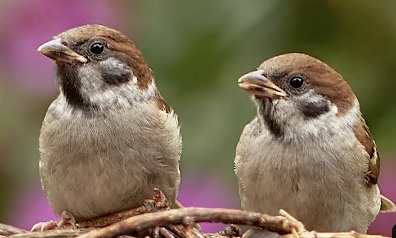
One morning while having breakfast, I tuned in to sparrows chirping. They like hiding in an overgrown hedge out the back providing them with ample shelter. It is never one sparrow that sings but a host of them. Their simple song, made up of only a few notes, is sung mainly by the male to attract females or fend off invaders. I can’t help but smile at their incessant bright chirruping. It isn’t very loud and provides a pleasant soundscape as I sip on my cup of tea.

Soon another sound gets my attention. The blackbird’s song is one of my favourites, mainly because it reminds me of my childhood. I even named a dog after this bird. While its song varies for each verse, it always seems to start on the same mellow note. Their phrases are short and often include ‘djuk djuk’ clucks. No other birds have the same slightly melancholic effect on me.

Scientists have found that listening to bird songs is conducive to mental health. It surprises me that we need this confirmed through research. This revelation reminds me of the recent discovery of ‘silent walking’. Those brave enough to try this new trend have reported a reduction in feeling distracted. Who would have thought. It turns out that being in touch with nature is calming.

I can now hear my three tenors warble at the font of the house. This is what I affectionately call the magpies that come to feed on the front veranda. Magpies often get a bad rap for being aggressive. In a small town like Millthorpe, they know all the people and can distinguish between those who treat them well and those who do not like their company. I am often rewarded for being kind to them with their mellifluous warbles as they sit on the railing, necks craned, beaks raised skyward.

Nature plays a vital role in our quality of life especially for those who live in cities. We are seeing an increased willingness to consider the health of urban environments through improving biodiversity. I’d like to see a greater variety of birds in the heart of Australian cities beyond pigeons, gulls, and ibises.

Of course, not all bird sounds have a positive effect on us. Some can be downright irritating. Take the Koel for example. To be subjected to the coo-eee call of a Koel rising in pitch and fervour is akin to torture. The kindest thing I can say about them is that I am grateful that they are migratory birds. I’d much rather listen to a flock of local sulphur crested cockies. Noisy as they are, I have a soft spot for these larrikins. They are mischievous, funny creatures who relish play and pleasure. I love the way they hang upside down from the gutter to look through my window or find novel ways to open my garbage bins to see what is hidden inside. Curious, cheeky and utterly uncontrollable, they are the epitome of the rebel without a cause. Cockatoos often wreak havoc, yet I can never be cross at them for long. Theirs may not my favourite bird call but they make me laugh like no other bird can.

There is so much to learn from pausing to listen to our natural environment. Tuning in to bird songs helps me get out of my head and pay attention to my surroundings. I focus wholeheartedly on listening rather than looking. It’s a skill many of us neglect.

Poplars

Listening to trees whisper, sigh and brustle as they sing their wind songs is one of the delights of walking in the country. The soughing of the wind through various trees often escapes our notice, but if we listen carefully, there’s much to be learnt about the trees we encounter.

A common feature in rural Australia, the Lombardy Poplar stands tall and erect. They make for graceful avenues and provide useful windbreaks for farmers. As they are deciduous, they look like sad sentries in winter but come spring, they emerge in full verdant glory with thousands of diamond shaped leaves. But it is their susurration that fascinates me. They sound like no other tree I know. Their flat petiole that attaches to the leaf creates a trembling, a shimmy-shamming sound that reminds me of unfolding crinkled tissue paper. I am sure I could recognise a copse of Poplars by simply listening to them.

My late partner once owned a country house in Manildra where he planted a row of poplars on his side of the road to match the ones on the other side. His neighbour scoffed at the extravagance of watering the trees, but he did it anyway. Their slender beauty would have captured his imagination. A lover of gardens, he appreciated a good view. As people drove past, they were enveloped by the poplars providing a change of scenery from the flat paddocks on either side.  They were also heralding the houses on this lonely stretch of road. I can almost hear him instructing visitors, ‘Keep driving until you see the poplars, then turn right into the first driveway. Ours is the Federation house with all the roses along the fence.’

Lombardy Poplars have also been used to complement architectural features of well-known public buildings in Canberra. They were introduced there in the early 1900s, around the time that the house out at Manildra was built. They grace the forecourt of the National Library and can be found in many of the older parks around Lake Burley Griffin even though they are now considered a weed and prohibited under the ACT Pest and Plants and Animal Act 2005 due to their vigorous growth and propensity to invade waterways.

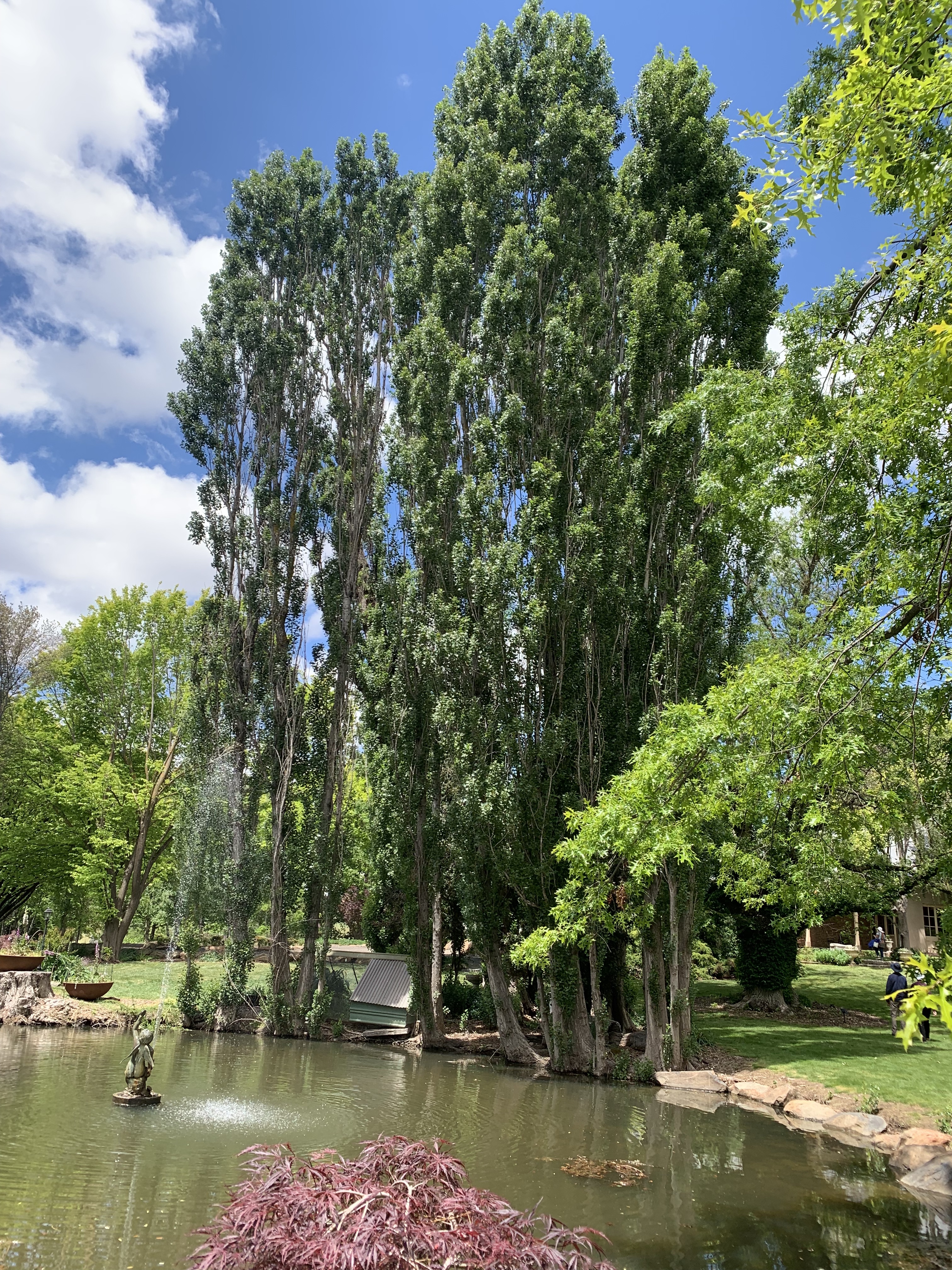
Last weekend Millthorpe hosted a Garden Ramble. It is a much-loved event which brings many visitors to the village. The gardens range from small backyards through to several acres of manicured parklands. Each is different, not only in size but also in aesthetic composition. Some favour the wild cottage garden effect while others are formal and majestic. It was at one of the oldest gardens that Poplars greeted me, sibilating in unison at my sight. Leaves waved like an old friend. These were ancient for Poplars, about forty metres tall, with roots that extended into the pond next to which they were originally planted. Their branches were in part straggly, but new growth was evident at the base of the trees.

Poplars, like church spires, reach to the heavens. I love them for their solemn beauty and wistful songs. Shimmering leaves in shamrock green remind me of the mother-of-pearl curtains of my youth refracting the sun’s rays. I am mesmerised by their wind-dance, their subtle choreography and siren song, drawing me ever closer into their embrace.

Bibliophile

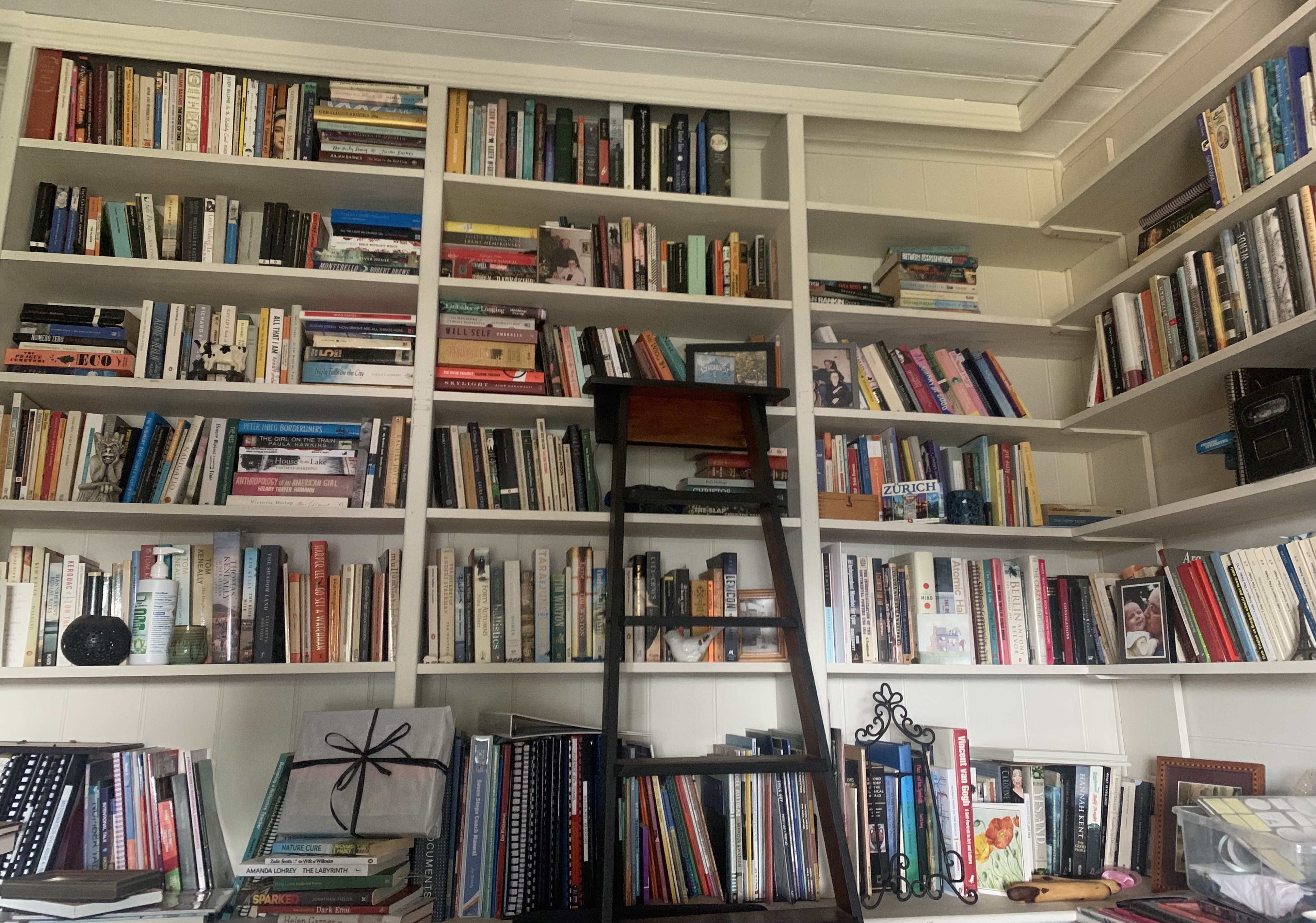
I am a self-confessed bookhound. I cannot walk past a bookshop without browsing and buying at least one book, even when I have no intention of a purchase. Sometimes I enter a store with a particular title in mind, but most of the time a book will call out and attract my attention before my rational mind can produce a scintilla of common sense. It doesn’t matter that I have thousands of unread books on my shelves, another one is added on a whim.

The last time I moved house, I counted well over 50 boxes of books. I packed them with a close friend at my side. I was glad to have her there, not only for the purposes of packing, but also to stop me from looking at each one to lovingly remember how it came into my possession. Had I attempted the exercise on my own, it would have taken days to complete the task.

This time, I know I will not have enough shelves at my new place to house my collection. Not only that, but there won’t be the wall space either. I am already investigating rotating shelves and other innovative designs. Regardless, I will have to downsize.

Today I set myself a target of reducing my collection by a mere 50 books. The first ten weren’t hard, but as I kept going, the task became increasingly difficult.

“But I haven’t read this yet!”

“I may not have enjoyed it, but it is a classic.”

“What if I want to revisit this passage and find the book is out of print?”

I listened to all the irrational arguments and kept adding books to the out-pile. It felt good to reach my target, even though I knew I would have to be more rigorous in my next cull.

Luckily for me, there is a street library down the road and its shelves were looking decidedly sparse. My contribution of 50 paperbacks has now filled all those empty spaces. I know my books will provide hours of pleasure to the readers of Millthorpe.

But will I resist the call next time I walk past a bookshop?

Selling a much-loved house

I am blessed to be able own my own house, or at least a substantial part of it. This cottage is exactly what I have yearned for all my life – an old wooden home with loads of character that greets me with warmth the moment I come in.

It has old, pitted floorboards that tell the story of the many feet that have walked on them, walls that bear the marks of furniture, and windows that creak and groan every time I open them.

Every room has its own story of past renovations which add to its overall charm. It is like an archaeological dig, unearthing the unique stamp of previous owners. I love how the floors tell of walls that have been removed and rooms that once were used in very different ways. And I also have put my own stamp on this place through the addition of a functional bathroom and laundry as well as a kitchen, in keeping with its heritage.

My studio out the back is a real luxury. It is a converted shed but when I open its doors, I am in a light filled space that is bigger than most one-bedroom apartments in Sydney. I have loved working on mosaics or writing in this space and of course my friends have enjoyed the comforts of a self-contained room. I have never had so much space in my life!

The wild cottage garden invites birds, insects and for me, contemplation. While I have never been a gardener, it is a calm place to enjoy. As there are four seasons in Millthorpe, it is possible to grow both deciduous and native trees and roses thrive in this environment. I have loved the explosion of blooms in spring and the colours of autumn. The garden is a testament to the passing of time as different plants take centre stage, depending on the season.

But it is time to move on. Now, I have to convey my love for this place to strangers who will no doubt find fault with what I consider are charming anachronisms. I have to declutter, downsize and get ready to relocate 300km away. It is a daunting task. I am eternally grateful to have spent seven years in a community that has welcomed me into the fold. Together with the friends I have made and the memories of a love that I will cherish for evermore, Millthorpe will always have a special place in my heart.

Country life

Seven years ago, I moved to a small country town in the Central West of NSW. Initially, I had preconceived ideas and prejudices which have mostly turned out to be, well, preconceived ideas and prejudices. I had no idea what it would be like. I freely acknowledge that each town is different and, honestly, some I really wouldn’t want to live in at all. However, if you choose the place carefully, it is a delight to live out west.

Millthorpe, where I chose to live, is a gem of a town. It is located between Orange and Bathurst which makes it a much sought-after address. It has quaint cottages which give it that old-world charm and the functioning railway station makes it one of the more accessible villages to reach. Our hatted restaurant, Tonic, attracts people as far away as Sydney and weekends can feel a tad busy down the main street. On weekdays, however, the place reverts to a sleepy little village where people walk dogs, chat to one another, and enjoy the slow pace. People look out for one another here and no one is considered an outsider. It is genuinely one of the most welcoming places I know.

While most shops and amenities are further away, it doesn’t take long to get to them. Traffic is mostly non-existent. I drive 20 minutes to get to work which for most people in the city is considered a short commute. My drive is scenic and I am blessed to be surrounded by nature. Whether it is cows on a hill, frost on the grass or swans in a dam, the bucolic charm never fades.

Another thing I appreciate is the quietude. I am one of those people who needs oceans of silence each day. I can listen to bird song, the rustling of leaves or the occasional bark but I don’t cope well with traffic noise or loud people. Here, my nights are dark, silent, and restful. Now and then, there is a storm with heavy thunder and lightning, but I find that a welcome release.

When there are no clouds in the sky, the stars are so much brighter than in the city. Even the moon seems bigger. It comes over the horizon as a large, illuminated ball breaking through the purple, orange and pink sky that heralds our sunsets. Dawn and dusk are magic in the Central West and makes even the most unsentimental among us gasp in awe.

While I know that I will probably not stay for ever, the Central West will always have a place in my heart. I love the quirky, earthy humour of the locals, the defined seasons, my gorgeous worker’s cottage. This is a place where I have felt more accepted than anywhere else I have lived and I have made life-long friends in a short time. It is the place where I have been given the freedom to write, where I have found love and where my soul has been given time to heal. Looking back, it is hard to understand why it took me so long to make the move.

Tap dancing

I’m always up for something crazy. When my friend Kellie asked me to join her in tap dancing lessons, I decided to play Cinderella. She had bought a pair of tap shoes that were too small for her.

‘If your shoes fit me, I’ll come,’ I said.

They fitted perfectly.

I went along to the first lesson trying to work out my left from right, and when I did, the others were already five steps ahead. I did my best attempting to imitate the shuffle, scuff and ball-change, often on the wrong foot, in the wrong tempo and in the wrong direction. Still, it was fun. At least until I attempted a brush and step on the highly polished wooden floor. I fell backwards, landing on my rear end before the force of acceleration did the rest. My head hit the floor with a thump. While everyone around me ran to my aid, I was on the floor in fits of laughter – my usual reaction to embarrassment and pain. The following week, I bought rubber grips which I fitted behind the alloy taps. Much better!

As each week went past, I remembered more of the steps. While I still need to watch the teacher like a hawk, I am getting better. At least I understand the instructions now, even if I can’t yet follow them with much precision. But I am learning, and the electrical impulses in my brain are venturing into regions they haven’t explored in decades. As a teacher, it is good to be reminded of the cognitive overload students can experience when presented with considerable amounts of new information.

Our dance instructor, Jaz, is a petite powerhouse who teaches ballet, tap, Jazz and for all I know, could just as easily teach breakdancing. She segues from one dance style to another without missing a beat and her mission is to ensure that her classes are accessible to all students. Is it any wonder that she won the prestigious award of Dance Australia’s Regional Hero?

‘I can find a work around for almost anything,’ is her motto. By this she means that she can modify dance steps so that everyone can participate. She is passionate about dance, teaching and inclusion and never turns anyone away.

Will I ever become really good at tap dancing? I doubt it. In the end, it doesn’t matter. Every Tuesday night, I head up to the local hall, spend time with my friend, get some exercise and improve my balance. I learn a few dance routines which I will probably never ‘perform’ and as a bonus, I get to have the best belly laughs when my feet take off from under me.