
Scooby

My mother’s first job in Australia was at the ABC in Ripponlea back in 1972. She worked at the canteen where she served meals, made cups of tea, and cleared tables. My mother often took me to work so she could keep an eye on me. Naturally, I was bored and began chatting to the staff when they came down for their break. It was there that I met Leigh, a young university student doing a work placement over the summer holidays. She took a liking to me, and we spoke about many things that summer, including our love of dogs. Leigh lived with her parents in Ferntree Gully and owned a kelpie.

‘Kelpies are Australian dogs. They’re the best,’ she said. ‘Would you like to come and meet him?’

‘Would I ever!’ I said

‘I’ll have a talk to your mum. Maybe you could come over this weekend to meet him,’ she suggested.

Leigh kept her word and arrived the following Saturday to collect me in her Mini Minor. My parents hadn’t owned a car since I was five and I felt grown up and important sitting in the front seat. At that time, I had seen very little of Melbourne and only knew the places in my immediate environment, places I could walk to easily. We drove for what seemed like hours, down straight roads and through endless suburbs. Finally, we came to a house up on a hill. The driveway was steep and treeless. A sleek brown kelpie ran to meet us, barking and nipping at the wheels. When Leigh stepped out of the car, he could barely be contained. His tail wagged his whole body. This dog was loyal, smart and a whole lot of fun. I wanted a dog just like him.

Leigh and I hatched a plan to get a rescue pup.

‘I won’t be allowed to keep it, Leigh’

‘Leave it to me, I’ll talk to your mum.’

I wasn’t so sure. ‘What if she says no?’

She laughed. ’I’m pretty good at convincing people.’

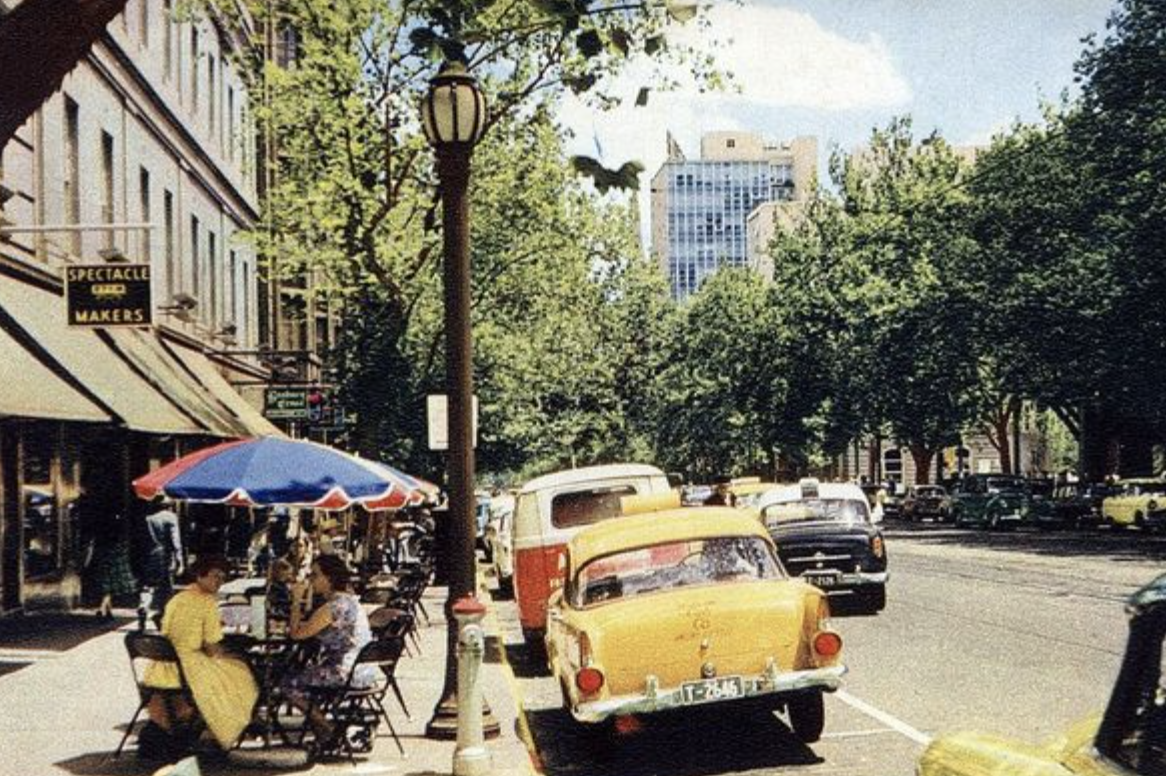
Leigh worked her magic on my mother, and I was finally allowed to go with her to the Lort Smith animal home in North Melbourne. We drove from the ABC during one of her long breaks. Going in the car with Leigh always felt like an adventure. We drove down St Kilda Road all the way into the city, then past Queen Victoria markets and up Flemington Rd. Everything was so new to me. The modern office blocks on St Kilda Rd, Flinders Street station with its open mouth reminding me of the entrance to Luna Park on the St Kilda Esplanade and the smells wafting from Victoria markets were all new sights and sensations. I could have driven around town with Leigh for hours, but I was anxious to get my new pup.

When we finally arrived, we were taken to where dogs were kept in what looked like large cages. The sound of dogs barking, whining, and howling echoed along the concrete walls. The result was a cacophony of misery. Walking along, I felt as if I were a warden in a prison, just like I had seen on our black and white television set. It was a depressing scene to witness. Dogs came to the front of their cages and pleaded with us for their freedom. I found it hard to meet their gaze. And then there was the foul odour of too many dogs in a confined space. It smelled like wet dog, excrement, and fear. It may have been cleaned regularly but the smell crept into every corner and was impossible to eradicate.

Finally, we came to an enclosure teeming with tiny black and tan pups. The warden with the key opened the gate and we were let in.

‘Go and choose one,’ Leigh said. ’Take your time and choose the one you like best.’

There were about ten puppies in the enclosure. It was feeding time. The pups all ran towards the trough and the strong ones pushed the weaker ones aside. One small pup with a protruding belly was trying to get to the food but was not strong enough to muscle in. It looked sad and forlorn. My heart went out to that pup.

‘This is the one I want,’ I said, pointing at it.

‘Are you sure?’ Leigh asked.

‘Yes, this is the one that needs me.’

The pup was taken for a check-up at the veterinary hospital attached to the facility. The vet looked at us.

‘Are you sure you want to take this one? It looks as if he could have distemper, and he may not survive,’ he said gravely.

‘He is the one I want.’ I said with tears welling in my eyes. ‘If he dies, at least he will be loved until that time.’

The vet looked apologetically at Leigh.

‘We’ll take him,’ she said.

‘Look, if he dies in the next couple of weeks, we’ll give you another one,’ said the vet. What will you call him?’

‘Scooby,’ I said. ‘Like Scooby-do.’ It had been my favourite cartoon when I lived in England.

Leigh paid not only for the dog but also for his vet bills. It must have cost her a packet. Despite everyone’s concerns, Scooby pulled through and lived to a ripe old age.

My mother stopped working at the ABC and Leigh went back to university. After that summer, I lost contact with her. Even now, so many decades later, I wish I could express my gratitude to her for the kindness and generosity she showed to that little migrant girl in her fledgling months in Australia.

A generous sum

The year after my father died, I returned to Elwood High School to complete my HSC. I knew it was the only way forward. My father had instilled in me the belief that education could change the trajectory of lives. He had always wanted to go to University, but the war had intervened. By the time WWII was over, it was too late for him to realise this dream, but not for his younger brother. My father completed an apprenticeship, worked hard, and helped my uncle get his education. This was how uncle Lajos became a professor of history at Budapest University and my father a humble leather worker. I knew what I had to do to get on in life.

A kind teacher at school, who barely knew me, decided to put my name forward to the Returned and Services League for a $100 scholarship. In 1978, that was generous sum of money. 

‘Your father fought in the war, didn’t he?’ she asked.

‘Yes Miss, he was shot in the knee.’ I answered enthusiastically. She ticked the ‘veteran’ box on the form. 

Elwood High School only ever had assemblies for special occasions, as our hall had burnt down in 1975. It was difficult to line up over a 1000 students on the basketball courts to listen to speakers. It must have been an Anzac Day assembly as a retired major gave a speech which most of us couldn’t hear at the back. We were getting restless standing there for what seemed like a very long time. 

This was when I felt a tap on my shoulder. The kind teacher, whose name I can’t remember, was signalling for me to follow. On our way up to the makeshift stage, she suddenly stopped and turned to look at me.

‘Where was your father from, again?’ she asked.

‘Hungary, Miss,’ I replied

This was followed by a long pause as she searched my face. ‘So, so he fought in the war?’

‘Yes, Miss.’

‘And Hungary was, Hungary was… whose side was Hungary on?’ she asked, suddenly realising she was more than a little rusty on her knowledge of history. 

‘Sorry, Miss?’ I wasn’t sure what she was asking.

‘Oh, never mind. Just go up and accept the cheque. It may be best if you don’t say much while you are up there,’ she cautioned.

I went up, shook the Major’s hand and thanked him. It was a generous sum and it made a considerable difference to my ability to complete the HSC. 

A couple of suburban boys

https://www.bygonely.com/melbourne-1970s/

My first part-time job was in the deli section of Coles in Balaclava. But by 1976, I was looking for something more exciting. When I heard that the new McDonalds in St Kilda was looking for casual staff, I immediately applied. My friend Sharmaine joined me in working there, and for a while it was fun. 

One Saturday night, our shift finished at seven and it was already getting dark outside. We weren’t looking forward to walking home. 

‘There’s no dance on tonight, is there?’ I asked.

‘None we can get a lift to. Everyone’s already gone out. This’ll be one boring Saturday night!’ Sharmaine said.

We were just about to cross the Esplanade when we heard a couple of guys call from an ancient two-tone Holden. 

‘Where ya girls off to?’ the driver hollered.

Windows wound down, elbow leaning out the window, the driver looked us up and down. It wasn’t the most original pick up line, but our feet were sore and we were bored. A lift was appealing and we felt safe enough together. We casually walked over to the car and saw two young guys, probably only about two years older than we were. They were as nervous as alley cats hanging out in the wrong neighbourhood. They clearly didn’t come from St Kilda.

‘You girls doin’ anythin’ tonight? You wanna go out somewhere?’ the driver stammered as we approached. He had shoulder length mouse-brown hair and wore a checked flannel shirt. Not my type, I thought, but what was there to lose?

’Nothing planned so far,’ Sharmaine answered.

‘Why don’t you girls jump in and we’ll go for a ride. Wherever you want,’ he added quickly.

‘My dad won’t let me go out with boys unless he’s met them,’ I said. ‘But if you drive me home and say hello to him, I’m sure I can come.’

‘Sure, jump in. I’m Steve and this here is Glen.’

‘Hi,’ we said, giggling as we scrambled into the back seat.

We drove to my place first. I opened the door and invited the boys in.

‘Papa, this is my friend Steve,’ I said.

They shook hands. I was hoping Steve’s handshake was firm because my father judged a person’s character by their handshake. It looked as if he had passed muster.

‘We ran into these boys from school coming back from work,’ I lied. 

’And we’d like to go to a dance. They’ll bring us back by midnight.’

‘Won’t you Steve? Just nod will ya, I just told him we were friends from way back,’ I said turning to Steve. He nodded dutifully.

‘Sharmaine’s dad already said she could go and he is very strict about who she goes out with. Please Papa.’

‘Not a stroke after midnight,’ he said. ‘I’ll wait up for you.’

‘You’re the best!’ I said and kissed him on the cheek. 

This was one of the few advantages of having a father who could not speak English. I could pull the wool over his eyes.

We had persuaded one parent, now it was Mr Keogh’s turn. To my surprise, Sharmaine talked her dad around quite easily and we were ready for a night on the town.

‘Where d’ya wanna go?’ Glen asked. They were from the outer suburbs and completely out of their depth. 

‘Let’s go to the Outpost Inn,’ I suggested. 

It was my favourite place to go. The Outpost Inn was a basement folk venue at the top end of Collins Street. It was a cool place to hang out and listen to various folk singers. There were three or four windowless underground rooms, painted black with a small makeshift stage at one end and couches or cushions strewn around the room. There was always more than one artist performing and you could wander from room to room to listen to whoever took your fancy. Someone was always smoking a joint and the atmosphere was quite mellow. It was the coolest place to be on a Saturday night, if you were into that scene. 

The Outpost Inn was run by a crazy Russian called Stefan. He was an imposing figure with a full beard and a shock of black hair. He had a striking resemblance to photos of Rasputin. I always felt safe because I knew Stefan could sort out any problem. He wasn’t the kind of person anyone would willingly take on. It seemed like a great place to take a couple of suburban boys. 

Within the first twenty minutes we realised the boys had the completely wrong impression of the venue. It was clearly the first time they had witnessed an alternative scene.

‘Check out the black walls, Glen,’ said Steve, nudging him with his elbow. 

‘Smell that will ya,’ was Glen’s reply. ‘You reckon it’s what I think it is? We’ve scored us some wild chicks, man. Which one do you want?’

Sharmaine and I glanced at one another. This had been a BAD idea. 

‘Just going to the bathroom,’ Sharmaine said and pulled at my sleeve. We quickly made our way to the toilets out the back. 

‘I don’t think this was a good idea,’  Sharmaine said. ‘They think we’re the kind of girls who will go all the way with them. I know that’s what they think. Glen keeps staring at my boobs.’

I had the same impression. ‘You know, we could just leave them here,’ I said, ‘C’mon, I know a back way out.’

And that’s what we did. We we left them standing there waiting for us to return. We fled like spooked cats, laughing until we cried, running all the way down Collins Street, without stopping. When we reached Swanston Street, we doubled over laughing, caught our breath, and waited for a number 67 tram to take us home safely.

My first trip back to Austria

I was 23 when I first returned to Europe, to search of the girl I had left behind. The girl that I remembered was more like a character from a storybook than a younger version of myself. That trip, half way across the world in a Boeing 747, so many years before, had marked a complete break with the old world. I was never to write to anyone, never to speak German, never to mention Austria. As my father never did learn English, we continued to speak Hungarian at home. I desperately wanted to fit in.  At the time, bilingualism was a social stigma in Australia and, armed with that knowledge, I decided that trilingualism must make me even more of a target. I pretended not to understand or speak a word of German. 

When I returned to Vienna with my then husband and mother-in-law, I found that I had not forgotten my German at all. In fact, I could get by quite well. I had no addresses of school mates, I only knew where we had lived. I simply drew on my memory and found my way back. 

We took the commuter train from Wien Westbahnhof to Pressbaum in Lower Austria. This was the same train line my father had travelled twelve years earlier on his way home from work. It took just over half an hour from Vienna to Pressbaum, the little township nestled in the Vienna woods. In my memory we had lived a long way from the city. 

Once there, I followed my nose. I climbed up the steps from the railway station to where the small kiosk stood, midway between the station and the walking path through a forest. It was shut. As I looked about, I remembered it as a little oasis between home and school. This is where I had bought Twini ice-blocks in summer, holding the siamese twin pop-sticks until I could pull them apart so I had the illusion of two treats when I had paid for only one. 

I had many happy memories of this small kiosk. My father had a tab there which he allowed me to freely use.  On pay day, he settled his account after a couple of glasses of beer with weathered old locals whose dialects were unintelligible. I wondered where these old men would meet now. They had always had a Stammtisch  –  a regular table, and sat there from morning to night – or so it seemed to me. These locals must have felt as displaced as I did now, looking at the forlorn, boarded up wooden structure. 

We turned left at the top of the path, walked through a small patch of forest and sought out the house where I had lived. The gate was shut and no-one stirred behind the curtains. I looked up to the second floor and thought of the kindly old woman who had once lived there and supplemented her pension by selling moonshine to her loyal supporters. 

I have some photos taken in the last couple of months before our departure from Austria. Black and white, they show me holding the handlebars of an ancient bicycle in front of the gate at number 40 Bahnhofstrasse. Although I know that the child looking at the camera is me, she is a time traveller from a bygone era. I said goodbye to that girl in the photo and crossed the railway line. 

Next stop was the old station masters’ cottage. The tiny two storey house stood frozen in time. Before I could ring the bell, an old dog came tottering up the path. It was Rigo. A very old dog now, his tail still had the piglet curl. I was sure he wouldn’t recognise me but my heart skipped a beat when I saw him. My handsome and faithful dog who had accompanied me in my adventures through the surrounding woods was still alive! 

Then, an ancient, crooked woman approached the gate. 

“Frau Deim?” I ventured. 

Her eyes searched my face and crinkled into a smile. “You’ve come back!” 

She unlocked the gate and my first reaction was to reach out for Rigo. He was happy to see visitors and who knows, maybe he did know who I was. After giving the dog a long pat out in the cold, we were invited in. Frau Deim apologised over and over for the state of her house. I was simply happy to see her.

In the past I never understood my mother’s desire to leave Europe behind. For years I was homesick for this place yet I could never tell anyone. Europe was a door slammed shut. My job was to face forward, embrace the New World and not look over my shoulder lest I turn to a pillar of salt. But for years I furtively glanced back, when no-one was watching. Now I came face to face with what we had left behind.

Frau Deim was the widow of a railway worker whose body was found strewn across the tracks one icy January. She kept to herself, worked hard and bought up her only son as a single mother, well before the term was coined. The only assistance she received was her right to live in the signal master’s cottage until death tracked her down. 

In 1983 she was an elderly woman with few means and plenty of problems. She had no running water and was reliant on a hand pump in her garden. Then, one day she noticed a foul odour emanating from the well. She asked the Austrian railways to investigate. The water was deemed to be undrinkable. From that day, she had to boil her water for ten minutes before it could be used.

Entering the house was like entering a sauna. Water droplets formed brown constellations on the ceiling, gliding down the walls and fogging her windows. It was hard to breathe. Mould invaded every crevice and advanced with military precision. Frau Deim looked about apologetically. Her bedroom opened onto the kitchen and had suffered the same fate. Her clothes hung limp over doors, on nails and draped forlorn over her bed. The wardrobe doors were swollen and warped. 

As I witnessed the pitiful fate this woman had to endure, I saw my parents’ choice to leave with adult eyes. Leaving Europe was like buying a lottery ticket. The outcome was uncertain but it had offered them a last chance of starting anew.

My primary school in Austria -2018

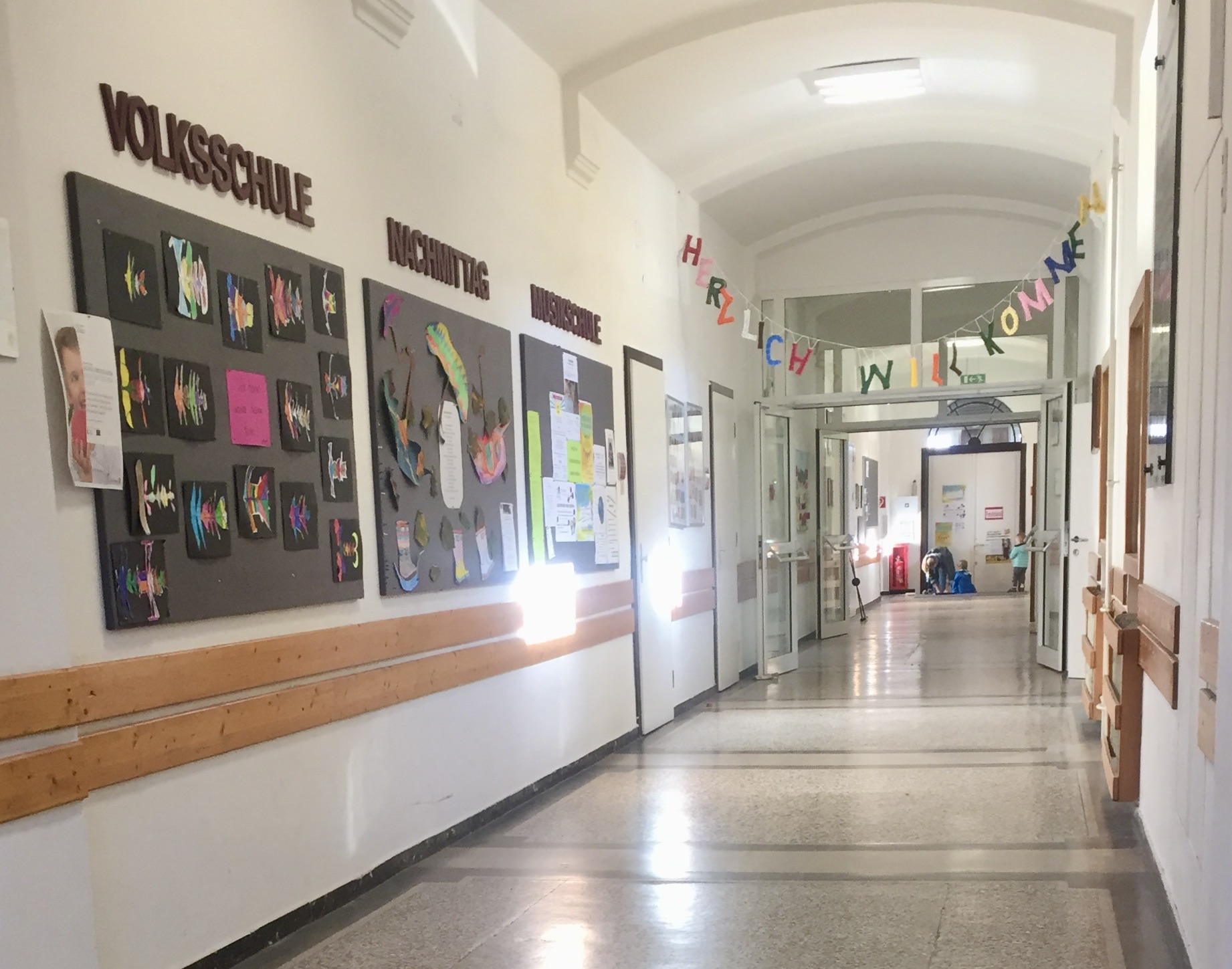
I want to go in but I can’t quite bring myself to do it. I’m standing in front of my old primary school in Pressbaum, a country town not far from Vienna. I feel foolish standing at the threshold and when someone finally comes out, I sneak in and take a few steps into the hallway. The thought of announcing myself to the office fills me with dread. What would I say? And who would care that I attended this school in the late 60’s and have traveled back to see it? I clearly hadn’t thought this through. What did I expect when I planned this pilgrimage? I take a photo and quickly leave before anyone can ask me what I am doing loitering in the corridor.

At the bus stop, I check the time table. I am the only one waiting until a boy, perhaps nine or ten, comes along and greets me. He too is waiting for the bus and without any hesitation he starts to chat. The boy tells me all about his school and how much he loves the place. I reveal that a long time ago, I too used to go to this school. I don’t go into details and he doesn’t ask. He is happy with his own chatter. ‘The music room is now a classroom,’ he tells me, ‘And the climbing wall had to be dismantled and rebuilt. Nothing stays the same,’ he says, shaking his head knowingly. I suppress my smile and encourage him to keep talking.

Clearly, he takes me for a local. At times he speaks so fast, I have to ask him to repeat what he says. This doesn’t worry him, and he continues to tell me about his life in broad strokes. He tells me that next year he will have to leave this school and he doesn’t want to go. ‘All the teachers here are nice and the school up the road is huge.’ I get the feeling he doesn’t cope well with change. Then, apropos nothing, he asks whether I’m not too hot in my leather jacket. ‘I am,’ I say and put the jacket in my lap.

The boy returns to his subject, telling me about all the changes he has seen at the school since he started there. I have an urge to tell him my story but don’t want to burden him with what happened long ago. There are so many things I could say, but I don’t. I remember visiting Sacre Coeur, the school he will attend next year. It was going to be my school too. As it turned out, a much bigger move awaited me. Australia, 16,000km away, was unfathomable and there was nothing that could prepare me for it.

As he speaks, I think about my old school I had come to visit. I can’t quite answer why I couldn’t bring myself to announce my presence. Maybe it was that I was searching for traces of that young girl I had left behind but realised that they had long been erased. So instead, I took the obligatory photograph; two dimensional and lifeless. I had made my pilgrimage and was now ready to leave. Then, a chance encounter with this boy. In him, I recognise the innocence of a bygone era. And as he speaks, I finally get a glimpse of her – that young girl of long ago, reflected in his clear, bright eyes.

Mushrooms

Chanterelles  or Eierschwammerl/ Pfiffferlinge © Nadya Kubik / shutterstock.com

‘See if you can find some mushrooms in the woods, when you come home from school’ my mother said before leaving for work. September was the best time for picking mushrooms and of all the chores, this one was my favourite. I took my dog, a bitser of a German Shepherd and, wicker basket in hand, we headed off. Going mushrooming was an adventure, a reason to go exploring the woods with my favoured companion.

I was nine years old and knew all the edible mushrooms of the Vienna Woods. I followed my nose and went deep into the forest where the dappled light shimmered across shadows and birds courted each other atop the canopy of beech trees. I listened for the cuckoo, the woodpecker, and the chirpy lark. They accompanied me in song and lifted my spirits as I meandered from the path in search for mushrooms at the base of ancient tree trunks.  

Looking for mushrooms was different to every other chore I had. It wasn’t time bound – I could justify being away for hours, unlike going to the shop to buy bread. To my dismay, my mother could calculate the time it took to walk there and back to the minute. Mushrooming, however, was an art, and art took its time. No one would accuse me of dawdling in the woods.

Deep in the forest, I felt at peace. Safe with the dog by my side, we looked out for one another. He never ran too far from my side. I was there to remove a thorn from his paw or find a cool stream for a drink, he was there to protect me. Sometimes, it was he who led me to the tastiest mushrooms. These afternoons were our precious time together.

While finding mushrooms for that night’s dinner should have been foremost on my mind, there were unexpected pleasures in the woods; a salamander that scuttled across the path and disappeared under leaves, a doe that looked deep into my eyes before trotting away. These encounters were pure rapture. I knew I belonged to this magical world and would always be welcomed home.

And then, there were the times when I found a meadow of wildflowers and I’d fill my basket before remembering the real reason for my ramble. Or, tired from my long walk, I’d lie down in a clearing and watch the clouds assemble into my favourite animals. All I had to remember was to be home before six and explain that mushrooms were particularly difficult to find that day. This was the latitude I was given when looking for mushrooms that would provide our evening meal.

Even so, I still had to find them. I could not go home empty handed for there would be no dinner on the table. I’d search carefully around promising trunks, moving leaves with a stick or bending down to explore a mound that could signal a troop of mushrooms. I was always delighted when my instincts proved right and I could pick three or four chanterelles before moving on.

On bountiful days, I’d return with enough mushrooms for a couple of meals. The sweet earthy smell in my basket scented the kitchen. For the next two nights, we would eat well. We’d have our fill of fried mushrooms and boiled potatoes and would not go to bed hungry.