Lighthouse reflections

Some things are seriously worth waiting for. Like the Artist residency at Nobby’s beach, Newcastle. I was counting down the months, then the weeks until it was finally upon me. Five glorious days to spend on my memoir that has been sitting on a shelf for the past year, patiently waiting for me to come back and give my undivided attention.

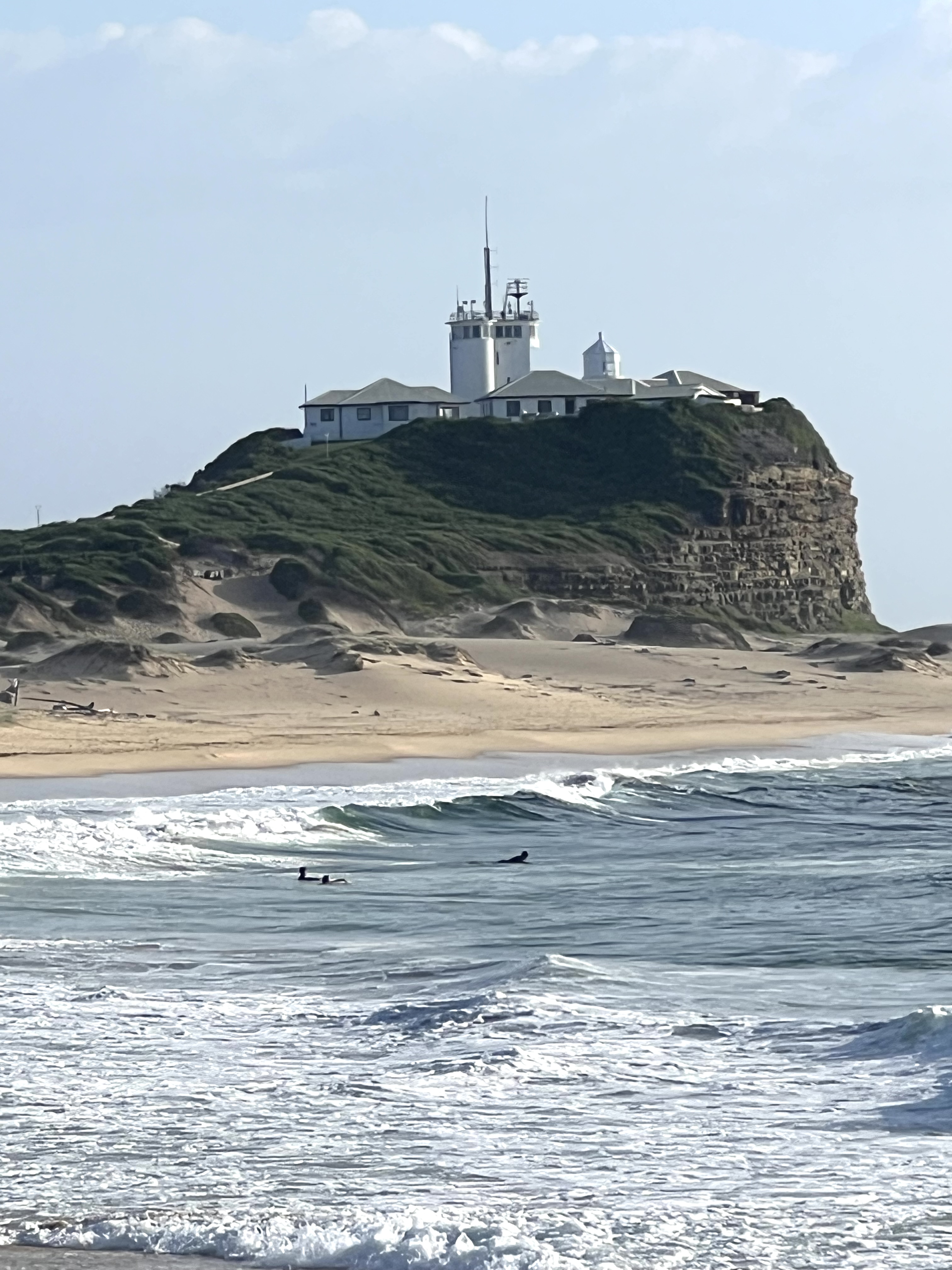
There were eleven of us at the lighthouse. Some writers, some artists. Several had returned for the second time and were delighted to meet up with old friends. Two of us came from Canberra and, to my surprise, there was a large Melbourne contingent. One younger woman had grown up at the lighthouse as her father was the last signals operator before that job too became automated. We loved hearing stories about the people who lived there and the history of each of the rooms where we worked. For her, it was a chance to paint the lighthouse and its surrounds which had played such a significant part in her early life.

There is something magical about lighthouses. They are often metaphors for safe passage, guidance, and protection. They offer illumination for the dark nights of the soul and are a beacon of hope. In a port city like Newcastle, this lighthouse has the important function of guiding vessels into the harbour and up the Hunter River.

Before I arrived, the lighthouse became the beacon guiding me to cross the finish line of the year with a sense of achievement. It didn’t disappoint. I found it easy to get into flow and felt focused for hours on end. Many of us met at 12.30 for lunch in the common room, enjoyed each other’s company, and went back with a fresh burst of energy for the afternoon session. By the end of the week, I cut 21 000 words from my manuscript. I consider it a boon for my future readers. The engagement with the work has also rekindled my enthusiasm for the project.

The knowledge that Nobby’s lighthouse is one of the oldest operational lighthouses in the country made it feel like a workplace rather than some anachronistic holiday destination. I felt connected to both its current significance and its historical legacy.

Back in 1854, it first guided commercial shipping and 88 years later, it became important for military operations during WWII. The three small cottages erected on the site and these were used by defence staff during the war. An unexploded shell fired from a Japanese submarine damaged one of them.

Various lighthouse staff occupied the cottages after the war until the late 1990s. Lighthouse Arts, which is an initiative of the Hunter Writers’ Centre, now uses these cottages to hold exhibitions and offer artists and writers a space to create.

The area where the lighthouse is located is now known as Nobbys-Whibayganba headland. So finally, there is recognition of the Traditional Custodians, the Awabakal people and their deep cultural connection to the land, saltwater and the Dreaming.

I am grateful I could nurture my calling on this spiritually laden Country. It gave me much needed clarity and purpose. As such, I am already planning my next sojourn.

If you feel you would benefit from having a week to commit to your creative project, apply at https://hunterwriterscentre.org/2024/11/28/lighthouse-arts-residencies/  

We may even meet each other there.

Dogs and Laughter: How Zusak Stole the Show

This weekend, I am attending the Canberra Writers’ Festival. It is my first time. I have been really impressed with the line-up of speakers and it was hard to choose the few I would attend. There were the ones whose books I have read and enjoyed and a couple of new ones that I thought looked interesting.

Of the big names on the list, I chose to see Markus Zusak. I have just finished reading Three Wild Dogs and the Truth, which was a present from a dear friend. As a dog lover, whose own memoir may one day appear with the title Blue Dog Girl, I couldn’t pass up the chance to hear him speak.

The book most people associate with Zusak is The Book Thief. Three Wild Dogs have none of the qualities of that book. It is a raw, unflinching, violent, tragic and oozing with love for these three crazy, havoc-wreaking mongrels. Zusak doesn’t portray himself as a perfect dog owner, far from it. I can imagine some dog owners recoiling in horror over some things he has done. But he is truthful, full of humour and passionately devoted to these dogs.

I wasn’t sure what to expect, but I wanted to get a glimpse into this man who could produce two books that couldn’t be more different. From experience, meeting an author whose work you adore can be a hit and miss affair. Once, I signed up for a six-week writing class with an author I idolised, only to find him pompous and condescending. I was in for a treat with Zusak.

The talk was held in the foyer of the Australian National Museum. By the time I arrived, hundreds of people had taken their seats. It was clear from the from the first question on that he was going to go off script and tell hilarious stories, rather than purposefully answer questions. He had such a wonderful connection with the audience that by the time he finished, we all felt that he was our friend. I have never seen an author work a crowd the way he did. He was clearly enjoying himself on that stage.

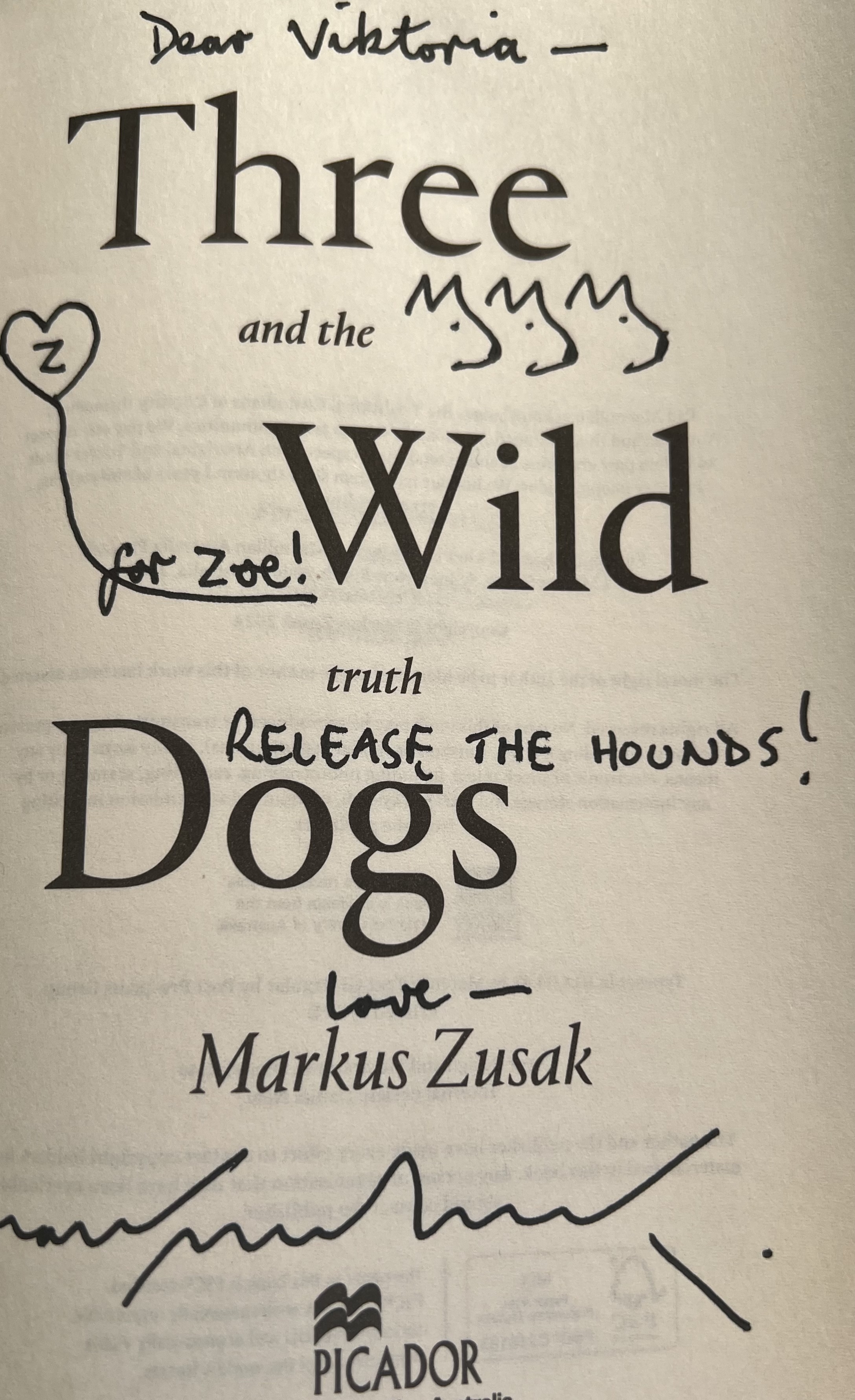
I lined up to get my book signed. When I reached him, he easily engaged in conversation by asking about my dog. He then told me a little anecdote about Standard Poodles while drawing three dog faces on the title page. Markus was charming and generous with his time.

It is rare to have an experience like this at a Writers Festival. It made readers feel part of a valued relationship. He honoured us as much as we honoured him. I’ll cherish this evening, as a testament to the magic that can happen when writers and readers come together.

Going Under

Last Wednesday, I drove to Orange for my friend Seana Smith’s book launch.  Writing is a solitary occupation, but once the work is complete, it’s time to emerge and celebrate. Going Under was published only a few weeks ago. There is nothing more joyful than a beaming author holding up a copy of their book in print.

I met Seana through the Central West Writers, a group of people who met monthly in various locations. We were both members for several years, even if we didn’t attend regularly. When we came together, we listened to writers read sections of their work, offer a suggestion or two and cheer them on. When we saw their work come to fruition as a published article or book, it gave everyone encouragement to keep going. Writers’ groups can be a beacon of hope when we are stuck in the messy middle.

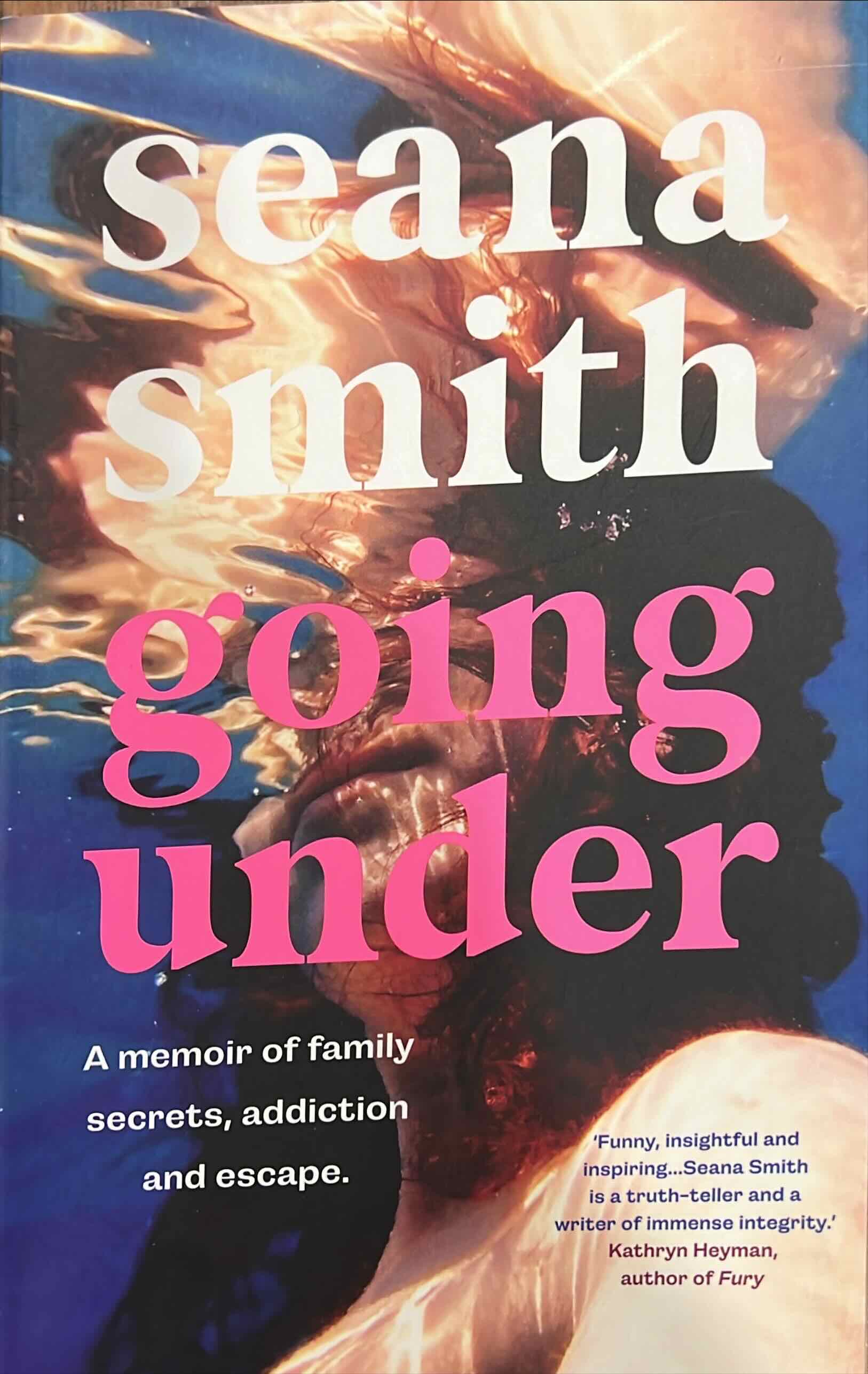
Seana’s book, Going Under, is a memoir which fearlessly chronicles her lifelong struggle with drinking. Like so many people I know, she has dealt with intergenerational alcoholism and trauma. These scars run deep, but we can effect healing when we face our demons.

Growing up in Scotland, drinking was part of the landscape. Moving around the world and finally settling in Australia didn’t change that. Nor did being successful in a variety of high-profile jobs. As an extrovert, Seana likes company, and having a glass in hand livens up a party. But drinking was much more than that for her. After much soul searching, Seana’s struggle with alcohol has finally come to an end. ‘My life will be better if I never drink again,’ came to her like a mantra that she could not ignore. And for over four years now, Seana has become a champion for sobriety.  

Going Under is published by Ventura Press. If your bookstore doesn’t have a copy, you can always place an order like I did. Or you can listen to the book in her wonderful braid Scots on Audible.

To the lighthouse

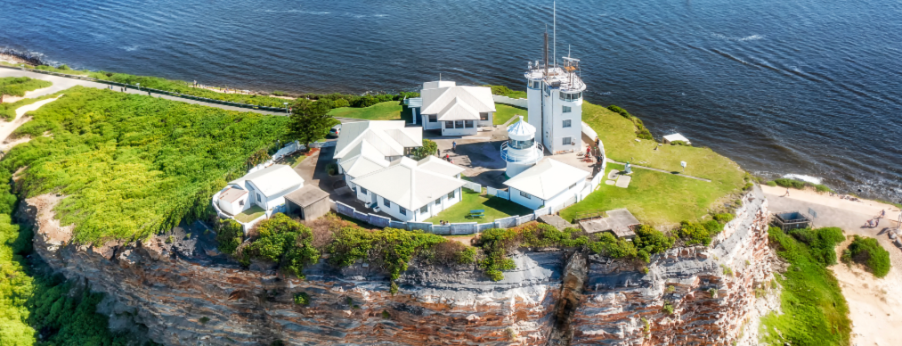
Attribution: This photo is taken from the Lighthouse Art residency application form

Rarely do I receive an unsolicited email that I decide to read. This one, however, came from the Hunter Writers’ Centre and it piqued my interest. It was advertising a fresh round of residencies at Nobbys lighthouse in Newcastle. The photo was enough to make me want to apply. Imagine spending a week on the stunning Nobbys-Whibayganba Headlands looking out onto the Pacific Ocean!

No sooner had I decided to apply than I talked myself out of it. Why would they offer it to me? There were much better writers out there. Who was I to think that I was worthy of this opportunity? Luckily, I saw this chatter for what it was – a self-limiting belief that didn’t deserve the airtime it was getting. So, I shut down the megaphone in my head and applied anyway.

I was thrilled to receive an offer letter for a week in December. From 8 to 4, I will have a desk in a room with a view. Pedestrian access along Macquarie Pier is the only way to get there, and the walk is long and in parts steep. It is exposed to the elements. In Awabakal language, Whibayganba means ‘the place of the one who makes it windy’. I have been forewarned.

I am very grateful to the Hunter Writers’ Centre for the chance to dedicate a week to a final edit of my memoir. It will also be a chance to ponder what lies ahead in 2025 and beyond. Few of us ever dedicate time to profound self-reflection.I am committed to make the most of this opportunity and look forward to a week, where my only distractions will be the vagaries of nature and awe-inspiring scenery.

The ‘treehouse’

I have been planning this move for over two years. Thank goodness I had the foresight to buy this townhouse. At the time I really didn’t think I could afford it. Luck was on my side, and I purchased just before prices in Canberra skyrocketed. I certainly wouldn’t be able to afford it now.  

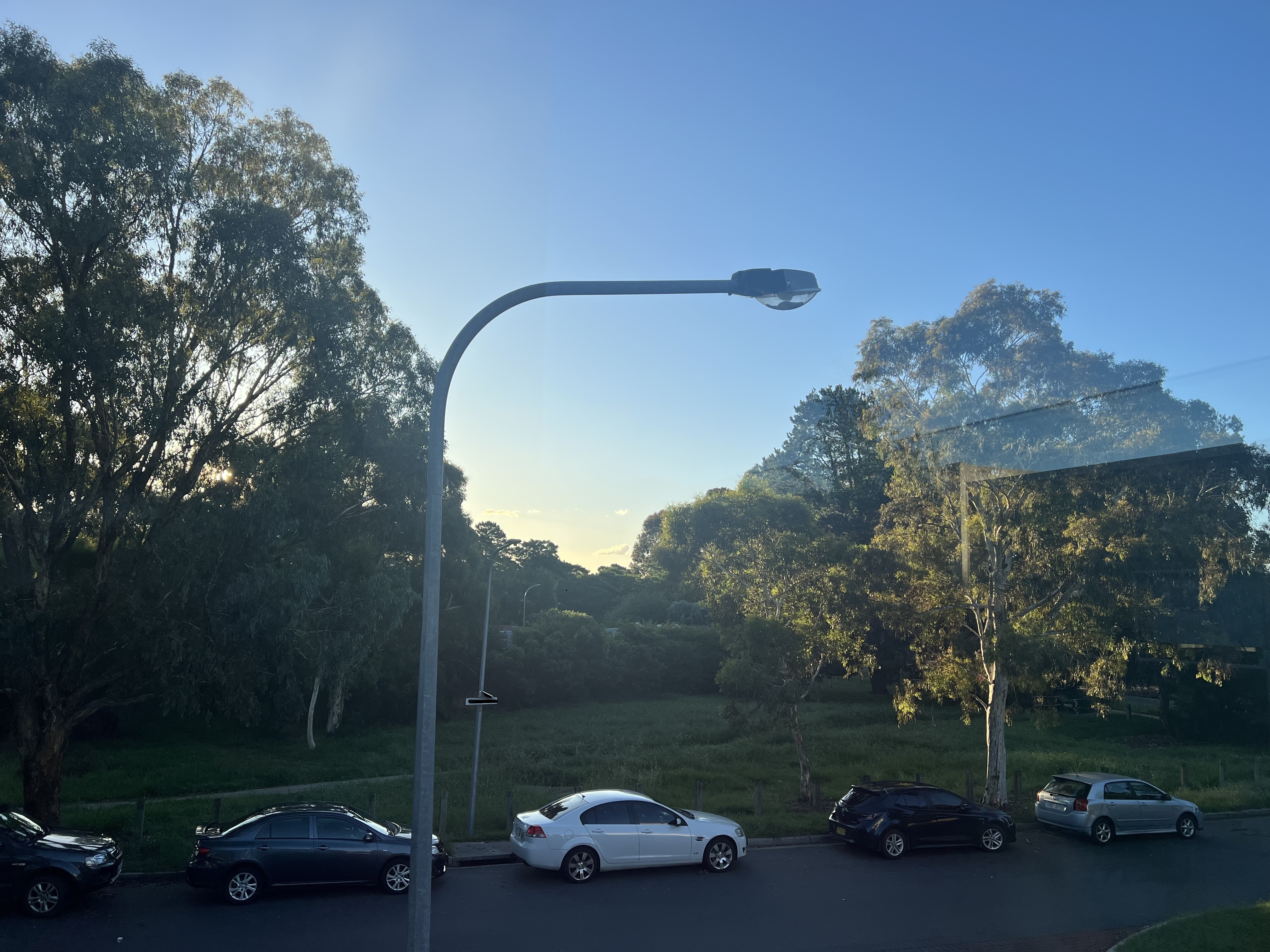
I am enjoying the city after seven years in the country. Mind you, it feels more like a large country town which has made it easier to acclimatise. I love that there are trees everywhere and from my study window, I can just see the roof of a solitary building.

A friend of my daughter calls my place the treehouse. I like that. The mosaic I made depicting a large tree will be affixed to the wall at the front door. It all seems so befitting now as l look over the canopies and listen to the warbling magpies. I am glad the Maggies have followed me here as have the Sulphur Crested Cockies. I do miss my Blackbirds though. Although they wouldn’t quite fit into the deliberately native landscape. There are no Silver Birches, Magnolias, Crab Apples, or Fruit trees. Instead, I look out over Eucalypts, Kurajongs, She-oaks, and Crepe Myrtles.

This makes me think about the possibilities for a garden. My courtyard out the back is presently filled with weeds. It has but a tiny patch of soil and I will have to think long and hard about what to plant there. It won’t be the roses of Millthorpe, nor brightly coloured flowering exotic species. I want to pay respect to the landscape around me so I will find out about endemic plants before I make my choice. There is much to learn.

I have been here less than a week, but it already feels like a lifetime. Maybe it is because I have spent so much time in this city over the past ten years. I may not know where everything is yet, but it feels very familiar. Familiar enough to feel a little like home.

A brush with the Law

In 1977 it was hard to get a job. Only a year before, students like me who had finished school with a Leaving Certificate could find work in the major banks, the post office or Telecom. But times had changed, and unemployment was on the rise. On Saturday morning, I bought the Age, circled jobs, and waited until Monday morning to make my phone calls at a phone booth. The jobs were often gone by the time I got through. One day, I saw a job as a court clerk. I had done Legal Studies at school, and it was a subject I really enjoyed. I loved learning about different legal cases and the precedents they established or built upon. My enthusiasm must have landed me the interview.

As I had no work clothes, I borrowed a blue wrap around skirt with matching shoes from Cat with whom I shared a flat. The shoes had a wedge heel which was a novelty for me. I had exactly 40 cents left for the week which was the cost of the tram ride from the top of Milton Street to Flinders Street station. The solicitor’s office was located in a turn of the century building on Flinders Street near Elizabeth Street.

I walked up two flights of marble stairs, holding onto the heavy wooden balustrade so I wouldn’t go over on my ankles. On the landing was a heavy wooden door. I stepped into a small office and his secretary ushered me into the solicitor’s room. A kindly old gent sat behind a desk piled high with folders, tied with pink legal tape. He invited me to sit down and tell him why I wanted the job.

‘Legal studies was my favourite subject at school. I love reading about cases and the stories they tell.  You know, like Donoghue v Stevenson. That snail in the bottle, and she actually won! Duty of care and all that.’

He smiled. ‘Tell me about yourself, about your family and what you want to do with your life.’

‘My father died a couple of months ago and I’m looking for work now. I’m a real hard worker, you won’t regret giving me the job.’

‘Can you see yourself finishing your studies?’

‘Oh, yes! I’d love to finish my HSC and maybe go to uni. I’d love to study Law.’

‘Well, in this job you will be getting files ready and taking them to court. There’s a lot of running around but you will meet interesting people. It’s a good start for someone interested in the Law.’

‘Does this mean I have the job?’ I asked hopefully.

‘Well, I do have another couple of girls to interview but you are definitely on my shortlist. You don’t have a phone number, do you?’

I shook my head.

Well, give me a call tomorrow morning at nine and I’ll let you know.’

I shook his hand firmly with good eye contact. I had this in the bag.

Outside, the sun promised a beautiful day ahead. As I had spent my last 40c on the tram ride, I began my long walk home. The tram ride had been a pleasant half hour trip but the walk in Cat’s shoes proved much more arduous. It seemed to take forever just to get to Domain Road and there were still a few kilometres to go. I walked past all the modern office blocks and hotels on St Kilda Road, feet aching, and mouth parched. I walked past wolf-whistling construction workers, eyes firmly fixed on the footpath, self-conscious about how I looked. I walked past confident men in suits and tall women in tight skirts trying to keep up with the pace.

I walked past the boarded-up factory where my father once worked, and eventually reached St Kilda town hall where a few years earlier I had requested permission to keep a bus filled with animals in front of St Kilda marina! There were memories everywhere I looked, yet I still had quite a few more blocks to walk. All I wanted to do was to take the shoes off and drink a glass of cold water.

Finally, I reached Milton Street and the block of flats where I lived with three friends. When I arrived home, the girls were out. I put Cat’s shoes back into her room, wiggled my blistered toes and sat down, tucking my feet under my bottom in one of our large 1930’s armchairs. I sipped on a cup of instant coffee with two and a half sugars and closed my eyes. I never borrowed Cat’s shoes again.

The next day, I took some money from the kitty to make the phone call.  I was excited for my first real job in a lawyer’s office. The phone rang three times before my future boss answered.

’Thanks for ringing back. It was a tough decision. I can see that you would make an excellent court clerk and I’d love to have you on board. But when I got home last night, my neighbour came by. His daughter is looking for a position and, well, I’ve known the family for over 30 years. I felt I had to give her a chance. I’m sure you understand the position I’m in.’

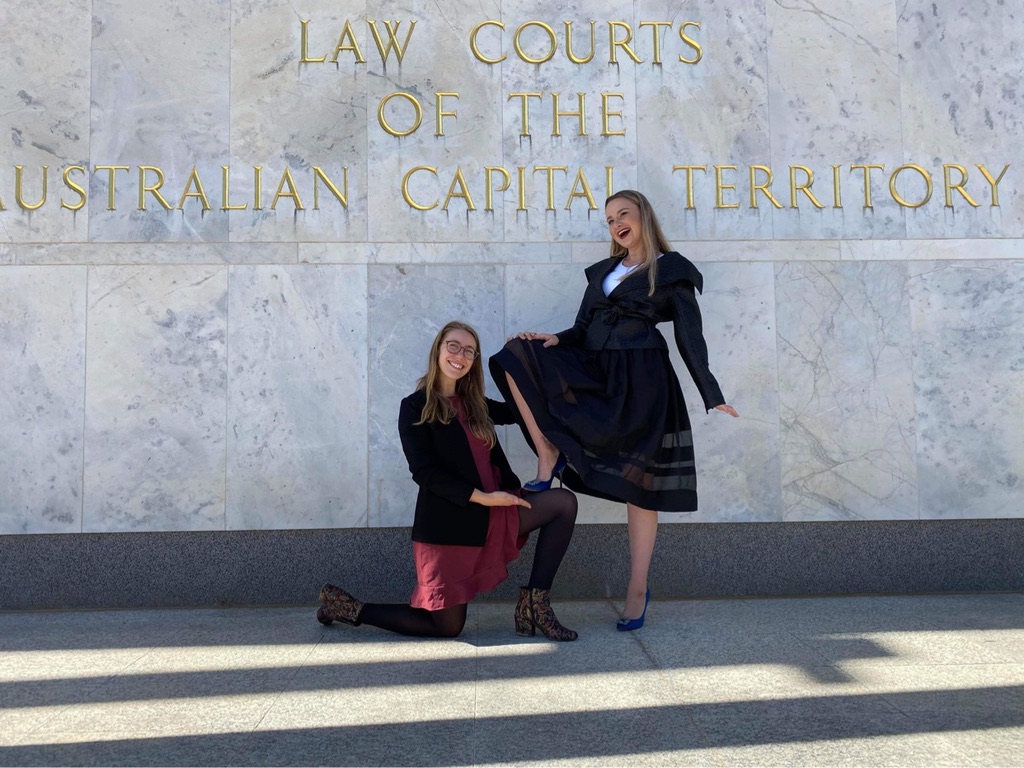
I choked on my words, said thank you and hung up. It was a moment when my life could have taken a different turn and I was fully aware of the chance I had lost. I never did pursue a legal career. In one of those odd turns of fate, it was to be my daughter (above right) who would finish her Law degree and be admitted to the Bar.
On the move again…

I was about to turn five and father and I were on the move again. This time, we were going to Kétegyháza, on the Southern Great Plain of south-east Hungary, near the Romanian border. Once there, my father looked for his brother-in-law, who was the director of an agricultural college. Uncle Attila lived in the caretaker’s house with his family. It must have looked like bucolic bliss.

‘Can she stay a while with you? It’s complicated right now. I’m trying to work out whether I can come home to Hungary and start afresh. There’s a lot to consider,’ my father confided to Attila.

‘Of course she can stay, Stephen,’ my uncle answered. ’She’s family and we always look after family.’

‘It’s only for a while,’ my father said and then he was gone again. I didn’t mind being left this time. I loved my time with Uncle Attila, Aunt Margot and their twelve-year-old son, Atti. My cousin and I adored each other from the moment we met. He treated me like his little sister and I saw him as the brother I’d never had. For Atti, I was a welcome distraction from his exacting parents and for me, he was nothing short of a demigod whom I idolised. For that one magic summer, we were inseparable.

It was fun to be in the country where I was allowed to play all day and make as much noise as I wanted. The house and garden seemed enormous after my time at my grandmother’s deathly quiet flat in Budapest. My stay seemed perfect in every way, and I honestly can’t remember missing my parents at all.

I followed Atti everywhere. Every morning we ran out of the house, climbed trees, played hide and seek. When we were tired, we lay down in meadows and watched clouds drift across the sky, I picked a riot of wildflowers for my aunt. There were so many that my fingers barely reached as I hugged the bunch to my chest. Everything about this summer was expansive like the soft blue sky above us.

In the evenings, I sat on the veranda and watched the colour of the sky change from pale blue to pink then orange and finally to ink. I inhaled the intense sweetness of lilac flowers and kept an eye on the light show in the sky. For hours I sat mesmerised watching uncle Attila whittle away at a piece of wood which would become a miniature blacksmith’s block with a tiny anvil on top. He also carved tiny hammers which made up the blacksmith’s set. I never tired of watching my uncle, although I did think at the time that the tools he made would be too small even for one of the seven dwarfs. Years after my uncle’s death, I would learn that he had made these intricate ornaments to supplement his income.

‘Let’s go and pick some apricots,’ Atti said, near the orchard at the back of their garden. ‘I know the best tree to climb. Catch me if you can!’

I ran after him barefoot. Knee deep in grass, I felt the soft blades brush against my calves. In the orchard dappled apricots hung heavily, ready for the taking. But then, inexplicably, agonising pain. Piercing pain shot shards up my left foot. I screamed.  Atti raced back to find me sitting in the grass, fat tears tumbling onto my cradled foot.

‘Show me,’ he said, and, ever so gently, he removed the bumblebee stinger.

I limped along beside him attuned to the drone of bees. Sure footed, Atti arrived at the orchard, reached up and picked ripe, freckled apricots. He ran back offering the sweetest antidote to a bee sting. One bite and the sting lost its power.

That summer passed far too quickly. It was almost time for Atti to return to school. I couldn’t imagine the house without the sound of his footsteps searching for me, inviting me to come and play. My aunt and uncle spoke about me in hushed tones and then, just like that, my father walked through the front door.

Fifty years later, my cousin Atti explained what had happened on that day. My aunt and uncle had desperately wanted another child and when I arrived on their doorstep, it was as if their prayers had been answered. They put their case convincingly to my father. If he allowed them to formally adopt me, I would not only stay within the wider family, but I would be assured of a secure future with excellent educational prospects and loving ‘parents’ to look after me. Uncle Attila, who was always self-assured, could also be loud and overbearing. No doubt, he clearly spelled out the advantages that my father could not provide. I think he made my father feel inadequate. Indignant, and above all proud, my father packed my few belongings and we left for the train station. In a little over three hours, we arrived in Vienna. He had a few leads to follow but besides those, he knew no-one.


Empty Nest

Ten days ago, I sent off my completed memoir for a manuscript assessment. I have been working on this project consistently since January 2019. It has, however, occupied my thoughts for many years before I was ready write the first sentence.

For someone who has devoted years to this project, the past ten days have felt like an eternity. Does it have merit? How many more edits will it require before I can approach a publisher? Where do I even begin with this next chapter of letting my manuscript go? And the most important question of all – what now?

For three years, I have conducted research, worked on individual scenes, pursued emerging patterns and themes. Several times I have read the manuscript cover to cover and have cut and polished and cut some more. Through this process I have jettisoned some 20,000 words to distil it to its essence. I don’t know whether I have succeeded.

I have put my heart and soul into writing. There were months when words dried up like ink in a misplaced pen. The less I wrote, the more arid my inner landscape became. Then I found my way to a state of flow through the London Writers’ Salon. Once I committed to writing daily, the words cascaded on the page and I completed my first, second and third drafts. I fantasised about working part-time to devote more energy to writing. I wanted a new rhythm to my days and spend happy hours in companionable silence over Zoom with writers from around the world.

But what now? As I am approaching the end of this project, I feel something akin to grief. What if I have nothing more to say? What do I do then? For someone who has the urge to write each day, this is a distressing thought. I have nursed and watched my memoir grow, but it is time to let this fledgling find its wings. When it does, I will have to let it go.

I have no idea how any of this works. Perhaps I need to have more faith. Perhaps I simply need to show up each day. Or perhaps the muse only visits those who have an empty nest to offer.

Seppi the crocodile man

My parents were refugees from Hungary. They left their home country in 1956 with my sister who was six at the time. She still remembers running through forests with gun fire echoing around her. They made it across the border to Austria where they were placed in a refugee camp. My parents never spoke about their experiences of 1956 in the same way they hardly ever spoke about the war years unless it was some amusing anecdote. Whatever happened then was in the past and there was an invisible red line drawn across the page to separate it from the present. Everyone in my family abided by this rule. It was only when I began to search for information of these years that I discovered that Luxembourg had accepted 250 Hungarian refugees. My parents and my sister would have been part of that elite group. This had happened four short years before I was born.

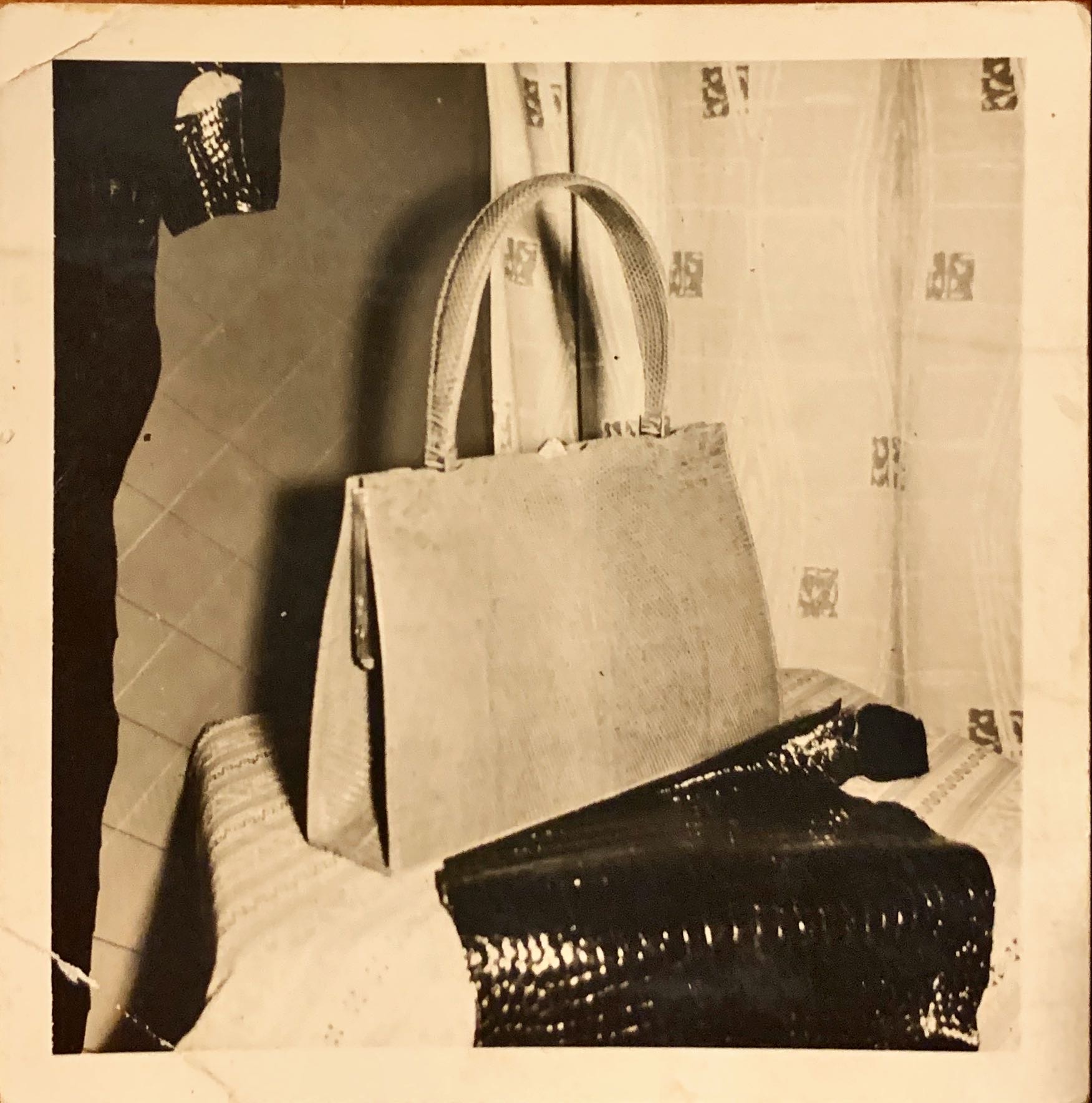
By 1957, Luxembourg could boast that the refugees they had accepted had quickly found permanent employment, specialising mainly in handicrafts. My father was one of these skilled workers. He quickly established himself as a leatherworker who could make bespoke leather handbags of the finest quality. By 1960, he had his own shop which he ran with a silent partner. It was one of the finest boutiques in Luxembourg, specialising in crocodile skin handbags.

The individually crafted handbags he made were placed ever so carefully in the shop window or hung from hooks along one of the wood-panelled walls. A large crocodile skin hung on the opposite side. I loved looking at that crocodile skin and the shapes I could see and feel when I ran my fingers along the bony scutes. I felt the bumpy ridges and smoothness in between. The skin was black and shiny and didn’t look anything like the small stuffed crocodile on the gramophone cabinet in our lounge room. That crocodile was a baby crocodile with short feet and sharp teeth. Its skin was a dull grey and quite bumpy to touch. It was a present from Seppi, the crocodile man.

Seppi only came once or twice a year to sell his crocodile skins and I couldn’t wait until he bounced into the living room, full of stories of the Sahara and the Nile. He spoke of faraway lands in Africa where he saw nothing but sand for days on end. When he was in Africa, he drove a jeep and hunted crocodiles. He told captivating stories about being thirsty and constantly almost running out of water. I sat on his lap and listened to his stories until they mixed with the stories I invented for him. When Seppi was away, I came up with my own adventures for him in that mythical place called Africa. Whenever I saw him, he always chewed gum and I began to save sticks of chewing gum I sometimes found on the kitchen table. I loved Seppi with all my heart and told him that I couldn’t wait to grow up and marry him. He laughed and said,

‘You’ll have to do a lot of growing, young lady,’

and gave me a bear hug before leaving on another one of his long trips. I often thought of Seppi chewing gum as he drove his jeep over sand dunes, looking for the next oasis. At night, I saw the crocodiles he would hunt, swimming in the river of my dreams.

Writers’ Hour by London Writers’ Salon

There are many disciplined writers, but I am not one. There have been weeks, sometimes months when all I have done is to agonise about writing but get a single word down. And then there have been times when I have found that magic state of flow. Inevitably, a busy period at work throws a spanner in the works and I fall out of the habit.

A few months ago, my friend Margaret Paton, who single-handedly organises the Central West Writers’ Group, put up a post on our Facebook page.

Writershour.comDaily Writing Sessions. Brought to you by London Writers’ Salon.

I was intrigued. It took me a while to work out that there were in fact several writers’ hours, all held between 8 and 9 am around the world. The one in London is between 5pm and 6pm Australian Eastern time, while the New York hour comes on at 10pm to 11pm. As I am night owl, I tend to catch the New York session but sometimes I am lucky enough to be home by 5 to take part in the London session.

The concept is deceptively simple. Writers log onto Zoom at the specified hour, a host mutes the conversation and welcomes us all. There is an explanation of the process: we are to type our intention for the next 50 minutes into the chat pod and some of these are read out. We may be sitting isolated from each other yet there’s a definite feeling of community. We are all comforted by the couple of hundred people sitting in their own space, all engaged in the writing process and experiencing similar struggles and joys.

The host reads out an inspiring quote, we raise a glass of water or cup of tea and off we go, keeping our cameras on for extra accountability, or not. After fifty minutes, a voice gently invites us back into the ‘room’. We use the chat pod to say how we went, whether we reached our goal for the hour and how we felt. One or two people are randomly chosen to report back before we say goodbye. It is as simple as that.

Since coming across the London Writers’ Salon, I write every day. I am beginning to recognise faces and love the way we encourage each other. I feel part of this wonderful world-wide community and best of all, I have written many thousands of words. I only wish I had come across the London Writers’ Salon when they first went online during lock down. Since then, they have grown exponentially. There aren’t many positives I can point to when it comes to Covid, but the Writers’ Hour is definitely one. I have finally found my community and reawakened my enthusiasm for writing.

For the past three years I have struggled with writing my memoir. Within a few months of regularly attending Writers’ Hour, I have completed my first draft and I’m now using my daily writing habit for editing. I never thought I could say that I’m looking forward to when my book is published. Thanks to the London Writers’ Salon, that day is now within reach.