The Miracle Morning Missed Me

Why can’t I get out of bed in the morning? Every night, my alarm is set on my phone and placed in the kitchen. I have chosen the most ear-piercing, shrill sound that I fear wakes my entire neighbourhood, but I still manage to roll over and go back to sleep. I have tried going to bed earlier, setting the alarm for as late as possible, setting it earlier to give myself more time, having a thermos of tea at my bedside, all to no avail.

The strange thing is that I’m not even comfortable in bed once I wake up. My hips ache, my bladder protests and still I lie there, convincing myself that ‘out there’ is not only less desirable but downright ghastly. It will be too cold and much too unpleasant. Yet when I finally get up, it is quite agreeable out there. The shower is warm, the world seems benign and when I take the dog for her walk, I can’t help but feel jubilant. The frost and silent fog are achingly beautiful. I wonder why I can’t return to this feeling to get me out of bed earlier. It would be so much more enjoyable to have an extra twenty minutes out in the park instead of lying in bed.

I never thought I’d say this, but I wish I were a morning person: someone who wakes up, jumps out of bed fully awake and ready to tackle the day. The type of person who is bright and chirpy, finds the first is hours of the day invigorating and gets things done before others are awake. It seems to make no difference whether I have six hours or ten hours sleep. I wake up bleary eyed, slightly grumpy and always at least a little more tired than when I went to bed. Luckily, my dog doesn’t mind me being monosyllabic for the first hour.

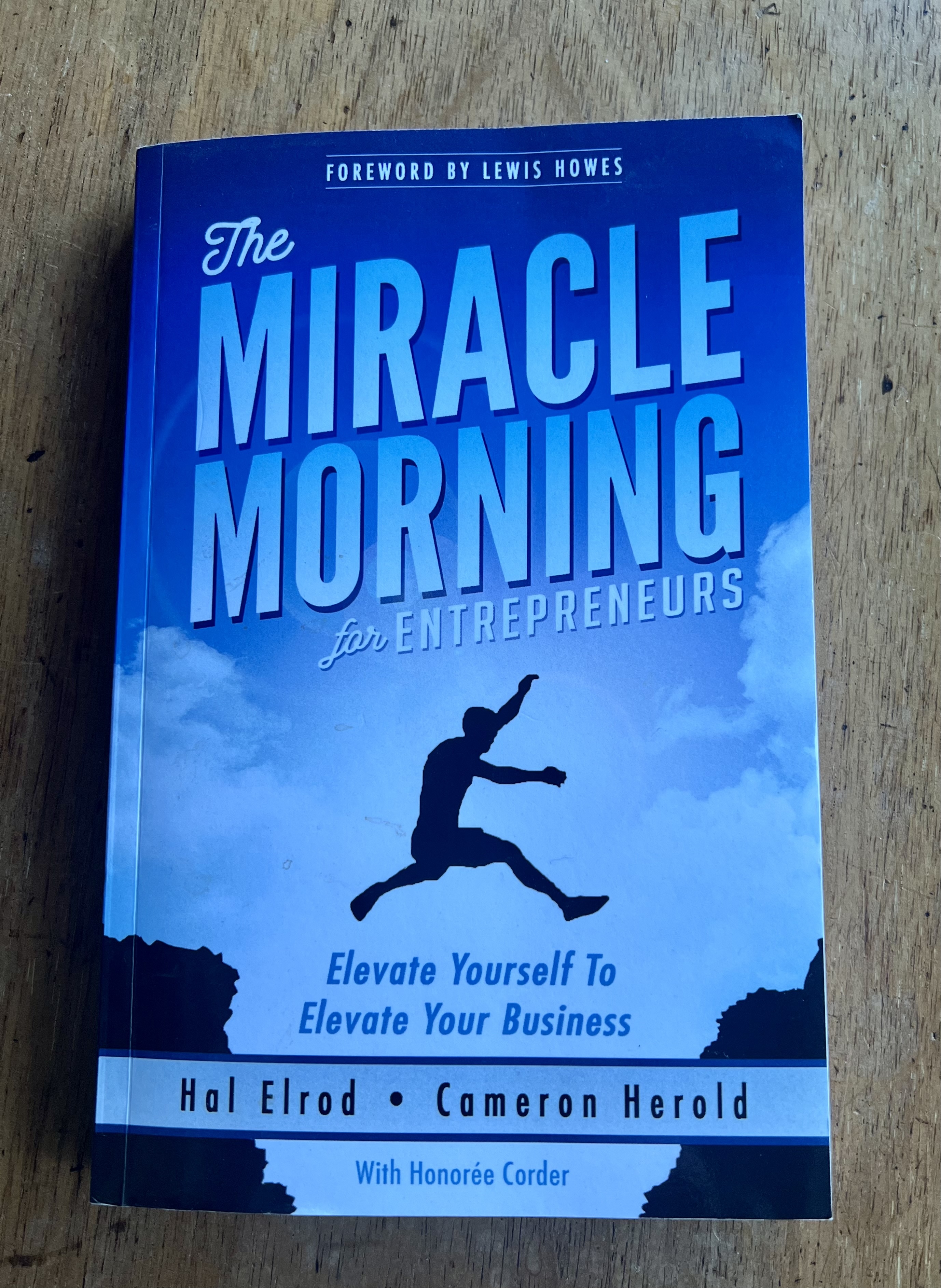
I have read ‘Miracle Morning’, ‘The Five Second Rule’ and various other books of the same ilk, trying to convince me that it is a merely a question of putting my mind to it. Lord knows, I have tried. I have even succeeded for a week or two at a time, but it was always a struggle, and I never felt full of energy. My rocket booster kicks in about 30 minutes before bedtime, which would be perfect timing if my job were midnight space travel, but not so great for a 6am start in the real world.

Many years ago, I taught English to Chinese students at a private college. It wasn’t a great job and for the most part I was deeply unhappy there. But there was one moment that has become a favourite of mine, an anecdote that resonates with every fibre of my being. A young man handed me his journal to be marked. The first sentence read, ‘I was alarmed at 7am.’  I simply couldn’t bring myself to mark it as incorrect.

The Quiet Cost of Disconnection

A few weeks back, I drove 330 km to attend friend’s birthday lunch. I hadn’t seen her for about six months and was delighted to surprise her on the day. I also caught up with a couple of friends I hadn’t seen for years on that weekend. Since then, my life has revolved around work, and I have barely seen anyone. Usually, I don’t mind at all, I’m a bit of a loner and rarely feel lonely. Lately though, there’s been a niggle gnawing within me, a slight feeling of dissatisfaction, which I’m finding disconcerting.

I talk to lots of people during the day, so it isn’t a lack of contact. However, most of my interactions are transactional and I don’t feel connected in any meaningful way. Today, it occurred to me that I know very little about the private lives of my colleagues and they know very little about me. Whilst I don’t expect to have all my social needs met at work, it is where I spend a large chunk of my time.

We always think about the quality of our diet and exercise as the main risk factors for our health. Recently, studies have identified another risk factor, which could be equally as important to longevity and health – the importance of social relations. This may be because the support that friends offer can lower our stress hormones, it can even help regulate insulin and help with our gut function. It reminds me of studies that have been done on positive coronary effects of purring cats on laps. We all need companionship and physical touch.

What matters most is the quality of our interactions. Happy marriages can help prolong life; unhappy ones can lead to poor health outcomes. While not causal, there’s a definite a link. This also applies to friendships. The stronger and more harmonious our friendships, the happier and healthier we tend to be.

But it isn’t just the social interaction that’s been lacking from my life. I haven’t done much of the two things that keep me centred. The first is walking and the second is writing. Before work, I only fit in 15 to 20 minutes of a walk and, now that winter has arrived, I mostly get home after dark. I miss my hour-long stroll after work and so does the dog. No such excuses for my lack of writing.

After a few weeks of missing the online London renegade writers’ group, I finally logged on today. We wrote, we chatted, we laughed and cheered each other on. Such a simple step and I already feel better. Two hours later, I’m buoyed, smiling, and content with my lot once again. And here’s the blog post to show for it.

A School Life, A Full Life

We are approaching the end of the term. I can tell. My floors aren’t vacuumed, and the bed is overdue for clean sheets. Lots of little jobs are falling by the wayside. I tell myself that I will get to them next week when I finally have some time.

Today, I arrived home after 7pm and my number one priority was feeding the animals and then cooking my own meal. My poor dog didn’t even get out for her customary walk tonight. I’ve snuggled into my dressing gown and I have no desire to brave the elements.

To be fair, not all of it has to do with working at a busy school. Last week, I had several engagements that left me with little time at home. The first was a delightful dinner on Friday night where good company, a bottle of bubbly and the funniest conversations made me laugh so hard that I had to hold my sides. Both food, and company were outstanding.

Saturday, I drove back to Millthorpe where I used to live to catch up with dear friends and get a haircut. It is a three hour drive one way. That’s quite some distance to travel for a hairdresser. While I like the Salon and the quality of the cut, my main reason for not swapping over to someone else is that I enjoy catching up with friends. As we move away, it is harder and harder to keep in contact. ‘We must keep in touch,’ is a common refrain but life gets busy and after a short time the connections are weakened until they are completely severed. I didn’t want that to happen.

The downside of being away for a weekend is that the washing, cleaning and weekly preparation doesn’t get done. I went headlong into this week without much of a plan. I’m feeling the effects of it now. My Monday has been taken up with reactive tasks and the important items on my to-do list never got a look in. When I packed up in the afternoon, I discarded a full cup of tea I had made myself at midday. I hadn’t been near my desk since then.

Am I frustrated? Maybe just a little. But life is more than just the tasks we feel we have to complete. I’m glad that I went to the dinner with good friends on Friday, and then off to see more lovely friends on the weekend. The washing can wait. I still have plenty to wear. While I may be tired, I am also incredibly grateful for my full life in loving company.

I’m grateful for friends – old and new, grateful for shared laughter, and for the chance to be of service, even on the messiest of Mondays. The to-do list can wait. For now, my dressing gown, a warm meal, and a quiet moment are exactly what I need.

Aching for Attention

Recently, my body has been telling me to pay attention through aches, pains and annoying niggles. The message is clear; take heed, you are more than the mind and your thoughts. The physical form is just as important, ignore it at your own peril.

I have suffered from migraines for most of my life and they have often come about when I have pushed myself to the limit. Things like forgetting to eat lunch, sitting in front of a computer for hours on end, not getting enough sleep are just a few ways I have abused my body and while it faithfully keeps going for a long time, eventually it tells me to stop. Usually, it does so in a not-so-subtle way. That’s because it knows that only a sledgehammer will stop me.

I often find wild bruises on my legs or dried blood on my arm, and I have no idea how I acquired these. I brush off minor cuts or bumps as inconveniences only to discover later that they weren’t so minor after all. I am not proud of this. It comes from an attitude of considering my body as an inconvenience that I carry around with me. I see it as a limiting factor in what I try to achieve. So, I ignore it as much as I can instead of working with it or giving it the care it needs. If I am honest, it has been a lifetime of neglect.

The last week has been particularly tough on my body. I stupidly wore high heels to work on a ten-hour day when I had to run from one building to the next and greet people in an official capacity. By the end of the day, I was hobbling back to the car, in pain and exhausted. That night, I slept 12 hours. My body said ‘enough’.

I woke with a headache this morning and instead of reaching for pain killers, I reached for water. You’re learning, I thought. My body felt stiff, aching all over even after my morning shower. I looked at my to do list and promptly closed my diary. It could wait. Instead of pushing myself to get the next thing done and crossed off, I walked my dog to the local café, enjoyed a coffee and decided to honour my body with a massage.

After forty-five minutes of pleasure and pain, I thanked the Chinese masseuse and floated out onto the street. Colours seemed brighter as did my mood. Back home I approached chores with more energy and decided others could wait. I took the dog for another long walk and met up with some of the regulars in the park. Looking up at cotton ball clouds, I watched their shapes change. I noticed a colony of ants build a nest on the side of the path and I realised I was pain free and happy. All I needed was a little self-care and acknowledgment of my body.

When a Stranger Calls Your Name

Photograph by John Harding originally posted on Friends of Watson Greenspace Facebook page

It takes about a year for me to feel that I have arrived in a new place. I have moved cities often enough to recognise this pattern. Sometimes waiting for that moment feels like an eternity, as it did when I first moved to Sydney while other times, it feels as if it has taken no time at all. Canberra falls in the latter category.

While I have felt at home in my new place very quickly, I didn’t know anyone besides my daughter and her friends when I moved. Then, a couple of months later I met my first friend at the dog park. She lives on the same street as I do, and we meet up for drinks or dinner every now and again.

I am known at the local shop but not by name. People are more likely to say hello to my dog Zoë who wears her name on her harness than they are to say hello to me. Of course this is very common. Even Markus Zusak says that when he is out without his dogs, he becomes invisible to people on the street.

Can you imagine my surprise when a man with a camera hanging from his neck called out to me, ‘Are you Viktoria?’ It turned out, he was the local wildlife photographer who posts the most stunning photos of birds, dogs and kangaroos that visit the nature reserve across the road from me. I have been liking his posts for months and occasionally writing a comment, especially when he posts shots of tawny frogmouths. He must have looked at my name and found a picture of me. Now, he kindly showed me the tree where they were roosting, and I saw the three babies with their parents with my own eyes. It was a truly awe-inspiring sight, and I was grateful that he shared his knowledge of birds freely.

I thanked him and continued on my way. Zoë was getting impatient for her walk. However, after about 200m we were stopped again. This time, an older woman called out, ‘excuse me but do you have a friend in Sydney who lives in Dulwich Hill?’ Once more, I was flummoxed. Turns out she had moved to Watson recently, was given my number, but hadn’t made the call as yet. She recognised me because of Zoë. I guess there aren’t many black standard poodles who walk in this park. We had a chat and decided to catch up for a cuppa later in the month.

Ten months have gone by since I first moved here. So many joyful things have happened, but it wasn’t until I was recognised by strangers that I felt I had truly set down roots. It feels like I am part of the suburb and part of this community. I feel calm in the familiarity of the trees, the pond and the paths that I take daily. But hearing my name said out loud carried a particular weight, as though the world had suddenly recognised me within it. It was a fleeting moment of quiet significance, a moment when I felt connected to the place and the person who has called me into being out of my own thoughts and into the time and space we both inhabited.

And so, I have finally arrived.

What’s left of a lifetime

Across the road stands an empty and neglected house. The curtains in the main bedroom are torn and I have never known otherwise. The gutters at the front lean towards the left and can no longer hold the downpour of rain. A large tin shed stands at the back of the property, its swinging doors wide open and bent, revealing a dark cavern with nothing inside. There is no light, no life, no love left in this house.

On the nature strip are the vestiges of a shared lifetime: a 1970s kitchen table with three fawn vinyl seats, a striped folding beach chair, an occasional chair, a plastic bin, an esky and a milkcrate filled with the detritus of a meagre life. They have been left for the annual council clean up and after this, there will be no sign left of the lives lived there.

When I moved to the village six years ago, I occasionally saw the old couple sitting on the veranda of the house. The husband mowed the lawn, took the bins out and did a little gardening here and there. He still drove his small car to town, although plenty of people were worried about his fast-declining driving skills. His wife, however, mainly spent her days indoors. From my study, I would see her get undressed for bed at 9pm sharp.

The couple were private. They had lived in the village all their lives and had a couple of trusted neighbours who would look in on them. Otherwise, they kept to themselves. It didn’t help that the old man was deaf and cut off from world. I would nod or wave from across the road but that was my only interaction with them.

Most weekends their grown-up children would visit with grandchildren in tow. They began to take over the mowing and one day I noticed that the old car was driven away. The son could see that old man was dangerous on the road. Everyone on the street breathed a sigh of relief. Then, I noticed other changes too – home help arrived a couple of times a week and after a while, nurses.

The first time an ambulance came, I feared the worst. I found out from neighbours that George (I finally learned his name) had a ‘turn’ during the night. I was wondering how his wife would cope but at 9pm I saw her getting ready for bed as usual. A day or so later, George was brought home and life resumed more or less as normal.

The ambulance began to arrive regularly to take George away. I saw less of him in the garden and he rarely sat out the front anymore. Neighbours who had known them for decades began to rally. Some took out and brought in the bins, other did some shopping or dropped off meals. The chemist brought their medicines and nurses visited routinely now. I was beginning to wonder how long this could last.

The last time that the ambulance arrived seemed no different to all the other times. But George never came home. The doctors decided it was time for geriatric care management, a euphemism for moving to a nursing home. The family arrived at the house and things began to move rather quickly. Neighbours informed me that a place had been found for them at a residential aged care facility on the NSW Central Coast, a long way from where they had lived all their lives.

One day I noticed that no lights came on at 9pm and the house stayed dark. Family began to arrive at odd times to clear out the house and garage, removing anything salvageable in their cars. Finally, all that was left was were the few items on the footpath.

I look at these forlorn leftovers and feel downcast. Is this what awaits us all? Cherished memories sitting at the kitchen table wiped away with a wet cloth and put out for council collection? It is almost too much to bear.

I wonder how the old couple is now and whether I will ever hear news about them again. I know they never wanted to leave this pretty little village that was home to them for over 90 years. Perhaps they are stronger than I think. I hope so. And I hope they can sit side by side for as long as they have left with one another as they once did on their front veranda.