Lighthouse reflections

Some things are seriously worth waiting for. Like the Artist residency at Nobby’s beach, Newcastle. I was counting down the months, then the weeks until it was finally upon me. Five glorious days to spend on my memoir that has been sitting on a shelf for the past year, patiently waiting for me to come back and give my undivided attention.

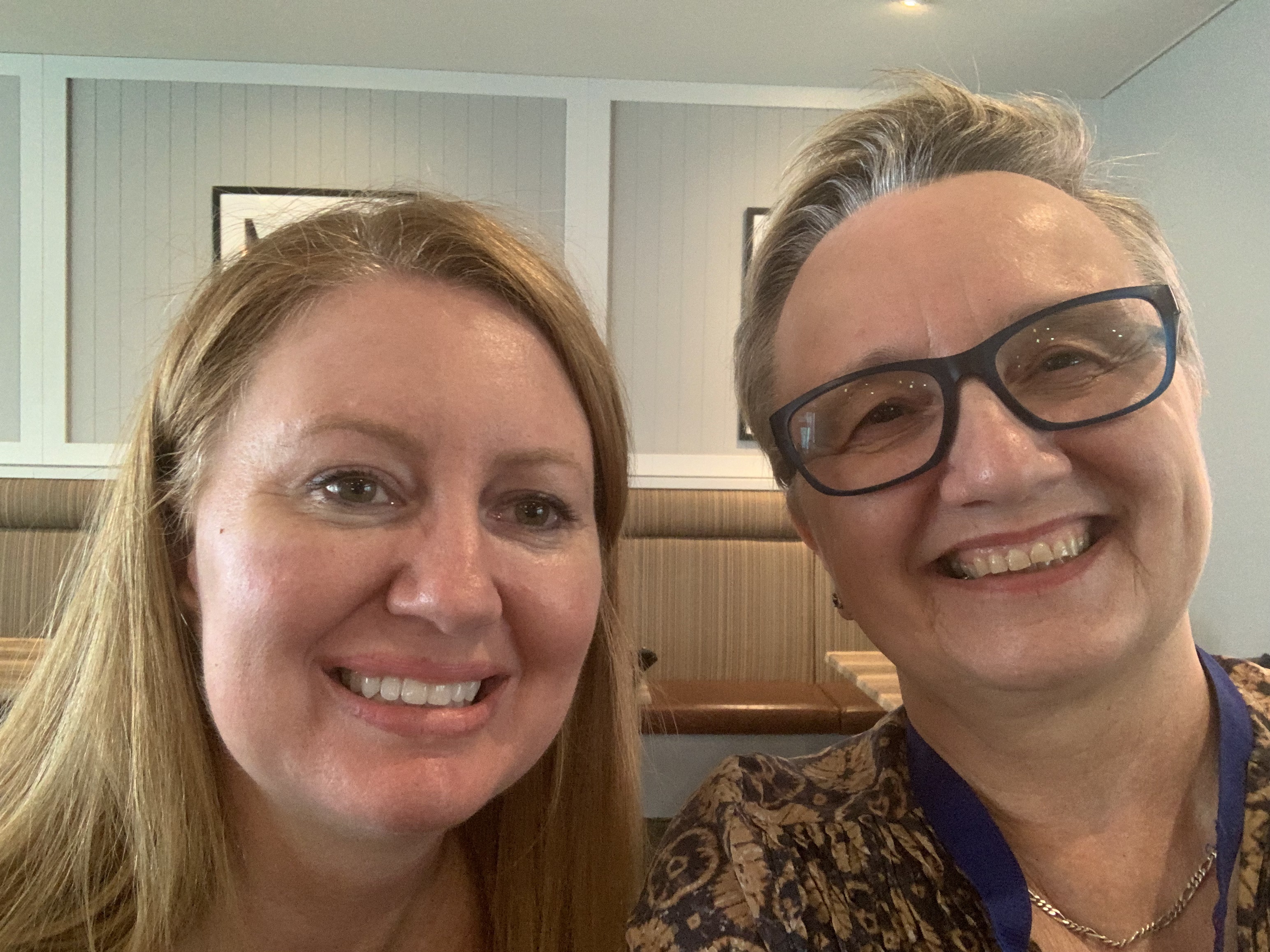
There were eleven of us at the lighthouse. Some writers, some artists. Several had returned for the second time and were delighted to meet up with old friends. Two of us came from Canberra and, to my surprise, there was a large Melbourne contingent. One younger woman had grown up at the lighthouse as her father was the last signals operator before that job too became automated. We loved hearing stories about the people who lived there and the history of each of the rooms where we worked. For her, it was a chance to paint the lighthouse and its surrounds which had played such a significant part in her early life.

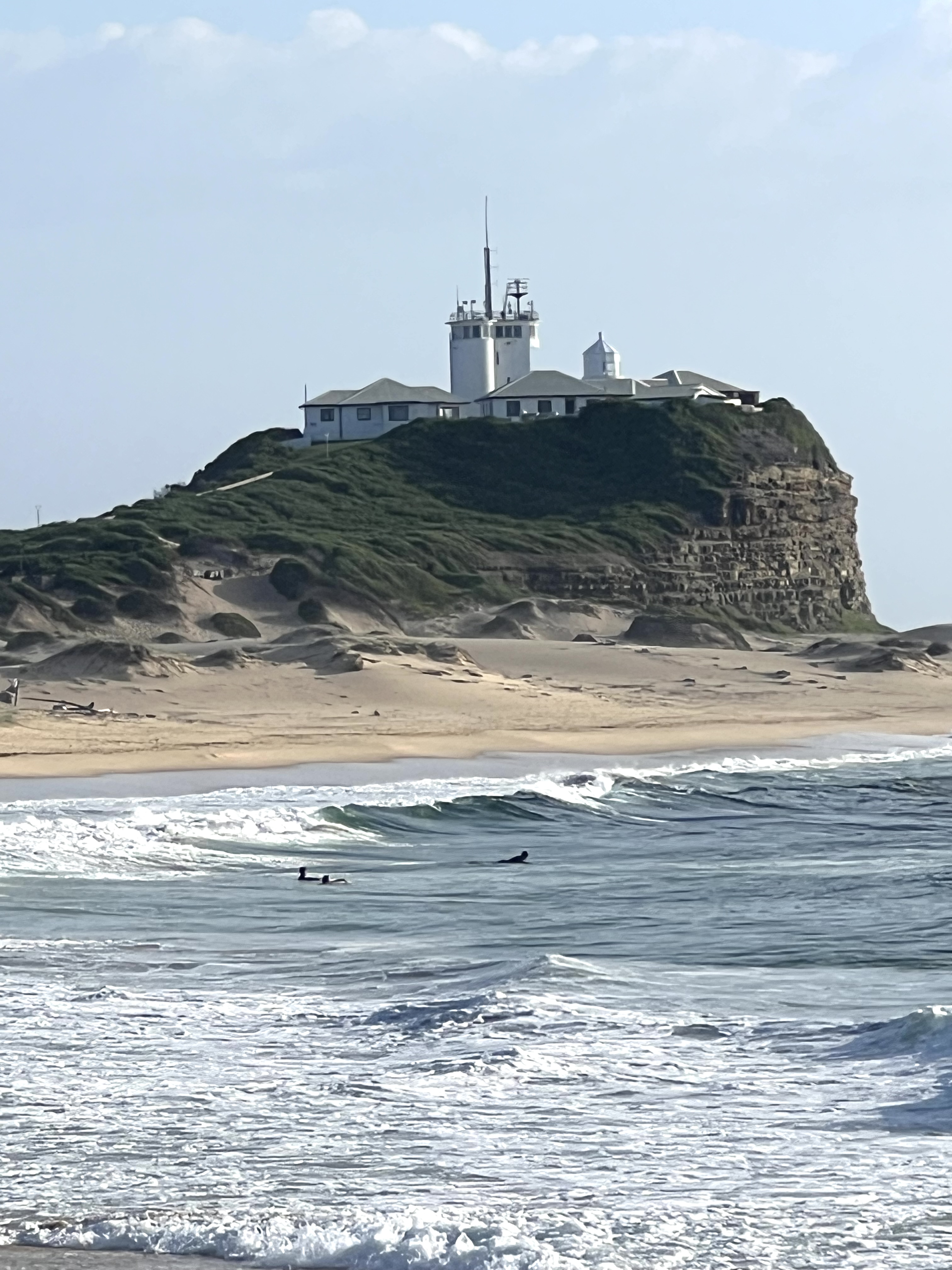
There is something magical about lighthouses. They are often metaphors for safe passage, guidance, and protection. They offer illumination for the dark nights of the soul and are a beacon of hope. In a port city like Newcastle, this lighthouse has the important function of guiding vessels into the harbour and up the Hunter River.

Before I arrived, the lighthouse became the beacon guiding me to cross the finish line of the year with a sense of achievement. It didn’t disappoint. I found it easy to get into flow and felt focused for hours on end. Many of us met at 12.30 for lunch in the common room, enjoyed each other’s company, and went back with a fresh burst of energy for the afternoon session. By the end of the week, I cut 21 000 words from my manuscript. I consider it a boon for my future readers. The engagement with the work has also rekindled my enthusiasm for the project.

The knowledge that Nobby’s lighthouse is one of the oldest operational lighthouses in the country made it feel like a workplace rather than some anachronistic holiday destination. I felt connected to both its current significance and its historical legacy.

Back in 1854, it first guided commercial shipping and 88 years later, it became important for military operations during WWII. The three small cottages erected on the site and these were used by defence staff during the war. An unexploded shell fired from a Japanese submarine damaged one of them.

Various lighthouse staff occupied the cottages after the war until the late 1990s. Lighthouse Arts, which is an initiative of the Hunter Writers’ Centre, now uses these cottages to hold exhibitions and offer artists and writers a space to create.

The area where the lighthouse is located is now known as Nobbys-Whibayganba headland. So finally, there is recognition of the Traditional Custodians, the Awabakal people and their deep cultural connection to the land, saltwater and the Dreaming.

I am grateful I could nurture my calling on this spiritually laden Country. It gave me much needed clarity and purpose. As such, I am already planning my next sojourn.

If you feel you would benefit from having a week to commit to your creative project, apply at https://hunterwriterscentre.org/2024/11/28/lighthouse-arts-residencies/  

We may even meet each other there.
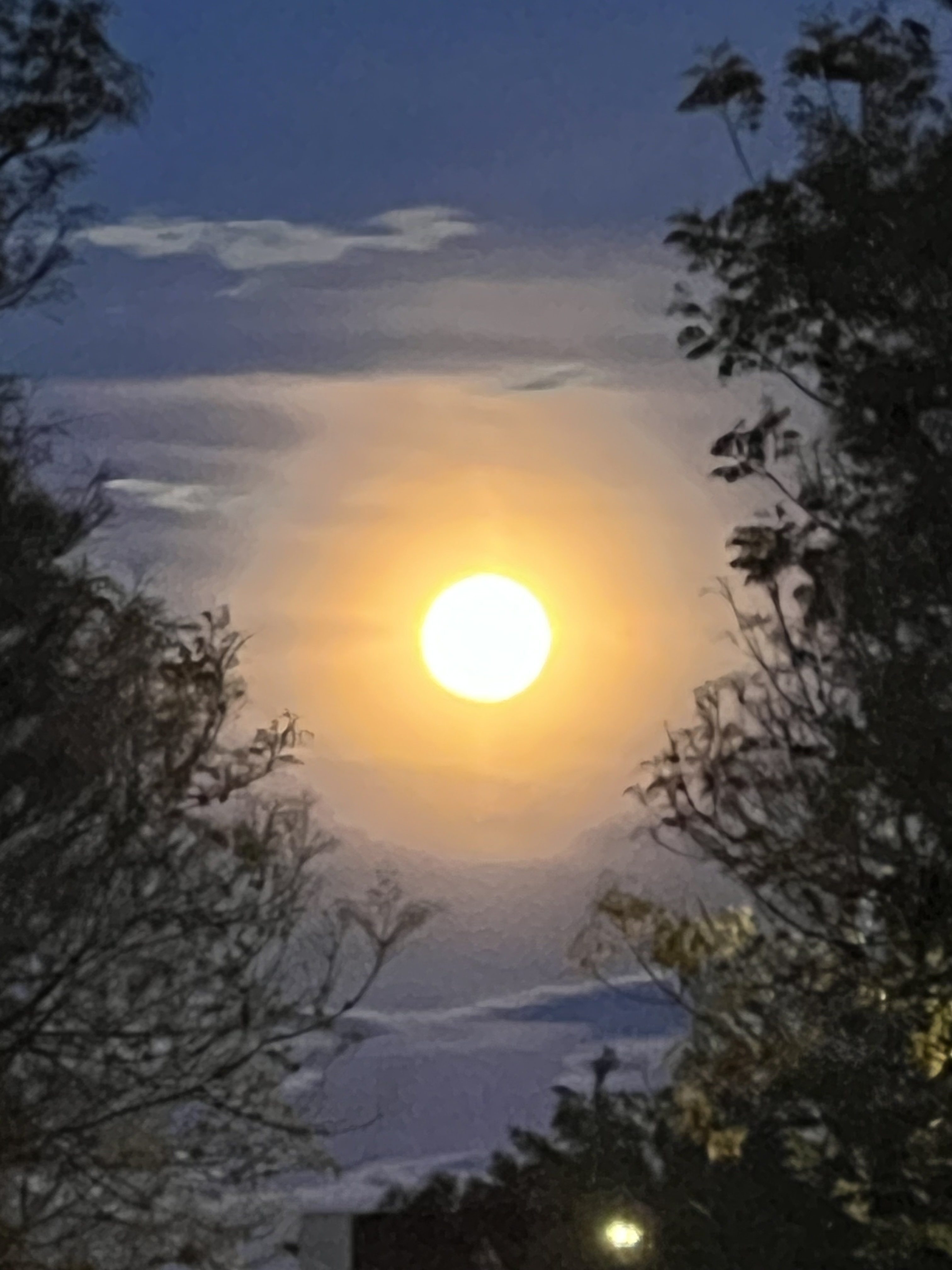
In Luna’s embrace

Like tides, I am drawn to the moon. Looking up from the cares of the world, there is my constant companion. Waxing, waning, lighting my way. Full moons always bring me joy. Every full moon catches me by surprise as if saying, ‘here I am, did you miss me?’. I sure did.

 I was unaware of all the hype around October’s super moon, when the Moon is at the closest point to us in its orbit. This super moon was the closest the Moon has been for quite a while and appeared at least 10% larger and 30% brighter than the faintest moon of the year.

The Western world colloquially refers to the full moon in October as the ‘Hunter’s Moon’. Traditionally, it was the best time to see deer and other wild animals to hunt and preserve for the coming winter. Of course, this makes little sense in the Southern Hemisphere as we await sweltering summers, but the name persists.

 There is a strong feminine connection with the moon, from the menstrual cycle which follows the 28-day lunar cycle, through to goddesses such as Luna and Selene named after her. The moon has played an important part in many cultures and religions. The Jewish calendar is lunisolar. Jewish people celebrate the first night of Passover when a full moon occurs after the spring equinox. In the Christian tradition, Easter falls on the first Sunday after the full moon following the spring equinox. Islam uses a lunar calendar with the new crescent moon marking the beginning of each month. The moon has influenced humanity since time immemorial.

Yet every light creates its own shadow. The moon has also been associated with madness, as in lunacy. Consider the quote from Shakespeare’s Othello ‘It is the very error of the moon. She comes more near the earth than she was wont. And makes men mad.’ There is, of course, no evidence to this myth, but it continues to flourish. Think of all the horror movies depicting a full moon and wolves howling. Then, in the early 19th century in the era of Romanticism, poets were associated with madness and mental illness. In truth, it was probably syphilis that caused their psychosis and mania.

Is it any wonder that seeing the full moon makes my heart jump a beat? I look up and see her on the horizon, as beautiful as a pregnant woman’s belly, about to bring forth new life on this planet. I swoon. My first instinct is to call my daughter, another lunar devotee, and tell her to look up NOW. Every minute counts as the moon rises and the optical illusion of a giant moon fades. Often, I will simply stop what I am doing, feast my eyes on her beauty and breathe in luscious long breaths in gratitude for what I have received.

The gift of friendship

‘Come and stay whenever you like,’ I tell my friends. And this week, I had the pleasure of four friends at my doorstep, each having come a long way to see me. I know these women from different times of my life and and their loyalty is astounding. I have moved hundreds of kilometres away but we still stay in touch.

They are all outstanding educators of one kind or another, yet I’m not sure they’d have much in common other than their teaching careers. I guess if they met, they would talk shop. However, I have a much deeper connection to each of them. I find a different side of me emerges in their company, not because I am trying to impress them, but because they speak to a part of my personality that resonates with theirs.

Michelle and her friend Claire’s visit brought out my rambunctious side. We could speak without a filter, mercilessly tease each other, drink gin, and laugh through the night without a care. There is something to be said for letting your hair down without worrying about the consequences when you know your friends have your back. Spending a night with them was like stepping into my carefree early twenties. Years and cares melted away. Yet they too have their share of hard times, but we can forget these for a while when we get together.

Lizzie was the next to arrive. I have known her for over twenty years, and she has been a loyal friend through jubilation and sorrow. Thousands of cups of tea have infused our friendship. Although her children are older than my daughter, we have shared our struggles and joys of motherhood, marriage and work life. I have always admired her loyalty to friends far and wide and her ability to find time to produce quality teaching resources, which she freely shares. There is also a deep spiritual side to Lizzie, which connects heart to heart. Her friendship has buoyed me over the years, and I feel blessed to be counted among the people she loves.

The last friends to visit were Kath, her husband, and their gorgeous Labrador, who simply wanted to play zoomies with my standard poodle. We don’t see each other that often anymore, but whenever we do, we feel nourished and affirmed by each other’s company. I worked with Kath for two or three short years, and they were the best years of my working life. She is thoughtful and generous, always inclusive, and gives the best hugs. Kath works harder than anyone I know and has made many personal sacrifices to run a high school with its fair share of complexities an hour and a half from where she lives. I have so much respect and admiration for her resilience, and I count myself lucky that she finds time to see me.

Seeing this many friends in a week is very unusual. As an introvert, I can get quite overwhelmed when I see too many people in quick succession. I was quite surprised that I didn’t feel drained at all. In part, this is because I have been on holidays, so I don’t have to juggle other commitments whilst having visitors. However, the other reason is that my friends have been so nurturing and aware of my needs that it hasn’t felt like hosting visitors at all. Each, in their own way, has filled my cup to the brim and beyond with love and warmth. My hope is that we can keep enjoying these precious times for many more years.

Dakers Oval – Blayney

A small patch of mossy grass stands apart from weeds around a fenced oval. On the spur of the moment, I take off my sandals to feel the spongy softness under my soles. It has been a long time since I have taken off my shoes to walk in grass. In my own backyard there are bindis, thistles and countless other weeds that have invaded the lawn. But here, on this small patch, I stand and feel a spongy softness under my soles. I am reminded of times in my childhood when I would find a clearing in the woods and lie in a meadow of wildflowers, protected by tall trees and the birds of my youth. There were the chatty finches, the trill of blackbirds, monotone thrushes, and the incessant hammering of the woodpecker. I close my eyes and listen. Here there are magpies warbling to one another, repeating a melody that echoes across the field. They are accompanied by the incessant chirping of crickets, who provide a high-pitched drone above which the birds improvise their songs.

It is hard to believe I am standing no more than a hundred meters beside a large carpark and local supermarket. The dogs I am walking sniff the ground and roll with unbridled pleasure in a smell only they can identify. Their joy is palpable as they leap and chase each other around a field beyond the cricket pitch.

There are not many small places like this left where dogs are welcome. Ironically, it is more difficult to find open spaces for dogs in the country than in the city, where dog owners congregate in groups with their much-loved pooches in suburban parks. Still, I’m happy to have my own company without the intrusion of other peoples’ chatter.

Between the fences and the farms just beyond this small green space is where the Belubula river meanders, making its way to feed into Carcoar dam and flow on to Canowindra and eventually into the Kalari or Lachlan River, near Gooloogong. One of my dogs throws herself into a creek that feeds into this river, not for a swim but to wade and cool down. She heaves herself back up the bank, shakes and rolls in the dirt to dry off. For a moment I think of the back seat of the car, but I could never deny her the pleasure of a dip on a hot day.

Near the entrance to this precious piece of council land, I find discarded cans of ‘Mother’ and the plastic packaging of Arnotts Kingston biscuits. On previous walks I have seen young workers from the supermarket sit here to have their break, smoking, laughing, enjoying a little freedom. I’m saddened that they don’t look after this place, a place of refuge from stacking shelves or serving on checkouts. After all, they choose to come to here rather than the carpark where there are plenty of seats close by. Something must draw them towards this spot, surrounded by trees, birds and the burbling creek. Are they hoping that someone like me comes to pick up their rubbish or are they content to sit in their small, soiled nest?

I walk twenty meters to place the rubbish in the bin provided and decide not to let their actions befoul the pleasure of this scenic stroll. After all, it is a magnificent morning to be walking on this lush land.

Christmas cake

My mother-in-law, Jean, introduced me to fruitcake. I had tried it before but could never quite understand what the fuss was about. The fruit cakes I had eaten up to that point were shop bought and mass produced. Pretty ordinary, I thought. And they were. When Jean began sending us fruit cakes several times a year, I began to appreciate a good fruit cake made with brandy, soaked fruits and nuts. She liked to experiment with various recipes, and I loved them all.

One day, Jean announced that she would no longer bake cakes. She was getting old and found the process increasingly difficult. I decided to step into the breach and began sending her the cakes she had taught me to make. In time, I perfected a fruit cake with chopped almonds that is just perfect. And so I carry on the family tradition of making and giving home-made cakes.

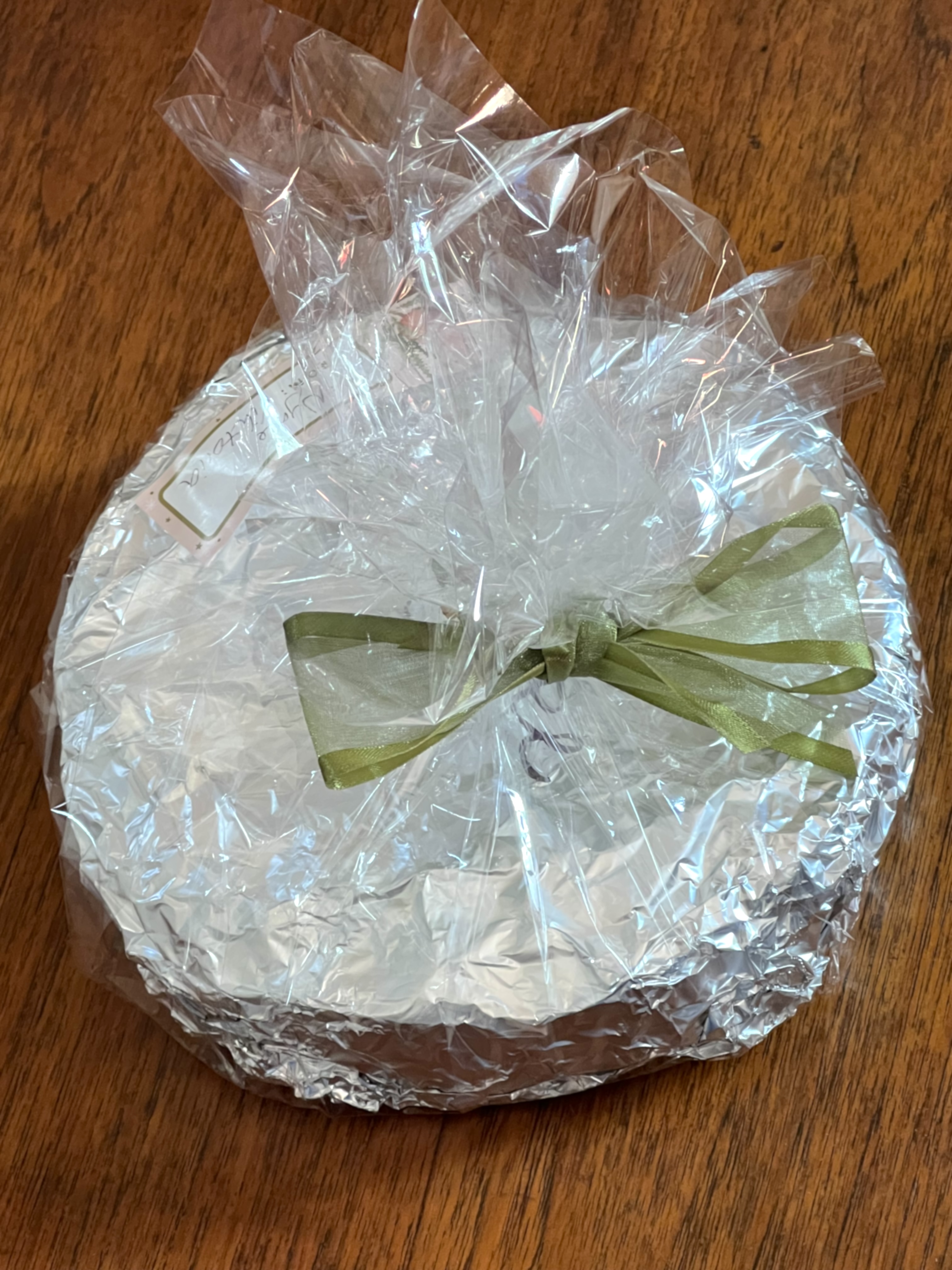
This year, I decided to bake fruit cakes for many of my friends. Over a period of about a month, I made 11 large cakes and more than 20 small, muffin-sized ones. The only restriction I placed on myself was that I wouldn’t post any. The cost of postage has become prohibitive over the years.

Making one cake after another took on a rhythm of soaking fruit, zesting oranges and lemons and watching the mixture froth when I added bicarb. I stirred in the flour and poured the mixture into baking tins which I then surrounded with brown paper and tied with twine. This helps to cook the cake evenly and stops the top from burning. Finally, it would go into the oven for a couple of hours during which I had time to start the next cake.

What I enjoyed most about this process was that I always had the person in mind for whom I was baking. I thought about each individual, their special qualities and the joy they brought to my life. It felt like a version of a Buddhist loving kindness meditation practice. I dedicated time to think about each person, added a little more of this, a bit less of that to suit their taste and wished them well for the coming year. I found it a lovely practice to think about each person, rather than bake all the cakes and allocate them randomly. This way, I could add a couple of magic ingredients to the mix – gratitude and love for recipients of each cake.

Melbourne Cup Day

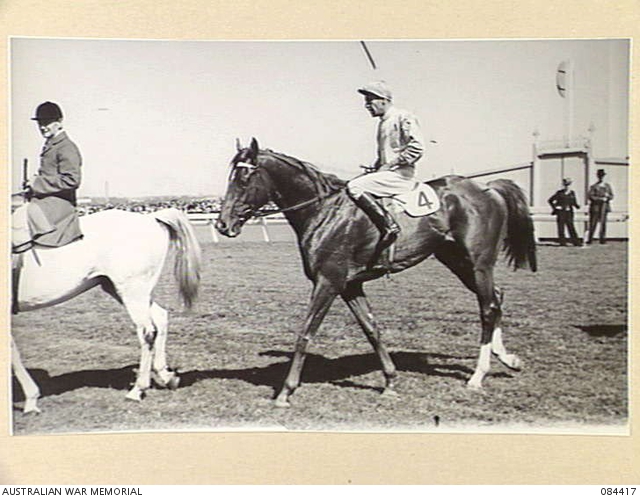
Sirius, Melbourne Cup winner 1944

Roger could recite every Melbourne Cup winner going back to his birth year, 1944. It was his favourite party trick. Starting with Sirius, he could name them all and knew details about most. He loved horses, had a fervent interest in racing carnivals, but never had a bet. The last horse to be committed to his phenomenal memory was Verry Elleegant, the first horse to ever win the Melbourne Cup from barrier 18.

While I admired his passion, I could never reconcile the love of horses with racing. My heart broke every time I heard about an accident on the field. These horses rarely survive. It also seems to me that we don’t need to encourage betting in a nation that has the greatest per capita losses from gambling worldwide.

The day that Dunaden won the Melbourne Cup is seared into my memory. My husband, Peter, was returning to work after several months on sick leave. He had a part of his lung removed after we discovered that his Melanoma had spread. Things were going well; he felt better and was looking forward to returning to work. We dared to be optimistic.

I received a muffled phone call at about 10am on Cup Day. He was calling from the waiting room of the hospital where he had received his previous treatments. ‘I’m alright,’ he said in the way he did when he wanted to shield me from distress. I had to prise the details out of him, the way I always did when I needed to know the truth.

‘I wasn’t feeling well on the train and when I got off, I collapsed. People helped me up and eventually I had enough strength to walk to the medical centre. They sent me straight to hospital.’

At that moment, I knew. I knew we were at the starting post of a race against time and the odds were stacked against us. It was a race we would never win, no matter how much I pleaded with the specialists. We were riding on their mercy and time was running out. I didn’t believe in miracles, but I dared to hope. I dared to hope for Christmas, then New Year.  After that, I hoped for our daughter’s birthday and our wedding anniversary. He never made it to either. The race had run its course.

Melbourne Cup Day makes me anxious. I am taken back to these dark times of loss. The loss of a partnership of over two decades, the loss of innocence for my daughter, and the loss of a deep love. I am also reminded of a more recent loss, that of losing a second chance at love with a man whose joyful connection to the Melbourne Cup is all the more lamentable now that he too has run his final race. Yet I can’t help but feel grateful to have accompanied both of my valiant men on their final stretch to the finish line.

Cut flowers

Since my house has been on the market, I have bought flowers every week before the next inspection. It makes the dining room table look cheerful and inviting, adding colour and a touch of whimsy. I always choose brightly coloured ranunculus in a riot of hues. There is nothing serious about these flowers, and like gerberas, they make me smile each time I glance at them.

The flowers are grown by a local hobby farmer who brings half a dozen bunches to the local coffee shop each Friday. Her smile is every bit as bright as her flowers. The last time I saw her at the shop, she insisted I take a freshly picked bunch, so that the joy they bring lasts a day or two longer. I thanked her and paid my twenty dollars, an extravagance to some, but I love their impact on my house and mood.

As international flights have enabled cut flowers to be flown around the world so that orchids could be enjoyed mid-winter in Canada or Norway, it feels so much more intimate to buy freshly picked seasonal flowers.

In my twenties, as a student living on a small allowance in Berlin, I bought flowers each week to conjure up the sun in the eternal twilight months of winter. This small weekly ritual helped to soften loneliness and feeling lost in a new city. It brought hope of new life to come in spring, when the clouds would clear, and days lengthen.

Today, I am buoyed by the same message of hope. This period of my life will pass – clouds will part to reveal whatever comes next. I don’t need to know the details yet; all I need to do is to invite grace. And if flowers are to bring me hope and joy, they are worthy of a special place at my table.

Selling a much-loved house

I am blessed to be able own my own house, or at least a substantial part of it. This cottage is exactly what I have yearned for all my life – an old wooden home with loads of character that greets me with warmth the moment I come in.

It has old, pitted floorboards that tell the story of the many feet that have walked on them, walls that bear the marks of furniture, and windows that creak and groan every time I open them.

Every room has its own story of past renovations which add to its overall charm. It is like an archaeological dig, unearthing the unique stamp of previous owners. I love how the floors tell of walls that have been removed and rooms that once were used in very different ways. And I also have put my own stamp on this place through the addition of a functional bathroom and laundry as well as a kitchen, in keeping with its heritage.

My studio out the back is a real luxury. It is a converted shed but when I open its doors, I am in a light filled space that is bigger than most one-bedroom apartments in Sydney. I have loved working on mosaics or writing in this space and of course my friends have enjoyed the comforts of a self-contained room. I have never had so much space in my life!

The wild cottage garden invites birds, insects and for me, contemplation. While I have never been a gardener, it is a calm place to enjoy. As there are four seasons in Millthorpe, it is possible to grow both deciduous and native trees and roses thrive in this environment. I have loved the explosion of blooms in spring and the colours of autumn. The garden is a testament to the passing of time as different plants take centre stage, depending on the season.

But it is time to move on. Now, I have to convey my love for this place to strangers who will no doubt find fault with what I consider are charming anachronisms. I have to declutter, downsize and get ready to relocate 300km away. It is a daunting task. I am eternally grateful to have spent seven years in a community that has welcomed me into the fold. Together with the friends I have made and the memories of a love that I will cherish for evermore, Millthorpe will always have a special place in my heart.

Radical Gratefulness

Gratitude has become trendy with the positive psychology movement. You can always find something to be grateful for – be grateful for your breath, a pretty flower, a kind word. While I agree with the sentiment, I wonder whether the next generation who hear this mantra will grow up like I did, having to eat everything on my plate because I had to think of all those starving children in India. I am quite sure none of my Indian friends ever benefitted from the extra mouthful of cauliflower or cabbage I forced down my throat and it created a very skewed relationship with food for me which has lasted a lifetime. Waste not, want not…

Don’t get me wrong, gratefulness is a beautiful state and I do believe that we need embody it much more than we do. My gripe is the glib statements that often sound forced and obvious.  What I have been grappling with is what we do when things go wrong in our lives. How to be grateful when truly terrible things happen. This is what mean by radical gratefulness.

When I watched Peter die, struggling to take his last breaths, in those moments, I felt grateful. Not for the intense sunny morning that seemed so incongruous with what was happening, nor for the 20 or so years I had spent with him, but for those awful moments where I watched him suffer and that I could be there to share them with him. As my dear friend Janet said at her husband’s funeral, ‘Today is a beautiful, terrible day.’

Ten years later, I sat with Roger as he took his last breath and once more, I was grateful to have had the honour to sit with him in that beautiful, terrible moment. To bear witness to someone’s final moments is to be filled with deep sorrow, pain and beatitude. Radical gratefulness is the only way I can describe this. It is the experience of two opposing feelings in visceral communion through grace.

And so it was this week when I experienced a major setback. It was my fault – I missed a crucial date, and it has cost me dearly. My first reaction was to be annoyed, frustrated, and to be honest, gutted. But as time went on, I was able to find my way back to radical gratefulness. I didn’t accept the ‘it happened for a reason,’ ‘something better will come your way,’ comments, although I truly appreciated the love and empathy I received. No, I forced myself to look at the situation deeply, accept it fully, and be grateful for the lesson I have learned about my chronic inattention to detail. It simply matters, and I’ve stopped making excuses about being ‘the big picture thinker’.

I can now say with conviction that I am grateful for the mistakes I’ve made, for they have enabled me to learn and grow. As Alex Elle explains eloquently, ‘Gratitude practice isn’t about pacifying our painful or challenging times —i t’s about recognizing them and finding self-compassion as we do the work.’

Gratefulness

Portrait of Saint Dominic (Meister Eckhart), 1515. Fine Art Images / Getty Images

“If the only prayer you said was thank you, that would be enough.”
― Meister Eckhart

Walk into any newsagent and you are likely to find a ‘Gratefulness Journal’, to record what you are grateful for each day. This might be feeling thankful for the important relationships in your life or the small, often overlooked, details such as noticing a bee land on a flower. It is a centering practice to help us focus on the beauty of life rather than fixate on our tribulations.

While it may look as if this is a fad which has come to us from the positive psychology movement, there is a far longer and much deeper history to consider. Gratefulness has been a religious practice for eons and not just in the Christian faith. It is present in Buddhism, in Judaism and Islam.

While it is easy to be grateful for the wonderful things we come across in life, it requires a much deeper practice to be grateful for our trials. When tragedy strikes or when things simply don’t go our way, it is difficult to see what to be grateful for. How can you be grateful for the death of a loved one or bushfires burning out of control? These are questions which have plagued humanity from time immemorial.

This is where I turn to people like Viktor Frankl and Etty Hillesum who have gone through the most horrific ordeals and could still be thankful for the small joys in their life. Viktor Frankl survived Hitler’s concentration camps, but Etty Hillesum didn’t.

My lived experience has been so much easier than theirs, but I too have had my share of grief and sorrow, as no doubt you have too. I look to Viktor and Etty and to people such as Brother David Steindl-Rast for spiritual guidance. I admire their resilience and depth of practice in difficult times. If Etty could be grateful for the beauty of life whilst in a concentration camp, I can be grateful for the small irritations that assail me daily.

This morning, late for work, I found I had a flat tyre. My first instinct was to curse and be annoyed. I drove to the local mechanic who kindly pumped it up so I could get to the next town where there was a tyre shop. Once there, I couldn’t be helped until much later in the day but I had to get to work. I took my chances and drove the 100km on what I thought was a dodgy tyre. I then left my car at a tyre shop expecting to get a whopping bill that I couldn’t afford. Instead, I was told that the problem was simply a valve, and it had been fixed when it was inflated by the mechanic. No charge.

Looking back, was I feeling stressed this morning? Of course I was! Did I get to work late? Yes! Was I grateful for all the people who helped me? Absolutely! I wanted nothing more but to say a heartfelt thank you to my colleague who was willing to cover for me, to the mechanic in my village who pumped up the tyre, to the salespeople in Cowra who wouldn’t charge me for their inspection. From what I perceived to be a miserable start to my day, I can only look back with gratitude to friends and strangers who have helped me along the way.

I strive to be thankful for each day and for whatever it may bring. I am grateful for my existence, that chance event that has bought me into this world. I know my life is but a brief flicker in the expanse of time and I am ever so grateful to have been given the opportunity to shine for that briefest moment that is mine.

https://jwa.org/encyclopedia/article/hillesum-etty

https://history.howstuffworks.com/historical-figures/viktor-frankl.htm

https://gratefulness.org/