What’s left of a lifetime

Across the road stands an empty and neglected house. The curtains in the main bedroom are torn and I have never known otherwise. The gutters at the front lean towards the left and can no longer hold the downpour of rain. A large tin shed stands at the back of the property, its swinging doors wide open and bent, revealing a dark cavern with nothing inside. There is no light, no life, no love left in this house.

On the nature strip are the vestiges of a shared lifetime: a 1970s kitchen table with three fawn vinyl seats, a striped folding beach chair, an occasional chair, a plastic bin, an esky and a milkcrate filled with the detritus of a meagre life. They have been left for the annual council clean up and after this, there will be no sign left of the lives lived there.

When I moved to the village six years ago, I occasionally saw the old couple sitting on the veranda of the house. The husband mowed the lawn, took the bins out and did a little gardening here and there. He still drove his small car to town, although plenty of people were worried about his fast-declining driving skills. His wife, however, mainly spent her days indoors. From my study, I would see her get undressed for bed at 9pm sharp.

The couple were private. They had lived in the village all their lives and had a couple of trusted neighbours who would look in on them. Otherwise, they kept to themselves. It didn’t help that the old man was deaf and cut off from world. I would nod or wave from across the road but that was my only interaction with them.

Most weekends their grown-up children would visit with grandchildren in tow. They began to take over the mowing and one day I noticed that the old car was driven away. The son could see that old man was dangerous on the road. Everyone on the street breathed a sigh of relief. Then, I noticed other changes too – home help arrived a couple of times a week and after a while, nurses.

The first time an ambulance came, I feared the worst. I found out from neighbours that George (I finally learned his name) had a ‘turn’ during the night. I was wondering how his wife would cope but at 9pm I saw her getting ready for bed as usual. A day or so later, George was brought home and life resumed more or less as normal.

The ambulance began to arrive regularly to take George away. I saw less of him in the garden and he rarely sat out the front anymore. Neighbours who had known them for decades began to rally. Some took out and brought in the bins, other did some shopping or dropped off meals. The chemist brought their medicines and nurses visited routinely now. I was beginning to wonder how long this could last.

The last time that the ambulance arrived seemed no different to all the other times. But George never came home. The doctors decided it was time for geriatric care management, a euphemism for moving to a nursing home. The family arrived at the house and things began to move rather quickly. Neighbours informed me that a place had been found for them at a residential aged care facility on the NSW Central Coast, a long way from where they had lived all their lives.

One day I noticed that no lights came on at 9pm and the house stayed dark. Family began to arrive at odd times to clear out the house and garage, removing anything salvageable in their cars. Finally, all that was left was were the few items on the footpath.

I look at these forlorn leftovers and feel downcast. Is this what awaits us all? Cherished memories sitting at the kitchen table wiped away with a wet cloth and put out for council collection? It is almost too much to bear.

I wonder how the old couple is now and whether I will ever hear news about them again. I know they never wanted to leave this pretty little village that was home to them for over 90 years. Perhaps they are stronger than I think. I hope so. And I hope they can sit side by side for as long as they have left with one another as they once did on their front veranda.

Stationery obsessions

I used to think I was the only one who couldn’t resist Milligram, Larry Post or Bespoke Letterpress. It turns out I was wrong.

I have often joked that I could keep a whole village supplied in stationery for six months if not a year. However, visiting my friend J. in Sydney made me realise that my obsession is small fry.

I may have enough ink cartridges to last a few years for my two fountain pens, but he has ink cartridges in a variety of colours for his ten stylographic pens. He opens toolboxes filled with nibs in various thicknesses, mechanical pencils and leads and unopened packets of Rollerball pens to show me.  He wins. It’s a laydown misère in a competition I never expected to enter.

It makes me wonder about my compulsion to buy yet another writing pad; I drafted this post on a newly purchased Japanese jotter. It is gridded, not lined, and has a small diagonal cut on the bottom left corner. I wrote in violet, using the same-coloured pen that my late uncle loved. Each of these items feels gratifying to admire and hold. Yet when placed with all the other stationery supplies vying for attention in drawers or shelves, they become part of the overwhelm of ‘too much stuff.’

‘Can I offer you a pen, some ink, or a nib perhaps?’ J. asks with exasperation in his voice. He is frustrated by his own inability to say ‘no’ to his stationery obsession. I look at him with compassion because I know that temptation to buy one more item only too well. I don’t submit to it with clothes, make-up, or jewellery but I can’t resist stationery or books. It takes every bit of my willpower to walk past a bookshop and I try so hard to avert my eyes when I come across boutique stationers.

What is it about a beautiful pen or good quality paper? I am a highly tactile person and get much pleasure from feeling the way a pen sits in the crook of my hand and how it glides effortlessly across quality paper. I enjoy looking at parchment which is easy on the eye. If I had my way, all notebooks would be buff rather than glaring white.

Then there are the evocative smells. You may prefer the scent of Chanel No 5, but for me there is nothing quite like the aroma of a newly opened ink bottle or the smell of an old notebook. It turns out I am a stationery geek. And friends, there’s nothing wrong with that.

Gratefulness

Portrait of Saint Dominic (Meister Eckhart), 1515. Fine Art Images / Getty Images

“If the only prayer you said was thank you, that would be enough.”
― Meister Eckhart

Walk into any newsagent and you are likely to find a ‘Gratefulness Journal’, to record what you are grateful for each day. This might be feeling thankful for the important relationships in your life or the small, often overlooked, details such as noticing a bee land on a flower. It is a centering practice to help us focus on the beauty of life rather than fixate on our tribulations.

While it may look as if this is a fad which has come to us from the positive psychology movement, there is a far longer and much deeper history to consider. Gratefulness has been a religious practice for eons and not just in the Christian faith. It is present in Buddhism, in Judaism and Islam.

While it is easy to be grateful for the wonderful things we come across in life, it requires a much deeper practice to be grateful for our trials. When tragedy strikes or when things simply don’t go our way, it is difficult to see what to be grateful for. How can you be grateful for the death of a loved one or bushfires burning out of control? These are questions which have plagued humanity from time immemorial.

This is where I turn to people like Viktor Frankl and Etty Hillesum who have gone through the most horrific ordeals and could still be thankful for the small joys in their life. Viktor Frankl survived Hitler’s concentration camps, but Etty Hillesum didn’t.

My lived experience has been so much easier than theirs, but I too have had my share of grief and sorrow, as no doubt you have too. I look to Viktor and Etty and to people such as Brother David Steindl-Rast for spiritual guidance. I admire their resilience and depth of practice in difficult times. If Etty could be grateful for the beauty of life whilst in a concentration camp, I can be grateful for the small irritations that assail me daily.

This morning, late for work, I found I had a flat tyre. My first instinct was to curse and be annoyed. I drove to the local mechanic who kindly pumped it up so I could get to the next town where there was a tyre shop. Once there, I couldn’t be helped until much later in the day but I had to get to work. I took my chances and drove the 100km on what I thought was a dodgy tyre. I then left my car at a tyre shop expecting to get a whopping bill that I couldn’t afford. Instead, I was told that the problem was simply a valve, and it had been fixed when it was inflated by the mechanic. No charge.

Looking back, was I feeling stressed this morning? Of course I was! Did I get to work late? Yes! Was I grateful for all the people who helped me? Absolutely! I wanted nothing more but to say a heartfelt thank you to my colleague who was willing to cover for me, to the mechanic in my village who pumped up the tyre, to the salespeople in Cowra who wouldn’t charge me for their inspection. From what I perceived to be a miserable start to my day, I can only look back with gratitude to friends and strangers who have helped me along the way.

I strive to be thankful for each day and for whatever it may bring. I am grateful for my existence, that chance event that has bought me into this world. I know my life is but a brief flicker in the expanse of time and I am ever so grateful to have been given the opportunity to shine for that briefest moment that is mine.

https://jwa.org/encyclopedia/article/hillesum-etty

https://history.howstuffworks.com/historical-figures/viktor-frankl.htm

https://gratefulness.org/

Tap dancing

I’m always up for something crazy. When my friend Kellie asked me to join her in tap dancing lessons, I decided to play Cinderella. She had bought a pair of tap shoes that were too small for her.

‘If your shoes fit me, I’ll come,’ I said.

They fitted perfectly.

I went along to the first lesson trying to work out my left from right, and when I did, the others were already five steps ahead. I did my best attempting to imitate the shuffle, scuff and ball-change, often on the wrong foot, in the wrong tempo and in the wrong direction. Still, it was fun. At least until I attempted a brush and step on the highly polished wooden floor. I fell backwards, landing on my rear end before the force of acceleration did the rest. My head hit the floor with a thump. While everyone around me ran to my aid, I was on the floor in fits of laughter – my usual reaction to embarrassment and pain. The following week, I bought rubber grips which I fitted behind the alloy taps. Much better!

As each week went past, I remembered more of the steps. While I still need to watch the teacher like a hawk, I am getting better. At least I understand the instructions now, even if I can’t yet follow them with much precision. But I am learning, and the electrical impulses in my brain are venturing into regions they haven’t explored in decades. As a teacher, it is good to be reminded of the cognitive overload students can experience when presented with considerable amounts of new information.

Our dance instructor, Jaz, is a petite powerhouse who teaches ballet, tap, Jazz and for all I know, could just as easily teach breakdancing. She segues from one dance style to another without missing a beat and her mission is to ensure that her classes are accessible to all students. Is it any wonder that she won the prestigious award of Dance Australia’s Regional Hero?

‘I can find a work around for almost anything,’ is her motto. By this she means that she can modify dance steps so that everyone can participate. She is passionate about dance, teaching and inclusion and never turns anyone away.

Will I ever become really good at tap dancing? I doubt it. In the end, it doesn’t matter. Every Tuesday night, I head up to the local hall, spend time with my friend, get some exercise and improve my balance. I learn a few dance routines which I will probably never ‘perform’ and as a bonus, I get to have the best belly laughs when my feet take off from under me.

The graduation

My university days were spent walking from lecture halls to tutorials in the offices of academics, filled with chairs and beanbags, where small groups of students discussed ideas. We were challenged to think critically, pushed to do our best and always walked away with more questions to ponder.

I look back at these halcyon days and wonder what memories my daughter will have of her university life which, in part, was spent in a pandemic. She was lucky enough to have the first few years on campus before lockdowns entered our vocabulary. This gave her the freedom to explore subjects and courses before she found her true calling. She met students and lecturers, followed her heart, and eventually completed two degrees before embarking on her Honours year. Since Covid, however, she has had to attend lectures and tutorials on Zoom and has missed the face-to-face contact with her supervisor as well her fellow students.

I can’t imagine what that would be like for students who are just starting out at university and who have never known anything else but online learning. I do wonder whether there is a higher dropout rate since those social connections have been lost.

To her credit, my daughter persevered. She likes to finish what she has started, and I am amazed at her determination. Times have been tough, but she kept showing up and completing each assignment, even when she thought she had nothing left to give of herself.

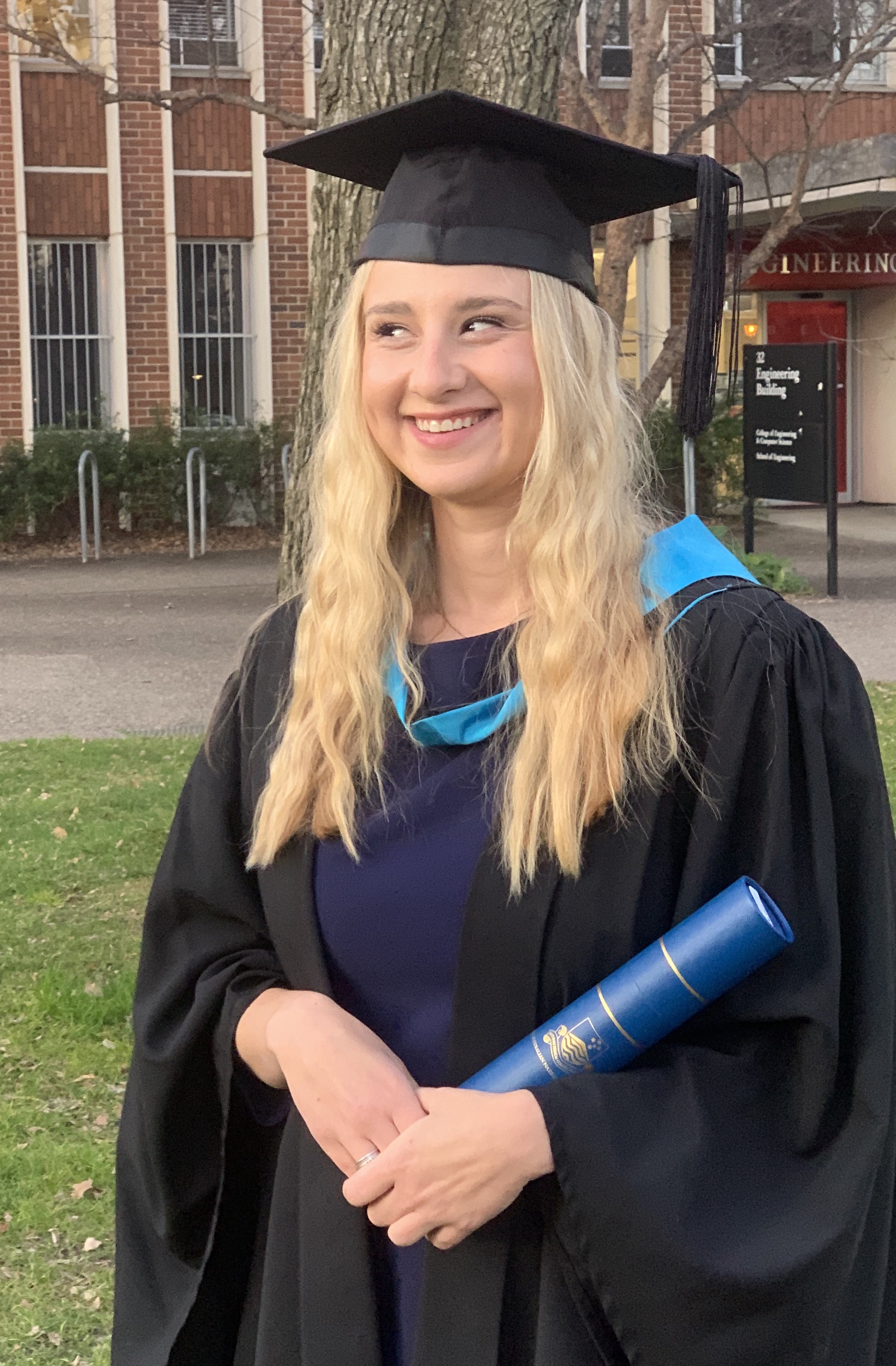
Then there was the letdown. There have been no graduation ceremonies for the past two years, so instead of the Chancellor of the University, it was the postie who handed her the first two degrees. This year, finally, she could have her Honours Degree conferred at a graduation ceremony. It was done with all the medieval pomp and ceremony but with modern touches which included facemasks for all. Academics and graduands alike wore their regalia, including gowns, mortar boards or Tudor bonnets with hoods in the colours of their faculty. I loved watching the new graduates walk up in their academic dress, some with high heeled sparkling shoes, some in Doc Martens, while others wore their sneakers under the age-old attire. Then, as they tipped their hats, purple or pink hair made its appearance to reveal fashionable 21st century students under the ancient dress code. It made me smile to see them express their untamed individuality within the constraints of this formal occasion.

Then it was my daughter’s turn. I was so proud of her accomplishments as she made her way across the stage wearing her stepfather’s RM boots while thinking of her father whose heart would have swelled with pride. Sitting next to her boyfriend, my own heart felt ready to burst as we clapped enthusiastically the moment her name was called, and her achievements were listed.

She has done well. She has done very well. And so, I pray that the two wonderful men who graced our lives far too briefly, continue to guide, and nurture her along the way. As for me, I hope she stays true to herself and never stops listening to that wild call of her heart.

Seppi the crocodile man

My parents were refugees from Hungary. They left their home country in 1956 with my sister who was six at the time. She still remembers running through forests with gun fire echoing around her. They made it across the border to Austria where they were placed in a refugee camp. My parents never spoke about their experiences of 1956 in the same way they hardly ever spoke about the war years unless it was some amusing anecdote. Whatever happened then was in the past and there was an invisible red line drawn across the page to separate it from the present. Everyone in my family abided by this rule. It was only when I began to search for information of these years that I discovered that Luxembourg had accepted 250 Hungarian refugees. My parents and my sister would have been part of that elite group. This had happened four short years before I was born.

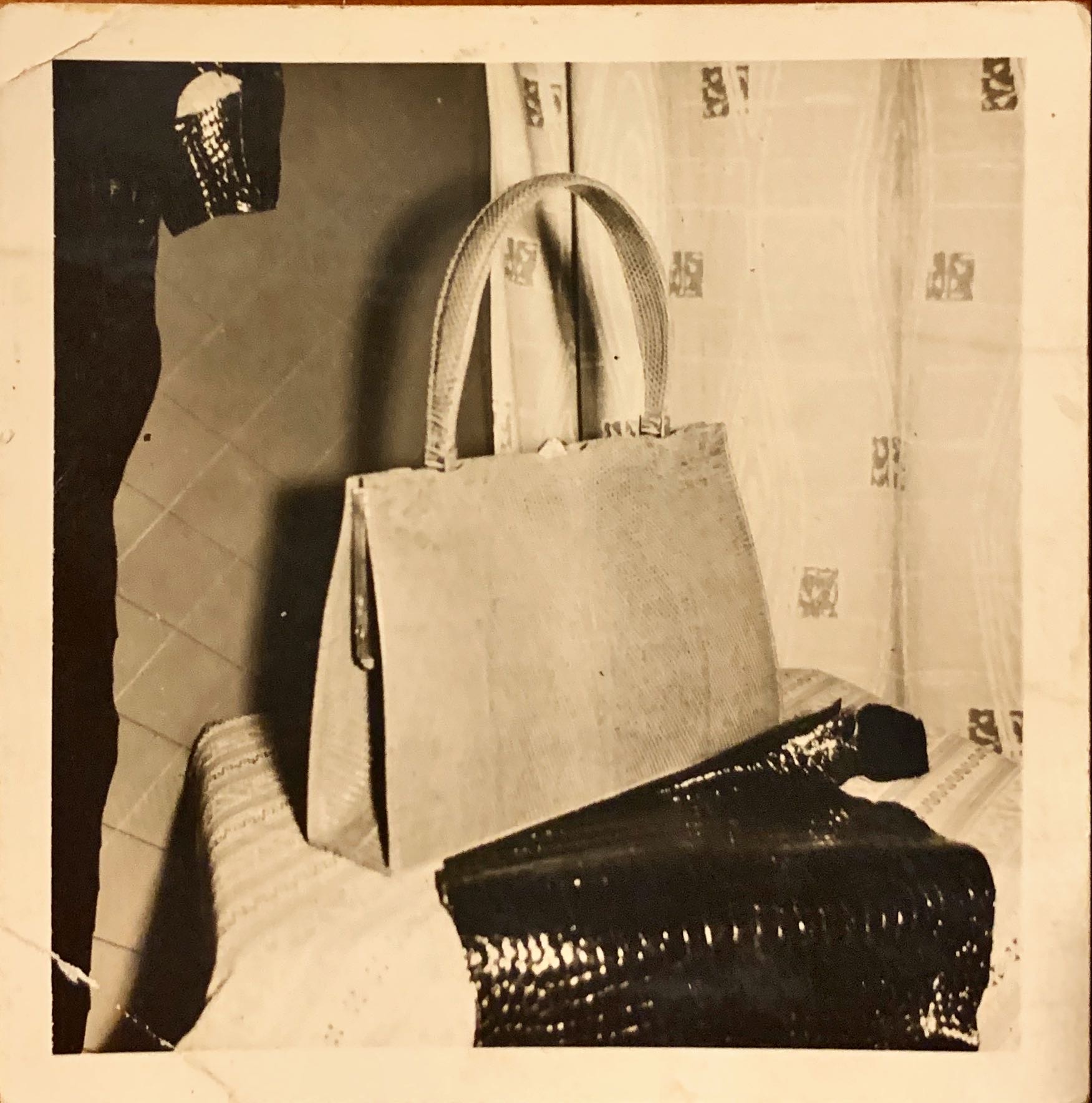
By 1957, Luxembourg could boast that the refugees they had accepted had quickly found permanent employment, specialising mainly in handicrafts. My father was one of these skilled workers. He quickly established himself as a leatherworker who could make bespoke leather handbags of the finest quality. By 1960, he had his own shop which he ran with a silent partner. It was one of the finest boutiques in Luxembourg, specialising in crocodile skin handbags.

The individually crafted handbags he made were placed ever so carefully in the shop window or hung from hooks along one of the wood-panelled walls. A large crocodile skin hung on the opposite side. I loved looking at that crocodile skin and the shapes I could see and feel when I ran my fingers along the bony scutes. I felt the bumpy ridges and smoothness in between. The skin was black and shiny and didn’t look anything like the small stuffed crocodile on the gramophone cabinet in our lounge room. That crocodile was a baby crocodile with short feet and sharp teeth. Its skin was a dull grey and quite bumpy to touch. It was a present from Seppi, the crocodile man.

Seppi only came once or twice a year to sell his crocodile skins and I couldn’t wait until he bounced into the living room, full of stories of the Sahara and the Nile. He spoke of faraway lands in Africa where he saw nothing but sand for days on end. When he was in Africa, he drove a jeep and hunted crocodiles. He told captivating stories about being thirsty and constantly almost running out of water. I sat on his lap and listened to his stories until they mixed with the stories I invented for him. When Seppi was away, I came up with my own adventures for him in that mythical place called Africa. Whenever I saw him, he always chewed gum and I began to save sticks of chewing gum I sometimes found on the kitchen table. I loved Seppi with all my heart and told him that I couldn’t wait to grow up and marry him. He laughed and said,

‘You’ll have to do a lot of growing, young lady,’

and gave me a bear hug before leaving on another one of his long trips. I often thought of Seppi chewing gum as he drove his jeep over sand dunes, looking for the next oasis. At night, I saw the crocodiles he would hunt, swimming in the river of my dreams.

Love Stories

Published by HarperCollins

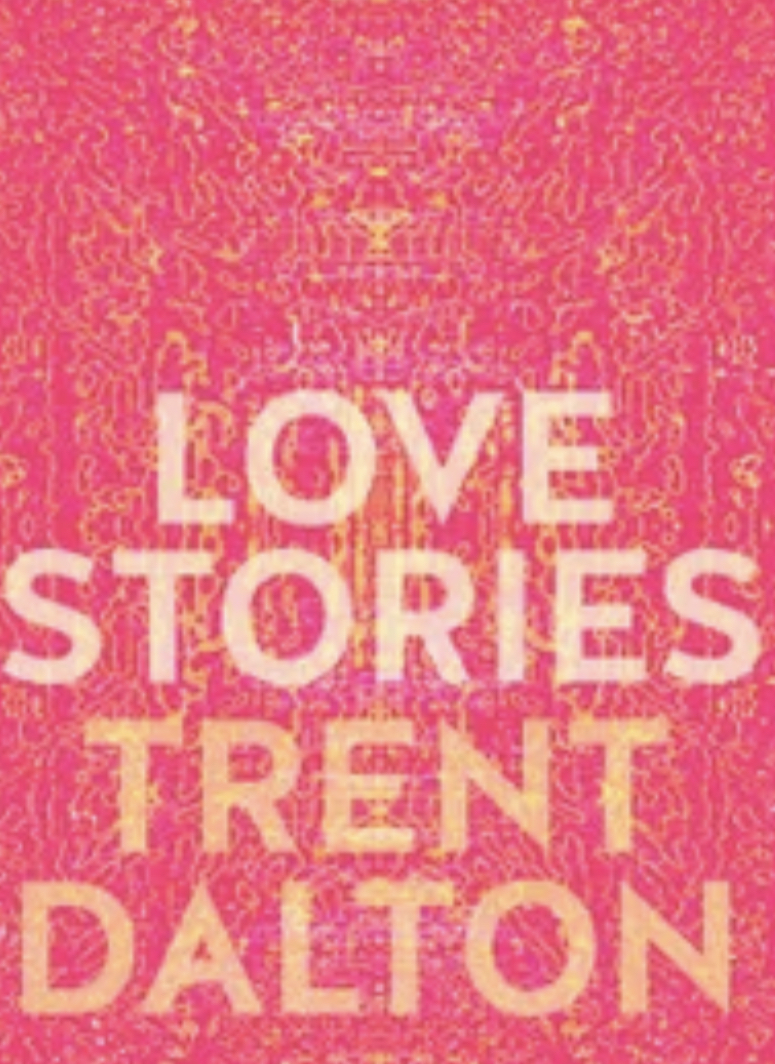
Every now and then, I come across a book I wish I had written myself. Trent Dalton’s Love Stories is a book like that. It rests the simple idea that everyone has a love story to tell. His story starts with an act of love. A close friend’s mother dies and bequeaths a blue portable Olivetti typewriter on which she had typed thousands of letters of protest, determined to make the world a better place. He is touched by the love this woman has shown him and decides to use the typewriter to type up the ordinary stories of love which turn out to be extraordinary in their magnitude.

Dalton takes the typewriter into the heart of Brisbane and sits at a card table with a hand-written sign, asking passers by to share their love stories. And they do! Over a couple of months, he collects their stories, polishes these gems until they spark so much love that my heart aches and tears flow with equal measure of joy and grief.

I listened to the book on Audible on my long drives through the country travelling between schools. I have cheered for bold young lovers and cried at the sublime love stories of couples who have been together for longer than I have been alive. My heart has ached for those who had lost their loved ones and I remembered the men in my own life, whom I have loved just as fiercely.

I was struck by the eloquence of the men and women who spoke candidly about their deepest feelings, who bared their soul to a stranger with a typewriter so that their story could heard. I thank them for it. I fell in love with each one of them.

Dalton cleverly weaves his love for his own wife and children, extended family, and friends into the story. There’s no denying that the book is sentimental, but it is never syrupy or gushing. Anything but. What makes the love stories work is their honesty, however painful that may be. Difficulties are not glossed over, and pure joy isn’t reduced to clichés. The emotions are raw and real, beautiful and tragic, joyous and always, always life affirming.

This is book is a rare gem. Simple yet not simplistic and so full of love that I forgot about the cares of the world for the time that I spent at the magical place on the corner of Adelaide and Albert Streets with Trent Dalton at his Olivetti typewriter.

Adolphe Sax or why I love memoir

Photo by Molnár Bálint on Unsplash

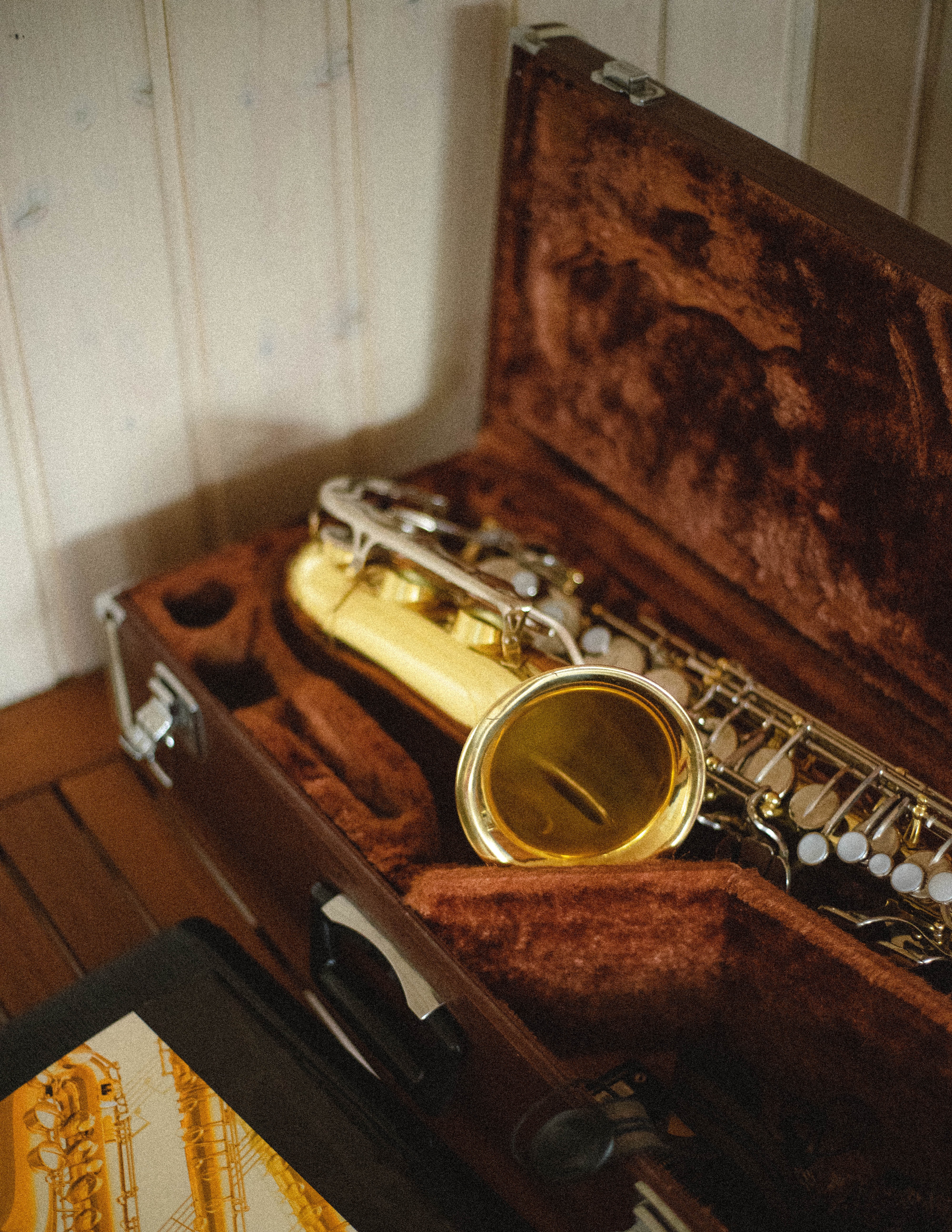
I am fascinated by memoirs and biographies. When reading novels, we understand the need to suspend disbelief, but true stories are often stranger than fiction. Take the life of Adolphe Sax who invented the Saxophone. If an author had made him the protagonist of a novel, we would think they were prone to exaggeration.

Born in 1814 in Belgium, Sax was accident prone. It strikes me as implausible that the man could have lived to the ripe old age of 80. He was hit on the head by a cobble stone which sent him careering into a river, yet he didn’t drown. He somehow survived poisoning several times over after drinking acidic water which looked like milk. He came close to dying several times, sleeping in rooms where furniture varnish was left to dry. He fell onto a hot frying pan, burned himself again in an explosion, swallowed a pin and fell from the height of three storeys onto his head. Yet he survived them all, invented the saxophone, and for his troubles lived out his life in penury. Voltaire may have pulled off such a ridiculous plot but not many others could.

This is what I love about people’s lives. The twists and turns, sliding door moments, disasters and moments of divine intervention that are both implausible and believable at the same time. We trust in them because we have experienced something similar in our own lives. We run into an old friend thousands of kilometres from home, we meet a stranger who is destined to be the love of our life or conversely, an accident turns our life upside down. Our experiences are joyous, humbling, exhilarating, painful and unfair, but they all allow us to learn and grow.

Reading a memoir gives me a window into someone else’s struggle and the lessons they have learnt. Writing my own memoir allows me to reflect on my own experiences and try to make sense of them. We are meaning making creatures and we need our personal narrative to make sense.

Writers’ Hour by London Writers’ Salon

There are many disciplined writers, but I am not one. There have been weeks, sometimes months when all I have done is to agonise about writing but get a single word down. And then there have been times when I have found that magic state of flow. Inevitably, a busy period at work throws a spanner in the works and I fall out of the habit.

A few months ago, my friend Margaret Paton, who single-handedly organises the Central West Writers’ Group, put up a post on our Facebook page.

Writershour.comDaily Writing Sessions. Brought to you by London Writers’ Salon.

I was intrigued. It took me a while to work out that there were in fact several writers’ hours, all held between 8 and 9 am around the world. The one in London is between 5pm and 6pm Australian Eastern time, while the New York hour comes on at 10pm to 11pm. As I am night owl, I tend to catch the New York session but sometimes I am lucky enough to be home by 5 to take part in the London session.

The concept is deceptively simple. Writers log onto Zoom at the specified hour, a host mutes the conversation and welcomes us all. There is an explanation of the process: we are to type our intention for the next 50 minutes into the chat pod and some of these are read out. We may be sitting isolated from each other yet there’s a definite feeling of community. We are all comforted by the couple of hundred people sitting in their own space, all engaged in the writing process and experiencing similar struggles and joys.

The host reads out an inspiring quote, we raise a glass of water or cup of tea and off we go, keeping our cameras on for extra accountability, or not. After fifty minutes, a voice gently invites us back into the ‘room’. We use the chat pod to say how we went, whether we reached our goal for the hour and how we felt. One or two people are randomly chosen to report back before we say goodbye. It is as simple as that.

Since coming across the London Writers’ Salon, I write every day. I am beginning to recognise faces and love the way we encourage each other. I feel part of this wonderful world-wide community and best of all, I have written many thousands of words. I only wish I had come across the London Writers’ Salon when they first went online during lock down. Since then, they have grown exponentially. There aren’t many positives I can point to when it comes to Covid, but the Writers’ Hour is definitely one. I have finally found my community and reawakened my enthusiasm for writing.

For the past three years I have struggled with writing my memoir. Within a few months of regularly attending Writers’ Hour, I have completed my first draft and I’m now using my daily writing habit for editing. I never thought I could say that I’m looking forward to when my book is published. Thanks to the London Writers’ Salon, that day is now within reach.

Janet

Every night I walked to our closest phone box and dialled 809 409, Janet’s phone number. I hopped up on the bench where the phone books were kept and steadied my feet against the opposite glass wall. I was quite comfortable sitting there and could easily talk for three quarters of an hour as long as adults didn’t come along trying to make a call. I ignored them for as long as possible and relied on my dog Scooby to dissuade them from banging on the door. I can’t for the life of me remember the things we talked about, but I suspect we told each other the minutiae of our day and made plans for the Elvis movie we would watch on the weekend. All this was mine to enjoy for 5c.

We alternated the weekends we spent at each other’s places. Janet would come to my place, and I would spend the next at hers. We had to take two trains and walk a good 15 minutes to half an hour at each end to arrive at our destination, but we didn’t mind.

I loved going to Janet’s place. She had a brother who ignored us most of the time, but her parents accepted me into their house and always made me feel welcome. Her mum, Gillian, was the kindest woman I knew and spending time out at Blackburn made me feel part of a real family who did things together. Janet and I walked her dog, a corgi called Melody on Saturday afternoon while her brother Ian, walked his beagle ahead of us.

Janet’s place was ordered and predictable. It felt like a real home. There was a rhythm to the family’s weekends and for the most part, the house was relatively calm and everyone got on. Their lives ran like clockwork. Saturday lunch was a tin of tomato soup with toast and on Sunday there was roast chicken. Janet’s parents were always there in the background, absorbed in their adult world but it felt like a real family. Their house was light filled and comfortable. Janet’s room which would have once been a sunroom, had large windows facing the backyard where majestic Elms provided shade. I loved waking up on the camp stretcher looking out into their lush garden.

My weekends were generally stress free in those early years with Janet, but my weekdays were rather drab and unexciting. I was generally home by six when my father arrived home, he cooked, we ate and then headed to the pub. After that we watched a cop show and went to bed. This was repeated every weekday. Life at Janet’s was quite different.  Their house seemed abuzz with her dad listening to the Goons on the radio every Saturday, her brother Ian playing the Beatles behind closed doors and her mum out in the kitchen humming while she did some household chores. Even the dogs were allowed inside. The contrast couldn’t have been greater to my place, where my dad listened to easy listening radio turned down low while he fixed handbags in the dining room that had become his workshop. Meanwhile I played Elvis on my record player at the other end of the house.

On weekends at Janet’s, we went for drives in the Dandenongs where we often saw lyre birds put on a display in the temperate rainforests. Then there were the tall mountain ash forests that were so very different to the woodlands of my childhood. No matter how peculiar these trees were, I had the same feeling of protection when I was amongst these stately, smooth-bark trees.

Janet’s family actually went out together. I remember going to Belgrave and taking the Puffing Billy to Emerald Lakeside station. The train snaked its way across wooden bridges as we sat in open air carriages that made me feel part of landscape. We walked to the perfect picnic spot, sat under a tree and enjoyed each other’s company. Eucalypts with their pungent citrus like smell permeated the air and I took slow deep breaths to saviour the moment. The sprawling Australian bush with its thick, untidy undergrowth was beginning to grow on me and feel like home.

When Janet came to my place in Elwood, we spent a lot of time listening to records in my bedroom and in the afternoon or evening we would watch a rerun of an Elvis movie. It didn’t worry us whether that was Clambake, Speedway or Viva Las Vegas. We were delighted when Elvis sang a romantic song at some implausible moment to yet another beautiful woman on the screen. I just wished it was me in his arms. We madly wrote down everything that happened in each scene and then dissected the movie scene by scene, talked about the girls he was kissing, the songs he sang and how he moved when he danced. Elvis was an endlessly fascinating subject for both of us.

One Thursday night, our television broke down just before it was Janet’s turn to stay over. As luck would have it, Double Trouble was going to be on TV that Saturday night. Neither of us had seen this Elvis movie as it wasn’t one that graced the screen too often. Looking back, it is not hard to see why. Not even Elvis could make Old MacDonald Had a Farm sound anything but trite. Regardless, we were keen to see it.

‘I know it’s Janet’s turn to come over, Papa, but we really don’t want to miss this Elvis movie. Can I go to her place, please?’ I begged.

‘Can’t the two of you do something else for once?’ he asked, slightly annoyed at my obsession.

‘You know I wouldn’t miss an Elvis movie for anything!’ I said, pleading now.

The next day, my father came home a little later than usual. He was carrying a 13 inch black and white TV under his arm. The screen was much smaller than our last TV but this one was less bulky and more modern. After giving my father a huge hug, I raced out to the phone box to tell Janet the good news.

While I was delighted that my father had solved our problem, I also recognised that this was quite reckless behaviour. It was the kind of behaviour that would have driven my mother crazy when they were still together. I knew we were a couple of weeks behind on our rent at the time and no doubt other bills were piling up. I wondered what he had hocked to buy that TV. Without noticing, I was beginning to take on the financial concerns just like my mother had done while she was with him.