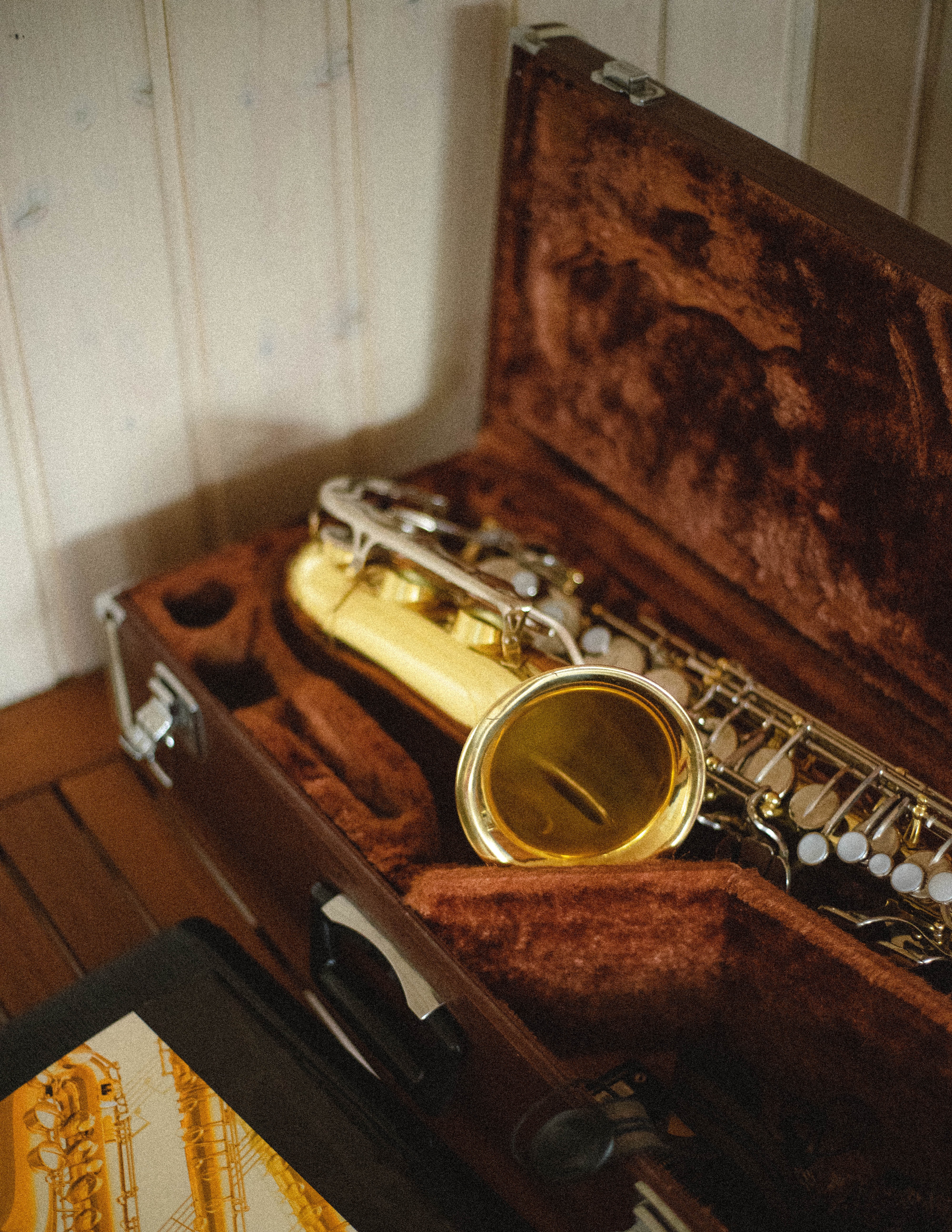
I am fascinated by memoirs and biographies. When reading novels, we understand the need to suspend disbelief, but true stories are often stranger than fiction. Take the life of Adolphe Sax who invented the Saxophone. If an author had made him the protagonist of a novel, we would think they were prone to exaggeration.
Born in 1814 in Belgium, Sax was accident prone. It strikes me as implausible that the man could have lived to the ripe old age of 80. He was hit on the head by a cobble stone which sent him careering into a river, yet he didn’t drown. He somehow survived poisoning several times over after drinking acidic water which looked like milk. He came close to dying several times, sleeping in rooms where furniture varnish was left to dry. He fell onto a hot frying pan, burned himself again in an explosion, swallowed a pin and fell from the height of three storeys onto his head. Yet he survived them all, invented the saxophone, and for his troubles lived out his life in penury. Voltaire may have pulled off such a ridiculous plot but not many others could.
This is what I love about people’s lives. The twists and turns, sliding door moments, disasters and moments of divine intervention that are both implausible and believable at the same time. We trust in them because we have experienced something similar in our own lives. We run into an old friend thousands of kilometres from home, we meet a stranger who is destined to be the love of our life or conversely, an accident turns our life upside down. Our experiences are joyous, humbling, exhilarating, painful and unfair, but they all allow us to learn and grow.
Reading a memoir gives me a window into someone else’s struggle and the lessons they have learnt. Writing my own memoir allows me to reflect on my own experiences and try to make sense of them. We are meaning making creatures and we need our personal narrative to make sense.
There are many disciplined writers, but I am not one. There have been weeks, sometimes months when all I have done is to agonise about writing but get a single word down. And then there have been times when I have found that magic state of flow. Inevitably, a busy period at work throws a spanner in the works and I fall out of the habit.
A few months ago, my friend Margaret Paton, who single-handedly organises the Central West Writers’ Group, put up a post on our Facebook page.
Writershour.com – Daily Writing Sessions. Brought to you by London Writers’ Salon.
I was intrigued. It took me a while to work out that there were in fact several writers’ hours, all held between 8 and 9 am around the world. The one in London is between 5pm and 6pm Australian Eastern time, while the New York hour comes on at 10pm to 11pm. As I am night owl, I tend to catch the New York session but sometimes I am lucky enough to be home by 5 to take part in the London session.
The concept is deceptively simple. Writers log onto Zoom at the specified hour, a host mutes the conversation and welcomes us all. There is an explanation of the process: we are to type our intention for the next 50 minutes into the chat pod and some of these are read out. We may be sitting isolated from each other yet there’s a definite feeling of community. We are all comforted by the couple of hundred people sitting in their own space, all engaged in the writing process and experiencing similar struggles and joys.
The host reads out an inspiring quote, we raise a glass of water or cup of tea and off we go, keeping our cameras on for extra accountability, or not. After fifty minutes, a voice gently invites us back into the ‘room’. We use the chat pod to say how we went, whether we reached our goal for the hour and how we felt. One or two people are randomly chosen to report back before we say goodbye. It is as simple as that.
Since coming across the London Writers’ Salon, I write every day. I am beginning to recognise faces and love the way we encourage each other. I feel part of this wonderful world-wide community and best of all, I have written many thousands of words. I only wish I had come across the London Writers’ Salon when they first went online during lock down. Since then, they have grown exponentially. There aren’t many positives I can point to when it comes to Covid, but the Writers’ Hour is definitely one. I have finally found my community and reawakened my enthusiasm for writing.
For the past three years I have struggled with writing my memoir. Within a few months of regularly attending Writers’ Hour, I have completed my first draft and I’m now using my daily writing habit for editing. I never thought I could say that I’m looking forward to when my book is published. Thanks to the London Writers’ Salon, that day is now within reach.
My mother’s first job in Australia was at the ABC in Ripponlea back in 1972. She worked at the canteen where she served meals, made cups of tea, and cleared tables. My mother often took me to work so she could keep an eye on me. Naturally, I was bored and began chatting to the staff when they came down for their break. It was there that I met Leigh, a young university student doing a work placement over the summer holidays. She took a liking to me, and we spoke about many things that summer, including our love of dogs. Leigh lived with her parents in Ferntree Gully and owned a kelpie.
‘Kelpies are Australian dogs. They’re the best,’ she said. ‘Would you like to come and meet him?’
‘Would I ever!’ I said
‘I’ll have a talk to your mum. Maybe you could come over this weekend to meet him,’ she suggested.
Leigh kept her word and arrived the following Saturday to collect me in her Mini Minor. My parents hadn’t owned a car since I was five and I felt grown up and important sitting in the front seat. At that time, I had seen very little of Melbourne and only knew the places in my immediate environment, places I could walk to easily. We drove for what seemed like hours, down straight roads and through endless suburbs. Finally, we came to a house up on a hill. The driveway was steep and treeless. A sleek brown kelpie ran to meet us, barking and nipping at the wheels. When Leigh stepped out of the car, he could barely be contained. His tail wagged his whole body. This dog was loyal, smart and a whole lot of fun. I wanted a dog just like him.
Leigh and I hatched a plan to get a rescue pup.
‘I won’t be allowed to keep it, Leigh’
‘Leave it to me, I’ll talk to your mum.’
I wasn’t so sure. ‘What if she says no?’
She laughed. ’I’m pretty good at convincing people.’
Leigh worked her magic on my mother, and I was finally allowed to go with her to the Lort Smith animal home in North Melbourne. We drove from the ABC during one of her long breaks. Going in the car with Leigh always felt like an adventure. We drove down St Kilda Road all the way into the city, then past Queen Victoria markets and up Flemington Rd. Everything was so new to me. The modern office blocks on St Kilda Rd, Flinders Street station with its open mouth reminding me of the entrance to Luna Park on the St Kilda Esplanade and the smells wafting from Victoria markets were all new sights and sensations. I could have driven around town with Leigh for hours, but I was anxious to get my new pup.
When we finally arrived, we were taken to where dogs were kept in what looked like large cages. The sound of dogs barking, whining, and howling echoed along the concrete walls. The result was a cacophony of misery. Walking along, I felt as if I were a warden in a prison, just like I had seen on our black and white television set. It was a depressing scene to witness. Dogs came to the front of their cages and pleaded with us for their freedom. I found it hard to meet their gaze. And then there was the foul odour of too many dogs in a confined space. It smelled like wet dog, excrement, and fear. It may have been cleaned regularly but the smell crept into every corner and was impossible to eradicate.
Finally, we came to an enclosure teeming with tiny black and tan pups. The warden with the key opened the gate and we were let in.
‘Go and choose one,’ Leigh said. ’Take your time and choose the one you like best.’
There were about ten puppies in the enclosure. It was feeding time. The pups all ran towards the trough and the strong ones pushed the weaker ones aside. One small pup with a protruding belly was trying to get to the food but was not strong enough to muscle in. It looked sad and forlorn. My heart went out to that pup.
‘This is the one I want,’ I said, pointing at it.
‘Are you sure?’ Leigh asked.
‘Yes, this is the one that needs me.’
The pup was taken for a check-up at the veterinary hospital attached to the facility. The vet looked at us.
‘Are you sure you want to take this one? It looks as if he could have distemper, and he may not survive,’ he said gravely.
‘He is the one I want.’ I said with tears welling in my eyes. ‘If he dies, at least he will be loved until that time.’
The vet looked apologetically at Leigh.
‘We’ll take him,’ she said.
‘Look, if he dies in the next couple of weeks, we’ll give you another one,’ said the vet. What will you call him?’
‘Scooby,’ I said. ‘Like Scooby-do.’ It had been my favourite cartoon when I lived in England.
Leigh paid not only for the dog but also for his vet bills. It must have cost her a packet. Despite everyone’s concerns, Scooby pulled through and lived to a ripe old age.
My mother stopped working at the ABC and Leigh went back to university. After that summer, I lost contact with her. Even now, so many decades later, I wish I could express my gratitude to her for the kindness and generosity she showed to that little migrant girl in her fledgling months in Australia.
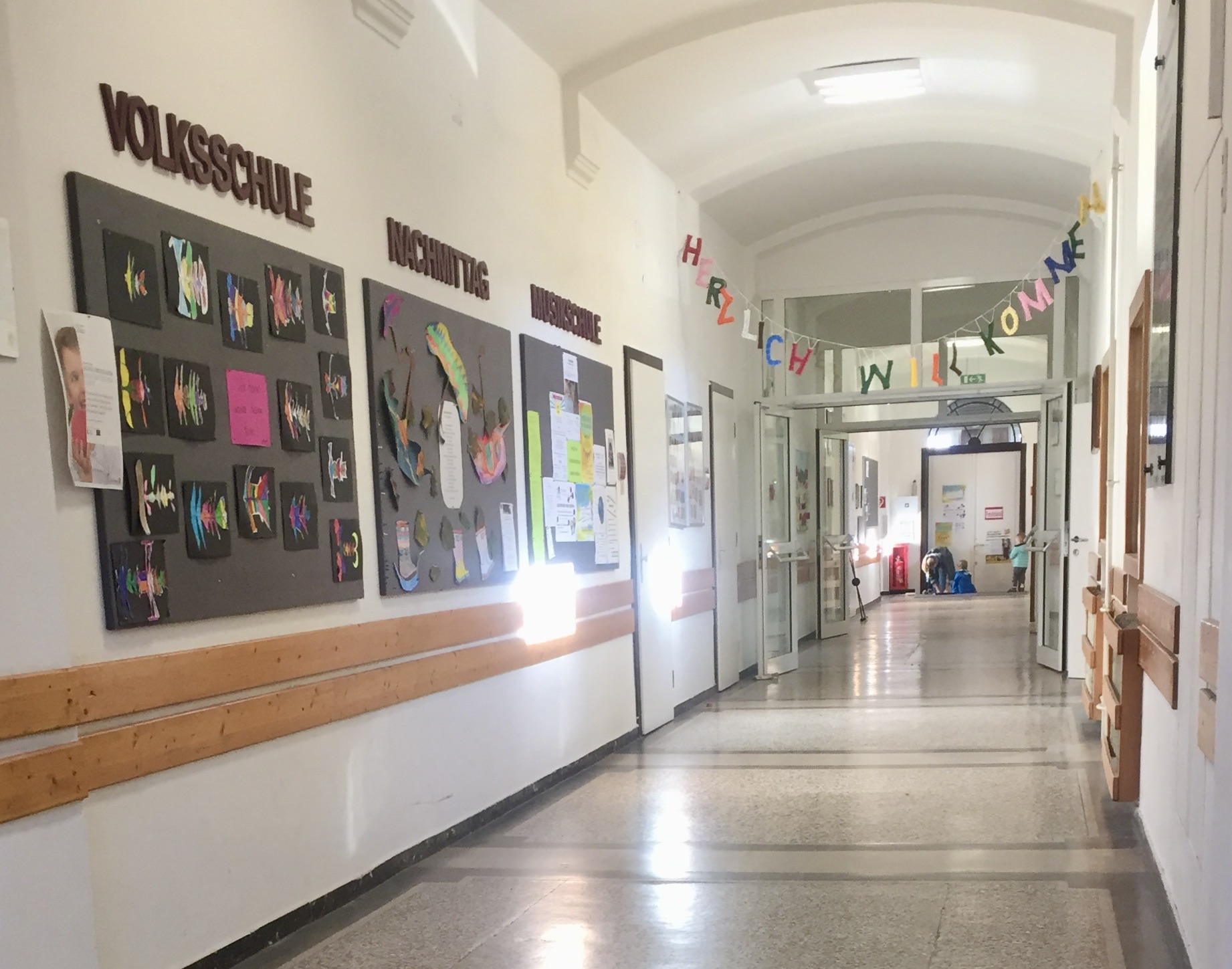
I want to go in but I can’t quite bring myself to do it. I’m standing in front of my old primary school in Pressbaum, a country town not far from Vienna. I feel foolish standing at the threshold and when someone finally comes out, I sneak in and take a few steps into the hallway. The thought of announcing myself to the office fills me with dread. What would I say? And who would care that I attended this school in the late 60’s and have traveled back to see it? I clearly hadn’t thought this through. What did I expect when I planned this pilgrimage? I take a photo and quickly leave before anyone can ask me what I am doing loitering in the corridor.
At the bus stop, I check the time table. I am the only one waiting until a boy, perhaps nine or ten, comes along and greets me. He too is waiting for the bus and without any hesitation he starts to chat. The boy tells me all about his school and how much he loves the place. I reveal that a long time ago, I too used to go to this school. I don’t go into details and he doesn’t ask. He is happy with his own chatter. ‘The music room is now a classroom,’ he tells me, ‘And the climbing wall had to be dismantled and rebuilt. Nothing stays the same,’ he says, shaking his head knowingly. I suppress my smile and encourage him to keep talking.
Clearly, he takes me for a local. At times he speaks so fast, I have to ask him to repeat what he says. This doesn’t worry him, and he continues to tell me about his life in broad strokes. He tells me that next year he will have to leave this school and he doesn’t want to go. ‘All the teachers here are nice and the school up the road is huge.’ I get the feeling he doesn’t cope well with change. Then, apropos nothing, he asks whether I’m not too hot in my leather jacket. ‘I am,’ I say and put the jacket in my lap.
The boy returns to his subject, telling me about all the changes he has seen at the school since he started there. I have an urge to tell him my story but don’t want to burden him with what happened long ago. There are so many things I could say, but I don’t. I remember visiting Sacre Coeur, the school he will attend next year. It was going to be my school too. As it turned out, a much bigger move awaited me. Australia, 16,000km away, was unfathomable and there was nothing that could prepare me for it.
As he speaks, I think about my old school I had come to visit. I can’t quite answer why I couldn’t bring myself to announce my presence. Maybe it was that I was searching for traces of that young girl I had left behind but realised that they had long been erased. So instead, I took the obligatory photograph; two dimensional and lifeless. I had made my pilgrimage and was now ready to leave. Then, a chance encounter with this boy. In him, I recognise the innocence of a bygone era. And as he speaks, I finally get a glimpse of her – that young girl of long ago, reflected in his clear, bright eyes.