It takes a village

My granddaughter was born two and a half months ago. She’s generally a ‘good baby’ (as if any baby could be bad), but she does struggle with sleep. In this regard, she reminds me of my daughter as a baby. She was a wakeful child, who would become overtired and then unable to sleep at all.

Now, of course, my daughter wishes she could sleep. Even a ten-minute nap is bliss, and she catches rest whenever she can. Her husband is a hands-on dad, which means both of them are running on empty. Nothing can prepare you for parenthood. It can only be understood through living it. I look at them and marvel at their resilience, but I also recognise that fine line between coping and breaking point.

One unfortunate inheritance I’ve passed on to my daughter is chronic migraines. She remembers me lying down with a bucket beside the bed, waiting for her father to come home and take over the evening routine. It probably happened once a week, certainly often enough to leave an imprint. Like me, she can only lie down, hope to sleep, or ride out the waves of pain. I know what she’s going through, but all I can really do is empathise, bring her medicine, prepare food, and care for the baby so she can rest.

Today she called me in desperation, asking where I was. After hours of trying to settle the baby with multi-day migraine, she had reached her limit. She did the wisest thing she could, put the baby down safely and walked away to her bedroom. I remember the guilt of those moments, when I too had to step back. Yet that distance, that breath of space, is what saves both mother and child. No-one can prepare you for motherhood and the contradictions it carries: joy and frustration, love and exhaustion, light and shadow.

She’s fortunate to have a close friend nearby who stepped in until I arrived. Together we cared for the baby, giving my daughter the reprieve she needed. Watching her, I thought about how difficult it can be raising a child in a nuclear family. How much gentler it might be if grandparents, aunts and uncles lived nearby, ready to lend a hand or a listening ear. There is much to be said for the extended family networks that are woven naturally into other cultures. As for us, we simply muddle through, doing our best, one tired, love-filled day at a time.

What Might Have Been, What Still Is

It is seven in the morning and I’m walking my dog. There are a few people about; a Border Collie here, an Oodle there, a Kelpie in the distance. As I come to cross path, an older couple appear without a dog in tow. This seems odd. At this time of the morning, most people walk briskly with their dogs, giving them a quick outing before work. Over time, most of these people have become familiar faces which I acknowledge with a nod and smile, or with whom I exchange a comment about the weather.  

Ever curious, my eyes follow the older couple as they walk in-step, hands in pockets, elbows lightly touching. As I watch from a distance, my heart aches for the familiarity and affection I sense from their movements. In their steps, I glimpse the path I imagined for myself long ago. This is how I always wanted my old age to be; my husband and I, walking along with a dog running ahead, enjoying companionable silence, or the conversation that makes up a lifetime shared.

Watching them, my heart aches but there’s also joy in my sadness. Joy, because they beat the odds of divorce, death or the malignancy of indifference. They have not ended up in a law court fighting out a bitter dispute or learned to loathe each other in silence, bickering away the fleeting moments of their lives. I celebrate this couple and all those who stood the test of time, those who have learned to love through pain, heartache and oh so many joys that life has to offer, to finally arrive at old age together, whether it be by luck, good fortune or good health. And as I watch them go, I know without doubt and without sentimentality that this would have been us, had death not severed my beloved from my side.

Three Beating Hearts: The Making of a Family

Some women are naturally clucky. They coo over babies, look at them wide-eyed and are in awe of the miracle of life, so tiny and perfect. I am not one of these women. I am much more likely to coo over puppies to reach out to stroke them than I ever am to hold a baby in my arms. Hard to admit but true.

When my daughter was born, I was completely in love the moment I set eyes on her. Finally, I understood what came naturally to other women. But for me, I only had eyes and love for my daughter. She was the most perfect creature I had ever seen, and I was instantly filled with a love so strong that I knew I would do anything for her. That feeling has never left me.

When my daughter fell pregnant, I wondered how I would react to the baby once it was born. Would I be as madly in love with her as I was with my own daughter? I honestly didn’t know. Of course, I knew I would love and protect her, but would it be the same as when my own child was born? After many months of waiting and wondering who this new member of the family would be like, the day came quicker than any of us anticipated.

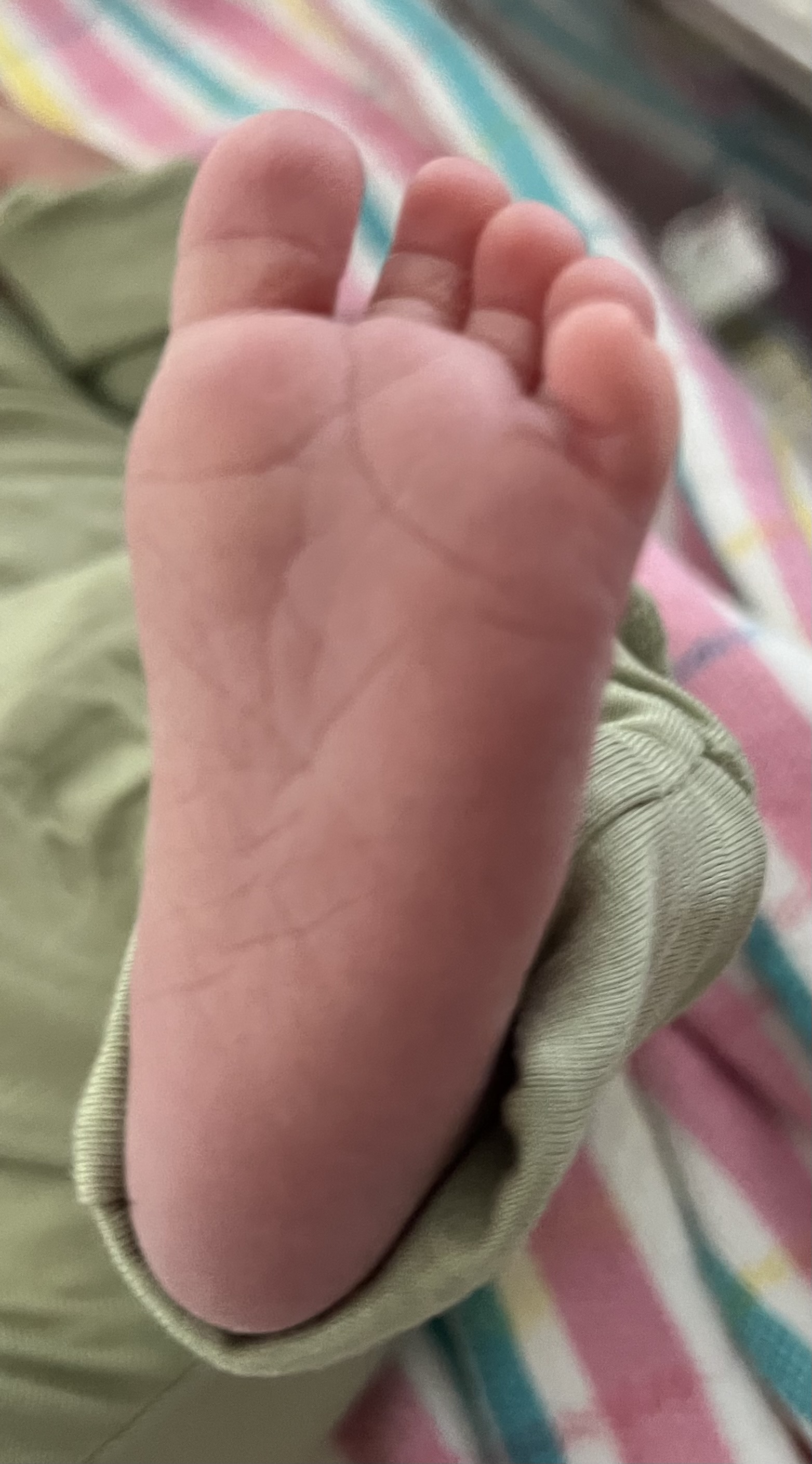
I arrived at the hospital just before my daughter was brought back to the ward, baby against bare chest, vernix protecting her daughter’s delicate skin. She looked so peaceful and beautiful, angelic even. Yet my eyes moved quickly to the face of her mother, my own daughter whom I love above all else. In turn, her eyes were fixed on her baby daughter and I recognised that fierce look of love, a feeling we now both share, generations apart.

She was looking out for her daughter, while I was looking out for mine.

Later in the week, I stayed at the hospital for a night so her husband could get some rest before bringing his family home. I am ashamed to say that I was of very little help that night. I heard the baby cry but could not rouse myself to get up. My darling daughter, however, was awake and doing all the things she had only learnt in the past couple of days. She was a natural. At six in the morning, I finally picked up her baby and settled her next to me so her mother could have a rest. For two blissful hours, I dozed with my granddaughter in the crook of my arm.

Her father came back in the morning and at first couldn’t find his baby. When he saw her snuggled into my arm, he laughed and came to retrieve her. He is besotted with his daughter, proud and protective. I see my husband’s love for our own child reflected in my son-in-law’s eyes. He will be a perfect father.

I am so proud of this little family. They work together, look out for one other and wear their boundless love with pride. And so, my own love expands beyond what I ever felt possible to envelope these three magnificent individuals who have become their own little family.

The Quiet Cost of Disconnection

A few weeks back, I drove 330 km to attend friend’s birthday lunch. I hadn’t seen her for about six months and was delighted to surprise her on the day. I also caught up with a couple of friends I hadn’t seen for years on that weekend. Since then, my life has revolved around work, and I have barely seen anyone. Usually, I don’t mind at all, I’m a bit of a loner and rarely feel lonely. Lately though, there’s been a niggle gnawing within me, a slight feeling of dissatisfaction, which I’m finding disconcerting.

I talk to lots of people during the day, so it isn’t a lack of contact. However, most of my interactions are transactional and I don’t feel connected in any meaningful way. Today, it occurred to me that I know very little about the private lives of my colleagues and they know very little about me. Whilst I don’t expect to have all my social needs met at work, it is where I spend a large chunk of my time.

We always think about the quality of our diet and exercise as the main risk factors for our health. Recently, studies have identified another risk factor, which could be equally as important to longevity and health – the importance of social relations. This may be because the support that friends offer can lower our stress hormones, it can even help regulate insulin and help with our gut function. It reminds me of studies that have been done on positive coronary effects of purring cats on laps. We all need companionship and physical touch.

What matters most is the quality of our interactions. Happy marriages can help prolong life; unhappy ones can lead to poor health outcomes. While not causal, there’s a definite a link. This also applies to friendships. The stronger and more harmonious our friendships, the happier and healthier we tend to be.

But it isn’t just the social interaction that’s been lacking from my life. I haven’t done much of the two things that keep me centred. The first is walking and the second is writing. Before work, I only fit in 15 to 20 minutes of a walk and, now that winter has arrived, I mostly get home after dark. I miss my hour-long stroll after work and so does the dog. No such excuses for my lack of writing.

After a few weeks of missing the online London renegade writers’ group, I finally logged on today. We wrote, we chatted, we laughed and cheered each other on. Such a simple step and I already feel better. Two hours later, I’m buoyed, smiling, and content with my lot once again. And here’s the blog post to show for it.

A bubbly legacy

For 20 years, I didn’t drink a drop. Then, out for dinner with a man who would grace my life for four short years, I succumbed to a glass of red. It was delicious. Tart, intense and astringent, I enjoyed every mouthful.

I have never been a heavy drinker. Admittedly, I went through episodes of binge drinking in my early twenties, but that was mainly to overcome social anxiety. Once inebriated, I took advantage of my impaired control and began to enjoy parties, rather than be the wallflower hanging out in the kitchen counting tiles. But that was a long time ago.

When I began to drink again, I would only do so at dinner and never at every dinner. Then Roger introduced me to the glass of champers on a Friday evening to celebrate the passing of another week. His philosophy was simple – celebrate if you have had a good week and celebrate if you made it through a tough one. Either way, you are a winner.

When he ‘shuffled off this mortal coil’, as he liked to quote, I was left with an unusually large glass vase filled to the brim with champagne corks. It was years’ worth of good and not so good weeks he had lived through, with and without me. I neither wanted to keep them, nor throw them away. In the end, I reached a compromise, took a photo of the full vase and kept perhaps 30 of the corks. They remind me of a life well-lived.

Now I carry on the tradition, at least most weeks. I can’t drink a bottle of bubbly on my own, but I can enjoy a piccolo, which is 200mL or almost two standard glasses. It is a perfect amount. I raise my glass and salute Roger, and the passing of another week. Cheers!

Christmas Cake Pt 2 – recipe

(Based on David Herbert’s fruitcake)

Ingredients:

250g block of unsalted butter

1 cup brown sugar (adjust to taste)

¾ cup of brandy

½ cup of water or orange juice

1 kg of mixed dried fruit

100g mixed peel

100g of crystalised ginger (if your recipient likes a bit of a bite), if not, replace with 100g of more fruit or glace cherries or whatever you know your recipient likes

5 well beaten eggs

2 decent tablespoons of treacle

Zest of one lemon and two oranges (you can use the juice instead of water)

1¾ cups of plain flour

½ cup of self-raising flour

1 teaspoon of bicarb

2 teaspoons (or more) of mixed spice

200 g almonds (half to go into the cake and half to decorate)

A heaped cup or two of love and appreciation

Method:

Bring the person to mind for whom you are baking.

Use a large pot.

Chop the butter and heat with sugar, brandy, water or orange juice, mixed dried fruit, ginger, and mixed peel. After it comes to the boil, simmer and stir. Cook on gentle heat for at least 10min.

While mixture cools, preheat the oven to 150 Celsius. Grease or spray a 23cm round tin or use a square tin of roughly the same proportions. Line with baking paper and leave a generous amount extending above the tin.  Chop about half of the almonds.

Once the mixture is cool, add eggs, treacle, lemon and orange zest. After stirring, sift in the flours, bicarb and mixed spice. Stir until all the flour is absorbed. Add the chopped almonds and stir. Add the heaped cupful of love and appreciation and keep stirring.

Spoon the mixture into the prepared tin. Make the top of the cake nice and flat and decorate with the remaining almonds. I usually make a flower pattern. Fold some brown paper into thirds and wrap it around the cake tin so it sits a good 5cm or so above the top of the tin. Tie with twine. Bake for 2 to 2.5hrs. Turn the cake after about an hour so it cooks evenly. Check with a skewer after 2hrs. Cool on a rack and wrap in foil. Write the person’s name on the foil and give thanks for their presence in your life.

Christmas cake

My mother-in-law, Jean, introduced me to fruitcake. I had tried it before but could never quite understand what the fuss was about. The fruit cakes I had eaten up to that point were shop bought and mass produced. Pretty ordinary, I thought. And they were. When Jean began sending us fruit cakes several times a year, I began to appreciate a good fruit cake made with brandy, soaked fruits and nuts. She liked to experiment with various recipes, and I loved them all.

One day, Jean announced that she would no longer bake cakes. She was getting old and found the process increasingly difficult. I decided to step into the breach and began sending her the cakes she had taught me to make. In time, I perfected a fruit cake with chopped almonds that is just perfect. And so I carry on the family tradition of making and giving home-made cakes.

This year, I decided to bake fruit cakes for many of my friends. Over a period of about a month, I made 11 large cakes and more than 20 small, muffin-sized ones. The only restriction I placed on myself was that I wouldn’t post any. The cost of postage has become prohibitive over the years.

Making one cake after another took on a rhythm of soaking fruit, zesting oranges and lemons and watching the mixture froth when I added bicarb. I stirred in the flour and poured the mixture into baking tins which I then surrounded with brown paper and tied with twine. This helps to cook the cake evenly and stops the top from burning. Finally, it would go into the oven for a couple of hours during which I had time to start the next cake.

What I enjoyed most about this process was that I always had the person in mind for whom I was baking. I thought about each individual, their special qualities and the joy they brought to my life. It felt like a version of a Buddhist loving kindness meditation practice. I dedicated time to think about each person, added a little more of this, a bit less of that to suit their taste and wished them well for the coming year. I found it a lovely practice to think about each person, rather than bake all the cakes and allocate them randomly. This way, I could add a couple of magic ingredients to the mix – gratitude and love for recipients of each cake.

Love Stories

Published by HarperCollins

Every now and then, I come across a book I wish I had written myself. Trent Dalton’s Love Stories is a book like that. It rests the simple idea that everyone has a love story to tell. His story starts with an act of love. A close friend’s mother dies and bequeaths a blue portable Olivetti typewriter on which she had typed thousands of letters of protest, determined to make the world a better place. He is touched by the love this woman has shown him and decides to use the typewriter to type up the ordinary stories of love which turn out to be extraordinary in their magnitude.

Dalton takes the typewriter into the heart of Brisbane and sits at a card table with a hand-written sign, asking passers by to share their love stories. And they do! Over a couple of months, he collects their stories, polishes these gems until they spark so much love that my heart aches and tears flow with equal measure of joy and grief.

I listened to the book on Audible on my long drives through the country travelling between schools. I have cheered for bold young lovers and cried at the sublime love stories of couples who have been together for longer than I have been alive. My heart has ached for those who had lost their loved ones and I remembered the men in my own life, whom I have loved just as fiercely.

I was struck by the eloquence of the men and women who spoke candidly about their deepest feelings, who bared their soul to a stranger with a typewriter so that their story could heard. I thank them for it. I fell in love with each one of them.

Dalton cleverly weaves his love for his own wife and children, extended family, and friends into the story. There’s no denying that the book is sentimental, but it is never syrupy or gushing. Anything but. What makes the love stories work is their honesty, however painful that may be. Difficulties are not glossed over, and pure joy isn’t reduced to clichés. The emotions are raw and real, beautiful and tragic, joyous and always, always life affirming.

This is book is a rare gem. Simple yet not simplistic and so full of love that I forgot about the cares of the world for the time that I spent at the magical place on the corner of Adelaide and Albert Streets with Trent Dalton at his Olivetti typewriter.

Memories of love

My father in the early 1940’s – he would have been 99 on Feb 4, 2022

My father was a good-looking, debonair man. He flirted with ease and knew how to flatter women. He liked telling stories of his youth’s exploits. For him, women represented a source of fascination, conquest, and pleasure. The exception was Agnes, his first wife.

Throughout my childhood, a slightly tattered, black and white photograph of Agnes leant on a mirror in my father’s heavily draped room. She was a slender woman with shoulder length wavy hair who was destined to have her smile set for posterity. The photo was taken in Budapest, sometime in the late 1940’s.

I would look at this picture for hours and wished she had been my mother. Instead, Agnes died of TB. Penicillin could have saved her, if only the drug had been available in post-war Hungary. In the picture she is in her early twenties, full of life and pregnant with her first child.

Agnes was the only woman who had rejected my father’s advances. I don’t think she was playing hard to get, she just wasn’t interested in his games. They fell in love, married, and started their life together in a city that lay in ruins. In their short life together, she doted on him. Whatever wish passed his lips, she would try to fulfil. My father recounted a story of craving doughnuts in the middle of the night. Agnes got out of bed to make yeast dough so he could have his favourite jam-filled, fried doughnuts for breakfast. I wished I could have had a mother like her. And he did too.

She fell pregnant and they were looking forward to starting a family. Agnes loved the feel of the child growing within her but developed a persistent, blood speckled cough. Doctors confirmed the worst but only to my father. He set about trying to get penicillin from the West. Relatives who had emigrated were begged to help. None did. The cough persisted and she grew weaker. It became clear that she would not see out the pregnancy. The doctors enlisted my father to persuade Agnes to abort the child they both longed for. I don’t think my father ever forgave himself for that treachery. Agnes couldn’t understand why he was so adamant but yielded to his wish. This may have extended her life by a few short weeks.

My father described his anguish when she died. He walked out of the hospital and straight into oncoming traffic. He didn’t notice the screeching cars or people yelling at him. It is hard to know how he went on with his life. He had lost his son and his wife within a few short weeks of each other. No-one would ever be able to fill that emptiness. Only drinking somewhat numbed his pain.

My father died a long time ago and Agnes is suspended in an eternal autumn day. She is a hand-me-down memory, a two-dimensional figure etched on brittle, glossy paper. Yet I think of her more than I do of my father. Or maybe I think of my father as I struggle to be the woman he wanted me to become. Agnes is the looking glass, the flawless woman, the perfect mother, the ideal lover, the unattainable Madonna. The mother I never had. The mother I still strive to be.

Zoe

Zoë and her bunny

‘No, she’s not a groodle, or a cavoodle, she’s a standard poodle,’ I explain patiently as someone stops to enquire about Zoë’s breed. ‘I always thought poodles were small dogs,’ is the usual reply. I sigh, go into detail about the different poodle sizes and temperaments before concluding that the standards are the best poodles by far. They are.

I have had minis and even a rescue toy poodle. Except for one of the minis, none of the other dogs have come even close to the intelligence, elegance, and devotion of the standard. Zoë is not a lap dog nor is she particularly cuddly, but she is constantly by my side without getting under my feet. If I’m working in the kitchen, she leans into me. It is her way to claim me as her own. Her bark would deter most people from entering the house, but she is friendly with strangers, as long as I am relaxed in their presence. She is the perfect companion.

Zoë is well known around the village. People may not remember my name, but they know hers. If we stop at the corner store for milk, she is often rewarded with a piece of bacon from the proprietor. Children come and pat her and visiting tourists stop to have a chat. Zoë knows how to wheedle her way into most hearts.

One of her endearing qualities is her love of toy bunnies. Whenever I bring a new squeaky animal into the house, Zoë leaps with joy and plays for hours, biting obsessively until she finds the squeak she is looking for. We then play a game of fetch which will be repeated every morning until the squeak dies and it is time for a new bunny. She is like a young child at Christmas taking her toy to bed and protectively putting a paw over it. Her devotion to her bunny melts my heart.

A less endearing quality is her love of chasing real bunnies. Selective deafness is a well-honed skill and when she sees a rabbit, no amount of calling, cajoling, or yelling will stop her. She is off through the thick scrub but she ain’t never caught a rabbit…  What she does come back with is a coat full of burrs which take the best part of an afternoon to remove – one by one, tugging them loose from her woolly coat. Zoë is never sorry for her disobedience; she always returns with her tongue out, eyes sparkling and tail wagging. It is hard to stay annoyed with such a display of exultation.

You can see standard poodles are hardly lounge lizards. While they don’t need a huge amount of exercise, they do love a good run. They will chase balls, their favourite human, and of course other animals. I have seen Zoë keep up with kelpies and border collies at the dog park. There’s an elegance to her run, a regal poise, and a graceful stretch of the legs as she flies through the air, ears flapping behind her. Out on a field, she is cheeky and playful, bursting with energy and joie de vivre. Poodles are quintessentially effervescent party animals. They are a pure joy to watch when playing with other dogs.

I never have to worry about doggy smells in the house, nor are there any dog hairs to sweep. As poodles don’t shed, even people with allergies can safely own one. They are clean dogs but do require regular clipping. If you don’t, before long, they will resemble your favourite reggae singer without any of the musical talent. I don’t recommend home haircuts; dog clipping is much more complicated than you think. It is well worth the money to employ a groomer every six to eight weeks. Zoë isn’t ever coiffured to resemble topiary at Versailles. After a trim, she simply looks like a well-heeled, short haired dog.

I can’t imagine my life without Zoë. I never feel lonely with her in the house, and she motivates me to go for long walks which are good for us both. Zoë can read my mood and responds accordingly. I would go so far as to claim that she has more EQ than most people. I have often thought, she would make a great therapy dog. But then, I believe that every dog has the capacity to be a therapy dog. Zoë just happens to be mine.