Mornings, Magpies and Me

Some children are up at 6 a.m. full of beans, ready to play. They wake their bleary-eyed parents with laughter, chatter and joie de vivre. I was never one of these kids. I’ve been a night owl from the day I was born.

My mornings have always been hard. Getting out of bed is hard. Jumping in and out of the shower is hard. Facing breakfast is hard. Anything beyond a grunt is hard. The only thing that isn’t hard is taking the dog for her morning walk.

Although I bitterly resent it before I go, the moment I’m out in the park the day changes. I remind myself this is worth getting up for: the cool air on my face, the well-trodden track under my feet, and the dog cantering ahead like a racehorse.

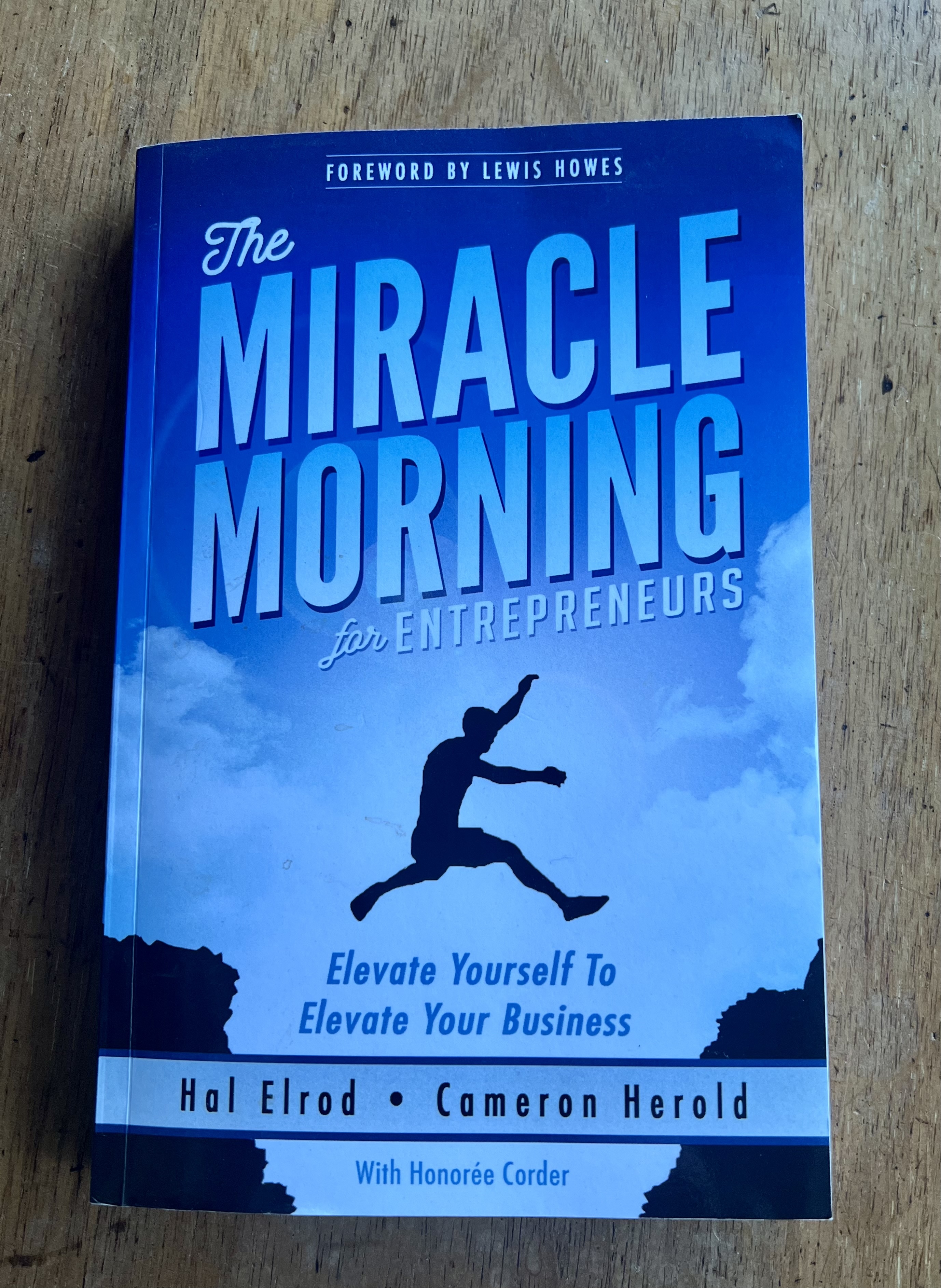
By this time, I’m smiling and have found my voice. I even enjoy meeting fellow walkers and saying hello. Yet the 45 minutes before the walk have been hellishly difficult. Why can’t I just skip the moaning and groaning and get to the good bits straight away? I’ve read The Miracle Morning, and each time I go back to it, I get all fired up about embracing the new habits it suggests. My enthusiasm, however, wilts the next morning when I actually have to put those lofty ideals into practice.

I now leave my phone in the kitchen and set my alarm so I have to get out of bed to turn it off. Great in theory. In practice, I’ve been known to yell ‘Siri, stop!’ loud enough for my phone to obey. When that hasn’t worked, the rebel in me has simply waited out the alarm with the doona pulled over my head. I can be ridiculously obstinate about getting up.

I’ve tried Mel Robbins’ five-second rule, but if you’re not committed, you won’t do it. I understand the theory (I always understand the theory) and for a while, when I’m all enthusiastic, it works. But inevitably, I slip back into bad habits.

This morning, I set my alarm 15 minutes earlier than I needed to and another for the right time. It let me hurkle-durkle for a while, letting thoughts amble lazily through my mind. With enormous effort, I stumbled out of bed and into the shower. Only when the warm water trickles down my face do I truly wake up. Until then, I’m a zombie condemning everything that crosses my path to hell and damnation.

I’ve always admired people who wake up ready to face the day. The world seems built for morning people. Life would be so much easier if I fell into line. But today, I’ve had a small win. I was out the door 20 minutes earlier than usual, and it made a huge difference. The dog had a much longer walk and I wasn’t in a hurry to get back. So instead of rushing, I enjoyed the magpies warbling and spotted a kookaburra perched on the overhead wire. I’d have missed this beautiful kingfisher on any other day. If every morning started with a kookaburra, I might stop arguing with my alarm. Might.
Magpie Mayhem

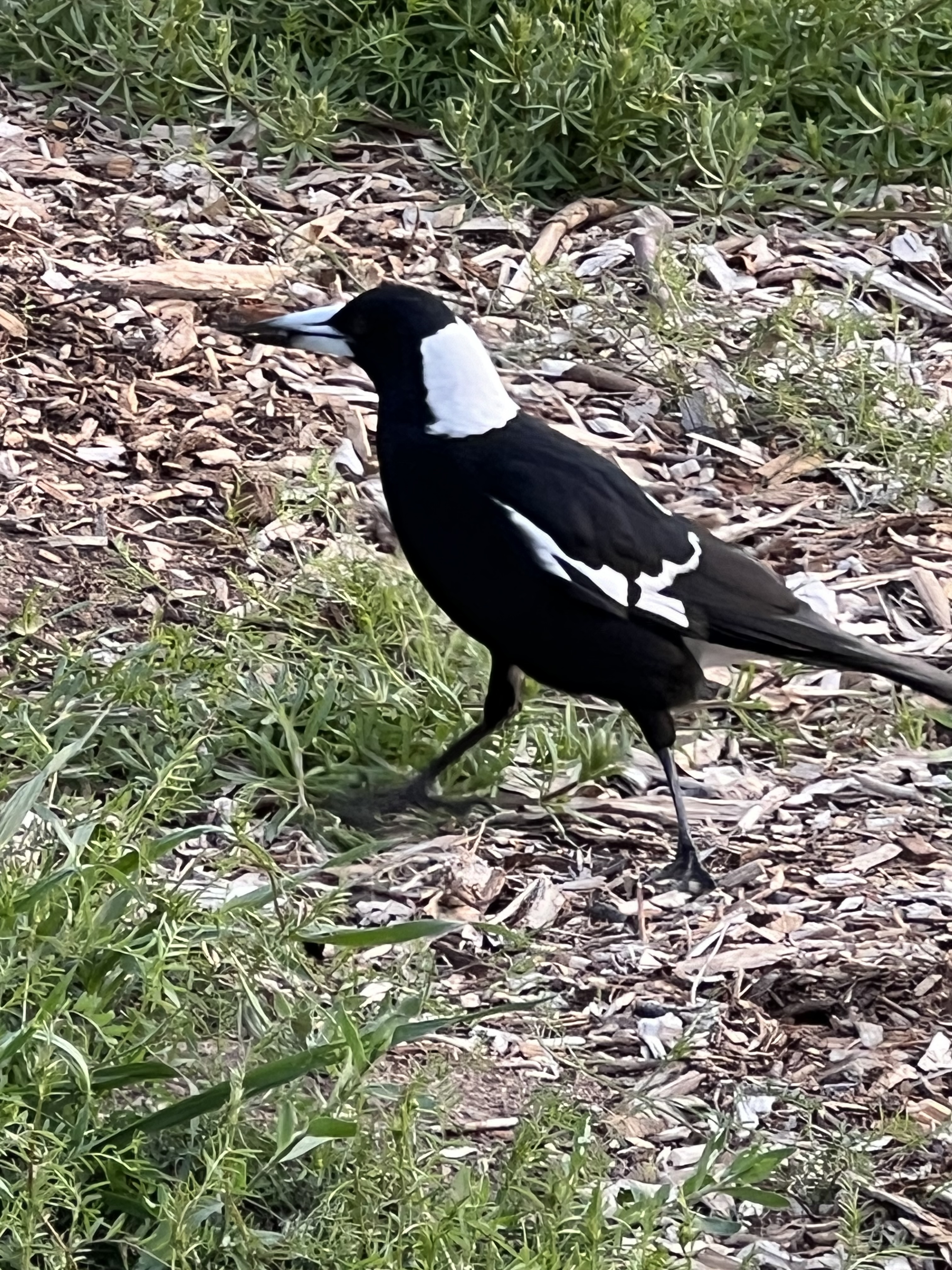
It’s magpie swooping season. In the past two weeks, I’ve been pecked on my head three times and my dog has had Northrop B-2 Spirit magpies stealth-bombing her from behind. Always from behind. She doesn’t move from my side now when we go near trees, and she looks up nervously at her sworn mortal enemies.

For nine months of the year, magpies are a joy in the neighbourhood. They warble in groups of two or three every morning and know us all by sight. They have excellent facial recognition, and recognise everyone in their patch, which is roughly the size of 30 suburban blocks. Magpies know exactly who is naughty or nice, and they pass on this information to other birds.

I always imagined their warble as a joyous expression of welcoming a new day or singing because they are happy. It turns out I was completely deluded. It takes a lot of energy to sing and warble, which is why most songbirds only do it when they are trying to attract a mate. Magpies, however, continue to sing each and every day and it turns out that it is purely to protect their territory. That lovely warble is hurtling expletives at other magpies within earshot. ‘Stay away or else!’

When I lived in the country, three magpies came to the bird feeder most mornings. They’d eat seeds I had put out for parrots, then throw their heads back in what I thought was appreciation and warbled. I referred to them as the three tenors. I must have watched too many Disney movies where all animals are anthropomorphised and given cutesy human traits, for it never occurred to me they were warding off other birds from their find.

Many years ago, I heard an ornithologist interviewed on ABC radio. He explained that 90% of magpies show no aggression at all and that it is only 10% of males who cause all the trouble during mating season. Tongue in cheek, he claimed Australia would be uninhabitable if all magpies swooped. After my last attack, I can only concur. Still, 10% of magpies are a sizable number. Of these aggressive males, half will attack only pedestrians and/or dogs, approximately 16% will attack only cyclists, 16% will go for posties and 18% will randomly attack anyone they come across. These figures are not made up; attacks have been extensively researched and quantified.

Magpies only ever swoop from behind and only if you are in the vicinity of a nest that has chicks in it. All attacks happen within 50 to 100m of a nest, so the sensible thing to do is to avoid the area once you’ve been swooped. When the chicks finally leave the nest, the male returns to being a placid bird until the following year. The best thing you can do in the meantime is to look at your attacker; a magpie won’t ever attack if it can see your face. The worst thing you can do is to run for your life, because then it will surely come after you. If you are on a bike, get off and walk the next 100m until you are in the clear. And yes, the cable ties on helmets work, not that it will stop the swooping, but at least it stops the frightening experience of a beak making repeated contact with the helmet.

For the next two months, I am avoiding the beautiful gums in my neighbourhood. Still, I walk the dog, greet any magpies I meet in a friendly tone and stay out of their territory. There will be time enough to enjoy a shady walk under the spotted gums once spring has passed. In the meantime, I remind myself that I am the intruder here.

Dakers Oval – Blayney

A small patch of mossy grass stands apart from weeds around a fenced oval. On the spur of the moment, I take off my sandals to feel the spongy softness under my soles. It has been a long time since I have taken off my shoes to walk in grass. In my own backyard there are bindis, thistles and countless other weeds that have invaded the lawn. But here, on this small patch, I stand and feel a spongy softness under my soles. I am reminded of times in my childhood when I would find a clearing in the woods and lie in a meadow of wildflowers, protected by tall trees and the birds of my youth. There were the chatty finches, the trill of blackbirds, monotone thrushes, and the incessant hammering of the woodpecker. I close my eyes and listen. Here there are magpies warbling to one another, repeating a melody that echoes across the field. They are accompanied by the incessant chirping of crickets, who provide a high-pitched drone above which the birds improvise their songs.

It is hard to believe I am standing no more than a hundred meters beside a large carpark and local supermarket. The dogs I am walking sniff the ground and roll with unbridled pleasure in a smell only they can identify. Their joy is palpable as they leap and chase each other around a field beyond the cricket pitch.

There are not many small places like this left where dogs are welcome. Ironically, it is more difficult to find open spaces for dogs in the country than in the city, where dog owners congregate in groups with their much-loved pooches in suburban parks. Still, I’m happy to have my own company without the intrusion of other peoples’ chatter.

Between the fences and the farms just beyond this small green space is where the Belubula river meanders, making its way to feed into Carcoar dam and flow on to Canowindra and eventually into the Kalari or Lachlan River, near Gooloogong. One of my dogs throws herself into a creek that feeds into this river, not for a swim but to wade and cool down. She heaves herself back up the bank, shakes and rolls in the dirt to dry off. For a moment I think of the back seat of the car, but I could never deny her the pleasure of a dip on a hot day.

Near the entrance to this precious piece of council land, I find discarded cans of ‘Mother’ and the plastic packaging of Arnotts Kingston biscuits. On previous walks I have seen young workers from the supermarket sit here to have their break, smoking, laughing, enjoying a little freedom. I’m saddened that they don’t look after this place, a place of refuge from stacking shelves or serving on checkouts. After all, they choose to come to here rather than the carpark where there are plenty of seats close by. Something must draw them towards this spot, surrounded by trees, birds and the burbling creek. Are they hoping that someone like me comes to pick up their rubbish or are they content to sit in their small, soiled nest?

I walk twenty meters to place the rubbish in the bin provided and decide not to let their actions befoul the pleasure of this scenic stroll. After all, it is a magnificent morning to be walking on this lush land.

Bird Song

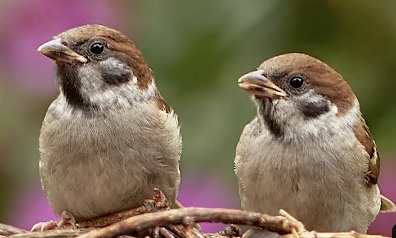
One morning while having breakfast, I tuned in to sparrows chirping. They like hiding in an overgrown hedge out the back providing them with ample shelter. It is never one sparrow that sings but a host of them. Their simple song, made up of only a few notes, is sung mainly by the male to attract females or fend off invaders. I can’t help but smile at their incessant bright chirruping. It isn’t very loud and provides a pleasant soundscape as I sip on my cup of tea.

Soon another sound gets my attention. The blackbird’s song is one of my favourites, mainly because it reminds me of my childhood. I even named a dog after this bird. While its song varies for each verse, it always seems to start on the same mellow note. Their phrases are short and often include ‘djuk djuk’ clucks. No other birds have the same slightly melancholic effect on me.

Scientists have found that listening to bird songs is conducive to mental health. It surprises me that we need this confirmed through research. This revelation reminds me of the recent discovery of ‘silent walking’. Those brave enough to try this new trend have reported a reduction in feeling distracted. Who would have thought. It turns out that being in touch with nature is calming.

I can now hear my three tenors warble at the font of the house. This is what I affectionately call the magpies that come to feed on the front veranda. Magpies often get a bad rap for being aggressive. In a small town like Millthorpe, they know all the people and can distinguish between those who treat them well and those who do not like their company. I am often rewarded for being kind to them with their mellifluous warbles as they sit on the railing, necks craned, beaks raised skyward.

Nature plays a vital role in our quality of life especially for those who live in cities. We are seeing an increased willingness to consider the health of urban environments through improving biodiversity. I’d like to see a greater variety of birds in the heart of Australian cities beyond pigeons, gulls, and ibises.

Of course, not all bird sounds have a positive effect on us. Some can be downright irritating. Take the Koel for example. To be subjected to the coo-eee call of a Koel rising in pitch and fervour is akin to torture. The kindest thing I can say about them is that I am grateful that they are migratory birds. I’d much rather listen to a flock of local sulphur crested cockies. Noisy as they are, I have a soft spot for these larrikins. They are mischievous, funny creatures who relish play and pleasure. I love the way they hang upside down from the gutter to look through my window or find novel ways to open my garbage bins to see what is hidden inside. Curious, cheeky and utterly uncontrollable, they are the epitome of the rebel without a cause. Cockatoos often wreak havoc, yet I can never be cross at them for long. Theirs may not my favourite bird call but they make me laugh like no other bird can.

There is so much to learn from pausing to listen to our natural environment. Tuning in to bird songs helps me get out of my head and pay attention to my surroundings. I focus wholeheartedly on listening rather than looking. It’s a skill many of us neglect.