Dawn, Dusk and the Dangerous Crossing

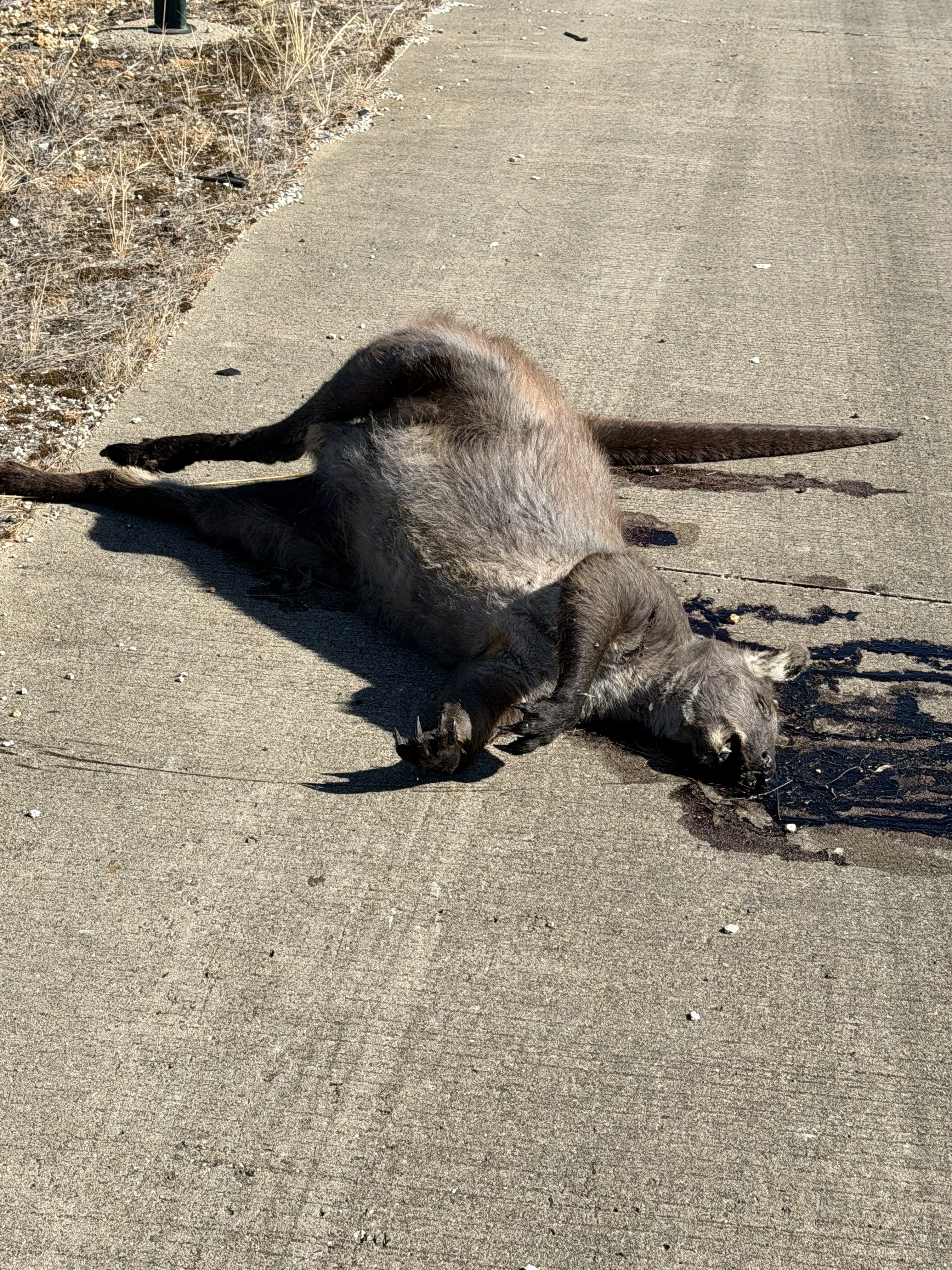
When friends come from overseas, they often bemoan that they only ever see dead kangaroos on the side of the road but never live ones. I share their unease about this road toll that seems to be accepted as a fact of life in Australia.

Until I moved to the country, I didn’t realise just how many animals are killed daily. Now that I live in Canberra, known as the bush capital, I encounter dead kangaroos, birds and wombats almost every day on my way to work. People in cars drive by, drive over, or drive around the carcasses. The animals decompose on the roadside, are eaten by crows or become odd-shaped patches on the bitumen.

According to a conservative estimate, ten million native animals are killed on roads each year. This doesn’t include foxes, rabbits or mice. As there is no national database, this figure is extrapolated from reported cases to wildlife rescue organisations and insurance claims. Many animals would simply disappear into the bush and die there.

In some places, efforts have been made to reduce this carnage. There are rope bridges for possums to cross over highways, and I’ve seen tunnels under sections of road for wombats, echidnas and other animals. However, these measures are few and far between. High fences have been erected around some roads to stop kangaroos accessing them, but these are extremely expensive to build and maintain.

Most wildlife is killed at dawn or dusk when our native animals are on the move. They’re often attracted to the greener grass at the side of the road or they’re crossing to reach water, food, or they may be looking for a mate. Their territory is often fragmented, which forces them to attempt crossings simply to get where instinct tells them to go. Barriers in the middle of the road may protect cars from oncoming traffic, but they also trap animals on the roadway with vehicles whizzing past.

My heart aches every time I see a dead animal on the side of the road. I’m shattered by the sight of a dead mother kangaroo and a joey a few metres further along, and I think about a dead bird’s mate waiting for its return. It’s easy to become desensitised when you see carcasses every few metres along a stretch of road. It becomes part of the everyday experience of driving to work or going on a road trip. But I don’t ever want to get desensitised or accept that this is how it has to be. We are needlessly putting endangered species such as the Tasmanian Devil and koalas at further risk of extinction.

While I don’t have an answer, I can only plead with drivers to slow down when animals are most likely to be on the move. If safe to do so, stop and let that echidna cross the road, or move that turtle in the direction it’s facing. If you happen to see an injured animal, call Wildlife Rescue Australia on 1300 596 457.

There are no roadside memorials dedicated to this daily slaughter. But I have my own small ritual when I see a dead animal on the road. I put a hand to my heart and breathe a breath or two in acknowledgement of their life and of the destruction we humans continue to bring upon them.

Lighthouse reflections

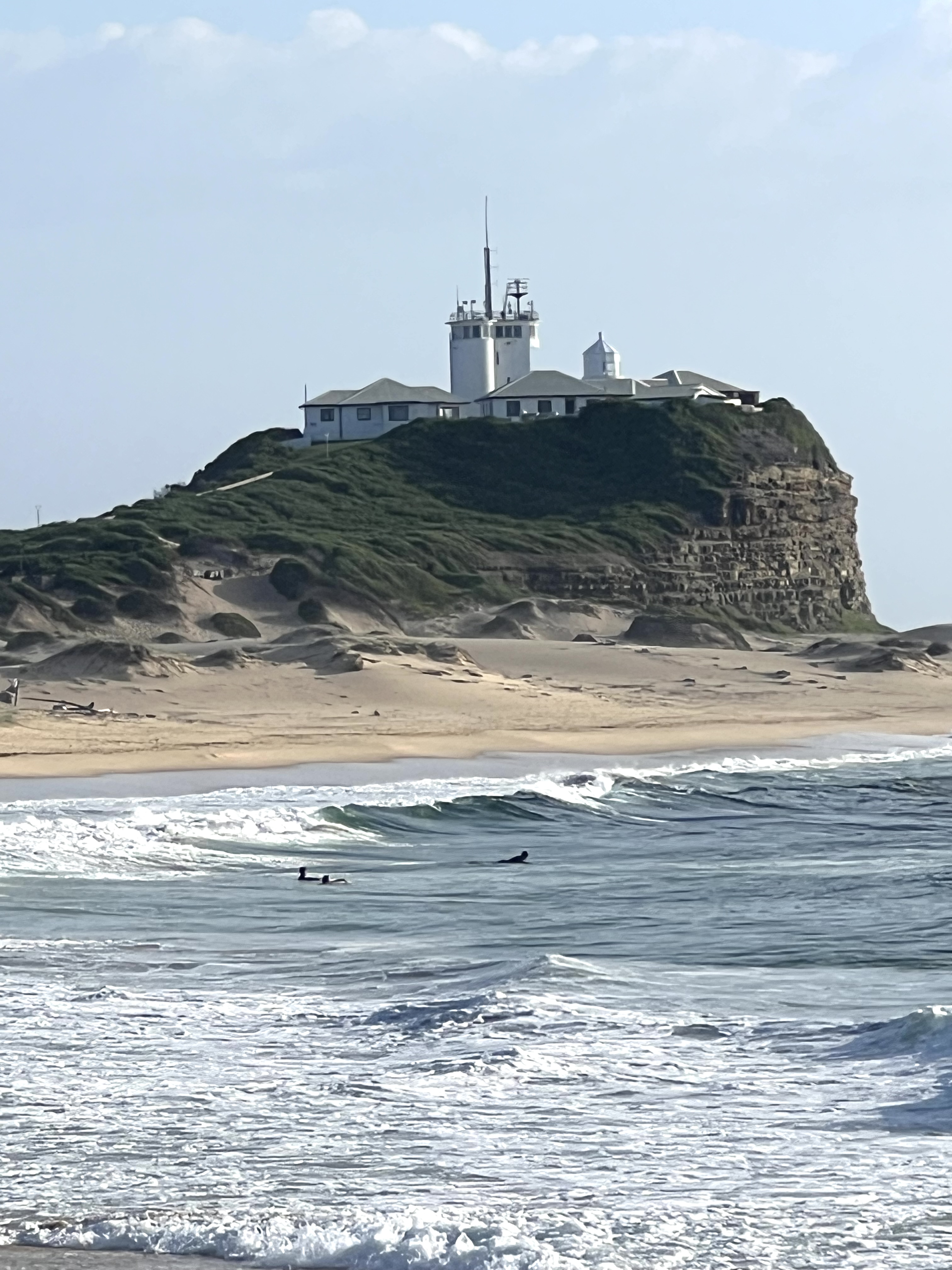
Some things are seriously worth waiting for. Like the Artist residency at Nobby’s beach, Newcastle. I was counting down the months, then the weeks until it was finally upon me. Five glorious days to spend on my memoir that has been sitting on a shelf for the past year, patiently waiting for me to come back and give my undivided attention.

There were eleven of us at the lighthouse. Some writers, some artists. Several had returned for the second time and were delighted to meet up with old friends. Two of us came from Canberra and, to my surprise, there was a large Melbourne contingent. One younger woman had grown up at the lighthouse as her father was the last signals operator before that job too became automated. We loved hearing stories about the people who lived there and the history of each of the rooms where we worked. For her, it was a chance to paint the lighthouse and its surrounds which had played such a significant part in her early life.

There is something magical about lighthouses. They are often metaphors for safe passage, guidance, and protection. They offer illumination for the dark nights of the soul and are a beacon of hope. In a port city like Newcastle, this lighthouse has the important function of guiding vessels into the harbour and up the Hunter River.

Before I arrived, the lighthouse became the beacon guiding me to cross the finish line of the year with a sense of achievement. It didn’t disappoint. I found it easy to get into flow and felt focused for hours on end. Many of us met at 12.30 for lunch in the common room, enjoyed each other’s company, and went back with a fresh burst of energy for the afternoon session. By the end of the week, I cut 21 000 words from my manuscript. I consider it a boon for my future readers. The engagement with the work has also rekindled my enthusiasm for the project.

The knowledge that Nobby’s lighthouse is one of the oldest operational lighthouses in the country made it feel like a workplace rather than some anachronistic holiday destination. I felt connected to both its current significance and its historical legacy.

Back in 1854, it first guided commercial shipping and 88 years later, it became important for military operations during WWII. The three small cottages erected on the site and these were used by defence staff during the war. An unexploded shell fired from a Japanese submarine damaged one of them.

Various lighthouse staff occupied the cottages after the war until the late 1990s. Lighthouse Arts, which is an initiative of the Hunter Writers’ Centre, now uses these cottages to hold exhibitions and offer artists and writers a space to create.

The area where the lighthouse is located is now known as Nobbys-Whibayganba headland. So finally, there is recognition of the Traditional Custodians, the Awabakal people and their deep cultural connection to the land, saltwater and the Dreaming.

I am grateful I could nurture my calling on this spiritually laden Country. It gave me much needed clarity and purpose. As such, I am already planning my next sojourn.

If you feel you would benefit from having a week to commit to your creative project, apply at https://hunterwriterscentre.org/2024/11/28/lighthouse-arts-residencies/  

We may even meet each other there.

Magpie Mayhem

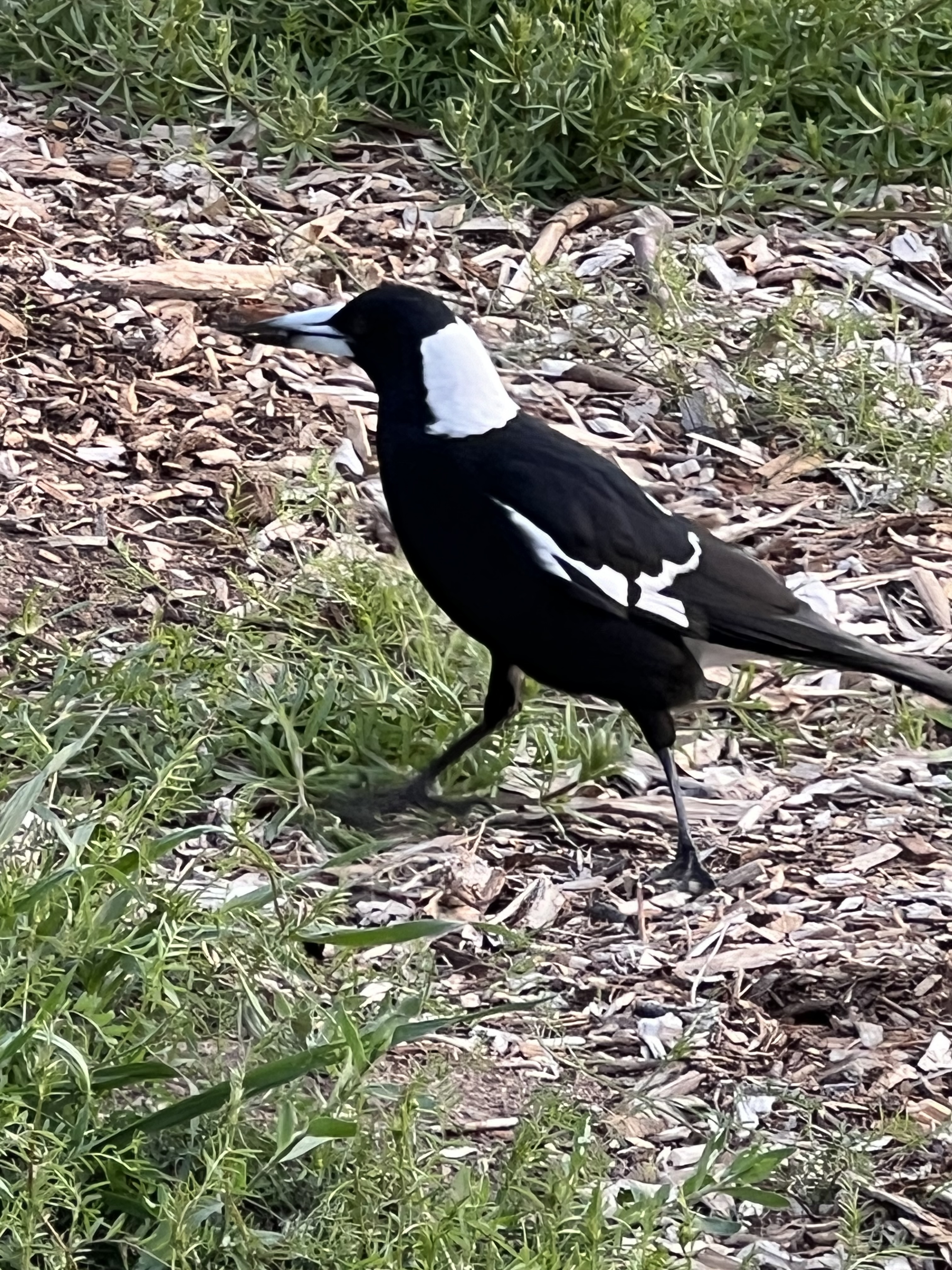
It’s magpie swooping season. In the past two weeks, I’ve been pecked on my head three times and my dog has had Northrop B-2 Spirit magpies stealth-bombing her from behind. Always from behind. She doesn’t move from my side now when we go near trees, and she looks up nervously at her sworn mortal enemies.

For nine months of the year, magpies are a joy in the neighbourhood. They warble in groups of two or three every morning and know us all by sight. They have excellent facial recognition, and recognise everyone in their patch, which is roughly the size of 30 suburban blocks. Magpies know exactly who is naughty or nice, and they pass on this information to other birds.

I always imagined their warble as a joyous expression of welcoming a new day or singing because they are happy. It turns out I was completely deluded. It takes a lot of energy to sing and warble, which is why most songbirds only do it when they are trying to attract a mate. Magpies, however, continue to sing each and every day and it turns out that it is purely to protect their territory. That lovely warble is hurtling expletives at other magpies within earshot. ‘Stay away or else!’

When I lived in the country, three magpies came to the bird feeder most mornings. They’d eat seeds I had put out for parrots, then throw their heads back in what I thought was appreciation and warbled. I referred to them as the three tenors. I must have watched too many Disney movies where all animals are anthropomorphised and given cutesy human traits, for it never occurred to me they were warding off other birds from their find.

Many years ago, I heard an ornithologist interviewed on ABC radio. He explained that 90% of magpies show no aggression at all and that it is only 10% of males who cause all the trouble during mating season. Tongue in cheek, he claimed Australia would be uninhabitable if all magpies swooped. After my last attack, I can only concur. Still, 10% of magpies are a sizable number. Of these aggressive males, half will attack only pedestrians and/or dogs, approximately 16% will attack only cyclists, 16% will go for posties and 18% will randomly attack anyone they come across. These figures are not made up; attacks have been extensively researched and quantified.

Magpies only ever swoop from behind and only if you are in the vicinity of a nest that has chicks in it. All attacks happen within 50 to 100m of a nest, so the sensible thing to do is to avoid the area once you’ve been swooped. When the chicks finally leave the nest, the male returns to being a placid bird until the following year. The best thing you can do in the meantime is to look at your attacker; a magpie won’t ever attack if it can see your face. The worst thing you can do is to run for your life, because then it will surely come after you. If you are on a bike, get off and walk the next 100m until you are in the clear. And yes, the cable ties on helmets work, not that it will stop the swooping, but at least it stops the frightening experience of a beak making repeated contact with the helmet.

For the next two months, I am avoiding the beautiful gums in my neighbourhood. Still, I walk the dog, greet any magpies I meet in a friendly tone and stay out of their territory. There will be time enough to enjoy a shady walk under the spotted gums once spring has passed. In the meantime, I remind myself that I am the intruder here.

Weather Whiplash

I must have blinked and missed it. A week ago, night-time temperatures were in the single digits but today spring has arrived and daytime temps are in the twenties. Trees that seemed dormant a few days back are suddenly blooming. Not just one or two trees, but rows of trees along streets that appeared bare the last time I looked.

Officially, spring is at least another week away, yet Sydney basked in 27 degrees today. This past year has been the second warmest on record, but fortunately rainfall has been average, at the very least in the Eastern states. Luckily, because bushfire season is starting earlier each year and dry vegetation acts like kindling.

For the 16 years that we lived in the Blue Mountains, every spring brought with it that heart-in mouth feeling as fire trucks raced by. My daughter developed a keen sense of bushfires. She can smell one miles away. This is the inadvertent training young children get who live in fire prone areas. We saw the destruction around us with alarming regularity and knew several people who lost their homes. I never knew the full extent of the effect it had on me until I left.

Unfortunately, it is expected that we will have to endure more heatwaves, extreme conditions in summer and increasingly hazardous weather conditions earlier than ever before and not just in Australia. We will all have to learn mitigation tactics and put an end to being complacent about our impact on the planet. It is high time we stop talking about the weather and work together to actively improve the climate.