When a Stranger Calls Your Name

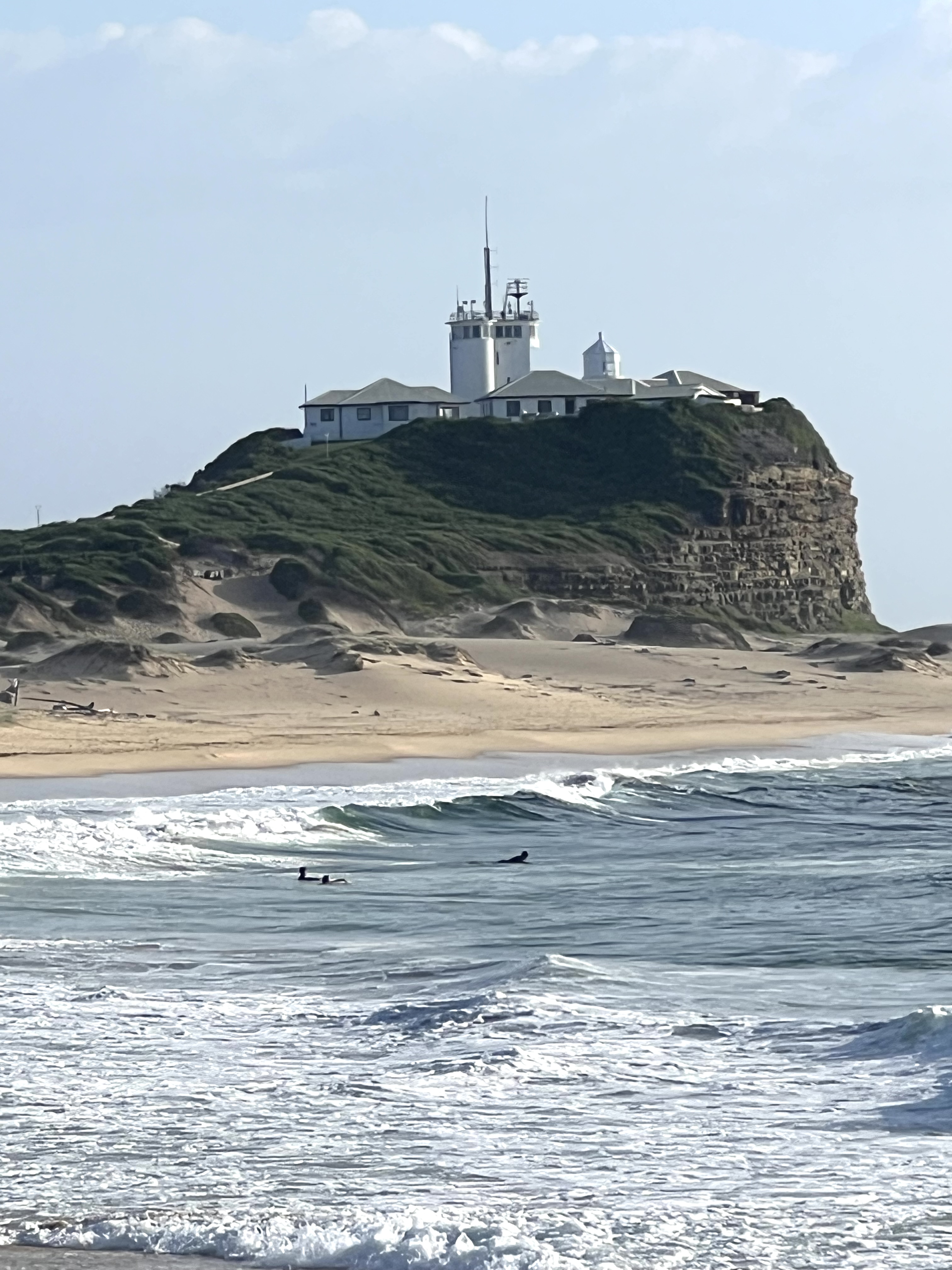
Photograph by John Harding originally posted on Friends of Watson Greenspace Facebook page

It takes about a year for me to feel that I have arrived in a new place. I have moved cities often enough to recognise this pattern. Sometimes waiting for that moment feels like an eternity, as it did when I first moved to Sydney while other times, it feels as if it has taken no time at all. Canberra falls in the latter category.

While I have felt at home in my new place very quickly, I didn’t know anyone besides my daughter and her friends when I moved. Then, a couple of months later I met my first friend at the dog park. She lives on the same street as I do, and we meet up for drinks or dinner every now and again.

I am known at the local shop but not by name. People are more likely to say hello to my dog Zoë who wears her name on her harness than they are to say hello to me. Of course this is very common. Even Markus Zusak says that when he is out without his dogs, he becomes invisible to people on the street.

Can you imagine my surprise when a man with a camera hanging from his neck called out to me, ‘Are you Viktoria?’ It turned out, he was the local wildlife photographer who posts the most stunning photos of birds, dogs and kangaroos that visit the nature reserve across the road from me. I have been liking his posts for months and occasionally writing a comment, especially when he posts shots of tawny frogmouths. He must have looked at my name and found a picture of me. Now, he kindly showed me the tree where they were roosting, and I saw the three babies with their parents with my own eyes. It was a truly awe-inspiring sight, and I was grateful that he shared his knowledge of birds freely.

I thanked him and continued on my way. Zoë was getting impatient for her walk. However, after about 200m we were stopped again. This time, an older woman called out, ‘excuse me but do you have a friend in Sydney who lives in Dulwich Hill?’ Once more, I was flummoxed. Turns out she had moved to Watson recently, was given my number, but hadn’t made the call as yet. She recognised me because of Zoë. I guess there aren’t many black standard poodles who walk in this park. We had a chat and decided to catch up for a cuppa later in the month.

Ten months have gone by since I first moved here. So many joyful things have happened, but it wasn’t until I was recognised by strangers that I felt I had truly set down roots. It feels like I am part of the suburb and part of this community. I feel calm in the familiarity of the trees, the pond and the paths that I take daily. But hearing my name said out loud carried a particular weight, as though the world had suddenly recognised me within it. It was a fleeting moment of quiet significance, a moment when I felt connected to the place and the person who has called me into being out of my own thoughts and into the time and space we both inhabited.

And so, I have finally arrived.

Bee stings and childhood things

stock.adobe.com

My childhood memories of bumblebees are vivid. They were big, bright and booming creatures I encountered in meadows, underfoot and once in the backseat of a car. An early encounter with a bumblebee set the scene for melissophobia (fear of bees) that plagued me for decades.

I remember the occasion clearly. In the back seat of my uncle’s car, the window was wound down to let in some fresh air. A bumblebee flew in and was buzzing loudly at the back window, trapped. The bee looked so pretty with its striped and furry body, and I was fascinated. My mother’s voice boomed from the front seat.

‘Don’t touch!’

This was enough to make me want to do just that. I was a contrary child who could never follow orders, especially not those given by my parents.  So, I did exactly the opposite to what I was told. I reached out to touch the bee and was stung on my hand. I wailed in pain and tears flowed freely. I probably received a few  ‘I told you sos,’ and nothing could console me. I grew weary of these gentle giants that fly awkwardly from flower-to-flower pollinating as they go. I also developed a fear of all insects in flight

Bumblebees are considered a pest in Australia, and I have only ever encountered them in Tasmania. Like so many imported species, they compete with native species and they also compete with honeybees. An interesting fact about bumblebees is that they do not produce honey. Due to their size, they can damage flowers which makes them unusable for other pollinators that come along. 

I have only overcome my fear of bees in the last few years after learning more about their importance to the ecosystem. Somehow, understanding their vital role in our own survival has changed my attitude towards these creatures and my fear has subsided. I treat bees with respect and keep my distance, but I am no longer afraid. I appreciate all that they do and now watch in awe as they engage in their complex ritual dances to let other bees know where the best nectar can be found.

Our choice in a broken world

The world keeps spinning. So does my head. I’m finding it hard to make sense of what has happened in the US this past week. Everything I have ever believed in; fairness, equity, social justice, minority rights, honesty, kindness – all the things I have fought for my whole life, have been brutally dismembered and thrown on a scrapheap.

Where does it leave us when the very rule of law, commitment to international law enshrined in conventions, treaties and standards is eroded and the rich and powerful can make self-serving decisions indiscriminately? There will be no impartiality of the judiciary, no checks and balances, no recourse. We are entering a dog-eat-dog era where people are pitted against each other, where you are either with me or against me. Either or. No nuance.

This is not a world I can believe in. Nor is it a world I want to live in. So, I will keep taking a stand for decency, compassion and tolerance. And I continue to find solace in Anne Lamott’s words that “Hope is not about proving anything. It’s about choosing to believe this one thing, that love is bigger than any grim, bleak shit anyone can throw at us.”
Amen to that!

Dogs and Laughter: How Zusak Stole the Show

This weekend, I am attending the Canberra Writers’ Festival. It is my first time. I have been really impressed with the line-up of speakers and it was hard to choose the few I would attend. There were the ones whose books I have read and enjoyed and a couple of new ones that I thought looked interesting.

Of the big names on the list, I chose to see Markus Zusak. I have just finished reading Three Wild Dogs and the Truth, which was a present from a dear friend. As a dog lover, whose own memoir may one day appear with the title Blue Dog Girl, I couldn’t pass up the chance to hear him speak.

The book most people associate with Zusak is The Book Thief. Three Wild Dogs have none of the qualities of that book. It is a raw, unflinching, violent, tragic and oozing with love for these three crazy, havoc-wreaking mongrels. Zusak doesn’t portray himself as a perfect dog owner, far from it. I can imagine some dog owners recoiling in horror over some things he has done. But he is truthful, full of humour and passionately devoted to these dogs.

I wasn’t sure what to expect, but I wanted to get a glimpse into this man who could produce two books that couldn’t be more different. From experience, meeting an author whose work you adore can be a hit and miss affair. Once, I signed up for a six-week writing class with an author I idolised, only to find him pompous and condescending. I was in for a treat with Zusak.

The talk was held in the foyer of the Australian National Museum. By the time I arrived, hundreds of people had taken their seats. It was clear from the from the first question on that he was going to go off script and tell hilarious stories, rather than purposefully answer questions. He had such a wonderful connection with the audience that by the time he finished, we all felt that he was our friend. I have never seen an author work a crowd the way he did. He was clearly enjoying himself on that stage.

I lined up to get my book signed. When I reached him, he easily engaged in conversation by asking about my dog. He then told me a little anecdote about Standard Poodles while drawing three dog faces on the title page. Markus was charming and generous with his time.

It is rare to have an experience like this at a Writers Festival. It made readers feel part of a valued relationship. He honoured us as much as we honoured him. I’ll cherish this evening, as a testament to the magic that can happen when writers and readers come together.

In Luna’s embrace

Like tides, I am drawn to the moon. Looking up from the cares of the world, there is my constant companion. Waxing, waning, lighting my way. Full moons always bring me joy. Every full moon catches me by surprise as if saying, ‘here I am, did you miss me?’. I sure did.

 I was unaware of all the hype around October’s super moon, when the Moon is at the closest point to us in its orbit. This super moon was the closest the Moon has been for quite a while and appeared at least 10% larger and 30% brighter than the faintest moon of the year.

The Western world colloquially refers to the full moon in October as the ‘Hunter’s Moon’. Traditionally, it was the best time to see deer and other wild animals to hunt and preserve for the coming winter. Of course, this makes little sense in the Southern Hemisphere as we await sweltering summers, but the name persists.

 There is a strong feminine connection with the moon, from the menstrual cycle which follows the 28-day lunar cycle, through to goddesses such as Luna and Selene named after her. The moon has played an important part in many cultures and religions. The Jewish calendar is lunisolar. Jewish people celebrate the first night of Passover when a full moon occurs after the spring equinox. In the Christian tradition, Easter falls on the first Sunday after the full moon following the spring equinox. Islam uses a lunar calendar with the new crescent moon marking the beginning of each month. The moon has influenced humanity since time immemorial.

Yet every light creates its own shadow. The moon has also been associated with madness, as in lunacy. Consider the quote from Shakespeare’s Othello ‘It is the very error of the moon. She comes more near the earth than she was wont. And makes men mad.’ There is, of course, no evidence to this myth, but it continues to flourish. Think of all the horror movies depicting a full moon and wolves howling. Then, in the early 19th century in the era of Romanticism, poets were associated with madness and mental illness. In truth, it was probably syphilis that caused their psychosis and mania.

Is it any wonder that seeing the full moon makes my heart jump a beat? I look up and see her on the horizon, as beautiful as a pregnant woman’s belly, about to bring forth new life on this planet. I swoon. My first instinct is to call my daughter, another lunar devotee, and tell her to look up NOW. Every minute counts as the moon rises and the optical illusion of a giant moon fades. Often, I will simply stop what I am doing, feast my eyes on her beauty and breathe in luscious long breaths in gratitude for what I have received.

Magpie Mayhem

It’s magpie swooping season. In the past two weeks, I’ve been pecked on my head three times and my dog has had Northrop B-2 Spirit magpies stealth-bombing her from behind. Always from behind. She doesn’t move from my side now when we go near trees, and she looks up nervously at her sworn mortal enemies.

For nine months of the year, magpies are a joy in the neighbourhood. They warble in groups of two or three every morning and know us all by sight. They have excellent facial recognition, and recognise everyone in their patch, which is roughly the size of 30 suburban blocks. Magpies know exactly who is naughty or nice, and they pass on this information to other birds.

I always imagined their warble as a joyous expression of welcoming a new day or singing because they are happy. It turns out I was completely deluded. It takes a lot of energy to sing and warble, which is why most songbirds only do it when they are trying to attract a mate. Magpies, however, continue to sing each and every day and it turns out that it is purely to protect their territory. That lovely warble is hurtling expletives at other magpies within earshot. ‘Stay away or else!’

When I lived in the country, three magpies came to the bird feeder most mornings. They’d eat seeds I had put out for parrots, then throw their heads back in what I thought was appreciation and warbled. I referred to them as the three tenors. I must have watched too many Disney movies where all animals are anthropomorphised and given cutesy human traits, for it never occurred to me they were warding off other birds from their find.

Many years ago, I heard an ornithologist interviewed on ABC radio. He explained that 90% of magpies show no aggression at all and that it is only 10% of males who cause all the trouble during mating season. Tongue in cheek, he claimed Australia would be uninhabitable if all magpies swooped. After my last attack, I can only concur. Still, 10% of magpies are a sizable number. Of these aggressive males, half will attack only pedestrians and/or dogs, approximately 16% will attack only cyclists, 16% will go for posties and 18% will randomly attack anyone they come across. These figures are not made up; attacks have been extensively researched and quantified.

Magpies only ever swoop from behind and only if you are in the vicinity of a nest that has chicks in it. All attacks happen within 50 to 100m of a nest, so the sensible thing to do is to avoid the area once you’ve been swooped. When the chicks finally leave the nest, the male returns to being a placid bird until the following year. The best thing you can do in the meantime is to look at your attacker; a magpie won’t ever attack if it can see your face. The worst thing you can do is to run for your life, because then it will surely come after you. If you are on a bike, get off and walk the next 100m until you are in the clear. And yes, the cable ties on helmets work, not that it will stop the swooping, but at least it stops the frightening experience of a beak making repeated contact with the helmet.

For the next two months, I am avoiding the beautiful gums in my neighbourhood. Still, I walk the dog, greet any magpies I meet in a friendly tone and stay out of their territory. There will be time enough to enjoy a shady walk under the spotted gums once spring has passed. In the meantime, I remind myself that I am the intruder here.

Suburban dystopia

Suburban life has never attracted me. I find the rows and rows of ticky-tacky houses on small blocks with double garages and endless lawns stifling. While there are plenty of cars, I hardly see a person walking and everything is far, far away. The only way to get somewhere is by private motor vehicle.

Shopping centres out in the ‘burbs are large scale. If there are any main street shops left, they are run down. The rest are found in shopping malls with enormous car parks where people circle like sharks trying to find a park. I have visited a few recently. They inevitably have a one or two supermarkets, cheap chemists, tobacconists an uninviting café or two and of course the ubiquitous two-dollar shops and cheap clothing stores by the dozen. All I can see is the landfill they will produce within weeks of purchase.

Teenagers hang around in groups at the Plaza; there’s very little else for them to do. Young women push their prams, old ones their walkers and those in between walk around with their shopping bags hanging by their sides. I see little joy in their faces. Shops are often empty with salespeople leaning on counters looking out, willing customers to come in and spend. It’s the bottle shop and supermarket that are busy in these places.

I look at people’s faces and wonder whether it is the emptiness inside that is fuelling their consumption. Things always look better when displayed in shop windows and I too have fallen for the trap thinking that an item will transform my space or make me feel better. Rarely has this been the case. If anything, I have often regretted the hole in my budget and the hours I had to work in exchange for that item.

I am not a minimalist and doubt that I will ever embrace that lifestyle. However, I try to think about my purchases and buy quality rather than quantity. My last pair of boots lasted ten years before I wore them out and items like crockery and furniture are decades old, except for my recently purchased desk. You won’t find me throwing out broken shelves at the council cleanup because the ones I have are made to last.

While I see why suburban life may appeal to some people, I can’t ignore its suffocating mundanity. There’s a deeper fulfilment to be found beyond cookie-cutter houses and sprawling parking lots. Choosing quality over quantity and seeking life affirming experiences is essential for a truly meaningful life. I want us to challenge and reject mindless consumption, not just for the sake of our well-being, but that of our planet. And we all deserve spaces that inspire us and choices that reflect our passions. Life is too short to settle for banality.

Rescue, reclaim and write!

Whenever I move house, the first thing I set up is my desk. It has to be in the right position, preferably in front of a window. I love looking out when I am trying to think of the right word or phrase to express exactly what I am trying to say. Looking at a wall is stifling, no matter how many lovely post cards or pictures I have placed there.

I have had many desks in my life, starting with an ancient desk that my parents bought me when I was six or seven. I loved sitting there with an ancient Remington typewriter perched upon it. It made me feel important, like a real writer. At that desk, I typed my first stories and contemplated the idea of becoming an author. I couldn’t think of anything more magical than writing of lands far away, where anything was possible, and where readers could explore places unlike those they have ever encountered. I still have that dream. 

Since then, I have had pretty desks, utilitarian desks, large and small desks, old and more modern desks, desks that I have loved and ones I have loathed. My last one should have been perfect, except it was far too low for me to feel comfortable. No matter what I tried, it just didn’t feel right. I dreamt of a desk that was made just for me and had all the right dimensions.

Serendipitously, I met Thomas Fox at a local market. When I saw his woodwork, I knew he was the person who could design and make the desk I was after. He is an artisan with an eye for form and style. I wanted a desk with sensuous curves and a surface that would connect me to the age and beauty of the wood. I wanted a desk I could love, not just for its utility but for its inherent beauty, a desk to caress like a lover.

After months of refinement, we settled on a design. Thomas went to work on translating those ideas into something tangible and exquisitely elegant. Several months later, the desk arrived, ready to have its final polish and placement in my study. I took pleasure in hearing about the reclaimed wood he used, its provenance, and how the unique pieces of wood were rescued from iconic buildings around Bega. While its latest form as a desk is new, parts of it are over 150 years old. Each section of the desk has its own story, and its character has developed over the years from previous uses. It has come to me as a palimpsest, waiting for me to imprint meaning without erasing its history. I foresee a lasting, rich collaboration between us.

Going Under

Last Wednesday, I drove to Orange for my friend Seana Smith’s book launch.  Writing is a solitary occupation, but once the work is complete, it’s time to emerge and celebrate. Going Under was published only a few weeks ago. There is nothing more joyful than a beaming author holding up a copy of their book in print.

I met Seana through the Central West Writers, a group of people who met monthly in various locations. We were both members for several years, even if we didn’t attend regularly. When we came together, we listened to writers read sections of their work, offer a suggestion or two and cheer them on. When we saw their work come to fruition as a published article or book, it gave everyone encouragement to keep going. Writers’ groups can be a beacon of hope when we are stuck in the messy middle.

Seana’s book, Going Under, is a memoir which fearlessly chronicles her lifelong struggle with drinking. Like so many people I know, she has dealt with intergenerational alcoholism and trauma. These scars run deep, but we can effect healing when we face our demons.

Growing up in Scotland, drinking was part of the landscape. Moving around the world and finally settling in Australia didn’t change that. Nor did being successful in a variety of high-profile jobs. As an extrovert, Seana likes company, and having a glass in hand livens up a party. But drinking was much more than that for her. After much soul searching, Seana’s struggle with alcohol has finally come to an end. ‘My life will be better if I never drink again,’ came to her like a mantra that she could not ignore. And for over four years now, Seana has become a champion for sobriety.  

Going Under is published by Ventura Press. If your bookstore doesn’t have a copy, you can always place an order like I did. Or you can listen to the book in her wonderful braid Scots on Audible.

Whispers of an ancient land

The sun has slipped behind the rounded mountain at the rear of the cabin where I’m staying. Its rock face is in the shade for most of the day. I can tell from the height of the trees and the snow that lies in patches near the summit. Outside, it is 3 degrees, and we haven’t reached sunset yet.

I’m staying in an eco-cabin in the snowy mountains, a short distance from Jindabyne. Mobs of lazily grazing kangaroos straighten backs and ears before returning to their feed. We pose no threat. There are neat piles of square scat near the front door. A wombat’s calling card. Further up the mountain, wallabies hop leisurely across our path. Their pointy dark faces hold our gaze for a moment and before returning to forage in the scrub.

An echidna crosses the road in front of me. Breaking hard, I stop two metres before a ball of waddling spikes. Without a car behind me, I can wait for it to get across the deadly bitumen. I hope it stays on this side of the road. I have seen too much roadkill on this trip already. A sign announces emu corner. I turn to see two emus in the grassy paddock next to cattle and a ‘roo. This place is teaming with wildlife.

Snow gums are everywhere. These hardy trees have survived in subzero temperatures as well as blazing summer days. Most have a definite lean to them from the prevailing winds. Their smooth bark is ghostly white, with grey green or yellow vertical patterns. it peels in strips like sunburnt skin. Their lanceolate leaves droop, weeping and brooding.

There is a melancholy beauty to these twisted and stunted trees. I notice many dead trees walking in the alpine forests. Snow gum dieback is spreading throughout the region. Longicorn beetles are the culprits causing this mass destruction as they eat right through the tree from the outer to inner bark, leaving behind a graveyard of trees. These beetles are native and have never caused such destruction in the past. Could it be that successive droughts and higher than normal temperatures are creating the conditions for these beetles to reach plague proportions?  

Granite boulder outcrops mark the landscape. These stunning, smoothly rounded boulders of various sizes are clustered in paddocks and throughout the wooded areas. They are crystalised masses of magma brought to the surface over 400 million years ago. I am looking at an ancient landscape and I’m unable to process what it all means.

The Ngarigo and Walgal people know and understand this country deeply. It has been their spiritual home for millennia. The landscape holds within it the culture and knowledge which is inseparable from its traditional custodians. As an outsider looking in, I can feel the spiritual force of this place and am humbled by all that I don’t understand on a rational level. But I can feel its spirit and its message running through the contours. I see, but I’m unable to decipher. I am beholden to this ancient land, its stories, knowledge, and mystery.