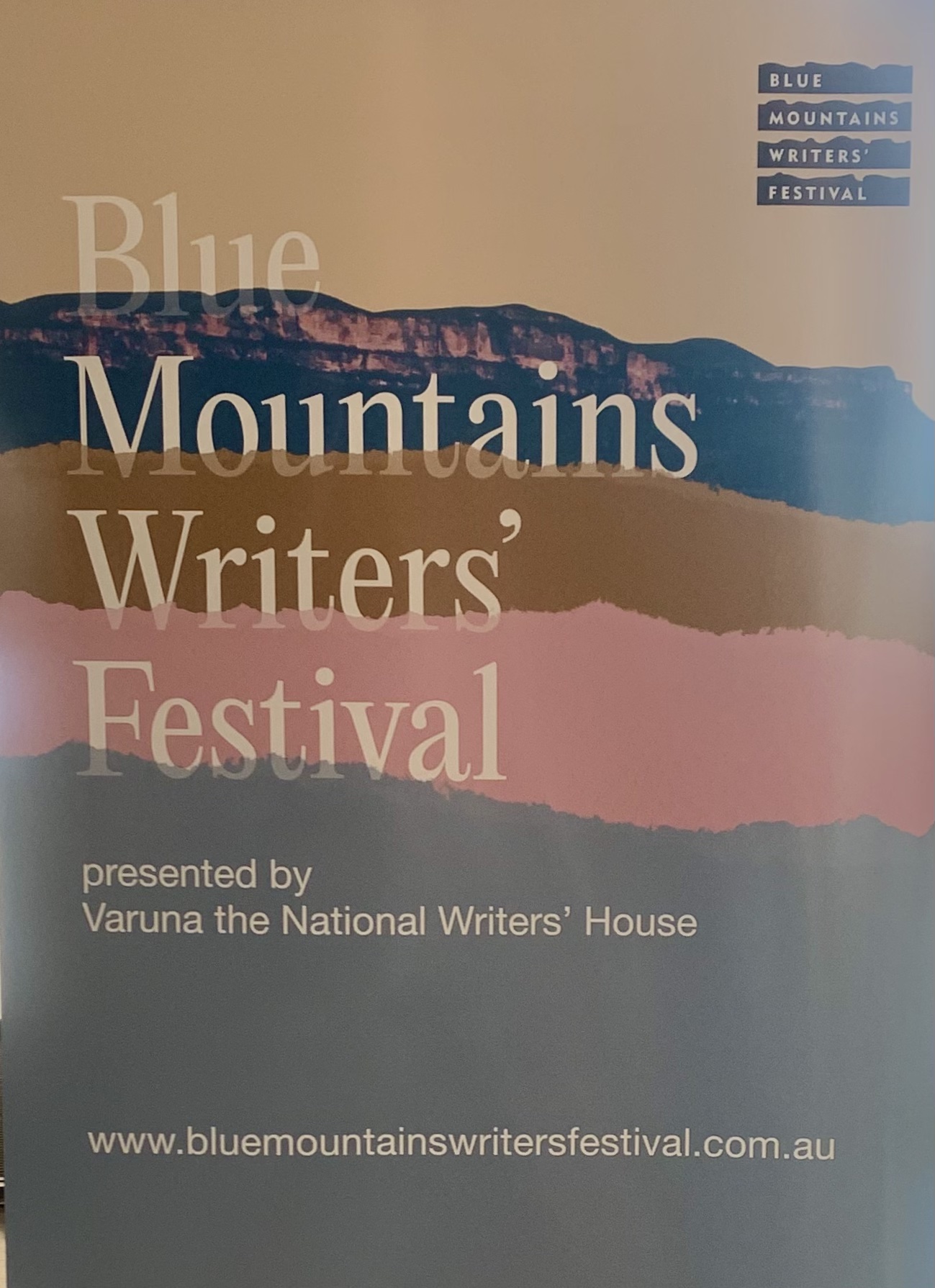
The Blue Mountains Writers’ Festival

I have wanted to attend the Blue Mountains Writers’ Festival for many years. Each year as the dates approached, I found a ‘reason’ why I couldn’t go.

What about the animals while I am away?

I can’t justify spending the money this year.

I should have gone when I was living in the mountains, now it’s too late.

It will take me at least two and a half hours to get there.

I don’t belong to a writerly crowd.

Who am I to think I can go to an event like this?

When I examined each of these thoughts in turn, I realised that I was shying away from the real reason I never went. I felt awkward attending an event on my own and I didn’t want to face discomfort. It was never about the event per se, but the intervals where people stand with their friends, chatting, laughing and having a good time.

I am not someone who can walk into a room and start a conversation. I usually stand on my own like a shag on a rock staring into a drink or trying to focus on some detail on the wall. I could distract myself with my mobile, and sometimes I do, but I am so appalled by such behaviour in others that I can’t bear resorting to it.

Yet if I have a role, I can be gregarious and helpful. I don’t even mind talking to a crowd of people over a microphone. Speaking to a group of two hundred doesn’t faze me at all, it is small groups that I find terrifying. Give me something to do and I will do it. Consequently, you often find me either at the food table or taking plates around, which legitimately allows me to approach people.

This year I decided to become savvy. The moment I saw a request for volunteers, I put up my hand. I was thrilled to be accepted. It meant I could spend some time wearing an official T-shirt and lanyard which would give me a role and I would also have time to attend events. It’s what Stephen Covey calls a Win/Win.

It turned out to be much better than that. I met wonderful volunteers with whom I could converse easily, I chatted to speakers informally in the Green Room and I contributed to an event that was an important and enriching experience for everyone. The volunteer role enabled me to start conversations and, as my confidence grew, I continued to seek out more opportunities.

The more I let my vulnerabilities show, the more others disclosed their own sensitivities. Our conversations moved from the superficial to the deeply personal and established connections which I hope will continue well past the festival weekend. It made me realise how important it is to find my own ‘tribe.’

Then there were the writers. The ones I heard spoke with honesty, often self-deprecating humour, and they were generous with their time. There were many sessions running concurrently, which meant I inevitably missed some brilliant speakers. It was a sentiment I heard echoed in the hallways wherever I went. So, although I had some trepidation about attending, by the end of the weekend, I felt energised, inspired and comfortable in my own skin.

I am grateful to Varuna for organising such an eminent event and for their staunch support of Australian writers.

Empty Nest

Ten days ago, I sent off my completed memoir for a manuscript assessment. I have been working on this project consistently since January 2019. It has, however, occupied my thoughts for many years before I was ready write the first sentence.

For someone who has devoted years to this project, the past ten days have felt like an eternity. Does it have merit? How many more edits will it require before I can approach a publisher? Where do I even begin with this next chapter of letting my manuscript go? And the most important question of all – what now?

For three years, I have conducted research, worked on individual scenes, pursued emerging patterns and themes. Several times I have read the manuscript cover to cover and have cut and polished and cut some more. Through this process I have jettisoned some 20,000 words to distil it to its essence. I don’t know whether I have succeeded.

I have put my heart and soul into writing. There were months when words dried up like ink in a misplaced pen. The less I wrote, the more arid my inner landscape became. Then I found my way to a state of flow through the London Writers’ Salon. Once I committed to writing daily, the words cascaded on the page and I completed my first, second and third drafts. I fantasised about working part-time to devote more energy to writing. I wanted a new rhythm to my days and spend happy hours in companionable silence over Zoom with writers from around the world.

But what now? As I am approaching the end of this project, I feel something akin to grief. What if I have nothing more to say? What do I do then? For someone who has the urge to write each day, this is a distressing thought. I have nursed and watched my memoir grow, but it is time to let this fledgling find its wings. When it does, I will have to let it go.

I have no idea how any of this works. Perhaps I need to have more faith. Perhaps I simply need to show up each day. Or perhaps the muse only visits those who have an empty nest to offer.

A cup of tea

Coffee anyone? No problem at all! An espresso, cappuccino, laté or flat white is made to perfection even in the most modest country towns. We admire the young barista, usually male, with a top knot and a few tattoos to show his credentials. The coffee is pushed down with the finest tamper, milk is heated to 60-65degrees and poured with a flick of the wrist to create ornamental flourishes upon the crema.

Now let’s try ordering a cup of tea. If I’m lucky, the water poured over the teabag has actually boiled but if ordered as a takeaway, the milk is added before the tea has had time to brew. The result is tepid, watered-down, and stained milk.

If I sit down at a café and ask for tea, I am likely to get it in a thick coffee cup or a mug. Only tea drinkers seem to understand that the thickness of the cup affects the taste. Should a teapot make an entrance, the ubiquitous teabag still hangs limply within. It is a rare café that keeps tealeaves on its shelves.

Last week, I went out for breakfast with a friend. We chose a well-known establishment which serves excellent meals. As we ordered, I asked the young waitress to tell me how they made their tea. She explained the procedure in great detail without a hint of irony.

‘We boil the water, take a teabag out of the box, put it in the cup and pour the hot water over it,’ was her enthusiastic reply.

I was reminded of Basil Fawlty and the fresh orange juice. Chef had just opened a new bottle. I had to restrain myself from laughing or telling the young waitress not to worry about the tea and bring me a Screwdriver instead. Alas, the reference would have gone over her head.

I had often wondered why David Herbert included a recipe for a pot of tea in his Complete Perfect Recipes. I found it rather quaint. Perhaps he had similar experiences to mine and wanted to show how easy it is to make a decent cup of tea. For those who are curious, he starts the entry with the following words:

Throw out your teabags and return to the ritual of a real cuppa made from tea leaves!

Fill a kettle with fresh cold water and bring to the boil. When the water has almost reached the boil, pour a little into your teapot, swirl it around and pour it out. Add 2-3 teaspoons of tea leaves to the pot.

When the water is boiling, fill the teapot with boiling water. Put on the lid and leave to brew for 3-5 minutes.

David Herbert

And there we have it, a perfect cup of tea.

The Artist’s date

Last month I watched a live interview with Julia Cameron, author of The Artist’s Way. I had read the book five years ago and began writing morning pages. I thought that was a good enough start and resisted putting her other tools to use. It worked for a while and then I lost my way.

After struggling for years with writing a memoir, I came across the London Writers’ Salon. Joining that supportive group of writers has enabled me to commit to daily writing and within a few short months, I have been able to finish the manuscript. I am now in the throes of editing, editing and editing. Who knows how many more edits will be required to make this little gem shine.

Listening to Julia Cameron I realised I needed to revisit the Artist’s Way and recommit to some of her principles. My morning pages were going well but as for the rest of it, I could see I was avoiding key pieces of her advice. Like the artist’s date for example.

Commit yourself to a weekly artist’s date, and then watch your killjoy side try to wriggle out of it.

She was right of course. The idea of an artist’s date is to allow yourself at least two hours a week to have a playdate with yourself, to do something that brings joy and is self-nurturing. It has to be a solitary activity, but dogs are permitted.

The first week I took Zoë to the Botanic Gardens in Orange. I found solace in walking in the rain and enjoyed finding various paths that led to different areas for me to explore. I then wanted to complete the date with lunch at their café, but I was 15 minutes late. Disappointed, I had a piece of cake I didn’t really want. Annoyed at myself, I drank my tea, ate the cake, and left. I wasn’t so sure that this had been a successful date but was willing to have another go the following week.

The next Saturday I began to wriggle and squirm. Still, I was determined to do it. I found that my local cinema was showing Ticket to Paradise with Julia Roberts and George Clooney. Why not? So, I went to see it. Surprisingly, I felt quite comfortable on my own in the cinema but was less than impressed with the movie. The plot was so predicable that I worked out the ending within the first five minutes. Ho hum.

Yesterday, I decided to go for a drive up Mt Canobolas with Zoē. We drove the potholed roads past stunning wineries and beautiful homes. Then I turned left onto the windy road up to the summit only to find that it was closed for redevelopment. I did a three-point turn and headed towards Mt Canobalas Lake instead.

I noted that the café was open, but decided to walk around the lake first. Zoë had to stay on her lead which she didn’t mind as she had plenty of interesting smells to explore. I quite liked being out on the track on my own. There were interesting cloud formations and new growth on trees which I photographed. Yet I was restless within me, even though this was exactly the kind of activity that always soothed my soul. I think I was about three quarters of the way around the lake before I stilled my mind and relaxed into the activity. Time for a cup of tea, I thought. But once again, I missed the opening hours by 15 minutes. Is this an omen?

I have no idea what I will do next week. I’m running out of ideas. There are a couple of art galleries I could visit or maybe there is a free course I can attend. A week to go and I can feel the struggle already.

You are likely to find yourself avoiding your artist dates. Recognise this resistance as a fear of intimacy – self intimacy.

Ok Julia I hear you, but let me tell you, the struggle is real.

Indistractable

Photo by Jazzy Jazz

I am the queen of distraction. Any excuse will do. A ding on my phone? A dog barking? Stomach rumble? I’m up for it! Literally. I will get up to investigate, check the phone, open the fridge door…

Recently, I decided to spend more time in the office. Even with all the distractions there, I get more work done. Sure, I may have a chat to a colleague and make myself the odd cup of tea but somehow, I am more focused because I know this is the place for work and not play.

About a year ago I listened to Nir Eyal’s book Indistractable: How to Control Your Attention and Choose Your Life. I felt motivated for about a week and then, slowly at first before accelerating with a vengeance, my old habits resurfaced. I didn’t want to be boxed in by time blocks, or make public commitments about my goals, I was happy to coast along, chop and change as my want and hit the panic button when deadlines emerged. After all, I work best under pressure. Doesn’t everyone?

Last week, London Writers’ Salon interviewed Nir Eyal. As I’m a bit of a self-help nerd, I decided to listen. I’m so glad I did. He explained my resistance, which is far from unique. There’s a psychological term for it. It is called reactance. ‘…when people feel coerced into a certain behavior, they will react against the coercion, often by demonstrating an increased preference for the behavior that is restrained, and may perform the behavior opposite to that desired (APA Dictionary of Psychology).’

This describes me perfectly. Even if I’m the one who sets the expectation, I will fight tooth and nail against it. Just knowing that I can name this pesky trait really helps. Now when I hear that voice saying, ‘I don’t want to do it that way, I prefer to do it my way,’ I can say, ‘hello reactance, I know what tricks you’re up to!’

Nir also had a great idea for people who get distracted by their children when working from home. His solution is to buy a cheap crown to wear when working. His kids were told that when he was wearing the crown, he was indistractable. They could only interrupt if it involved blood or vomit. I have used a similar tactic when teaching. I’d say to my class that I was in a bubble with my reading group. Only the people inside the bubble were allowed to talk to me. Surprisingly, kids really respected the bubble. If they ignored the rule I drew an invisible bubble with my arms, and they would walk away. It worked like a charm. At least until an enterprising young chap walked up to my invisible bubble with an invisible pin and pricked it.

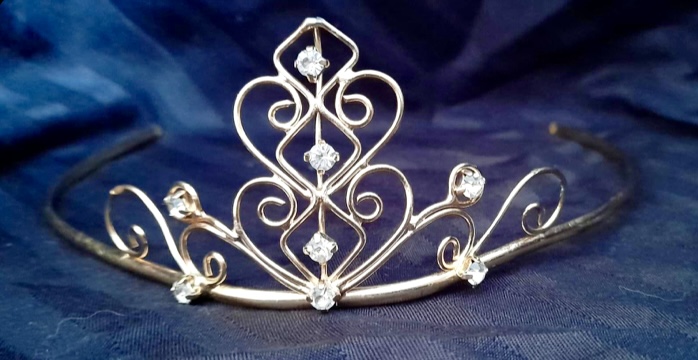
I really like Nir’s idea of wearing a crown. I will go out and buy a tiara (much more elegant) and wear it to remind that naughty distracting child within me that I have work to do. If nothing else, I will at least look stylish when I raid the fridge.  

The smoking ceremony

A smoking ceremony is an ancient Aboriginal custom performed at rites of passage. Nowadays, it is also carried out by elders when they conduct a Welcome to Country. There is a reciprocity to being welcomed onto country. We ask for permission to enter and the elder in turn welcomes us with a ritual in which the history of the land and people is shared. A Welcome to Country, especially one with a smoking ceremony, is always a rich and moving experience.

Last Friday, I attended a workshop at Rylstone Public School with several teachers, principals and a special Canadian guest, Lyn Sharratt. Out in the playground, Local Elder Peter Swain welcomed us onto the land. He explained the importance of the matriarchal lineage to Aboriginal people, through which there is a deep connection to Mother Earth. A coolamon beside him contained white ochre paint and the women were invited to paint their forearms along their veins. We were asked to think of our ancestors whose lifeblood still flows within us and whose protection and strength we sought through this ritual. I found the symbolism deeply moving and felt a strong connection to my parents and grandparents who have departed long ago.

After this part of the ceremony, a coolamon was used for the smoking ceremony. There were leaves from various endemic plants including the bottle brush, which is used to wake up the brain. This was just what I needed so I kept crushing and smelling the leaves before I added them to the coolamon to burn. We also used eucalyptus leaves and other plants which have different healing and spiritual qualities. Peter then blew under the leaves to ensure there was enough of a fire to create the smoke.

We stood in a circle, and he brought the smoke to each of us, purifying our feet, our hearts, and our heads. It reminded me of Western religious ceremonies where frankincense is used in a similar way. Incense is also used in Eastern traditions for purification. This just highlights the deep spiritual connection that all cultures have to one another.

I am forever grateful for the generosity of Indigenous Australians who continue to welcome us onto their land despite the colonial history of the past 230 years. It is therefore in the spirit of profound respect that I acknowledge that I live, work, and write my stories on Wiradjuri land. I acknowledge elders past, present and those emerging who hold the hopes and dreams of Aboriginal Australia. I also acknowledge that this land was stolen and that it is, was and always will be Aboriginal land.

Rain

It has been raining steadily for days. The sodden earth is unable to absorb any more water and the ground is boggy underfoot. Paddocks have turned into lakes and livestock are moving to higher ground. Canola fields blaze yellow; the wheat has shot up. It looks like a bountiful season. Yet, I wonder if all this abundance could turn into a mirage should farmers be unable to harvest their crops.

Whole towns have been inundated with water this year. Months later, people are still without homes, some living in tents. There’s a housing crisis in these communities and still the rain keeps coming. Mould has stealthily invaded houses and everything feels damp to touch. Roads have become impassable. There is a feeling of despondency.

Yesterday, as I was driving through a cloudburst with my windscreen wipers working overtime, I saw flashes of a rainbow through the momentary clear screen, only to be blurred a second later. But it was enough. I kept my eye on that rainbow, remembering the covenant made between Noah and God, that never again will the whole world be flooded.

Then I see photos of droughts in England and America with lakes that have turned to dustbowls, and I am thankful for the life-giving water we have in plenitude. I remember too the last long drought we had in Australia from 2001 to 2009. Children were born and raised on farms where they had never seen rain in all their lives. Water had to be trucked into towns and plenty of farmers walked off the land. There were suicides too. At the time, it felt as if we would never see rain again.

Due to climate change, our weather is becoming increasingly unpredictable. We can’t count on seasons doing what they have always done. It will take a gargantuan effort for mother earth to keep providing for us. We all have our part to play in how things will turn out for humanity. Not one of us is free of blame for the state of the world.

I accept the challenge to change what I can: be less wasteful, want less and recycle more of our precious resources. I cannot give in to despair. Hope still springs eternal. And as I watch the rain, I think about the story of that ancient covenant and look for the rainbow ahead.

Potholes

Rain has washed away whole sections of country roads. Wherever I look there are potholes, thoroughfares which are no longer passable and ‘rough surface’ signs to alert drivers to the obvious. I recently punctured a tyre as I plunged into a hole much deeper than anticipated and last Thursday, a loose rock hit my windscreen leaving it with a sizable crack.

I have had ample opportunity to ponder the pothole, both real and figurative, as I white-knuckle clench the steering wheel. There have certainly been some rough rides. Last week as I drove along a dark country highway, trying to avoid both kangaroos and potholes, I suddenly found myself going over a flooded roadway. I could hear the safety ads loud and clear, ‘Do not enter floodwaters’ but it was too late. I was already deep in the water and accelerating out. The sun had dropped behind the horizon, and I was left to navigate unfamiliar, rugged roads at night.

While potholes are perilous for travellers, I find solace in the fact that we haven’t been able to bend nature to our will altogether. In the great battle between the elements and bitumen, the elements win every time.

And as I navigate the great and small potholes in my life, I draw some lessons from driving along country roads. If I am lucky to see the pothole ahead, I can always move over to the other side, as long as there is no oncoming traffic. There are often ways to mitigate the great and small disasters in life by course correcting.

Potholes make me slow down. Instead of rushing from A to B, I need to be measured and disciplined to get there safely. This is a lesson I need to learn over and over. When confronted with overwhelm, it is best to slow down and approach tasks with a well-considered plan rather than plough ahead at full speed.

Then there is the detour. At times it is well worth obeying the sign. It may take longer to get wherever I’m going but there’s a reason for the diversion. These roads are often scenic and may lead to unexpected pleasures along the way. A detour whether forced or voluntary can provide insights which otherwise could easily be missed.

I am learning to approach potholes as moments to pause and reflect. They may be an unwanted disruption, but they teach me that I can’t control everything. And ever so slowly, I am learning to accept the things I cannot change.

Winter

Winter

Winter is a magical season of rest and withdrawal. It is a time when I seek comfort and warmth, rich foods, and good company to while away the long evenings. It is also a time when my garden looks barren, and any small flowers are welcome to break the monotony of bare trees and dull lawns.

After weeks of monochrome grey skies, days of rain, sleet and hail, the sun broke through for short periods today. There were patches of blue sky and the occasional glimmer of sunshine. That was all I needed to feel alive and thankful for this day, as much as I love winter. I made a cup of tea and headed outside to sit next to a rosemary bush. Closing my eyes, I listened to a bee make its way towards the tiny blue flowers. A doleful bird repeated the same two-tone motif in the distance. Then, the screech of a parrot joined the fray, a crimson rosella and finally, a blackbird offering a pretty melody as a counterpoint to the Australian native birds.

I rarely sit in the garden in winter. It is too cold, rainy, or windy. Instead, I observe it from my kitchen window. Today, however, the temperature was perfect. Suddenly, I felt a yearning for those easy spring days when the jumpers come off, insects emerge, and birds return to entertain with new songs. Bulbs are due to bloom soon and we are only weeks away from a riot of colour that will grace the garden once more.

I am lucky to live in a place with distinct seasons. Winters in the Central West of New South Wales can be bitterly cold with icy winds that take your breath away. Morning frosts blanket gardens in a soft white sheet and the fog settles into valleys until mid-morning transporting me into a landscapes of fairy tales. At times I drive above the fog and see an ocean of white below me. I descend like a diver into its depth and can’t help but be overcome with the beauty all around me.

Evenings are still cold, but they have lost their bite. I no longer light the fire; a mohair throw is enough to keep me cosy. The days are getting longer too. Soon, I will be arriving home in daylight and taking the dog for distant walks. We have travelled around the sun once more and the season is set to change.

Plumwood

I caress a first edition, limited print run of a book of photographs. The cover, green and black, is the pattern of a crocodile’s skin. Nothing else suggests what the book is about. I am intrigued.

An A5 insert explains the genesis of the book. The author, Rory King, a talented young photographer, has long been fascinated with Val Plumwood, a trailblazing Eco-feminist who lived on Plumwood Mountain in a hand-hewn bush retreat. Her ground-breaking work on anthropocentrism has influenced the way ecology is viewed – humans as part of the web of life and not at the very centre of it.

King’s photographs of Plumwood’s cottage and the rainforest in which it stands, are intimate, matte black and white images that play with light and shade. Some are fleeting moments, fragmentary, a blink of the eye. Others capture the lush growth of the forest floor. King also includes photographs of the East Alligator lagoon situated in Kakadu National Park, where he followed Plumwood’s footsteps to the exact location where she was savagely attacked by a saltwater crocodile. I find these photographs the most evocative in the book, in part because of my own memories of a trip to East Arnhem Land and in part because crocodiles take me back to my childhood, when I listened to Seppi, the crocodile hunter, tell stories of pursuing crocodiles along the Nile.

Not only is the book evocative and visually luminous, it also has a tactile allure. The recycled paper has an ecological appeal, befitting Plumwood’s philosophy. I have an urge not only to view but to touch and feel the images on the page. There are so many details to explore – the stacked books in front of Plumwood’s fireplace, baskets and trinkets, a banjo on a divan. Then there are shimmering individual leaves, reflections in water, a build-up of silt along a riverbed. My fingers trace the branches of a tree, the back of a crocodile floating in the water…

Plumwood is published by Tall Poppy Press and is available at www.tallpoppypress.xyz