Twixtmas

I have always been fascinated by liminal spaces: doorways, verges, airport terminals and the inbetween times in our lives. The time between Christmas and New Year, six days of waiting for the old year to pass and the new year to start, sees us standing at the threshold of the old and the new, in limbo, neither here nor there quite yet.

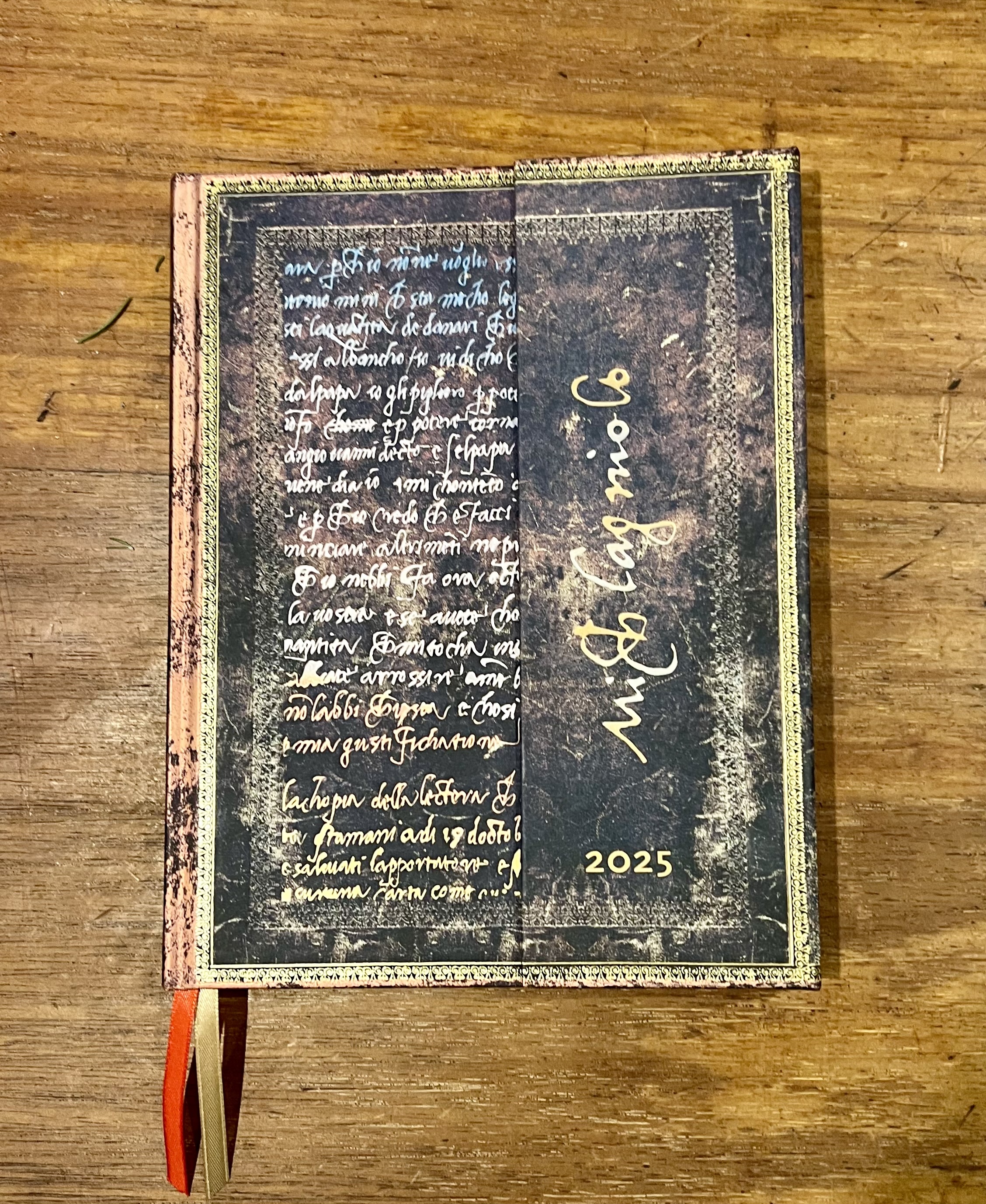
My new diary for the year is pristine, bar a couple of appointments. It is empty, yet full of promise for what is to come. 365 days of dreams and hopes await, yet I have little control over what will actually happen. Which of us will make it to this very day next year? Who will join us in our midst? What will be the joys, the sorrows, the moments we will remember? How will we show up for them?

The other day, I looked through the photos on my phone, starting at January 1, 2024. I made two pages of notes of all the important events I had captured. They were overwhelmingly positive this year, but then we rarely capture our sorrows unless they are marked with a ritual. I am sure there were plenty of mediocre days there, but I chose to focus on the things that uplift me. I will remember this in the coming year and focus on the positives. I’ll leave the downside of life to news reporters.

Twixtmas is a good time to take stock and reflect. I want to get into the habit of doing this much more often. We all know that our notion of time is a mental construct, that time keeps going on without stopping on December 31 and starting again on January 1. But it is useful to draw a line somewhere and give ourselves a chance to begin anew. While I am not a believer in new year’s resolutions, I do set a guiding principle for the year. 2025 will be the year of Imperfect Action.

Imperfect Action calls for movement towards something before I am ready, before I have all the information, before I can talk myself out of it. It is a way to get out of my head (and out of my way) to attempt new things without expectations. It is a belief that if I act, the outcome will look after itself. It is a realisation that I can only control my actions, not what the result will be.

When we recognise our task is to lean into action rather than expect outcomes, we can live with increased equanimity. Life becomes less of a grind and infinitely more fulfilling. We can take each step with intention and let the outcome take care of itself. Trust your effort will lead you exactly to where you need to be. Happy Twixtmas!
Boxing Day: Box it up!

You don’t have to be a minimalist to want to declutter your life after Christmas. We, who are lucky enough to live in wealthy countries, have more than our fair share of possessions and after a while, the sheer volume of it makes us feel stifled. Never more so than after Christmas, when even more things come into our homes, not all of it is welcome.

Generally, I try to give presents that are consumables like special items of food or at least useful around the house. I do make an exception with a friend with whom I exchange ridiculous gifts, but even these are practical. I don’t get hung up on whether things I give get re-gifted; if I got it wrong, let someone else enjoy it! Nor do I mind giving money if I know it is the best gift for the person.

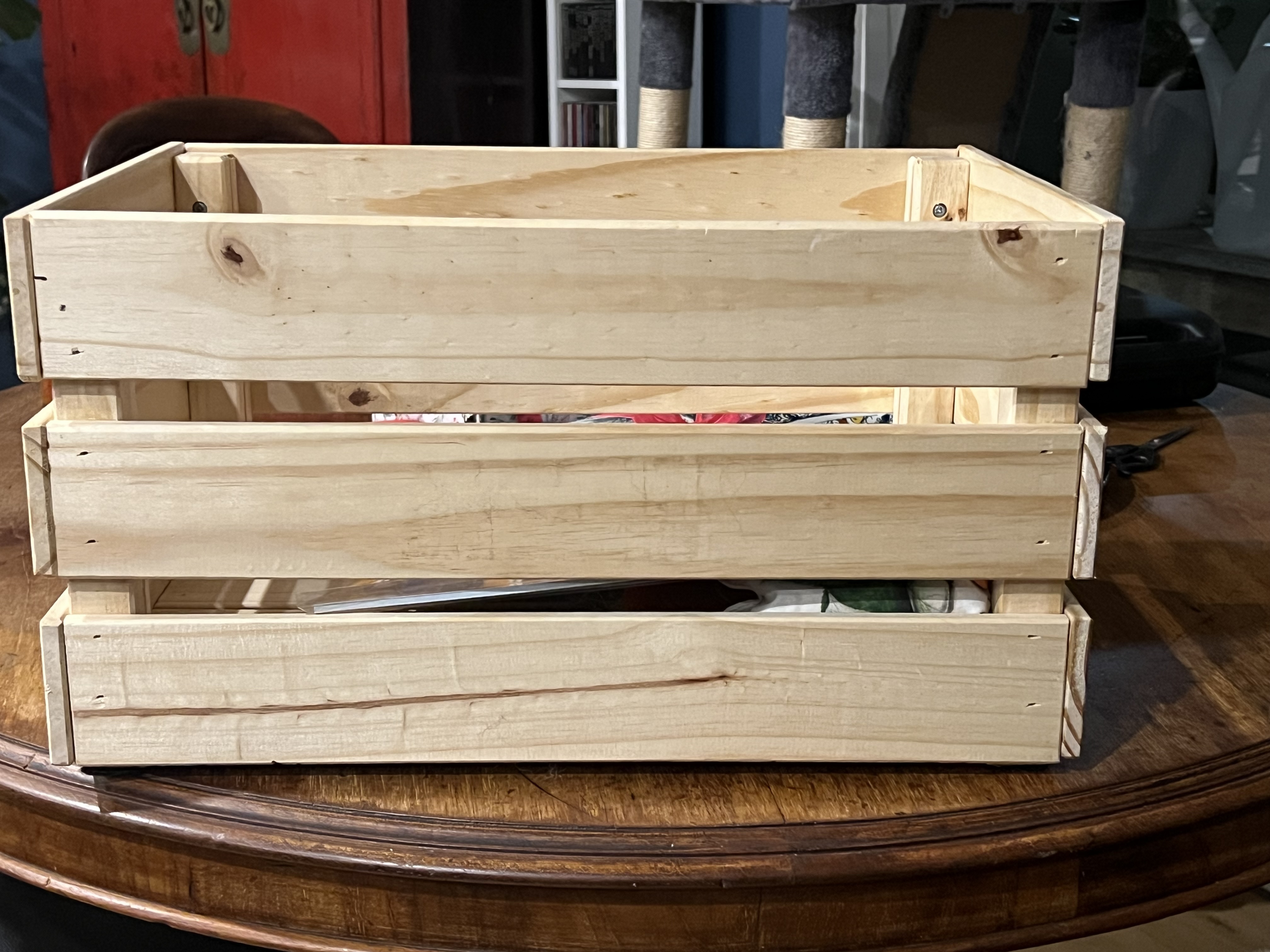
I find it difficult to fathom that people would want to go out and spend more money on Boxing Day sales, unless, of course, there is something very special that they have been waiting for. For me, Boxing Day is a good day to begin the purge and box up all the things I no longer need. I go through my wardrobe and ask myself honestly whether I have worn that item in the past year, whether it still fits me and whether I still like it. If the answer is no to any of these questions, it gets folded and put into a box. I also go through my linen cupboard, shoes, kitchen utensils, herbs and spices, and food items at the back of the cupboard. The only thing that escapes my scrutiny is books. We all have our weaknesses.

While I am by no means a loyal follower of Marie Kondo, there is some truth in what she has to say. Although, she too has changed her tune somewhat since she has had children. She is less rigid and acknowledges the inevitable clutter that comes with raising kids. If you have children, you will need to be much more flexible with your approach to clutter. Still, you can go through clothes that no longer fit and toys that no longer hold their interest. Box it up!

Those of us who don’t have young children in our care need to think about the things we have accumulated and whether they will help or hinder us when transitioning into the next stage of our lives. Moving from a house to a small townhouse at the beginning of the year has certainly taught me about which things spark joy and which things spark nothing but trip hazards. There is only so much that fits into that container, which we refer to as our home.

I am not advocating Swedish Death Cleaning either. As far as I’m concerned, if someone benefits from receiving my inheritance, let them clean up after me. No, I am advocating doing some decluttering for ourselves. We will be the beneficiaries of a place where we can easily find things and where we can walk to the bathroom at night without encountering an obstacle course of our own making.

Let Christmas Day be about giving and receiving. Enjoy the presents, the food, and your loved ones. Then, when Boxing Day comes, and you look at the mess that’s left behind, take out the boxes and begin sorting. Come the New Year, you will be so thankful you did.

Lighthouse reflections

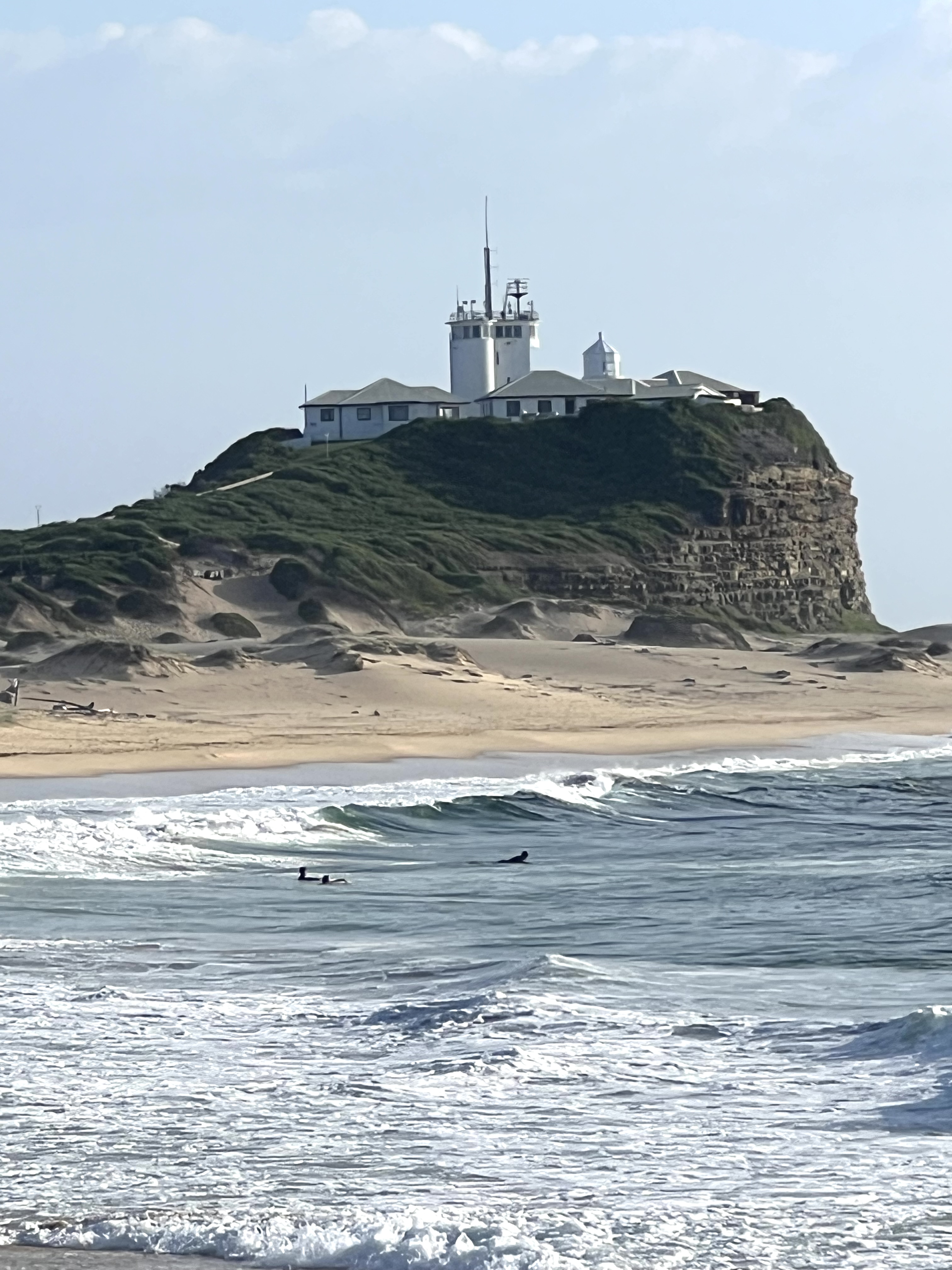
Some things are seriously worth waiting for. Like the Artist residency at Nobby’s beach, Newcastle. I was counting down the months, then the weeks until it was finally upon me. Five glorious days to spend on my memoir that has been sitting on a shelf for the past year, patiently waiting for me to come back and give my undivided attention.

There were eleven of us at the lighthouse. Some writers, some artists. Several had returned for the second time and were delighted to meet up with old friends. Two of us came from Canberra and, to my surprise, there was a large Melbourne contingent. One younger woman had grown up at the lighthouse as her father was the last signals operator before that job too became automated. We loved hearing stories about the people who lived there and the history of each of the rooms where we worked. For her, it was a chance to paint the lighthouse and its surrounds which had played such a significant part in her early life.

There is something magical about lighthouses. They are often metaphors for safe passage, guidance, and protection. They offer illumination for the dark nights of the soul and are a beacon of hope. In a port city like Newcastle, this lighthouse has the important function of guiding vessels into the harbour and up the Hunter River.

Before I arrived, the lighthouse became the beacon guiding me to cross the finish line of the year with a sense of achievement. It didn’t disappoint. I found it easy to get into flow and felt focused for hours on end. Many of us met at 12.30 for lunch in the common room, enjoyed each other’s company, and went back with a fresh burst of energy for the afternoon session. By the end of the week, I cut 21 000 words from my manuscript. I consider it a boon for my future readers. The engagement with the work has also rekindled my enthusiasm for the project.

The knowledge that Nobby’s lighthouse is one of the oldest operational lighthouses in the country made it feel like a workplace rather than some anachronistic holiday destination. I felt connected to both its current significance and its historical legacy.

Back in 1854, it first guided commercial shipping and 88 years later, it became important for military operations during WWII. The three small cottages erected on the site and these were used by defence staff during the war. An unexploded shell fired from a Japanese submarine damaged one of them.

Various lighthouse staff occupied the cottages after the war until the late 1990s. Lighthouse Arts, which is an initiative of the Hunter Writers’ Centre, now uses these cottages to hold exhibitions and offer artists and writers a space to create.

The area where the lighthouse is located is now known as Nobbys-Whibayganba headland. So finally, there is recognition of the Traditional Custodians, the Awabakal people and their deep cultural connection to the land, saltwater and the Dreaming.

I am grateful I could nurture my calling on this spiritually laden Country. It gave me much needed clarity and purpose. As such, I am already planning my next sojourn.

If you feel you would benefit from having a week to commit to your creative project, apply at https://hunterwriterscentre.org/2024/11/28/lighthouse-arts-residencies/  

We may even meet each other there.

When a Stranger Calls Your Name

Photograph by John Harding originally posted on Friends of Watson Greenspace Facebook page

It takes about a year for me to feel that I have arrived in a new place. I have moved cities often enough to recognise this pattern. Sometimes waiting for that moment feels like an eternity, as it did when I first moved to Sydney while other times, it feels as if it has taken no time at all. Canberra falls in the latter category.

While I have felt at home in my new place very quickly, I didn’t know anyone besides my daughter and her friends when I moved. Then, a couple of months later I met my first friend at the dog park. She lives on the same street as I do, and we meet up for drinks or dinner every now and again.

I am known at the local shop but not by name. People are more likely to say hello to my dog Zoë who wears her name on her harness than they are to say hello to me. Of course this is very common. Even Markus Zusak says that when he is out without his dogs, he becomes invisible to people on the street.

Can you imagine my surprise when a man with a camera hanging from his neck called out to me, ‘Are you Viktoria?’ It turned out, he was the local wildlife photographer who posts the most stunning photos of birds, dogs and kangaroos that visit the nature reserve across the road from me. I have been liking his posts for months and occasionally writing a comment, especially when he posts shots of tawny frogmouths. He must have looked at my name and found a picture of me. Now, he kindly showed me the tree where they were roosting, and I saw the three babies with their parents with my own eyes. It was a truly awe-inspiring sight, and I was grateful that he shared his knowledge of birds freely.

I thanked him and continued on my way. Zoë was getting impatient for her walk. However, after about 200m we were stopped again. This time, an older woman called out, ‘excuse me but do you have a friend in Sydney who lives in Dulwich Hill?’ Once more, I was flummoxed. Turns out she had moved to Watson recently, was given my number, but hadn’t made the call as yet. She recognised me because of Zoë. I guess there aren’t many black standard poodles who walk in this park. We had a chat and decided to catch up for a cuppa later in the month.

Ten months have gone by since I first moved here. So many joyful things have happened, but it wasn’t until I was recognised by strangers that I felt I had truly set down roots. It feels like I am part of the suburb and part of this community. I feel calm in the familiarity of the trees, the pond and the paths that I take daily. But hearing my name said out loud carried a particular weight, as though the world had suddenly recognised me within it. It was a fleeting moment of quiet significance, a moment when I felt connected to the place and the person who has called me into being out of my own thoughts and into the time and space we both inhabited.

And so, I have finally arrived.