Hurkle-durkling

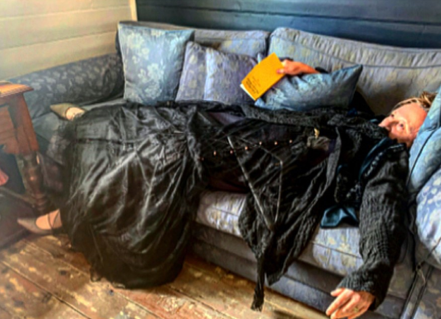
To hurkle-durkle is a wonderful old Scottish term which means to lie in bed or lounge about when one should be up and about. It reminds me of words like shilly-shally, dilly-dally, argy-bargy, topsy-turvy and hoity-toity. Their humorous effect derives from the rhyme or alliteration. They are fun to say and capture a sense of their meaning.

I have come across hurkle-durkle from a number of sources lately. I first heard Susie Dent speak about it on the Something Rhymes with Purple podcast, then a friend reminded me of the word not long ago. Since then, I have seen it pop on Facebook and Instagram. It clearly accommodates a need in the English language.

Whether it is driven by jealous parents of teenagers who hurkle-durkle from their mid-teens through to their early twenties, or by blurry eyed workaholics who can only dream of such a luxury, it seems to have touched a nerve in the productivity driven twenty-first century. It is interesting to see the word make a comeback at precisely the time when the double-shot morning espresso has become a badge of honour for many.

As far as I’m concerned, we should all hurkle-durkle a lot more than we do. I’m sure we would be less stressed and more satisfied with life, if we allowed ourselves this little luxury more often. It is difficult to think of a hurkle-durkler committing road rage or being rude to shop assistants. We all behave better when we are well-rested.

We are now entering that crazy part of the year which we euphemistically call ‘the silly season.’ It isn’t silly at all. If anything, it should be called the frantic season. The list of things to get done before Christmas seems to get longer each year. Things ramp up at work as we approach the final weeks of the year and then there are all the social commitments, presents to buy and cards to write. No wonder we wind up cranky by the time we get to Christmas Day. You know my answer to this insanity. Sure you do. Go and spend some quality time hurkle-durkling and ride out the season in style.
Bird Song

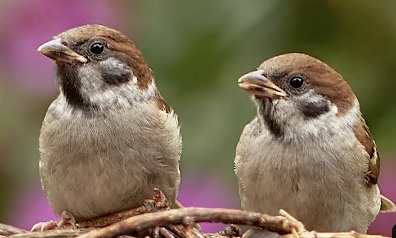
One morning while having breakfast, I tuned in to sparrows chirping. They like hiding in an overgrown hedge out the back providing them with ample shelter. It is never one sparrow that sings but a host of them. Their simple song, made up of only a few notes, is sung mainly by the male to attract females or fend off invaders. I can’t help but smile at their incessant bright chirruping. It isn’t very loud and provides a pleasant soundscape as I sip on my cup of tea.

Soon another sound gets my attention. The blackbird’s song is one of my favourites, mainly because it reminds me of my childhood. I even named a dog after this bird. While its song varies for each verse, it always seems to start on the same mellow note. Their phrases are short and often include ‘djuk djuk’ clucks. No other birds have the same slightly melancholic effect on me.

Scientists have found that listening to bird songs is conducive to mental health. It surprises me that we need this confirmed through research. This revelation reminds me of the recent discovery of ‘silent walking’. Those brave enough to try this new trend have reported a reduction in feeling distracted. Who would have thought. It turns out that being in touch with nature is calming.

I can now hear my three tenors warble at the font of the house. This is what I affectionately call the magpies that come to feed on the front veranda. Magpies often get a bad rap for being aggressive. In a small town like Millthorpe, they know all the people and can distinguish between those who treat them well and those who do not like their company. I am often rewarded for being kind to them with their mellifluous warbles as they sit on the railing, necks craned, beaks raised skyward.

Nature plays a vital role in our quality of life especially for those who live in cities. We are seeing an increased willingness to consider the health of urban environments through improving biodiversity. I’d like to see a greater variety of birds in the heart of Australian cities beyond pigeons, gulls, and ibises.

Of course, not all bird sounds have a positive effect on us. Some can be downright irritating. Take the Koel for example. To be subjected to the coo-eee call of a Koel rising in pitch and fervour is akin to torture. The kindest thing I can say about them is that I am grateful that they are migratory birds. I’d much rather listen to a flock of local sulphur crested cockies. Noisy as they are, I have a soft spot for these larrikins. They are mischievous, funny creatures who relish play and pleasure. I love the way they hang upside down from the gutter to look through my window or find novel ways to open my garbage bins to see what is hidden inside. Curious, cheeky and utterly uncontrollable, they are the epitome of the rebel without a cause. Cockatoos often wreak havoc, yet I can never be cross at them for long. Theirs may not my favourite bird call but they make me laugh like no other bird can.

There is so much to learn from pausing to listen to our natural environment. Tuning in to bird songs helps me get out of my head and pay attention to my surroundings. I focus wholeheartedly on listening rather than looking. It’s a skill many of us neglect.

Melbourne Cup Day

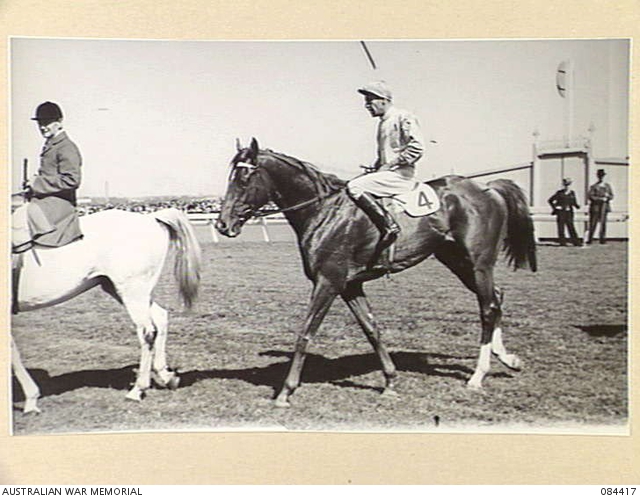
Sirius, Melbourne Cup winner 1944

Roger could recite every Melbourne Cup winner going back to his birth year, 1944. It was his favourite party trick. Starting with Sirius, he could name them all and knew details about most. He loved horses, had a fervent interest in racing carnivals, but never had a bet. The last horse to be committed to his phenomenal memory was Verry Elleegant, the first horse to ever win the Melbourne Cup from barrier 18.

While I admired his passion, I could never reconcile the love of horses with racing. My heart broke every time I heard about an accident on the field. These horses rarely survive. It also seems to me that we don’t need to encourage betting in a nation that has the greatest per capita losses from gambling worldwide.

The day that Dunaden won the Melbourne Cup is seared into my memory. My husband, Peter, was returning to work after several months on sick leave. He had a part of his lung removed after we discovered that his Melanoma had spread. Things were going well; he felt better and was looking forward to returning to work. We dared to be optimistic.

I received a muffled phone call at about 10am on Cup Day. He was calling from the waiting room of the hospital where he had received his previous treatments. ‘I’m alright,’ he said in the way he did when he wanted to shield me from distress. I had to prise the details out of him, the way I always did when I needed to know the truth.

‘I wasn’t feeling well on the train and when I got off, I collapsed. People helped me up and eventually I had enough strength to walk to the medical centre. They sent me straight to hospital.’

At that moment, I knew. I knew we were at the starting post of a race against time and the odds were stacked against us. It was a race we would never win, no matter how much I pleaded with the specialists. We were riding on their mercy and time was running out. I didn’t believe in miracles, but I dared to hope. I dared to hope for Christmas, then New Year.  After that, I hoped for our daughter’s birthday and our wedding anniversary. He never made it to either. The race had run its course.

Melbourne Cup Day makes me anxious. I am taken back to these dark times of loss. The loss of a partnership of over two decades, the loss of innocence for my daughter, and the loss of a deep love. I am also reminded of a more recent loss, that of losing a second chance at love with a man whose joyful connection to the Melbourne Cup is all the more lamentable now that he too has run his final race. Yet I can’t help but feel grateful to have accompanied both of my valiant men on their final stretch to the finish line.

Poplars

Listening to trees whisper, sigh and brustle as they sing their wind songs is one of the delights of walking in the country. The soughing of the wind through various trees often escapes our notice, but if we listen carefully, there’s much to be learnt about the trees we encounter.

A common feature in rural Australia, the Lombardy Poplar stands tall and erect. They make for graceful avenues and provide useful windbreaks for farmers. As they are deciduous, they look like sad sentries in winter but come spring, they emerge in full verdant glory with thousands of diamond shaped leaves. But it is their susurration that fascinates me. They sound like no other tree I know. Their flat petiole that attaches to the leaf creates a trembling, a shimmy-shamming sound that reminds me of unfolding crinkled tissue paper. I am sure I could recognise a copse of Poplars by simply listening to them.

My late partner once owned a country house in Manildra where he planted a row of poplars on his side of the road to match the ones on the other side. His neighbour scoffed at the extravagance of watering the trees, but he did it anyway. Their slender beauty would have captured his imagination. A lover of gardens, he appreciated a good view. As people drove past, they were enveloped by the poplars providing a change of scenery from the flat paddocks on either side.  They were also heralding the houses on this lonely stretch of road. I can almost hear him instructing visitors, ‘Keep driving until you see the poplars, then turn right into the first driveway. Ours is the Federation house with all the roses along the fence.’

Lombardy Poplars have also been used to complement architectural features of well-known public buildings in Canberra. They were introduced there in the early 1900s, around the time that the house out at Manildra was built. They grace the forecourt of the National Library and can be found in many of the older parks around Lake Burley Griffin even though they are now considered a weed and prohibited under the ACT Pest and Plants and Animal Act 2005 due to their vigorous growth and propensity to invade waterways.

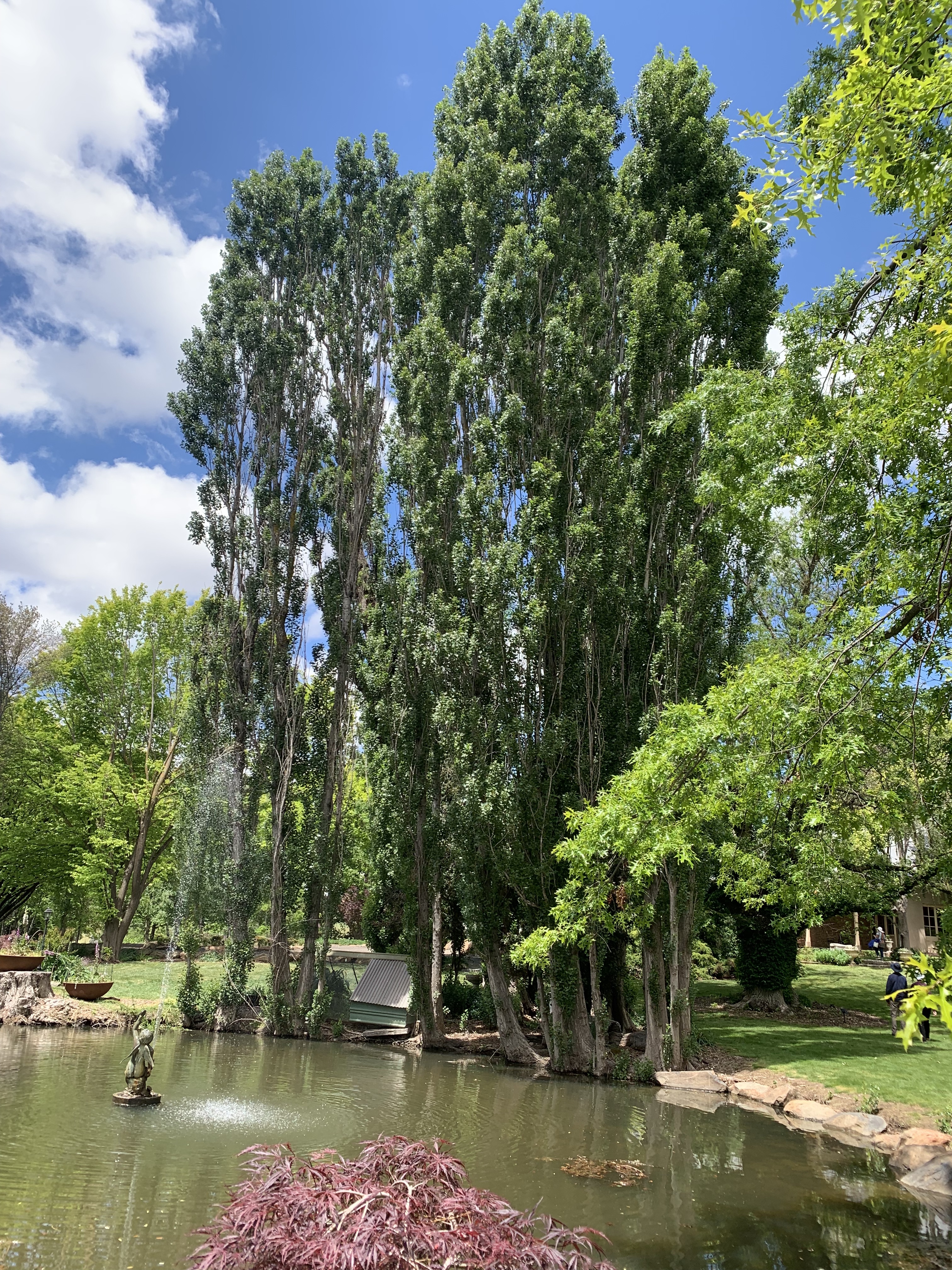
Last weekend Millthorpe hosted a Garden Ramble. It is a much-loved event which brings many visitors to the village. The gardens range from small backyards through to several acres of manicured parklands. Each is different, not only in size but also in aesthetic composition. Some favour the wild cottage garden effect while others are formal and majestic. It was at one of the oldest gardens that Poplars greeted me, sibilating in unison at my sight. Leaves waved like an old friend. These were ancient for Poplars, about forty metres tall, with roots that extended into the pond next to which they were originally planted. Their branches were in part straggly, but new growth was evident at the base of the trees.

Poplars, like church spires, reach to the heavens. I love them for their solemn beauty and wistful songs. Shimmering leaves in shamrock green remind me of the mother-of-pearl curtains of my youth refracting the sun’s rays. I am mesmerised by their wind-dance, their subtle choreography and siren song, drawing me ever closer into their embrace.