
The Hurdy Gurdy of Summer

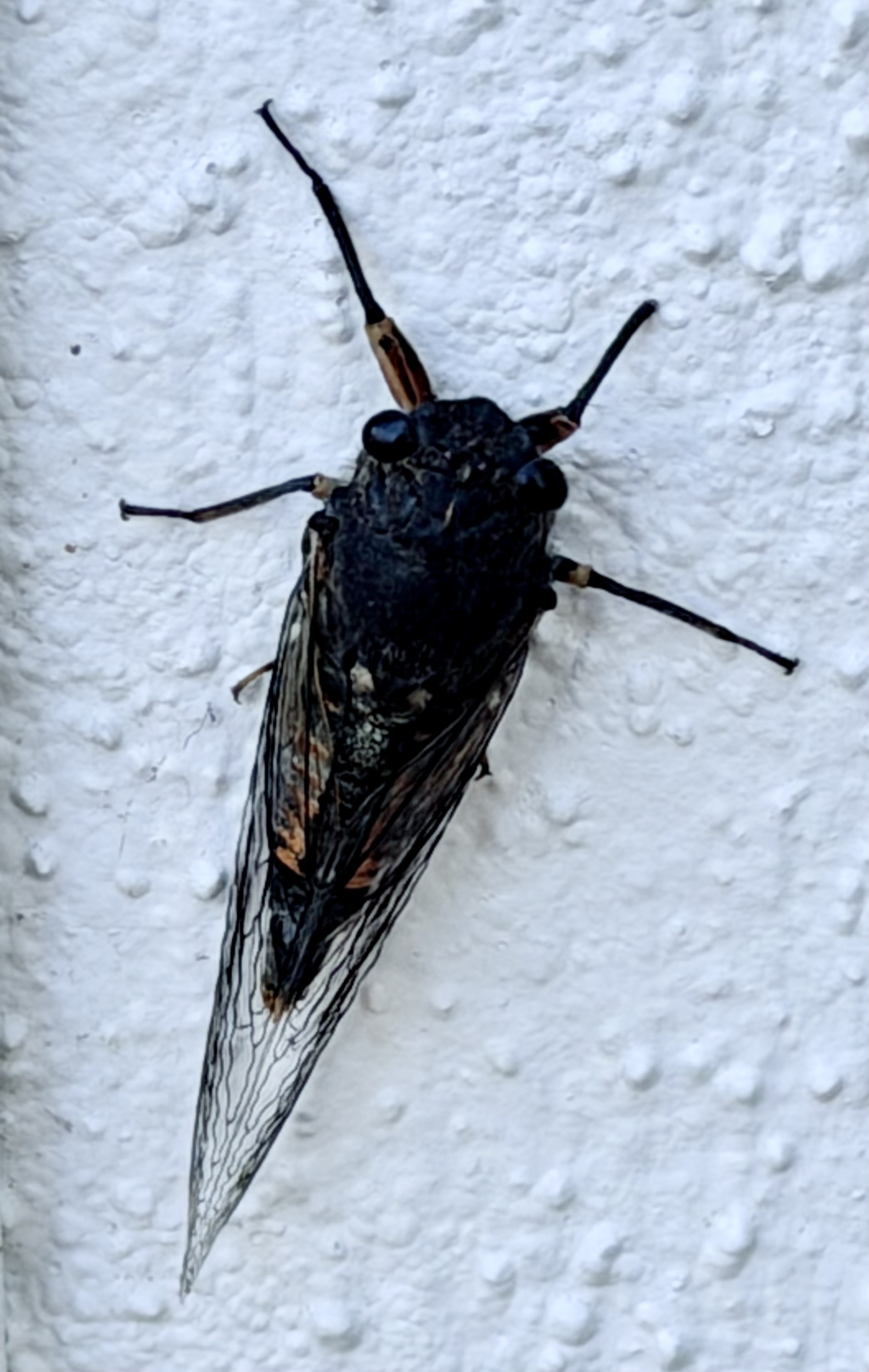
Black Prince Cicada on a wall

The sound of summer in Australia is the ear-splitting drone of cicadas. On a hot day, different species may be heard, each with their unique song. The sound they make with their tymbals creates the characteristic rhythmic drone. On my walk the other morning, the sound reminded me of a hurdy gurdy used in medieval music.

The closer I listened, the more sounds I heard, including a lower rhythmic quack that punctuated the drone. Intrigued, I recorded the sound and headed home to do some research. The quack quack sound belongs to Red Eyed Cicada and the high pitched deafening drone comes from the cicada affectionately known as the Greengrocer.

The common names of cicadas in Australia are often comical. Here are some of the ones I have come across: Double Drummer, Yellow Monday, Floury Baker and Razor Grinder… They sound like nicknames acquired down the pub after a few beers.

Some years ago, I worked at a school where classes were named after a theme. One year, the whole school was named after insects and I chose for our class to be the cicadas. We collected their shells from trees and learnt about their life cycle. Children often brought in cicadas they had found and after studying them, released them in the playground. At the end of the year, each child was to receive an award which I read out aloud at an assembly. I found 25 different cicada names which I assigned to each child with a sentence or two about their personality. Parents laughter echoed in the hall as I read amusing anecdotes I had collected throughout the year. The kid who liked to tap his pencil on his desk became the Double Drummer, the Black Prince was our Star Wars aficionado. I haven’t thought about that for years.

This year we have had a strange summer. It arrived somewhat late and while there are stinking hot days, the temperatures have also plunged into the teens. It is pretty unpredictable at present. I am not a fan of the hot weather and much prefer autumn and winter, especially in Canberra where temperatures plummet to negative numbers. Yet the sound of cicadas cutting through the summer heat, loud and insistent, brings a measure of joy to even the hottest days.

Summer Pudding

Summer pudding

I discovered summer pudding many years ago at my mother-in-law’s place. It felt as if the dessert had been invented just for me. Cherries and berries are my favourite fruits and from the moment they come into season, my hands and lips are stained red and blue. I have been known to eat a kilo of cherries on a long car ride, with disastrous consequences to follow. Still, I can’t help myself. ‘Just two more,’ I tell myself, and then 2 kilometres later, ‘just another two and I’ll stop.’ These days I only buy 500 grams at a time. Self-control has never been my strong suit.

Summer pudding combines all my favourite fruits in a simple, almost humble dish. It originated in England, and I expected it to have a long, storied history. Surprisingly, the recipe dates back only to the late nineteenth century. In my mind, I had imagined a tradition going back hundreds of years. I pictured young girls wandering through fields, gathering wild berries for their mothers to turn into a cheap pudding. In reality, those girls probably ate the berries as fast as they picked them.

Nowadays, berries are expensive unless there happens to be a glut. Mulberries, raspberries and blackberries can be wildly expensive. Early season cherries are a luxury not many people can afford. Even strawberries, the most reliable and affordable of the berries, fluctuate in price. Making a summer pudding, at least without access to free fruit, ends up being more expensive than baking an elaborate cake. So much for my fantasy of it being a poor man’s pudding.

The trickiest part of making it is leaving it to set overnight. Patience is another virtue I lack. Every time I open the fridge, I can see the pudding with my cast iron teapot on top, pressing the bread down over the fruit. It will be ready by tomorrow afternoon, I remind myself. Less than twenty-four hours to go. And besides, I don’t even have clotted cream. Yet.

If this dessert sounds like heaven to you, here is a recipe. The quantities aren’t exact. Use whatever fruit you have, however much of it you can get your hands on. You could make a summer pudding entirely from raspberries, but I prefer a mixed variety.

Summer pudding

Stale sliced white bread to line the bowl
1kg mixed summer berries such as strawberries, cherries, blackberries, mulberries, raspberries
¼ cup caster sugar
A splash of liqueur such as Kirsch if you like
Clotted cream to serve

Cut the crusts off the bread.
Wash the fruit and remove stalks, stones and pips.
Cut the strawberries into pieces.
Place all the fruit into a pot with the sugar and about ¼ cup of water.
Cook for 2–4 minutes, until the sugar dissolves, the fruit softens and the juices run.
Drain the juice.
Brush the stale bread with the juice and line a bowl, juicy side outwards.
Slightly overlap each slice so there are no gaps.
Cover the bottom of the bowl too.
Pour the fruit into the bowl with a little juice and cover the top with bread.
Press the pudding down with a saucer and some heavy items on top.
Refrigerate overnight or longer.
Run a knife around the edge of the pudding and pour a little juice around the outside.
Invert the bowl onto a plate and ease the pudding out.
Serve with the remaining juice, clotted cream and extra fruit if desired.

Thank you dear Margaret for sharing this recipe and memories they evoke.

Post script

I bought clotted cream, invited a neighbour and a friend, and we attacked the pudding. It was delicious. The cream had to be scooped off the spoon, it was that thick. If you think the cream is unnecessary, you’d be mistaken. The pudding is quite sweet and needs the richness of the cream to balance the flavours. As scrumptious as it was, none of us could fit in seconds.

My solar powered watch

My solar-powered watch stopped working today. How could that be? The sun has been out every day for the past month and temperatures have soared into the mid 30s for days on end. I know it has been really hot because my air-con has been running almost non-stop for weeks. Ironically, the sun powers the air-conditioning via solar panels on the roof, yet it seems to have trouble charging my watch.

I know many people who love the heat. I’m just not one of them. Heat triggers my migraines, and I feel sluggish and uncomfortable when I go outside. Most days I work from the office, where the air-conditioning is turned up so high that I had to find a shop that sold woollen cardigans in the middle of summer. I dare not leave the house without it lest I freeze. Shopping centres, theatres and libraries are no better. The temperature can drop by 20 degrees when entering an establishment. This oddity reminds me of going to Europe in winter, where they turn up the heat so high that going to a café feels like entering a sauna. It seems we can’t get temperature regulation right.

Since Peter’s diagnosis with melanoma, I’ve been terrified of being out in the sun. For the record, that’s called heliophobia. Helio- from the Greek word Helios which means sun and phobia, also from the Greek, meaning excessive fear, in case you were wondering about its etymology. Yet even before Peter’s diagnosis, I wasn’t much of an outdoor girl. I could never cultivate a tan and burn far too easily. To the best of my knowledge, peeling skin has never been considered attractive. Maybe this has contributed to my nocturnal habits.

My watch is still at its 6:45pm impasse. Putting it under a lamp hasn’t brought it back to life. I’m now wondering how often I go outside during the day. The answer is, not that often. I walk the dog early and then again at sunset. I guess that’s not enough sunlight to recharge my watch. Maybe, like me, it’s suffering from a chronic vitamin D deficiency.