
Every six weeks, I get my hair cut. There’s nothing out of the ordinary about that. Hair grows and if you like it short, it needs to be cut regularly. Nor is it unusual for women to travel across town to visit their hairdresser. Once you have established a good relationship, it is difficult to start over with someone else. It’s a bit like an old relationship where you are comfortable bearing all to each other.
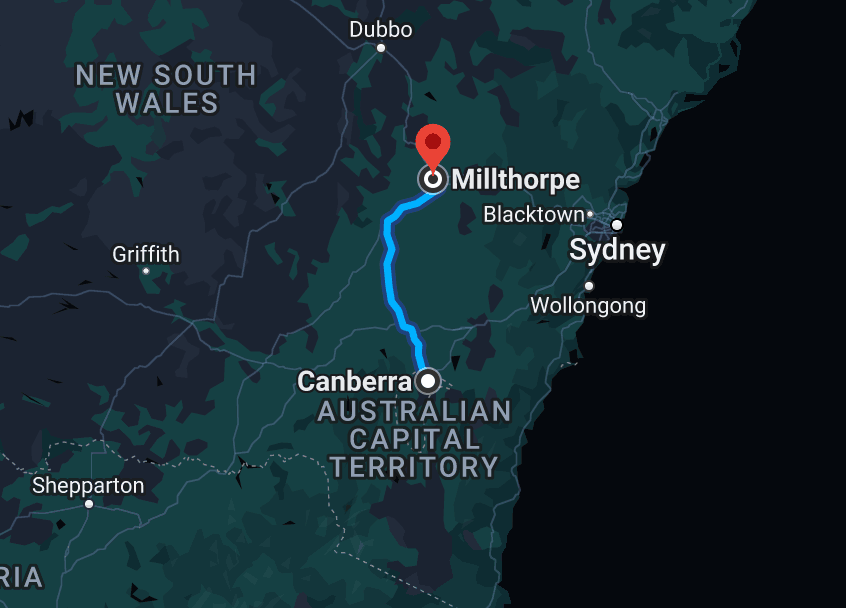
I probably take this further than most. Visiting my hairdresser involves a ritual of driving 270km each way and staying overnight with friends in Millthorpe where I used to live. That’s the equivalent of driving from Milan to Venice or further than Vienna to Budapest. In Europe this would be insane, in Australia just slightly bonkers. We readily acknowledge that we have a different relationship to distances. In my misspent youth, I dated guys who used six packs (beer) as their preferred unit of measure between cities. (Not condoned!) That was before drink driving was taken seriously. I have a tendency to measure distances by increments of towns. Canberra to Millthorpe is three hours; one hour to Boorowa, one hour to Cowra and then one hour to Millthorpe. It’s a rough estimate, but it works for me.
My hairdresser is good but there’s probably 50 equally good ones within a 10km radius from where I live. She knows me well by now and doesn’t bother with social niceties. If we talk, there’s a point to it. She’s a no-nonsense woman who has no need to pretend to be anything else. I like her. But that’s not the only reason I make the trip.
Over the seven years I lived in Millthorpe, I have made some good friends and rekindled some old friendships from a different part of my life. Funny how that works out. When I moved to Canberra, I left some very good friends behind, and it seems a shame to keep losing friends as we age. So, I decided not to let that happen. My hairdresser appointment is a good excuse to visit friends regularly. For I know when we say, ‘let’s keep in touch,’ it rarely eventuates. Our lives become busy, other priorities take over and before we know it, we have lost contact. Getting my haircut is my way of ensuring that I keep up with friends. I now need to come up with a similar strategy to see my friends in Sydney!
How far do you go to keep up friendships?

 From Quill to Quote