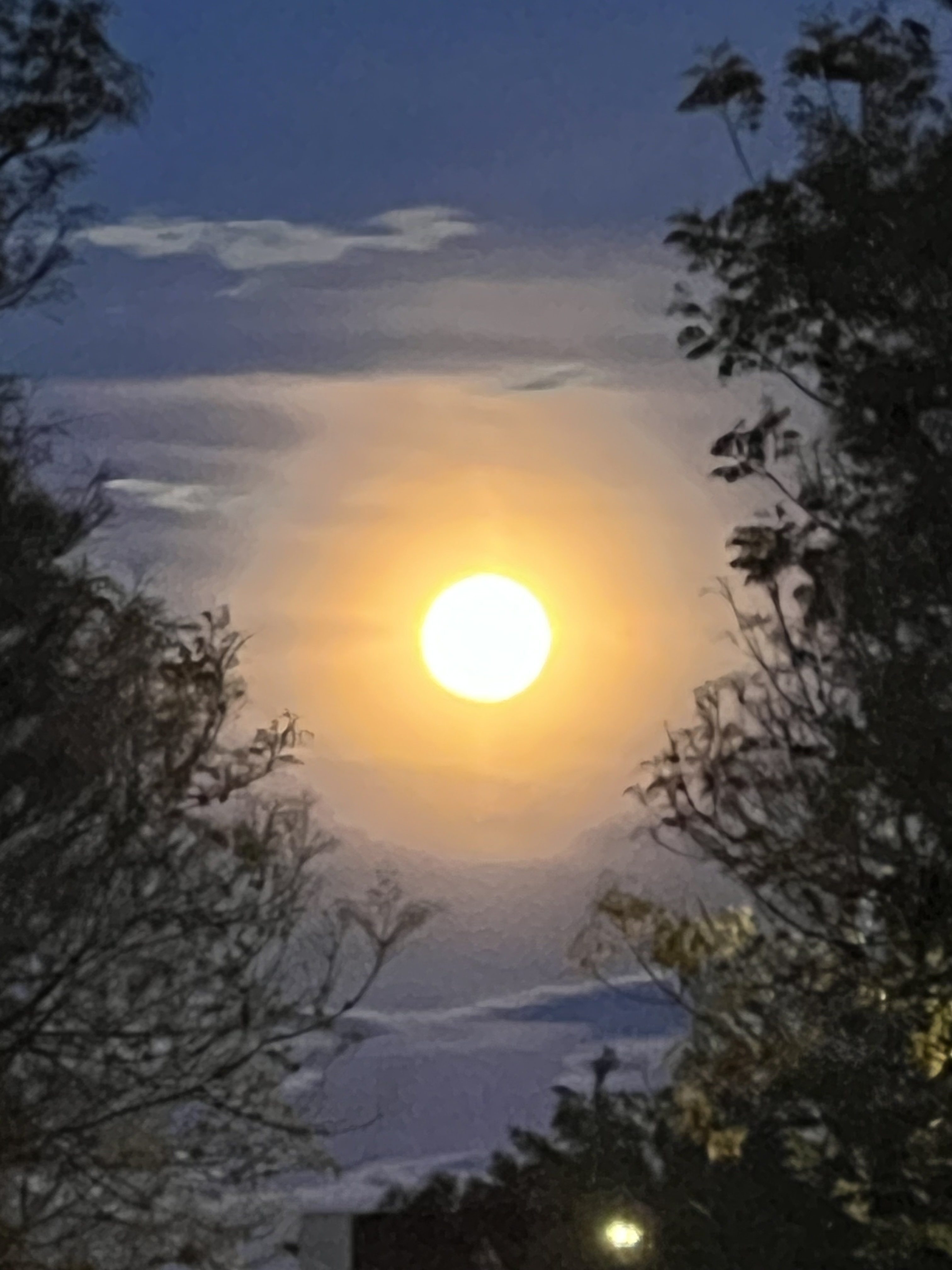

Like tides, I am drawn to the moon. Looking up from the cares of the world, there is my constant companion. Waxing, waning, lighting my way. Full moons always bring me joy. Every full moon catches me by surprise as if saying, ‘here I am, did you miss me?’. I sure did.
I was unaware of all the hype around October’s super moon, when the Moon is at the closest point to us in its orbit. This super moon was the closest the Moon has been for quite a while and appeared at least 10% larger and 30% brighter than the faintest moon of the year.
The Western world colloquially refers to the full moon in October as the ‘Hunter’s Moon’. Traditionally, it was the best time to see deer and other wild animals to hunt and preserve for the coming winter. Of course, this makes little sense in the Southern Hemisphere as we await sweltering summers, but the name persists.
There is a strong feminine connection with the moon, from the menstrual cycle which follows the 28-day lunar cycle, through to goddesses such as Luna and Selene named after her. The moon has played an important part in many cultures and religions. The Jewish calendar is lunisolar. Jewish people celebrate the first night of Passover when a full moon occurs after the spring equinox. In the Christian tradition, Easter falls on the first Sunday after the full moon following the spring equinox. Islam uses a lunar calendar with the new crescent moon marking the beginning of each month. The moon has influenced humanity since time immemorial.
Yet every light creates its own shadow. The moon has also been associated with madness, as in lunacy. Consider the quote from Shakespeare’s Othello ‘It is the very error of the moon. She comes more near the earth than she was wont. And makes men mad.’ There is, of course, no evidence to this myth, but it continues to flourish. Think of all the horror movies depicting a full moon and wolves howling. Then, in the early 19th century in the era of Romanticism, poets were associated with madness and mental illness. In truth, it was probably syphilis that caused their psychosis and mania.
Is it any wonder that seeing the full moon makes my heart jump a beat? I look up and see her on the horizon, as beautiful as a pregnant woman’s belly, about to bring forth new life on this planet. I swoon. My first instinct is to call my daughter, another lunar devotee, and tell her to look up NOW. Every minute counts as the moon rises and the optical illusion of a giant moon fades. Often, I will simply stop what I am doing, feast my eyes on her beauty and breathe in luscious long breaths in gratitude for what I have received.
 From Quill to Quote