Six Days Horizontal

Getting sick is like sitting down on a chair that’s much lower than anticipated. You land hard and wonder why you didn’t see it coming. The signs were all there – lack of energy, headache, a bit of a cough but it didn’t seem that bad. Until it was. And then the crash landing.

Six days in bed felt like long drawn out weeks. There were nights where minutes felt like hours and hours stretched into infinity until dawn. Unable to breathe through my nose, I sat half upright, sipping endless glass after glass of water in a futile attempt to keep my lips moist. It was pretty grim by Wednesday night. Thoughts meandered irrationally in and out of my consciousness. At one point I was writing scripts for ‘Vera’; trains of clever dialogues rattled by without ever stopping at a station. At other times I was coming up with ideas for Podcasts. Perhaps that synapse of an idea will make this suffering worthwhile.

Being sick for a length of time gave me ample of opportunity to appraise my life. Existential dread arrived on cue between the hours of three and four a.m., no alarm necessary. Had I done enough with my one wild life? Clearly not. My shortcomings lay exposed, expectorating. I was condemned, guilty on all counts. My optimism fled at the first sign of the tempest raging in my head.

The week has been confronting. I turned into a creature I barely recognised. I could have walked out of the pages of Fear and Loathing in Las Vegas. Any veneer of humour was chipped away, hope no longer resided in my soul. And my old friend, gratitude? She too deserted me and has only fleetingly reappeared in the past two days. A fair-weather friend on whom I thought I could rely. Faith too had deserted me.

Here I am on day eight and the fog is slowly lifting. I am now fully dressed and have even eaten a meal. I’ve stopped trying to wrestle with what I can’t control and settled into reluctant acceptance. My mood has steadied and the storm has eased. I am emerging, somewhat battered but essentially intact. I tell myself I’ll never take my health for granted again, and even as I think it, I know it’s probably horseshit.

Floating My Way into Calm

The first time I encountered a floatation tank was in Melbourne sometime in the 1990s. Back then, they were small pods which could either be closed completely or left ajar for those who suffered from claustrophobia. I didn’t know what to expect and found the experience relaxing but rather boring. It was also before I learnt to meditate.

On a whim, I decided to book a 60-minute floatation experience. I reasoned that if I fell asleep during an MRI, I would find floating in an enclosed tank relaxing. I booked into the nearest ‘Wellness Centre’ and a calm young woman met me at the front counter. The process was explained via a short video on an iPad; she then offered me a cup of tea and took me to the floatation room.

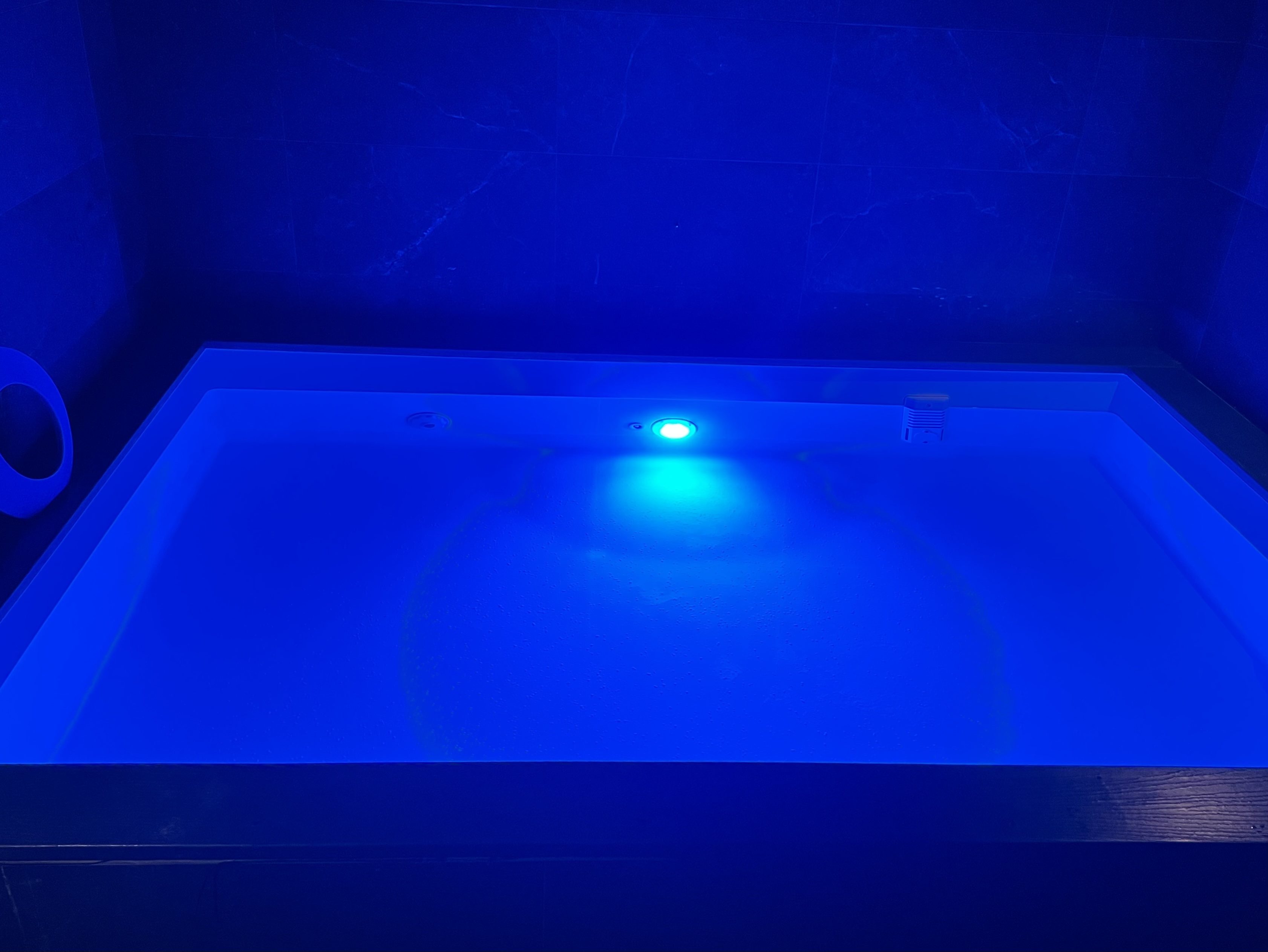
Instead of an enclosed tank, I found myself in a very spacious room with a shower on one side and a floatation pool taking up the length of the room. I was surrounded by blue light which I could turn off for complete sensory deprivation. Once showered, I stepped into the pool and immediately floated to the surface of the water. I chose not to have any music and turned off the light.

This may remind some people of solitary confinement and in a sense it was. I began a mindfulness of breathing meditation, where I counted each in and outbreath as one and then continued until I reached ten before starting at one again. I managed to focus for ten times ten breaths which roughly equates ten minutes before I lost track. I’m not sure how long I persevered with counting my breath before I fell into a deep sleep in zero-G.

Sensory deprivation is often used to reduce stress, relieve pain and help with concentration. When sensory input is minimised, it is easier to allow our parasympathetic nervous system to do its job and relax the body. It can lower the heart rate and produce a profound sense of calm. Sensory deprivation, especially when combined with high levels of magnesium sulfate (Epsom salts), can assist with muscle recovery and improved sleep quality. These are all sorely needed when we are always on the go, and my sore body sure appreciated the benefits.

A faint voice awakened me. I stirred, found the light switch and showered once more, washing the salt from my body. Heading to the lounge area, I encountered a number of slow moving, gently smiling people. After tea and a few quiet moments in the lounge, I opened the door and returned to the world outside; calm, rested, and savouring the silence within.

September Stirrings

As September and my birthday approach, I become acutely aware that the year is heading into the final waning quarter. We race about exclaiming ‘where did the year go?’, like we have done every year before this and no doubt will in years to follow. But years come and go in days and hours, in the actions and inactions that we succumb to in the moment. At the time they seem such tiny decisions that they really don’t matter but when we add them up, those moments become minutes and hours and then days and months.

It reminds me of that small biscuit that can’t possibly make a difference yet over time adding up to extra kilos or the five dollars for a coffee that can add up to a substantial amount of money when invested. We often look for the big things that make a change in our lives when we should be looking at the micro-moments that have the real impact.

Recently, I have begun to question every one of my purchases. Do I really need it? Will I really use it? How much will it be worth to me in six months’ time? They are quite sobering questions, and I have found that many things are quite unnecessary. This has also allowed me to appreciate the things I do have. The exception to my newfound frugality is buying books, but even there, I have curbed my spending. In part, because I am running out of both shelf and wall space to accommodate them.

As I approach the last quarter of the year, I am disappointed with my lack of progress on some goals but at the same time, I am buoyed by the progress of others. On reflection, this sounds fairly normal. We dream big at the beginning of the year but then, getting through the day with all its demands wears us down little by little. In addition, like joker cards, life’s twists and turns can jolt our lives onto a different track altogether. 

I head into my birth month taking stock of this past year, what I can achieve as we sprint towards the finish line of 2025 and what lies ahead for me in the coming year. I’ll be a year older, none-the wiser, but feeling positive about some of the habits I have been developing. Spending less and living within my means is a basic tenet in life that I should have acquired decades ago but I am proud that in this season of my life, I am on my way to conquering my spending habits and learning to make the moments count. It turns out, the last quarter of the year, and of life, is also shaped by the smallest of choices.

Mornings, Magpies and Me

Some children are up at 6 a.m. full of beans, ready to play. They wake their bleary-eyed parents with laughter, chatter and joie de vivre. I was never one of these kids. I’ve been a night owl from the day I was born.

My mornings have always been hard. Getting out of bed is hard. Jumping in and out of the shower is hard. Facing breakfast is hard. Anything beyond a grunt is hard. The only thing that isn’t hard is taking the dog for her morning walk.

Although I bitterly resent it before I go, the moment I’m out in the park the day changes. I remind myself this is worth getting up for: the cool air on my face, the well-trodden track under my feet, and the dog cantering ahead like a racehorse.

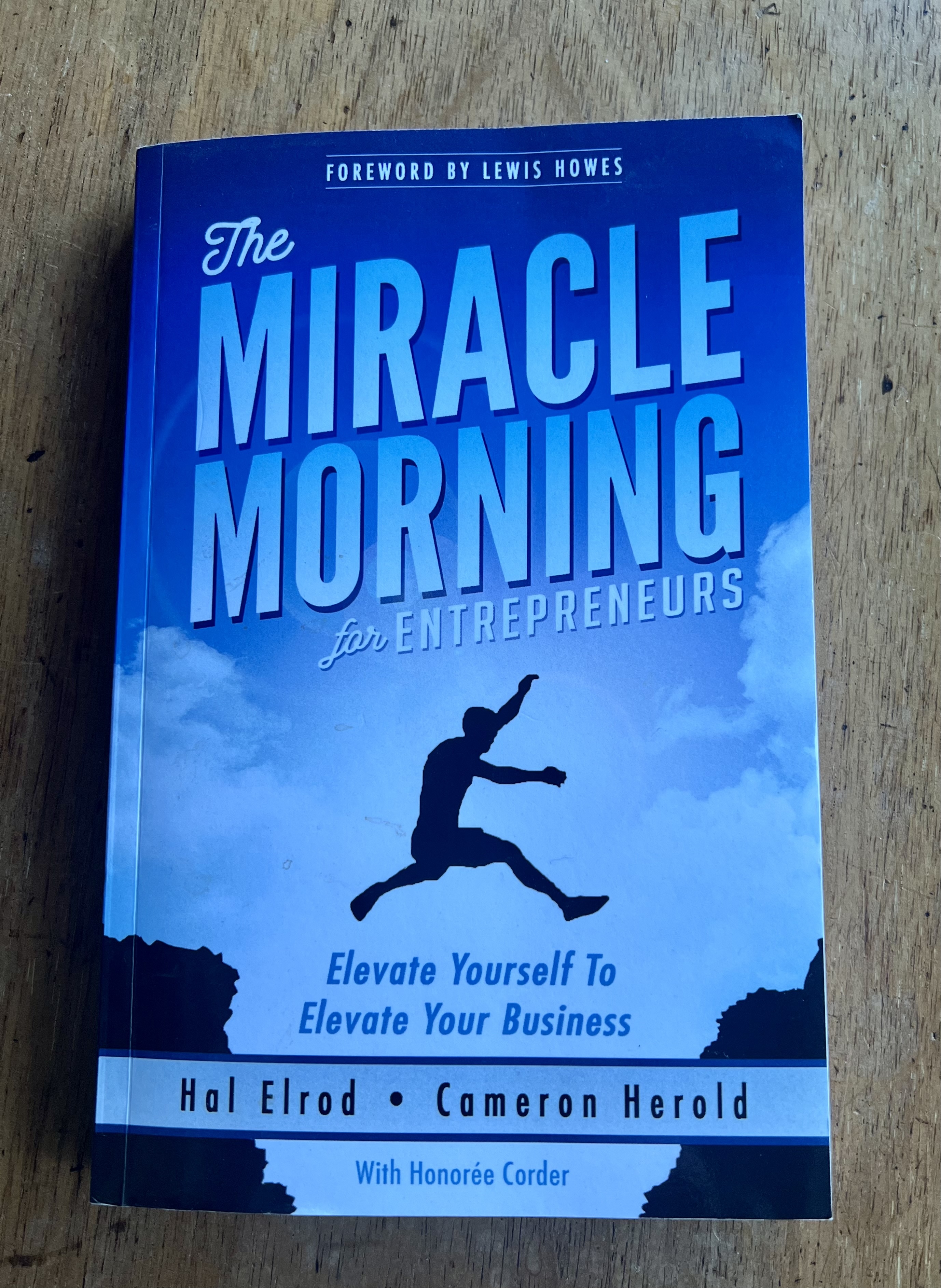
By this time, I’m smiling and have found my voice. I even enjoy meeting fellow walkers and saying hello. Yet the 45 minutes before the walk have been hellishly difficult. Why can’t I just skip the moaning and groaning and get to the good bits straight away? I’ve read The Miracle Morning, and each time I go back to it, I get all fired up about embracing the new habits it suggests. My enthusiasm, however, wilts the next morning when I actually have to put those lofty ideals into practice.

I now leave my phone in the kitchen and set my alarm so I have to get out of bed to turn it off. Great in theory. In practice, I’ve been known to yell ‘Siri, stop!’ loud enough for my phone to obey. When that hasn’t worked, the rebel in me has simply waited out the alarm with the doona pulled over my head. I can be ridiculously obstinate about getting up.

I’ve tried Mel Robbins’ five-second rule, but if you’re not committed, you won’t do it. I understand the theory (I always understand the theory) and for a while, when I’m all enthusiastic, it works. But inevitably, I slip back into bad habits.

This morning, I set my alarm 15 minutes earlier than I needed to and another for the right time. It let me hurkle-durkle for a while, letting thoughts amble lazily through my mind. With enormous effort, I stumbled out of bed and into the shower. Only when the warm water trickles down my face do I truly wake up. Until then, I’m a zombie condemning everything that crosses my path to hell and damnation.

I’ve always admired people who wake up ready to face the day. The world seems built for morning people. Life would be so much easier if I fell into line. But today, I’ve had a small win. I was out the door 20 minutes earlier than usual, and it made a huge difference. The dog had a much longer walk and I wasn’t in a hurry to get back. So instead of rushing, I enjoyed the magpies warbling and spotted a kookaburra perched on the overhead wire. I’d have missed this beautiful kingfisher on any other day. If every morning started with a kookaburra, I might stop arguing with my alarm. Might.

Bed Rest and Restlessness

I am an impatient patient. Bed rest is agony, not because of the pain but because I am railing against having to rest. Any other time, I long for a sleep in, a chance to have a leisurely morning, just not when I’m sick. Feeling unwell sends me into a spin of (mild) depression, feeling trapped and a sense of foreboding that I will never reemerge into the land of the hale and hearty.

I’ve had the luxury of a week off work. Was I pleased? Not a bit! I lay in bed checking emails, between coughing fits and fits of sleep. Things were happening without me running around. Everyone was coping but me. My colleagues were probably not even aware that I wasn’t there. I was superfluous.

Is this how retirement would feel? No longer needed, no one wondering what I was up to? I have always thought of the moment I leave as entering the land of milk and honey. I’d finally be able to do whatever I liked, whenever I liked. But would it be like this illness, stretching ahead without an end in sight?

Today I finally felt well enough to walk the dog and meet up with a friend. I came home, had a short rest and then proceeded to paint the laundry. First coat done, I had a longer rest before attempting the next tasks on my list. Is this what I have come to? Short bursts of energy to be followed by periods of rest before I can cope with the next item? Surely not!

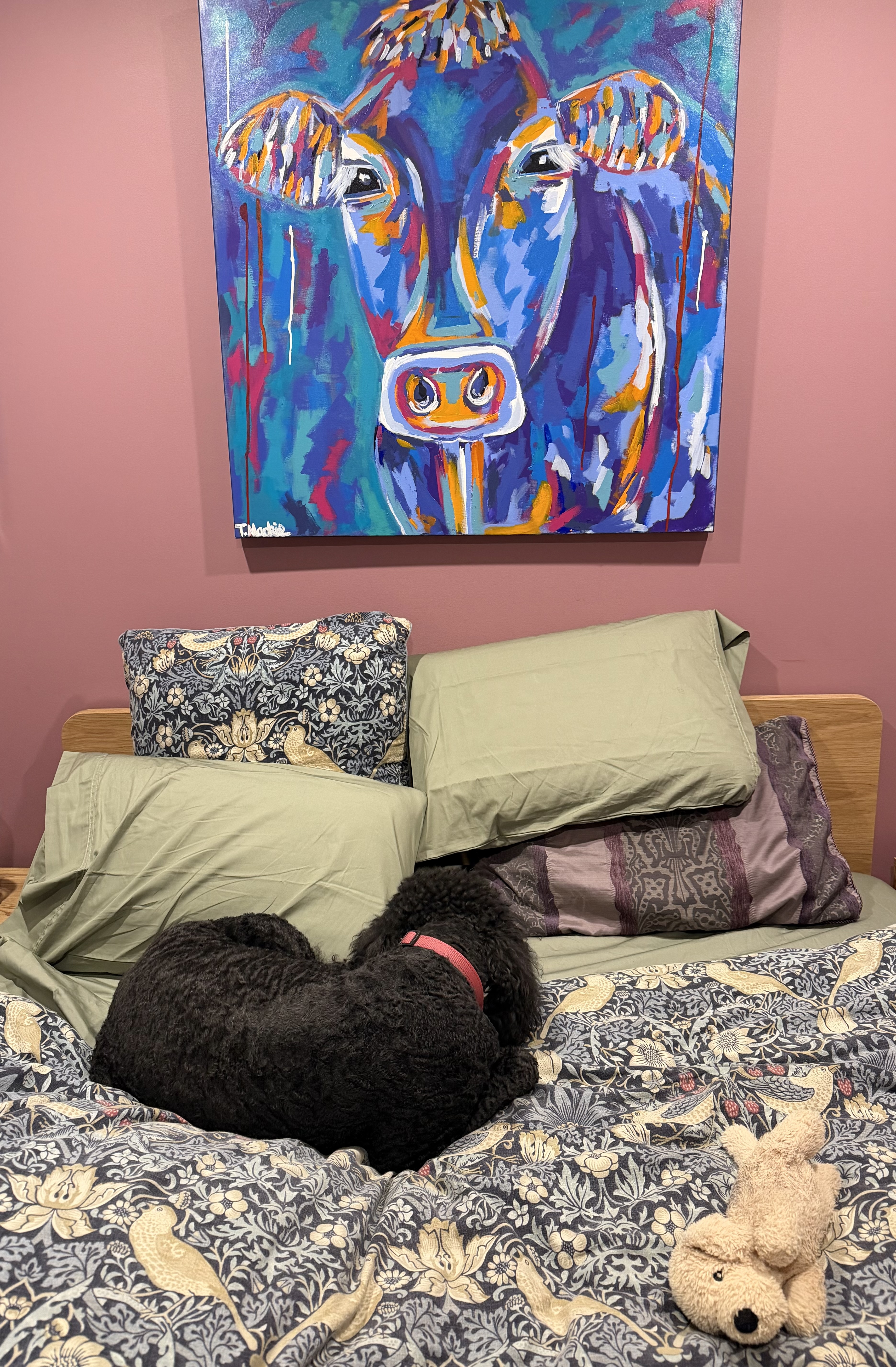
Tomorrow, the second coat goes on and I have a shelf to assemble before the new washing machine arrives on Monday morning. I may then head out to the Christmas in July markets. I’m already feeling better just thinking of it. That fresh coat of paint will not only give the laundry a new lease of life but will also renew my spirits. Perhaps, I just need to find a new rhythm. One that fits in with what my body is gently trying to tell me. On the other hand, maybe I’ll hold onto that thought until at least Monday and let the sleeping dog lie on the bed. After all, I have a laundry to conquer.

Low light, low mood

Today is the winter solstice, the shortest day of the year. Things are on the way up from here. Don’t get me wrong, I love the brisk, cold winter days but I do get affected by the shorter days. It can be as cold as it likes but I need light. A lack of light can make me feel quite listless and despondent. All I want to do is roll up in a ball and hibernate.

I don’t know whether I truly have SAD or Seasonal Affective Disorder but some of the symptoms fit. Symptoms like lack of energy, fatigue, sleeping too much, eating too many carbs, difficulty in concentrations, physical aches and pains, feeling anxious, blue, restless are all there but doesn’t everyone experience these at some point in their lives? It reminds me of looking at a horoscope and cherry picking your traits. Oh yes, I’m such a Virgo/Libra/Sagittarius because these five very generalised traits apply to me. Is it all in my head?

Well yes, it is all in my head in one way or another. And does it really matter if I can assign a label to my feelings? I just know I feel better when there is light around me, I just don’t like the heat that comes with it. One of the best days I can recall was a mid-winter freezing cold day in the Swiss alps with snow all around me, blue skies and a blazing sun above. I felt on top of the world, full of energy, weightless, content.

It doesn’t help to have to get up before the sun comes over the horizon. I’m gloomy and moody in the mornings until I get outside. Once I’m out walking and the sun appears, I am fine but cloudy days press down on me and keep me downcast.

I now understand why I have always felt depressed when curtains are drawn in summer to keep the heat out. It explains why I have opted for translucent blinds in my current home and why I fell in love with it the moment I walked in. There are large windows on three sides of the main room which not only let in light but the sight of trees.

I now have a better appreciation as to why people worship the sun. Even those of us who prefer to hide in the shade are drawn to her light. It isn’t her heat that I need, just her brightness and clarity. And so, on this shortest day of the year, I look forward to the light returning, day by day, minute by minute until the days are long and bright and my mood rises above the horizon.

The Miracle Morning Missed Me

Why can’t I get out of bed in the morning? Every night, my alarm is set on my phone and placed in the kitchen. I have chosen the most ear-piercing, shrill sound that I fear wakes my entire neighbourhood, but I still manage to roll over and go back to sleep. I have tried going to bed earlier, setting the alarm for as late as possible, setting it earlier to give myself more time, having a thermos of tea at my bedside, all to no avail.

The strange thing is that I’m not even comfortable in bed once I wake up. My hips ache, my bladder protests and still I lie there, convincing myself that ‘out there’ is not only less desirable but downright ghastly. It will be too cold and much too unpleasant. Yet when I finally get up, it is quite agreeable out there. The shower is warm, the world seems benign and when I take the dog for her walk, I can’t help but feel jubilant. The frost and silent fog are achingly beautiful. I wonder why I can’t return to this feeling to get me out of bed earlier. It would be so much more enjoyable to have an extra twenty minutes out in the park instead of lying in bed.

I never thought I’d say this, but I wish I were a morning person: someone who wakes up, jumps out of bed fully awake and ready to tackle the day. The type of person who is bright and chirpy, finds the first is hours of the day invigorating and gets things done before others are awake. It seems to make no difference whether I have six hours or ten hours sleep. I wake up bleary eyed, slightly grumpy and always at least a little more tired than when I went to bed. Luckily, my dog doesn’t mind me being monosyllabic for the first hour.

I have read ‘Miracle Morning’, ‘The Five Second Rule’ and various other books of the same ilk, trying to convince me that it is a merely a question of putting my mind to it. Lord knows, I have tried. I have even succeeded for a week or two at a time, but it was always a struggle, and I never felt full of energy. My rocket booster kicks in about 30 minutes before bedtime, which would be perfect timing if my job were midnight space travel, but not so great for a 6am start in the real world.

Many years ago, I taught English to Chinese students at a private college. It wasn’t a great job and for the most part I was deeply unhappy there. But there was one moment that has become a favourite of mine, an anecdote that resonates with every fibre of my being. A young man handed me his journal to be marked. The first sentence read, ‘I was alarmed at 7am.’  I simply couldn’t bring myself to mark it as incorrect.

The Quiet Cost of Disconnection

A few weeks back, I drove 330 km to attend friend’s birthday lunch. I hadn’t seen her for about six months and was delighted to surprise her on the day. I also caught up with a couple of friends I hadn’t seen for years on that weekend. Since then, my life has revolved around work, and I have barely seen anyone. Usually, I don’t mind at all, I’m a bit of a loner and rarely feel lonely. Lately though, there’s been a niggle gnawing within me, a slight feeling of dissatisfaction, which I’m finding disconcerting.

I talk to lots of people during the day, so it isn’t a lack of contact. However, most of my interactions are transactional and I don’t feel connected in any meaningful way. Today, it occurred to me that I know very little about the private lives of my colleagues and they know very little about me. Whilst I don’t expect to have all my social needs met at work, it is where I spend a large chunk of my time.

We always think about the quality of our diet and exercise as the main risk factors for our health. Recently, studies have identified another risk factor, which could be equally as important to longevity and health – the importance of social relations. This may be because the support that friends offer can lower our stress hormones, it can even help regulate insulin and help with our gut function. It reminds me of studies that have been done on positive coronary effects of purring cats on laps. We all need companionship and physical touch.

What matters most is the quality of our interactions. Happy marriages can help prolong life; unhappy ones can lead to poor health outcomes. While not causal, there’s a definite a link. This also applies to friendships. The stronger and more harmonious our friendships, the happier and healthier we tend to be.

But it isn’t just the social interaction that’s been lacking from my life. I haven’t done much of the two things that keep me centred. The first is walking and the second is writing. Before work, I only fit in 15 to 20 minutes of a walk and, now that winter has arrived, I mostly get home after dark. I miss my hour-long stroll after work and so does the dog. No such excuses for my lack of writing.

After a few weeks of missing the online London renegade writers’ group, I finally logged on today. We wrote, we chatted, we laughed and cheered each other on. Such a simple step and I already feel better. Two hours later, I’m buoyed, smiling, and content with my lot once again. And here’s the blog post to show for it.

Ringing Bells and Deepening Breaths: A Practice in Presence

Breathing, such a simple act. An involuntary function of the body that stays with us from the moment we come into this world to the moment we leave it. So why is it so hard to for us to master?

Like many people I know, my breath is shallow unless I pay attention to it. When I consciously think about it, my breathing slows and moves to my belly. At the same time, my shoulders drop, and I feel calmer after just two or three rounds. I am not meditating, just paying attention while I go about my daily tasks. Yet I don’t remember to do this simple exercise often enough.

Today I heard Jonathan Fields talk about the importance of breathwork. He starts his mornings with taking some inbreaths and then exhaling just a little longer. As he repeats this, the breaths naturally get longer, and the exhalation is also lengthened. This has the effect of calming his mind and starting the day feeling at ease. I think this is a worthwhile routine to incorporate into my morning.

The scientific reason why this works is that stress puts the sympathetic nervous system in charge, which activates the ‘fight or flight’ response. On the other hand, when we breathe deeply, we engage the parasympathetic nervous system which slows the heart rate and makes us feel relaxed. As our breath is always available to us, we can use it to help us regulate emotions.

I was reminded of something I always do when I hear bells ring. I stop and breathe consciously until I can’t hear them anymore. In Eastern meditation practices, the bell is always a reminder to return to the breath. This practice was easy to incorporate into my daily life in Europe where church bells often chime on the quarter hour. When I was teaching in a small town in Switzerland, the bells were always there to help me come back to my breath during the day. It made me present to that moment with my students. I miss hearing them in Australia.

So today, I set a gentle sounding timer for each hour of the day, reminding myself to consciously breathe, drop my shoulders and to move my body. I spend too much time in front of my computer and am unaware of the tension I hold. Now, I have an external reminder to bring me back to the physicality of my body and my breath. As Thich Nhat Hanh said ever so simply, ‘breathing in I calm my body, breathing out I smile.’

Bird Song

One morning while having breakfast, I tuned in to sparrows chirping. They like hiding in an overgrown hedge out the back providing them with ample shelter. It is never one sparrow that sings but a host of them. Their simple song, made up of only a few notes, is sung mainly by the male to attract females or fend off invaders. I can’t help but smile at their incessant bright chirruping. It isn’t very loud and provides a pleasant soundscape as I sip on my cup of tea.

Soon another sound gets my attention. The blackbird’s song is one of my favourites, mainly because it reminds me of my childhood. I even named a dog after this bird. While its song varies for each verse, it always seems to start on the same mellow note. Their phrases are short and often include ‘djuk djuk’ clucks. No other birds have the same slightly melancholic effect on me.

Scientists have found that listening to bird songs is conducive to mental health. It surprises me that we need this confirmed through research. This revelation reminds me of the recent discovery of ‘silent walking’. Those brave enough to try this new trend have reported a reduction in feeling distracted. Who would have thought. It turns out that being in touch with nature is calming.

I can now hear my three tenors warble at the font of the house. This is what I affectionately call the magpies that come to feed on the front veranda. Magpies often get a bad rap for being aggressive. In a small town like Millthorpe, they know all the people and can distinguish between those who treat them well and those who do not like their company. I am often rewarded for being kind to them with their mellifluous warbles as they sit on the railing, necks craned, beaks raised skyward.

Nature plays a vital role in our quality of life especially for those who live in cities. We are seeing an increased willingness to consider the health of urban environments through improving biodiversity. I’d like to see a greater variety of birds in the heart of Australian cities beyond pigeons, gulls, and ibises.

Of course, not all bird sounds have a positive effect on us. Some can be downright irritating. Take the Koel for example. To be subjected to the coo-eee call of a Koel rising in pitch and fervour is akin to torture. The kindest thing I can say about them is that I am grateful that they are migratory birds. I’d much rather listen to a flock of local sulphur crested cockies. Noisy as they are, I have a soft spot for these larrikins. They are mischievous, funny creatures who relish play and pleasure. I love the way they hang upside down from the gutter to look through my window or find novel ways to open my garbage bins to see what is hidden inside. Curious, cheeky and utterly uncontrollable, they are the epitome of the rebel without a cause. Cockatoos often wreak havoc, yet I can never be cross at them for long. Theirs may not my favourite bird call but they make me laugh like no other bird can.

There is so much to learn from pausing to listen to our natural environment. Tuning in to bird songs helps me get out of my head and pay attention to my surroundings. I focus wholeheartedly on listening rather than looking. It’s a skill many of us neglect.