
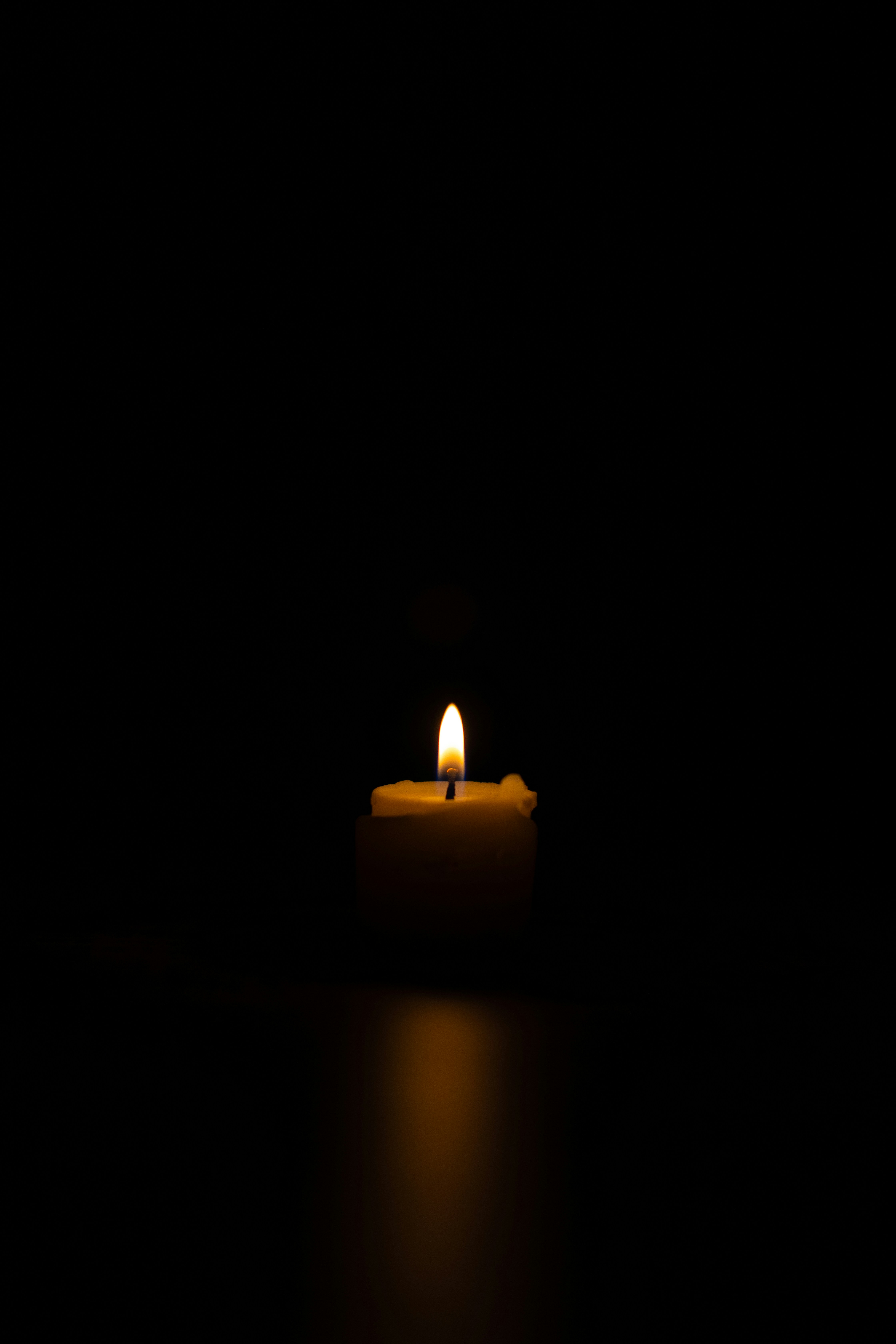
A shared flame

Photo by Sixteen Miles Out on Unsplash

In the Christian tradition, Jesus is referred to as the light of the world. His birth, which is what we celebrate at Christmas, is heralded by a bright star showing the way to Bethlehem. During Advent, the four weeks before Christmas, a candle is lit on each Sunday in anticipation of Christmas. In Scandinavian countries, the Feast of St Lucy on December 13 is celebrated with the wearing of candle crowns, bringing light into the Advent season. Similarly, Yule, the pagan festival marking the return of light, is celebrated in the Northern Hemisphere at the winter solstice, the shortest day of the year.

In the Hindu tradition, the festival is called Diwali and it occurs at the beginning of winter to symbolise the triumph of light over darkness, good over evil, and knowledge over ignorance. Buddhists celebrate Vesak, marking the birth, enlightenment and death of the Buddha, with the lighting of lamps and lanterns. While there is no official festival of light in the Muslim tradition, lights and lanterns are prominently displayed during Ramadan and Eid.

And so we come to the Jewish celebration of Hanukkah. The eight days and nights of Hanukkah commemorate the rededication of the Second Temple in Jerusalem and the miracle of the oil used for lighting that lasted eight days, while the temple was fought for and won back from the Greek Syrian Seleucids who had defiled it. Over the years, Hanukkah has come to symbolise resistance against injustice and oppression or, to put it another way, good vanquishing evil.

As humans, we are drawn to light for safety, warmth and the provision of food. Is it any wonder that light, especially candlelight, is a shared symbol across cultures? Light has always been a metaphor for all that is good and just in our world. This is why the murderous acts at Bondi Beach were such a shock for us all. Both secular and religious Australians wish each other joy and peace for the year ahead. We believe that good will triumph over evil and, as Martin Luther King Jr. said, ‘darkness cannot drive out darkness; only light can do that. Hate cannot drive out hate; only love can do that.’

This Christmas, let us all light a candle for our brothers and sisters as a sign that we will not allow darkness to prevail.

Smitten and Smote: Biblical Ponderings with Shampoo

Does anyone else think too much in the shower? I lather my hair and my mind wanders down odd side tracks and into cul-de-sacs. A quick rinse is never enough. Even on busy mornings, I stretch time to follow my thoughts.

This morning, my mind began to wonder about the American pronunciation of the word ‘herb’, which is ‘erb. Was this an older form of the way we say it, fossilised from when America was colonised? Most likely, I thought. Does this mean that they would say an herb rather than a herb? Again, I answered in the affirmative. If we say an hour, it makes sense that they would say an herb. After all, we sometimes see a history and an history in printed form.

How did I come to mull over this word? I have been hearing it a lot while listening to both podcasts and lately, when listening to the Old Testament as an audiobook. I don’t know how I came to buy an American version rather than the one narrated by David Suchet of Poirot fame. However, I am used to the American woman’s voice by now and will have the pleasure of listening to her for the next 65 hours.

I decided to listen to the Old Testament because I have only ever known fragments of it. The classic stories like Adam and Eve, Noah’s Ark, Moses and the Exodus, the Ten Commandments and Lot’s wife turning to salt were about the extent of my knowledge. And some Psalms of course. I wanted to go deeper to understand more of the foundation of the three Abrahamic religions, namely Judaism, Christianity and Islam. Of these three, Islam split off quite early, following the lineage of Ishmael, son of Abraham, while Judaism from whence Christianity originated, followed the lineage of Isaac, Abraham’s other son. However, in Islam, Isaac, Moses and Jesus are still acknowledged as prophets.

I was thinking about these things and the language used in the translation of the Old Testament from Hebrew. There’s much begetting, smiting and going in under women. Smite, smitten, smote. I have only been smitten in the positive sense. But I guess that too has the implication of being inflicted a heavy blow, like being hit with Cupid’s arrow.

There are a multitude of abominations and even more circumcisions. King Saul demanded that David bring 100 foreskins of Philistines as a price for Michal, his daughter. How did he carry them back, I wondered. In a bag or perhaps pierced on a stick? I did squirm a little at that thought.  I’m only part way through and I’m already desensitised to the brutal killings, wiping out of whole towns including women, children and ‘sucklings’.

Words have always fascinated me. To tarry for example. In the bible it means to wait or to linger for longer than intended. It has a sense of being delayed by someone or something. Nowadays when we tarry, we are slow in action or in departure, but it is rarely used in everyday speech. I can only imagine it used satirically as in, ‘tarry not, young wench!’

I have tarried too long under the shower. Time to rinse off the ‘erbal conditioner and seize the day, lest I be smote for the abomination of wasting precious resources of this dry country.