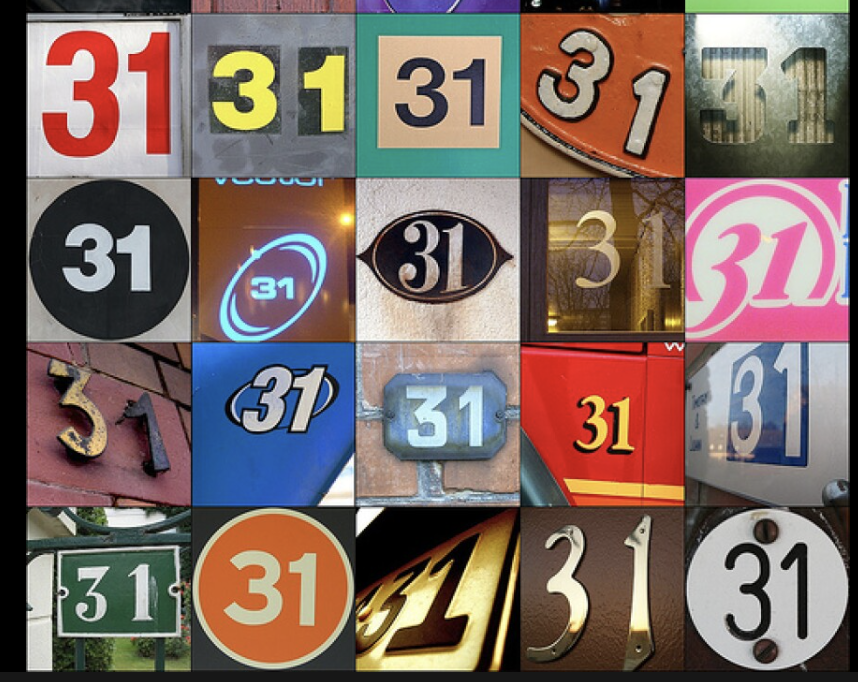
A prime number

ssa-school.org

Thirty-one years ago today, we took a taxi to the registry office in Sydney where we were to meet your parents, the only invited guests for the ceremony. I opted for a pink pant suit, and you wore an elegant jacket and tie for the occasion. We had wanted to keep it low key.  

We didn’t tell anyone about our wedding, it was strictly a private affair, but people found out anyway. The next Monday at work, some observant colleagues noticed your wedding ring and for the next few days, it was all they could talk about. My colleagues guessed too and by the end of the day I was presented with an enormous bunch of native flowers. They made your eyes itch and set off sneezing fits, so I relegated them to the balcony of our small apartment.

Marriage didn’t change much between us, but parenthood did. Our daughter became our focus and as my job became increasingly demanding, you were the one to take her to the park, play tennis or teach her to ride a bike. We didn’t have nearly enough time for one another, but we knew we had each other’s back.

You had much more patience with her than I ever did. I was a hard task master when it came to learning but you managed to achieve the same results without tears. Maths was your strength, and it has become hers too. You both had a love of patterns in numbers and your favourite numbers were prime. Seventeen, your birthday and thirteen the day you died, both prime. Sixty-one, the age at which you left us to grieve an innumerable loss in the prime of your life.

We were married for 19 years. Yet another prime number. Each year we’d celebrate our wedding anniversary with a special dinner, but we never bought each other presents. We didn’t need to. Our love didn’t rely on any outward signs. We knew its strength from the small acts of service, the cup of tea in bed each morning, dinner on the table at night, washing brought in without a word. Sometimes it was conveyed in a look, a smile, a hand across the table.

Then, as our daughter became increasingly independent, we reached out for each other again. We’d take the train to explore a town, listen to an orchestra or visit art galleries. But our time was to be cut short. I never indulged in false hope. Three months before you died, we visited the Art Gallery of NSW for an exhibition on modernity in German Art. You knew it would interest me and booked the tickets. It was a sunny day, not a cloud in the sky as we waited at the traffic lights on the corner of Hyde Park and Macquarie Street.

I looked up into the bluest of blue skies, skies the colour of your eyes. I remember thinking, what a pity it was that I wouldn’t share the rest of my life with you the way I had always intended. I was overcome by great sadness but couldn’t divulge my thoughts. Instead, I smiled and resolved to have the best day with you at the exhibition, which I did.

Today, we would have celebrated our 31st wedding anniversary and you would have made a joke about it being an auspicious number. You’d be 73 now, just shy of your 74th birthday. It is hard for me to imagine you at this age, but I know you’d still have that glint in your azure eyes.

‘We’re still in our prime,’ you’d say, and I’d fall in love with you over again.
Melbourne Cup Day

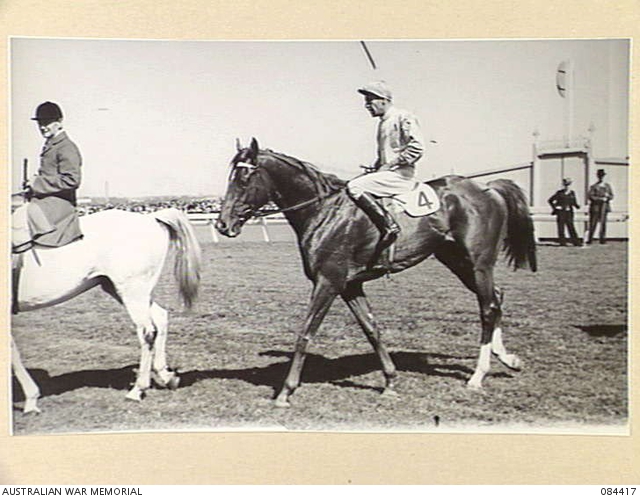
Sirius, Melbourne Cup winner 1944

Roger could recite every Melbourne Cup winner going back to his birth year, 1944. It was his favourite party trick. Starting with Sirius, he could name them all and knew details about most. He loved horses, had a fervent interest in racing carnivals, but never had a bet. The last horse to be committed to his phenomenal memory was Verry Elleegant, the first horse to ever win the Melbourne Cup from barrier 18.

While I admired his passion, I could never reconcile the love of horses with racing. My heart broke every time I heard about an accident on the field. These horses rarely survive. It also seems to me that we don’t need to encourage betting in a nation that has the greatest per capita losses from gambling worldwide.

The day that Dunaden won the Melbourne Cup is seared into my memory. My husband, Peter, was returning to work after several months on sick leave. He had a part of his lung removed after we discovered that his Melanoma had spread. Things were going well; he felt better and was looking forward to returning to work. We dared to be optimistic.

I received a muffled phone call at about 10am on Cup Day. He was calling from the waiting room of the hospital where he had received his previous treatments. ‘I’m alright,’ he said in the way he did when he wanted to shield me from distress. I had to prise the details out of him, the way I always did when I needed to know the truth.

‘I wasn’t feeling well on the train and when I got off, I collapsed. People helped me up and eventually I had enough strength to walk to the medical centre. They sent me straight to hospital.’

At that moment, I knew. I knew we were at the starting post of a race against time and the odds were stacked against us. It was a race we would never win, no matter how much I pleaded with the specialists. We were riding on their mercy and time was running out. I didn’t believe in miracles, but I dared to hope. I dared to hope for Christmas, then New Year.  After that, I hoped for our daughter’s birthday and our wedding anniversary. He never made it to either. The race had run its course.

Melbourne Cup Day makes me anxious. I am taken back to these dark times of loss. The loss of a partnership of over two decades, the loss of innocence for my daughter, and the loss of a deep love. I am also reminded of a more recent loss, that of losing a second chance at love with a man whose joyful connection to the Melbourne Cup is all the more lamentable now that he too has run his final race. Yet I can’t help but feel grateful to have accompanied both of my valiant men on their final stretch to the finish line.

Radical Gratefulness

Gratitude has become trendy with the positive psychology movement. You can always find something to be grateful for – be grateful for your breath, a pretty flower, a kind word. While I agree with the sentiment, I wonder whether the next generation who hear this mantra will grow up like I did, having to eat everything on my plate because I had to think of all those starving children in India. I am quite sure none of my Indian friends ever benefitted from the extra mouthful of cauliflower or cabbage I forced down my throat and it created a very skewed relationship with food for me which has lasted a lifetime. Waste not, want not…

Don’t get me wrong, gratefulness is a beautiful state and I do believe that we need embody it much more than we do. My gripe is the glib statements that often sound forced and obvious.  What I have been grappling with is what we do when things go wrong in our lives. How to be grateful when truly terrible things happen. This is what mean by radical gratefulness.

When I watched Peter die, struggling to take his last breaths, in those moments, I felt grateful. Not for the intense sunny morning that seemed so incongruous with what was happening, nor for the 20 or so years I had spent with him, but for those awful moments where I watched him suffer and that I could be there to share them with him. As my dear friend Janet said at her husband’s funeral, ‘Today is a beautiful, terrible day.’

Ten years later, I sat with Roger as he took his last breath and once more, I was grateful to have had the honour to sit with him in that beautiful, terrible moment. To bear witness to someone’s final moments is to be filled with deep sorrow, pain and beatitude. Radical gratefulness is the only way I can describe this. It is the experience of two opposing feelings in visceral communion through grace.

And so it was this week when I experienced a major setback. It was my fault – I missed a crucial date, and it has cost me dearly. My first reaction was to be annoyed, frustrated, and to be honest, gutted. But as time went on, I was able to find my way back to radical gratefulness. I didn’t accept the ‘it happened for a reason,’ ‘something better will come your way,’ comments, although I truly appreciated the love and empathy I received. No, I forced myself to look at the situation deeply, accept it fully, and be grateful for the lesson I have learned about my chronic inattention to detail. It simply matters, and I’ve stopped making excuses about being ‘the big picture thinker’.

I can now say with conviction that I am grateful for the mistakes I’ve made, for they have enabled me to learn and grow. As Alex Elle explains eloquently, ‘Gratitude practice isn’t about pacifying our painful or challenging times —i t’s about recognizing them and finding self-compassion as we do the work.’