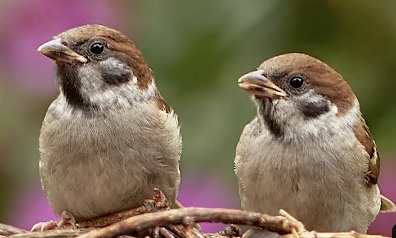
One morning while having breakfast, I tuned in to sparrows chirping. They like hiding in an overgrown hedge out the back providing them with ample shelter. It is never one sparrow that sings but a host of them. Their simple song, made up of only a few notes, is sung mainly by the male to attract females or fend off invaders. I can’t help but smile at their incessant bright chirruping. It isn’t very loud and provides a pleasant soundscape as I sip on my cup of tea.
Soon another sound gets my attention. The blackbird’s song is one of my favourites, mainly because it reminds me of my childhood. I even named a dog after this bird. While its song varies for each verse, it always seems to start on the same mellow note. Their phrases are short and often include ‘djuk djuk’ clucks. No other birds have the same slightly melancholic effect on me.
Scientists have found that listening to bird songs is conducive to mental health. It surprises me that we need this confirmed through research. This revelation reminds me of the recent discovery of ‘silent walking’. Those brave enough to try this new trend have reported a reduction in feeling distracted. Who would have thought. It turns out that being in touch with nature is calming.
I can now hear my three tenors warble at the font of the house. This is what I affectionately call the magpies that come to feed on the front veranda. Magpies often get a bad rap for being aggressive. In a small town like Millthorpe, they know all the people and can distinguish between those who treat them well and those who do not like their company. I am often rewarded for being kind to them with their mellifluous warbles as they sit on the railing, necks craned, beaks raised skyward.
Nature plays a vital role in our quality of life especially for those who live in cities. We are seeing an increased willingness to consider the health of urban environments through improving biodiversity. I’d like to see a greater variety of birds in the heart of Australian cities beyond pigeons, gulls, and ibises.
Of course, not all bird sounds have a positive effect on us. Some can be downright irritating. Take the Koel for example. To be subjected to the coo-eee call of a Koel rising in pitch and fervour is akin to torture. The kindest thing I can say about them is that I am grateful that they are migratory birds. I’d much rather listen to a flock of local sulphur crested cockies. Noisy as they are, I have a soft spot for these larrikins. They are mischievous, funny creatures who relish play and pleasure. I love the way they hang upside down from the gutter to look through my window or find novel ways to open my garbage bins to see what is hidden inside. Curious, cheeky and utterly uncontrollable, they are the epitome of the rebel without a cause. Cockatoos often wreak havoc, yet I can never be cross at them for long. Theirs may not my favourite bird call but they make me laugh like no other bird can.
There is so much to learn from pausing to listen to our natural environment. Tuning in to bird songs helps me get out of my head and pay attention to my surroundings. I focus wholeheartedly on listening rather than looking. It’s a skill many of us neglect.
 From Quill to Quote