The stick library

We have become familiar with street libraries which have popped up in the most unlikely places providing a much-needed community service. People take books that pique their interest and bring back ones they have read, but no longer wish to keep. There are no forms to fill out, no due dates nor any fines to worry about. It is a self-regulated system that works because everyone who uses it benefits. It only takes one person to start it, keep an eye on what comes and goes, tidy up every now and again, and occasionally cull. No wonder they have become such a hit.

Yesterday, as I was walking two dogs at a local park in Watson, Canberra, I discovered a variation on the theme – a stick library. My first reaction was joyous laughter. Such a charming idea matched with a quirky sense of humour, and a doggone purpose. In its vicinity, I spied four people and at least double that number of dogs. I should also mention that there was a lagoon nearby. The humans were standing at its edge, throwing sticks into the water for the dogs to fetch.

I walked up to a man whose Border Collie ran towards us with two sticks in his mouth.

‘What a great idea,’ I said, pointing to the stick library.

‘Yeah, whenever we used to come down here, no one could ever find a stick to throw,’ he said. ‘Then some guy decided to do something about it and since then, people bring sticks back for others to use.’

‘I love the community here in Watson,’ a younger woman chimed in. ‘The stick library speaks volumes about the kind of people who live here. It’s such a friendly place.’

‘Someone called ABC radio the other day to say thank you for the stick library and the switchboard lit up,’ the man added. ‘Now they’ve tracked down a guy called Tom who’ll give an interview at the local radio station.’

I nodded in appreciation and could immediately see the appeal of this good news story. After all, we are a dog loving nation. One in three households in Canberra owns a dog. You don’t have to walk very far to encounter a pooch with its special human beaming with pride as they make their way to the nearest off-leash area. Exercise is essential, especially in a city brimming with apartments. And what better exercise than to fetch a good old-fashioned stick?

30th Wedding Anniversary

I remember that summer’s day 30 years ago. There wasn’t a cloud in the sky and the weather was mild for Sydney. It was perfect. We had planned a low-key event with only your parents as our witnesses. Nothing fancy.

You weren’t that keen on marriage, but it was important to me, so you went along with it. At first you didn’t want to tell anyone at all, but everyone noticed your ring at work the next day. Years later, you couldn’t imagine not being married me, but I’m getting ahead of myself.

On the day, we arrived at the Registry Office, me in my pink suit and you, quite informal, in a black shirt and cream jeans. We were greeted by your parents and your sister, whom you hadn’t invited. She came along anyway to see her brother on his big day. After the ceremony was over, she surprised us with a gift – a two-hour lunch cruise on a replica of the Endeavour. We made our way to Darling Harbour and boarded the boat.

That evening, your parents came to our place for dinner. Your father noticed that I was doing my best to impress them. He was so happy his son had ‘finally settled down.’ We didn’t know then, that in four months’ time he would collapse in a supermarket and never regain consciousness. Afterwards, you often remarked that it was rare to see your father as proud as he was on our wedding day.

By our third anniversary you were holding our sixteen-day old daughter. It was love at first sight and you never stopped loving her with all your heart. Fatherhood suited you. The two of you adored each other in ways that is only comprehensible to daughters and their fathers. I should know, I had a father like that.

While you loved us wholeheartedly, you were never much good at making decisions. They were left up to me. Or, according to you, I never gave you enough time to think things through. I was impulsive and driven. My nesting instincts kicked in once our daughter was born. Although you felt harried, you always went along with my decisions in the end. It turned out that I was pretty good at making the right ones. You, on the other hand, were good at keeping me grounded and working out the logistics. Practicality has never been my strong suit.

Our lives went on and we became steadfast partners. We were like hands that fitted into well-worn gloves, comfortable and warmed by each other’s presence. Without much need for discussion, we agreed on how to raise our child, what mattered most in life and were buoyed by the ideals that sustained us. Our house was a place where academic discourse could dominate dinner conversations, yet humour and laughter were never far away.

We had a magical year in Switzerland shortly after you were diagnosed with melanoma. A disease you would eventually refer to as ‘the bastard’. That year, we were still clinging to the life-raft of hope. I was working as an exchange teacher, and you took leave to write your PhD. We explored every corner of Switzerland on weekends, and you relaxed into your role as the house husband who shopped, cooked and cleaned while writing the next chapters of your thesis. We both wished that the year would never end.

It wasn’t too long after our return that ‘the bastard’ began to eat its way through your body. Quite by accident we discovered it had attacked one of your lungs. The chest pains I thought were a heart problem turned out to be the spreading cancer. You never quite recovered after the next operation. Although you bravely attempted to return to work, you collapsed on the train on your first day back. After that, it was a quick downward spiral. None of us could have imagined how quick it would be.

You were quite unwell at your last Christmas with us, but you did your best not to show it. You even took our daughter on a long bush walk a week later. A fortnight after that, you were unable to make it to bathroom unaided.

We decided the hospital was unable to help us with what lay ahead and thankfully they didn’t argue. I took you home on the Wednesday and by Friday morning we were saying goodbye as you laboured your last breaths. It was both a beautiful and at the same time agonisingly confronting experience. We held your hand, told you we loved you and let you go. Your dog came, licked your hand, lay upon you, and would not leave. It was heartbreaking to witness.

Twenty-eight days later would have been our 19th wedding anniversary and on the 10th of February this year, it we would have been our 30th.  I raise my glass to you.

Your 100th birthday

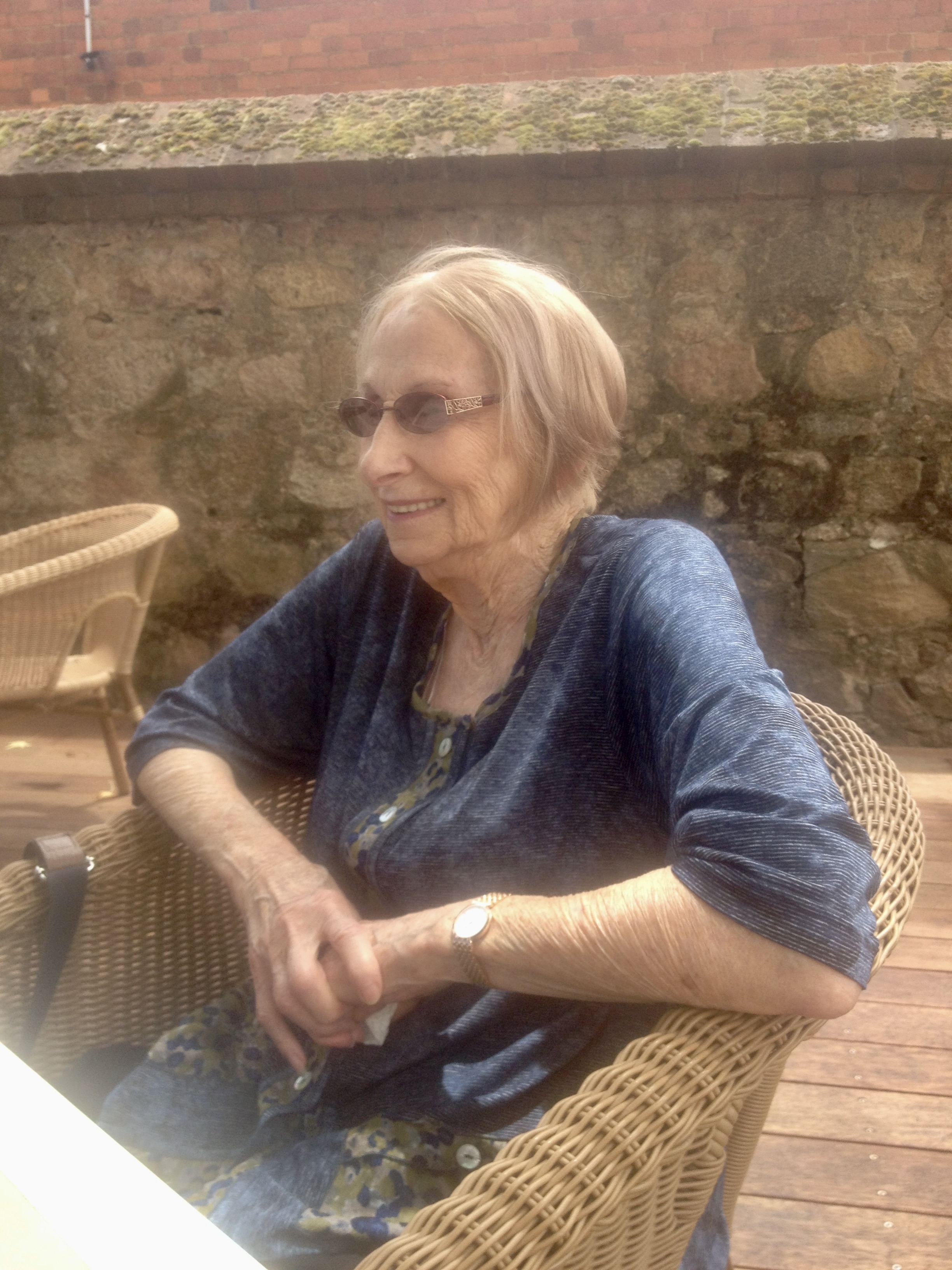
My father in his 20s

I wish I could celebrate this day with you instead of mourning the decades since you left your life. We would raise a glass and remember the good times and shake our heads at the tough years we survived. You’d hardly recognise me as that rebellious daughter you left behind almost 50 years ago.

As you wished for me, I completed the university degree that was denied to you. The war had disrupted your youth and by the time it ended, further education was no longer an option. Instead, you became a master leatherworker, and your wages allowed your younger brother to receive the tuition to become a lecturer. In later years, this became a bone of contention between the two of you and it was easy for you to feel wronged. With the iron curtain between you, the relationship didn’t survive.

The war didn’t end in ’45 for you. Its effects lingered on. You married your sweetheart, yet a cruel fate awaited her. She had survived the bombs, but TB tore your son from her womb. Not long after, your beloved wife was also taken. Somehow you carried on. Much later you met my mother, a feisty woman with a hearty laugh, and you fell for her casual bravado which turned ugly once fuelled by alcohol.

The 1956 Hungarian Revolution changed your life. Many of your compatriots left the country to start anew. My mother wanted leave, so you followed. However, your heart stayed behind. No matter where you went, you could never find a place to call home; wanderlust was not part your makeup. But your new wife gave you something that would sustain you through dark times – a daughter. I became who you lived for.

After many attempts to leave her, you still followed my mother to ends of the earth. Happiness would elude you there too. So you continued to love me fiercely, unconditionally, and in the end destructively. When I was a teenager, your love engulfed my life until I felt it constrict my every movement. While I was the one who felt suffocated, in the end it was you who decided to stop breathing. Maybe you thought it was better that way, but I never did.

I have missed you all these years and still talk to you often. On your hundredth birthday, I wish I could tell you that things have turned out better than either of us could have imagined. And I wish I could tell you that it is worth believing in the good times come, even in our darkest hour.

Job Applications

I detest writing job applications. Yet here I am doing it again, after swearing never to write another one in my life. I have a perfectly good job but something inside keeps niggling away. I’m sure I could do the job that was advertised, and it is only for ten weeks. I have nothing to lose and everything to gain – experience at a higher level, more options in the future and of course that little bit more money would never go astray.

I applied for the job and didn’t get it. No-one did. Unlike some of the other applicants who threw their hat in the ring, I called the convenor for feedback. She gave me lots of useful advice, including how to structure my paragraphs to make it easier for those on the panel to find key information. The first sentence is to introduce what I will talk about, the second to state how this relates to the selection criteria and the next sentences to give detail before closing off with the impact of my work. It sounds easy but is incredibly difficult to do in half a page with several examples.

I am not a fast writer and I do overthink things. The first application took a good couple of days. Rewriting this application, I started from scratch and put my ideas into an Excel spreadsheet under each category. Just that process took two days to complete and then another day and a half to rewrite the application within the limited space provided.

The job hasn’t been readvertised, but I am ready. I have asked my boss for some feedback, and we will meet tomorrow morning to go through what I have written. No doubt there will be more changes. I have come this far, so I can go the distance. There are no guarantees that I will be successful next time, but at least I have listened to feedback and learnt some useful tips in the process. Surely, that is worth the time I have invested.

Portrait

Portrait by Varosha: https://linktr.ee/Varosha

I never expected that I would have a portrait painted of myself. While I have sat as an artist’s model for a life-drawing class in my late twenties, the results were only sketches, and I doubt my face was the object of interest. In any case, I never saw the finished products at the end of the session, and I’m certain they would not have survived the passing of time.

Painted portraits are quite a different proposition. They tend to be the hallmark of people with power or fame. Why would anyone paint me? I don’t hold a position of authority and the only thing I’m famous for is leaving my belongings behind. So, when the callout came from the London Writers’ Salon for subjects willing to be painted during a writing session, I thought to myself, I’m in!

Varosha is a Bristol based writer and artist. She is currently Artist in Residence with the London Writers’ Salon, and her project is called ‘The Daily Faces.’ The concept is quite simple but oh so clever. Over the period of about a month, she will paint 32 portraits of people who join the daily Writers’ Hour. These paintings will then be laid out to look like two Zoom screens. In other words, they will look just like what we see when we log in – random faces all coming together to write in silent companionship for an hour.

I didn’t know when the actual painting would take place. Then, out of the blue, I received an email from Varosha to say that she had painted me during the previous writing session and attached was a photograph of the portrait. I didn’t expect to have such a strong emotional reaction to the painting. I absolutely love it. While I look more serious than I usually am, the likeness is astounding and reflects the way I look during the writing process. I also appreciate that when I study the portrait, I see that she has captured something of the essence of who I am. All this without having met me! I feel deeply honoured to have been chosen as one of her subject.

I am glad I had no idea when Varosha was planning to paint me. I am sure vanity would have kicked in and I would have chosen a brighter lipstick and maybe even tried to strike a pose or two. I certainly would have planted a fake smile on my face to ensure I didn’t look grumpy. As it is, the portrait is an honest portrayal for which I am grateful.

I invite you look at the rest of the portraits Varosha has painted during the Writers’ Hour, at: https://www.instagram.com/explore/tags/thedailyfaces/?hl=en

My young travellers

My daughter and her boyfriend are leaving for Scandinavia tomorrow. They are typical of their generation in that they love travel and adventure. The more the better is their motto.  They have scrimped and saved for a year, booking Airbnbs months in advance and paying for smaller flights as they earned their money. As seasoned travellers, they are well-organised and have a knack for finding stunning places off the tourist track. Each of their days is accounted for, but they have left enough time to be immersed in nature wherever they go.

There are certainly similarities with how I used to travel in my twenties: bags packed at the last minute, doing things on the cheap, not worrying about getting sick or having an accident on the way. I comfort myself with the knowledge that they have mobile phones and that bank transfers are almost instantaneous. Today I gave them a last-minute present; four Apple Airtags in case their luggage gets lost. These are all advantages I could never have even dreamt of in the 1980s.

I was much less adventuresome than my two jetsetters. But then, I mostly travelled on my own. On my trips I tended to visit relatives, retraced places where I had lived as a child and met up with university friends who were on similar missions. I have mostly travelled to the same five countries time and again, apart from the occasional side trip to uncharted territories. What always drew me to a place were the people I knew there. I slept on friend’s futons on the floor and enjoyed their hospitality which I returned when they visited Australia. This pattern continued for five or six years. I still stay in touch with a handful of these friends and enjoy visiting them, whenever I can manage.

My daughter has gathered friends around the globe too. Like me, she is good at keeping in touch with them. Her friends are more mobile, but it has become much easier to connect with each other. In my twenties, I was sending weekly handwritten Aerograms and had to wait a week or longer for a reply. My happiest days were when a letter or two awaited me in the letterbox. I have kept most of these correspondences and they have become treasured mementos of the past. Technology sure has speeded up communication, but I miss the handwritten letters in the mail.

The young travellers have now departed to begin the first leg of their journey. I am left with my studio filled with their belongings and a much-loved dog to look after. I will miss the long evenings playing board games, the smell of new recipes emanating from the kitchen and the quick-witted repartee between us. Yes, I will miss them, but I am also grateful that they have this opportunity to travel.

Bon voyage and a safe return!

A reflective practice

Are still looking for a way to put 2022 behind you and stay positive about what this year could be like? I have a great practice for you that won’t take up much time and bring you some clarity about what is important for you to do in 2023.

  • Take a piece of paper and rule a line down the centre, as above.
  • Put a plus sign on one side and a minus on the other.
  • List all the great things that happened last year on the plus side.
  • List all the not-so-great things on the other.
  • When you finish, peruse your list, and look for themes.
  • List these.

You should gain some clarity on what has been important to you – family, friends, bushwalking – whatever floats your boat.

Aim to have more of these in your life this year and less of the things that don’t bring you satisfaction.

Now, ask yourself, what did 2022 teach you?

Here is what I found out through this practice:

  • I have a strong need for connection.
  • My animals bring me more joy than I realise.
  • When I have forced myself out of my comfort zone the sky didn’t fall in.
  • Writing plays a central part in my life.
  • Grief has accompanied me for a very long time.
  • I am in a state of ‘divine discontent’, which will no doubt push me forward to do more of what I want from life.

What I learnt last year:

  • Small steps daily lead to success faster than the occasional burst of action.
  • Kindness matters more than we realise as does gratitude.
  • I can be imperfect and still have successes.

Thanks to the London Writers’ Salon for this great idea.

When in doubt, throw it out!

Many years ago, I worked at a restaurant as a larder cook. I knew very little when I started, but over time, I learnt skills such as slicing, piping, and presenting food – skills that have stood me in good stead. Another thing I learnt was that left over food needed to be treated with care. The chef’s rule was, ‘when in doubt, throw it out.’ Obeying this rule has probably saved many from stomach upsets or worse.

I often cite this rule when I am faced with clutter. It applies just as well to plastic containers, useless gadgets, and the mountain of papers I have kept. Yet stuff accumulates and multiplies like weeds. Especially paper. As I write, my desk is cluttered with paper I need to sort, throw out or shred.

The end of the year is the time I tend to favour for a ‘spring’ clean. The days between Christmas and New Year are perfect for this job. Sometimes I throw out more than I should, but that is rare. More often than not, I don’t delve deep enough. This year, I am determined to go through papers I have kept because ‘they could come in useful someday’ and purge anything I haven’t looked at in the past year. Ten-year-old lesson plans and other teaching resources will be added to this pile. I’m not about to throw out sentimental letters or tax files – these will stay. It is the amassed pile of articles (now years out of date) and hard-copy work files that I will discard. If I have enough time, I will also tackle the computer and delete pesky duplicates and any unnecessary files!

I swore I wasn’t going to make a New Year’s resolution, yet this is beginning to sound like one. Could I call it some mad, end of year tenacious pluck, and avoid the weight of expectation?

I suppose it really doesn’t matter what I call it. All that matters is that I can reclaim my desk and eradicate feelings of overwhelm whenever I enter my study. I want to start the year with that fleeting sense of control.

Wish me luck!

Happy Christmas from Australia

I wish you all a glorious Christmas. In particular:

  • Harmony at the lunch or dinner table
  • Pleasant interactions with family
  • Equanimity if things don’t go according to plan
  • Gratitude for even the smallest gestures
  • Compassion for others and yourself
  • An expanding heart
  • Generosity of spirit
  • Acceptance of your own limits
  • Time out to recharge

Thank you so much for reading my weekly blogs, letting me know when you like something and occasionally leaving a comment. I truly appreciate each and every one of you!

Morning pages

There are weeks when writing is hard. I just had one of them. Illness, deadlines, and distractions all got in the way, and I didn’t write. Although, strictly speaking this isn’t true. I always write something, it just might not be a blog post. In this past week I have written a job application (not my favourite kind of writing) and I have written in my journal. It is the one thing I manage to do almost every day of the year.

I try to follow Julia Cameron’s rule of three handwritten pages first thing in the morning. When time is tight, I will write one page rather than not write at all. As my friend Kellie likes to remind me, ‘done is better than perfect.’ When I write longhand, words flow from my pen as if my right hand was connected to my thoughts. Sometimes when I read a sentence back, I notice that I have written the first part of a word and finished it with the next one. It is fast, unedited, stream of consciousness writing.

Most of the time, my scribbles are not worth reading. They chronicle mundanities of life, sometimes strange dreams and on rare occasions, I might get some insight. Still, I persist. As Julia Cameron suggests, morning pages are for my eyes only and they are not meant to be creative writing but a way to clear the mind.

Weeks go by when I think that the morning pages have done nothing at all for me. Then I realise that getting those initial thoughts out of my system allow me to face the day without ‘stuff’ circling in my mind. I can leave all those thoughts in the journal. It is like having a container for loose change, only that in this case the container holds loose thoughts.

Every now and again, a solution to a problem presents itself in the pages. Granted, it doesn’t happen often. These are like little nuggets of gold that are left behind when all the dirt has been washed away. I can’t expect to find a nugget every day but when I do, I know that the process has worked its charm.

It takes me about fifteen minutes in the morning to write three pages. I don’t use prompts. I simply pick up the pen, put it to paper and let it glide across the page. I enter an almost a meditative state where I watch the pen do its work. I sit with a cup of tea, write, sip, write some more and finally close the journal. I rarely read what I have written, although it can be useful to go back after a few months and get a sense of how things have shifted.

I recommend the habit of morning pages. They allow you to clear away the cobwebs and start the day unburdened. You might find it the most worthwhile fifteen minutes of your day.