Bev at the club

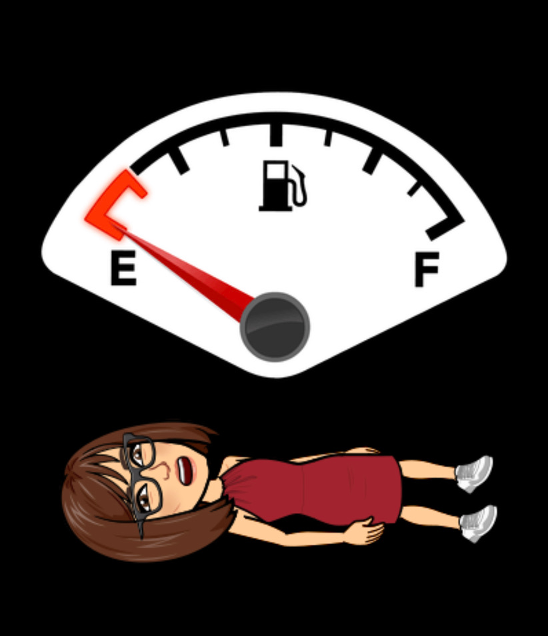
Bev pulled down hard on the steering wheel. Her tyres squealed as she drove into the carpark. It was a snap decision. What would it matter if she arrived home twenty minutes later? There was no-one to meet her anyway.

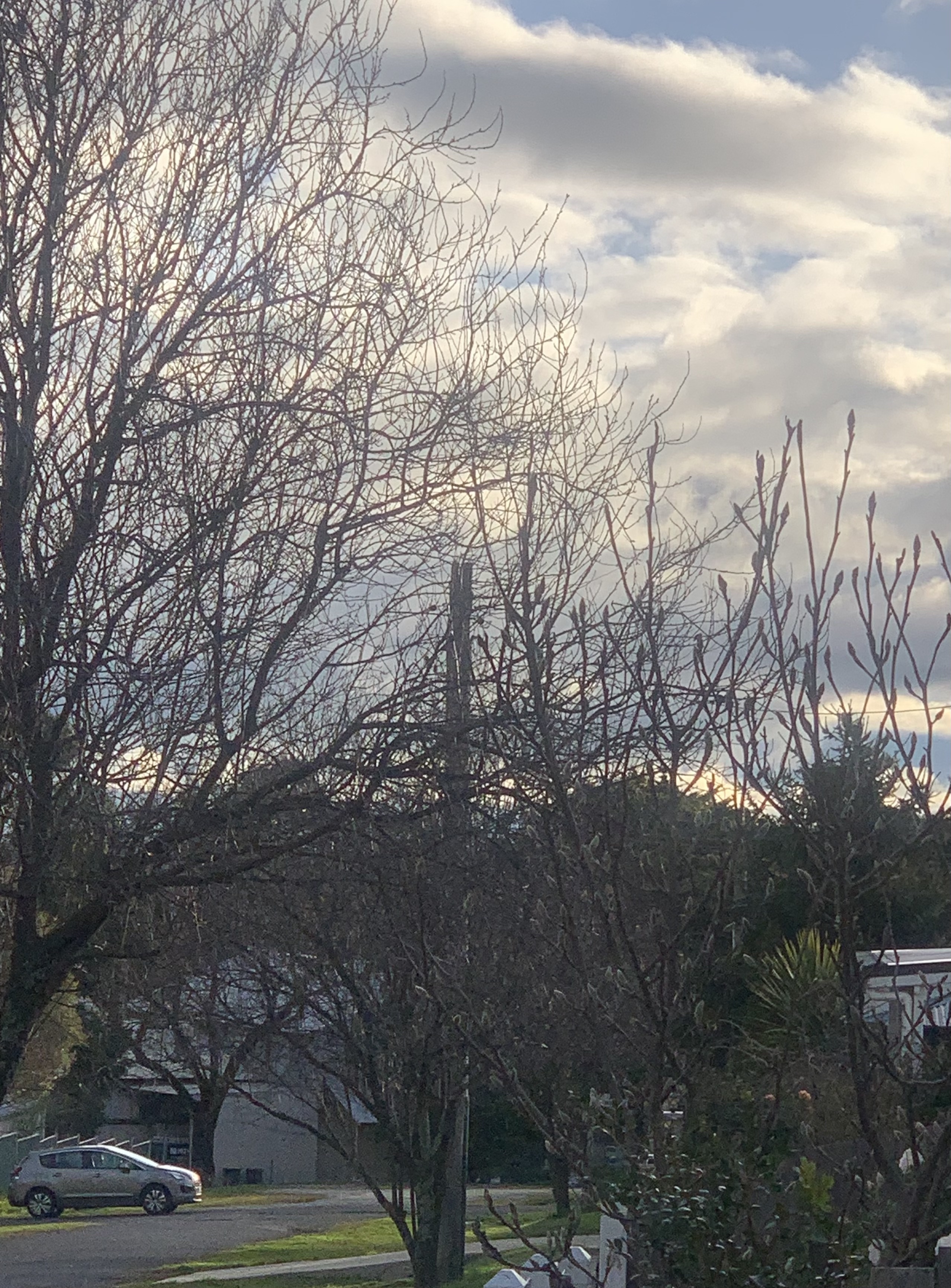
She locked the car and shuffled across the to the club’s entrance. Her legs had swelled in the heat and the humidity made her gasp for air. It was sure to be cool inside and a cold drink would be welcome.  As Bev neared the glass doors, they silently slid open releasing a rush of air towards her. She was feeling better already.

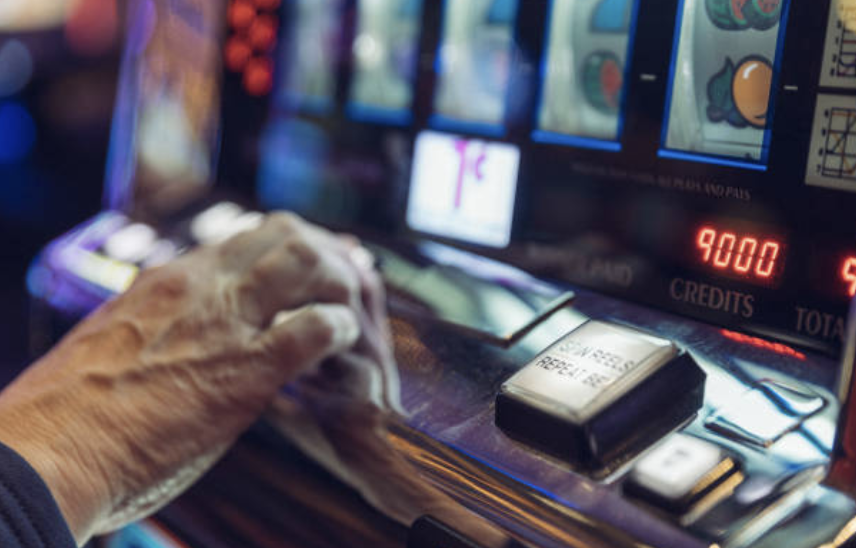
At the bar she ordered a midi of shandy. One drink and she would leave. That’s what she told herself.  Today was going to be different to every other time swung into the carpark at the last moment. Yet her heartrate was already up, and she felt the familiar agitation build. Bev was saw flickering lights from the room behind her reflected in the mirror behind the bar.  Then there were the enticing beeps, chimes, and whirs of those spinning wheels. Her fingers drummed the beat on the counter. She only had twenty dollars left until her pension arrived on Thursday. This time she’d resist.

Photos on my phone

Fifteen years ago, I had to remember to take a camera if I wanted to take a photo. I may have remembered to take it along to special occasions or when we went on holidays. I chose my subjects carefully and tried to take the perfect photo in one shot. Before digital cameras, the roll of Kodak film often sat in the fridge for a year or two before I remembered to have it developed. The result was either joy at remembering a forgotten moment or the disappointment of a badly executed composition. Usually, it was the latter.

Now that we all have a camera in our pockets, it is easier than ever to take bad photos. The only difference is that we don’t have to print them. We now store these along with the thousands of other photos on our phones, computers and of course the cloud. We keep it all because we can. We have photos of wi-fi passwords, breakfasts we have consumed months ago, screen shots of travel arrangements and of course thousands of photos of pets and the occasional human.

By the time we have several thousand photos, culling becomes a chore best avoided. There’s always something more important on the to do list.  Who wants to spend hours making one decision after another? Generally, this task is only attempted when we are running out of memory on our devices. Even then, people will go to great lengths to avoid pressing the delete button. The number of photos slowing down a device is often the excuse for buying a new phone or iPad with bigger memory and better camera to continue our bad habits.

I have recently updated my computer and decided it was a good time to do some digital culling. I deleted thousands of files and even made a start on the photos. My worst offenders were images of work-related PowerPoint presentations that reminded me of my good intentions to revisit them. Of course, I haven’t looked at them. Not once. This was followed by random photos of cute dogs, hundreds of photos of my daughter at graduation, catching each expression milliseconds apart. I do it because it is easy; just a slight push on the glass screen and I have a memory that is less likely to fail than the memory stored in my mind. At the same time, I realise it is another version of mindless consumerism. I can now outsource remembering to my phone.

My friend Lizzie once gave me some advice when I felt overwhelmed with my (lack of) filing. The piles of paper were screaming at me every time I entered the room. I felt shame and a good measure of embarrassment whenever I glanced across at the papers. She suggested spending no more than 15 minutes on the task each afternoon. It worked. Slowly the pile began to recede and as I acquired stamina, I could face twenty minutes or even half an hour to get it done. The problem I have always faced is all or nothing thinking. Either I sort through the lot, or it isn’t worth starting. Yet the reality is that deleting 5 photos is better than deleting none.

Currently, I still carry 5 838 photos and 132 videos in my pocket. What about you?

Country life

Seven years ago, I moved to a small country town in the Central West of NSW. Initially, I had preconceived ideas and prejudices which have mostly turned out to be, well, preconceived ideas and prejudices. I had no idea what it would be like. I freely acknowledge that each town is different and, honestly, some I really wouldn’t want to live in at all. However, if you choose the place carefully, it is a delight to live out west.

Millthorpe, where I chose to live, is a gem of a town. It is located between Orange and Bathurst which makes it a much sought-after address. It has quaint cottages which give it that old-world charm and the functioning railway station makes it one of the more accessible villages to reach. Our hatted restaurant, Tonic, attracts people as far away as Sydney and weekends can feel a tad busy down the main street. On weekdays, however, the place reverts to a sleepy little village where people walk dogs, chat to one another, and enjoy the slow pace. People look out for one another here and no one is considered an outsider. It is genuinely one of the most welcoming places I know.

While most shops and amenities are further away, it doesn’t take long to get to them. Traffic is mostly non-existent. I drive 20 minutes to get to work which for most people in the city is considered a short commute. My drive is scenic and I am blessed to be surrounded by nature. Whether it is cows on a hill, frost on the grass or swans in a dam, the bucolic charm never fades.

Another thing I appreciate is the quietude. I am one of those people who needs oceans of silence each day. I can listen to bird song, the rustling of leaves or the occasional bark but I don’t cope well with traffic noise or loud people. Here, my nights are dark, silent, and restful. Now and then, there is a storm with heavy thunder and lightning, but I find that a welcome release.

When there are no clouds in the sky, the stars are so much brighter than in the city. Even the moon seems bigger. It comes over the horizon as a large, illuminated ball breaking through the purple, orange and pink sky that heralds our sunsets. Dawn and dusk are magic in the Central West and makes even the most unsentimental among us gasp in awe.

While I know that I will probably not stay for ever, the Central West will always have a place in my heart. I love the quirky, earthy humour of the locals, the defined seasons, my gorgeous worker’s cottage. This is a place where I have felt more accepted than anywhere else I have lived and I have made life-long friends in a short time. It is the place where I have been given the freedom to write, where I have found love and where my soul has been given time to heal. Looking back, it is hard to understand why it took me so long to make the move.

Visiting Jean

Jean in 2015

Jean, my 94 year-old mother-in-law lives in a nursing home. She has been there since 2019. Like most elderly people, she didn’t want to go, nor does she want to stay. It was the lot of her own mother, and she prayed it would never be hers.

Jean was doing really well, living on her own and managing with her daily routines. Then came a fateful slip on the tiles which landed her in hospital with a broken hip. The pain was unbearable. She did not want to live, and we did not think she would make it. She survived the long operation but never regained the confidence to walk nor her will to keep living. Yet she is still with us, four years later.

As a young person, Jean went deaf before she reached twenty. Throughout her long life, she has learnt to cope with hearing aids, learning to lip read and pretending to understand when she was too embarrassed to seek clarification. This has led to many amusing and some quite unfortunate misunderstandings. One I remember well was when Jean came to visit us from Albury. We had made all the arrangements over the phone, but she never arrived in Sydney. We worried that she had made a mistake and alighted at the wrong station. Finally, we phoned her. She was at home drinking a cup of tea with a biscuit, completely unaware that we were expecting her on that day. As far as she was concerned, she was coming the following week and had not heard us confirm the date over the phone.

Her hearing impairment led to a secluded life lived in the bosom of her family. Jean did not have friends and found social gatherings difficult. As much as she loved going out to lunch, she enjoyed it most when she was on her own or with one other person. Since arriving in the nursing home, she has refused to leave her room to eat in the communal dining room. The social expectations are beyond her.

I used to call Jean weekly the way my husband did, but I stopped about three years ago when she could no longer hear me on the phone. I began writing letters instead, but they too have fallen by the wayside as I find it difficult to come up with new things to say. Most weeks are routine and don’t leave much to report. I now manage a letter every three to four weeks. I also try to visit three times a year – not much, I admit, but all I can manage as I live more than 400km away.

This time, I arrive mid-afternoon. I walk into her room and find her in bed. Frail and sunken, I am shocked at the sight. Her skin is translucent with purple bruised arms.

‘I’m not feeling too well,’ she tells me, ‘so I decided to stay in bed.’ Fair enough, I think. She only has two choices – stay in bed or sit in the armchair. Life has been reduced to this.

Jean perks up with my visit. She tells me news about her granddaughters, the new house her daughter Diane is building and the sale of the house that used to be her home.

‘I was upset at first, she says, ‘but I don’t care anymore.’ With the next breath she asks, ‘But where will I go, when I leave here?’ I cannot answer, so I say nothing.

As dinner time approaches, she begins to speculate what will be on the menu.

‘I hope it is crêpes,’ she says. ‘I had them once and they were lovely.’

When a nurse comes to check on her, she repeats her wish for crêpes, hoping that this will get back to the cook.

‘It doesn’t take long to cook a crêpe,’ she says, as if the cook could easily accommodate her wishes.

When dinner arrives, she is disappointed. It is meatballs with mashed potatoes. ‘I don’t want that,’ she says and asks for the soup on the tray. I watch her spoon her soup with gusto, making loud noises as she eats. I don’t remember her ever making this sound before.

‘Let me look at those meatballs,’ she says, and I bring them to her. ‘I’ll only eat the sauce,’ she says but then tries to cut into the meat. I offer to help, and she accepts. There is no way that she would have managed the cutting process on her own. Then, while telling me that she really doesn’t want to eat, she polishes off the meatball and seems to enjoy it.

‘What’s for dessert?’ she asks.

After dinner, I look for a nurse to help her move up in the bed. She has slipped down, and her toes are hitting the footboard. She has to be lifted out of bed for it to be remade. The process takes all the energy she has.

Once back in bed she points to a single red chrysanthemum in a small vase on her dresser. ‘Dianne brought it from her garden a week ago,’ she tells me. ‘It was twice as big and such a vivid red. Now it is wilting.’

The sentence hangs between us as we share the same thoughts. She looks at me, shrugs and smiles. Neither of us needs to say another word.

The heart

A beating heart keeping us alive. From the moment we are born, a steady rhythm. Providing a cadence to our emotions, whether joy, love, fear, or anger, each has its own beat and the heart keeps score.

Last week, I was reminded of this on a visceral level when a doctor voiced concerns over my daughter’s heartbeat. Dread flowed through our veins, finding its way to both of our hearts. Tests and speculations began. An undiagnosed hole in the heart? Arrhythmia? Will she need a Pacemaker or other device? Long days of waiting for an ECG then a 24-hour Holter monitor. More waiting for results.
In my worst moments I imagined losing her. I envisaged a hole in my heart in the place she currently occupies. As mothers we know our children never really leave our bodies, we carry them within us forever more. I thought about the hole in her heart where her father’s love once flowed freely, a hole which can never be surgically repaired and will ache for a lifetime. I also remembered a robust young boy I taught years ago, full of life and laughter who collapsed on a basketball court unable to be revived as his heart stopped mid-flight. I will never forget the funeral held in the very same hall, filled with teenagers coming to terms with mortality for the first time. Nor will I forget the grieving mother and my own heart breaking at the sight of her. A life shrouded in sorrow and an abyss tearing her heart asunder.
Then, the much awaited call came through. My daughter was instantly relieved by the doctor’s news. She may have an unusual heartbeat, but it doesn’t pose any danger. If necessary, she can take medication in the future, but for now she can relax. Her heart is functioning as it should.

As for my heart, the tightness releases the moment I hear the news. No matter the distance, our lives remain intertwined.

Two mothers

Taking a shortcut through the back lanes of Adelaide, an Aboriginal woman approached me holding two paintings. It was late afternoon and she looked tired as if she had been waiting for someone for a long time.

There was a hopeful look in her eyes, but her body language radiated defeat. I stopped, knowing full well that she was going to ask for money, but I couldn’t walk away. I needed to bear witness to this woman’s story. She began by telling me about her son whom she needed to visit, a good man, now in need of money to pay some bills. What I heard was a plea from one mother to another. It didn’t matter how old her son was, as his mother she would do anything for him in the same way I would do anything for my daughter.

She offered me one of two paintings she had completed; I could choose. She wanted a fair exchange, her pride demanded that. When I told her that I had no cash – who does these days? – she suggested an ATM not far from where we stood. I assured her I’d return but she walked with me anyway, making certain that the exchange would take place.

It was hard to choose a painting, they were so different to one another. One was of animals on an ochre background while the one I eventually chose, was painted in vibrant colours and depicted meeting places and possibly a ceremonial site in the centre. I felt the one I chose was the more feminine and would remind me of her strong character.

The painting and that tiny glimpse into her life is now hanging in my bedroom. Mother to mother, I think of her often and wonder how she and her son are getting on. And I wonder whether she knows that she has touched my heart.

Writing

I am at that difficult moment in a writers’ life when a manuscript is ready for publication. I have researched suitable publishers, made note of their precise requirements, and will now write my biography, a synopsis of the story and attempt to convince them that I have more than one book in me.

Every time I think I have come to the end of a writing process, new challenges present themselves. Writing a book requires a different skillset to editing or writing a synopsis. I’m learning on the fly. There are no guarantees that my hard work will pay off or that the manuscript will find a home beyond my desk drawer. Yet I am driven to keep trying. I have even started on my next project which is my first attempt at writing a novel.

At work, colleagues talk about television shows or movies they have seen. They spend their time gardening on weekends, or talk about BBQs they have attended. I smile and nod but have nothing to contribute. While they relax or socialise, I sit at my desk and write – often late into the night. They can’t understand why I would choose to keep working after a day at the office where I also work on a computer. On the other hand, I can’t understand why people wouldn’t want to use their time to create rather than simply consume. That’s not to say that I don’t enjoy movies or that I don’t lose myself in books. Of course, I do. However, I also need to produce something tangible to feel fulfilled.

I have talented friends who can paint or draw, and I marvel at their abilities. My daughter is a gifted musician, and my cousin a consummate stonemason. As for me, I have none of these skills. But I am passionate about language and words have always been my salvation.

A lifetime of accumulation

With each passing year I realise that I have accumulated more than I will ever be able to use. I have champagne glasses, plates, and platters galore, sheets, towels and tablecloths that have never seen the light of day. Many of these items have been given to me by generous friends who have looked for a perfect present and no doubt spent a pretty penny in the process. I am always grateful for their kind thoughts.

I have kept sentimental items which remind me of special places or times, and they make me smile when I notice them on a shelf as I walk by. These would be particularly difficult to part with and I am glad to keep them with me.

The more practical things I would happily give away, if only I had somewhere to take them. I have donated many items to Vinnies and the Salvos but they are now overflowing with donated goods. Even country towns recently ravaged by floods are asking people to stop sending donations. They have filled every hall available and are now facing the issue of trying to move the excess on.

One of the saddest things I have recently seen is footage of markets in Africa where women attempt to recycle clothes offloaded by wealthy countries. They call them ‘Dead White Man’s Clothes’ and try to sell the merchandise for a pittance. It seems nobody wants what we discard and all we have done is to shift the problem elsewhere.

I remember in my twenties we were thankful for every bit of donated furniture, crockery, and glassware. We weren’t choosy. We repurposed most items and it was a long time before we considered buying anything new. New things were expensive. There were no two-dollar shops, mass market imports hadn’t flooded the market yet and we had to make do. In many ways, I feel we were better at recycling simply because we had to be. I would have been ever so thankful for the things I am now trying pass on. And if I hadn’t wanted them, I would have known dozens of people who did.

So here I am with boxes of brick-a-brac I’d love to give away. But in an era of plenty, it is more difficult to give away than it ever was to accumulate.

Hot-desking

© Copyright Pierlite 2023

Whoever dreamt up open plan offices clearly had never worked in one. Add hot-desking to the mix and you have a recipe for disaster. ‘Our employees are our greatest asset,’ is the catch cry of many a workplace but it feels like ‘your call is important to us’ while placed on hold.

I work in an ostensibly beautifully designed office that must have cost the NSW government a pretty penny. It has state of the art kitchens on every floor, artwork in the hallway, real plants in every area, large television screens in the eating area and little nooks to for intimate conversations. It also has adjustable desks, expensive chairs, and some small bookable offices where people can go to have meetings or private conversations, if they aren’t already booked. On the surface, it is perfect.

Right now, many people are still working from home so that only a fraction of the desks are utilised. Our designated area is close to another NSW department which is quite separate to us. Most of their work is conducted on the telephone or Zoom calls, while most of our work tends to be either quiet computer work or online meetings. Both groups deal with sensitive and confidential information but due to the configuration of the desks, we can’t help but hear things that we really shouldn’t. It doesn’t help that one of the men ‘from the other side’ has a booming voice that travels several hundred metres. Furthermore, brevity is not a concept with which he is acquainted.

I have had to get used to wearing noise cancelling headphones (my own) to be able to get any work done at all. Sometimes even they aren’t enough, and I find myself downloading the sound of ocean waves to drown out the voices around me.

Then there’s the issue of hot-desking. It is meant to be ‘flexible’ or ‘agile’, but it ignores that we are creatures of habit who like to have our own spot. Hot-desking certainly hasn’t stopped booming-voice-man’s conversation reaching my ears. He, like most others, tends to sit at his favourite desk. This isn’t an issue at present as we have more desks than people in the office. The working from home phenomenon has meant that many people have chosen not to return as they find it more comfortable to be in their own surroundings. Let’s face it, at home you can sit at your own desk and have as many of your favourite items around you as you like. A bit like in the old days when you could have a photo on a desk, maybe some nick-nacks, and most importantly, the files you were working on. The computer was affixed to the table and at the end of the day you could walk away knowing full well that everything would be found where it had been left.

Now, however, I have to carry my laptop and my work mobile, store keyboard and mouse in a tiny locker with any papers I may need (remember the dream of the paperless office ?) and leave the desk pristine when I clock off. It takes a good 5-10 minutes to set up each morning and the same to pack up in the evening.

All the desks look sterile. There are no photos or personal belongings anywhere and it feels more like an assembly line than an office. The message is clear. We are all expendable. When I leave, no trace of my presence is left behind.

Tempting Lollies

While paying for my groceries at the local corner store, I noticed a tiny tot, no more than two years old, jump off his tiny bike, and head into the store as if on a mission. He was wearing his helmet as he strode up to the lolly section checking the goods on offer. The shop assistant and I couldn’t help but smile; the boy had the swagger of a cowboy in the body of a wee pixie.

I was just receiving my change when I noticed the boy leave the shop with a packet of sour chews in his hand. He jumped on his bike and rode off, just as quickly as he had arrived. The shop assistant and I looked at each other.

‘Did that kid just walk out with the chews?’ he asked.

‘He certainly did,’ I answered laughing. Our eyes met and we both smiled.

‘I’ll have to run after him,’ he said. He was clearly amused.

As I walked out of the shop, I could see the little kid next to his mother.

‘Did he not pay for the lollies?’ she asked as the shop assistant approached.

I could see that they were talking amicably so I turned and left them to it.

I know this story has turned out well for the little boy. The shop assistant was kind and the mother sympathetic. They both understood that exchanging money for goods is an abstract concept which a two-year-old can’t possibly grasp. Mum would have taken the boy back to the shop to hand over the coins and he would have been handed the lollies in exchange.

This incident reminded me of a similar story which did not end so well. I must have been about four years old when I was shopping with my mother at a market in Madrid. We walked from stall to stall buying vegetables when I spotted some delicious strawberries. As we walked past, I helped myself to a large juicy one that beckoned to be eaten. I have always been attracted to red as a colour, and this strawberry was a deliciously passionate, vibrant red. Just as I bit into the forbidden fruit, the grocer yelled at me, calling me a thief! I had no idea what this meant, only that he was shouting, angry and threatening me with a crooked finger coming towards me. My mother shouted back and pulled me away hard, which hurt my hand and shoulder. Tears welled up, and I could no longer enjoy the fruit I had so desired only moments earlier.

I won’t claim that we live in more enlightened times. To debunk that myth, you need only to look at the juvenile justice system where ten-year-old children can be locked up for shoplifting. But maybe there are an increasing number of people who understand that most children go through this stage and the best way to treat them is to approach with the love and compassion that all young children deserve.  

And so, I hope that the little boy enjoyed every last mouthful of his carefully selected lollies after handing over the cash.