Three Beating Hearts: The Making of a Family

Some women are naturally clucky. They coo over babies, look at them wide-eyed and are in awe of the miracle of life, so tiny and perfect. I am not one of these women. I am much more likely to coo over puppies to reach out to stroke them than I ever am to hold a baby in my arms. Hard to admit but true.

When my daughter was born, I was completely in love the moment I set eyes on her. Finally, I understood what came naturally to other women. But for me, I only had eyes and love for my daughter. She was the most perfect creature I had ever seen, and I was instantly filled with a love so strong that I knew I would do anything for her. That feeling has never left me.

When my daughter fell pregnant, I wondered how I would react to the baby once it was born. Would I be as madly in love with her as I was with my own daughter? I honestly didn’t know. Of course, I knew I would love and protect her, but would it be the same as when my own child was born? After many months of waiting and wondering who this new member of the family would be like, the day came quicker than any of us anticipated.

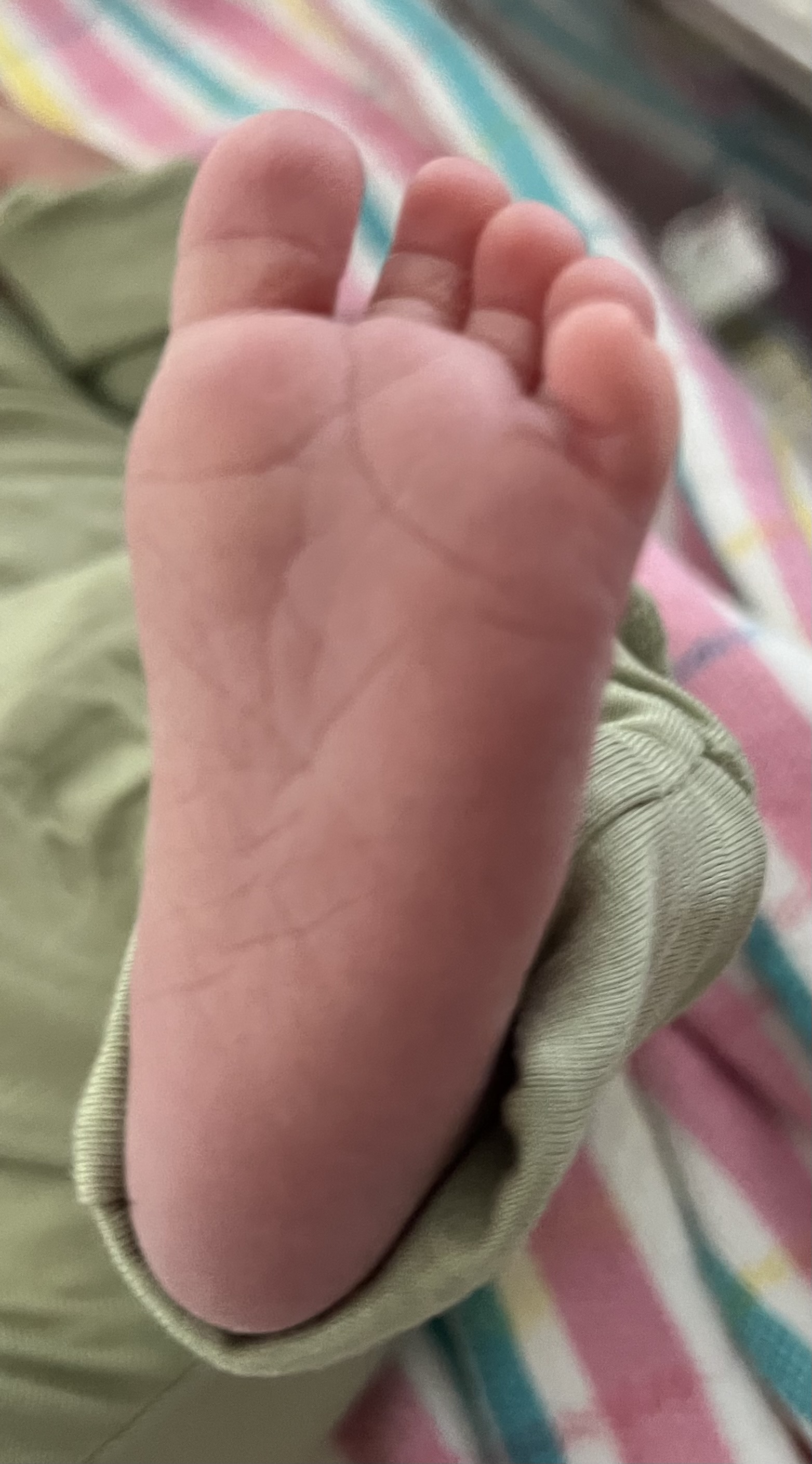
I arrived at the hospital just before my daughter was brought back to the ward, baby against bare chest, vernix protecting her daughter’s delicate skin. She looked so peaceful and beautiful, angelic even. Yet my eyes moved quickly to the face of her mother, my own daughter whom I love above all else. In turn, her eyes were fixed on her baby daughter and I recognised that fierce look of love, a feeling we now both share, generations apart.

She was looking out for her daughter, while I was looking out for mine.

Later in the week, I stayed at the hospital for a night so her husband could get some rest before bringing his family home. I am ashamed to say that I was of very little help that night. I heard the baby cry but could not rouse myself to get up. My darling daughter, however, was awake and doing all the things she had only learnt in the past couple of days. She was a natural. At six in the morning, I finally picked up her baby and settled her next to me so her mother could have a rest. For two blissful hours, I dozed with my granddaughter in the crook of my arm.

Her father came back in the morning and at first couldn’t find his baby. When he saw her snuggled into my arm, he laughed and came to retrieve her. He is besotted with his daughter, proud and protective. I see my husband’s love for our own child reflected in my son-in-law’s eyes. He will be a perfect father.

I am so proud of this little family. They work together, look out for one other and wear their boundless love with pride. And so, my own love expands beyond what I ever felt possible to envelope these three magnificent individuals who have become their own little family.

Woven Threads, Living Stories: A NAIDOC Reflection

My finished product

Happy NAIDOC Week! NAIDOC stands for National Aborigines and Islanders Day Observance Committee. As the name suggests, it was originally marked on a single day, and since 1975 has grown into a week-long celebration held each July.

This year marks the 50th anniversary of NAIDOC. It has its roots in protest movements seeking recognition and rights for Indigenous peoples and has since evolved into a celebration of culture, resilience and leadership. The theme for this year is “The Next Generation: Strength, Vision & Legacy.” As a teacher, this theme resonates deeply with me. We must ensure that the next generation is equipped with the knowledge, skills and tools to preserve and adapt their culture. I pay my respects to Elders past and present for the work they have done, and continue to do, in guiding and teaching the younger generations.

NAIDOC Week is also an opportunity for non-Indigenous members of the community to learn more about culture and Country. When I saw a weaving workshop advertised, I decided to go along and learn a little about this ancient craft. Ronnie Jordan ran the two-hour session at the Botanic Gardens with a couple of enthusiastic young people who clearly enjoyed sharing their cultural knowledge. I was humbled by their generosity.

Weaving is an example of complex technology, not only in the act of weaving itself, but also in the selection, processing and dyeing of materials such as grasses, reeds and even bark. Preparations like splitting, soaking and finding the right pigments are essential to how the final product takes shape. Weaving is used to make mats, baskets, bags, ropes, bowls, nets and fish traps. Weavers not only know how to create these items, but also how to repair them.

Both Indigenous men and women weave. They pass on knowledge through their hands, connecting with both people and Country. Each weaver develops their own distinctive style, which others recognise. It’s even possible to tell where an object comes from based on the plants used and the time of year it was harvested.

For our workshop, we used raffia that Ronnie had dyed using natural seeds, fruits and plants. We sat in a circle, began the process together, and continued at our own pace. I caught on reasonably quickly, perhaps because I knit and crochet, both of which rely on repeated patterns and maintaining even tension. As Ronnie walked around, she’d occasionally call out, “Exhale,” noticing that many of us were so focused we were holding our breath. After a while, the chatter died down and we settled into a meditative flow state.

The first time I saw Aboriginal women weaving was in Maningrida, in West Arnhem Land. They sat on the veranda of the local arts centre, their hands moving rhythmically as they wove baskets with intricate designs. It was mesmerising. I bought a small basket as a souvenir and carried it carefully all the way back to Sydney. I still regard it as one of the most beautiful objects in my home.

After two hours, our weaving was still very much in its infancy. We were encouraged to take some raffia home to continue. Not wanting to appear greedy, I took what I thought was a fair amount. It wasn’t nearly enough. Once home, I continued weaving late into the night until I ran out of coloured raffia. I had made a small mat, larger than a coaster, smaller than a placemat in about five hours. It gave me a new appreciation for handwoven baskets, and I now understand the price tags attached to them.

Bed Rest and Restlessness

I am an impatient patient. Bed rest is agony, not because of the pain but because I am railing against having to rest. Any other time, I long for a sleep in, a chance to have a leisurely morning, just not when I’m sick. Feeling unwell sends me into a spin of (mild) depression, feeling trapped and a sense of foreboding that I will never reemerge into the land of the hale and hearty.

I’ve had the luxury of a week off work. Was I pleased? Not a bit! I lay in bed checking emails, between coughing fits and fits of sleep. Things were happening without me running around. Everyone was coping but me. My colleagues were probably not even aware that I wasn’t there. I was superfluous.

Is this how retirement would feel? No longer needed, no one wondering what I was up to? I have always thought of the moment I leave as entering the land of milk and honey. I’d finally be able to do whatever I liked, whenever I liked. But would it be like this illness, stretching ahead without an end in sight?

Today I finally felt well enough to walk the dog and meet up with a friend. I came home, had a short rest and then proceeded to paint the laundry. First coat done, I had a longer rest before attempting the next tasks on my list. Is this what I have come to? Short bursts of energy to be followed by periods of rest before I can cope with the next item? Surely not!

Tomorrow, the second coat goes on and I have a shelf to assemble before the new washing machine arrives on Monday morning. I may then head out to the Christmas in July markets. I’m already feeling better just thinking of it. That fresh coat of paint will not only give the laundry a new lease of life but will also renew my spirits. Perhaps, I just need to find a new rhythm. One that fits in with what my body is gently trying to tell me. On the other hand, maybe I’ll hold onto that thought until at least Monday and let the sleeping dog lie on the bed. After all, I have a laundry to conquer.