Music, Memory and Manners

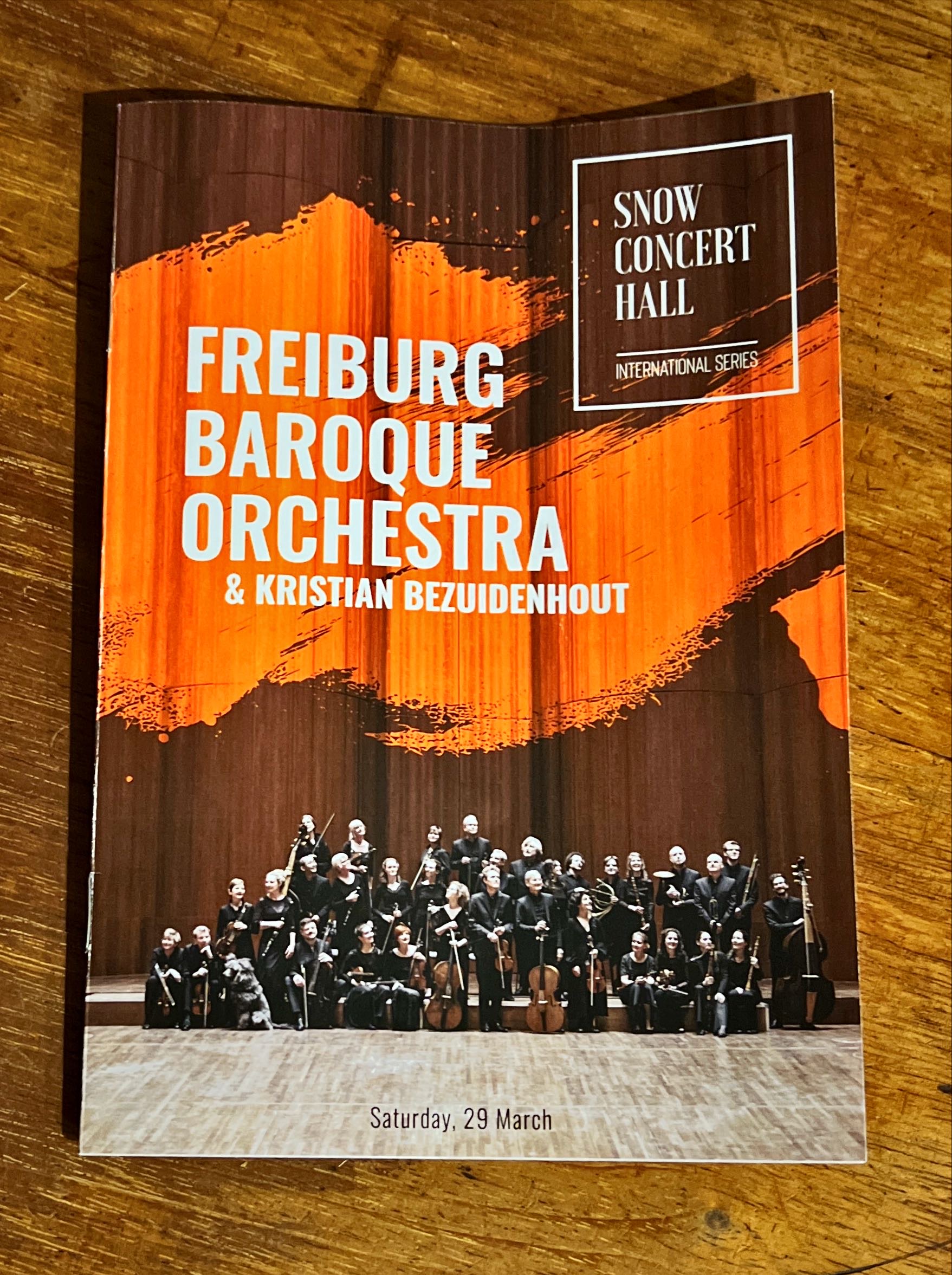
On the spur of the moment, I bought myself a ticket the Freiburg Baroque Orchestra. I have been in Canberra for just over a year and so far, have attended four concerts. Having access to more cultural events was one of my reasons for moving to the city. So why wasn’t I getting out more?

I am happy with my own company, but when it comes to going out, I still subscribe to the outdated notion that I need to go with a friend. What a ridiculous idea! Sure, it would be nice to talk about the concert, but during the recital we’d be sitting next to each other in silence. Would I enjoy the music more because I know the person sitting next to me? Of course not! So, I decided to drop this limiting belief and go anyway.

The concert consisted of a Bach symphony in G minor followed by the Mozart piano concerto ‘Jeunehomme’, with Kristian Bezuidenhout on Fortepiano. In Baroque music, I’m much more used to the sound of a Harpsichord, so it was interesting to listen to the Fortepiano which is more like the piano we know today but with a much softer, less sustained tone. Bezuidenhout’s playing was magical. Unfortunately, the man in front of me was tall and bobbed his head this way and that, making it hard for me to watch the action on stage. I felt sorry for the people behind me who must have watched his head go one way, mine the other, to get a glimpse.

There were two children behind me with their mother. I am guessing they were between 8 and 11 years old. Neither could wait for the interval to get some food. Poor kids! Afterwards, the boy, bored with the event, was hoping the concert would end after each piece. His sister was much quieter. It reminded me of taking my daughter to concerts when she was little, but she was much more engaged. Maybe that was because we started taking her from about the age of three and she was a compliant child. At that age, she sat on one of our laps, listened to the music for the first half and fell asleep after intermission. I wasn’t concerned about the children behind me – they only spoke between the pieces when people were clapping.

After the interval, the orchestra played the Violin Concerto No.5 in A major, ‘Turkish’. Gottfried von der Goltz was truly mesmerising on violin. I thought about my daughter, who also learned to play violin. I would have loved her to become a violinist but while she had the aptitude, she didn’t have the application. She pursued it for a couple of years at university but never quite seriously. At the time, I was a little disappointed. Now, I see that her interests have evolved and what she does pursue, she does with passion and full-hearted commitment. All these thoughts went through my mind as I listened. I also considered how lucky I am to have my daughter nearby. Had she become a violinist, she would most likely be overseas by now.

It is hard for a casual connoisseur to concentrate on only the music for over two hours. My mind went to many places during the evening. One place I wished my mind hadn’t turned to, was feeling annoyed with a man two rows in front of me. He not only arrived late but scrolled on his phone for the entire performance. No matter how much I told myself that I had no control over the situation, it kept annoying me. I tried to tilt my head so I couldn’t see the screen, but the phone kept lighting up. I felt sorry for the people sitting either side of him. I couldn’t understand why they didn’t ask him to put it away. It made me wonder why we seem to have traded manners, which are about the way we behave towards others, for the right of the individual to do as they please. Dear Lord, I’m beginning to sound self-righteous!

The end of the concert caught me by surprise. I must have drifted off a little. It had all been quite pleasant except for the mobile phone man. We streamed out of the concert hall, most people well past their sixties, judging by the number of grey heads. I felt like a youngster in comparison. Walking to the car I thought how easy and enjoyable the evening had been. From now on, I am fully embracing my independence.

When Your Body Says No

By mid-morning on Friday, I knew the blistering headache was here to stay. I kept pretending—a sip of water, a bite to eat, a can of Coke. Nothing worked. Then, by mid-afternoon, I wanted to get home as quickly as I could and by mid-evening I was in bed, bilious and head pounding. A migraine.

I haven’t had an attack as bad as this one for a long time. Since discovering Maxalt, I have been able to stave off the worst attacks. Unfortunately, I didn’t have a script with me and no tablets at home. During the worst of the pain, I tried to ‘ride the wave’. It wasn’t working. No matter how much I tried to relax, do yogic breathing or take my mind of it, the pain was unbearable. I had forgotten about this level of pain and how it had affected most of my adult life until about 10 years ago. Once or twice a week I would drive back from work, unable to turn my head. Once home, I crawled into bed and waited for my husband to arrive so he could make dinner and look after our daughter. This was how we lived our lives.

I had hoped not to pass on the migraine gene. Unfortunately, my daughter suffers from them as much as I used to. I texted her as the pain surged to a new level and she arrived with medication in hand, a sleeping pill and a cold compress for my head. I lay there as she tidied my kitchen and waited for the medication to take effect. I was incredibly thankful but couldn’t help but wonder about my declining years. Will it be her fate to look after me in twenty years’ time? It’s not what would ever want.

As far as migraine sufferers go, I am relatively lucky. Mine usually don’t last for longer than a day and I function well by the next morning. Not this time. For the past two days I have felt like there’s sludge moving through my body. I have a slight headache, stiff neck, back and hips, no energy and brain fog. Every plan I had for this weekend had to be shelved. This was going to be the weekend when I worked on projects, went out and did a thorough clean. All I managed to do is walk the dog, read a little and write a few words.

Tomorrow is Monday and I’ll be back at work. To be on top of my game, I need to relax, let go of the weekend’s frustrations and go to bed early. To stop feeling overwhelmed, I have compartmentalised my to do list. Some things will have to wait until mid-week, others until next weekend and the rest can go on the long finger or drop off the list altogether. Health isn’t just a priority—it’s the foundation for everything else. And this weekend, my body made sure I remembered that.

The Old Lady’s Silent Farewell

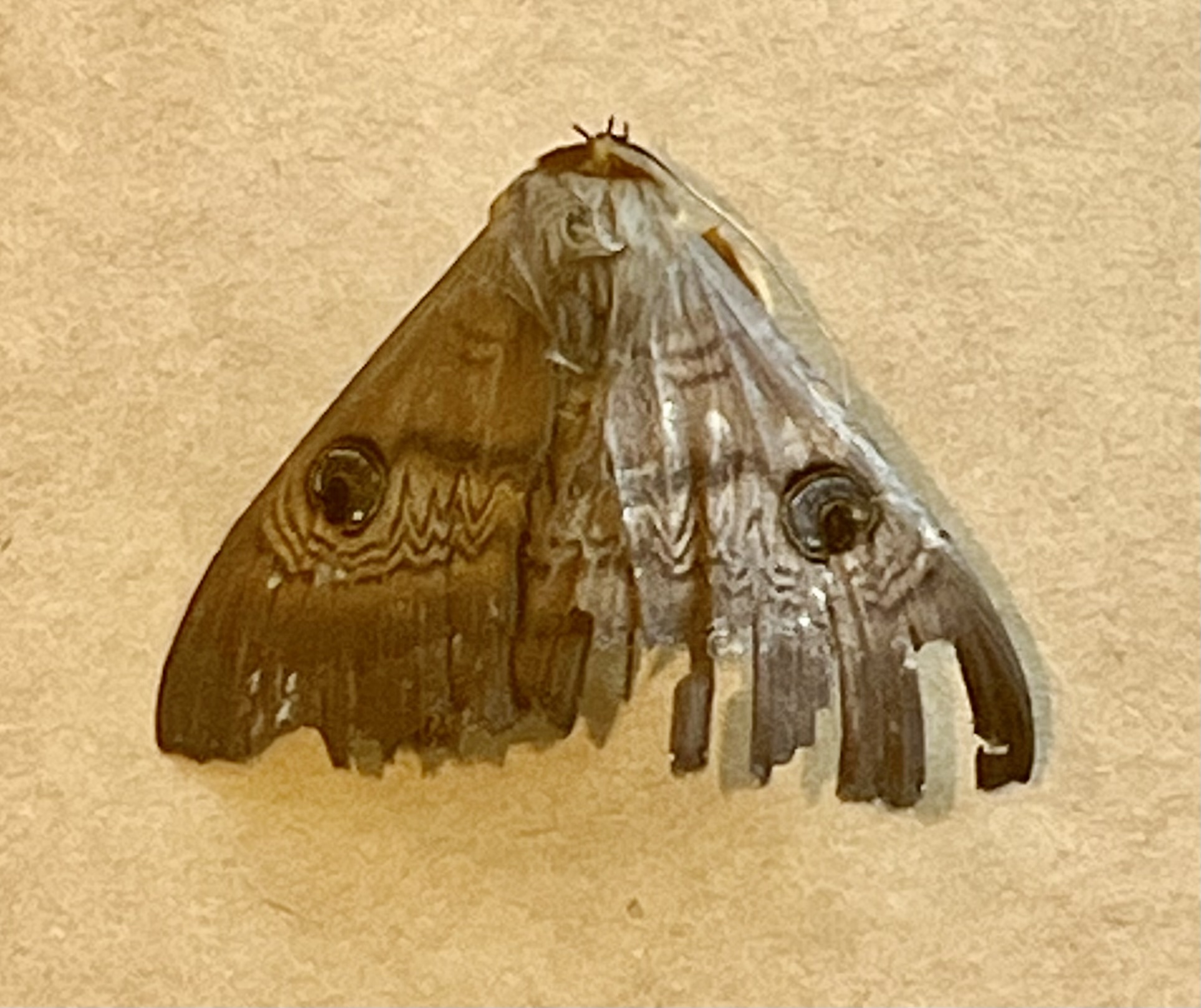
The other night, an enormous moth came into my study. Each of the dark brown wings had a blue ‘eye’, no doubt to intimidate a predator. I saw it settle on a window and watched awhile. I ought to get a large glass to capture and release it on the balcony, I thought. Then, momentarily distracted, I forgot all about the moth.

A week later, I found it dead on the table near the window. Even in death, it looked majestic. I felt guilty that I hadn’t remembered to release it and hoped it had a chance to mate and produce another generation of Southern Old Lady Moths. What an odd name for such a stunning moth!

Once I found out its name, I was curious to learn more. It is such a human trait. Naming something makes us feel more connected to it. So, I did a little research. Southern Old Lady Moths can be found where there are acacia trees, and we have plenty of them in the nature reserve across the road. Their caterpillars feast on wattle leaves and can grow up to 6cm. Their heads and feet are orange, just like the underside of the moth I found.

Once they emerge from their chrysalis, the moths are nocturnal. During the day they hibernate in small, out-of-the-way spaces, sometimes even in houses and garages. During these times, the moths remain perfectly still. This was what I was hoping for when I found the moth on the table, but I quickly realised this was not the case.

I felt responsible for its demise. I wished I had remembered to take it out when I first noticed it. Now, in death, I had the opportunity to observe it closely. I marvelled at its markings and its orange underside and head. Then, belatedly, I placed it in a pot plant on the balcony. Though I had forgotten it in life, I gave it a place in death. Here it will either provide food for a bird or turn to compost, completing its cycle of life.