Fun with etymology

https://languages.oup.com/google-dictionary-en/

I know, I know, a bit geeky, but trust me, a deep dive into the history of vocabulary can be fun. I was preparing a presentation for teachers on some useful prefixes to teach students in mathematics and, of course, I couldn’t just leave it at providing them with a list. No, I went into the Latin or Greek roots of some of them and then showed teachers how unlocking the meaning of a prefix allows students to deduce the meaning of many unfamiliar words, not just the word they were teaching at the time.

Take the prefix uni- for example. Knowing that uni- means one allows students not only to know that unidirectional means going in one direction, but it helps them work out unilateral, universe, unite, unison, unicycle and unique. Frac- coming from the Latin means break or broken as in a fraction of a number. From there, we can work out the meaning of fracture, fractious, infraction (breaking an agreement) and refract. All very interesting, you may say, but where’s the fun?

I began looking into the word rectangle, meaning a right-angled polygon. I then became interested in the word ‘right’, which goes back to the Latin ‘rectus’, meaning ruled as in ruled in a straight line. This then made me think of right and left and how right handedness has been favoured. No wonder as right is associated with being straight, while left goes back to meanings of tired or weak. No wonder left-handed people feel hard done by!

Coming back to rectangle, the prefix rec- is related to several other prefixes, namely regi-, reg- and rex-. We can see the other meaning of ‘rule’ in regi- and rex- as in register, reginal or regina. Even with these regal words, we can see the relationship to being being kept straight. Then, with the prefix rec- we have rectify (to straighten out), correct, direct, erect, resurrect, misdirect and rectum. Rectum? Straight away, I had to look up why this word belonged with all the others. And for those of you as curious as I was, it refers to the final straight portion of the large intestine. Mystery solved.

A prime number

ssa-school.org

Thirty-one years ago today, we took a taxi to the registry office in Sydney where we were to meet your parents, the only invited guests for the ceremony. I opted for a pink pant suit, and you wore an elegant jacket and tie for the occasion. We had wanted to keep it low key.  

We didn’t tell anyone about our wedding, it was strictly a private affair, but people found out anyway. The next Monday at work, some observant colleagues noticed your wedding ring and for the next few days, it was all they could talk about. My colleagues guessed too and by the end of the day I was presented with an enormous bunch of native flowers. They made your eyes itch and set off sneezing fits, so I relegated them to the balcony of our small apartment.

Marriage didn’t change much between us, but parenthood did. Our daughter became our focus and as my job became increasingly demanding, you were the one to take her to the park, play tennis or teach her to ride a bike. We didn’t have nearly enough time for one another, but we knew we had each other’s back.

You had much more patience with her than I ever did. I was a hard task master when it came to learning but you managed to achieve the same results without tears. Maths was your strength, and it has become hers too. You both had a love of patterns in numbers and your favourite numbers were prime. Seventeen, your birthday and thirteen the day you died, both prime. Sixty-one, the age at which you left us to grieve an innumerable loss in the prime of your life.

We were married for 19 years. Yet another prime number. Each year we’d celebrate our wedding anniversary with a special dinner, but we never bought each other presents. We didn’t need to. Our love didn’t rely on any outward signs. We knew its strength from the small acts of service, the cup of tea in bed each morning, dinner on the table at night, washing brought in without a word. Sometimes it was conveyed in a look, a smile, a hand across the table.

Then, as our daughter became increasingly independent, we reached out for each other again. We’d take the train to explore a town, listen to an orchestra or visit art galleries. But our time was to be cut short. I never indulged in false hope. Three months before you died, we visited the Art Gallery of NSW for an exhibition on modernity in German Art. You knew it would interest me and booked the tickets. It was a sunny day, not a cloud in the sky as we waited at the traffic lights on the corner of Hyde Park and Macquarie Street.

I looked up into the bluest of blue skies, skies the colour of your eyes. I remember thinking, what a pity it was that I wouldn’t share the rest of my life with you the way I had always intended. I was overcome by great sadness but couldn’t divulge my thoughts. Instead, I smiled and resolved to have the best day with you at the exhibition, which I did.

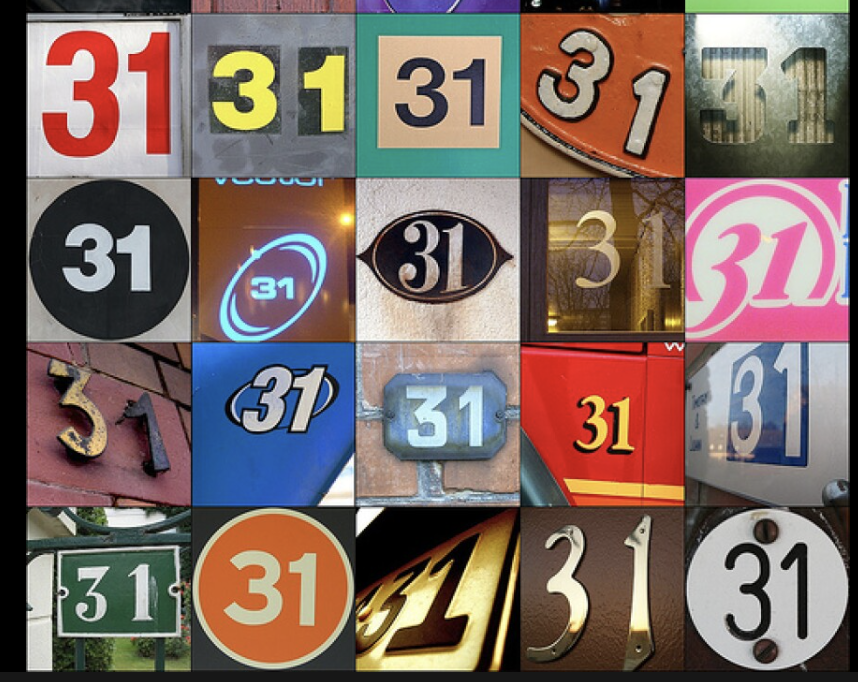
Today, we would have celebrated our 31st wedding anniversary and you would have made a joke about it being an auspicious number. You’d be 73 now, just shy of your 74th birthday. It is hard for me to imagine you at this age, but I know you’d still have that glint in your azure eyes.

‘We’re still in our prime,’ you’d say, and I’d fall in love with you over again.

Word of the day

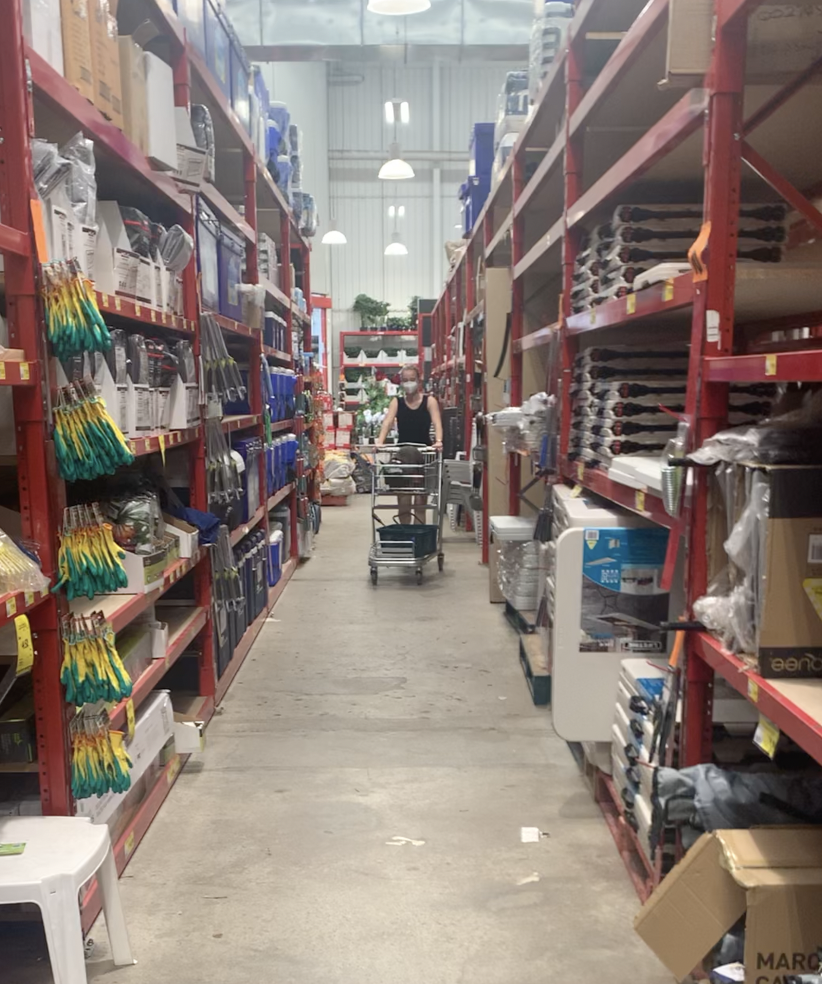
There is a common denominator when moving house in Australia: trip upon trip to Bunnings. For those unacquainted with this iconic fixture of Aussie weekend shopping, it is a hardware store that sells everything from nails, tools and build-it-yourself kitchens to paints, tiles and garden gnomes.

Bunnings is where you go to get cardboard boxes, masking tape and wrapping material before you move, then hire a ute for the move, followed by all the things you require after the move. Consequently, I have spent a sizeable percentage of my income at Bunnings over the past few months. I dare not keep track of the actual amount, to spare me from a visit to the cardiologist.

My laundry is filled with sample pots of paint in various colours as I struggle to choose the right hue for my walls. Of course I had to buy a bucket to wash out the paintbrushes, even though there must be half a dozen somewhere. Last weekend I went back three times – twice for mulch and potting mix and once for a spirit level and more paint. I’m already on first name basis with some staff at my nearest outlet, and can tell you the life story of one particularly helpful team member. He carted over a 100L of soil to my car, so we had plenty of opportunity to chat. I suppose it’s one way to get to know people in a new city.

Service can be slow at the paint counter as people like me agonise over their colour choices. On Sunday, I was waiting patiently for my turn as I overheard a lengthy conversation about restoring a bathtub which had been left outside for some years. Stuart, who was serving, went through all the possible products which could help the young man with his project. Jocular yet deadpan, he directed the would be bath restorer to the merchandise in stock.

‘Down the next isle mate, middle shelf, halfway along you’ll find a cornucopia of enamel colours to fix that old bath of yours.’

‘Great word,’ I said, unable to keep my teacher’s voice in check. Lucky for him, I didn’t have a sticker at hand or I may have put one on his lapel or sent him to the principal for an award.

‘Bet you didn’t wake up this morning and think, I’ll hear the word cornucopia at Bunnings today,’ he replied without missing a beat.

‘I certainly did not,’ I said, smiling, ‘but it made my day.’

Moral of the story: don’t underestimate old blokes working for Bunnings.

Jude

Judy was a flaming redhead with attitude. She spoke her mind, never backed down, and was as tough as acrylic nails. She fought hard, drank hard, smoked weed like the rest of us, and was never mellow. I don’t remember how we became friends.

While I was politically rebellious and desperately wanted to fit into the hippy counterculture, she didn’t give a damn about any of that. She rebelled against her parents, both of whom were Hungarian – her father an alcoholic and her mother a controlling, authoritarian figure in her life. Maybe that is what we had in common. The depressive alcoholic and deeply unhappy Hungarian parents who tried to live their lives through a stranglehold on their children. We couldn’t live up to their expectations.

We moved in together when I was sixteen. To pay the rent on our two-bedroom flat, we had to share the rooms. Jude and I shared one bedroom while our other two friends, Cat and Sharmaine, shared the other. I would have preferred sharing my room with Sharmaine as we were closer, but it didn’t happen that way.

Judy’s bed was under the window and mine against the wall on the other side. A large wardrobe separated us. The only other piece of furniture in the room was my desk, angled along the adjacent corner. It had more of a decorative than a practical purpose, I admit. But I always intended to go back to study, and I wanted to write. The truth is, I never did.

As much as Jude rebelled against her family, she was as fastidious as her mother. She couldn’t bear mess or disorder. For the first couple of months, Judy and I engaged in tactical warfare in the kitchen. Every time I went to get cutlery, it was reordered to replicate her mother’s drawers. Being pigheaded, I changed them back to the way my father had organised our drawers. Neither of us said anything but continued our senseless silent squabble in a futile attempt to assert our dominance.

One day, I came home to a clean flat. Judy presented a classic cocktail that afternoon; all sweet liqueur with plenty of ice served with dash of martyr. I found her unbearable. I walked into our bedroom and flew into a rage. She had placed a tablecloth diagonally across my desk with fresh flowers in its centre.

  ‘It is a desk’ I screamed, ‘not a dining table!’

Judy, taken by surprise, reacted with some choice words of her own.

  ‘You never use it anyway,’ she said once she calmed down, and she wasn’t wrong. I was really furious with myself for not studying, and not writing a single word at that desk. I had taken out my frustrations on a well-meaning friend.

Jude was wilder and more reckless than I ever was. Once, we went into a second-hand shop in fashionable Greville Street, where we pored over vintage dresses we couldn’t afford. When we left, I was incensed by the looks the shop keeper gave me. Judy just laughed.

  ‘He’s probably missing that dress I shoved into your bag,’ she said.

I couldn’t believe that she had shoplifted and implicated me in the crime. I wasn’t cut out for it, and she took advantage of my innocence.

We worked together on a two-tonne truck on weekends doing furniture and rubbish removals with Marion, who owned the truck. We thought nothing of it. When some men refused to allow us to carry a sofa, we left it wedged in their doorway. It was a proto-feminist act before we had any knowledge of gendered work.

We parted ways one summer when we were about go tobacco picking in Queensland. The promised jobs fell through the day before we were to leave. She hitch-hiked north anyway. I stayed behind and went back to school a couple of months later. That was the last time I saw her.

I have stayed in touch with Cat and Sharmaine from a distance but have never heard from Jude. Every now and again I’d think of her and wonder what life she led. Years passed quicker than I thought were possible in my youth and that fiery redhead could well be grey by now. At least that’s what I thought until I received a Facebook message from a mutual friend last week. I had no idea that they had kept in touch.

  ‘I’ve got some bad news… Jude is palliative care. …They’re waiting for her daughter to arrive from OS and I guess she’s on life support, and may shut it off.’

She died a week later.

Her death has affected me more than I expected. I have lost friends and loved ones where the grief was as deep as a gash all the way to the bone; the scar tissue a constant reminder of a wound never fully healed. Yet each scar is a cross I gladly bear for the love I received in return.

Jude’s death is different. Maybe it has something to do with leaving home at such a young age, our similar backgrounds, and my memories of a misspent youth. We partied hard, drank too much, and got ourselves into situations that could have gone very, very badly. Somehow, we survived. Or should I say, somehow, I’ve survived.

Farewell Judy, I will always remember your unruly red hair, your devil-may-care attitude and your insatiable thirst for life. You have left us far too soon.