
Bibliophile

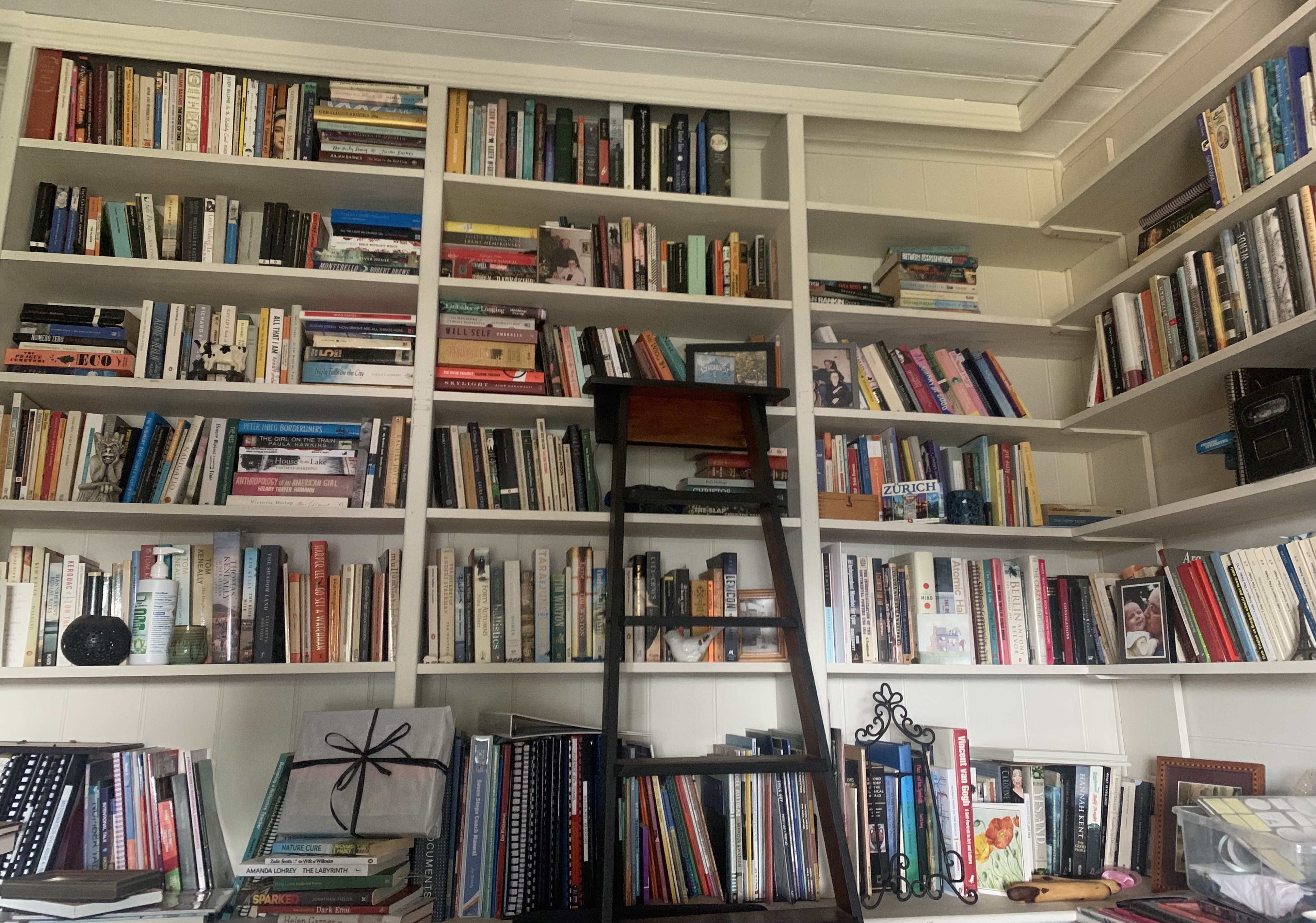
I am a self-confessed bookhound. I cannot walk past a bookshop without browsing and buying at least one book, even when I have no intention of a purchase. Sometimes I enter a store with a particular title in mind, but most of the time a book will call out and attract my attention before my rational mind can produce a scintilla of common sense. It doesn’t matter that I have thousands of unread books on my shelves, another one is added on a whim.

The last time I moved house, I counted well over 50 boxes of books. I packed them with a close friend at my side. I was glad to have her there, not only for the purposes of packing, but also to stop me from looking at each one to lovingly remember how it came into my possession. Had I attempted the exercise on my own, it would have taken days to complete the task.

This time, I know I will not have enough shelves at my new place to house my collection. Not only that, but there won’t be the wall space either. I am already investigating rotating shelves and other innovative designs. Regardless, I will have to downsize.

Today I set myself a target of reducing my collection by a mere 50 books. The first ten weren’t hard, but as I kept going, the task became increasingly difficult.

“But I haven’t read this yet!”

“I may not have enjoyed it, but it is a classic.”

“What if I want to revisit this passage and find the book is out of print?”

I listened to all the irrational arguments and kept adding books to the out-pile. It felt good to reach my target, even though I knew I would have to be more rigorous in my next cull.

Luckily for me, there is a street library down the road and its shelves were looking decidedly sparse. My contribution of 50 paperbacks has now filled all those empty spaces. I know my books will provide hours of pleasure to the readers of Millthorpe.

But will I resist the call next time I walk past a bookshop?

Why I attended a YES rally supporting the Voice

I have to think hard to remember the last rally I attended. I think it was a rally to support the Independence of East Timor back in the late 1990s. I remember pushing a stroller along George Street in Sydney, chanting to the familiar refrain:

‘What do we want?

Self-determination!

When do we want it?

NOW!’

Not long after that, we moved out of Sydney and going to rallies became a just a little more difficult to organise with a young child. Then life became busy and while I supported many causes, I didn’t make it out onto the streets the way I did when I was younger.

This weekend, there were rallies all over Australia supporting the Yes campaign for an Indigenous Voice to parliament. A referendum will be held in three weeks to change the Australian Constitution which would allow an Indigenous body to give independent advice to the government of the day regarding laws and policies that affect Indigenous communities.

It was a beautiful day and thousands of people of all ages attended from near and far. There were people there who had fought for Aboriginal and Torres Strait Islanders to be recognised in the Constitution back in 1967, families, young activists, migrants, Indigenous leaders and more. We marched to Parliament House and made our voices heard, in the hope that Australians will make it possible for Indigenous voices to be heard.

Linda Burney, the Minister for Indigenous Australians and Member for Barton said that the Voice would make it possible to advise on

“Things like incarceration and child removal, housing, health and educational outcomes. This voice is about making sure that what happens in the federal parliament is going to be a positive step forward both in terms of us as a nation, but also the life outcomes for First Nations people in Australia.”

For me, the issue is simple. Do I want to support our most disenfranchised group in society to have a say in what is being done to them, or do I want things to remain as they are? Do I want life expectancy to continue to be approximately 8 years lower for Indigenous people? Do I want Indigenous students to be two and a half years behind their peers in educational outcomes by school-leaving age? And do I want to accept widespread socioeconomic disadvantage and health inequality which is similar to that experienced in Third World countries? If I want to see these statistics to change, my vote must be a YES to the Voice.

Do I believe that giving Aboriginal and Torres Strait Islanders a Voice will fix all the inequalities outlined above? Of course not! But I do believe that it will make a tangible difference and give the message that non-Indigenous people not only care but are willing to listen. To me, that deserves a resounding YES.

Selling a much-loved house

I am blessed to be able own my own house, or at least a substantial part of it. This cottage is exactly what I have yearned for all my life – an old wooden home with loads of character that greets me with warmth the moment I come in.

It has old, pitted floorboards that tell the story of the many feet that have walked on them, walls that bear the marks of furniture, and windows that creak and groan every time I open them.

Every room has its own story of past renovations which add to its overall charm. It is like an archaeological dig, unearthing the unique stamp of previous owners. I love how the floors tell of walls that have been removed and rooms that once were used in very different ways. And I also have put my own stamp on this place through the addition of a functional bathroom and laundry as well as a kitchen, in keeping with its heritage.

My studio out the back is a real luxury. It is a converted shed but when I open its doors, I am in a light filled space that is bigger than most one-bedroom apartments in Sydney. I have loved working on mosaics or writing in this space and of course my friends have enjoyed the comforts of a self-contained room. I have never had so much space in my life!

The wild cottage garden invites birds, insects and for me, contemplation. While I have never been a gardener, it is a calm place to enjoy. As there are four seasons in Millthorpe, it is possible to grow both deciduous and native trees and roses thrive in this environment. I have loved the explosion of blooms in spring and the colours of autumn. The garden is a testament to the passing of time as different plants take centre stage, depending on the season.

But it is time to move on. Now, I have to convey my love for this place to strangers who will no doubt find fault with what I consider are charming anachronisms. I have to declutter, downsize and get ready to relocate 300km away. It is a daunting task. I am eternally grateful to have spent seven years in a community that has welcomed me into the fold. Together with the friends I have made and the memories of a love that I will cherish for evermore, Millthorpe will always have a special place in my heart.

Central West NSW

There are mornings that take your breath away. Driving through milky fog, ghosted cattle appear and fade into the background. The road stretches no more than 50 metres ahead, a reminder to trust the way forward and believe that the destination will eventually reveal itself.

Trees are cloaked in thick white coats, silver grass droops with dew before it disappears as the car cuts through the landscape like a scythe. Subdued, canola blooms in the next paddock on this cold morning, awaiting the sun to shake off the vestiges of winter.  As yet, the sun is nowhere to be seen.

Thirty kilometres further and the fog has cleared. The sun is out now, but the air still bears a chill. Rows of vines grow along taught wires and they stretch their arms towards each other, as if reaching to a kindred soul. Still bare, the neat rows extend up hills into the distance. It will be several weeks yet before green shoots appear.

Winding through scraggy scrub growing on undulating hills, the landscape now is rocky and the soil poor. There’s more roadkill along this section of the trip as animals look for food along the green verge. There are foxes, roos and even a wombat with its stiff legs in the air. I’m driving through an animal graveyard.

Small villages are scattered at varying distances. Some have freshly painted houses with proud gardens, others are forlorn and neglected. Rusted sheds collapse onto themselves, and ancient farm machinery has been left to decay. Driving through the outskirts of a larger settlement, the aftermath of a deadly flood is visible a year later. Debris from the surge of water still clings onto farm fences, once vibrant shops have been abandoned and brick foundations without corresponding houses point to the slow road to recovery that this town faces.

Thirty-five km on, my destination comes into view. A large inland town, it is a rural hub servicing farms and smaller settlements. The town is known for its grand heritage buildings and splendid parks along the river and a short lived gold rush back in the 1860s. Its roads lead to towns much further afield – outback NSW and eventually Queensland to the north. It is a place where trucks rumble along a highway which dissects the town more efficiently than its river ever could.

It has taken two hours to drive no more than 140km through this part of the Central West. It is a region known for its excellent food and wine production as well as agriculture. To me, it has been home for seven years and I know it best for its crisp winter mornings and bucolic beauty. I shall miss it when the time comes for me to leave.